
Ive-eaten-caviar-almost-daily-for-15-years-so-I.jpeg

I’ve eaten caviar almost daily for 15 years, so I built a brand to bring prices down

This as-told-to essay is based on a conversation with Sony Mordechai, the founder of Imperia Caviar and entrepreneur behind companies including Sport Couture Group and Alesonor Real Estate Development. It has been edited for length and clarity.

About 15 years ago, a friend of mine who works in the alcohol space organized a week of tastings in Bordeaux. That’s when I first discovered the world of caviar.

I became fascinated with it. I started tasting different types, visiting farms, and really trying to understand the industry. What I saw surprised me: the margins were very high, and the system felt outdated. It was very exclusive.

About six or seven years ago, I saw an opportunity. I wanted to create a global brand that could offer the highest-quality product at the best possible price, with great customer service. That’s how Imperia Caviar started.

From the beginning, the idea was simple: democratize caviar.

In other parts of the world, people eat caviar much more regularly. So we saw an opportunity not just to sell a product, but to educate people and expand the market.

I’ve personally been eating caviar almost every day for the past 15 years. I love it so much that I combine it with almost anything.

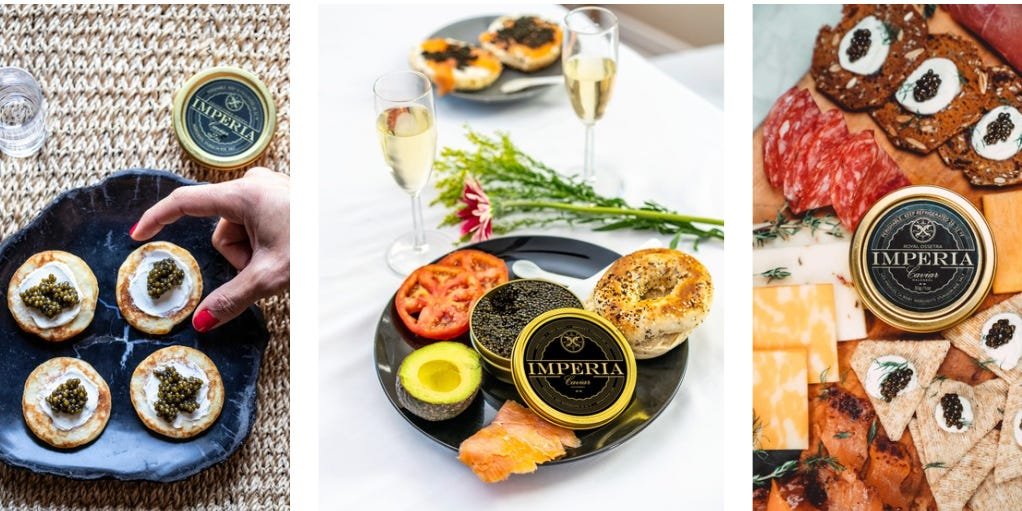
That includes traditional caviar pairings, as well as very unconventional ones. I’ve had it with potato chips, fried chicken, and even ice cream. My sister says I eat it like ketchup.

Early on, part of our marketing strategy was to shock people — to show them you don’t have to follow rules to enjoy caviar.

At the time, industry insiders told us to stop “defaming” caviar. It was seen as something you could only eat in a formal, luxury setting. But I believe that if you enjoy something, you should experience it however you like.

Now, that mindset is becoming more mainstream.

You see people putting caviar on chicken nuggets, on pizza, on all kinds of foods. What was once taboo is now part of a larger trend. It’s less about status and more about experience.

Younger generations, in particular, are very focused on sharing experiences. They’re less interested in owning things and more interested in moments they can enjoy and share — often on social media. Caviar fits very well into that.

At the same time, lowering the price point has been critical.

A lot of people assume caviar is only for the ultra-rich. That’s a misconception. Yes, it’s a premium product, but it doesn’t have to be out of reach. You can spend $50 or $100 and have a meaningful experience.

In many ways, I think of what we’re doing as similar to what happened with sushi. Years ago, sushi wasn’t widely consumed in the US. Now, a large percentage of the population eats it regularly. We believe caviar can follow a similar path.

An important piece to making that happen is quality. For many of our customers, trying our brand is their first time trying caviar, and you only get one chance at a first impression. If that experience isn’t great, they may decide they don’t like caviar at all.

That’s why we’ve always focused on offering the highest-quality product possible. And that approach has helped us grow.

We started as a direct-to-consumer brand, but many of our customers own restaurants, hotels, and even airlines. They began introducing our caviar into their businesses, and our enterprise side has grown quickly as well.

More restaurants are now offering caviar — not as a stand-alone luxury item, but as an upgrade. Similar to how you might add truffles to a dish, you can now add caviar to pasta, pizza, or other foods.

I think that’s a big shift. It’s moving from something reserved for special occasions to something that can elevate everyday moments.

In the past, demand was concentrated around holidays like New Year’s or Christmas. Now, we’re seeing people enjoy caviar for many special occasions — Mother’s Day, brunches, parties, and even regular weekends. We even have a caviar subscription, like a wine club, for people who want to enjoy it more frequently.

Personally, I also see a wellness angle.

Caviar naturally contains omega-3s, vitamin B12, iron, and other nutrients. It’s something that makes you feel good while you’re eating it and afterward. I’m very focused on how food impacts energy and overall well-being, and caviar fits into that.

I don’t think the industry is fully there yet in terms of positioning it as a wellness product, but I believe that in the future, for something to be considered truly luxurious, it will also have to be healthy and produced the right way.

Ultimately, our goal is to make caviar an everyday delight.

We believe the timing is right. In some parts of the world, it’s already part of the culture. Now, we’re seeing that shift happen more globally.

Caviar doesn’t have to be about exclusivity anymore. It can be about celebration — big or small — and about sharing experiences with others.



Source link

Sales-reps-at-11-billion-AI-startup-ElevenLabs-have-to.jpeg

Sales reps at $11 billion AI startup ElevenLabs have to bring in 20 times their base salary, or they’re out — VP says

At $11 billion AI startup ElevenLabs, the message to sales reps is simple: Hit 20x your base salary, or you’re out.

Speaking on the 20VC podcast on Friday, Carles Reina, VP of sales at the voice-cloning startup, talked through its “ruthless” quotas.

“So if I pay you $100,000 a year, your quota is $2 million. That’s it. If you don’t achieve your quota, then you’re going to be out, right?” Reina said. “And we’re ruthless on that end.”

ElevenLabs — which was recently valued at $11 billion after closing a $500 million funding round — operates in micro-teams of five to ten people each, according to CEO and cofounder Mati Staniszewski, who spoke on a separate 20VC podcast episode in September.

Reina said he prefers to operate in smaller teams that hit their quotas, and pay them more.

Small teams have become a growing trend in tech, with AI startups touting their ability to scale with far fewer employees by working alongside AI agents.

LinkedIn cofounder Reid Hoffman wrote in January that a team of 15 people using AI can rival a team of 150 who aren’t.

Meanwhile, Mark Zuckerberg said on a Meta earnings call in July that he has “gotten a little bit more convinced around the ability for small, talent-dense teams to be the optimal configuration for driving frontier research.”

Reina said the “ruthless” quota has been successful at ElevenLabs, saying on the 20VC podcast that more than 80% of reps hit their sales quota.

ElevenLabs did not respond to a request for a comment.

He added that the firm compensates both the account executive and customer success manager if they upsell a company within the first 12 months.

“I’m paying double, but I don’t care,” Reina said. “It makes perfect sense because then I have these two people busting their ass to make sure that they actually can make more money, which is fantastic for me as a company.”

The push for higher performance isn’t limited to AI startups.

In April, Google said it was restructuring its compensation structure to increase rewards for top performers. “High performance is more important than ever,” Google’s head of compensation told staff at the time.


Source link

Henry Chandonnet is pictured

I worked at Tesla and Waymo. Here are the leadership lessons I bring to my startup.

This as-told-to essay is based on a conversation with Spencer Penn, the 33-year-old founder of LightSource, who lives in San Francisco. It’s been edited for length and clarity.

I moved to California 10 years ago, back when Tesla was a boutique car business. We were making 1,000 vehicles a week.

My friends and family were telling me it was a big career mistake to work at Tesla. They said it would never be someone’s main car, that it’s a tech toy, that it’s an iPad with wheels on it. But I was just excited to see what this Elon guy was up to.

My interactions with Elon were always very positive, but I’m not a fanboy. There were some things that were very notable about his leadership style.

Tesla is a very flat organization. When I was there, even relatively young and out of college, it was two levels between Elon and me. That’s very unusual to have such close proximity so early in your career.

Just because it’s a flat org structure, doesn’t mean it’s a horizontal power dynamic. Elon is the king. What he says goes. If you wanted to get something done, you really did have to go through Elon.

The drawbacks were that the guy didn’t have that much time. In 2017, he was running three different companies: Tesla, SpaceX, and Neuralink. He was just getting started with OpenAI. He had two and a half days a week to really focus on Tesla exclusively. You’d have to get things approved in that period of time.

But he was also very focused on the product. He would get involved in the way that things felt. If you wanted to change a texture on a paint, you’d want to get his buy-in.

Many CEOs go the opposite direction. They let themselves get so far removed from the product. Elon always felt the product was the thing, and the innovation would be what drives the company forward.

I like to embody that here at our company. I still do demos. If you take your hands off the wheel, things might veer in a direction you don’t like.

Elon has a knack for setting overly ambitious goals. There are benefits and drawbacks. Sometimes, you lose credibility. Certain products like the new Roadster were unveiled back when I was an employee, and they’ve yet to be delivered.

But there are certain things where you shoot for the moon and you do hit the stars. Nobody thought Starlink would be as successful as quickly as it has been.

If you apply the right amount of pressure, you can see where the leaks are. That kind of ambition is everything.

That’s the final thing Elon does: he’s really a risk taker. He’s bet the company multiple times; he always keeps putting the chips back on red. I think about that a lot. Sometimes it can be hard for professional management to take the risks they need to. Sometimes you can sleepwalk into a long-term, uncompetitive position.

There was some internal signaling. People knew that Elon was in the factory. They knew that he was going to stay there until the issues were fixed. Elon works about as hard as any human on earth possibly can.

There’s a hotel right across the street from the Fremont factory. Part of me always felt like, instead of setting up pillows in a conference room, I would like our CEO to be well-rested and go to the hotel five minutes away. But the signaling was very potent.

I try to embody that to some degree here, too. I like to come into the office five days a week. I want people to know that I’m coming in early and I’m staying late. I unload the dishwasher in the office. I’m assembling IKEA furniture.

How I found Waymo compared

Waymo was a very different organization. It’s a very vertical org structure. Google is a large organization with lots of levels, and that translated directly to Waymo, which is a much smaller business.

Even though it’s a very vertical org structure, it’s a horizontal power structure. It’s like it’s rotated 90 degrees from Tesla.

Some people compared the org to slime mold. It starts to spread and find all the crevices on its own. Individual contributors could construct their own ideas.

There are benefits and drawbacks. There is the possibility that there are duplicative teams doing the same things in different ways. But it also leads to a lot of creativity.

At Tesla, it was very clear that Elon and his lieutenants were driving a lot of the decisions. The decisions that the more junior people made would be incremental. At Google, I found that a lot of the best ideas come from the individual folks in the business, because they’re given the freedom to roam.

In a startup, you have limited resources. You have to be focused, but a lot of the best ideas come from experimentation.

We had an engineer who asked if he could move his start date by a month. He was like, “I want to spend a month before I get into work catching up on everything that’s happening in AI.” He came to the table, and he had so deeply immersed himself that he had a lot of new and fresh ideas. Many of those ideas have become product features.

I have to delegate innovation to folks on the team to find those opportunities. That’s something I learned from Google.


Source link