British-Airways-is-among-the-airlines-slashing-flights-to-the.jpeg

British Airways is among the airlines slashing flights to the Middle East weeks in advance or more

  • Several airlines are suspending flight routes to destinations in the Middle East well in advance.
  • British Airways cut flights to Abu Dhabi until later this year and others until later this month.
  • While some airlines are canceling routes, others are operating at a more limited capacity.

The travel fallout from the war in Iran continues, with several airlines canceling flights to the Middle East weeks in advance or more.

Thousands of flights were canceled across the region following the US-Israel attack on Iran on February 28 and subsequent retaliatory strikes. While some flights have resumed and many travelers who got stranded in places like Abu Dhabi and Doha have made it out, the travel disruptions are ongoing.

Industry experts previously told Business Insider that the lasting impacts on tourism and global travel will likely depend on how long the war lasts, as well as how it ends. Canceled flights to Dubai International Airport, which serves as a common connector for routes between Europe, Asia, and Africa, could especially have a ripple effect.

While some airlines are canceling routes altogether, others are continuing to operate but in a more limited capacity. Some airlines have also added repatriation flights to help stranded travelers get home.

Here are the airlines that have suspended services to some destinations in the Middle East.

British Airways

British Airways said Tuesday it was canceling flights to Amman, Bahrain, Doha, Dubai, and Tel Aviv until later this month, and to and from Abu Dhabi until later this year.

It’s unclear when the flights will resume. Flights from London to Abu Dhabi appeared to be bookable on the airline’s website starting April 16.

British Airways also said it had limited seats remaining on its repatriation flights from Oman to London on March 11 and 12 for customers with existing bookings.

“Following these dates, the flights will pause due to reduced demand but will be kept under continuous review,” the airline said.

Air Canada

Air Canada has canceled all flights to and from Dubai through March 28 and to Tel Aviv through May 2 due to the conflict.

“If you are in either of these regions, please do not head to the airport. Your safety is our top priority,” the airline said in a statement last week.

Virgin Atlantic

Virgin Atlantic canceled its service to Dubai for the remainder of its usual season, or until March 28. The British airline, which typically only operates flights to Dubai seasonally, said in a statement that “the recent escalation in the Middle East has brought forward the end of our operation for this season.”

Virgin also said Sunday it was canceling its flights to Riyadh for the next two weeks.

Oman Air

Oman Air said Sunday it was canceling all flights to and from the following locations through March 15: Amman, Dubai, Bahrain, Doha, Dammam, Kuwait, Copenhagen, Baghdad, and Khasab.

The airline also said it was operating extra flights to and from Muscat during that time, including to London, Istanbul, Cairo, and other destinations in Europe and Asia.

Air France

Air France said Monday it was canceling flights to and from Dubai and Riyadh until March 12, and to and from Tel Aviv and Beirut until March 13.

Lufthansa

Lufthansa said this it was suspending flights to and from the following locations: Dubai, Abu Dhabi, and Dammam until March 15 and Tel Aviv until April 2.

Previously the airline said it was suspending flights to and from Amman and Erbil until March 15, Beirut until March 28, and Tehran until April 30.

Lufthansa said flights to and from Riyadh and Jeddah would continue.

Finnair

Finnair canceled all its flights to and from Doha and Dubai between February 28 and March 29.


Source link

A-British-citizen-in-Dubai-says-he-still-feels-safe.jpeg

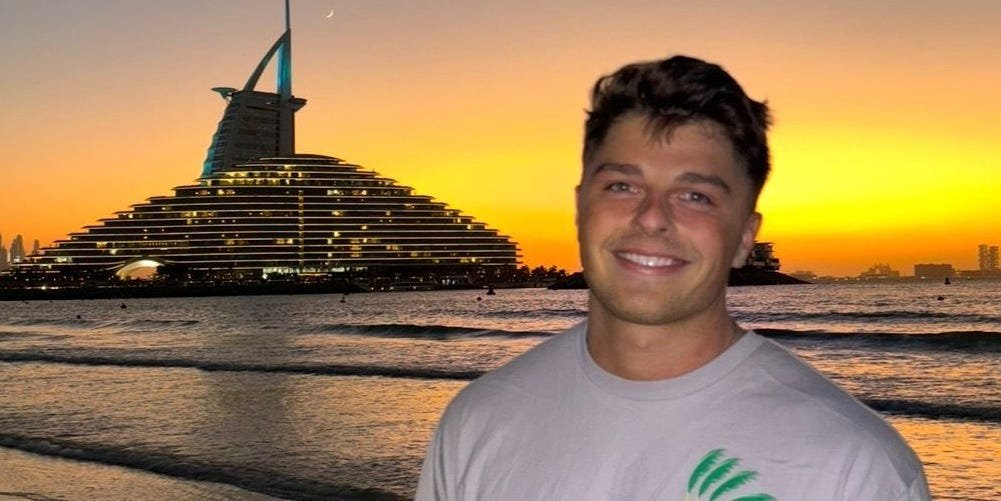
A British citizen in Dubai says he still feels safe despite the Iran strikes

This is an as-told-to essay based on a conversation with Charlie Lovett, a British citizen in Dubai who runs a used-car marketplace. Iran has launched retaliatory strikes at sites in the United Arab Emirates after being attacked by the US and Israel. This story has been edited for length and clarity.

I have British parents and am a British citizen, but a large chunk of my life has been spent here in Dubai.

My dad’s job brought us here, so I did all my schooling here from age 3 to 18. I moved back to London for university and worked there for a few years. In the last couple years, I set up a business in the UAE, so I am back here quite a lot.

It was very surreal when everything started on Saturday.

I had some friends around, and we knew what was happening in Iran, but I didn’t think much about canceling or changing plans, which is a testament to how safe I felt here. I live in a high-rise on the Palm Jumeirah and was sitting on my balcony when I could hear a few bangs in the area.

Initially, it was quite scary and very unsettling, but very quickly, I turned to government sources about what was going on. If you live here or have lived here for a long time, you understand that it is a safe place to live and that measures are in place to protect you. There’s been a big difference in reactions between people who live here and people who are visiting.

Growing up in Dubai instilled a strong sense of safety

Before the other day, I had never heard a missile here.

Still, having grown up here, I have a deep-rooted, subconscious sense of safety that has built over time.

There is a lot of trust here within the community and in the government. Half the time, we don’t even lock our doors. The other day, I went for a run and didn’t want to carry my car keys, so I just left them in the car. You don’t have to worry about these things here. It’s the small things you notice growing up here, as a kid, being able to play outside for hours without a parent.

You also get an understanding of how the government operates. It’s very structured and organized. You feel like you’re in safe hands. For instance, during COVID, everything was handled very well.

There are protocols in place, and people here are really good at following them. If you’re told not to go into the office, for example, people don’t really kick up a fuss about that. They just crack on.

On all the official government channels, you can see almost a live breakdown of everything that’s happening and an explanation as to what’s going on — like that the sounds aren’t necessarily missiles landing, they’re just being intercepted. The government also sent out iPhone notifications, all translated into both English and Arabic.

Right now, for people who live here, I think the consensus is it’s just business as usual. Everyone’s quite calm.

It already feels normal again. There’s the occasional loud sound, but that’s mostly subsided in the last few days. There’s a mall right next to me where I work and shop, and it’s been packed. There are people out and doing things and just going about their day. I was just out for dinner with my dad.

There’s a lot of conflicting information going around

If you’re not from here or if you’re here on holiday, I get that it would be very different. You’re in an unfamiliar environment, you don’t know how things work, and you don’t necessarily have family or friends around.

I also think some people may be scrolling online or seeing rumors, rather than following the official channels. I think there’s been a lot of mixed reporting, which can also confuse things.

I’ve got family and friends in the UK, and my girlfriend’s there at the moment, so they’re seeing what’s being reported in British media and what’s surfacing online. So there’s this huge discrepancy in what’s actually happening and what’s being shared in certain places.

I got here just over two weeks ago. I’m trying to leave, not because I’m evacuating, but because I’m trying to make it to the Barcelona marathon. It’s just a matter of finding a flight that’ll get me there in time. Afterward, I’ll return here when I can.

For people who live here — about 90% of whom are expats — the thought of this happening wasn’t even in our minds until last week. But even then, it has not shifted our perspective. A lot of people feel more comfortable staying here than they would going back to their home countries.


Source link

Im-a-British-mom-in-the-US-who-only-connected.jpeg

I’m a British mom in the US who only connected with other Brits. Now, in my 50s, my closest friends are American.

My move to San Diego came at the end of a long, restless journey around the world.

I left London for Australia at 22, not long after my mom died. I’d spent the final year of her life as her full-time caregiver as she battled with cancer.

When she was gone, I needed to escape my hometown.

I’ll never forget my friend seeing me off, excitedly saying, “You’re so lucky to move to Australia!” I forced a smile because I felt the complete opposite. I was literally running away from my grief.

For the next 15 years, I moved countries every few years, filling my life with adventure while trying to find purpose. Distraction is powerful, and it worked to some degree.

Melbourne came first, then Los Angeles, back to Sydney, and eventually Dubai in the Middle East. I chased my dream of becoming an actor, built a journalism career, and went on overland camping trips through India and Africa.

Deep down, though, I knew I was seeking a “big life” to avoid the sadness of losing my mom.


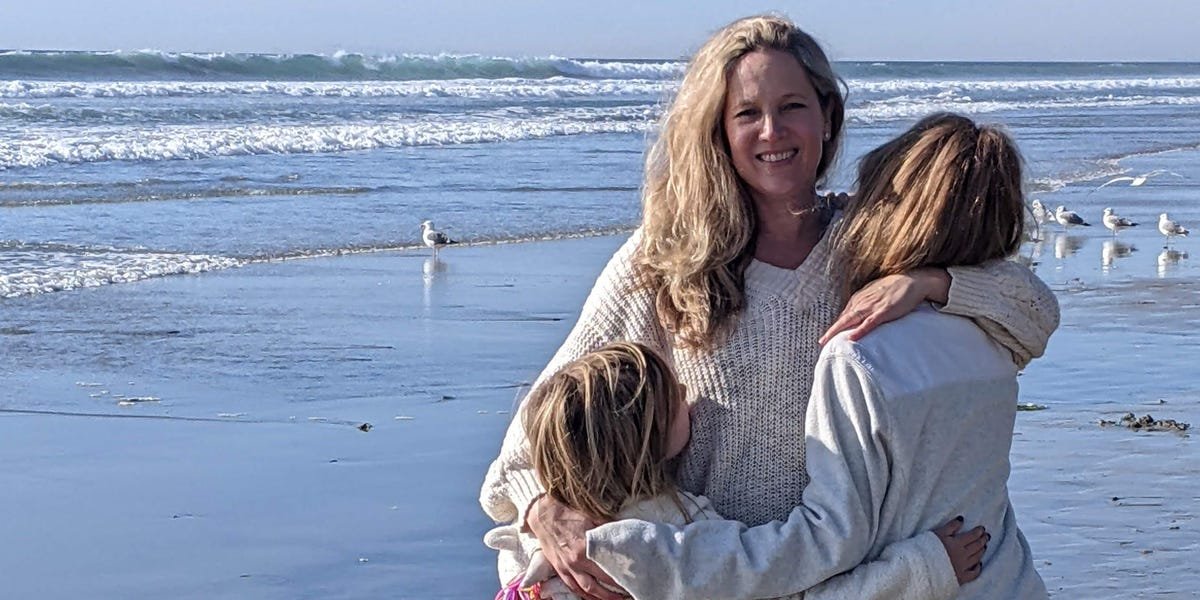
Mother and daughter on the beach together.

Collins left London at 22, after her mom died.

Provided by Madeleine Collins


Building bonds far from home

Wherever I lived as an expat, I formed close friendships with local women — apart from Dubai, where friendships with Emirati women were either discouraged or impossible.

Often, my closest friends were the women I lived with. Some of my roommates had family nearby and folded me into their lives. I spent Christmases with them and found comfort in borrowed families.

None of them were British, and I never sought that out. As a result, some of my dearest friends are now scattered across the globe.

Motherhood changed everything

I met my husband during a vacation to his native South Africa, and we bonded over our shared experiences of travel and adventure.

However, when we moved to San Diego with our baby daughter in 2009, everything — including, apparently, me — changed.

Suddenly, the unknown scared me. Adventure was replaced by Target and Trader Joe’s runs, and surviving sleep deprivation.

I joined local moms’ groups but felt out of sync. The language was different — “dummy” became “pacifier,” “pram” became “stroller” — but the deeper disconnect came from conversations I couldn’t join. Many women had grandparents nearby who helped with childcare or stepped in on weekends. I had no one, and constantly felt like an outsider.

It was hard to tell whether we had anything in common beyond motherhood, and I often wondered whether people assumed I’d eventually move back to England.

Luckily, I found a nearby British mom’s group. One friendship led to another, and soon I discovered a whole network of us in San Diego.

It felt comforting: the shared humor, the homesickness, the feeling of being outsiders together. The kinship was powerful, but it also marked a shift in me that I didn’t like.

The expat bubble I didn’t recognize

At some point, I noticed I’d become someone I didn’t recognize. I often joked that I only wanted English friends — and I meant it. It turned into a casual “them and us” mentality, even though we all felt lucky to live in California.

For someone who had moved country so many times and embraced all the challenges that come with it, I became cocooned in an expat bubble of my own making.

It felt wrong — embarrassing, even — to live in a country while avoiding the people from here. I worried that this smaller, more fearful version of myself was permanent.


A group of four women in their 50s.

In her 50s, she made friends with American women in her book club.

Provided by Madeleine Collins


Turning 50, and opening up again

Then I hit my 50s, and things changed again.

Because I had children in my early 40s, most of my English friends were about a decade younger than me, and they couldn’t relate to my new midlife woes. Mentioning HRT over dinner was met with silence and a sympathetic smile. I found myself prefacing everything with, “Well, because I’m older…”

Around that time, I joined my neighborhood book club, which was made up entirely of American women in their late 40s, 50s, and 60s. They were funny, warm, and deeply interesting. The group included women from all walks of life, from a nanny to a scientist.

After discussing the book each month, conversations quickly turned personal. We bonded over menopause, parenting teenagers, and aging parents. These women became my people.

Finding a sense of belonging

I still value my English friends in San Diego, but my American friendships have instilled in me a sense of belonging.

They laugh at my English-isms, which I love, but I’ve learned that belonging isn’t about shared accents or passports. It’s about shared seasons of life.

While I would still move home to be near my extended family, my husband doesn’t want to, and our children are in the education system here now. This season isn’t changing any time soon, and I’m finally happy about that.

Do you have a story to share about living abroad? Contact the editor at akarplus@businessinsider.com.


Source link

The-biggest-scandals-of-the-British-royal-family.jpeg

The biggest scandals of the British royal family

The two-hour primetime special was full of stunning revelations.

Markle told Winfrey that Kate Middleton made her cry the week of her wedding over a flower girl dress and not the other way around, as had been reported in tabloids. She also said members of the royal family had “concerns and conversations” about how dark Archie’s skin would be before he was born, and The Firm told them that Archie wouldn’t receive a title or security, breaking from protocol.

She also opened up about having suicidal thoughts amid constant tabloid criticism and racism, and said a senior member of the royal institution wouldn’t let her seek help.

Harry revealed that his family cut him off financially in the first quarter of 2020, and that Charles stopped taking his phone calls before they announced they were stepping back from the royal family. He also said that it hurts that the royal family never acknowledged tabloids’ racist treatment of Markle, and that none of the royal family members have reached out to apologize for the reasons he felt he had to leave.

Following the interview, Buckingham Palace released a statement on behalf of the Queen.

“The whole family is saddened to learn the full extent of how challenging the last few years have been for Harry and Meghan,” the statement read.

“The issues raised, particularly that of race, are concerning. Whilst some recollections may vary, they are taken very seriously and will be addressed by the family privately. 

“Harry, Meghan, and Archie will always be much loved family members.”


Source link