

Paramount-ally-RedBird-says-using-Middle-East-money-to-help.jpeg

Paramount ally RedBird says using Middle East money to help buy Warner Bros. could be a good idea

  • Last year, Paramount said it would use $24 billion in funding from Saudi Arabia, Abu Dhabi, and Qatar to help buy WBD.
  • Now that Paramount has won that deal, it won’t say whether that’s still the plan.
  • A key Paramount backer suggests that Gulf money would be a good thing for this deal.

We still don’t know if Paramount intends to use billions of dollars from Gulf states like Saudi Arabia to help it buy Warner Bros. Discovery.

But if Paramount does end up doing that, it wouldn’t be a bad thing, says a key Paramount backer.

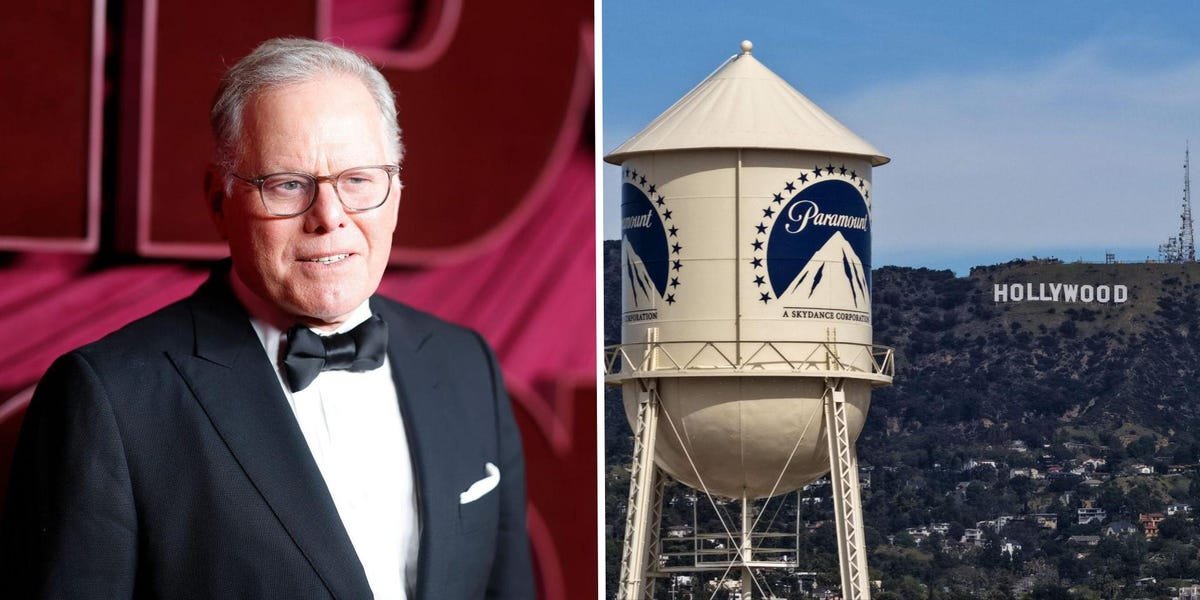
That update comes via Gerry Cardinale, who heads up RedBird Capital Partners, the private equity company that helped finance Larry and David Ellison’s acquisition of Paramount last year and is doing the same with their WBD deal now.

In a podcast with Puck’s Matt Belloni published Wednesday night, Cardinale wouldn’t comment directly on Paramount’s previously disclosed plans to use $24 billion from sovereign wealth funds controlled by Saudi Arabia, Abu Dhabi, and Qatar to help buy WBD.

Instead, he reiterated Paramount’s current messaging on the deal’s financing: The $47 billion in equity Paramount will use to buy WBD will be “backstopped” by the Ellison family and RedBird — meaning they are ultimately on the hook to pay up. The rest of the $81 billion deal will be financed with debt.

Cardinale also acknowledged what Paramount has disclosed in its current disclosure documents: It intends to sell portions of that $47 billion commitment to other investors: “We haven’t syndicated anything at this time,” he said. “We do expect to syndicate with strategic, domestic, and foreign investors. But at the end of the day, that alchemy shouldn’t matter because it’ll be done in the right way.”

And when asked about concerns about Middle Eastern countries owning part of a media conglomerate that includes assets like CNN, Cardinale suggested that could be a plus.

“I think we want to be a global company,” he said. “You look at what’s going on right now geopolitically. What’s going on right now geopolitically out of the Middle East wouldn’t be, the positives of that would not be happening without some of those sovereigns that you’re referring to.”

He continued:

“The world is changing. We can stick our head in the sand and pretend it’s not, or we can embrace globalization and the derivative benefits both geopolitically and otherwise that come from that. Content generation coming out of Hollywood is one of America’s greatest exports.
I firmly embrace the global nature and orientation that we bring to this from a capital standpoint, from a footprint standpoint, etc. At the end of the day, I do understand some of the concerns that you’ve raised, but that will work itself out between signing and closing because at the end of the day, worst-case scenario, Ellison and RedBird are 100% of this thing.”

All of which suggests to me that Paramount still intends to use money from Gulf-based sovereign wealth funds to buy WBD.

What I don’t understand is why the company won’t say that out loud. Does that mean it’s still negotiating with potential investors? Or that it’s reticent to disclose outside investors, for whatever reason, until it has to? A Paramount rep declined to comment.

Source link

Paramount-officially-announces-Warner-Bros-Discovery-takeover.jpeg

Paramount officially announces Warner Bros. Discovery takeover

  • Read the memo Paramount Skydance CEO David Ellison sent about the Warner Bros. Discovery merger.
  • The companies made it official on Friday with an announcement.
  • Netflix, which was also vying for WBD, declined to raise its bid for the company on Thursday.

Paramount Skydance and Warner Bros. Discovery have made it official, and CEO David Ellison sent a memo out to staff about the merger.

Paramount said in an official announcement on Friday that it had entered into a definitive merger agreement with Warner Bros. Discovery, giving the David Ellison-run media firm valuable assets such as HBO, CNN, and DC Studios.

Netflix, which was also vying for WBD, declined to raise its bid for the company on Thursday, effectively walking away from its offer to acquire Warner Bros. Discovery’s streaming and studio assets.

Paramount made multiple offers for all of Warner Bros. Discovery, including its film studio, HBO, and cable networks such as CNN, rather than the slimmer asset package Netflix had pursued. WBD accepted its revised $31-per-share offer that Netflix declined to counter.

Politics may have played a role in the bidding war. President Donald Trump publicly expressed disapproval of Netflix’s bid, and Republican lawmakers sharply criticized the company at a recent congressional hearing, accusing it of promoting “woke” programming. Trump had also demanded that Netflix fire a board member.

Investor sentiment compounded those headwinds. Netflix shareholders had been signaling discomfort with the scale and risk of the acquisition for weeks, dragging down the stock. Shares rebounded sharply once it became clear that Paramount’s bid was gaining momentum.

Read the memo Ellison sent:

Team,
Today we announced that Paramount has entered into a definitive agreement to acquire Warner Bros. Discovery. You can read the full details in our press release here.
I want to begin by thanking each of you for your patience, resilience, and commitment throughout this process. It has not been easy. Shortly after launching the new Paramount in August, we announced our plans to pursue this transaction. The months since have required a lot of hard work and resolve as together we have navigated the complexities and uncertainties that come with a deal of this scale.
That perseverance has brought us to this exciting moment.
By uniting two iconic studios, complementary streaming platforms, established cable and linear networks, expanding international businesses, world-class intellectual property, and the extraordinary talent behind all of this, we have a rare opportunity to help shape the future of our industry. Together, we can build a more dynamic, more competitive and more creatively ambitious company — one that better serves storytellers, entertains audiences around the world, and delivers long-term value for shareholders.
From day one, our vision has been clear: to build the next-generation global media and entertainment company. Acquiring WBD meaningfully accelerates that ambition. It expands our reach and enhances our ability to create the world’s most compelling stories and experiences.
While we have signed a definitive agreement, the transaction remains subject to customary closing conditions, including regulatory approvals and WBD shareholder approval, with a vote expected in the early spring of 2026. Until closing, Paramount and WBD will continue to operate as separate companies.
I know you will have questions about what this means for our company and for you and your teams. And as I said on Day 1, you have my commitment that we will be as direct as possible and share important updates as they become available.
Thank you again for your patience throughout this process and for your continued dedication. I am confident that, together, we will seize this incredible opportunity and build something truly extraordinary.
Let’s go!
David


Source link

Leaked-audio-Warner-Bros-Discovery-CEO-David-Zaslav-tells-employees.jpeg

Leaked audio: Warner Bros. Discovery CEO David Zaslav tells employees Paramount deal felt ‘whiplash-y’

Warner Bros. Discovery’s CEO just pitched employees on its impending Paramount Skydance deal, after spending the last few months arguing against it in favor of the now-nixed Netflix deal.

David Zaslav told WBD staffers at a company town hall on Friday morning that he’s excited to join forces with Paramount.

“I think together, we can be a great company,” Zaslav said on the call, a recording of which was obtained by Business Insider.

“We’re getting bigger, and we’re getting stronger,” he said.

WBD had agreed to sell its studio and HBO assets to Netflix for $27.75 per share. Paramount launched a rival bid of $30 per share for the whole company, including its cable TV networks, and pitched WBD shareholders that its deal was better.

Zaslav acknowledged that the decision to switch from its Netflix deal to Paramount’s rival offer “all happened very quickly.”

“It feels a little whiplash-y,” Zaslav said, adding that he and WBD’s board of directors are still “getting our bearings.”

Paramount “acted with determination” in pursuing WBD, Zaslav said.

WBD underwent a “thorough, rigorous strategic review process” and was under a legal obligation to continue to review and evaluate unsolicited offers that could bring shareholders more value.

Zaslav suggested that teaming up with Paramount is crucial to WBD’s survival.

“If Warner Bros. is going to survive, then we needed to be bigger, and we needed to be global,” Zaslav said.

Zaslav added that “some of these companies are getting so big that they can just run us over.”

The Paramount-WBD deal still needs regulatory approval, a process that will likely take at least six to 12 more months.

“The deal may not close,” Zaslav said. “If it doesn’t close, we get $7 billion, and we get back to work.”

Last week, WBD’s board told its shareholders that there could be an employee exodus if it took Paramount’s deal, citing the $6 billion in cost savings that Ellison’s company planned to achieve. Netflix had said it planned to get $2 billion to $3 billion in savings from its deal.


Source link

Heres-what-smart-people-are-saying-about-Paramount-winning-the.jpeg

Here’s what smart people are saying about Paramount winning the Warner Bros. Discovery deal

Matt Stoller, director of research at the American Economic Liberties Project and author of the “BIG” anti-monopoly newsletter, discussed the legal situation surrounding the deal in a Substack video conversation with Richard Rushfield, a columnist at The Ankler.

He said the merger can be challenged by state enforcers, and Paramount would push to close the deal quickly to get ahead of that.

“That means they get to take over all these assets and start running them,” Stoller said. “They can fire people. They can intermingle the assets. They can choose new lines of business. They can move people around. All of the bonuses get paid out. They can do layoffs.”

Trying to unwind operations where assets are already intermingled would be like “unscrambling eggs,” Stoller said.

Stoller said he was puzzled by why other companies in Hollywood haven’t hired lawyers to compile evidence in opposition to the merger and hand it to state attorneys general to help build their case.

“It just baffles me why people are so passive when you can actually knife fight on stuff,” Stoller said, though he added that it could be happening without his knowledge.


Source link

WBD Ellison

Warner Bros. Discovery’s board says Paramount’s latest offer is better than Netflix’s


Aleksander Kalka/NurPhoto via Getty Images; Kristina Bumphrey/Variety via Getty Images

Paramount Skydance may finally have the upper hand on Netflix in the bidding war for Warner Bros. Discovery.

The WBD board announced on Thursday afternoon that it believes Paramount’s offer to buy the entire company for $31 per share is better than Netflix’s proposal to buy its studio and HBO assets for $27.75 per share.

This story will be updated.


Source link

James Faris headshot

Warner Bros. Discovery says it thinks Paramount’s new bid could be superior to Netflix’s offer

After 10 tries, David Ellison’s Paramount Skydance has finally made a proposal that Warner Bros. Discovery’s board is excited about.

Paramount is prepared to pay $31 per share for all of WBD, including its TV networks like CNN and TruTV, up from $30 per share in its previous public offers, WBD told shareholders on Tuesday afternoon.

WBD’s board said Paramount’s offer “could reasonably be expected” to lead to a superior proposal to Netflix’s. However, WBD added that its board had “not made a determination” yet as to whether Paramount’s latest bid is actually better.

If WBD’s board determines that Paramount’s bid is better, then Netflix would have four days to submit a sweetened offer, if it wants. Netflix has offered $27.75 per share for WBD’s streaming and studio assets, and doesn’t want its cable channels. While Netflix could stand pat, doing so could put its dream of buying HBO at risk.

WBD hadn’t been impressed with Paramount’s prior offers, raising issues about everything from its equity backstop to its initial hesitation to cover costs like a breakup fee to Netflix. Paramount patched up those perceived holes by putting a guarantee from billionaire Larry Ellison, the father of Paramount’s CEO, and agreeing to reimburse WBD’s payout to Netflix if the board switched deals.

Paramount’s new offer also includes a so-called “ticking fee,” which will pay WBD shareholders $0.25 per share for each quarter that Paramount’s deal for WBD doesn’t close, starting on September 30. Previously, the ticking fee was slated to start in January 2027.

Paramount has long believed its offers for WBD were better than Netflix’s, reasoning that WBD’s cable channels don’t have much value after accounting for how much debt they’re expected to carry.

Netflix has sold its deal for WBD’s studio and HBO assets as simpler and better for Hollywood. The streaming juggernaut argued that it would “protect and create jobs in America” compared to Paramount, which has promised investors $6 billion in savings if it buys WBD. Netflix has said its deal could create $2 billion to $3 billion in synergies.

WBD warned last week that an employee exodus was possible if it took Paramount’s offer, since staffers could fear mass job cuts.

Another pivotal factor in the fight for Warner Bros. is the regulatory process, both in the US and abroad.

President Donald Trump has sent mixed signals about Netflix’s planned acquisition of Warner Bros., saying that its market share “could be a problem” before pledging to stay out of the process and leaving the antitrust decision up to the US Department of Justice.

A White House spokesperson told Business Insider last week that the president “has great relationships with all parties in this potential transaction and remains neutral in this process with no preference for either bidder.”

Days later, Trump said Netflix should take Susan Rice off its board “or pay the consequences.” Rice, a White House official under Obama and Biden, had gone on a podcast and criticized Trump and the corporations that she believes “take a knee” to him. Netflix co-CEO Ted Sarandos downplayed Trump’s complaint, saying that the company’s Warner Bros. bid is “not a political deal.”

If Netflix decides to increase its offer, WBD shareholders will be in a win-win situation.


Source link

Trump-says-hes-staying-out-of-the-fight-between-Netflix.jpeg

Trump says he’s staying out of the fight between Netflix and Paramount to take over Warner Bros. Discovery

President Donald Trump said Netflix and Paramount Skydance have called him about their fight over Warner Bros. Discovery — but he says he’s staying out of it.

“I’ve been called by both sides,” Trump told “NBC Nightly News.” “It’s the two sides, but I’ve decided I shouldn’t be involved. The Justice Department will handle it.”

This is a shift from what Trump said in December of last year.

“They have a very big market share, and when they have Warner Bros., you know, that share goes up a lot so, I don’t know,” Trump said after Netflix made its bid for Warner Bros. Discover. “I’ll be involved in that decision, too. But they have a very big market share.”

The fight for Warner Bros. Discovery, and its well-known IP, has been contentious.

In November of last year, formal bids for the media behemoth were submitted, including those from Netflix and Paramount Skydance — which previously signaled interest in buying Warner Bros. Discovery.

Netflix announced in early December that it would acquire parts of WBD — the studio and streaming — for an equity value of $72 billion ($27.75 per share).

“The seismic cash-and-stock deal, which has a total enterprise value of $82.7 billion, will bring together Netflix’s streaming platform with Warner Bros.’ century-old studio, HBO, HBO Max, and some of the most iconic franchises in film and television,” Business Insider reported when the deal was announced.

Paramount Skydance came in days later with a hostile, all-cash offer of $30 per share for all of WBD, including its cable assets, making its appeal directly to shareholders.

The battle has continued with Netflix revising its deal with an all-cash offer at the same price per share, Paramount Skydance saying Oracle billionaire Larry Ellison was backing its offer, and WBD telling its shareholders to reject the Paramount deal.

No matter how the saga ends, the bids will need to clear regulatory hurdles for the merger — and for now Trump said he’ll leave that to the DOJ.


Source link

Netflix-strengthens-its-Warner-Bros-bid-as-Paramounts-David-Ellison.jpeg

Netflix strengthens its Warner Bros. bid as Paramount’s David Ellison tries to wreck its deal

Netflix is breaking open its piggy bank to keep Paramount Skydance CEO David Ellison from crashing its Warner Bros. deal.

The streaming giant just sweetened its offer for the Warner Bros. studio and HBO by offering all-cash, matching a key feature of Paramount’s hostile bid. Warner Bros.’ board of directors has approved the all-cash bid, and the companies said they expect Warner shareholders to vote on the transaction by April.

“Our revised all-cash agreement will enable an expedited timeline to a stockholder vote and provide greater financial certainty,” Netflix co-CEO Ted Sarandos said in a statement announcing the news.

“Today’s revised merger agreement brings us even closer to combining two of the greatest storytelling companies in the world,” David Zaslav, president and CEO of Warner Bros. Discovery, said in a statement on Tuesday.

While Netflix isn’t raising its bid from $27.75 per share, converting $4.50 per share in stock to cash takes away a variable for Warner Bros. Discovery shareholders. Netflix shares are down 13% since the Warner Bros. deal was made public and have fallen 28% since late October.

Paramount believes its all-cash offer of $30 per share for all of WBD is superior to Netflix’s winning bid for WBD’s key assets, which include its studio, HBO, and HBO Max, but not its TV networks. Ellison has made eight bids for WBD, all of which have been rejected. Paramount is now suing WBD while fighting for spots on its board.

A key remaining point of difference between the two bids hinges on the perceived value of WBD’s networks. Paramount is looking to buy them, while Netflix is not.

If WBD’s cable channels, such as CNN, TNT, and HGTV, are valued at less than $2.25 per share, or $5.9 billion, then Paramount’s proposal appears, at first glance, to be more appealing than Netflix’s. However, WBD has said that it must knock off $1.79 per share from Paramount’s bid to account for costs it would incur by changing course, like a $2.8 billion breakup fee to Netflix. That would mean WBD’s cable networks only need to be worth $0.46 per share for Netflix’s bid to be financially superior in the board’s eyes.

Paramount has argued that the WBD cable networks it wants to buy are worth $0 per share, or only as much as the debt they’re expected to carry. Ellison and company acknowledged “the theoretical possibility” that those TV assets could be worth $0.50 per share.

Most media analysts have a rosier view of WBD’s cable business, valuing its channels anywhere from the low single digits to $3.51 per share. Even a glass-half-empty view based on the valuation of new cable company Versant would put WBD’s networks at $1.20 per share as of last week, a Business Insider analysis found.

Netflix’s updated all-cash offer helps solidify WBD’s decision to choose it, after accounting for the added costs from Paramount’s bid.

Unless WBD shareholders band against its board of directors, Paramount may face pressure to sweeten its offer by raising its bid.


Source link

The-memes-are-flying-about-the-Netflix-and-Paramount-bidding.jpeg

The memes are flying about the Netflix and Paramount bidding battle for Warner Bros. Discovery

The Hollywood bidding war between Paramount Skydance and Netflix has created a meme frenzy.

The two media giants are in an all-out battle for Warner Bros. Discovery after it accepted Netflix’s offer to acquire its studio and streaming businesses for an equity value of $72 billion. David Ellison’s Paramount launched a hostile $30-per-share bid for all of WBD on Monday.

Warner Bros. Discovery owns the Warner Bros. film studio, HBO, the HBO Max streaming service, and TV networks such as CNN, TNT, and TruTV. It confirmed receipt of Paramount’s unsolicited offer on Monday.

Both entities have made their cases on why they’d be the best owner for WBD. Although internet comedians don’t have a say in where the deals land, it hasn’t stopped them from weighing in with viral jokes about the dueling companies and their quest to acquire WBD.

Some social media users are poking fun at the back-and-forth with memes about how far each company is willing to go to gain WBD’s favor. One post compared the battle for the best offer to a scene from the HBO business drama “Succession,” a title Netflix would own if the deal goes through.

The Instagram meme account Litquidity used parody images that appeared to be AI-created of two business leaders speaking at the DealBook Summit to mock how each company is trying to prove its offer is better.

Some people seem to be using humor to cope with the idea of more consolidation in Hollywood. They are pushing back on both offers with memes about stopping the looming acquisition completely.

“I’m putting together a team to fight the Netflix Warner Bros merger,” one X user captioned a compilation video of various actors and famous filmmakers.

Others speculated on what the movie-watching experience could be like under Warner Bros. Discovery’s new ownership. One TikTok video showed a man sitting down to watch a movie, only for the intros to include a confusing mix of studios, backers such as Saudi Arabia’s Public Investment Fund, and even a DJ, being played before the movie began.

In the midst of all the jokes, Netflix argues that its offer would be better for consumers and creators, while Ellison says Paramount is more likely to win regulatory approval and offers Hollywood more certainty.

What all of this means in the long run is unclear so far. It could lead to job cuts in the entertainment industry as the giants consolidate their power. The trends of streaming services getting pricier and fewer movies hitting theaters could also continue, as companies release less content, Business Insider previously reported.

Either way — as with many serious big business deals — consumers and industry insiders are finding ways to laugh through it.


Source link

Netflix-co-CEO-Ted-Sarandos-reveals-how-he-personally-pitched-Trump.jpeg

Netflix co-CEO Ted Sarandos reveals how he personally pitched Trump on the Warner Bros. deal

Before Netflix made its winning bid for Warner Bros., its co-CEO pitched President Donald Trump directly on the merits of the deal.

The pair found common ground, Netflix co-CEO Ted Sarandos said.

“The president’s interests in this are the same as ours, which is to create and protect jobs,” Sarandos said of Trump at the UBS media conference on Monday afternoon.

Sarandos said he’d talked to Trump “many times since the election about the different challenges facing the entertainment industry.”

“The president cares deeply about the entertainment industry, and he loves the entertainment industry,” Sarandos continued.

Trump praised Sarandos on Sunday, calling him a “great person” who he said had done “one of the greatest jobs in the history of movies.” Still, Trump said Netflix’s “big market share” in the streaming space “could be a problem” as it tries to buy Warner Bros. Discovery’s streaming and studio assets.

The Netflix-Warner Bros. deal reached on Friday is worth $82.7 billion, including $72 billion in equity. WBD’s TV networks like CNN or HGTV, aren’t in the proposal.

Rival suitor Paramount Skydance responded on Monday with a hostile bid in the form of a $30-per-share, all-cash offer for all of WBD, including the declining TV networks. Netflix’s offer is $27.75 per share, comprising mostly cash and some stock. There’s debate among analysts about whether Netflix’s or Paramount’s renewed offer is more attractive, as it depends on the value of WBD’s TV networks.

Paramount’s move “was entirely expected,” Sarandos said.

Paramount CEO David Ellison, who Trump has publicly praised, went on CNBC on Monday morning to tout his company’s offer as “pro-consumer, pro-creative talent,” and “pro-competition.” Ellison said his company’s offer had “faster regulatory certainty to close” than Netflix’s. Ellison’s father, Oracle cofounder Larry Ellison, is a longtime Trump ally and one of the richest people on the planet.

However, Netflix also seems to be building rapport with Trump. That could help explain why Netflix’s Sarandos and fellow co-CEO Greg Peters are optimistic about their deal.

“We are very confident that regulators should, and will, approve it,” Peters said of the WBD deal.

Sarandos pitched the streaming giant’s proposed acquisition as a net positive for the labor market, despite the concerns of many in Hollywood. He also said the company is “deeply committed” to releasing movies from Warner Bros. in theaters, “exactly the way they’ve released those movies today.”

That overture could help ease Trump’s concerns. Sarandos pitched Netflix as a great job saver.

“What the president has been interested in, in this deal, has been: To what extent does it protect and create jobs in America?” Sarandos said.

Sarandos warned that Ellison would implement lots of layoffs if his bid won and said the Paramount CEO promised about $6 billion in cost savings from a WBD deal. Those so-called “synergies,” in analyst jargon, translate to a smaller workforce, Sarandos said.

“Where do you think synergies come from? Cutting jobs,” Sarandos said. “We’re not cutting jobs — we’re making jobs.”

Netflix has promised investors $2 billion to $3 billion in its own cost savings from its Warner Bros. deal, however.


Source link