
New-York-City-homeowners-can-apply-to-build-a-backyard.jpeg

New York City homeowners can apply to build a backyard tiny home

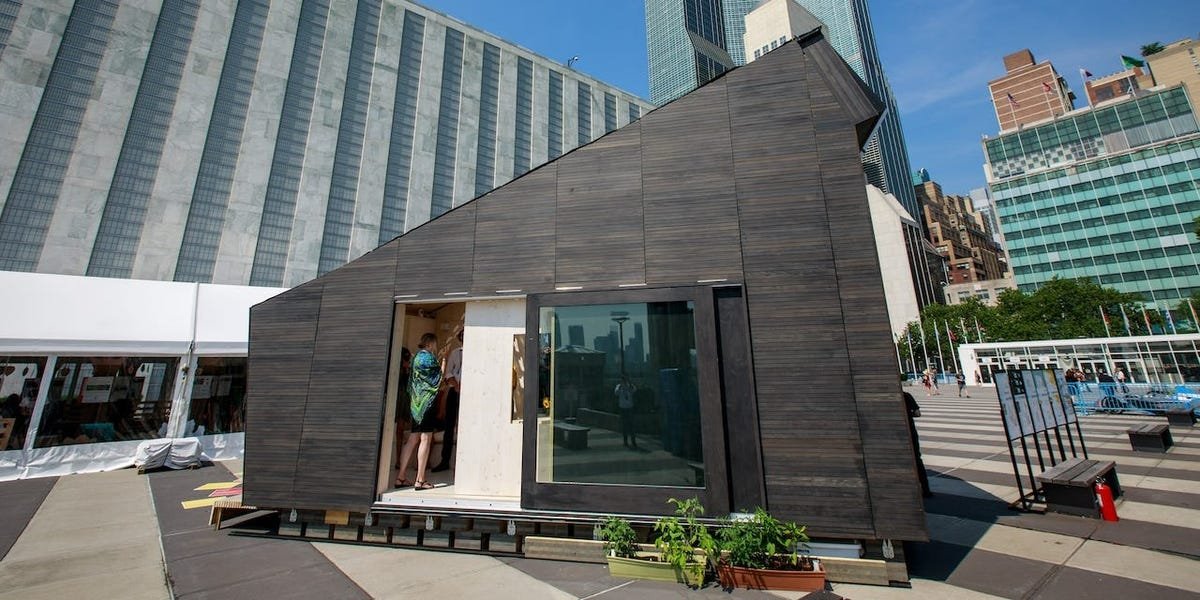
It’s open season for some New York City homeowners interested in building a tiny home in their backyard.

Under a sweeping zoning reform Mayor Eric Adams signed into law late last year, the city made it legal for certain one- and two-family homeowners to add an additional home, also known as an “ancillary dwelling unit” or ADU, to their property.

On September 30, 2025, the city finalized its rules for backyard and attic ADUs and began accepting applications from homeowners, although the government is still working on the rules for basement units. The city estimates that the reform — part of its City of Yes for Housing Opportunity package — will help create about 25,000 new homes in backyard cottages and converted garages, attics, and basements over the next 15 years. But the success of the reform will depend in large part on homeowners navigating high construction costs and regulations.

Wil Fisher has spent the last year preparing for this. The former city government employee founded a Queens-based firm, Unit Two Development, that helps homeowners determine whether their property is eligible for an ADU and connects them with contractors and others who can help them build one. Fisher said he and his team have identified well over 100,000 eligible individual properties, and they’ve talked with more than 100 of these homeowners, who largely live in Queens and Staten Island.

“The rules of the road are now written,” Fisher said. “It was a long process, but for the most part we’re off to the races.”

Most of the people Fisher has talked with are interested in adding an ADU to house a family member, including an aging parent or a relative with disabilities who needs care, or an adult child.

Maggie Ornstein is one of these homeowners. Ornstein, 47, lives with her mother in a house in western Queens that has been home to five generations of her family since the 1800s. She hopes to build an ADU for her mother, who’s undergoing treatment for cancer and is having difficulty navigating the stairs in their two-and-a-half-story home.

Ornstein, a public health geographer, has consulted with Fisher and determined that she could legally convert her garage into a home.

“My dream for an ADU on my property would be something that would be accessible, but might also have a second floor where a family member could potentially stay if they wanted to visit, or if I wanted to be with my mom in the ADU,” she said.

After months of planning and big picture discussions with potential clients, Fisher is starting to nail down the specifics of what his clients could build and what it might cost.

“Now is sort of the pivot from the conceptual to here’s exactly what it will take, and here are the cost implications of that,” he said.

Are you a New Yorker interested in building an ADU? Reach out to this reporter to share your experience at erelman@businessinsider.com.

Dealing with costs and regulations

One inevitable obstacle homeowners face is the steep price of building in the city. Fisher estimates that adding a backyard unit or converting a garage will start between $300,000 and $400,000, depending on the project’s size. That’s compared to the city’s median home price of $800,000.

The construction cost is out of reach for many homeowners who’d benefit most from adding an ADU to their property, said Thomas Yu, executive director of Asian Americans for Equality, an advocacy organization and affordable housing provider. Yu said there needs to be a much clearer and more affordable path to adding an ADU before the regulatory reform will unleash construction in lower and middle-income neighborhoods. He suggested tax abatements or grants for homeowners with more modest means.

Many of the New Yorkers Yu and his team work with live in overcrowded homes with multiple generations of their family. They could benefit from having a home for an older relative or an adult child who couldn’t otherwise afford to stay in the city.

“The ability for that generation to achieve independent homeownership is zero, particularly in New York City,” Yu said of younger New Yorkers. “So ADUs are the next half-step that’s needed for that.”

Ornstein said she’s been discouraged by the price tag on her potential project. She’s also turned off by how extensive and involved the construction would likely be, especially given her work schedule and caregiving responsibilities. She’s hoping to find some government funding to help pay for the project.

“It’s so much more expensive than I would have anticipated,” she said. “On the one hand, you wouldn’t be able to buy an apartment in New York City for what an ADU would cost to build. But on the other, it’s really a lot of upfront cost.”

The expense and hassle of adding an ADU might not make sense for homeowners who are just looking for rental income, Fisher said. But he expects the units will be easily rentable for those who want a tenant either immediately or in the future. Adding an ADU also tends to hike the property’s resale value.

“As far as I’m seeing, construction costs are a little too high for them to be a slam dunk rental investment from day one,” Fisher said. “But for folks who have a relative or an immediate need that exists within their own family or social network, these are going to be good investments in the long term.”

ADU construction is also limited by a slew of regulations. The units can’t be bigger than 800 square feet or take up more than a third of a homeowner’s backyard. The law also restricts basement ADUs in areas prone to flooding and prohibits them in attached homes, like townhouses.

The Regional Plan Association, a pro-housing nonprofit focused on the tri-state area, found that just 68,000 lots — 12% of the city’s one- and two-family properties — are eligible to add an ADU.

The city says it’s creating a “one-stop shop” full of information for homeowners interested in building an additional unit. The site will include a set of public, pre-approved backyard ADU designs submitted by architects, designers, and builders that homeowners can use to lower design costs and speed up the construction process.

“Efficiencies that can be built in are really going to be make or break for this market,” Fisher said.


Source link

To-build-muscle-you-need-a-de-load-week-Heres-how.jpeg

To build muscle, you need a ‘de-load’ week. Here’s how a powerlifting doctor strategizes rest for maximum gains.

Working hard in the gym without seeing results?

A short rest may help you break that plateau, according to a doctor who set state and national records in powerlifting.

Dr. Shernan Holtan, a hematologist and busy mom of two, has been lifting weights for over a decade. She hits the gym at 5:30 a.m. for an hour of training before heading to her day job as chief of blood and marrow transplant at Roswell Park Comprehensive Cancer Center.

Her key to avoiding physical burnout and keeping up gains: Every four to six weeks, she eases up on her training to let her body recover and build back stronger.

“You give yourself a break. Come back, lower the weight drastically for a week, and really just let your body soak up all of the stress that you just put it through to let it repair and heal,” she told Business Insider.

The strategic break is commonly referred to in the fitness world as a “de-load week.” It’s an evidence-backed way to smash through plateaus, reduce the risk of injury, and boost muscle and strength gains for everyone from elite powerlifters and bodybuilders to everyday athletes.


Dr. Shernan Holtan performing weighted lunges in the gym

Building weights is about challenging your muscles, then resting and recovering.

Roswell Park Comprehensive Cancer Center


For Holtan, deloads have enabled her to maintain steady progress for years, gradually building up the strength to squat 225 pounds (or more) for reps. In that time, she’s also started running and CrossFit, in addition to hiking, biking, and going to the gym (sometimes with her teenage daughter).

“I exercise every day, but I’m not doing crazy stuff every day,” she said.

Here’s how to know if you should take a deload, and the right way to rest for better fitness.

Why resting helps you build more muscle

Unless you’re a pro athlete, less can be more when it comes to exercise.

That’s because muscle and strength gains only happen during the rest periods between gym sessions. A good gym session can break down muscle fibers, prompting them to grow back stronger, but only if you provide them with the time and resources (energy in the form of sufficient calories and protein) to recover.

Holtan said to think of it as a slow and steady effort over time, rather than going all-out at the gym (and being too sore to come back).

“It’s little micro adjustments, tiny increases in weight, a few extra reps,” she said.

Then, over the weeks and months of training, a de-load can help your body to reset and keep making progress.

A de-load can also be a full rest from exercise, and can be a good idea during a vacation or holiday, so you can fully enjoy the time off.

When to take a de-load

The right time to take a rest can vary depending on your training and goals. Trainers typically recommend taking a break every four to 12 weeks.

The length of the rest can vary too.

If you’re consistently in the gym three times a week, you may only need a day or two to deload, and can go two or three months between breaks. Competitive athletes who train five or more days a week might benefit from longer breaks every month or two.

Holtan focuses on a specific goal for four to six weeks, then rests and repeats with a slightly different goal.


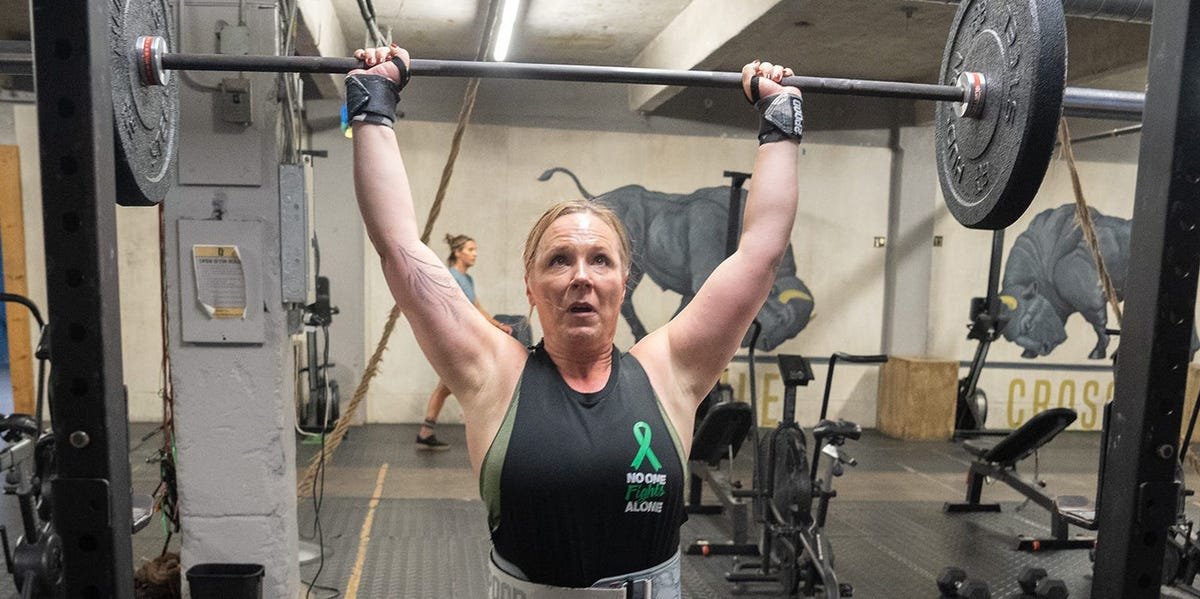
Dr Shernan Holtan lifting weights in the gym performing an overhead barbell press

Dr. Holtan said her training schedule prioritizes a specific rep range for four to six weeks, then she takes a break to recover.

Roswell Park Comprehensive Cancer Center


For instance, she might spend a month or so building up to a heavy one-rep max deadlift, bench press, and squat. After her deload week, she might focus on lifting moderate weight for more reps.

This is a type of training cycle known as periodization, which can help prevent athletes from overtraining or getting stuck in a rut.

Listening to your body can also signal that a rest might be beneficial.

If you’re just not enjoying the gym, struggle to finish a workout ,or need to foam roll the pain away, an extra rest day might be just what you need.


Source link

girl with brown hair and blue shirt smiling in front of plain white background

Burnout led me to build Bala — and caught up with me again as we grew. Here’s how I manage now.

This as-told-to essay is based on a conversation with Natalie Holloway, a 37-year-old cofounder of Bala, based in Los Angeles. The following has been edited for length and clarity.

The first time I recognized I was experiencing burnout, my husband and I left our advertising jobs and traveled without any set plans. This trip got me out of the nonstop grind mindset I’d functioned in for too long.

I came back to corporate work refreshed and inspired in October 2016. Our company, Bala, was supposed to be a side hustle, creating cute wrist and ankle weights inspired by our travels. We never imagined it would take off the way it did. I went full-time on Bala in 2019, and my husband joined in 2020.

After building the business for five years, we had to lay off our entire team due to the post-COVID-19 fitness industry downturn. I felt immediate burnout knowing the work that was ahead of me, but this time, I couldn’t take a year off to recover.

Having experienced burnout in multiple stages of my career, I now understand what it looks like, and I can navigate it effectively with the right tools and tactics.

I fell into advertising and burned out quickly without realizing it

After college, I landed a job in advertising and fell in love with that career path. As my career progressed, I would often stay at the office late into the night and miss 9 p.m. dinner reservations. I felt creatively inspired by what I was doing, but the hours were so long that I began to wonder what the point was.

My husband, whom I had met at work and just started dating, suggested that we quit our jobs to recover and travel, and I said yes. We were both experiencing burnout, and I didn’t even realize how bad it was until that moment.

We spent several months saving money and planning before leaving our jobs in March 2016.

We came up with the idea for Bala Bangles on our recovery trip

It was so freeing to leave with no real plan, but also scary. We didn’t have jobs, we didn’t have an income, and our résumés were not being built. But we did finally have the mental space to slow down, look around, and feel inspired.

One day, we were taking a yoga class in Indonesia, and the class was too easy; we wanted to work up a sweat. After the class, my husband, Max, had the idea for wrist and ankle weights that look like cute bracelets. We decided to try creating them when we returned.

This trip taught me that detachment is what helps the most when I’m feeling burned out, and that’s the easiest to achieve through time away from the source of my stress.

We came back and our side hustle became our full-time jobs, but then we had to rebuild again

We got back and both got new jobs in advertising, but started working on Bala on the side. We never thought it would be our full-time jobs, but it started growing.

Once we were carried in stores and had enough orders coming in, we felt we couldn’t keep up with both our corporate jobs and Bala. I left my advertising job first, and my husband followed a few months later.


Two people packing items at tables in a room with scattered boxes and a dog lying on the floor.

Shipping out Bala orders.

Courtesy of Natalie Holloway


Then the COVID-19 pandemic happened, and the fitness industry experienced a surge in demand. However, after the pandemic, the fitness industry experienced a decline, and we had to lay off our entire staff.

I was pregnant and felt like I didn’t have enough stamina to take on the work of 30 people. It was a really demoralizing time, and the burnout hit me immediately because all of our hopes and dreams were on the line.

The second time I experienced burnout, I had to confront my mindset

I was determined not to let burnout destroy my health during my pregnancy. This time, I focused on and learned the value of how I speak to myself.

During my second experience with burnout, I learned that giving myself a mantra helps ground my anxiety. Sometimes it’s something like ‘I’m calm, present, and have an abundance of time.’ Repeating this helps when I’m feeling overwhelmed and burned out.

I can’t control when stress creeps in, but I can control how I talk myself through it because my head is my reality, and I’m trying to create a positive one.


A woman stands holding baby in Bala store.

Natalie Holloway in the Bala store in Los Angeles.

Courtesy of Natalie Holloway


When we started rebuilding the business, my husband and I decided that no matter how long it took for the company to recover, we were determined to see it through to the end. We had to prepare for a marathon, not a sprint.

We’ve started regrowing our team back to its original size.

These small changes have made all the difference

I started working with a life coach, and that’s really helped. They’re helping me understand what’s on my to-do list that aligns with my values, which will give me energy, and what doesn’t align with my values, which will deplete my energy.

Although we can’t travel to cure burnout as we once did, I now take mini recovery trips, either for a weekend, a week, or a month, when I can. We sometimes visit Joshua Tree as a family to escape from LA, unwind, and mentally reset.

We also spend every July in Lakeside, Ohio. We don’t make any plans. It’s just our kids and us. We still do some work, but we’re able to meaningfully downshift our lives in a way that recharges us.

I always have my mantras going now, and I’ve learned how to feel comfortable being kind to myself. I realized that burnout is inevitable, but it’s about how I handle it. I try to prevent it by reminding myself that I’m working toward the long game.


Source link