
Im-an-American-who-moved-to-a-small-French-village.jpeg

I’m an American who moved to a small French village. I tried to adjust, but learned I wasn’t built for country living.

Growing up in a remote California suburb, I spent most of my childhood counting down the days until I could leave for a big city.

When the time came to move to New York for college, I was prepared to say goodbye to country living for good. I spent six years in New York, and then another four in Berlin.

Although I loved my experiences in both cities, I was exhausted. Years of apartment hopping, navigating dirty subways, and dealing with nonstop hustle left me craving a reprieve — and wondering why I’d been so quick to swear off a quainter life in the country.

So, when my husband proposed that we move to a little village near his family in France, I surprised myself by agreeing to give it a try.

This was in 2021, when COVID-19 restrictions were making it challenging to live in Berlin, and we were both desperate for the benefits that such a relocation could offer — like more square footage, a yard, and, most importantly, proximity to our loved ones and their support.

The reservations I had about residing in the country were still nagging me, but I figured things would be different this time. I was older, wiser, and doing it in beautiful France, of all places.

I wish I had listened to my gut, though, because all my old qualms with country living ended up rearing their ugly heads — and we ended up leaving after two years.

Without a driver’s license, I felt isolated by the lack of public transit


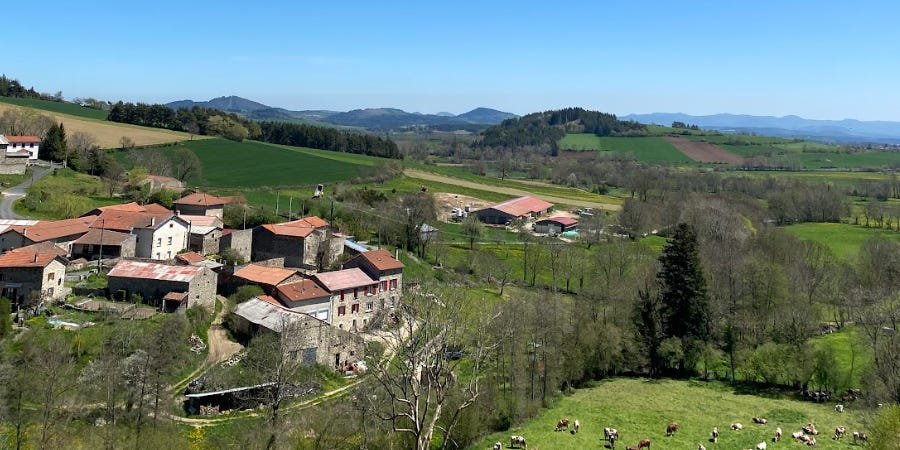
A shot of the French village where the author lived, featuring houses, fields, and a skyline.

I’d hoped my new home would be a bit more walkable.

Audrey Bruno


I never needed a driver’s license when I lived in cities, but that all changed when we moved to the French village. There, we simply couldn’t get around without a car — but we sure tried.

I knew going in that my public transportation options would be more limited than they were in a city, but I didn’t expect to be as isolated as we were.

When we first arrived, it took us over a month to work up the funds to buy a car. In the meantime, we attempted one very hilly bike ride, but had to call it quits before we’d even made it halfway to our destination.

Walking was no better — it took hours to get to the nearest shops, and sometimes they wouldn’t even be open when we finally arrived.

Even after we obtained a vehicle, I couldn’t navigate on my own without my husband, since he was the only one with a license.

He was always willing to drive me around, but I was frustrated by my newfound lack of independence. I considered getting a license of my own, but the cost of driving school was out of our budget at the time, so it really seemed like there was no way out of the situation I’d gotten myself into.

I wasn’t prepared for the demands of caring for a house after years of apartment dwelling


A snow-covered house in a French village.

Years of living in apartments didn’t prepare me for the hard work of cleaning and maintaining a house.

Audrey Bruno


Apartment life certainly has its drawbacks, but extra square footage comes with pitfalls, too.

We loved that our rental home gave us the newfound ability to stretch out and make noise without bothering each other. The downside, though, was that it was up to us to care for and maintain all that extra space.

It wasn’t just the house, either — it was also our responsibility to tend to the adjoining garden, barn, and the attached horse stables. It was a full-time job’s worth of work, and I started to miss the days when I could clean my whole apartment in just an afternoon.

Living without any takeout options was harder than I expected

Normally, I’m a proponent of cooking as much of my own food as possible, but I at least like to have the option of ordering in or eating out — especially on days full of chores and work.

Unfortunately, getting to the closest takeout restaurant took an hour round-trip, and delivery applications like Uber Eats didn’t service our small village.

What’s more, our dining options were severely limited compared to what we’d had in Berlin. I realized that I missed trying different cuisines and checking out new restaurants, and even when cooking,

I didn’t have access to the same wide variety of ingredients that I’d had in the city. One example was sesame oil — if I wanted to use this pantry staple in a recipe, I’d have to go to a big city to find it.

Connecting with neighbors wasn’t easy

Our village was extremely small — as of 2020, the population was under 400 — and many of the people I met were much older.

Needless to say, our rhythms and beliefs didn’t always match up. We often had debates over everything from politics to local initiatives — like what to do with all the feral cats — and it wasn’t always easy to argue my point in my then-limited French.

Since most folks in Berlin are fluent in English, I’d never been up against such a language barrier before. All that and more made it challenging to form true connections and further contributed to my feelings of isolation.

That said, there were things I missed about country life once I left


The writer standing outside, holding up lettuce she grew.

When I lived in the countryside, I got to grow my own fruits and vegetables.

Audrey Bruno


Despite all my frustrations, there were a few great things about living in the French countryside.

For starters, it really is beautiful, and being there allowed me to grow my own fruit and vegetables, forage wild blackberries in the forest, and perfect my French with the folks in town who were willing and patient enough to help me out.

After two years, we ended up moving to Lyon, the nearest city, because it offered the best of both worlds. At only 84 miles away, we’d have proximity to my husband’s family and access to nature, plus all the advantages of living in a major city.

I’ll always remember the beautiful memories from my time in the village — but I’ll also always prefer to reminisce about them from an apartment in a city.


Source link

Anthropic-says-its-buzzy-new-Claude-Cowork-tool-was-mostly.jpeg

Anthropic says its buzzy new Claude Cowork tool was mostly built by AI — in less than 2 weeks

Anthropic’s new working agent was largely built by Claude itself — the latest example of AI coding tools speeding up product development.

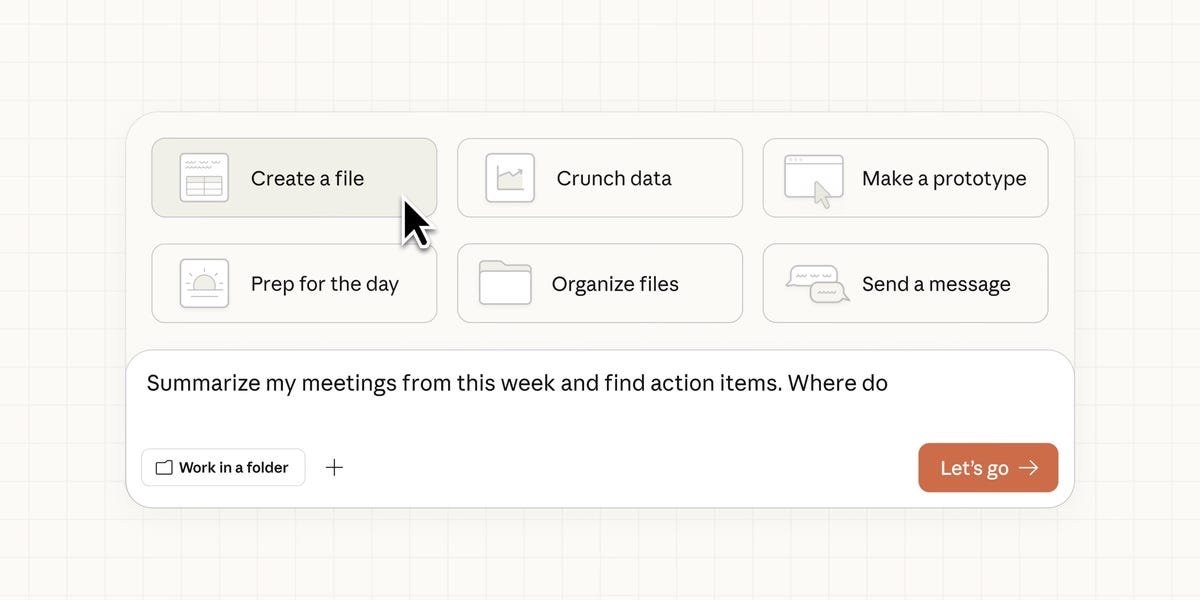
On Monday, Anthropic announced the release of Cowork, a “more approachable” AI tool accompanying Claude Code that’s geared toward fulfilling users’ requests that are unrelated to programming. Users grant the agentic AI tool access to specific files on their computer and prompt it to complete tasks.

Boris Cherny, head of Claude Code, said that Anthropic’s AI coded “pretty much all” of Cowork.

“@claudeai wrote Cowork,” Product Manager Felix Rieseberg wrote on X. “Us humans meet in-person to discuss foundational architectural and product decisions, but all of us devs manage anywhere between 3 to 8 Claude instances implementing features, fixing bugs, or researching potential solutions.”

As a result, Rieseberg said the first edition of Cowork came together quickly.

“This is the product that my team has built here, we sprinted at this for the last week and a half,” he said during a livestream with Dan Shipper.

Over the holidays, Rieseberg said that Anthropic saw its customers using Claude for an increasing number of non-coding-related tasks.

“This sort of like the research preview, very early Alpha, a lot of rough edges, as you’ve already seen, right?” he said.

Cowork is initially available to Claude Max subscribers on the Mac app.

The launch has made a splash in the tech world, with many online users praising the product and its accessibility.

“I think that’s a really smart product,” Datasette co-creator Simon Willison wrote in a blog about his experience. “Claude Code has an enormous amount of value that hasn’t yet been unlocked for a general audience, and this seems like a pragmatic approach.”

“This is big,” Reddit cofounder Alexis Ohanian wrote on X.

Because granting an AI agent access and the ability to take action on specific computer files comes with risk, Anthropic cautions that Cowork users should be careful.

“By default, the main thing to know is that Claude can take potentially destructive actions (such as deleting local files) if it’s instructed to,” the company said. “Since there’s always some chance that Claude might misinterpret your instructions, you should give Claude very clear guidance around things like this. “

The latest in a flurry of AI announcements

AI companies wasted no time in launching new offerings and partnerships to kick off the new year.

On Sunday, Anthropic announced Claude for Healthcare, a major addition to its healthcare and life sciences offerings. Its release came on the heels of rival OpenAI signaling its investment in the healthcare space with ChatGPT Health.

Amid AI bubble chatter and scrutiny on the increasing AI investments made by tech companies, Anthropic CEO Dario Amodei has argued that Anthropic has built a more sustainable business model that allowed it to make more educated bets on its future build-out. While he did not name OpenAI or CEO Sam Altman directly, he made some thinly veiled criticisms of his former company throughout the event.

“I think because we focus on enterprise, I think we have a better business model,” Amodei said at The New York Times’ Dealbook Summit. “I think we have better margins. I think we’re being responsible about it.”

Google, which some experts saw as overtaking OpenAI at the end of 2025, announced a major deal with Apple to have Gemini power Siri’s artificial intelligence capabilities.


Source link

Matthew Loh Headshot

NATO allies are buying this rugged 6×6 armored vehicle built in Finland for Arctic war

Alarms blare over the factory floors, and work at Patria’s Hämeenlinna facility grinds to a halt.

The soft thrum of an explosion echoes through the campus. Moments later, roughly 700 workers continue making their armored vehicles bound for Japan, Sweden, Slovakia, and other countries. The blast is not a test-firing of its new combat vehicle, but part of the construction for its expanding manufacturing facility.

Patria, Finland’s largest defense company, is planning to nearly double production at its main hub just north of Helsinki, clearing rocks with explosives on-site to make way for several new assembly lines.


Construction crews clear rocks at Patria's factory campus.

Construction crews are paving the way for a new assembly line in Patria’s Hämeenlinna facility.

Matthew Loh for Business Insider


The Hämeenlinna factory manufactures Patria’s 8×8 armored personnel carrier and a relatively new, up-and-coming vehicle: a wheeled 6×6 troop transport that’s receiving surging demand from northern and western Europe.

Work on the 25-foot-long, 17-ton vehicle began in 2020 under a joint program between Finland and Latvia called the Common Armored Vehicles System. Both countries sought a cost-effective, mass-produced armored vehicle that could be used by their militaries for interoperability.

Latvia has since sent at least 42 of these vehicles to Ukraine, armed with heavy machine guns and rolled out in batches over the last year. The vehicle can cross tundra and even rivers while shielding up to 10 troops it carries from land mines and artillery fire to get them to forward positions.


Soldiers stand to attention next to the Latvia and Ukrainian flags, placed before a row of 6x6s.

Latvia handed over 21 of its promised Patria 6×6 vehicles to Ukraine in November.

Alexander Welscher/picture alliance via Getty Images


When Business Insider visited Patria’s factory, representatives for the company — which is majority-owned by the state of Finland — said the firm wasn’t authorized to share details about the 6×6’s performance in Ukraine.

But the CAVS 6×6 program has been quickly drawing attention from the rest of Europe: What began as a partnership between two countries has expanded into a consortium of seven member states.

Sweden joined the Common Armored Vehicles System program in 2022, followed by Germany, Denmark, the UK, and Norway in subsequent years.

Finland and Latvia have placed orders for just under 500 of these vehicles, while Sweden has requested 415 of the 6×6s to be delivered over the next five years. Stockholm’s latest order for 94 vehicles, announced in early December, priced each one at about $1.75 million.

Germany has become the program’s largest buyer, signing contracts in mid-December to acquire 876 of the 6×6 vehicles, valued at $2.3 billion. These vehicles will be split into four variants, including one that features a mortar turret.

Meanwhile, Denmark, which joined the program this year, has already placed an order for 129 6×6 vehicles.

The UK and Norway are still negotiating 6×6 orders with Patria.

Inside the CAVS 6×6

The CAVS 6×6 can accommodate roughly 10 troops, along with a typical crew of two or three, and features up to NATO standard level 4 armor designed to withstand direct hits from large-caliber machine gun fire, mine explosions, and nearby artillery blasts.

The CAVS 6×6 competes with other wheeled troop transports, such as Rheinmetall’s Boxer and General Dynamics Land Systems’ Stryker, the latter of which is extensively fielded by the US Army.

The Finnish company said it can tweak the vehicle for each customer’s needs, but a typical model features climate control that enables the vehicle to operate in temperatures as low as -40°F.

“Inside, it will be comfortable enough to easily survive. We are talking about temperatures of the plus centigrades,” Mikko Rantanen, Patria’s director for 6×6 vehicle programs, told Business Insider from inside the rear compartment of one of the vehicles.


The interior of Patria's 6x6 can be seen from the rear.

Patria’s 6×6 can sit roughly 12 to 13 people total.

Matthew Loh for Business Insider


The 6×6’s rear interior is spartan: Cloth-covered metal-frame seats and headrests for five people on either side, with space behind each seat for equipment and small arms.

There’s just enough room for a soldier to sit with their knees touching the opposite passenger’s. A few fire extinguishers inside are connected to an automatic suppression system that can detect a blaze in the rear cabin.


The interior of a Patria 6x6.

The interior of Patria’s 6×6 features a relatively simple design, with metal seats and storage compartments for firearms and equipment.

Matthew Loh for Business Insider


Screens allow troops to see outside the vehicle through exterior cameras, while a rear hatch provides the option of fitting a machine gun or crewed weapon module on top of the 6×6.

On the right-hand side of the vehicle, a small passageway also lets troops pass between the rear compartment and the driver’s cabin, which resembles that of a truck and features an automatic gearbox.


The driver's cabin of the Patria 6x6.

The driver’s cabin of the 6×6 is like that of a truck’s. The vehicle is driven in auto.

Matthew Loh for Business Insider


Optional propellers on the 6×6’s underside enable it to transition seamlessly from traversing land to crossing small bodies of water, such as rivers or lakes.

“We can enter the water without needing preparation in this configuration,” said Rantanen.


Propellers on the underside rear of the Patria 6x6.

A showcase vehicle of the Patria 6×6 sports propellers for when crews have to move the APC through water.

Matthew Loh for Business Insider


However, the 6×6’s speed in the water is just under 5 mph, and Rantanen added that it’s not meant to be a landing craft or amphibious assault vehicle.

On land, it’s designed to drive at speeds of over 60 mph, easily cross trenches that are four feet wide, and surmount obstacles about two feet high.


The interior of the Patria 6x6, facing the front.

Screens in the 6×6 show what’s happening outside the vehicle. The passageway here leads to the driver’s cabin.

Matthew Loh for Business Insider


Moving fast in the Arctic

Building weapons and vehicles specifically for arctic terrain is a specialty for contractors in Finland, a country renowned for holding off the Soviet Union for over 100 days in deep snow and dense forest during World War II.

Patria said that while the 6×6 can be outfitted for various terrain types, including the desert, the arctic domain is its forte.


A Patria CAVS 6x6 rolls through mud in the snow.

The CAVS 6×6 is designed to cross both snow and marsh terrain.

Patria


Snow isn’t the only challenge in arctic warfare. Few roads are available on Finland’s border with Russia — the priority threat for NATO — and its vast hinterland is peppered with thousands of small lakes and marshland that can bog down armored transport.

“In the wintertime, it’s snow,” said Petri Hepola, Patria’s executive vice president for sales and marketing and its chief program officer for the F-35. “In the summer, lots of wet soil and swampy areas. One of the most important features is how fast you can move your troops and tools through these areas.”


Patria's CAVS 6x6 kicks up mud as it navigates a wet road.

The wet terrain in the summertime for northern regions means the 6×6 has to be capable of moving fast in both mud and snow.

Patria


Finland and Norway are the only two members of Patria’s 6×6 program that share Arctic borders with Russia.

However, as northern Europe, especially the Baltic and Nordic states, grows increasingly concerned about conflict with Moscow, the Kremlin has been bolstering its military presence in the high north, repopulating key bases and transforming its Arctic fleet into a separate strategic theater.

Since Finland joined NATO in 2023, alliance forces have been rushing to train on the country’s terrain and frigid temperatures, making it one of the most active spots for joint exercises in recent years.

“Our products have been surviving very well in that environment,” Hepola said.

Gearing up for 2027

With an order backlog of nearly 2,000 6×6 vehicles, Patria hopes its new facility in Hämeenlinna will be ready for production by 2027. The factory campus serves only the tail end of the entire manufacturing cycle, which can take weeks in most cases, or several months for more complicated variants.

Inside, hundreds of workers conduct welding, surface treatment, assembly, tests, and other final processes that can each take weeks to complete. Dozens of vehicles line the factory floors, and dozens more sit in parking lots, each marked with a flag to designate the country for which it has been modified.


Patria armored vehicles are seen on the factory floor of a production facility in Latvia.

Patria vehicles are seen during the official opening ceremony for a new production facility in Latvia in 2024.

GINTS IVUSKANS/AFP via Getty Images


Before delivery, each one is supposed to be driven at least 200 km, or 124 miles.

Rantanen, director of the 6×6 program, said Patria has been integrating counter-drone systems, such as jammers, on the vehicle.

Armored vehicles in Ukraine have especially struggled against pervasive minefields and small drones with explosive payloads, some of which are controlled via a fiber optic cable connection that can’t be jammed. In response, soldiers there have relied more on firearms such as shotguns and machine guns to counter such attacks.

Rantanen said Patria hasn’t yet officially added any kinetic weapons that can take down drones.

“The drone threat is currently evolving at such a speed that it’s hard to keep track of it closely,” he said. “But we are hard at work for the countermeasures against drones as well.”


Source link