
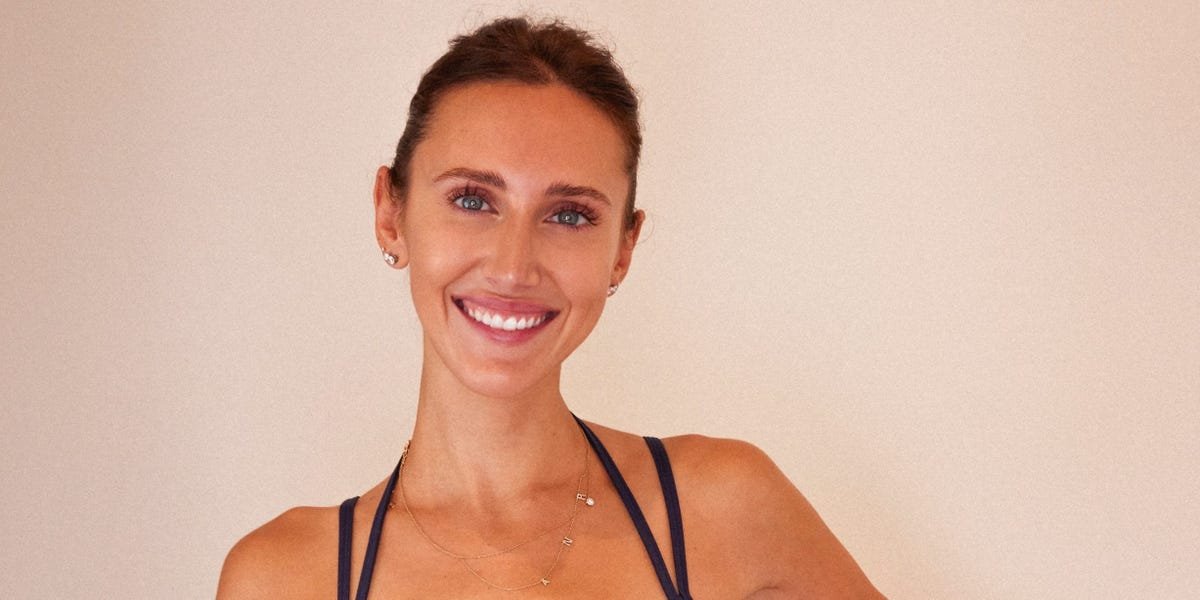
Woman-started-Pilates-studio-after-getting-burned-out-from-venture.jpeg

Woman started Pilates studio after getting burned out from venture job

This as-told-to essay is based on a conversation with Anna Noelle Rinke, the 30-year-old Austin-based founder of Homebody Studios. Her previous employment and identity have been verified by Business Insider. The following has been edited for length and clarity.

I have an engineering background, and I worked in tech for the first portion of my career. I started an AI software company that was part of IBM’s intrapreneur program. It made me realize I love entrepreneurship, but I wanted to learn a lot more. And then I was most recently a chief of staff to a major venture investor in Austin.

I absolutely loved the job. We were running a million miles a minute and I went into this job knowing it would be very intense and “on” all the time. But I was not getting enough sleep. I was not eating full meals. And I was putting more stress on myself than was even necessary.

I felt like if I continued to treat my body this way, there would be some repercussions. I was a cog in the machine that was an incredible company, but I got burned out.

Roughly 18 months ago, I left my job in venture capital and started a Pilates brand.

I’ve been a Pilates lover for seven years, and after I quit, it was the first time in my life I could explore it in a deeper way. I never had the time previously to get any form of fitness certification and I did that after quitting and fell in love. I started teaching privately and then I met my founder at a Pilates class.

She was the director of marketing at a fashion brand, already had a Pilates studio, and knew how to build a brand. I have the operational background and already founded a startup. I knew how to run a team and scale.

So we decided to come together. It was weird to go from working in such technical areas to telling everyone that I’m doing Pilates now. It was a big shift — and a big ego death.

I don’t have to always say “yes”

We opened our first location in November 2024, and we now have four. I took a lot of lessons from my time in corporate about how to communicate effectively and approach systems and teams. We’re scaling like a tech company — but still maintaining our health and relationships and the important things along the way.

The workload is more than I had before, but it’s different. My cofounder and I can make the call if we want to say “yes” or “no.”

If an event or brand deal comes up but we’ve been back-to-back for weeks, it’s up to us to have the discernment to say, “Is this really worth it? Is this more important than our health and our option to rest right now?”

When I was an employee at a company, I had free will to say “no,” but my nature was to say “yes.” Now as a leader, I’m leaning into slowing down. I’m also thinking about my team and not wanting them to experience the things that I had to put myself through.

As a cofounder, I also have the autonomy to run an errand in the middle of the day. As an employee, you can’t do that, unless it’s part of the company culture, which it’s usually not. I also have the autonomy to eat a full meal in between meetings, rather than just a protein bar. I’m able to balance health and relationships with my work.

It doesn’t feel like work

At my AI startup, I worked roughly nine-hour days. The chief of staff job was typically 12 hours, although we had a light season, so I would work eight-hour days during the summer.

Now I work about 10 hours on weekdays, but sometimes it can creep to 12, and other times it’s only six. That includes me taking a class, though, where I’m still kind of working. I also work on weekends, about four or five hours a day, unless we have an event and it’s more.

A lot of days, I finish up at 6 p.m., eat dinner, and go back on my computer until bed. We have studios in Texas and California, so we work across multiple time zones.

I feel so aligned with what I’m doing right now that it doesn’t feel like work. I feel like I always heard people say that and I didn’t understand. I love what I do so much and I love seeing how we’re helping people with their mental and physical goals. I could work 20 hours a day and it wouldn’t drain me.

To feel so rewarded by work always felt like such a fairy tale — honestly like propaganda — but it’s real once you feel like you’re doing something that you’re meant to be doing.


Source link

Women-at-the-top-are-exhausted-and-burned-out-according.jpeg

Women at the top are exhausted and burned out, according to a McKinsey and Lean In report

Women are hitting the top of the corporate ladder only to find something waiting for them: exhaustion.

According to a report published Tuesday by McKinsey and LeanIn.org, a nonprofit founded by Sheryl Sandberg, burnout among senior-level women is the highest it has been in the past five years.

Around 60% of these women said they have frequently felt burned out at work in the past few months, compared with 50% of senior-level men, per numbers from the “Women in the Workplace” 2025 study.

Women who are newer to leadership roles are feeling the strain more acutely. Among senior-level women who have been at their companies for five years or less, 70% reported frequent burnout, and 81% said they are concerned about their job security.

“These high levels of concern align with research that shows women often face extra scrutiny when they’re new to organizations and have to work harder to prove themselves,” the report said, adding that Black women in leadership face exceptionally high burnout and job insecurity. “In contrast, when women and men in leadership have longer tenures, their levels of burnout and job security are quite similar.”

The report, an annual study of women in corporate America, surveyed 9,500 employees across 124 companies between July and August. The study also includes interviews with 62 HR executives and company-reported data from 124 organizations that together employ about 3 million people.

LeanIn.org launched a study with McKinsey in 2015 to track how women progress through the corporate pipeline and where companies fall short. The group is named after Sandberg’s 2013 book “Lean In,” which sparked a national debate about women’s ambition, leadership, and workplace equality.

This year’s findings paint a bleak picture for women at the top. Senior-level women who are hesitant to advance their careers say they see a steeper path forward compared to their male counterparts. Eleven percent of senior women who don’t want to advance say they don’t see a realistic route to promotion, compared with 3% of senior men. And 21% say more senior-level people look burned out or unhappy, nearly double the share of men who say the same.

It’s not because women are less committed — the report found that women and men are equally locked in. What differs is the desire to keep climbing, per the report.

The data shows a clear ambition gap: 80% of women want to be promoted to the next level, compared with 86% of men. That gap is widest at the beginning and the top of the pipeline — 69% vs. 80% at the entry level, and 84% vs. 92% among senior leaders.

This is the first time in the report’s 11-year history that women have shown lower interest in promotion than men, it said.

This gap in ambition to advance falls away “when women receive the same career support that men do,” the report added. In other words, companies are responsible for creating the burnout problem for women.

“This is only happening in the companies that aren’t doing the right thing when women get the full support and the same stretch opportunities. They’re not leaning out at all,” Sandberg said in a Tuesday interview with Bloomberg Television.

“What’s happening is that women face more barriers at every level of the career,” she added.

More companies are cutting back on DEI and support for women

Even as companies say they are committed to diversity and inclusion, at least one in six have reduced the teams or resources behind those efforts, the report said.

About 13% of employers have pulled back or eliminated women-focused career-development programs, and another 13% have cut formal sponsorship programs, which play a key role in helping employees advance, it added.

“Women overall are less likely to have sponsors — and this really matters. Employees with sponsors are promoted at nearly twice the rate of those without,” the report said.

The report also found that companies are rolling back remote and flexible work options, which can hinder women’s ability to stay and advance in their careers. One in four has scaled back remote or hybrid work arrangements, and 13% have reduced flexible working hours over the past year.

At the same time, the report said that women who work remotely most of the time are “less likely to have a sponsor and far less likely to have been promoted in the last two years than women who work mostly on-site.” Meanwhile, men receive more similar levels of sponsorship and promotions regardless of their work arrangement.

At the entry level, a stage where advocacy and visibility are essential, women are also less likely than men to receive stretch assignments and other opportunities, the report added.

Last year, the “Women in the Workplace” study found that more women were advancing to senior leadership roles. By 2024, women held 29% of C-suite roles, up from 17% in 2015.

However, progress fades at the entry and management levels, per the report. “For every 100 men promoted to manager in 2018, 79 women were promoted. And this year, just 81 women were,” it added.


Source link