
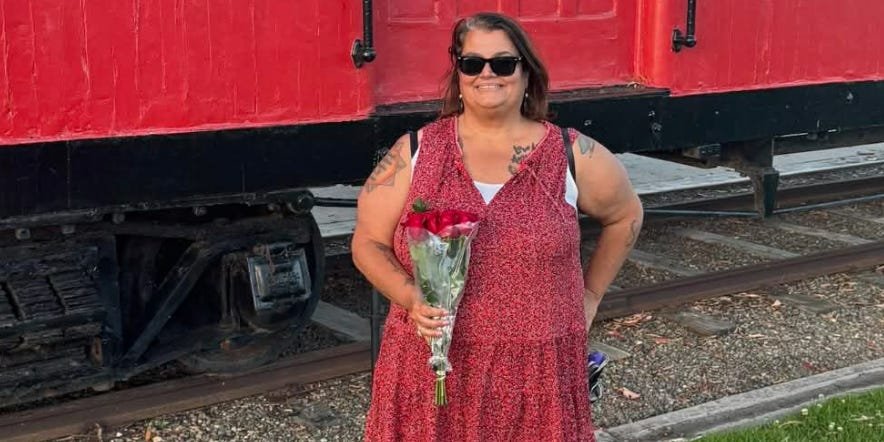
My-income-dropped-to-less-than-12000-after-burnout-caused.jpeg

My income dropped to less than $12,000 after burnout caused my health to collapse. I had to learn how not to overwork myself.

For most of my career, I relied on pushing through. I built a reputation for delivering under pressure, often pulling things together at the last minute and performing at a high level. That pace came with a cost: long work hours, inconsistent sleep, and a constant sense that I had to stay ahead of everything.

For a while, it worked. Then, last spring, my body stopped cooperating.

After receiving full payment from a new client — the kind of moment that normally would have felt like relief — I found myself on the bathroom floor, crying and unable to respond to messages or continue working.

I didn’t understand what was happening. It would take the better part of a year to begin to make sense of what my body was trying to tell me.

Before the crash, success did not feel stable

From the outside, my life looked successful.

I had been an entrepreneur for more than a decade, written books, and given a TEDx talk. At my peak, I brought in over $140,000.

But it never felt like enough. No matter how much I earned or accomplished, I lived with a constant sense of pressure — always anticipating the next problem, the next demand, or the next thing that could go wrong.

Looking back, I can see that I built my life around overwork. I was burning the candle at both ends, working at all hours, and ignoring the signals my body was sending me.

What I thought was resilience was often something else: pushing past my limits to meet expectations, both external and internal.

My health and housing became unstable

After that moment on the bathroom floor, things intensified.

I began experiencing severe physical symptoms, including intense pain, recurring headaches, digestive issues, and periods of exhaustion that made it nearly impossible to function. At times, the pain felt serious enough to warrant emergency care.

From the outside, these “episodes” may have looked like mental health issues. But in my body, it was deeply physical.

I did seek medical care, but my tests came back normal, even though my body did not feel normal.

At the time, I was renting a room in a shared home with a warm, multigenerational family. The house was lively and full of activity — beautiful in many ways — but overwhelming for a nervous system already overloaded.

As my symptoms became more visible, they drew more attention than I could manage.

A few days later, I left. Around 8 p.m., I packed a laundry basket of clothes, along with some pillows and blankets, into my SUV and drove away without a clear plan.

Over the following months, my living situation was precarious. I no longer had a home base or even a room to return to. My belongings were spread across multiple storage locations, and my car became a place where I felt some sense of safety.

Through a connection, I was able to rent an Airbnb by the beach for $50 a day for a period of time. I also stayed in hotels, spent time in parks, and slept in my car on some nights.

Because income was secondary to survival, it dropped to less than $12,000 for the year.

How I got through it

When people hear my income dropped that low, they usually ask the same question: How did you survive?

The answer is that I stopped trying to do everything alone.

Throughout my life, I was fiercely independent out of necessity. I was the person who handled problems and made chaos work. Accepting support did not come naturally to me.

That season taught me something different. I had always believed in God, but this was the first time I had to rely on that belief in a real, daily way. I didn’t always know how things would come together, but I learned to trust and surrender in a way I never had before.

I also met someone who became my partner, and our stable relationship became an important source of stability during a time when very little was stable.

Through our relationship, I experienced a felt sense of safety in my body for the first time in my life. It also showed me how unfamiliar it was for my body to receive something good without immediately preparing for loss, pressure, or payback.

What I learned about resilience

Over the following year, as I began paying closer attention to my body instead of overriding it, I started to see a pattern.

What I experienced was not just because of burnout. It was the accumulation of years of operating in a constant state of pressure and hypervigilance. It was a system-wide depletion under chronic stress, trauma adaptation, and sustained circumstantial load.

For most of my life, resilience meant enduring difficult environments and making them work.

What I began to understand instead was the difference between surviving and being in environments — and relationships — where there was genuine safety, resonance, and reciprocity.

I’m rebuilding my life and career in a way my body can actually sustain, and I’m no longer doing it alone. I don’t have a stable home, and I’m still building my career back to where it once was.

From the outside, a year where my income dropped below $12,000 might look like failure.

But for me, it became the year I stopped measuring resilience by how much I could endure — and started defining it by whether my life was something my body could actually sustain.


Source link

cherylt_headshot

Critical Role’s chief creative officer, Matt Mercer, explains how he avoids burnout

Critical Role’s chief creative officer, Matthew Mercer, had been spearheading his eight-member crew’s relentless push into the big leagues of nerdworld for 10 years.

That was until this July, when he announced that he’d be giving up control of one of the crew’s biggest priorities, their long-running “Dungeons & Dragons” Twitch livestream.

In an August appearance on the podcast “Crispy’s Tavern: Tales and Tea,” Mercer said he’d felt the threat of burnout and thought he needed a break. He said he’d started to feel a “continuous need to produce creatively,” which was “a very draining and very scary thing.”

To be sure, Mercer and his seven cofounders still have a full slate of projects to work on. That includes an ongoing sold-out arena tour, as well as two Amazon-backed animated series on Prime Video. Mercer also has a key role in the team’s game publishing arm, Darrington Press, home to “Daggerheart,” their flagship game and their answer to “D&D.”

Still, Mercer says, it’s important to be able to admit when you’re done, and to give yourself permission to step away from the work for as long as you need to.

“My biggest advice for burnout is to acknowledge when you’re at the edge and take every opportunity you can to step away and replenish your cup,” Mercer told Business Insider.

Brennan Lee Mulligan of “Dimension 20” fame, Mercer’s longtime friend and collaborator, is the game master for Campaign Four, the team’s ongoing “D&D” stream. Mulligan taking over the main stream means Mercer is no longer solely in charge of captaining the team’s regular episodes, which often run to the four-hour mark.

“There’s this concept, the idea that just pushing through and sometimes necessity requires you to do that to a certain point,” Mercer said.

“But I find walking away and taking some time to enrich your creative input means that whatever time you lost beating your head against the wall will be more than made up for when you can return from a place of genuine inspiration and renewal,” Mercer added.

Campaign Four airs on Beacon, Critical Role’s in-house streaming platform, as well as on Twitch and YouTube.


Source link

girl with brown hair and blue shirt smiling in front of plain white background

Burnout led me to build Bala — and caught up with me again as we grew. Here’s how I manage now.

This as-told-to essay is based on a conversation with Natalie Holloway, a 37-year-old cofounder of Bala, based in Los Angeles. The following has been edited for length and clarity.

The first time I recognized I was experiencing burnout, my husband and I left our advertising jobs and traveled without any set plans. This trip got me out of the nonstop grind mindset I’d functioned in for too long.

I came back to corporate work refreshed and inspired in October 2016. Our company, Bala, was supposed to be a side hustle, creating cute wrist and ankle weights inspired by our travels. We never imagined it would take off the way it did. I went full-time on Bala in 2019, and my husband joined in 2020.

After building the business for five years, we had to lay off our entire team due to the post-COVID-19 fitness industry downturn. I felt immediate burnout knowing the work that was ahead of me, but this time, I couldn’t take a year off to recover.

Having experienced burnout in multiple stages of my career, I now understand what it looks like, and I can navigate it effectively with the right tools and tactics.

I fell into advertising and burned out quickly without realizing it

After college, I landed a job in advertising and fell in love with that career path. As my career progressed, I would often stay at the office late into the night and miss 9 p.m. dinner reservations. I felt creatively inspired by what I was doing, but the hours were so long that I began to wonder what the point was.

My husband, whom I had met at work and just started dating, suggested that we quit our jobs to recover and travel, and I said yes. We were both experiencing burnout, and I didn’t even realize how bad it was until that moment.

We spent several months saving money and planning before leaving our jobs in March 2016.

We came up with the idea for Bala Bangles on our recovery trip

It was so freeing to leave with no real plan, but also scary. We didn’t have jobs, we didn’t have an income, and our résumés were not being built. But we did finally have the mental space to slow down, look around, and feel inspired.

One day, we were taking a yoga class in Indonesia, and the class was too easy; we wanted to work up a sweat. After the class, my husband, Max, had the idea for wrist and ankle weights that look like cute bracelets. We decided to try creating them when we returned.

This trip taught me that detachment is what helps the most when I’m feeling burned out, and that’s the easiest to achieve through time away from the source of my stress.

We came back and our side hustle became our full-time jobs, but then we had to rebuild again

We got back and both got new jobs in advertising, but started working on Bala on the side. We never thought it would be our full-time jobs, but it started growing.

Once we were carried in stores and had enough orders coming in, we felt we couldn’t keep up with both our corporate jobs and Bala. I left my advertising job first, and my husband followed a few months later.


Two people packing items at tables in a room with scattered boxes and a dog lying on the floor.

Shipping out Bala orders.

Courtesy of Natalie Holloway


Then the COVID-19 pandemic happened, and the fitness industry experienced a surge in demand. However, after the pandemic, the fitness industry experienced a decline, and we had to lay off our entire staff.

I was pregnant and felt like I didn’t have enough stamina to take on the work of 30 people. It was a really demoralizing time, and the burnout hit me immediately because all of our hopes and dreams were on the line.

The second time I experienced burnout, I had to confront my mindset

I was determined not to let burnout destroy my health during my pregnancy. This time, I focused on and learned the value of how I speak to myself.

During my second experience with burnout, I learned that giving myself a mantra helps ground my anxiety. Sometimes it’s something like ‘I’m calm, present, and have an abundance of time.’ Repeating this helps when I’m feeling overwhelmed and burned out.

I can’t control when stress creeps in, but I can control how I talk myself through it because my head is my reality, and I’m trying to create a positive one.


A woman stands holding baby in Bala store.

Natalie Holloway in the Bala store in Los Angeles.

Courtesy of Natalie Holloway


When we started rebuilding the business, my husband and I decided that no matter how long it took for the company to recover, we were determined to see it through to the end. We had to prepare for a marathon, not a sprint.

We’ve started regrowing our team back to its original size.

These small changes have made all the difference

I started working with a life coach, and that’s really helped. They’re helping me understand what’s on my to-do list that aligns with my values, which will give me energy, and what doesn’t align with my values, which will deplete my energy.

Although we can’t travel to cure burnout as we once did, I now take mini recovery trips, either for a weekend, a week, or a month, when I can. We sometimes visit Joshua Tree as a family to escape from LA, unwind, and mentally reset.

We also spend every July in Lakeside, Ohio. We don’t make any plans. It’s just our kids and us. We still do some work, but we’re able to meaningfully downshift our lives in a way that recharges us.

I always have my mantras going now, and I’ve learned how to feel comfortable being kind to myself. I realized that burnout is inevitable, but it’s about how I handle it. I try to prevent it by reminding myself that I’m working toward the long game.


Source link