
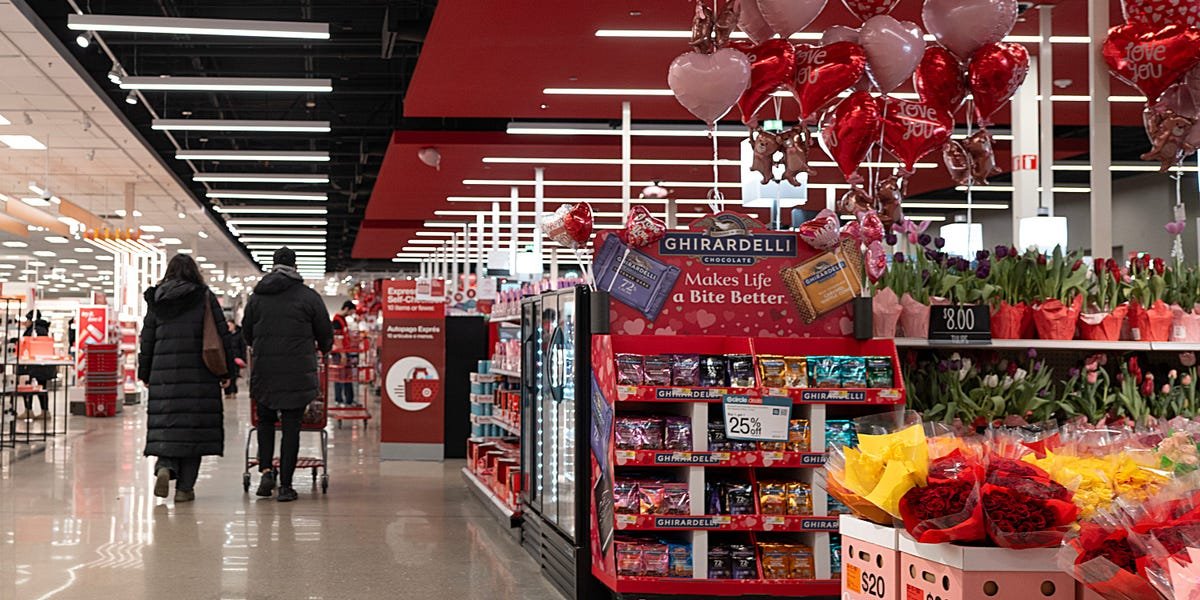
Target-shifts-away-from-being-an-everything-store-in-new.jpeg

Target shifts away from being an ‘everything store’ in new strategy focused on ‘busy families’

Target is betting on “busy families” to drive its turnaround.

On Tuesday, the retailers’ executives outlined changes to Target’s stores, app, and product selection that they said will improve financial results. At the center of it all are the needs of time-crunched moms and dads, they said.

The plan involves bolstering product selection and customer service in specific product categories, such as baby clothing and care, executives said Tuesday during a presentation at Target’s Minneapolis headquarters.

“Target is not an everything store,” CEO Michael Fiddelke said at the company’s annual financial meeting in Minneapolis. “That’s not what guests want from us.”

Funding many of the changes is an additional $1 billion in investments that Target plans to make this year, including “hundreds of millions” for store staffing and training, CFO Jim Lee said. That’s in addition to $1 billion in capital expenditures that Target announced last year.

The bullseye retailer is in critical need of a return to growth after coming off more than three years of flat or declining sales, Fiddelke said.

Target said on Tuesday that it expects to report net sales growth in each quarter of 2026 after posting a 1.7% decline for its fiscal year that ended on January 31.

Target bets on baby, grocery to get its groove back

The additional investments are meant to free up store employees to provide better customer service, Fiddelke said.

In baby care, Target is expanding its Cloud Island clothing brand and testing “baby concierges” helping customers shop, said Cara Sylvester, Target’s chief merchandising officer said at the meeting.

“This is about earning trust early and strengthening relationships that extend well beyond the baby aisle and beyond the baby life stage,” Sylvester said.

Groceries will also get more investment and floor space in Target’s stores, executives said.

John Conlin, Target’s SVP of food and beverage, told Business Insider that half of the retailer’s shoppers have food in their shopping baskets. That share rises during seasonal occasions and celebrations. The company is also plowing cash into a fresh supply chain to improve its offering of those products.

Target plans to open 30 new stores and fully remodel 130 existing ones in 2026, Lee said.

Those changes are meant to be an inflection point in Target’s strategy. “There will be more newness across the assortment in those stores in the next year than we’ve seen in any year in the last decade,” Fiddelke said.

It’s not the first time that Target has tried to differentiate itself from rivals, including Walmart, by offering a more curated offering.

Over the past few decades, Target partnered with big names in fashion to design some of its clothing and home decor. It also introduced snacks and groceries with sleek packaging that bucked the reputation of store-brand food as budget-focused.

In the last few years, though, some Target customers told Business Insider that the chain lost its reputation as a “nicer Walmart.” Foot traffic declined, and some stores started to look disheveled.

Executives acknowledged many of those shortcomings in Minneapolis on Tuesday — and said their investments are designed to reclaim Target’s old position in retail.

“We used to be strong in a pacesetter in a category like home,” Fiddelke said. “We haven’t been for the last few years.”

Fiddelke, who joined Target as a finance intern in 2003, is a company insider — a potential issue as he tries to execute a new strategy, some analysts who were expecting an outsider to execute the turnaround have said.

On Tuesday, the CEO aimed to sell his decades of experience at Target —and his own lived experience — as an asset.

“Having been in the shoes of a busy-parent household myself, sometimes you just need the very best of Target right to your doorstep,” Fiddelke said.


Source link

Fighting-with-Iran-has-spread-to-tankers-at-sea-Ships.jpeg

Fighting with Iran has spread to tankers at sea. Ships are coming under fire around the busy Strait of Hormuz.

Deadly fighting in the Middle East has spread to tankers around the strategic Strait of Hormuz, with multiple ships coming under fire on Sunday, opening up a new front in the conflict.

The Palau-flagged oil tanker Skylight (IMO 9330020) was “targeted” a few miles north of the Khasab port in Oman, the country’s Maritime Security Center said, adding that the 20-person crew was evacuated. At least four people were injured.

An official with Operation Aspides, the European Union’s counter-Houthi mission, told Business Insider that Omani authorities carried out the rescue operations.

The US Treasury Department sanctioned Skylight and more than two dozen other “shadow fleet vessels” in December for illegally moving Iranian oil.

No one claimed responsibility for the attack, but the Gulf Cooperation Council said it condemned the “brutal Iranian attacks” targeting the Duqm port in Oman and “an oil tanker off its coast.”

The incident marked the first time that a ship had come under fire since the US and Israel began a strike campaign against Iran on Saturday morning. Tehran has retaliated by launching missiles and drones across the Middle East.

The United Kingdom Maritime Trade Operations, an element of the Royal Navy, has reported at least two additional attacks off the coast of Oman. Two vessels were struck by an “unknown projectile,” it said.


A cargo ship is pictured off the coast of the city of Fujairah, in the Strait of Hormuz in the northern Emirate on February 25, 2026.

Multiple ships came under attack near the Strait of Hormuz on Sunday.

Photo by Giuseppe CACACE/AFP via Getty Images


Iran has a history of carrying out attacks against ships near the Strait of Hormuz, including with its Shahed one-way attack drones, which have gained notoriety as Russia uses them extensively in Ukraine. Its proxies have also attacked commercial vessels.

The incidents underscore the new risk to shipping near the Strait of Hormuz. The narrow body of water between Iran and Oman is one of the world’s most important global trade routes, with about 20% of the world’s daily oil supply passing through it.

On Saturday, an Operation Aspides official said that ships had received radio transmissions from the Iranian Islamic Revolutionary Guard Corps (IRGC) stating that vessels were barred from entering the Strait of Hormuz.

However, the UKMTO said on Sunday that “no official closure of the Strait of Hormuz has been formally communicated to the maritime industry through recognized maritime safety channels.”

It said that the maritime safety situation in the region remained “highly volatile,” with the ongoing fighting creating an “elevated threat to commercial shipping.” Britain warned that vessels could face military miscalculation and electronic interference.

Some vessels are avoiding the Straight of Hormuz, with international shipping companies suspending transits until further notice. Marine traffic trackers showed a significant drop in traffic through the strait after the US and Israeli strikes began on Saturday.

Iran previously threatened to shut the Strait of Hormuz in retaliation for any attacks or moves it deemed hostile by the US. A full blockade, or even a sufficiently dangerous environment to deter enough ships from traveling through, could send oil prices soaring.

Israel and Iran continued to trade strikes into Sunday. Retaliatory fire from Tehran has targeted more than half a dozen other Middle East countries, including bases hosting US troops across the region.


Source link