Katherine Li, West Coast breaking news reporter at the Business Insider.

California settles with school district involved in 2023 Business Insider investigation over its handling of sexual misconduct complaints

California Attorney General Rob Bonta announced Friday that his office reached a settlement with the El Monte Union High School District.

The settlement follows what Bonta described as years of “mishandling” sexual harassment, assault, and abuse complaints from students.

In 2023, Business Insider published an extensive investigation into allegations of misconduct at Rosemead High, a school in the district.

The state opened an investigation into the district in 2024. It examined conduct from 2018 through fall 2025 and reviewed more than 88,000 documents and nearly 200,000 emails. Investigators also interviewed 26 administrators, along with staff, former students, and other witnesses.

Speaking at a press conference in Los Angeles County, Bonta said that, under the settlement, the California Department of Justice and the school district will implement a four-year corrective plan that would permanently enjoin the district from violating state and federal laws governing sexual misconduct in schools.

The El Monte Union High School District serves roughly 9,500 students across eight campuses.

“Every child deserves to learn and grow in a safe and supportive school environment,” the attorney general said in a statement on Friday. “Today’s settlement marks a beginning, not an end.”

“I am hopeful that the District will move swiftly to implement the reforms required by this settlement, and my office will be monitoring closely to ensure its compliance,” Bonta added.

As part of the settlement, the district must appoint a state DOJ-approved compliance coordinator, roll out a centralized electronic complaint system, and expand access to education and mental health services for those who report misconduct. Officials will also be required to maintain a list of substitute teachers barred from reappointment following sustained findings of sexual harassment.

“At El Monte Union High School District, student safety and well-being remain our highest priorities,” El Monte Union High School Superintendent Edward Zuniga said in a statement included in Bonta’s press release.

“This agreement reflects our continued commitment to strengthening systems that support safe, inclusive, and respectful learning environments. Through enhanced protocols, increased transparency, and expanded training for staff, students, and families, we are reinforcing our responsibility to protect every student and ensure they feel supported, valued, and ready to learn.”


Source link

Feds-charge-a-California-man-with-trying-to-profit-from.jpeg

Feds charge a California man with trying to profit from Nancy Guthrie’s disappearance with a bogus ransom

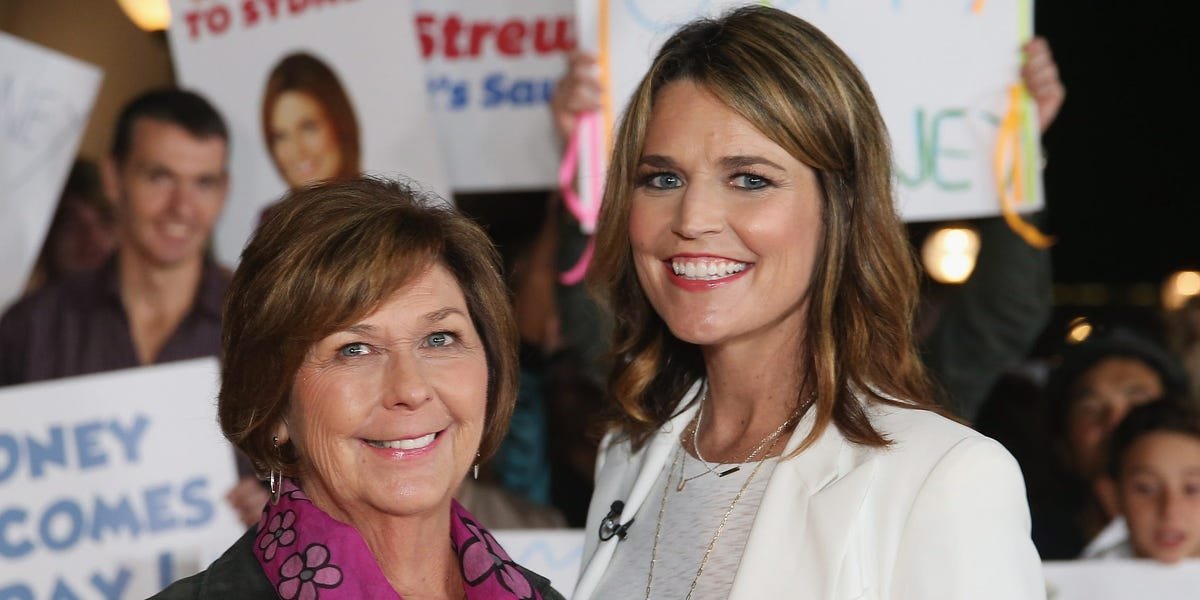
Derrick Callella of California was arrested and charged Thursday over a fake ransom demand for Nancy Guthrie, the mother of “Today” show host Savannah Guthrie.

“Did you get the bitcoin were [sic] waiting on our end for the transaction,” Callella allegedly texted two family members of Nancy Guthrie on Wednesday, following reports of a ransom demand tied to the woman’s disappearance that listed a Bitcoin wallet address.

The criminal complaint, filed in Arizona federal court, says that Callella admitted to sending the messages. It was not immediately clear whether Callella had retained an attorney.

Authorities believe the 84-year-old Nancy Guthrie was taken from her ranch-style home just outside Tucson, Arizona, in the Catalina Foothills five days ago.

An FBI official announced the arrest of the “total imposter” on Thursday at a press conference over Nancy Guthrie’s disappearance.

“To those imposters who are trying to take advantage and profit from this situation, we will investigate and ensure you are held accountable for your actions,” FBI Phoenix’s special agent in charge, Heith Janke, said at the press conference.

Janke also issued a message to anyone involved in Nancy Guthrie’s disappearance, urging them to “do the right thing.”

“This is an 84-year-old grandma that needs vital medication for her well-being,” Janke said.

The FBI is offering a reward of up to $50,000 for information leading to the recovery of Nancy Guthrie or the arrest and conviction of anyone involved in her disappearance, Janke announced.

Authorities said that an additional ransom letter regarding Nancy Guthrie, sent to local and national media outlets, is being taken “seriously.”

That note made a monetary “demand” for 5 p.m. local time Thursday, said Janke.

“If a transfer wasn’t made, then I think a second demand was for next Monday,” Janke said, declining to provide other specifics.

An Apple Watch and a floodlight were also mentioned in ransom letters, Janke said.

“We’re not going to go into specifics. It’s very important that we keep this investigation moving forward, and we don’t want to put more facts out there that others then can use to try to profit from this,” he said.


A timeline of Nancy Guthrie's disappearance.

Police have outlined a timeline surrounding Nancy Guthrie’s disappearance.

Pima County Sheriff’s Department


Authorities revealed new details around the timeline of Nancy Guthrie’s disappearance on Thursday and confirmed that the blood discovered on the elderly woman’s porch belonged to her.

Nancy Guthrie was dropped off at her home by her family just before 10 p.m. on January 31. At 1:47 a.m. MST the next day, the woman’s doorbell camera disconnected, police said.

At 2:12 a.m., the doorbell software detected a person on the camera, but there was no available video footage, Pima County Sheriff Chris Nanos said during the Thursday press conference. Minutes later, Nancy Guthrie’s pacemaker app showed a disconnect from her phone.

Her family checked in on her at 11:56 a.m. and called 911 shortly after, police said.

Nanos said that Nancy Guthrie’s doorbell camera had also been removed. No suspects or persons of interest have yet been identified in the case, the sheriff said.

On Wednesday, in an emotional video post alongside her siblings, Savannah Guthrie pleaded to her mother’s possible abductors to “please reach out to us.”

“We, too, have heard the reports about a ransom letter in the media. As a family, we are doing everything that we can. We are ready to talk,” the famed NBC anchor said, adding, “We want to hear from you, and we are ready to listen.”

Nancy Guthrie suffers from physical ailments and requires daily medications that, if not taken every 24 hours, could have life-threatening consequences.

“Right now, we believe Nancy is still out there. We want her home,” Nanos said.


Source link

Im-a-millionaire-living-in-California-Im-happy-to-pay.jpeg

I’m a millionaire living in California. I’m happy to pay higher taxes since I have more wealth — it just makes sense.

This as-told-to essay is based on a conversation with Scott Ellis, a 55-year-old millionaire who lives in Silicon Valley, about California’s proposed 5% billionaire wealth tax. Ellis is a member of Patriotic Millionaires, a collection of wealthy Americans who advocate for a fair tax system, a livable wage, and equal access to political power. The following has been edited for length and clarity.

I never thought I’d live in California. I grew up in Colorado, went to college in Boston, and lived in Texas. I came out here for business school because I wanted to be at Stanford, and because you could play golf during the winter.

Now I love it here. It has nothing to do with taxes; taxes have never been anywhere on our list of criteria for deciding where to live. I want to live where my family is and love the weather, the jobs, and the dynamism.

Taxes are the price that we pay to live in a civil society. We have to do this together. There are examples all around the world of the power of effective government, and just like anything else, government needs to be funded. We should make it effective and efficient.

I’m proud to pay the taxes I pay. I should pay taxes that are higher than other people because I have more wealth than other people — that makes sense.

My wife and I achieved financial success in our careers

A lot of our financial success has been due to my wife’s success, as well as mine at the beginning of our careers.

I went to Harvard undergrad, worked at McKinsey for three years, and then went to Stanford. I then worked at Hewlett-Packard for almost eight years.

In 2007, my wife was a VP at Yahoo and we had two small kids. I looked at my boss’s job, and at the CEO’s job, and decided I didn’t ever want those roles. I thought, “Uh-oh, I’m on this ladder, and it’s not really where I want to go.”

Ultimately, my wife and I decided that I would step back and be the stay-at-home parent. My wife continued her career, and she’s been very successful in consumer internet at Yahoo, Google, and Pinterest.

I developed an interest in social issues in college

I studied poverty, urban America, housing, transportation, and sociology in college, and started thinking more about questions like: What does fairness look like? What does justice look like? What would it look like to build a great society?

I got busy pursuing my career, meeting my wife, and raising our kids, but as time passed and we progressed in our careers, I got back into thinking about how we help others around us. I did a bunch of volunteer work in different contexts, eventually becoming the COO and then the CSO of a nonprofit called New Teacher Center, which does intensive mentoring programs for new teachers.

Since 2012, I’ve started and run several nonprofits in the education space, and advised almost 200 individuals and organizations on things like strategy, finance, operations, and culture.

I’m also really focused on addressing excessive wealth and its impact on society and thinking about a future vision for American democracy, which is how I came to Patriotic Millionaires, an organization of wealthy Americans who advocate for higher taxes on wealthy people like ourselves, a higher minimum wage, and a broader distribution of political power across our society.

I’ve been struck by the massive accumulation of wealth

In recent years, I’ve been struck by the massive accumulation of wealth enabled by the consumer internet space, globalization, and the structure of the finance industry. It’s different from what it used to be in the ’80s and ’90s; this is a whole new ballgame.

More recently, I’ve been looking around Silicon Valley at all these people who are so incredibly wealthy, talented, and successful, and realizing how few of them are thinking about choosing to build a better society together.

They’re excited about starting new companies and raising new funds, but these are all people who have more money than they could ever spend, and their next goal is to generate even more money, mainly for people who already have more money than they could ever spend.

Meanwhile, 10% of our society is in poverty. It really feels unfair and wrong, and we can do better.

People don’t need more than $30 million

The proposed billionaire wealth tax in California doesn’t impact me and my family directly. People may think, “You’re happy to raise taxes on other people.”

But we need to start with a different conversation, about how much wealth is enough, how much wealth is too much, and what is financial success?

I believe that if you have $30 million in wealth, congratulations, you won capitalism. If you do the analysis of reasonable investment returns and inflation, you can buy a really nice first house, a nice second house, your kids’ college is paid for, your end-of-life expenses are covered, and you have a very, very luxurious ongoing existence.

So much of success in life is luck. Yes, people absolutely get educated and work hard. But it’s been found that the wealthier people are, the more they tend to attribute their wealth to how good they are and how hard they worked.

I look at single moms working three jobs, working the night shift — a heck of a lot of people who have less than $190,000 [the median household wealth] in wealth are working very hard.

Once you get beyond $30 million — and almost no one ever gets there — you get to a point where your life is so good, you really can’t materially improve your life anymore. We should implement a very aggressive annual 50% tax on all household wealth over $30 million. Excessive wealth turns into excessive power through huge campaign donations, which threatens and undermines democracy and capitalism.

The wealth tax is a step in the right direction — but not enough

I’m absolutely delighted that we’re moving in this direction, but I believe changes to wealth taxes need to happen at the federal level.

When wealthy folks bring up moving out of California, it’s a distraction. All of a sudden, instead of us talking about the fact that millions of people are going to be either losing healthcare or paying much more for healthcare, we’re worried about the 200 really rich people who might move.

People move all the time. Companies move all the time for all kinds of reasons — it’s just part of business. These conversations happen all the time — like, “Oh my gosh, there won’t be any more companies in Silicon Valley.” Well, 20 years later, look around. There are still some companies here; it’s just fine.

It’s 65 degrees and sunny here. The CEO of Nvidia recently said they’ll be staying in California because that’s where the talent is. We’ve got the Golden Gate Bridge, Hollywood, Tahoe, the Redwoods, the beach, and great weather. I’m really not worried that people aren’t going to want to live in California.

I love it here. My wife and I are thinking about living in different cities for maybe a month at a time, but I have no plans to go anywhere else. Although I definitely love Colorado — I still have my Denver Broncos coasters and will be cheering for my Broncos — I’m from Silicon Valley now, and that’s where I’m going to stay.




Source link

xAI

California sends xAI cease-and-desist letter, saying it must stop allowing sexualized deepfake images of minors


Anadolu/Anadolu Agency via Getty Images

  • California sent xAI a cease-and-desist letter, demanding it stop allowing deefake images of minors.
  • Elon Musk’s xAI faces sustained criticism over Grok’s ability to create nonconsensual sexualized images.
  • The letter, sent by AG Rob Bonta, threatens legal action if the deepfakes continue to be permitted.

California Attorney General Rob Bonta has demanded that xAI prevent its chatbot, Grok, from continuing to create sexualized deepfake images of children.

Bonta’s office sent a cease-and-desist letter to Elon Musk’s AI startup on Friday after sustained criticism over the bot’s ability to create nonconsensual sexualized images, including those of minors.

Earlier this week, X said that it implemented restrictions on Grok.

“We have implemented technological measures to prevent the Grok account from allowing the editing of images of real people in revealing clothing such as bikinis,” X’s safety account said in a blog post on the platform on Wednesday. “This restriction applies to all users, including paid subscribers.”

However, that didn’t stop the X or Grok app from creating sexualized images, Business Insider’s Henry Chandonnet found on Thursday.

Representatives for the CA Attorney General’s office did not immediately respond to requests for comment from Business Insider.

In an automated response to Business Insider, xAI said, “Legacy Media Lies.”

This is a developing story. Please check back for updates.


Source link

Ayelet Sheffey

What Jensen Huang, and Larry Page’s reactions to the California wealth tax reveal

It’s a classic fight-or-flight response — with a billionaire’s twist.

A proposed wealth tax in California prompted the state’s resident billionaires to consider whether they wanted to continue their residency if the one-time 5% tax is approved.

Their reactions, said CFP professional Don Hilario, who works with financial planning clients in California, boil down to risk tolerance.

The tax, as proposed, would only apply to assets in the state during the 2026 tax year. Google’s billionaire cofounder, Larry Page, moved some of his assets out of California ahead of the January 1, 2026, deadline to avoid facing the tax, Business Insider first reported. Meanwhile, Nvidia’s billionaire CEO Jensen Huang said he has “not even thought about it once.”

“We chose to live in Silicon Valley, and whatever taxes they would like to apply, so be it,” Huang told Bloomberg TV’s Ed Ludlow. “I’m perfectly fine with it.”

Hilario, whose financial planning clients include individuals in Big Tech, said that the lingering uncertainty of the tax can trigger a need for certainty and autonomy.

“People who want to have a greater sense of control will do the Larry Page route,” he said, “versus people who have the temperament to endure will take Jensen’s route.”

Hilario described a hypothetical scenario in which individuals with high net worths are considering purchasing a home. In a period where the economy and interest rates are uncertain, do you want to put the lion’s share of your expenses toward the home in the event that rates will be higher in the future, or do you hold out and continue accumulating your wealth in the event that economic conditions improve?

“That’s the same type of emotions that exist with this tax bill because the fear of not taking any action is unsettling,” Hilario said.

The proposal, put forth by the union SEIU-United Healthcare Workers West to offset potential budget cuts to healthcare and education, is far from being implemented — it would require 870,000 signatures to make it onto the November 2026 ballot.

The SEIU said in its proposal that the concentration of billionaire wealth in California makes the state “uniquely positioned to address both the well-documented crisis of wealth inequality in the United States and the emerging and interrelated crises the state faces” with the budget cuts.

In addition to Huang and Page, other billionaires are voicing their opinions on the proposed wealth tax. LinkedIn’s cofounder, Reid Hoffman, wrote in a post on X that the proposal has “massive flaws.”

“Poorly designed taxes incentivize avoidance, capital flight, and distortions that ultimately raise less revenue,” he said.

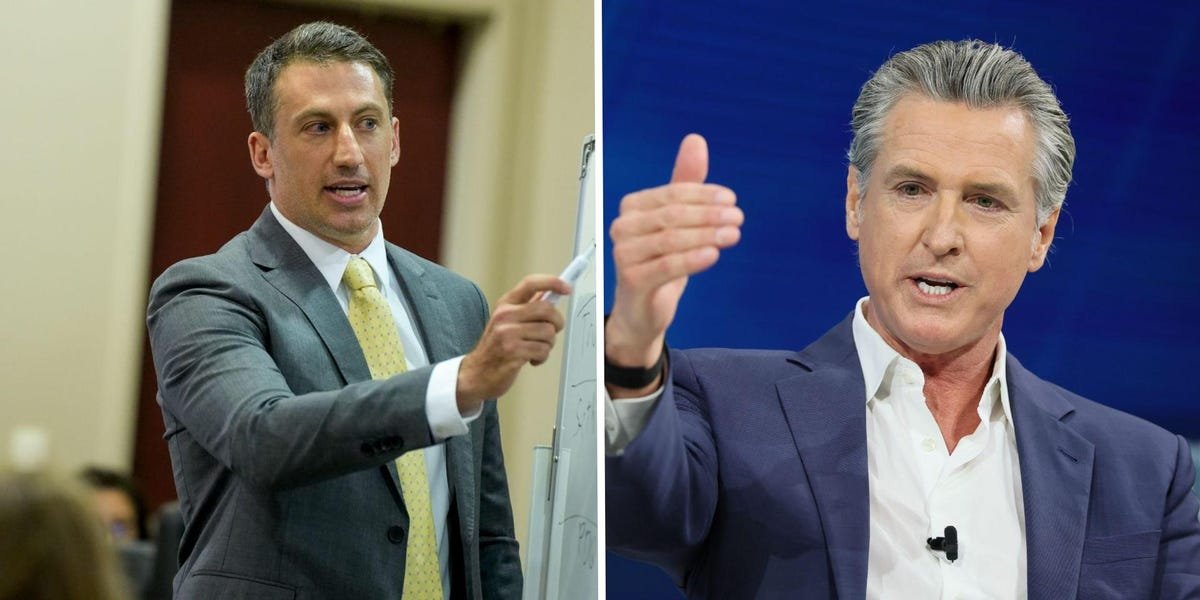
Alex Spiro, an attorney who has previously represented billionaires, wrote in a letter to California Gov. Gavin Newsom that his clients would “permanently relocate” if the tax were to become law. Hilario said that the significant uncertainty surrounding the proposal, including how assets will be valued and whether the tax would change over time, likely forced billionaires to decide how risk-averse they really are.

“I still think ultimately it’s unclear. And I think when it’s unclear, it’ll make people, in this case, investors, be more cautious and defensive,” Hilario said. “And then a big part of it is, how do we respond emotionally? I think whether you’re taking early action or enduring, you do want to gather information and avoid making a decision that would ultimately be irreversible.”


Source link

Larry-Page-is-officially-moving-business-out-of-California-ahead.jpeg

Larry Page is officially moving business out of California ahead of a proposed billionaire’s tax

Billionaire Larry Page is peacing out of California.

The Google cofounder has cut ties between California and many of his assets that risked exposing him to a proposed new wealth tax in the state, meeting an end-of-2025 deadline, according to filings reviewed by Business Insider.

Page’s family office, Koop, was converted out of California in late December and incorporated in Delaware, per filings with both states. Page converted several other entities to Delaware, including Flu Lab LLC — a vehicle he has used to fund research on tackling influenza and lists its principal office address in Nevada — and another entity named One Aero, which has funded his flying car ventures and lists its principal office address in Florida.

A filing was also made to convert Dynatomics, LLC from California to Delaware with a new principal address in Keller, Texas. Page launched Dynatomics, a new startup focused on applying AI to aircraft manufacturing, in 2023, Business Insider previously reported. A source close to Page said that the team, run by Chris Anderson, continues to work out of California.

Anderson and representatives for Page’s family office did not respond to requests for comment.

The New York Times reported in December that Page had told people he was considering moving to Florida because of a proposed ballot measure that would tax the state’s wealthiest residents. The proposal, if passed successfully, would mean that any California resident worth more than $1 billion would be taxed 5% of their assets.

Under California law, residency is determined by the nature of a person’s ties to the state, with factors such as the time spent in the state and the maintenance of substantial business ties taken into account. If the ballot measure is approved in November, it would take effect retroactively for residents living in California as of January 1, 2026.

A source close to Page said the Google cofounder had already left the state. Whether Page’s move is temporary could not be learned.

Page is ranked the second-richest person in the world, according to the Bloomberg Billionaires Index.

Page’s family converts other entities to Delaware

Besides his family office and funding vehicles, Page converted out an LLC that Business Insider previously identified as being used to purchase islands in Puerto Rico and the Virgin Islands, from California to Delaware, with a new address listed in Florida.

A separate LLC Page used to purchase an Island in Fiji was also converted out to Delaware.

Page’s wife, the scientist Lucinda Southworth, founded a marine-conservation charity named Oceankind. Filings show that Oceankind converted out of California to Delaware in December.

Delaware has become a popular state for businesses to incorporate due to its favorable tax structure, privacy, and its home to a court system specifically designed to handle corporate disputes. The state does not require LLCs to disclose the names and addresses of directors when incorporating, providing them with an extra layer of privacy.

Privacy is especially important to Page, whose family office is shrouded in a level of secrecy unparalleled by most and carefully managed by its CEO, Wayne Osborne.

Cristina Rosado, an attorney who handles many of Page and Southworth’s assets, signed several of the California filings.

Page incorporated three entities in Florida last year, as previously reported by The New York Times. A Koop LLC was incorporated in Florida in January 2025, per filings reviewed by Business Insider. It could not be confirmed if it belongs to Page.

California’s billionaire tax proposal

The California billionaire tax proposal faced some opposition from leaders in venture capital and politics. In a post on X in December, venture capitalist Vinod Khosla said the proposed measure would mean California would lose its most important taxpayers and “net off much worse.”

“Long term damage unless legislature bans wealth taxes,” he added. “Easier to equalize taxes on work income and capital gains at the national level.

Matt Mahan, Democratic mayor of San Jose, California, on Monday described the tax as “a political plan that will sink California’s innovation economy.”

White House AI czar David Sacks has criticized the proposal and said it will backfire. He has also said he believes Miami and Austin will overtake New York and San Francisco for finance and tech, respectively. He announced this month that his venture capital firm, Craft Ventures, had opened an office in Austin.

Last month, celebrity lawyer Alex Spiro wrote a letter to California Gov. Gavin Newsom, warning that the proposed billionaire tax would “trigger an exodus of capital and innovation from California,” Business Insider previously reported.

Have something to share? Contact this reporter via email at hlangley@businessinsider.com or Signal at hughlangley.01. Use a personal email address and a non-work device; here’s our guide to sharing information securely.


Source link

Read-the-letter-celebrity-lawyer-Alex-Spiro-wrote-to-Gavin.jpeg

Read the letter celebrity lawyer Alex Spiro wrote to Gavin Newsom, warning that his clients will ‘permanently relocate’ if California wealth tax passes

A proposed billionaire tax in California has the wealthy threatening to flee, according to a letter written by power lawyer Alex Spiro to Gov. Gavin Newsom.

In a December 11 letter that was obtained by Business Insider, Spiro lays out his opposition to the proposed tax on behalf of his clients, whom he calls “California residents who would be subject to the proposed Billionaire Tax Act.”

“It will trigger an exodus of capital and innovation from California,” Spiro wrote. “Our clients have made clear they will permanently relocate if subjected to this tax.”

The measure proposes that California residents with assets exceeding $1 billion be subject to a one-time 5% tax on the value of their assets. If the proposal receives enough signatures, it will appear on the state ballot in November 2026. If passed, it would apply retroactively to all California residents as of January 1, 2026.

While Newsom has said he is against the tax and would “fight” it, he would not have the ability to veto it if it were to pass as a ballot measure.

Several wealthy Californians, including venture capitalist Peter Thiel and Google cofounder Larry Page, have considered shrinking their presence in California, according to a New York Times report. Representatives for Page and Thiel did not respond to Business Insider when asked if they were represented by Spiro.

Over the weekend, billionaire Palmer Luckey took to X to voice his opposition to the measure.

“I made my money from my first company, paid hundreds of millions of dollars in taxes on it,” the Anduril cofounder wrote. “Now me and my cofounders have to somehow come up with billions of dollars in cash.”

While it’s not clear which clients the lawyer was referencing in his letter to Newsom, Spiro’s client roster in the past has included billionaires and A-listers. He has previously represented Kim Kardashian, Jay-Z, and Elon Musk.

Read the full letter below:

Re: Constitutional Concerns Regarding Proposed Billionaire Tax Act
Dear Governor Newsom:
I represent California residents who would be subject to the proposed Billionaire Tax Act if it qualifies for the November 2026 ballot. I write to urge you to work to prevent this initiative from moving forward. The Act has serious legal problems and would cause significant economic damage to California and the broader economy.
First, and most importantly, the Act would be unconstitutional. Although the Act purports to be a tax, it is in reality an uncompensated confiscation of property. The Act imposes a 5% levy on total accumulated wealth, including illiquid assets that generate no income. That is in substance a taking without just compensation. As the Supreme Court explained in Armstrong v. United States, the government cannot force “some people alone to bear public burdens which, in all fairness and justice, should be borne by the public as a whole.” 364 U.S. 40, 49 (1960). The Act concentrates an extraordinary burden on a small group to solve a general revenue problem— exactly what the Constitution prohibits.
Second, for the people who relocate from California in 2026 before the November election, the Act would tax them after they have become citizens of other States and without any ability to vote on the measure. The Supreme Court has held that retroactive taxation cannot be “harsh and oppressive.” United States v. Carlton, 512 U.S. 26, 30 (1994). A 5% levy on total net worth imposed on former residents who departed before the law was even enacted clearly meets that definition.
Third, the Act’s unprecedented novelty makes it especially vulnerable to a legal challenge. California has never imposed a wealth tax, much less one that reaches former residents and that is targeted at a small group of citizens. The Supreme Court closely scrutinizes unprecedented exercises of government power precisely because they lack historical precedent. See Biden v. Nebraska, 600 U.S. 477, 505 (2023). In fact, it has not hesitated to invalidate the retroactive application of new taxes, even for far less extreme measures. See Blodgett v. Holden, 275 U.S. 142 (1927). There can be no doubt that the current Supreme Court would carefully evaluate a law so out of step with the American legal tradition.
From an economic perspective, the Act creates two serious problems. First, it will trigger an exodus of capital and innovation from California. Our clients have made clear they will permanently relocate if subjected to this tax. They are not alone. See California’s wealth-tax test: Have voters finally found a policy that the state’s inherent economic strengths can’t overcome?, Wash. Post (Nov. 17, 2025) (opinion) (describing the tax as “almost tailor-made to drive most Silicon Valley tech companies to Austin, Texas”). In other words, by passing this proposal California would exchange a one-time windfall for the permanent loss of billions in annual income taxes, capital gains taxes, property taxes, and economic activity. The state’s most economically productive residents would take their businesses, jobs, and charitable giving with them. Second, the Act will force destructive asset sales. Our clients hold equity stakes in operating businesses, venture capital funds, and real estate. Paying a 5% wealth tax would require massive forced liquidations, depressing asset values and triggering market instability that would harm ordinary investors whose retirement accounts hold these same investments.
Our clients are prepared to mount a vigorous constitutional challenge if this measure advances. Litigation would be protracted and expensive, and it would generate sustained negative attention to California’s business climate. The prudent course is to prevent this constitutionally defective measure from reaching the ballot. We respectfully ask that you discourage signature gathering, oppose qualification, and if necessary, campaign against passage.
Our clients prefer to remain in California and continue contributing to the state’s economy and civic life. But they will not remain if subjected to an unconstitutional confiscation of their wealth. We hope this can be resolved through political channels rather than through years of contentious litigation.
Respectfully,
Alex Spiro


Source link

Tesla-is-ordered-to-rename-Autopilot-after-a-California-judge.jpeg

Tesla is ordered to rename ‘Autopilot’ after a California judge ruled that the EV-maker misled consumers

Tesla may have to rebrand Autopilot.

Steve Gordon, the Director of the California Department of Motor Vehicles, said in a media briefing on Tuesday that Tesla has 90 days to amend its advertising language or face a 30-day suspension from selling in California.

Gordon said on Tuesday that the DMV is specifically asking Tesla to change the name “Autopilot” to clarify that the company has advanced driving systems, which do not equate to an automated system or an autonomous vehicle. Changes must be made within 90 days, or the DMV will “enforce the cessation of sales.”

“My guess is that they will pursue some remedy,” said Gordon of what Tesla might do next, “but the easiest one for them is just to come into compliance.”

In response to the DMV’s decision, a Tesla spokesperson told Business Insider that this is “a ‘consumer protection’ order about the use of the term ‘Autopilot’ in a case where not one single customer came forward to say there’s a problem.”

“Sales in California will continue uninterrupted,” the spokesperson added.

On November 21, Administrative Judge Juliet E. Cox made a proposed decision about whether Tesla has misled consumers into thinking its cars are more capable of driving themselves than they actually are, and transmitted it to the DMV for consideration. The document containing the proposal, however, has been withheld from the public and won’t be released till December 22.

Gordon said during the Tuesday briefing that Cox recommended both a suspension of Tesla’s license to sell and to manufacture in California. The DMV, however, decided not to pursue a suspension of the license to manufacture and put a temporary 90-day stay on the suspension of the license to sell for Tesla to make amends.

“They’re very important to the state,” said Gordon of Tesla. “We want to be fair to them and give them a chance to see if they can find a resolution now that there is a ruling from the administrative law judge.”

“If you look at the Q3 report of this year, Tesla has the top-selling car, the Model Y, in its segment,” Gordon added. “We felt that the leverage via the sales channel was sufficient to get compliance.”

The notice to Tesla follows a weeklong hearing in July at the administrative court in Oakland. In 2022, the DMV sued Tesla, accusing the carmaker of misleading consumers through Tesla’s advertisements and by naming its driver assistance technologies “Full Self-Driving” and “Autopilot.”

Tesla, which had a rocky year, denied that the company had ever tried to conceal the fact that its vehicles cannot fully drive themselves.

The DMV sought to suspend Tesla’s ability to sell cars in the state for at least 30 days and award consumers monetary damages.

The CA DMV wrote in its complaint that on multiple occasions in 2021 and 2022, Tesla’s website advertised its FSD driver assistance system as being “designed to be able to conduct short and long-distance trips with no action required by the person in the driver’s seat.”

Tesla’s lawyers said during the hearing that the company has always informed buyers that they “cannot fully rely” on FSD or Autopilot.

“Cars with Full Self-Driving capabilities are currently not capable of driving themselves,” said Attorney Matthew Benedetto, a member of Tesla’s legal team, during the hearing.


Source link