
This-couple-used-Claude-Code-make-a-bot-that-called.jpeg

This couple used Claude Code make a bot that called 20,000 gas stations, building a price tracker from scratch

“Hey, I’m Bobby from Gas Index, I’m an AI. What’s regular goin’ for today?”

“Say it again?” an attendant from Manhattan responded — before telling the bot the sign above the station was flashing a $3.89 price for a gallon of regular.

“Perfect, thanks,” Bobby said before hanging up.

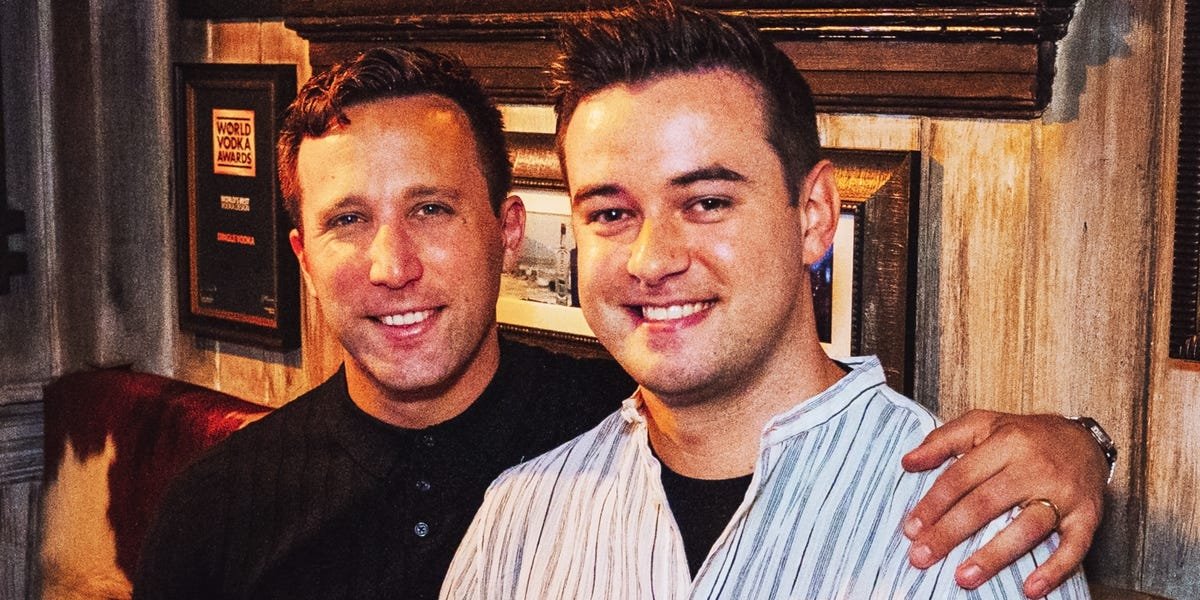
That’s one of nearly 20,000 conversations between a gas station attendant and an AI agent — named Bobby after a character from the animated sitcom “King of the Hill” — created by Matt Cortland and John Fleming.

Cortland and Fleming, a married couple based in London, shipped a website and a phone bot as a passion project on Monday. It’s called Gas Index.

It touches on several trends colliding at once: vibe-coding AI tools that speed up software development, rising fuel costs amid the war in Iran, and a new class of bots interacting directly with people in the real world.

“It seemed like a relatively new way of getting up-to-date information,” Cortland, who has family in New Jersey and works as a consultant, told Business Insider. “We thought, ‘What’s the thing that could be really impactful for people?’ We arrived at gas prices.”

Fleming, a UK-based postdoctoral researcher at Oxford University, said their app reveals a significant difference in American regulations.

On Wednesday, the national average for regular gas is $4.16, according to AAA, but prices range widely — from $3.43 in Oklahoma to $5.93 in California. In the UK, by contrast, the couple found average regional prices differ by just three cents nationwide.

“The US is trying to fill a gap,” Fleming said. “In the UK, it’s a gold standard system. People in petrol stations have to update their prices every half hour and make it publicly accessible.”

How does the gas spike compare with a Dunkin’ iced?


A screenshot of the Gas Index's Massachusetts page.

The website compares the added cost of recent gas price spikes with regional delicacies. 


Gas Index


Gas Index tracks more than 170,000 stations across all 50 states, with a marriage of data sets. It starts with location and pricing data from Google — but the tech company’s dataset covers only about half of US gas stations, according to the founders, with stronger coverage among large chains.

The app aims to fix that coverage gap with updates where Google’s pricing API doesn’t reach.

To get more data, Gas Index relies on user-submitted photos of pumps and receipts and AI-generated phone calls to stations that don’t report prices elsewhere.

Cortland and Fleming said the website was built with Claude Code over three days, while contributions from tools like ElevenLabs, Twilio, and Supabase helped build the phone bot and manage the data in another two days. The couple said the push to build the site’s last 10% was “very intensive.”

They estimate their AI token receipts for the project between $3,000 and $5,000.

“You spend for every call you make,” Cortland said. “When you’re making this many calls, the price really starts to go up. We did get a grant from ElevenLabs, which gave a ton of credits. If we didn’t have that, it would have been way more expensive.”

Gas Index also tries to translate rising gas costs into everyday terms.

Take, for example, a Toyota Camry owner in Alewife, Massachusetts. That driver can enter their car and location to see how much more they’re paying to fill their tank — expressed in regional delicacies like Dunkin’ iced coffees or fluffernutter ingredients.


A Boston Red Sox Fan holds an iced Dunkin' coffee in their right hand.

In Massachusetts, for example, drivers can approximate how much their next fuel-up would cost in Dunkin’ iced coffees. 

Maddie Malhotra/Boston Red Sox/Getty Images


Nebraska’s gas prices are compared to the price of a ticket to attend a Husker college football game. Louisiana’s is weighed against the price of a Cafe Du Monde beignet. New Hampshire’s is stacked up to a pint of maple syrup.

Still, accuracy varies. Because the comparisons depend on user-submitted data, which the founders said will improve over time, they have built-in checks to weed out “bad data” from users.

Business Insider spot-checked 10 stations listed on the site by calling them directly. Four matched the listed price, while one differed by 15 cents. Gas prices can change multiple times per day, leading to discrepancies depending on when the data is collected.

Responding to an AI call


A woman, wearing an orange hat and apron, stands behind a checkout counter at a gas station convenience store.

Bobby, Gas Index’s AI robocaller, rang thousands of gas stations across America. 

Hispanolistic/Getty Images


Bobby called a lot of stations. Their responses varied.

“I can go outside and check real quick,” one cashier in Texas told the AI, according to transcripts provided by Cortland and Fleming. “I’m walking outside right now. So right now, our regular gas is $3.49 a gallon, and diesel is $4.99 a gallon.”

Several others were less enthusiastic. Cortland says that one in every 700 calls features some profanity.

The calls also revealed regional differences. Texas was the hardest state to reach by phone, they said, while only 20% of stations in New Jersey shared prices after picking up the receiver.

Independently owned stations were the most willing to disclose their current prices, they said.

A war’s impact on fuel costs


A Chevron gas station sign. Prices for a gallon of gas range between $6.39 and $6.98.

Gas prices have climbed since the start of violent clashes in the Strait of Hormuz. 

Mario Tama/Getty Images


The site also frames price increases around the war in Iran, which it references repeatedly on its homepage.

“What’s the war costing you specifically?” a read-out at the top of the site says. “Gas is up $1.13 a gallon since the Iran war began.”

But the founders said they want everyone to use their new project, and don’t want to be seen as nakedly political.

“The goal here is just to get people to try to get better pricing for stuff,” Cortland said. “We want people in Democratic and Republican states also to use this, because it can be helpful for everyone.”


Source link

Heres-exactly-what-Susan-Rice-said-before-Trump-called-on.jpeg

Here’s exactly what Susan Rice said before Trump called on Netflix to fire her from its board.

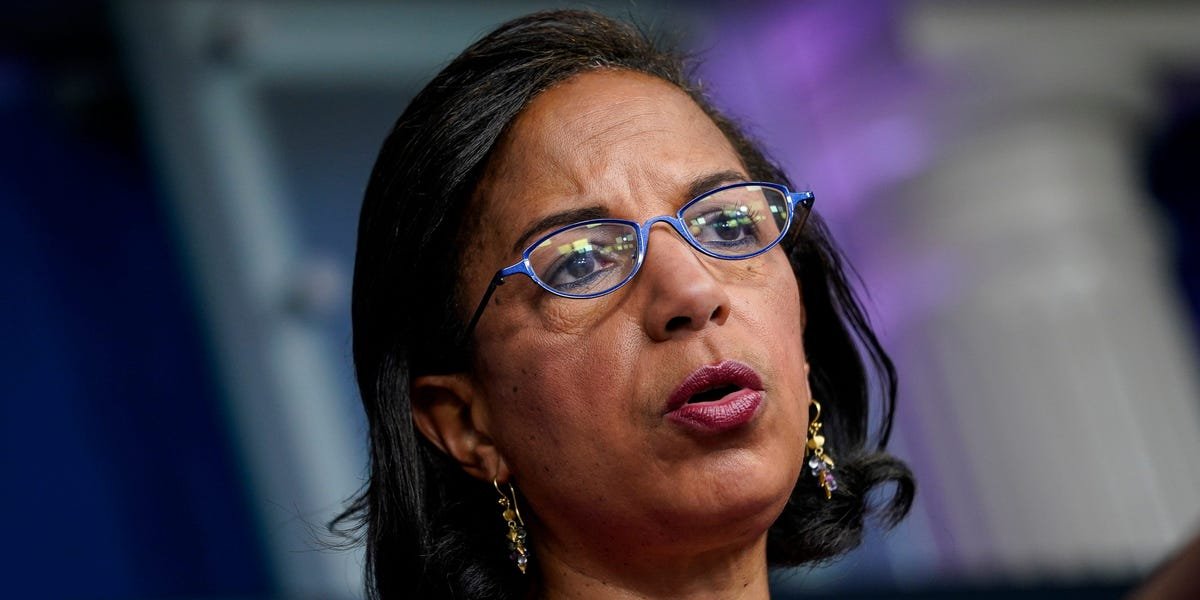
President Donald Trump has warned Netflix to remove former US ambassador and national security advisor Susan Rice from its board “or pay the consequences.”

The stakes are high for Netflix: It’s in the middle of trying to execute a mega-deal to buy Warner Bros.

Rice, who served in senior roles in the Obama and Biden administrations, was critical of Trump’s second term in office when she appeared on the “Stay Tuned with Preet Bharara” podcast in an episode published on Thursday. Rice made comments about corporations that “take a knee to Trump,” saying they could face retribution under a subsequent Democratic administration.

After being alerted to Rice’s comments by far-right activist Laura Loomer, Trump posted: “Netflix should fire racist, Trump Deranged Susan Rice, IMMEDIATELY, or pay the consequences. She’s got no talent or skills – Purely a political hack! HER POWER IS GONE, AND WILL NEVER BE BACK. How much is she being paid, and for what??? Thank you for your attention to this matter. President DJT.”

Loomer’s post highlighted comments Rice made about corporations.

Here’s exactly what Rice said on that topic:

“When it comes to the elites, you know, the corporate interests, the law firms, the universities, the media, I agree with you, Preet, it is not, it’s not going to end well for them. For those that decided that it was, you know, that they would act in their perceived very narrow self-interest, which I would underscore is very short-term self-interest, and, you know, take a knee to Trump, I think they’re now starting to realize, ‘Wait a minute, you know, this is not popular.’
“Trump is not popular. What he is doing, whether on the economy and affordability or on immigration, now, is not popular, and that there is likely to be a swing in the other direction, and they are going to be caught with more than their pants down, they’re going to be held accountable by those who come in opposition to Trump and win at the ballot box.
“And I can tell you Preet, you know, as I talk to leaders in Washington, leaders in our party, leaders in the states, if these corporations think that the Democrats, when they come back in power, are going to, you know, play by the old rules and say, ‘Oh, never mind, we’ll forgive you for all the people you fired, all the policies and principles you’ve violated, all, you know, the laws you’ve skirted,’ I think they’ve got another thing coming.”

Netflix’s pursuit of Warner Bros. would require approval from the Department of Justice’s antitrust division.

Trump in December said that Netflix had a “very big market share,” and that its potential acquisition of Warner Bros. “could be a problem.”

However, this month, he said he “shouldn’t be involved” in the deal and would defer to the Department of Justice to investigate the proposed merger.

Paramount, backed by Trump ally Larry Ellison, the billionaire Oracle cofounder, is also trying to buy Warner Bros.

A White House official told Business Insider last week that Trump “has great relationships with all parties in this potential transaction and remains neutral in this process with no preference for either bidder.”

Netflix’s co-CEO Ted Sarandos said on a podcast appearance last week that Trump had not asked for any political concessions related to the deal.

‘I expected it to be very bad’

In the podcast interview, Rice was critical of Trump on many fronts.

When asked what worried her most about the current political situation, Rice said:

“The thing that worries me, perhaps the very most, is the abrogation of the rule of law in this country, and the fact that, you know, we are now living in a lawless society when the authorities of what is an increasingly authoritarian state exercises, you know, personal police forces, to go and execute the will of the President and do so in blatant violation of American citizens constitutional rights, their First Amendment rights, their Second Amendment rights, their Fourth Amendment rights.”
“And when you have, you know, masked armed men busting into the houses of American citizens and ripping people out of their homes in their underwear and beating them and throwing them to the ground and putting them in cars and disappearing them and denying them access to counsel or their families, when you have the same people shooting American citizens in the street for exercising their First Amendment rights, we are in a very different place, and that worries me enormously.
“And what also worries me, Preet is, you won’t be surprised to hear, is that we’re only at the beginning of what I think they may intend to try and that our very elections and our the fundamental elements of our democracy are profoundly at risk.”

When asked for her assessment of the Trump administration’s past 12 months in office, Rice said:

“Well, I expected it to be very bad, and I guess I would confess that it’s probably worse than I anticipated, but not because they’re doing things that surprised me. They told us exactly what they were going to do.”
“You know, recall Trump saying multiple times on the campaign trail, ‘If you vote for me, this one time, you’ll never have to vote again.’ Or his, you know, pledge to use the American military against the quote, ‘enemy within.’
“You know, you had Stephen Miller, foreshadowing not only the use of the Insurrection Act, but potentially the suspension of habeas corpus and the imposition of martial law. All of these are, you know, they tell you, interestingly, where they intend to head.
“But what surprised me is the speed and the efficacy of their efforts to do what they set out to do, and the fact that they have faced very little resistance from members of their own party, from the private sector, from civil society leaders and university heads and law firms and all of the, you know, the pillars of society, media — that have rolled over and played dead or hidden under rocks.
“So I think the speed and the ease with which they’ve made progress on their agenda, which they laid out very clearly in Project 2025, and elsewhere, is what surprised me more than what they’ve tried to do.”

Disclosure: Mathias Döpfner, the CEO of Business Insider’s parent company, is a Netflix board member.


Source link

Jeremy-Grantham-called-pandemic-crash-but-screwed-up-his-trade.jpeg

Jeremy Grantham called pandemic crash but screwed up his trade: memoir

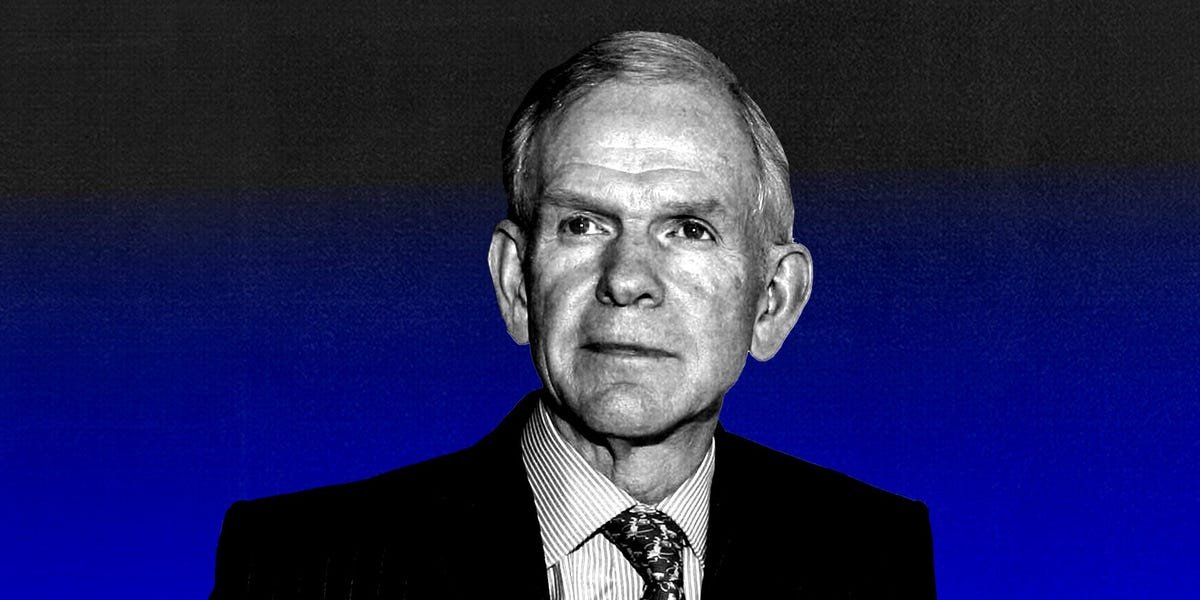
Legendary investor Jeremy Grantham raised the alarm on an AI bubble, revealed a pandemic bet that didn’t pay off, and recommended young people steer clear of Wall Street in a memoir published last month.

The GMO cofounder wrote in “The Making of a Permabear: The Perils of Long-term Investing in a Short-term World,” which he coauthored, that ChatGPT’s release in late 2022 shored up a crumbling stock market and created a “bubble within a bubble.”

There’s “no clear historical analogy to this strange new beast,” Grantham wrote, but the AI bubble is likely to “at least temporarily deflate,” allowing the original market bubble to pop.

He issued a grim outlook, warning that the massive run-up in stocks has frontloaded returns so the market’s long-term prospects “look as poor as almost any other time in history.” Investors face either a “dismal return forever or a hefty bear market followed by a normal return,” he added.

Grantham also predicted that past interest-rate hikes and “ridiculous speculation” during and after the pandemic would “eventually end in a recession.”

“The US market since at least 2020 has been in a bubble,” he wrote, adding that even though bubbles can be unpredictable, all of them have popped so far.

Right bet, wrong size

Grantham disclosed in his book that he anticipated the COVID-19 pandemic would tank the stock market, but he didn’t win big from the prescient call.

The investor wrote that he dug into every rumor about the mystery virus in January 2020, and determined it posed a serious medical and economic threat, especially if countries bungled their responses.

He took steps to protect the portfolio of his family foundation — the Grantham Foundation for the Protection of the Environment — from a slump in stocks, and later convinced his GMO colleagues to prepare for trouble too.

“I get to brag here at how early this was compared to most,” Grantham wrote. “The bad news was that when the smoke had cleared, our trade was so unlevered and so lacking in cleverness that we really might as well have done nothing.”

Grantham contrasted that with Bill Ackman, whose Pershing Square hedge fund spent $27 million on credit-default swaps (CDS) on investment-grade and high-yield CDS swap indexes in February 2020.

Those derivatives soared in value within weeks, and Ackman sold them for $2.6 billion by late March, scoring a nearly 100-fold profit. The windfall offset losses in Pershing’s equity portfolio, and Ackman plowed more than $2 billion into stocks before they rebounded.

Grantham said his comparatively lackluster pandemic trade was a reminder that he’s “good at research and judgment, but left to my own devices sometimes mediocre at implementation.”

He gave another example of that shortcoming. He recalled publishing a bullish outlook the day the stock market hit its low in March 2009, but “neither I nor our Foundation nor GMO came close to maximizing the potential rewards of such a highly confident call.”

Skip the finance job

Grantham wrote in his book that he enjoyed the “intellectual challenge” of investment management, but came to view it as a “trivial activity.”

“If I started out all over again I’d prefer to do something that has some socially redeeming features,” he wrote.

Grantham said the world needs more people with practical and scientific skills to weather hard times and tackle existential risks such as climate change.

“We are going to have desperately difficult years ahead,” he wrote. “And I would urge young people with talent to do really seriously useful stuff: engineering, farming, metal bashing and serious science and research because we are going to need those kinds of skills.”

Grantham added that his foundation invests in new ventures that could “save the day” by harnessing geothermal energy or replacing toxic food packaging with greaseproof paper.

He wrote that making strides in “something so important is more satisfying and exciting than the equivalent breakthrough in making money in the stock market.”


Source link

Lauren Crosby

I moved away from my family in my 30s. When I called crying, my dad dropped everything and came to see me.

This as-told-to essay is based on a conversation with Ruth Davis, a Creative Director in LA. It has been edited for length and clarity.

In 2019, I relocated with my 12-year-old daughter and fiancé to Los Angeles, which is two hours away from the “family village” where I had grown up.

All my family — siblings, cousins, aunts, uncles, and grandparents — all lived within 15 minutes of each other. I knew it was going to be a hard move for our nuclear family unit, but I was convinced LA was the right place for us to be.

I didn’t fully understand the impact it would have on me.

My dad is my everything

It was my dad whom I immediately felt I had lost.

Before we moved, my dad was everything to me. He and my mom had split when I was young, so my dad had full custody. It was just the two of us all the time.

When I had my daughter, my dad moved in with us and was there to help with all the practical aspects of raising a child. But he was also just there as emotional support for me. He made me complete.

After we moved, we only saw him once a month, when he’d take the train to visit us. I missed him and felt overwhelmed without him.

In August 2025, I was grieving the loss of two family members, feeling overwhelmed with sadness, but also with life in general. I remember sitting on my bed, losing it, crying.

I called him, crying

My daughter was knocking on the door, asking me when we were leaving the house — we were going out for the day. I snapped at her. I couldn’t leave the bed. I wanted to show up for her in that moment, but couldn’t.

In that moment, I felt like a failure compared to my dad. He had lived through so much grief and so many hard times, and yet I never knew because he managed to hold everything together.

All I could think to do was to call my dad, crying as he answered. He listened to me and then told me he would call me right back.

“Everything is going to be OK,” he said before hanging up. Dad has never been a “words” person.

Not too long after, he called back and told me he had been to the train station to buy a train ticket to come visit the next day.

Knowing he was coming felt like a double-edged sword. I felt incredibly lucky to have a dad who would come and see me at the drop of a hat, but I also felt self-doubt because my elderly dad could get it together, but I couldn’t.

The next morning, when I knew my dad was on the train, bound for my house, I was certain everything would be OK. My dad was coming. With him, life feels normal and complete.

I won’t advise my daughter to move away

I don’t regret the wonderful changes the move afforded me and the position in life it put my nuclear family and me in. But had I known not seeing my dad every day would wreck me as it has, I don’t know if I would have done it the same way.

I had bought into the modern idea that decisions should always be made with the nuclear family in mind, but the distance from him made me realize how much I emotionally value my dad in ways I didn’t think imaginable.

Knowing what I know now, I would never advise my daughter to move away from her village, even if it means she’ll move closer to a partner’s village, as I did. I think as a mother, I did her a disservice by moving her away from my family, her tight-knit community.


Source link

Jamie-Dimon-says-he-called-Warren-Buffett-after-poaching-his.jpeg

Jamie Dimon says he called Warren Buffett after poaching his protégé

Jamie Dimon didn’t have much trouble telling Warren Buffett he’d hired one of his top lieutenants.

The JPMorgan CEO said that he called Buffett after hiring Todd Combs in December, who will lead a new $10 billion group at the bank and act as a special advisor to Dimon.

“It’s a free country, and people make their own decisions,” Dimon said in an interview at the Chamber of Commerce on Thursday. “I did call Warren. He probably wouldn’t have preferred it, but he said, ‘if he’s going anywhere, at least he’s going to you.'”

Combs had been at Berkshire since 2010, where he served as CEO of Berkshire-owned Geico and as one of Buffett’s two investment managers. In a press release, Buffett said that Combs “has resigned to accept an interesting and important job at JPMorgan,” and that the bank made “a good decision.”

In his own press release about the hire, Dimon called Combs, a former member of JPMorgan’s board, “one of the greatest investors and leaders I’ve known.” Dimon has praised Buffett time and again over the years, saying that he “represents everything that is good about American capitalism and America itself” after the 95-year-old announced he would step down as Berkshire’s CEO. Business Insider contacted Berkshire Hathaway and JPMorgan for comment.

Dimon, 69, addressed questions of his own future as a corporate leader during Thursday’s interview. When asked whether he wants to stay in the job his characteristic five more years, Dimon said yes, “at least.”

“I love what I do. It’s up to the board how long I do it. As long as I have the energy and the spit in the eye and the fire in the gut, yeah, I want to do it,” he said.

And he said he has absolutely no interest in becoming the Fed Chair: “Absolutely, positively, no chance, no way, no how for any reason.” (Dimon reiterated the importance of the central bank’s independence in the interview, which has come into question in recent days given the Justice Department’s investigation. He said that President Donald Trump also thinks we need an independent board.)

If a president offered him the job of Treasury Secretary, however, Dimon said he would “consider it.” He’d need to understand “what they want and how they want to operate” before making a decision.

For now, though, Dimon said he’s happy to be his own boss.


Source link

Karoline-Leavitt-called-her-age-gap-marriage-an-atypical-love-story.jpeg

Karoline Leavitt called her age-gap marriage an ‘atypical love story.’ Here’s what to know about her life and career.

Leavitt was introduced to Riccio, a real-estate developer, at a campaign event by a mutual friend during her 2022 run for Congress.

They announced their engagement on Christmas in 2023 and welcomed a son, Niko, on July 10, 2024.

Leavitt and Riccio wed on January 4, 2025, days before Trump’s second inauguration. Leavitt spoke about their 32-year age gap in a February 2025 interview on The Megyn Kelly Show.

“I mean, it’s a very atypical love story, but he’s incredible,” she said of Riccio, adding, “He’s the father of my child, and he’s the best dad I could ever ask for. And he is so supportive, especially during a very chaotic period of life.”

In a November interview with Miranda Devine on the podcast “Pod Force One,” Leavitt spoke about her parents’ reaction to her “unusual” relationship with Riccio, who is older than her mother.

“It’s definitely a challenging conversation to have at first,” she said. “But then, of course, once they got to know him and saw who he is as a man and his character and how much he adores me, I think it became quite easy for them.”

On December 26, Leavitt announced that she and Riccio are expecting a baby girl in May, making her the first-ever pregnant White House press secretary.

“My husband and I are thrilled to grow our family and can’t wait to watch our son become a big brother,” she wrote in an Instagram post.


Source link

Hilton-called-out-by-DHS-after-the-department-said-ICE.jpeg

Hilton called out by DHS after the department said ICE agents’ reservations were canceled at an independently owned Hampton Inn

The Department of Homeland Security singled out Hilton on X, saying a hotel in Minnesota canceled reservations belonging to Immigration and Customs Enforcement agents.

According to a screenshot shared by DHS on Tuesday, a Hampton Inn in Lakeville, south of Minneapolis, said it was “not allowing any ICE or immigration agents to stay at our property.”

“If you are with DHS or immigration, let us know as we will have to cancel your reservation,” the screenshot said.

Hilton said it doesn’t own or operate the hotel.

“This hotel is independently owned and operated, and these actions were not reflective of Hilton values,” Hilton said in a statement to Business Insider. “We have been in direct contact with the hotel, and they have apologized for the actions of their team, which was not in keeping with their policies. They have taken immediate action to resolve this matter and are contacting impacted guests to ensure they are accommodated.”

“Hilton’s position is clear: Our properties are open to everyone and we do not tolerate any form of discrimination,” the statement said.

Everpeak Hospitality, the owner of the hotel, said in a statement Tuesday that the incident was “inconsistent with our policy of being a welcoming place for all.”

“We are in touch with the impacted guests to ensure they are accommodated,” the statement said. “We do not discriminate against any individuals or agencies and apologize to those impacted.”

The Department of Homeland Security did not respond to a request for comment.

Who owns Hilton-branded hotels?

Hilton is a publicly traded company owned by its shareholders.

Hilton’s largest known shareholders are The Vanguard Group and BlackRock, which respectively own 10.6% and 8.5% of its common stock, according to the company’s 2025 proxy statement.

Hilton, like other global hotel chains, does not own most Hilton-branded hotels.

Instead, most of its hotels are franchised, in which case they are owned and operated independently, or they are owned by a third party and operated by Hilton.


Source link