

This-TikTok-vigilante-is-calling-out-what-he-says-are.jpeg

This TikTok vigilante is calling out what he says are obnoxious influencers — and getting legal threats

Jay didn’t set out to become the internet’s watchdog of entitled influencers.

The creator behind the Daadi Snacks account, who asked to be identified by his first name to protect his corporate day job, started posting on TikTok in 2024 to promote his family’s snack business. The company makes popcorn inspired by his grandma’s recipe that includes Indian spices.

One day, he came across a pair of influencers who were disappointed that a high-end South Indian restaurant didn’t have Chicken Tikka Masala on its menu.

“They made this comment that I thought was funny, in a way, out of touch,” he said. “So I just did a really quick stitch making fun of that, and being like, ‘Oh my God, there was, like, no chicken Tiki Marsala,’ as I said it, and that blew up.”

That video was the start of Jay’s side hustle as a prominent influencer critic. He now gets millions of views for his deadpan takedowns of creators, including tourists who don’t learn local customs and foodies who try to bully restaurants into giving them free meals.

“Come with meeee,” the New Yorker says in what’s become his trademark opening, satirizing the whiney upspeak that’s common among the targets of his critiques.

Daadi Snacks now boasts over a million TikTok followers, and while the videos aren’t traditional product marketing, Jay said they’ve helped grow awareness of his family’s brand. He doesn’t make money directly from the videos, but in addition to “Sweet Chai” and “Spicy Masala” popcorns, Daadi Snacks sells a “Come with meeee” tote and “ohmygawdyouguyz” ballcap.

Some of Jay’s targets have not been amused, at times blocking him or sending cease-and-desist letters.

His content feels especially relevant now, with influencer marketing growing faster than ever, replacing traditional media channels, and industry standards racing to keep up.

Foodie influencers under attack

Many viewers praise Jay’s videos, with one commenter calling him the “Batman of the internet.”

“Love this account and everything it stands for,” another commented.

Not everyone’s a fan, though.

“He’s literally a food influencer with an annoying voice in his ‘normal videos’ and pretending it’s all a parody just to sell popcorn,” sniffed a commenter on Reddit.

A TikToker known as themilehams, who has been targeted by Jay’s criticism, said accounts like his fuel bullying. Themilehams said in a direct message with Business Insider that they “welcome the trolls” because it helps their channel, but others might be ill-prepared for such attacks.

Jay, who often takes aim at food and travel influencers, said most feedback on his videos has been positive, and that many of his posts are based on tips from followers.

His clashes with influencers can get messy.

In January, an influencer complained that a New York café charged $25 for coffee and a “nasty danish” and booted her after three hours. Jay visited the café and showed a menu listing the most expensive combo at about $15, along with a no-weekend laptop policy he said was clearly posted.

“It makes me sick that someone tried to do this to honest, hardworking people,” he said in the video.

The poster, an Atlanta influencer who goes by BestieBri, said in a statement to Business Insider that she didn’t mean to attack the café. She said she didn’t like her pastry and that the laptop policy wasn’t posted when she visited. She added that she felt “misrepresented” by the Daadi Snacks post and had received harassing and threatening messages after it gained traction.

Jay’s taken aim at bigger fish, too.

They include the monk-turned-wellness-guru Jay Shetty, whom he colorfully ripped for his glamorous lifestyle. Shetty has defended his monk training and said he wrestles with reconciling his spirituality and entrepreneurship.

Jay also took aim at Ballerina Farm over its raw milk controversy. Multiple news outlets reported in January that samples of Ballerina Farm’s raw milk had failed two health tests in the summer of 2025. Ballerina Farm issued a statement in February, saying it passed the state’s required testing, had never recalled any products, and had stopped selling raw milk in August 2025.

Reps for Shetty and Ballerina Farm didn’t respond to requests for comment.

The creator economy is maturing

The creator economy is bigger than ever and growing. IAB estimated that advertisers would spend $43.9 billion on creator marketing this year.

Despite its size, there are no universally accepted standards for creators, and new entrants are constantly reshaping the space, said Kyle Hjelmeseth, CEO of G&B Digital Management.

“It’s not like people go to school for ‘How to show up and be an influencer,'” he said.

Hjelmeseth has launched a training program, the College of Influence, aimed at professionalizing the industry.

There have been some efforts to set industry standards, as well. A nonprofit, with ad industry support, is looking to certify creators — or create a stamp of approval — to ensure they follow some best practices. And a new public-interest organization called Deinfluence is trying to crack down on influencers who don’t disclose their funding sources.

Skepticism of influencer culture has been building for years, gaining traction with the rise of the “de-influencer” movement — a trend that urged people to question products creators promoted (while creating its own category of influencing). Los Angeles-based creator Kerry Rose Schwartz has gained a following on Instagram with her blunt restaurant reviews and criticism of paid influencer culture.

For now, Jay enjoys the work, but he doesn’t see himself doing it forever. He hopes his posts will encourage influencers to be more supportive of local businesses, so he can hang up his cape and focus on what he really enjoys: promoting local businesses.

“My hope is that things are in a position where I don’t really have to make as many videos, and I could just make small business reviews,” he said. “That’d be way more fun.”


Source link

Palantir-wants-its-old-employees-back-The-shire-is-calling.jpeg

Palantir wants its old employees back: ‘The shire is calling’

Palantir is making a direct appeal to its alum — complete with more “Lord of the Rings” references.

On Tuesday morning, Ted Mabrey, the company’s global head of commercial, called on “former hobbits” to return to “the Shire” in matching posts on X and LinkedIn.

“If you have ever considered returning to Palantir, this is the week to do it,” he wrote. “The world is demanding every last unit of creative energy we can muster.”

The recruiting message arrives amid renewed scrutiny over how AI tools are used in military and surveillance settings, as the US continues its war with Iran.

Last week, Anthropic sparred with the federal government over the terms of its AI contracts after it drew a red line at the use of its models for mass domestic surveillance and fully autonomous weapons. As a result, OpenAI entered into agreements with the Department of Defense.

Palantir, which employs more than 4,000 people, builds software platforms used by corporations and government agencies to analyze large volumes of data, including for military and intelligence agencies.

In recent years, the company has expanded its government cooperation.

In 2025, Palantir was awarded a US Army contract worth up to $10 billion to consolidate and modernize existing systems. Last month, it secured a $1 billion software agreement with the Department of Homeland Security.

Palantir did not respond to Business Insider’s questions about Mabrey’s post, including whether the company is increasing staffing for defense-related deployments or whether the appeal reflects a broader hiring push.

Mabrey’s message leaned into the company’s long-running affinity for J.R.R. Tolkien. Palantir takes its name from the palantíri — the mystical “seeing stones” in “The Lord of the Rings.”

Notably, Mabrey skipped the usual recruiting language around compensation, in-office lunch perks, or flexibility.

Instead, he promised intensity.

Returning employees, he wrote, would “be on a plane day one” and “committing code that matters within hours of getting your laptop,” working “from the foxhole to the factory floor” on “incredibly meaningful” deployments.

“I promise you nothing other than the sense of satisfaction that comes from the purpose and intensity of the most intense deployments you ever worked on,” Mabrey wrote. “If you have been chasing that spark, come find it again.”

“The Shire is calling,” he added.


Source link

Theron Mohamed — Profile Picture

Greg Abel pays tribute to Warren Buffett in his first letter as Berkshire Hathaway CEO, calling him a ‘very hard act to follow’

Greg Abel paid tribute to Warren Buffett and reassured Berkshire Hathaway shareholders he wouldn’t do anything drastic as their new CEO in his first letter to them on Saturday.

Buffett handed Berkshire’s reins to Abel at the start of this year, ending a six-decade run during which he transformed the failing textile mill into a sprawling conglomerate worth more than $1 trillion.

The legendary investor oversaw a 6,100,000% return for Berkshire shareholders between 1965 and 2025, trouncing the S&P 500’s total return of 46,100% including dividends. His compounded annual gain of 19.7% was nearly double the index’s 10.5% figure over a 60-year timeframe.

“Warren is obviously a very hard act to follow,” Abel wrote, continuing Buffett’s decades-long tradition of penning an annual shareholder letter.

Berkshire’s new boss dedicated the first section of his letter to Buffett, praising everything from his patience and judgment to his investing prowess, legacy as an educator, track record as a CEO, and the unique company he built with the late Charlie Munger.

Abel used the letter to properly introduce himself to shareholders, and even tried to inject some of Buffett’s trademark wit.

“I will not be your CEO for the next 60 years as simple arithmetic makes that — shall we say — an ambitious plan,” he quipped.

More of the same

Abel made it clear to shareholders that he “gets it” — he understands what makes Berkshire special and has no plans to ruin it.

He walked through what he called Berkshire’s “foundational values”: its decentralized model, integrity, financial strength, capital discipline, risk management, and operational excellence.

Abel lingered on the topic of capital discipline, showing he’s aware of how much scrutiny Berkshire has received for hoarding more than $370 billion of liquid assets.

He signaled there won’t be any rushed deals or immediate dividend payouts on his watch. He described Berkshire’s cash pile as both its rainy-day fund and its “dry powder” for stock purchases and acquisitions, but said he’ll remain disciplined in spending it “regardless of the size” of the company’s reserves.

Digging into the details

Abel’s letter contained several key nuggets for close followers of Berkshire.

First, he described its Kraft Heinz investment as “disappointing” with a return “well short of adequate,” echoing Buffett’s uncharacteristic bashing of the food giant.

Second, Abel broke out the five stakes in Japanese companies purchased by Buffett a few years ago. The dedicated table showed Berkshire paid a total of $15.4 billion for positions worth a combined $35.4 billion at December’s close, and collected $862 million in dividends from them last year.

Third, he revealed that Ted Weschler now oversees about 6% of Berkshire’s investments after assuming control of the recently departed Todd Combs’ portion of the company’s portfolio.

Abel also positioned Weschler as one of his key deputies, writing that his “impact extends beyond these investments” to weighing in on big opportunities and Berkshire’s businesses, and providing other support.

Finally, he signaled a shift to a bigger brain trust at Berkshire. Instead of Buffett and Munger holding court for the entire Q&A at Berkshire’s annual meeting, as they did for many years, Abel will field questions with Berkshire’s insurance chief, Ajit Jain, and later with Katie Farmer and Adam Johnson, two of his top deputies.


Source link

FCC-Chair-Brendan-Carr-responds-to-Stephen-Colbert-calling-incident.jpeg

FCC Chair Brendan Carr responds to Stephen Colbert, calling incident ‘Democrat on Democrat violence’

Federal Communications Commission Chair Brendan Carr said it’s “fake news” to suggest that the government pressured CBS to pull a Democratic lawmaker’s interview from Stephen Colbert’s “The Late Show” earlier this week.

Carr addressed the latest flash point moment between broadcasters and the FCC in his Wednesday remarks during the commission’s February open meeting, saying there was “no censorship by the government here.”

Speaking to Fox News’ Laura Ingraham on Wednesday evening, Carr doubled down, describing the incident as “Democrat on Democrat violence,” rather than evidence that the commission had pressured CBS not to air the interview.

Instead, Carr said, CBS’s advice to “The Late Show” not to air an interview with James Talarico, a Democratic Texas state representative running for a hotly contested US Senate seat, was an appropriate response to prevent the commission from enforcing its equal time rule.

The equal time rule requires TV and radio broadcast stations to provide equivalent airtime opportunities to legally qualified political candidates, or risk fines or, potentially, the revocation of their broadcast license. The rule does not apply to bona fide newscasts, interviews, or on-the-spot news.

The rule has rarely been applied in recent decades. Broadcasters had generally understood a 2006 FCC ruling to mean that interviews on daytime and late-night talk shows were exempt from the rule. However, the FCC said in revised guidance sent to stations last month that “This is not the case.”

“Perhaps Colbert and other establishment Democrats want to put the thumb on the scale in this Democrat primary for one candidate over the other,” Carr told Ingraham. “I don’t know, you’ll have to ask them, but we’re going to enforce the law and hold broadcasters accountable.”

Carr told reporters during the FCC’s open meeting that the commission was pursuing “enforcement actions” against the talk show “The View” over its broadcast of an interview with Talarico.

“What we’re doing now is simply applying the law on the books in an even-handed manner, and for people that benefited from a two-tier system of justice during the Biden years, they may feel like that’s weaponization, but that doesn’t make it so,” Carr told Ingraham.

Representatives for Fox News, CBS, The Late Show, and the campaigns of Talarico and primary opponent Jasmine Crockett did not immediately respond to requests for comment from Business Insider. The FCC pointed to Carr’s remarks during the open meeting when reached for comment.

CBS previously said in a statement that it did not specifically prohibit “The Late Show” from broadcasting the interview, but that it did provide the show with legal guidance.

Colbert, who has hosted “The Late Show” since 2015, told his viewers on Monday that CBS lawyers said “in no uncertain terms” that his late-night talk show could not air the interview with Talarico. He also said he was told not to acknowledge the decision on air, which prompted his decision to post the interview on YouTube.

By the time of Carr’s appearance on The Ingraham Angle, Colbert’s interview with Talarico had received more than 3.8 million views — significantly more than other recent interviews, which average between about 75,000 and 510,000 views.

Rep. Crockett, a Democrat running against Talarico, said during a Tuesday appearance on “The Briefing with Jen Psaki” likely gave her primary rival a “boost.”

In a Wednesday social media post, Talarico’s campaign confirmed that the fervor around the incident had a positive effect, saying it had raised $2.5 million in 24 hours after the Colbert interview was scrapped.


Source link

Metas-Reality-Labs-chief-is-calling-the-most-important-meeting.jpeg

Meta’s Reality Labs chief is calling the ‘most important’ meeting of the year and says employees should show up in person

Meta’s Chief Technology Officer and head of Reality Labs, Andrew Bosworth, has called an all-hands meeting for January 14, describing it as the “most important” of the year.

Bosworth is also strongly recommending that Reality Labs employees attend the division’s meeting in person, two Meta employees told Business Insider.

The emphasis on in-person attendance is unusual for the division, which oversees the company’s wearables, virtual and augmented reality initiatives, and a nascent robotics unit, these employees said. Some managers have told employees to “drop what they’re doing” to attend the all-hands in person, one employee told Business Insider.

Meta did not immediately respond to a request for comment about the meeting.

While the division has seen some success, such as its Ray-Ban smart glasses, Reality Labs has been a costly venture for Meta, incurring losses of more than $70 billion since 2020.

Last year, Meta CEO Mark Zuckerberg shifted the company’s strategic focus toward AI and away from the metaverse. In 2025, Meta invested $14.3 billion in Scale AI and hired its CEO, Alexandr Wang, as part of the major reset of the company’s AI efforts. Meta then embarked on a multibillion-dollar hiring spree, poaching top-tier AI researchers and engineers from rivals such as OpenAI and Google DeepMind.

Reality Labs has faced repeated rounds of cuts over the past year. In December, Business Insider reported that Meta was planning budget cuts up to 30% and considering job cuts in Reality Labs.

Last April, Meta laid off employees in Oculus Studios, its in-house gaming division, and the team behind Supernatural, the VR fitness app Meta acquired for over $400 million. Those cuts followed Meta’s broader January 2025 layoffs that eliminated nearly 4,000 roles companywide, with at least 560 affecting Reality Labs employees.

In a memo obtained by Business Insider earlier last year, Bosworth referred to 2025 as “the most critical” year in his eight-year tenure at Reality Labs.

“This year likely determines whether this entire effort will go down as the work of visionaries or a legendary misadventure,” he wrote.

Have a tip? Contact Pranav Dixit via email at pranavdixit@protonmail.com or Signal at 1-408-905-9124. Use a personal email address, a nonwork WiFi network, and a nonwork device; here’s our guide to sharing information securely.


Source link

Stop-calling-everything-a-flop-It-was-a-good-year.jpeg

Stop calling everything a flop: It was a good year for the movies.

Every December, cinephiles ask: Was this a good year for movies? By the end of 2025, I knew my answer instantly: Yes.

The box office told a different story. Before the COVID-19 pandemic, annual box-office grosses routinely reached $10 to $11 billion. This year, totals are expected to fall short of $9 billion.

“It looks like it’s going to be two years in a row that the industry flatlined,” Alamo Drafthouse COO Michael Sherrill told Variety.

But if you look beyond the box-office numbers, you’d see the year was packed with wonderful movies. And it’s just one reason we should be paying less attention to what the box office tells us.

Underrated gems were everywhere

Not every year has a “Barbenheimer,” which together raked in $2.4 billion at the box office in 2023, but that doesn’t mean there weren’t plenty of five-star films in 2025.

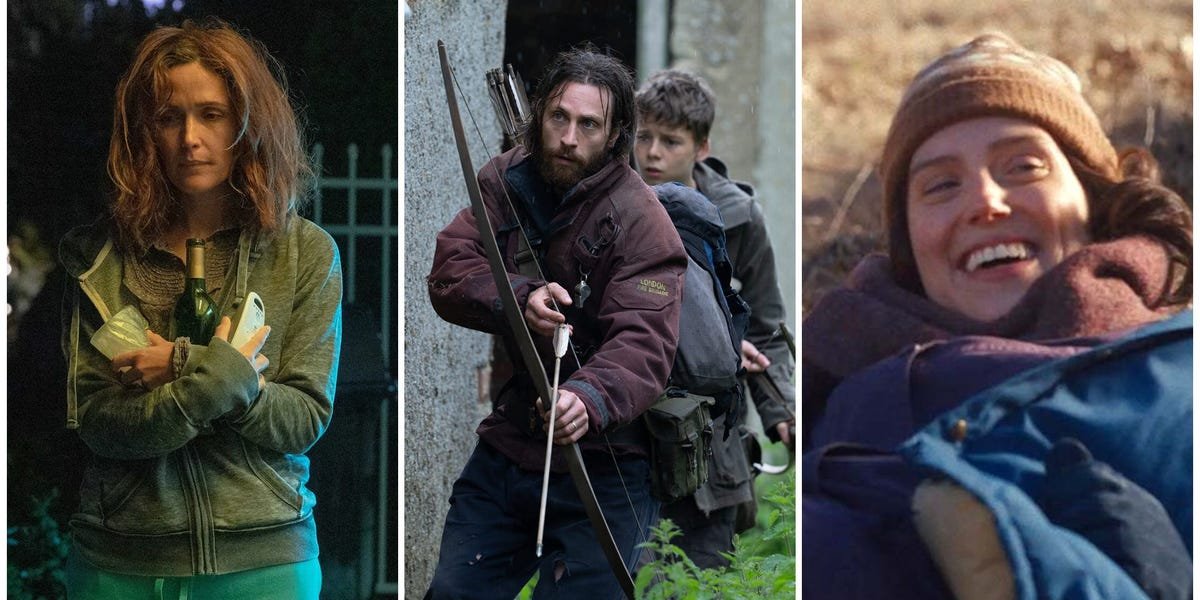
Some of the best movies of the year included “28 Years Later,” “Blue Moon,” “Sentimental Value,” “Splitsville,” “Hamnet,” “If I Had Legs I’d Kick You,” “Black Bag,” and “Mission: Impossible — The Final Reckoning,” and all but two made less than $11 million worldwide.

“The Final Reckoning,” which grossed $598 million at the box office, was still unable to become profitable due to ballooning production costs, according to The Hollywood Reporter.

Another, “Black Bag,” was a slick thriller starring Michael Fassbender and Cate Blanchett as a pair of married spies who are pitted against each other when a mole is discovered. This film was visually stunning, featured strong performances, and the tension never let up.


Michael Fassbender holding a book wearing sunglasses

“Black Bag.”

Focus Features


When it was released in March, “Black Bag” earned $44 million at the box office, likely because it catered to, for lack of a better term, “adults.” Yet Gen Z and Gen Alpha are the generations “sort of single-handedly keeping film alive” more than any others, according to reports from CinemaUnited and the National Research Group, suggesting there may be a ceiling on how far adult-focused theatrical releases like “Black Bag” can go today. By comparison, another Soderbergh-directed thriller, “Out of Sight,” made nearly double that in 1998.

Another great 2025 film, “Sorry, Baby,” was a movie written by, directed by, and starring Eva Victor in their directorial debut. Victor played a college professor grappling with the aftermath of a sexual assault. It was simultaneously heartbreaking, funny, and uplifting.

It also only made $3 million at the box office — a respectable total for a small indie film with a reported budget of $1.5 million and a very limited theatrical run, but not a smash by any means.

Another movie that made $3 million? “Splitsville,” which made me laugh harder than almost anything else I saw this year.


splitsville

“Splitsville.”

Neon


What I learned from these movies: Don’t let the “flop” label or a small box-office number scare you. Just because it didn’t have “Avengers: Endgame”-level marketing, fanfare, and box-office take-home, it doesn’t mean it’s not worth your time.

The new normal

In fact, even some of the biggest hits of the year could be considered flops by Old Hollywood standards.

Movies like “Superman,” “The Fantastic Four: First Steps,” and “Captain America: Brave New World” each earned hundreds of millions of dollars globally but fell far short of the blockbuster heights superhero films once enjoyed.

Arguably the best superhero movie of the year, “Thunderbolts*,” made $382 million worldwide, making it a superhero flop according to outlets like Variety and Screen Crush.


In

“Thunderbolts*.”

Marvel Studios


Over the last decade, viewers’ habits have changed; more people stay home and stream their favorite films, rather than head to theaters.

With the advent of streaming, fewer people are interested in going to cinemas. A US Kagan Consumer Insights survey, released in October, found that the percentage of frequent movie-goers dropped by 22% between 2019 and 2025.

Meanwhile, in July 2025, Netflix reported its best-ever numbers during an earnings call. Free streaming services like YouTube and Tubi increased viewership by 53% between 2023 and 2024, and Peacock gained 3 million subscribers in just the first week of the Olympics.

The era when every major release was expected to make a billion dollars is over.

We should all know less about marketing budgets

This comes as there’s more focus on the theater box office and studio budgets. Over the past decade, trade publications have leaned into coverage of how much money a movie needs to earn “to make its money back.”

This reporting only opens up films like Ryan Coogler’s “Sinners,” a record-breaking, singular film that depicts an area of the country rarely shown on screen, to bad-faith criticism, as viewers use data to tear a movie down, regardless of quality.


A still of

“Sinners.”

Eli Adé


It not only ignores creative value but also obscures other stories, such as how Coogler secured a rights deal to own the rights in 2050, which could set a new precedent for how creatives take ownership of their work.

Instead, the narrative was about how this film, which grossed over $360 million on a $90 million budget, per IndieWire, wasn’t close to making its money back.

It leads to things like this:

This phenomenon isn’t completely new. In Nancy Meyers’ “The Holiday,” a film released almost 20 years ago, a character complains we shouldn’t be tracking box-office returns like baseball scores: “Now a picture has to make a killing the first weekend or it’s dead. This is supposed to be conducive to great work?”

Still, with movies like “Sinners” and “Black Bag” in our rear-view mirrors, we should remind ourselves that box-office success shouldn’t matter to us cinema lovers — we should only care about how the movies are making us feel and think.

So, as 2026 begins, stop worrying and love the bomb — and an entire world of cinema will be opened up to you.


Source link