At the height of her soccer career, Abby Wambach felt invincible.
A FIFA world champion, two-time winner of the Olympic gold with the US women’s national team, and a record-setting goal scorer, she was at the top of her game and racking up awards.
“I was fit. I was capable. I was one of the best in the world, and I had medals to prove it,” Wambach told Business Insider.
But when Wambach was 35, her mother was diagnosed with colon cancer. Considered at risk because of her family history, Wambach underwent a colonoscopy. The procedure found she had polyps, abnormal growths in the colon that can become cancerous.
At the time, the recommended age for colon cancer screening was 50. While not all polyps become tumors, 15 years could have been more than enough time for Wambach to develop cancer, potentially at a stage too late for treatment.
Every time Gabby publishes a story, you’ll get an alert straight to your inbox!
Stay connected to Gabby and get more of their work as it publishes.
“If I didn’t get that screening and waited, that absolutely could have killed me,” she said.
Now, as colon cancer has become the No. 1 cause of cancer-related deaths in Americans under 50, Wambach is urging others to get screened.
She and her fellow Olympian, soccer champ, and podcast co-host Julie Foudy are raising awareness by partnering with Cologuard, a non-invasive, at-home stool test for adults 45 and older at average risk.
“It’s one of the most preventable forms of cancer if you get screened,” Foudy said. “Even if you feel fine, you have to get screened. It doesn’t take that long.”
Colon cancer cases are rising in young people
Wambach said colon cancer can affect anyone. As a pro soccer star, she was used to being in tune with her body to perform at an elite level. She never expected to have an abnormal colonoscopy, and she almost couldn’t believe the results.
“When the doctor came and told me when I’m coming back from anesthesia, I was like, ‘This can’t be true,'” Wambach said. “It doesn’t matter who you are; this can happen to anyone.”
Early detection of colon cancer is key because the disease is highly treatable in the initial stages.
Symptoms of colon cancer often occur only in later stages, when the disease has spread elsewhere in the body, and the odds of survival are significantly lower.
“If you are feeling symptoms from colorectal cancer, it is too late,” Wambach said.
That means it’s crucial to understand potential risk factors, such as family history. Wambach said her mom’s diagnosis was a turning point for the whole family to get screened.
“I just remember vividly the process that she went through, how scary it was, and how important it was for all of us to learn this,” she said.
Colon cancer screening should start at age 45 for most people, according to the American Cancer Society. That’s five years earlier than previously recommended, due to the growing number of early-onset cancer cases.
However, anyone with colon cancer risk factors, such as a genetic history or symptoms such as rectal bleeding, should get screened earlier.
Foudy and Wambach at the Cologuard Classic by Exact Sciences, a tournament to raise awareness of colorectal cancer screening and featuring patients and survivors.
Courtesy of Exact Sciences
A colonoscopy is the gold standard for colon cancer testing. Still, simple at-home stool tests like Cologuard are available for people 45 and older who are at average risk. Stool tests need to be done more frequently — every three years — and abnormal results require a follow-up colonoscopy.
Foudy, 55, has used the test herself. She said it’s conveniently done in about 10 minutes at home and should be standard practice, but many women her age aren’t up to date on screenings.
“I’m around active, healthy women all the time. I had a friend the other day who said, ‘I’ve never gotten screened,'” she said. “What are you doing? This is too easy. Go get it.”
The winter months were a blur of holiday activities and family gatherings. It felt like I was running on a treadmill from Thanksgiving into the new year, without the opportunity to get off.
As the unofficial “bringer of cheer” in my family, I feel a heavy burden to make sure we have enough fun over the holidays and work hard to create all the memories. Cookies must be baked, and decorations must be put up. And then they need to come down and get put away as I ready the family for the new year and the months ahead.
On top of that, I’m doing weekly chemo for breast cancer, which didn’t let up throughout the holiday madness. Life doesn’t stop for cancer. Eventually, I learned I needed to stop and do something for myself, though.
My diagnosis meant a change of plans
When I got my cancer diagnosis, I had to cancel planned trips to St. Maarten, Boston, and Dollywood. Not having those to look forward to was hard for me. As a travel writer, I love getting out of my regular routine for a few days to snorkel with sea turtles and dine on new cuisines.
With only my weekly chemo sessions on the calendar, I was feeling down. I knew that limiting my exposure to germs was important, but I missed my time spent enjoying Guinness in Ireland and kayaking near glaciers in Alaska. I knew I had to go somewhere, even if it was nearby.
I booked a one-night staycation near home
My solution: I booked myself a night away at West Cliff Inn, a boutique hotel by the beach in Santa Cruz that’s just a 30-minute drive from my home. I knew this wouldn’t be the same as a week in the Caribbean, but it was the perfect combination of time by myself and relaxation.
The author said she enjoyed having time and space to herself while on this solo trip.
Courtesy of Kate Loweth.
When I checked in, I found that my room was extra spacious and could have accommodated a friend or two. Did I think maybe I should have brought someone with me? Yes. But that thought vanished as soon as I set out to explore the area on my own
Simple moments helped me reset
I took a long walk on the beach and hiked along the cliffs, watching surfers just offshore. I enjoyed an umbrella drink and coconut shrimp at a tiki restaurant on the water, where I sat in the rotating bar area. A friend texted me at the perfect time with some gossip, and it felt like we were enjoying the vibrant sunset together.
The writer said she enjoyed a long walk on the beach during her stay in Santa Cruz.
Courtesy of Kate Loweth.
Before it got too dark, I headed back to the hotel and enjoyed a salt soak in my massive tub before cozing up in my king-size bed at an early hour to enjoy the latest episode of “Below Deck.”
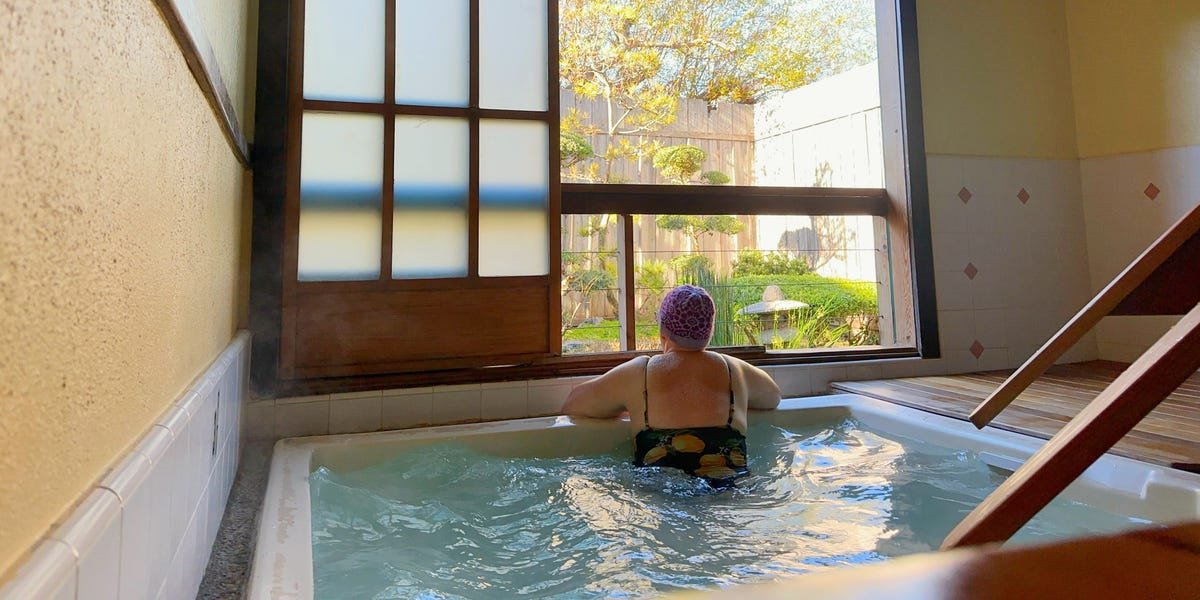
The next day, I visited a nearby spa and enjoyed a massage and a dip in a private hot tub before heading back home. Few things are perfect, but these 36 hours came pretty close.
I learned I don’t need a big trip to feel refreshed
This trip wasn’t about avoiding my family. It was about giving myself something to look forward to and acknowledging the difficult time I am going through.
I got home and felt ready to tackle what comes next, and I’m going to keep that in mind as I continue to move forward.
Laura Behnke did not have time to worry about cancer when she first saw blood in the toilet.
She was trying in vitro fertilization for the fourth and final time, and her focus was on getting pregnant after three failed rounds with no healthy embryos. Everything else could wait.
A few days before the implantation was scheduled, she saw a kind of red mucus coating her stool, and thought: “‘I have been under an immense amount of stress. I know I’ve been straining. This has to be hemorrhoids, right?'”
“I just told myself, ‘You know what? Calm down, take some deep breaths, stop straining, and this will all go away, and it’ll be fine, and you can go on and have a baby,'” Behnke told Business Insider.
It would be over a year before she discovered she had rectal cancer, joining a growing cohort of younger adults being diagnosed with the disease decades earlier thanexpected.
Cancer was not on her radar
“I felt good,” she said. “There was no way I could have cancer.”
courtesy of Laura Behnke
After that fourth round of IVF, at age 41, Behnke did get pregnant. At first, she was shocked. Hearing a heartbeat at five weeks made it finally feel real. She was overjoyed.
Behnke continued to see some blood in the toilet intermittently, but it was easy to brush off because hemorrhoids are common during pregnancy. She didn’t know the difference between the drops of blood typical for hemorrhoids, and the red mucus she saw that she now knows was characteristic of colorectal cancer.
“Nobody at any point asked me: ‘What’s the bleeding like? How often is it happening?'” Behnke said. “We all just said, ‘Oh, hemorrhoids, cool. Moving on. We have other things to worry about.'”
In her third trimester, Behnke did develop a swollen external hemorrhoid, which made it hurt to sit down. For two days, she tried not to put any pressure on her bottom. In the car, she sat on a donut pillow. On the couch, she laid on her side. This bleeding looked and felt different, like bright red food dye coloring the toilet bowl. She took medication to manage the pain, and got on with the business of getting ready to be a new mom. A few months later, her daughter was born.
Behnke was enjoying being a new mom, and felt fine. She assumed the blood she saw in the toilet was caused by hemorrhoids, swollen veins that can develop around the anus, which are a common side effect of pregnancy.
courtesy of Laura Behnke
After six months of sleepless nights and newborn feedings, Behnke was finally starting to feel like herself again. She was regaining her strength, losing weight, and feeling in control of her body after years of IVF treatments and a pregnancy.
By now though, Behnke saw bloody mucus in the toilet even when she didn’t have a bowel movement, which she attributed to that pesky external hemorrhoid. Her bowels were also changing shape, and her stools sometimes coming out pencil thin.
Behnke decided to see a colorectal surgeon to get the swollen hemorrhoid removed. The doctor asked her about all of her symptoms, sparing no details about the blood or the poop, and then, to her surprise, told Behnke she urgently needed a colonoscopy.
“It could be a whole lot of things other than cancer, but we need a colonoscopy to find out for sure,” Behnke remembers her doctor saying.
After over a year of bloody stools, that was the first time Behnke heard the word “cancer” uttered.
Rectal cancer is on the rise among people in their 40s
Behnke went through radiation, chemotherapy, and then surgery to remove part of her colon.
courtesy of Laura Behnke
When the doctor told Behnke she had late-stage 3b colorectal cancer, she broke down crying. “But we have a seven-month-old!” she wailed into her husband’s shoulder.
“How could I be that sick and feel that good?” she wondered. “I had just had a completely normal and healthy pregnancy.” Suddenly, she felt a debt of gratitude to that annoying little hemorrhoid that led to her diagnosis.
The colonoscopy revealed that cancer had spread to some of the lymph nodes around her rectum, and was edging closer to other parts of her body. She was thankful that the prognosis was still relatively good. With radiation, then chemotherapy, and surgery afterwards to remove part of her colon and rectum, doctors were confident they could wipe the organ clean.
At 42-years-old, Behnke was diagnosed with what has quickly become the deadliest cancer for people under 50 in America.
“The landscape of colorectal cancer is changing rapidly,” Rebecca Siegel, an epidemiologist and the senior scientific director of surveillance research at the American Cancer Society, told Business Insider.
Experts don’t know why, but many of these new, young-onset colon cancer cases are rectal, prompting bloody stools. Other common symptoms in this age group include persistent stomach cramping or severe abdominal pain, low iron levels, and changes to bowel movements, including the narrower stools Behnke saw.
Research suggests that bloody stools are an early warning sign for about 40% of rectal cancer patients. “There’s an opportunity for earlier diagnosis, but the problem is, especially for younger people, they’re not aware of the symptoms and they don’t want to talk about the symptoms,” Siegel said. “And sometimes they even do go to the doctor with these symptoms, and they’re diagnosed with hemorrhoids or something else.”
A couple of weeks after Behnke had her first dose of radiation, she stopped bleeding into the toilet.After 25 sessions of radiation, then four months of chemotherapy, and finally, surgery that removed parts of her colon and rectum, she landed in diapers alongside her daughter for a few weeks. Doctors said every visible trace of the cancer was gone.
Slowly, over time, her colon has healed and she’s readjusted to a more normal bathroom routine, but she says things will never be quite the same down there. She prioritizes getting plenty of fiber in her diet from colorful vegetables, and also takes fiber pills twice a day, to help with the lingering symptoms.
“I am alive and I am healthy and all of this is workable,” she said.
This is not an ‘old man’s disease’ — talk to your doctor about bloody stools or unexplained stomach pain
Her daughter will start going in for colonoscopies at age 32, since that is 10 years younger than Behnke’s age at diagnosis.
courtesy of Laura Behnke
Colorectal cancer, Behnke said, is not an “old man’s disease” anymore. After her diagnosis, she urged her younger brother to get a colonoscopy, and doctors discovered he had precancerous polyps developing. Her young daughter, she said, will start having colonoscopies in her early 30s, because of her increased risk of developing colorectal cancer.
Behnke said she’s grateful she met “the right surgeon at the right time,” a doctor who asked the right questions, and didn’t dismiss her symptoms because she was too young or postpartum.
“No rectal bleeding is okay,” she said. “If you do have any sort of symptoms, any sort of concerns, anything that doesn’t feel right, you have every right to go ask a doctor about it and to demand some answers.”
Katie Davis lived the typical busy college student life when she first started feeling stomach pain.
Then a 20-year-old junior and marketing major at Westchester University in Pennsylvania, Davis split her time between classes, her job at Playa Bowls, and her sorority. The pain in the top right of her abdomen was easy to ignore because it was so sporadic and fleeting.
Davis was living the normal life of a college student when she started experiencing pain in her abdomen.
Katie Davis
“It was on and off, it would come in waves,” Davis, now 21, told Business Insider. “I would go a good while without it, and then it would come and only last a few minutes, sometimes even a few seconds.”
Over time, the pain — when it showed up — got more severe, sometimes causing her to double over in pain. Three months after it started, she went to a local urgent care while at her boyfriend’s family beach house. There was no ultrasound equipment at the facility, and she was told that, based on her symptoms, it could be an ovarian cyst that would hopefully go away after her next period.
Her doctor suspected colon cancer before the biopsy
Davis had a feeling she had colon cancer because of the private room she was placed in after her colonoscopy.
Katie Davis
Davis was told to keep an eye on the pain and go to an emergency room if she felt other symptoms like fever or nausea. A few days later, when she started getting chills and vomited at her parents’ home, Davis did just that.
Every time Julia publishes a story, you’ll get an alert straight to your inbox!
Stay connected to Julia and get more of their work as it publishes.
“That was the first time anything more serious than an ovarian cyst was brought up to me,” Davis said. According to her ultrasound and CAT scan, her colon was inflamed and appeared to have free fluid, a potential indication of infection, trauma, or cancer.
The ER doctor thought it could be Crohn’s or ulcerative colitis, or, in more serious cases, colon cancer. He scheduled a colonoscopy.
“I didn’t think I was going to come out of it having cancer or anything really serious,” Davis said. Her first clue that something was wrong was when she woke up from the procedure. She noticed she was placed in a separate room from the other colonoscopy patients.
The doctor who performed the procedure told Davis and her mom that he was “pretty positive” the mass in Davis’ colon was cancerous. “He said he’d been doing it for long enough that he could kind of tell,” she said.
Shortly after, Davis was diagnosed with stage 2 colon cancer.
“I didn’t really know what to think or feel,” Davis said about learning her diagnosis. “Definitely just numb and confused at first, like ‘how did I get this?'”
Treatment dragged on due to side effects like vision loss
Davis had to switch to a milder and prolonged treatment plan when traditional chemo led to serious side effects.
Katie Davis
After diagnosis, Davis had surgery on her colon and was supposed to start three months of chemotherapy soon after. But, the side effects complicated her treatment.
“I couldn’t tolerate the more hardcore chemotherapy,” Davis said. She developed extreme fatigue, nausea, and neuropathy, which she said felt like “pins and needles” in her hands every time she encountered temperature changes.
The most alarming side effect was her vision loss. “My vision would go completely black,” Davis said. Her parents researched the drug,oxaliplatin, which can cause vision issues in some patients. Davis also found the Colorectal Cancer Alliance (CCA) and said hearing similar stories around common side effects helped her stay informed about alternative treatment options.
Davis was put on oral-only chemotherapy medication, prolonging her treatment from three to six months. The only upside was that she no longer had to travel back and forth for treatment, since she could take it wherever she was.
Davis tried to keep her life as normal as possible during treatment.
Katie Davis
All the while, she was still attending her college classes in person as often as she could, even though her professors knew about her colon cancer diagnosis. “My boyfriend lives there, all my friends live there, so I tried to be there as much as possible,” she said. “I tried to keep up with my stuff as much as I could, but it definitely was difficult to do schoolwork when I felt as horrible as I did on the chemo.”
She’s glad she listened to her body
Davis finished chemo in June 2025 and was declared cancer-free shortly after. Going forward, she’ll have blood tests every three months and an annual colonoscopy.
Now a senior, she’s a marketing intern at a financial advisory firm and is trying to figure out her plans post-graduation. She said finishing treatment made her feel “excited to be normal again” and get back to her normal college life without worrying about doctor’s appointments or treatment side effects.
Now cancer-free, Davis advocates for more awareness of colon cancer symptoms in young people.
Katie Davis
Looking back, she’s grateful for noticing the warning signs early enough. “A lot of my doctors said that most people at my age or with my stage wouldn’t really have the symptoms that I had that let me know that something is wrong,” she said. “I’m glad that I learned to listen to my body.”
It’s her biggest piece of advice to young people with similar or subtle symptoms, as colon cancer recently became the leading cause of cancer death in people under 50. She said joining the CCA and colon cancer Facebook groups can also help raise awareness of potential symptoms.
“You’re not really alone going through it,” she said, whether you’re worried about symptoms or actively undergoing treatment. “There are other people who are experiencing it too who can help you.”
This as-told-to essay is based on a conversation with Mark Seguin, who was surprise-diagnosed with colon cancer five years ago at age 35. It’s been edited for length and clarity.
I’ll never know for sure why I got colon cancer at age 35.
Sure, I can look back now and point to things that weren’t perfect. Work stress, ultra-processed foods, having two young kids, I wasn’t taking care of my body in exactly the way that I used to — especially after weathering several snowboarding injuries, I kind of slowed down on my fitness. But I don’t feel like it’s healthy to “would have, could have, should have” about cancer or blame yourself. Especially because some people in peak physical fitness with the cleanest diets get this disease.
Ever since I was a teenager, I’ve loved snowboarding.
Courtesy of Mark Seguin
There weren’t really any obvious signs that I was sick. Just one day, I woke up and it hit me. A searing pain in the middle of my stomach as soon as I opened my eyes. I literally could not get out of bed. The pain was so bad, I couldn’t get my body upright. It felt like someone was ringing out a rag inside of me.
I’d later learn this was because — unbeknownst to anyone — food was getting stuck behind the tumor in my colon. Unable to move through my system properly, waste was building up and wreaking havoc.
Every time Hilary publishes a story, you’ll get an alert straight to your inbox!
Stay connected to Hilary and get more of their work as it publishes.
I just assumed I ate something bad the day before. I wondered what it could have been.
By the afternoon that day, I was feeling better, and I got up and carried on. But about a month later, it happened again. This time, it was the same type of stomach pain, but not as severe. Again, I was like, “Man, what am I eating that keeps doing this to me?”
A couple more months went by. Then again, the pain returned, this time on the right side of my belly. Alarm bells went off. I immediately thought of all the stories I’ve heard about people ignoring stomach pains, and then their appendix ruptures and bursts. That was my wake-up call to get myself to the ER and get checked out. Still, cancer was not on my radar. I never saw any blood in the toilet, so I didn’t think I had to worry about colon cancer.
After searing stomach pain, and a trip to the ER, a GI doctor finally found my cancer
I had to get part of my intestines taken out.
Courtesy of Mark Seguin
Thankfully, I didn’t have appendicitis, but my ER doctor referred me to a gastroenterologist for some follow-up tests. The GI doctor said I was young, healthy, and there was probably nothing to worry about, but suggested we do a colonoscopy, just to be safe.
I’ll never forget the look on his face when he walked in to deliver my results. He looked like he’d just seen a ghost. “I’m pretty sure you have cancer,” he said. It was serious too: late, stage 3 colon cancer that had spread to my lymph nodes. He said I won the bad luck lottery.
I reacted like I always do when I get hurt snowboarding, break a bone, or throw my back out: What’s the next step? I have to know what to do next.
I had trouble staying hydrated during chemotherapy. Even the smell of water repulsed me.
Courtesy of Mark Seguin
Surgery, draining high-dose chemotherapy treatments, and lots of days in bed. That’s what came next. The chemo made me super sensitive to cold. Breathing cold air or drinking cold water felt like pulling apart velcro in my throat. I couldn’t drink anything cold or enjoy popsicles to stay hydrated, but warm liquids made me nauseous. I became hyperattuned to even the smell of water, and it repulsed me. I had to get hooked up to intravenous hydration roughly half a dozen times while going through chemo because I just couldn’t eat or drink much of anything.
After colon cancer, I committed to more strength training
By the time I rang the bell and finished chemotherapy, about five months after my diagnosis, I felt so frail and small. I’d lost 30 pounds. I hated feeling that way. I wanted to be able to pick up my kids when I needed to. My youngest was only 5 years old when I was diagnosed. I can’t let my boys outrun me just yet! So at the end of my chemotherapy course, I started a strength training program. It was the same one I’d used in high school that helped me get stronger, a program from a baseball fitness coach who helps train pros, including the New York Yankees, Eric Cressey.
At first, I was worried: was training safe for a cancer patient? Could it derail my recovery? And would I even have the energy? Initially, after chemo, even short hikes were draining, but I pushed forward, including squats, presses, and broad jumps into my routine.
At first, even family hikes on flat terrain were super draining. But I kept trying.
Courtesy of Mark Seguin
It turns out, there’s a pretty wide and growing body of evidence suggesting that working out is great for cancer rehab — and especially for colon cancer. After about six months, I was thrilled to be setting all-time bests for my lifts and presses. It was such a proud moment.
There was a super compelling new study that I came across in 2025, which shows that exercise can be as effective at preventing colon cancer relapse as drugs. It was a wild finding that shook oncologists and excited doctors nationwide when it was revealed last year at the nation’s largest cancer conference. I’m just glad I have more reasons to keep doing what I’m doing. Right now, my routine is a basic two days a week of strength training, plus some cardio like hikes with a weighted vest or an incline treadmill jog when I can fit it in.
I cannot let these boys beat me just yet!
Courtesy of Mark Seguin
Part of what motivates me to work out is the idea of staying healthy and cancer-free, and — I must admit — part of it is just my dad pride. My youngest wants to race me all the time. He’s 10 now, I can’t let him beat me yet, okay?
I eat healthier now, but I’m a realist
I have also changed up my diet, incorporating more fiber-rich foods into my routine. I was raised in the “fast-food era,” but now I try to avoid the ultra-processed and cured meats that are so clearly linked to more colon cancer, like sausages, hot dogs, and bacon. (I rarely have bacon now, which sucks.)
I try to incorporate more veggies and beans into my diet, things that we know are good for colon health. In true Mediterranean Diet fashion, I try to make sure dinners include something green — if it’s chicken, I might add some broccoli, if it’s spaghetti, let’s dish up a side of green beans. I’m not perfect about it, but I think any little effort helps. When I make tacos now, I mix the ground beef with some mashed black beans. That way, it’s a little bit less meat, but also you’re getting fiber from the beans. I haven’t overhauled my diet completely, but I’ve been finding the little evidence-backed opportunities, which I think is honestly a more realistic strategy.
Exercise, a healthy diet, and managing stress have all been important to my recovery.
Courtesy of Mark Seguin
It’s been five years since my cancer diagnosis now, and I’m almost in the clear. My doctors say if my next scan looks good, and my blood work remains clean through the rest of the year, they’re going to release me completely. It’s kind of a scary prospect to go out into the open world without your oncology team looking out for cancer. I’ve found peace knowing I am doing a lot of the things we know decrease the odds of recurrence: exercising more, eating better, and decreasing stress. I also take a baby aspirin, which recent studies have suggested may reduce the risk of recurrence of certain types of colon cancer.
3 rules to live by for finding colon cancer
If you’re 45, get a colonoscopy. Don’t delay the care that could save your life.
Courtesy of Mark Seguin
I try to always remember a few things that can help identify colon cancer early, and share them with my friends when I can.
First of all, if something feels off, go get it checked out.
Second: make that follow-up appointment.
My doctor said the one thing I did that so many folks miss is actually going in for that next appointment, after leaving the ER. Don’t delay the care that might save your life.
Finally, if you’re 45, get a colonoscopy.
I know, we snowboarders like to tough things out sometimes. Don’t do that with your colon. I’m not going to miss an opportunity to say, “Hey, you’re 45, right? Did you get that colonoscopy booked?”
I still love to snowboard, and try to bring my colon cancer advocacy to the slopes as much as I can.
Courtesy of Mark Seguin
I try to keep it casual and not be the colon cancer weirdo out on the slopes, but I do want to advocate for more awareness of young colon cancer. Colon cancer is now the leading cause of cancer death in people under 50 — and the only cancer that’s becoming more deadly in my age group, not less. If I can help one more person get checked and find cancer earlier, that’s success.
This is an as-told-to essay based on a conversation with David Ronca, a retired video systems engineer. He spent 12 years at Netflix and six years at Meta. This story has been edited for length and clarity.
My time at a startup in the early years of my engineering career was like a really bad relationship.
I joined a company that specialized in video playback around 2000. I loved working on video. I consider those seven years like going to school, and I came out with a Ph.D. in practical video systems. But it was the hardest seven years I’ve ever had in terms of work demands.
I was told when I joined that it would be really important that you’re seen around here a lot. So I would work until 7, 8, 9 — sometimes until 10 p.m. Then we started hitting delivery schedules, and I was getting to work around 10 in the morning and going home sometimes at 2:30 in the morning. We’re talking 14-hours days, six to seven days a week. Eighty hours a week would’ve been a break.
We didn’t have good direction. We’d be four or five months into solving a hard problem before leadership would stop us and say, “Go work on this instead.” It was madness.
We were using work hours to compensate for really bad decisions.
In January 2004, I started feeling ill. On a Sunday, I didn’t feel so good, and by midweek, I got worse.
On Friday night, January 17, my wife took me to the emergency room. The doctor told me, “This is likely colon cancer.” After the first surgery, he said, “There’s no way you have a tumor like this and it’s not cancer.”
Two weeks earlier, I had been running and feeling great. Within a week, I was in a hospital bed on machines.
It took another week before doctors could do the full surgery. And you spend that time with no idea what they’re going to find. That was a very dark week.
My mother died of breast cancer when she was 48. I was 16. Now, I’m in the hospital at 44. I remember thinking, “History doesn’t repeat, but it rhymes.”
My wife would bring the three kids. My oldest, who was seven, would sit quietly in the room with me. My youngest was two years old. He didn’t really know me.
I was looking at my young son, thinking he’s going to grow up without a dad.
After surgery, they told me it was stage 3 colon cancer. They removed 60% of my colon. There was lymph node metastasis. My five-year survival prognosis was about 25%.
‘I will not work like this’
I went back to work part-time at first.
I was told that I had used up all my sick leave and vacation and was put on California disability, which is around $200 a week.
By that time, this was a company I had spent four years working 24/7 for.
I told my boss, “I’m sorry, I will not do this. I still want to work here, but if I have to leave, I will quit. Because I will not work like this.”
From that point on, I didn’t. And that was the irony of it all.
I feel like I did some of my best engineering after that. The real change was that I was no longer wasting my brainpower and my thinking on junk.
You don’t do good work after 12 hours. You can’t work sustained all-nighters and be productive. The quality of your work is going to suck. I don’t care who you are. For most mere mortals, you try to work those hours, you’re just not going to be doing good work.
I also started making intentional decisions for life, not just work.
I coached soccer for all three of my kids. I went to their games. My daughter did ballet, and we were there all the time. We started planning and taking family vacations — hiking in the mountains, RV road trips, and Maui.
I realized you have to work to have a life, but you have to have a life to work. So you want to stand in the middle of those things.
Hours worked are not a performance metric
In 2007, after several clean scans, I joined Netflix. I delayed accepting the offer until I got my scan report. I didn’t want to change jobs yet because if you have positive liver metastasis, you’d be lucky to get two years.
In my interview, Patty McCord, the chief talent officer at the time, told me, “We don’t value 24/7 work. You won’t be successful here working all the time.”
That was almost foreign to me. But it also didn’t mean we didn’t work hard.
At Netflix, I was part of the early streaming team — maybe 12 to 16 people. We made aggressive schedules, and we didn’t miss them. We launched a Netflix app on the original iPad on Day One within two months.
The culture at the company was: If you have to work 24/7 for us to be successful, you’ve got a problem, and we’ve got a problem, and we’re going to fix it.
Even at Meta, my favorite poster had a silhouette of a rocking horse that said, “Don’t mistake motion for progress.”
In other words, high performance is not measured by how much work you do. It’s measured by how impactful your results are.
This is not to say that it’s wrong to work more than eight hours. Instead, you should understand why you’re working more hours. It should be intentional. Intentional exceptions.
If I were to tell my younger self anything, it would be to make work-life balance part of your DNA. Learn to take time off.
Don’t wait until you have cancer or some other near-death experience to realize this.
Over the past five to 10 years, OB-GYN Dr. Thaïs Aliabadi noticed an uptick in younger cancer patients in her practice.
Suddenly, more in their 30s and 40s were getting diagnosed with breast, uterine, and colon cancer, the latter of which is now the leading cause of cancer death in people under 50.
As to the causes, Aliabadi has her own theories.
“I think our lifestyles, our metabolic changes, the rates of obesity, the increase in insulin resistance, our poor diet, lack of exercise, chronic inflammation — these have all played a huge role,” she told Business Insider. She also mentioned environmental pollutants that can disrupt the endocrine system and the fact that women are getting pregnant later or not at all, which can change hormone exposure and increase the risk of breast cancer.
In better news, she also said higher rates of diagnoses also mean “we’ve gotten better and better at cancer detection and risk assessment,” as awareness around early symptoms have also improved.
While so many factors can feel out of our control, “I wish every woman knew that cancer is not always completely random,” Aliabadi said. In some cases, “we can actually see risk long, long before the disease appears.”
Aliabadi shared her three tips for preventing cancers in women (such as breast and ovarian cancer), from analyzing your risk to focusing on your metabolic health.
Improve your metabolic health with diet, sleep, and exercise
Regular exercise can lower the risk of multiple cancers.
skynesher/Getty Images
In terms of overall prevention, Aliabadi said starting a few healthy habits as early as possible is key.
“If you want to lower your risk of cancer, number one on the list is to maintain a healthy metabolic profile,” she said. It means lowering cholesterol, inflammation, and visceral fat — the fat surrounding your internal organs.
She said exercise, such as strength training and cardio, improves insulin sensitivity, reduces inflammation, and balances hormones, lowering the risk of multiple cancers.
Eating a diet “rich in whole foods” and cutting back on ultra-processed foods can also make a huge difference by boosting gut health and cutting down cholesterol.
Other good habits for metabolic health include stress reduction and getting adequate sleep. “Sleep deprivation is poison to our longevity, and persistent stress can affect our hormones and our immune pathways,” she said.
These habits don’t just decrease cancer risk — they also reduce the risk of cardiovascular disease, diabetes, and other chronic illnesses.
Cut down on carcinogens where you can
Even moderate drinking increases cancer risk.
Elena Noviello/Getty Images
Aliabadi said environmental toxins, like chemicals in food packaging, can be “a little tougher” to be aware of because of how ubiquitous they are.
However, there are still ways to reduce exposure to carcinogens (cancer-causing agents) and endocrine disruptors. A commonly spoken about one is tobacco, so abstaining from smoking cigarettes or vaping “can significantly lower many cancer risks,” she said.
The one she really emphasized cutting back on is alcohol, as even moderate drinking can increase cancer risks.
“In my office, I have zero tolerance for alcohol,” she said. “Not even a couple of glasses a week.”
Collect data on your body
Depending on risk factors, you might need to start screening earlier.
German Adrasti/Getty Images
While cancer screenings have recommended starting ages — some of which have been recently lowered to reflect an uptick in younger patients — Aliabadi says you shouldn’t rely on them.
“We need to stop thinking that prevention starts at 40, that mammograms start at 40,” she said. “Prevention starts in our teens and in our 20s, believe it or not.”
She urges women to take a two-minute online test and learn their lifetime risk assessment score for breast cancer, which uses information like family history, genetic mutations, and breast density to more accurately estimate when you should get screened. Olivia Munn, a patient of Aliabadi’s, famously took the test and was diagnosed with early-stage breast cancer despite having no symptoms.
Aliabadi said that testing for seemingly unrelated conditions, like PCOS, endometriosis, fertility, genetic conditions, and insulin resistance, can all play a role in evaluating your cancer risk and give you a better idea of how vigilant you should be.
Aliabadi, who herself had a high lifetime risk assessment score for breast cancer and was initially dismissed by doctors, said a patient knowing their body helps them better advocate for themselves and seek out second opinions if needed.
“If someone at the front desk tries to scare her away, she will be her own health advocate,” Aliabadi said. “She will know exactly why she’s there and why she needs that mammogram.”
A GoFundMe for James Van Der Beek’s family highlights a harsh reality of young cancer diagnoses: they can be financially devastating.
“The costs of James’s medical care and the extended fight against cancer have left the family out of funds,” reads the fundraising page.
The effort raised over $1 million in 24 hours following the actor’s death from colorectal cancer on February 11.
Van Der Beek, who was 48, was diagnosed with stage 3 colon cancer in 2023 and publicly announced his diagnosis in late 2024. He is survived by his wife, Kimberly, and their six children. The fundraiser says the money will help pay off Van Der Beek’s care, cover household expenses, and support the kids’ education.
The family’s story underscores the financial struggles for millions of Americans navigating a cancer diagnosis under 50. While it’s hard to face steep healthcare costs at any time, it can be especially challenging during prime earning years. Van Der Beek worked in TV and movies from the 1990s to the early 2020s.
Every time Allie publishes a story, you’ll get an alert straight to your inbox!
Stay connected to Allie and get more of their work as it publishes.
Young cancer patients lose $5,000 in yearly wages
Business Insider heard from dozens of patients as part of a yearlong investigation into young cancer cases. They told us about the credit card debt they incurred from treatment, the skyrocketing cost of health insurance, and the impact of cancer on their working lives long past recovery.
Our newsroom collaboration with health economists at GoodRx found that the average 30-something with a stage 3 colon cancer diagnosis spends $45,000 out of pocket in their first year of treatment. Chemotherapy, prescriptions, insurance premiums, fertility treatments, and unexpected costs like transportation and mobility aids are included in that figure.
Lost wages are too — young patients in their prime earning years typically miss out on thousands of dollars in income.
The GoodRx analysis of data in the national Medical Expenditure Panel Survey found that the average cancer patient ages 18 to 44 loses $5,104 in annual wages and 26 days of work due to illness. This is markedly more than older patients outside their prime working window: Patients ages 45 to 64 lose $2,903 in wages and 18 days of work.
These numbers are averages, and a particular patient’s wage losses and costs may vary depending on their age, job, treatment plan,and location. But it highlights a truth for young adults like Van Der Beek: Bills for cancer care can hit at a time when people are financially vulnerable or facing income instability.
Financial challenges can also be compounded by career setbacks. Young cancer patients told Business Insider they struggled to balance their workload with constant medical appointments and worried about losing out on promotions. Some had to quit their jobs, while others couldn’t afford to give up their employer-sponsored health insurance. Medical debt is among the top causes of bankruptcy in the US, and is more frequently reported by millennials than any other generation.
What’s harder to capture in data is the emotional toll young cancer has on patients, especially those who consider their careers to be part of their identities.
As Van Der Beek told Business Insider last year:“All these beautiful things that I love, and I used to define myself as — a father, a provider, a husband — all that got taken away, or at least paused. I had to sit there and say, ‘Well, what am I?’ And it was, ‘I’m still worthy of love.'”
Actor James Van Der Beek’s wife, Kimberly, appears to have backed a GoFundMe in the wake of the “Dawson’s Creek” actor’s death on Wednesday from colorectal cancer.
The campaign — shared on both James and Kimberly’s Instagram stories — states the mother of the star’s six kids as the organizer.
The initiative, which had raised over $598,000 toward the 1 million target by 7:30 p.m., primarily called for donations to help cover 48-year-old Van Der Beek’s medical bills.
“In the wake of this loss, Kimberly and the children are facing an uncertain future,” the text of the GoFundMe said. “The costs of James’s medical care and the extended fight against cancer have left the family out of funds.”
It said the bereaved family is “working hard to stay in their home and to ensure the children can continue their education and maintain some stability during this incredibly difficult time.”
Every time Jane publishes a story, you’ll get an alert straight to your inbox!
Stay connected to Jane and get more of their work as it publishes.
Van Der Beek’s wife announced his death on Instagram
The appeal went on to say that financial support from others would make a “world of difference” as Van Der Beek’s loved ones “navigate the road ahead.”
The money raised was said to help fund the family’s living expenses, pay bills, and support the kids’ education.
“Every donation, no matter the size, will help Kimberly and her family find hope and security as they rebuild their lives,” the GoFundMe said.
In her Instagram story, Kimberly wrote, “My friends created this link to support me and our children during this time. With gratitude and a broken heart.”
Kimberly and James Van Der Beek on the red carpet.
Phillip Faraone/Getty Images
A spokesperson for GoFundMe told Business Insider, “We are working with the organizer to ensure funds safely reach the intended beneficiary.”
They added, “Funds are being held safely by our payment processor in the meantime.”
Kimberly announced her husband’s death on Instagram, saying, “Our beloved James David Van Der Beek passed peacefully this morning.
“He met his final days with courage, faith, and grace. There is much to share regarding his wishes, love for humanity, and the sacredness of time. Those days will come.
“For now we ask for peaceful privacy as we grieve our loving husband, father, son, brother, and friend.”
2 months ago, the star said he felt ‘strong’
Van Der Beek received his cancer diagnosis three years ago. He made his final public appearance on NBC in December when he seemed optimistic about his health.
“I feel much, much better than I did a couple months ago,” Van Der Beek told interviewer Craig Melvin.
He added, “It’s been a longer journey than I ever thought it would be. It’s required more of me — more patience, more discipline, more strength than I knew I had. I knew I was strong — I didn’t know I was this strong.”
The same month, the 90s heartthrob auctioned off personal memorabilia from the filming of “Dawson’s Creek” to help his family and meet bills for his cancer treatment.