
My-son-bought-a-2-car-and-learned-how-to.jpeg

My son bought a $2 car and learned how to fix it himself. It gave him the independence he was craving.

My eldest felt a strong urge to own a car for most of his teenage years. He would pop into the living room and show his dad and me his latest internet find, usually a 20-year-old jalopy with questionable reliability costing several thousand dollars.

Each summer break, he would talk about buying a car with us. Each time, we wouldn’t say no. We would just urge him to consider his situation as a full-time student with an uncertain future.

We provided transportation to and from school, and while there, he walked, rode a bike, and grabbed rides from friends. Each time, he decided on his own that it might not be the smartest time to invest a couple of thousand dollars in a car of questionable repair.

He got a deal from a family friend

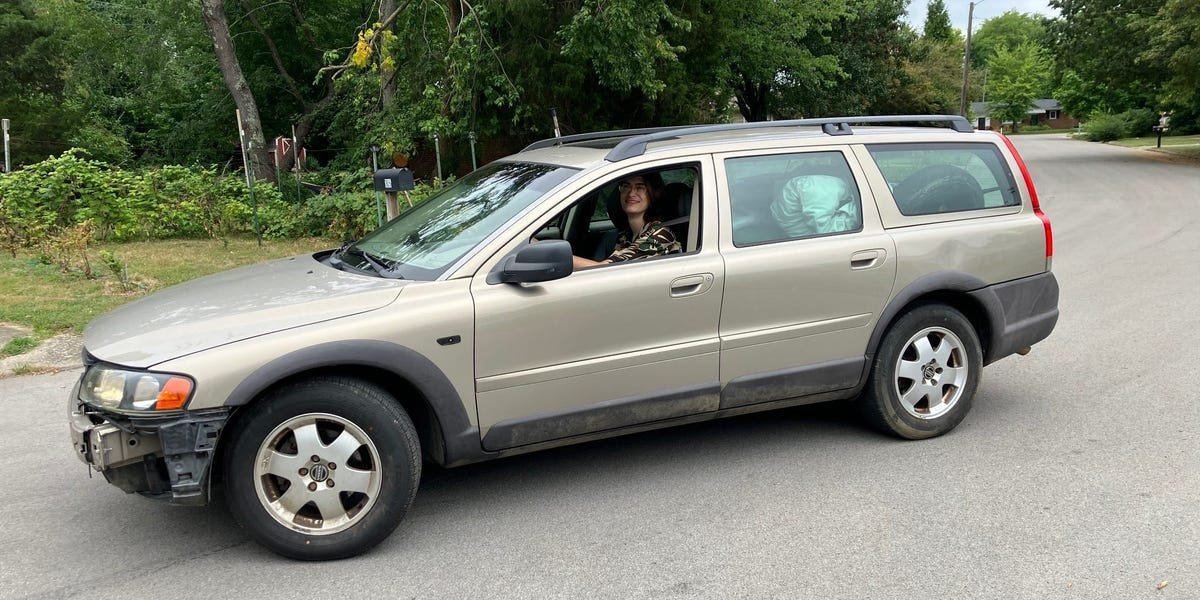
The summer before his junior year of college, however, a family friend offered him a deal he couldn’t pass up. It was a 20-year-old Volvo wagon that had a run-in with a deer. The front end was crumpled, it was undrivable, and he didn’t have the title. But the price was right — $2, twice the friend’s original purchase price of a buck.

In some ways, it was a bold move. My son didn’t have much experience in car mechanics. During that school break, he put money and time into repairs. He straightened the front radiator support with a winch so all the parts would fit again. He replaced the radiator and flushed out the intercooler. By the end, it stayed in motion long enough to limp to a storage barn for the winter.


Abandoned car

The author’s son learned how to fix the car with YouTube videos.

Courtesy of the author


The next summer, it was his main focus. He installed a new radiator fan, bought a new battery. Replaced two tires and had them aligned. Put in a new headlight and did more bodywork. He cleaned it, inside and out. And just a couple of days before returning to college, the crowning glory: a salvaged hood that perfectly matched the golden hue of his car.

He learned a lot from fixing the car

There was a fair amount of angst. Figuring out the process for issuing a new title. Hunting down the owner who last had it and arranging a meeting. Ordering the wrong or incomplete parts and having to send them back. Determining what needed to be fixed and how much it cost. Calculating how much he should spend, even after fixing it up, the car was probably only worth about $2,000.

He elected to do much of the work himself, spending hours at the “University of YouTube.” At one point, as he lamented the money he had spent so far, with the possibility that it would all be for naught, my husband asked him how much a college credit hour costs. My son looked it up. It was exactly what he had spent so far on the car. My husband said, “Haven’t you learned a lot?”


Young man posing with car

The author says her son learned so much from fixing his own car.

Courtesy of the author


That helpful reframing stuck: The night before he drove the car to college, my son commented, “Hey, I got a free car at the end of that college class.” We celebrated with him that evening, telling him how proud we were of his persistence and frugality, of his push to learn something new.

He got the independence he wanted

Seeing him drive off in that car left an indelible impression on me. Armed with his insurance’s roadside assistance, a toolbox gifted by his dad, and a bag of extra fluids in the passenger seat, he set out on the 8-hour, 57-minute drive to York College in Pennsylvania from our home in Kentucky. He couldn’t shake the small, satisfied smile on his face. I couldn’t shake my delight and my apprehension.

Being the mom that I am, I asked him to text whenever he stopped so we could track him on his journey. First stop: at the coffee shop halfway, our usual lunch break, and the new thrift store next door. Next, at a Civilian Conservation Corps museum, he saw signs along the highway. Finally, in the parking lot of his dorm. Even through text, I could sense the satisfaction and pride he felt for accomplishing that trip in his own ride.

In the ensuing months, the $2 car has safely delivered him each week to his internship and to a friend’s house for fall break. It has given him a measure of independence he didn’t have before. And it gave him something we, as parents, couldn’t, no matter how much we wanted to: a sense of self-sufficiency. That was something he had to earn.

We could only encourage him, support him, and talk him through his next steps, then see if he succeeded or failed. In the end, he knew that he could handle the road ahead by himself.


Source link

Rivian-CEO-says-it-may-be-inconceivable-to-buy-a.jpeg

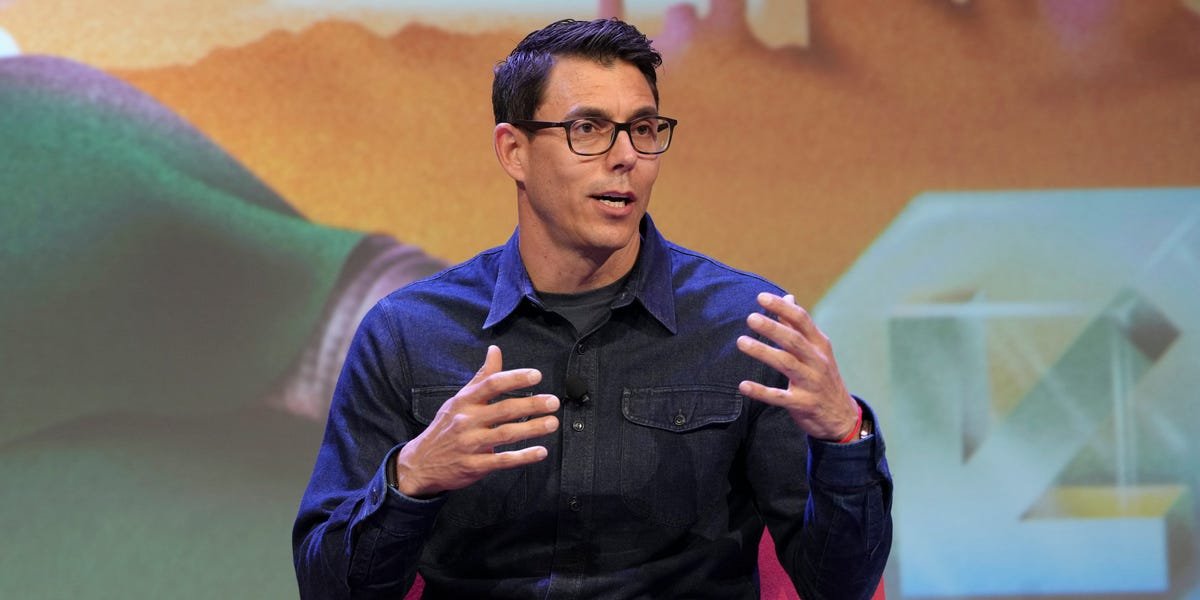
Rivian CEO says it may be ‘inconceivable’ to buy a car that can’t drive itself by 2030

Rivian CEO RJ Scaringe said self-driving capabilities will be a “must-have” in a car in the “very near future.”

Speaking on a “No Priors” podcast interview, released on Thursday, Scaringe talked about how autonomous cars would become the norm by the end of the decade.

“I think by 2030 it’ll be inconceivable to buy a car and not expect it to drive itself,” Scaringe said. “Maybe that’s sooner. We hope it’s sooner, we’re targeting a little sooner than that.”

He added that today, it is hard to imagine buying a car without airbags or air conditioning, which “at one moment in time were optional.”

“I think in not too much time, a couple of years, it’ll be hard to conceive of buying a car that can’t drop you at the airport or pick up your kids from school,” Scaringe said.

Scaringe previously said that, beyond just being able to drive themselves, autonomous vehicles should progress to a point where they can run errands, such as getting items from the store or ordering spare car parts.

Rivian is one of the handful of US-based automakers making inroads into the self-driving vehicle space, along with Tesla, Alphabet’s Waymo, and Ford. They face strong competition in markets outside the US, where Chinese competitors like BYD, XPeng, and Baidu have gained market share.

Rivian, based in Irvine, California, is expected to start delivering its R2 SUV later in the year. This model is its cheapest EV to date, priced at $45,000.

Rivian released earnings on Thursday, reporting a full-year 2025 revenue of $5.39 billion, which was an 8% increase from 2024. The company said in the earnings report that it had delivered 42,247 vehicles to customers in 2025.

The company’s stock price dropped 5% after earnings but rose about 15% in after-hours trading. It’s up about 12% in the past year.


Source link

Lloyd Lee

This ‘driverless car’ startup is doing the one thing robotaxi companies don’t want to be caught doing

In the world of robotaxis, there’s a stigma around remote driving. Are you really “driverless” if there’s a person — even remotely — at the wheel?

One startup is fully embracing it.

Vay is a Berlin-based startup founded by two engineers and a former Zoox employee.


Vay co-founders

Vay cofounders Fabrizi Scelsi, Thomas von der Ohe, and Bogdan Djukic

Vay


The company is taking a somewhat contrarian approach to what it calls a “driverless car.”

Instead of automating the ride-hailing service, which can be technically challenging and costly to scale, Vay wants to rethink how we rent cars.

To do so, Vay wants to leverage remote-driving technology and, eventually, autonomy to deliver cars without humans inside to people who need a private vehicle for less than a day.

Thomas von der Ohe, cofounder and CEO of Vay, told Business Insider that the goal is to be cheaper than an Uber and more convenient than a traditional brick-and-mortar rental program.

“It’s basically by far the most affordable A to B transport,” von der Ohe, a former technical program manager during the early days of Zoox, said. “It’s half the price of Uber and half the price of robotaxis. How it works: We just bring the car, you then drive, and then when you’re done, you don’t have to park.”

Autonomy’s shifting timelines

Von der Ohe spent less than two years at Zoox when the company was just 60 people large and had yet to be acquired by Amazon. The Vay cofounder said he oversaw some of the first public testing of Zoox cars when there were safety drivers inside the vehicle.

At the robotaxi company, von der Ohe said he saw a goal with an ever-shifting timeline.

“It always felt like it was three years out,” he said of autonomous driving. “And then every year it shifted by a year. So we wanted to have self-driving cars everywhere in 2020 at Zoox. And then it was 2021 and so forth.”

Von der Ohe left Zoox in 2018. Instead of fixating on robotaxis, von der Ohe wanted to stay in mobility but work on something that could be faster to bring to market and easier to scale with less capital. Vay was born.

How it works

Customers order a car the same way they hail an Uber or Lyft through Vay’s app. To rent a car, users have to upload a driver’s license and a photo of themselves.


Vay app

Users can order a Vay rental car through a proprietary app.

Lloyd Lee/BI


Vay proposes that users can get a car delivered to them without a driver within minutes, as long as they’re within the service area or geofence. If you’re out of the service area, then you’re out of luck.

Once the car is delivered, the renter takes over.

The startup services Las Vegas, where it manages a fleet of 100 Kia Niros, a compact, all-electric SUV. Each Kia is retrofitted with four cameras. There are no other sensors, von der Ohe said.

The Vay cofounder told Business Insider that the service area is about twice the size of San Francisco.

Inside Vay’s Vegas office, there are about eight driving stations, in which a trained human operator remotely controls Vay’s vehicle fleet. The setup looks like a video game simulation with three computer screens and a disembodied driver’s seat.

A large red button to the left of the driver’s seat activates an emergency protocol during which the car pulls over to the side of the road.


Vay driver simulation

Vincent Reddy, an operations lead for Vay, remotely drives a car.

Lloyd Lee/BI


Vincent Reddy, an operations lead for Vay, said that there are several criteria a remote driver needs to meet, including completing about 1,000 kilometers of remote driving. Reddy remotely drove Business Insider during a demo ride.

“It’s similar to kind of like a high-grade racing sim,” Reddy said of the driving experience. “The thing that feels the most different is not having the feedback of what it feels like driving over bumps and things on the road because the seat doesn’t move. There’s no G-force, or you don’t get the feeling of accelerating or braking.”

To deliver the cars, Vay only uses the remote-driving technology on local roads and stays under 25 mph. The car can go on the highway once the customer takes over the vehicle.

There were no notable incidents during a 10-minute driverless ride around the block of Vay’s Vegas office.

50% cheaper than an Uber

Vay’s value proposition to customers is that the service is cheaper and more flexible than hailing an Uber.

Von der Ohe told Business Insider that the service should be about 50% cheaper than the average Uber ride.


Vay

Vay hands out business cards that advertise a “driverless car” that’s half the price of hailing an Uber.

Lloyd Lee/BI


Users are charged by the minute, with a decreased price if they are parked, in case they, for example, need to grab groceries or hit the gym.

When Business Insider viewed the app, the pricing was at $0.35 per minute while driving and $0.05 per minute while parked. At those prices, a 30-minute drive to and from a destination, including an hour-and-a-half stop, would cost around $25.

When asked if the pricing will change based on demand, von der Ohe said the company doesn’t yet have a pricing mechanism, such as surge pricing, in place, but expects there will be changes to the structure.

The CEO said he can keep the costs low because Vay’s vehicle fleet doesn’t have a complex sensor suite, and the remote operators manage multiple cars.

Von der Ohe said that as of January 2026, there is one remote operator for every 10 vehicles. However, that doesn’t mean a remote driver is operating 10 vehicles at the same time. Instead, a remote operator can deliver one car and immediately move on to the next vehicle.

“So I have much more cars and remote drivers, and that’s why we make it half the price,” he said.

Vay’s future

Vay employs about 200 people and raised more than $200 million, including a $60 million investment from Grab Holdings, the Singaporean tech company that owns Grab, the super app of Southeast Asia.


Vay Kia Niro

Vay’s vehicle fleet is currently made up of 100 Kia Niros.

Lloyd Lee/BI


While von der Ohe told Business Insider that building a fully autonomous ride experience like Waymo is not on Vay’s road map, the CEO said his startup will gradually add autonomous driving features.

“We’re not in competition with them,” von der Ohe said of robotaxi operators.

Since its founding, Vay has provided 35,000 trips, according to the CEO.

He said the service has especially seen high demand during the Consumer Electronics Show.

When Von der Ohe opened the app, the wait time to get a car was 31 minutes.

“It’s extremely busy today already,” he said. “It’s a long way. It should be five.”


Source link