
What-gas-price-shock-Pokemon-cards-and-Needoh-tell-another.jpeg

What gas price shock? Pokémon cards and Needoh tell another story

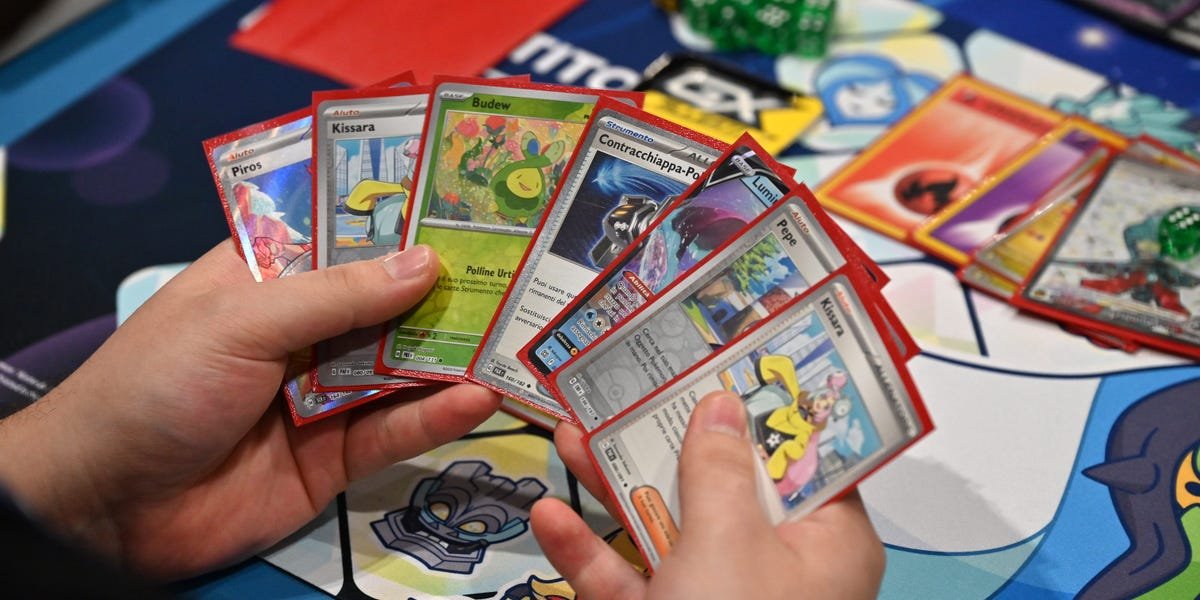
Rising gas prices might not be hurting consumer spending as much as feared. Look at Pokémon card sales.

Average gas prices in the US passed $4 a gallon last week, increasing more than a dollar over one month after the US and Israel began a war with Iran that disrupted oil shipments through the Strait of Hormuz.

“If there was ever a time for a gas price shock, this is it,” Mizuho analyst David Bellinger wrote in a note to clients on Monday.

A slew of economic and spending data, from Pokémon cards to movie tickets, suggests that gas prices aren’t causing consumers to pull back spending elsewhere yet, Bellinger wrote.

Higher gas prices are coinciding with tax season, and many shoppers are receiving tax refunds that could be boosting their spending power. Bellinger wrote that data from the Internal Revenue Service suggests the average tax refund is up by double digits over last year.

Then, there’s what shoppers are spending money on. Box office returns over the Easter weekend broke records, Bellinger wrote, and shoppers are still spending on toys such as Needoh sensory toys — an item that few consumers would consider essential.

Trading cards, including Pokémon, are subject to purchasing limits at some retailers, which Bellinger said shows “a clear uptick in the category.”

And JPMorgan CEO Jamie Dimon said in the bank’s annual shareholder letter on Monday that consumers are “still earning and spending.”

“For now, spending seems to be in a good place,” Bellinger wrote.

That could change if fuel prices keep rising. Gas prices could hit $5 a gallon this month if the war with Iran continues, analysts at JPMorgan said on Monday.

Other parts of the economy are feeling the pinch of higher fuel prices, too.

Wholesale prices for many kinds of fresh produce have increased over the past month, for example, as diesel prices have risen. Prices for temperature-sensitive produce, such as raspberries, and produce that has to travel long distances to get to market, such as limes from Mexico, have jumped the most.

Dimon also warned in his letter on Monday that “inflation slowly going up” could pull down markets and consumer sentiment this year.

Do you have a story to share about rising prices? Contact this reporter at abitter@businessinsider.com or via encrypted messaging app Signal at 808-854-4501. Use a personal email address, a nonwork WiFi network, and a nonwork device; here’s our guide to sharing information securely.


Source link

I-used-to-obsess-over-perfect-holiday-cards-When-I.jpeg

I used to obsess over perfect holiday cards. When I finally stopped sending them, I found more joy in the season.

I grew up in a house where coordinated family photos were the norm. My mom would line up the four of us kids in matching outfits — one year, freshly pressed sailor suits; the next, velvet dresses, with my brother in a matching tie. Every stray hair would be tucked in or sprayed down.

We were bribed (or more like lightly threatened) to smile with our eyes open, something that’s more difficult than it should be when you’re a kid who just wants to be DONE.

Then came the card — glossy, cheerful, and perfectly posed — the proof that our family had it all together, at least for one photo.

I kept the tradition going with my own kids

So when I had my own kids, I continued this tradition without question. Every year, I’d book a family photo session well in advance of Thanksgiving, hoping that temperamental Chicago weather wouldn’t put a damper on our outdoor photos.

I’d scour Pinterest for outfit inspiration, aiming for a coordinated but not totally matching vibe. The goal was to capture one frame of perfection — a photo worthy of the hundreds of envelopes I’d soon address by hand.


Holiday card

The author continued the tradition of holiday cards with her family.

Courtesy of the author


But the reality behind those photos was far from picture-perfect. There were bribes of hot chocolate and complaints about itchy sweaters. I’d smile through gritted teeth while the photographer tried to get everyone looking in the same direction. By the end, the kids were shivering, my husband was done, and I was wondering why we put ourselves through this every year.

And that was just phase one.

Once we had a “good enough” photo, I’d spend hours designing the cards online, tweaking fonts, choosing layouts, and agonizing over whether to include a photo of the whole family or the cuter one of just the kids.

Then came the addressing, stamping, and mailing — usually squeezed in between wrapping gifts, decorating the house, and trying to keep the ambiance somewhat festive. What was meant to be a joyful holiday tradition had turned into yet another item on my never-ending to-do list.

Quitting holiday cards lifted a huge weight

Two years ago, I finally asked myself, “Why am I doing this?”

When I couldn’t come up with a satisfying answer beyond “because we’ve always done it,” I decided to stop. No family photo shoot. No card design. No envelopes or stamps.


Family at ski resort

The author feels her family photos feel more authentic now.

Courtesy of the author


That first year without holiday cards felt strange at first, like I’d forgotten to do something important. December rolled around, and my mailbox filled with cheerful greetings from family and friends, each one featuring those perfectly posed families and braggy year-end recaps. For a fleeting moment, I felt a pang of guilt, like I’d dropped out of a club I’d been part of my entire adult life.

But then the feeling passed. What replaced it was a deep sense of relief.

Without the looming card deadline, December suddenly opened up. I had more time to actually enjoy the holidays — to bake sugar cookies in the shape of stars and drive through neighborhoods adorned in holiday lights. The pressure to present our family in a certain way — smiling, coordinated, festive — simply disappeared.

Now our photos (and holidays) feel more authentic

Instead of orchestrating a posed photo, we started taking more spontaneous pictures: messy, candid, real. A selfie at a local holiday market. A blurry shot of everyone laughing in front of our silver faux Christmas tree. A snowy mountain scene after a day of skiing. These pictures weren’t perfect, but they were us. And when I looked at them later, they didn’t remind me of how stressed I felt trying to get everyone to cooperate — they reminded me of how much fun we actually had.


Family posing by tree

The author and her family.

Courtesy of the author


Something else unexpected also happened: no one seemed to miss the cards. The people who truly wanted to connect reached out in other ways. It made me realize that keeping in touch didn’t have to involve postage and cardstock.

Letting go of the holiday card tradition didn’t make the end of the year any less special — it made them more so. It gave me permission to simplify and remember that the memories that matter most aren’t ones you send in the mail. They’re the ones you make together, no matching outfits required.


Source link