
Guilty-on-all-counts-Jury-convicts-Netflix-director-Carl-Rinsch.jpeg

Guilty on all counts: Jury convicts Netflix director Carl Rinsch in $11 million fraud case

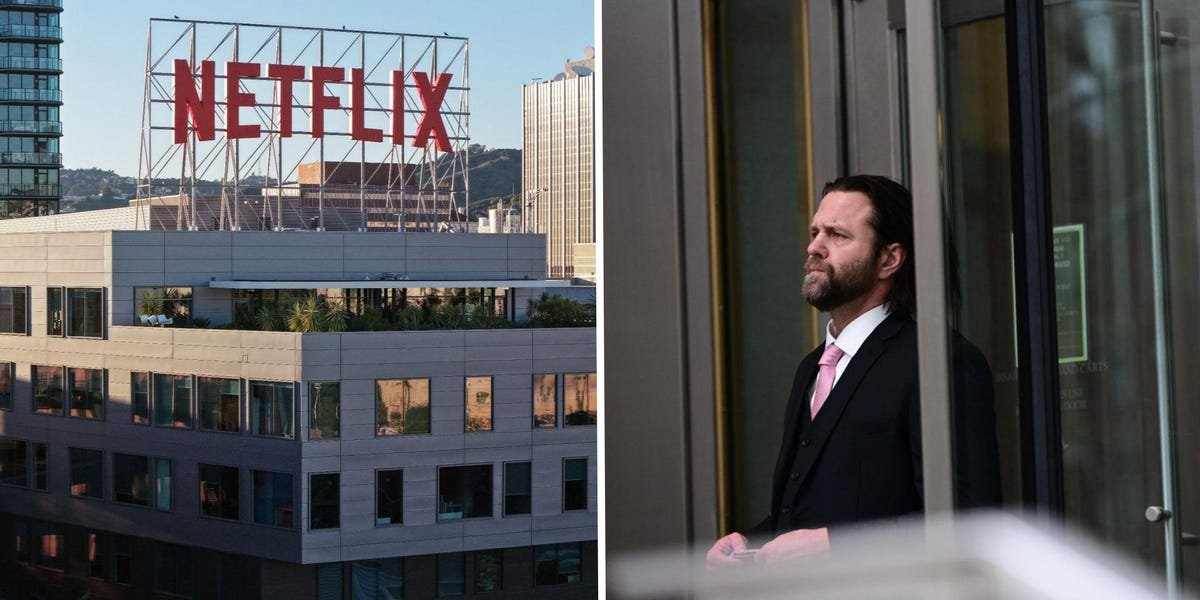
A Manhattan federal jury on Thursday found Carl Rinsch guilty on charges that he scammed Netflix out of $11 million in a lavish spending spree.

After less than five hours of deliberation, the jury said it found Rinsh guilty on all seven counts, including fraud, money laundering, and illegal money transmission. He faces up to 90 years in prison, but is expected to be sentenced to far less.

Rinsch, wearing a purple-plaid tie and matching pocket square, looked straight at the judge as the jury foreman read the verdict.

The case centered on the millions of dollars Netflix paid Rinsch to film “White Horse,” a sci-fi epic about a world where clone-like beings, after a schism with humankind, create their own society walled off from the rest of the world. Rinsch testified in his own defense earlier this week.

Rinsch — a Ridley Scott protege who previously directed the Keanu Reeves-starring “47 Ronin” — shot footage for “White Horse” on two continents. But by the fall of 2019, he exceeded the $44 million Netflix budgeted for the project and asked for more money.

Through the end of 2019 and early 2020, Rinsch negotiated with Netflix to figure out how to move “White Horse” forward and realize his ambitions. He envisioned a franchise like “Star Wars” and “Game of Thrones,” complete with an elaborate fantasy world, that could become part of Netflix’s catalogue.

In March of 2020, the streaming service agreed to give Rinsch’s production company another $11 million.

Then, everything went wrong.

On the witness stand in Manhattan federal court, he said he believed the bulk of the $11 million was meant to reimburse him for keeping the production of “White Horse” afloat the previous fall, when it had gone over-budget. According to him, Netflix expected him to conduct only “soft pre-production” on a potential second season.

Netflix balked. Former executives testified in the trial that the $11 million was meant to go toward finishing a first season that Rinsch never delivered. According to prosecutors, the entire negotiation for the $11 million was a sham, and Rinsch meant to defraud the company all along.

At closing arguments on Wednesday, Assistant US Attorney David Markewitz presented the jury with a Buzzfeed-style list of “10 Ways You Know Carl Rinsch is Guilty.” In a slideshow, he walked them through what he said were Rinsch’s contradictory claims — on the witness stand, in emails and text messages, and in prior statements in a civil legal dispute with Netflix — that he said demonstrated Rinsch wasn’t telling the truth.

He argued it was absurd to think Rinsch’s lavish purchases — like a $439,000 handmade Hastens mattress — could not have possibly been meant for the production of “White Horse.” And Rinch’s 2021 purchases of Rolls-Royces were insured in his own name, rather than insured by Netflix.

“In a TV show, a mattress is going to be covered by sheets and a blanket,” Markewitz told the jury. “No one watching ‘White Horse’ from home is going to have any idea what is under those linens.”

Daniel McGuinness, an attorney representing Rinsch, told the jury that Rinsch never had the “intent” required to find him guilty.

He showed them emails and texts leading up to the March 2020 agreement that he said demonstrated Rinsch’s negotiating posture had always been that Netflix owed him about $11 million for reimbursement. Rinsch never said he would spend all the money on additional production for “White Horse,” McGuinness said.

In reality, according to McGuinness, the situation was a “contract dispute” based on misunderstandings between Rinsch and Netflix.

“They were talking past each other, and the government has turned it into a nefarious fraud conspiracy,” McGuinness said.

This is a breaking story. Please check back for updates.


Source link

A-Ferrari-and-over-480-takeout-orders-FBI-details-spending.jpeg

A Ferrari and over 480 takeout orders: FBI details spending spree of Netflix director in $11 million fraud case

In March of 2020, Netflix infused $11 million into a production company to complete the first season of “White Horse,” a futuristic sci-fi series it hoped to bring to its platform.

Carl Rinsch — the director, writer, and showrunner of “White Horse” — never finished the 12 episodes he was supposed to deliver.

But a short time after he got the cash, Rinsch spent millions of dollars on furniture, cars, credit card bills —  and a whole lot of takeout.

According to testimony at his criminal trial on Thursday, Rinsch spent a total of $9.14 million through a personal bank account with funds originally earmarked to finish “White Horse,” which had the production codename “Conquest.”

The spending included more than 480 food deliveries from Postmates and Uber Eats during a six-month span in 2022, according to a spreadsheet entered into evidence. The spreadsheet showed Rinsch sometimes making a dozen separate food purchases each day.

The most expensive category, FBI agent Michael Naccarelli testified, was for furniture, for which Rinsch spent $3.36 million.

Rinsch also spent $2.4 million on cars — including a Ferrari and Rolls-Royces — and $1.8 million on American Express bills, according to Naccarelli. He also spent money on hotels, jewelry, and art, Naccarelli said.

“Rinsch described the Ferrari as “a birthday gift to myself” in a 2021 text message to his personal assistant, which was shown to jurors later Thursday.

Attorneys for Rinsch told jurors at his trial in Manhattan federal court that the “White Horse” debacle is a civil business dispute — not criminal financial fraud.

They say Rinsch, who previously directed “47 Ronin,” starring Keanu Reeves, is a “creative genius” who was overwhelmed by the demands of directing, writing, and producing “White Horse” and left to flounder by the streaming company.

Days after Netflix sent $11 million to a bank account for Rinsch’s production company, he moved $10.5 million to a personal Wells Fargo bank account, according to Naccarelli and records entered into trial evidence.

The director then moved portions of the funds to a Kraken cryptocurrency exchange account, as well as other bank accounts, before ultimately transferring $13.7 million to a personal Bank of America account.

With his Kraken account, Rinsch purchased about a dozen different cryptocurrencies, including Dogecoin, Etherium, Bitcoin Cash, and the stablecoin Tether, trial records show.

In April 2022, Rinsch’s Dogecoin holdings were worth about $755,000, and his Etherium tokens about $939,000, according to Naccarelli.

While a financial advisor previously testified in the trial that Rinsch’s stock investments went badly, Naccarelli said the director’s cryptocurrency investments were profitable.

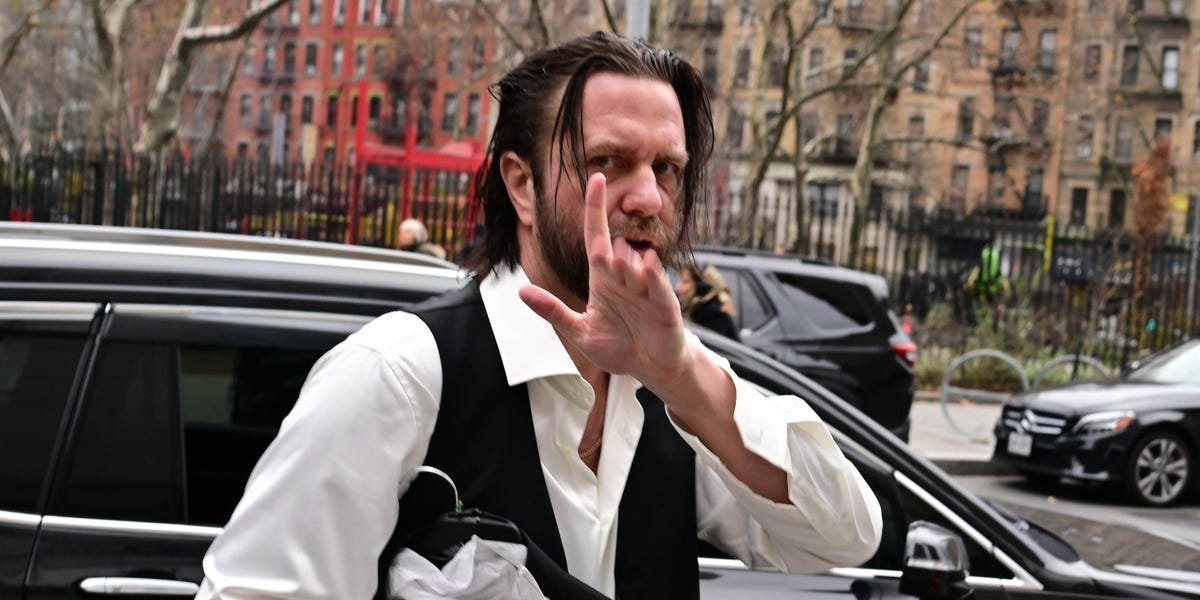
“The trades performed very well,” Naccarelli said as Rinsch — wearing a three-piece black suit and a patterned pink tie and matching pocket square — nodded slightly.

Allen Grove, an FBI agent who testified after Naccarelli, said Rinsch considered himself a major Dogecoin trader when they met in April 2023 regarding a dispute over one of Rinsch’s furniture purchases in Paris.

“Mr. Rinsch described to me that he became wealthy during the pandemic by investing in Dogecoin,” Grove testified. “He described himself to me as ‘The Dogecoin Whale.'”

Rinsch said in an earlier deposition, which was shown to jurors on Thursday, that his purchases of four Rolls-Royces were meant for the production of “White Horse,” and not for personal use. Netflix wrote off the production as a loss in 2020.

“That would be fraud otherwise,” Rinsch said in the deposition.


Source link