Lloyd Lee

Alphabet CEO could earn up to $692M under a new equity package that’s linked to Waymo for the first time

Alphabet’s chief executive just got a new equity pay package that, for the first time, ties a chunk of his payout to Waymo, the company’s robotaxi service.

In an SEC filing posted on Friday, the company awarded CEO Sundar Pichai a three-year equity cycle that could be worth up to $692 million if the CEO meets the board’s performance targets.

Much of the package remains unchanged from the CEO’s 2022 award, according to the filing. The new incentives revolve around the value of two of Alphabet’s “Other Bets”: Waymo and Wing Aviation, a drone delivery service.

According to the filing, Pichai could be awarded up to $260 million depending on the increase in Waymo’s per-unit value over a three-year period, as determined by the compensation committee — essentially, the board’s estimate of what a single Waymo equity unit is worth.

The company doesn’t list specific operational milestones Pichai will have to reach. A spokesperson for Alphabet declined to comment.

In addition, the company granted the CEO Wing-linked equity units that could be worth up to $90 million, contingent on the company’s per-unit value over the next three years.

Tying Pichai’s compensation to Waymo and Wing is a signal that Alphabet no longer views the two entities as moonshot experiments but rather as assets representing valuable, scalable businesses

The board said in the filing that “incentivizing Mr. Pichai to focus his efforts on developing and scaling Alphabet’s later stage Other Bets, such as Waymo and Wing,” is in the best interests of Alphabet and its stakeholders.

Waymo, which began as a project inside Google’s moonshot factory in 2009, has driven over 200 million autonomous miles to date. This year, the company expanded its commercial service to 10 markets, serving riders in Dallas, Houston, San Antonio, and Orlando.

Wing is another moonshot factory venture that began in 2012. The company, which provides last-mile drone delivery services, became an independent Alphabet subsidiary in 2018. Wing announced in January that it would expand to more than 270 Walmart stores by 2027.

Pichai maintains a base salary of $2 million, unchanged since 2020, and will be awarded performance stock units (PSUs) tied to Alphabet’s total shareholder returns relative to the S&P 100. The max value of the PSUs could be worth up to $252 million.

There’s also a time-based equity package that will award Pichai $84 million, provided he stays with the company for the next three years.


Source link

McDonalds-CEO-is-getting-roasted-for-his-Big-Arch-review.jpeg

McDonald’s CEO is getting roasted for his “Big Arch” review. Think you could do better? Take this quiz!

  • The McDonald’s CEO is getting roasted for an awkward taste test of the new “Big Arch” burger.”
  • Do you think you could really do so much better, huh, tough guy?
  • Take our fun quiz to see if you really CAN do a better job as McDonald’s CEO.

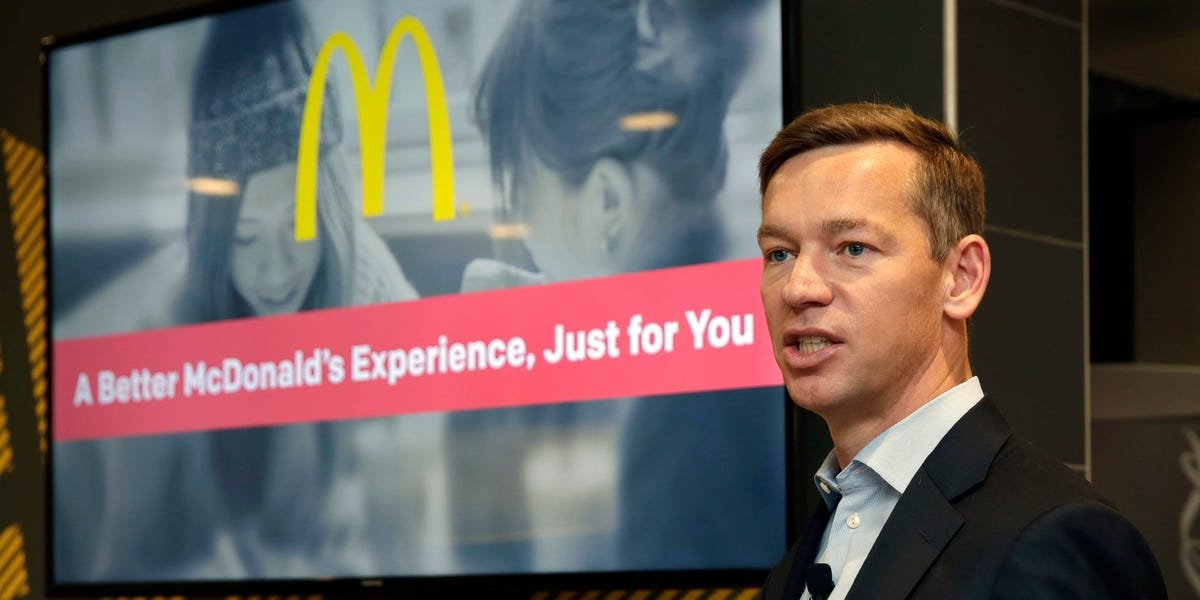
Poor Chris Kempczinski. What should’ve been a joyous occasion — the launch of the new “Big Arch” burger — has turned into a public drubbing for the McDonald’s CEO.

An Instagram video Kempczinski posted, where he takes a bite of the Big Arch, has been roundly mocked — with people saying his small bite of the burger showed he didn’t really like McDonald’s food, which he also referred to as “product.”

The memes flowed like ketchup.

To make matters worse, other fast-food CEOs piled on, posting their own versions of the video and enthusiastically tasting their own burgers.

When you’ve got a bunch of adults performatively chomping down burgers in an effort to roast you … let’s just say things probably aren’t working out the way you’d hoped.

McDonald’s hasn’t returned my requests for comment. I’ve been asking to interview Kempczinski. I’ve been watching his Instagram Reels for months now, fascinated by how the McDonald’s CEO talks directly to his audience.

So, you think you could do a better job at McDonald’s?

It turns out, enjoying a burger is easy. Running a company is hard. McDonald’s stock is up more than 6% so far this year, far outpacing the broader market, which is down by more than 1.3% — but even so, lots of people on social media are saying they think they can do a better job than Kempczinski.

Oh yeah, peanut gallery?! Prove it! (Just kidding. This literally proves nothing.)

Take this quiz to answer a bunch of questions to see if you really could do a better job than the current McDonald’s CEO:


Source link

Netflix-CEO-Ted-Sarandos-says-he-bailed-on-WBD-because.jpeg

Netflix CEO Ted Sarandos says he bailed on WBD because of the deal’s price, not because of Donald Trump

Did Netflix walk away from Warner Bros. Discovery because of money? Or because of politics?

Money, says Netflix boss Ted Sarandos. Just money.

Sarandos, the streamer’s co-CEO, says Netflix pulled out of the WBD bidding war — ultimately won by Larry and David Ellison’s Paramount — because Netflix didn’t want to raise the price it would pay for WBD’s studio and HBO business.

The fact that the proposed Netflix/WBD deal was getting pushback from Republicans in Washington — and other regulators in the US and around the world — was not an issue, Sarandos said in an interview this weekend.

“I still believe in all the positives. I just believed in them up to $27.75 a share,” Sarandos told Bloomberg, referring to the price Netflix originally agreed to pay for WBD’s studio business and HBO unit in December.

I don’t know that Sarandos’ argument will entirely sway those who think the Ellisons’ attempts to court President Donald Trump and other Republicans had an impact on Netflix’s calculus. David Ellison, for example, attended last week’s State of the Union address as the guest of Trump ally Sen. Lindsay Graham.

Adding fuel to those theories: Netflix announced that it was withdrawing from the WBD auction shortly after Sarandos visited the White House on Thursday. But Sarandos says nothing in that meeting had anything to do with his decision. “It was a very productive meeting, nothing out of the ordinary,” he said.

Instead, Sarandos said, Netflix had already decided to bow out earlier that day, as soon as WBD told the company that Paramount’s most recent bid was a “superior proposal.” Just about everyone in the media world expected Netflix to counter that offer with a new one of their own.

But asked repeatedly about what role Trump and any other politician had in his decision, Sarandos insisted that the answer was zero.

“Things have been going exactly the way they should,” he said, arguing that “the president stayed completely neutral on this.”

This is also what Sarandos had said for the last few weeks, when asked if politics and/or Trump’s preferences would influence the deal. That made sense at the time — why complain about politics at the same time you’re trying to woo politicians?

And it may continue to make sense, given that Netflix may end up back in Washington in the future, asking for a sign-off on a different deal. (Sarandos did say it was “unlikely” he would try to buy something else in the next year or so.)

But what about Trump’s interest in the fate of CNN, which is currently owned by WBD, and which will become part of Paramount, assuming the deal closes? Trump had previously announced that it was “imperative that CNN be sold”.

Follow that idea to its logical conclusion, and it would mean that Trump would favor the Paramount bid, since it was for all of WBD, including CNN. The Netflix bid didn’t include the news network or WBD’s other basic cable channels.

“Once it was clear that we weren’t in the CNN business, it was a lot less interesting. He didn’t care that much more about our deal,” Sarandos said.

I wanted to make sure I understood what Sarandos was saying: Was it that once Trump realized Netflix didn’t want to buy CNN, he didn’t support Netflix buying any part of WBD? Or was it that once Trump realized Netflix didn’t want to buy CNN, he became less interested in its outcome, period?

The latter, a Netflix rep told me Sunday.


Source link

Dominick Reuter

Yes, Costco’s CEO really does respond to members’ emails — I tried it

Costco’s culture of attention to detail is one of the wholesale club’s keys to success.

That extends to the very top, with CEO Ron Vachris taking time out of his day to deal with what must be a warehouse-sized email inbox.

“I do read my email and respond to the majority,” Vachris told me when I emailed him to ask if he personally checks his messages, as multiple viral screenshots suggest. He replied the same day I messaged him, at about 10:30 p.m. Pacific time.

He also said he delegates some notes to other Costco team members.

“I see a fair number of emails on a weekly basis and can’t give you an estimate,” he added. “I am very fortunate to have fantastic managers and employees that handle the majority of our members’ needs.”

A four-decade employee of Costco, Vachris started as a forklift operator and has been in the top job for two years now, delivering strong results.

His tenure has been one of disciplined execution of the company’s reliable strategy, complemented by thoughtful tweaks such as extended shopping hours for executive members and new tech to manage the flow of customers in and out of the chain’s 923 locations.

Costco also routinely earns some of the highest customer satisfaction scores in retail, though it has seen a bit of pressure lately on that front from Walmart-owned Sam’s Club.

Some CEOs bring a personal touch to the job

Of course, Vachris is neither the first nor the only CEO to bring a personal touch to his leadership.

DoorDash CEO Tony Xu said last year that he gets hundreds of emails each week from gig workers, restaurants, and customers. Many of those notes include insights about how the company can improve.

“Every day, I think, is a daily struggle, where the job is to try to make an improvement for that day,” he said.

Uber CEO Dara Khosrowshahi and Lyft CEO David Risher have also spent time behind the wheel as drivers and delivery workers to better understand the businesses they run.

Apple’s Steve Jobs was another CEO who famously considered (and sometimes curtly dismissed) customer emails — a fitting habit for the inventor of the iPhone and iPad.

Along those lines, I noticed that earlier viral messages from Vachris were usually replies to short notes with relevant feedback about the company.

One example posted online was about the food court being out of ketchup for the famous $1.50 hot dogs during a member’s recent visit to one location.

“Will pass this on to the right folks there,” said the reply under Vachris’ name.

When I emailed Vachris with my questions, I also mentioned my recent experience with the Costco autos program, when I unexpectedly had to replace my car this month — a program I know, from my coverage, the company cares a lot about.

“We have found this to be a great service for our members, bringing great value and clarity to the process,” Vachris replied. “Thank you for your email and support as a Costco member.”


Source link

I-landed-a-job-by-cold-emailing-the-CEO-Nothing.jpeg

I landed a job by cold emailing the CEO. Nothing else worked for me.

This as-told-to essay is based on a conversation with Cathy Xie, a 25-year-old marketing professional based in Toronto. It’s been edited for length and clarity.

I remember opening my laptop about a month into my job hunt, seeing yet another automated rejection, and feeling this kind of collapsing desperation. I knew I needed to do something different in my approach if I wanted to stand out in the job market.

I tried three new job-finding strategies, but I didn’t get hired until I sent an email directly to a CEO with the subject line “My landlord inspired this email.”

Job seekers should be thinking less about their résumé and cover letters, and more about how they can get a potential employer’s attention.

I mass-applied to jobs for a month

In 2024, I founded a startup aimed at helping students and new grads with unconventional backgrounds pivot into tech and navigate the job market. Unfortunately, we had to shut down about a year and a half later due to changes in the market. It’s a little ironic that the tech job market is what put me back on the job hunt.

After mass applying to roles across marketing, product, and growth, largely targeting tech and AI companies, I felt drained. I was also spending so much time doom-scrolling on TikTok, watching video after video of young Gen Z job seekers talking about their frustrations with the job market.

Job searching was always in the back of my mind, and I knew it was time to try a different approach.

Referrals and niche startup boards only helped me so much

The first route I tried was referrals, but those were not a huge success.

My next approach was scouring niche startup boards, subscribing to free newsletters that posted about startups hiring, and even following LinkedIn creators who report on startups that had just raised. Then I’d apply directly through the company’s website and try to email someone on the team who would likely be my manager for that position. Though I didn’t end up with a job from that approach, it was still a great way to network.

My last approach, cold emailing a founder, ultimately landed me my new role. I’d been following this founder’s journey on LinkedIn for a while because I was passionate about his startup’s mission to address the housing crisis in major cities. He posted that he was hiring a marketing manager and included a link to apply. I thought to myself, “I am not applying the traditional way again.”

I had just come across a social media post from someone about how cold emailing helped them achieve so many of their life goals, and how rejection was redirection. It made me think maybe I should just email the founder directly. I had nothing to lose.

The founder responded to my email

I know, as a founder, you get thousands of emails, so I needed to make sure my email was one he had to open.

It was also important to me to make my email as personal as possible because I think it’s a lost art. Especially with AI, we’ve become overly formal with writing. My subject line was “My landlord inspired this email” because I thought it was funny and might grab his attention.

In the body, I introduced myself, described my past roles and how they prepared me for this job, and wrote about my passion for and interest in the startup itself. I tried to keep it personable and a little funny. I kept it around 150 words, so it was short and sweet.

He responded just over a week later by emailing me back and messaging me on LinkedIn to set up an intro call with him and the CMO. After two more interviews, including an intro to a case study and a case study presentation, I was offered the role of marketing manager.

The job has been great so far, and my team is amazing.

Here’s my advice for job seekers

The first two questions a lot of people ask themselves when applying to a job are “How should I write my résumé?” and “How should I write my cover letter?”

However, I think the question you should ask yourself instead is, “How can I get the attention of this person?” Once you ask yourself how you can get in front of a person, you open up so many ways to approach this job hunt, rather than just doing the traditional cold application.

With this wave of AI, it’s so easy not to put in effort with job applications and just mass apply. But I think what comes with getting people’s attention is putting in the effort.

You can spend a few hours cold applying and maybe get one or two automated emails, or you can spend those hours doing a couple of very personalized outreaches. It will take effort, but I think it’s important to put that effort in if you want to stand out in today’s job market.

Do you have a story to share about finding a job with an unconventional method? If so, please reach out to the editor, Manseen Logan, at mlogan@businessinsider.com.


Source link

Theron Mohamed — Profile Picture

Greg Abel pays tribute to Warren Buffett in his first letter as Berkshire Hathaway CEO, calling him a ‘very hard act to follow’

Greg Abel paid tribute to Warren Buffett and reassured Berkshire Hathaway shareholders he wouldn’t do anything drastic as their new CEO in his first letter to them on Saturday.

Buffett handed Berkshire’s reins to Abel at the start of this year, ending a six-decade run during which he transformed the failing textile mill into a sprawling conglomerate worth more than $1 trillion.

The legendary investor oversaw a 6,100,000% return for Berkshire shareholders between 1965 and 2025, trouncing the S&P 500’s total return of 46,100% including dividends. His compounded annual gain of 19.7% was nearly double the index’s 10.5% figure over a 60-year timeframe.

“Warren is obviously a very hard act to follow,” Abel wrote, continuing Buffett’s decades-long tradition of penning an annual shareholder letter.

Berkshire’s new boss dedicated the first section of his letter to Buffett, praising everything from his patience and judgment to his investing prowess, legacy as an educator, track record as a CEO, and the unique company he built with the late Charlie Munger.

Abel used the letter to properly introduce himself to shareholders, and even tried to inject some of Buffett’s trademark wit.

“I will not be your CEO for the next 60 years as simple arithmetic makes that — shall we say — an ambitious plan,” he quipped.

More of the same

Abel made it clear to shareholders that he “gets it” — he understands what makes Berkshire special and has no plans to ruin it.

He walked through what he called Berkshire’s “foundational values”: its decentralized model, integrity, financial strength, capital discipline, risk management, and operational excellence.

Abel lingered on the topic of capital discipline, showing he’s aware of how much scrutiny Berkshire has received for hoarding more than $370 billion of liquid assets.

He signaled there won’t be any rushed deals or immediate dividend payouts on his watch. He described Berkshire’s cash pile as both its rainy-day fund and its “dry powder” for stock purchases and acquisitions, but said he’ll remain disciplined in spending it “regardless of the size” of the company’s reserves.

Digging into the details

Abel’s letter contained several key nuggets for close followers of Berkshire.

First, he described its Kraft Heinz investment as “disappointing” with a return “well short of adequate,” echoing Buffett’s uncharacteristic bashing of the food giant.

Second, Abel broke out the five stakes in Japanese companies purchased by Buffett a few years ago. The dedicated table showed Berkshire paid a total of $15.4 billion for positions worth a combined $35.4 billion at December’s close, and collected $862 million in dividends from them last year.

Third, he revealed that Ted Weschler now oversees about 6% of Berkshire’s investments after assuming control of the recently departed Todd Combs’ portion of the company’s portfolio.

Abel also positioned Weschler as one of his key deputies, writing that his “impact extends beyond these investments” to weighing in on big opportunities and Berkshire’s businesses, and providing other support.

Finally, he signaled a shift to a bigger brain trust at Berkshire. Instead of Buffett and Munger holding court for the entire Q&A at Berkshire’s annual meeting, as they did for many years, Abel will field questions with Berkshire’s insurance chief, Ajit Jain, and later with Katie Farmer and Adam Johnson, two of his top deputies.


Source link

Leaked-audio-Warner-Bros-Discovery-CEO-David-Zaslav-tells-employees.jpeg

Leaked audio: Warner Bros. Discovery CEO David Zaslav tells employees Paramount deal felt ‘whiplash-y’

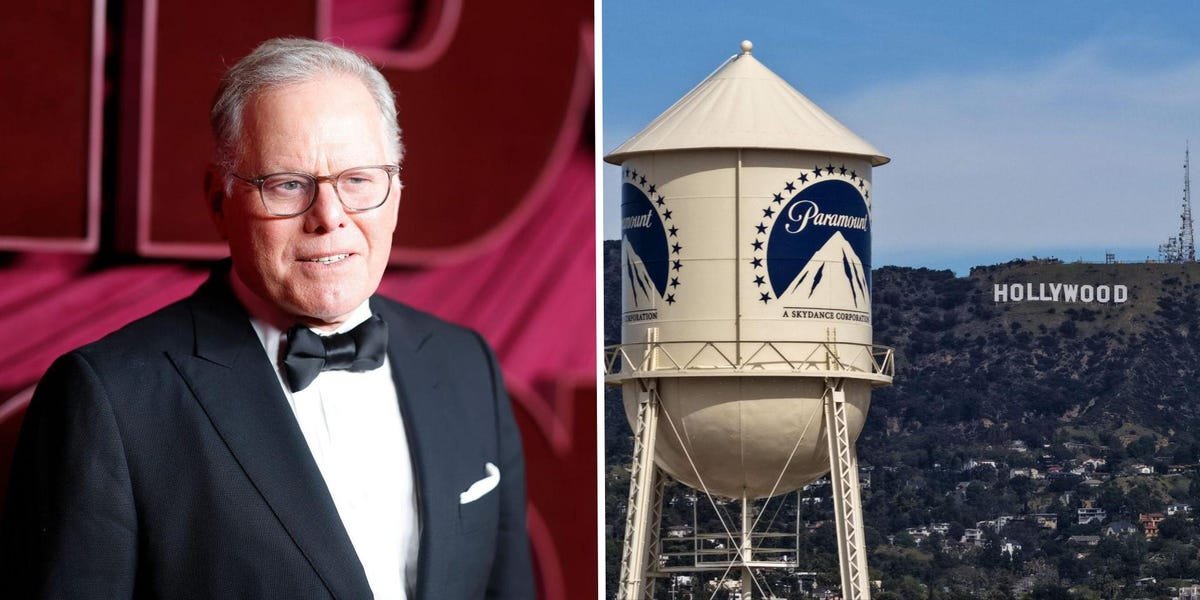
Warner Bros. Discovery’s CEO just pitched employees on its impending Paramount Skydance deal, after spending the last few months arguing against it in favor of the now-nixed Netflix deal.

David Zaslav told WBD staffers at a company town hall on Friday morning that he’s excited to join forces with Paramount.

“I think together, we can be a great company,” Zaslav said on the call, a recording of which was obtained by Business Insider.

“We’re getting bigger, and we’re getting stronger,” he said.

WBD had agreed to sell its studio and HBO assets to Netflix for $27.75 per share. Paramount launched a rival bid of $30 per share for the whole company, including its cable TV networks, and pitched WBD shareholders that its deal was better.

Zaslav acknowledged that the decision to switch from its Netflix deal to Paramount’s rival offer “all happened very quickly.”

“It feels a little whiplash-y,” Zaslav said, adding that he and WBD’s board of directors are still “getting our bearings.”

Paramount “acted with determination” in pursuing WBD, Zaslav said.

WBD underwent a “thorough, rigorous strategic review process” and was under a legal obligation to continue to review and evaluate unsolicited offers that could bring shareholders more value.

Zaslav suggested that teaming up with Paramount is crucial to WBD’s survival.

“If Warner Bros. is going to survive, then we needed to be bigger, and we needed to be global,” Zaslav said.

Zaslav added that “some of these companies are getting so big that they can just run us over.”

The Paramount-WBD deal still needs regulatory approval, a process that will likely take at least six to 12 more months.

“The deal may not close,” Zaslav said. “If it doesn’t close, we get $7 billion, and we get back to work.”

Last week, WBD’s board told its shareholders that there could be an employee exodus if it took Paramount’s deal, citing the $6 billion in cost savings that Ellison’s company planned to achieve. Netflix had said it planned to get $2 billion to $3 billion in savings from its deal.


Source link

CEO-Jack-Dorsey-issues-a-dire-warning-about-AIs-impact.jpeg

CEO Jack Dorsey issues a dire warning about AI’s impact as he cuts Block by almost half

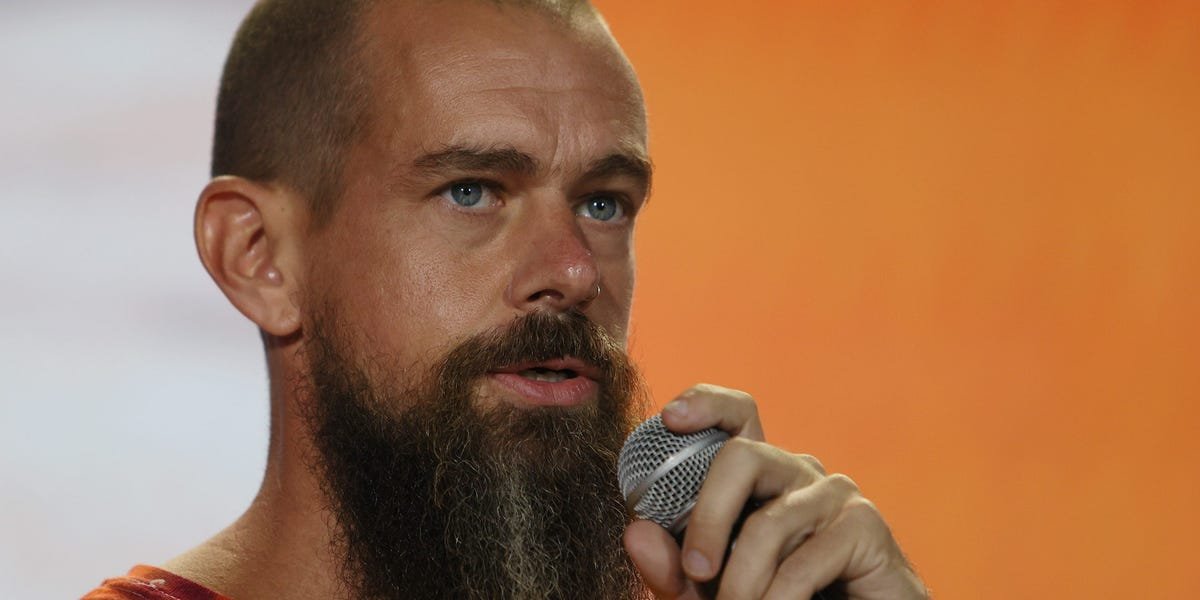
Block CEO Jack Dorsey issued a warning about the impact of AI on employment, particularly for other companies

After announcing he’s cutting about 40% of Block’s 11,000 employees, Dorsey outlined Block’s next phase as a “smaller, faster, intelligence-native company” in his opening remarks during the company’s earnings call on Thursday.

“I don’t think we’re early to this realization. I think most companies are late,” he said.

AI, he said, is dramatically accelerating work inside Block.

“A significantly smaller team using the tools we’re building can do more and do it better. And intelligence tool capabilities are compounding faster every single week,” Dorsey said

Dorsey pointed to a sharp jump in AI capabilities late last year, surpassing Block’s own internal tool, Goose, which it uses to speed up coding and other repetitive work.

“Something happened in December last year where the models just got an order of magnitude more capable and more intelligent,” he said.

Dorsey predicted more companies will follow suit, using AI to drive efficiency gains. Block, he said, is moving ahead of a trend that “all companies will eventually” embrace.

The Bay Area tech company, which owns Square, Cash App, and Tidal, had “a lot of duplication” that needed to be streamlined, Dorsey said.

Block CFO Amrita Ahuja said that at Block, engineering work that would have taken weeks now takes a fraction of the time thanks to AI coding tools.

Output per engineer is up by more than 40% since September, she added.

Although Block is shedding over 4,000 people from its 10,000-strong workforce, it’s expanding in one area — senior engineering talent focused on AI, Ahuja said.


Source link

The-CEO-of-the-World-Economic-Forum-is-stepping-down.jpeg

The CEO of the World Economic Forum is stepping down after a review of his Epstein ties

  • Børge Brende, the long-serving head of the World Economic Forum, is stepping down.
  • His resignation comes after the WEF launched an independent review into his ties to Jeffrey Epstein.
  • Emails released by the Department of Justice appeared to show Brende had dinner with Epstein three times.

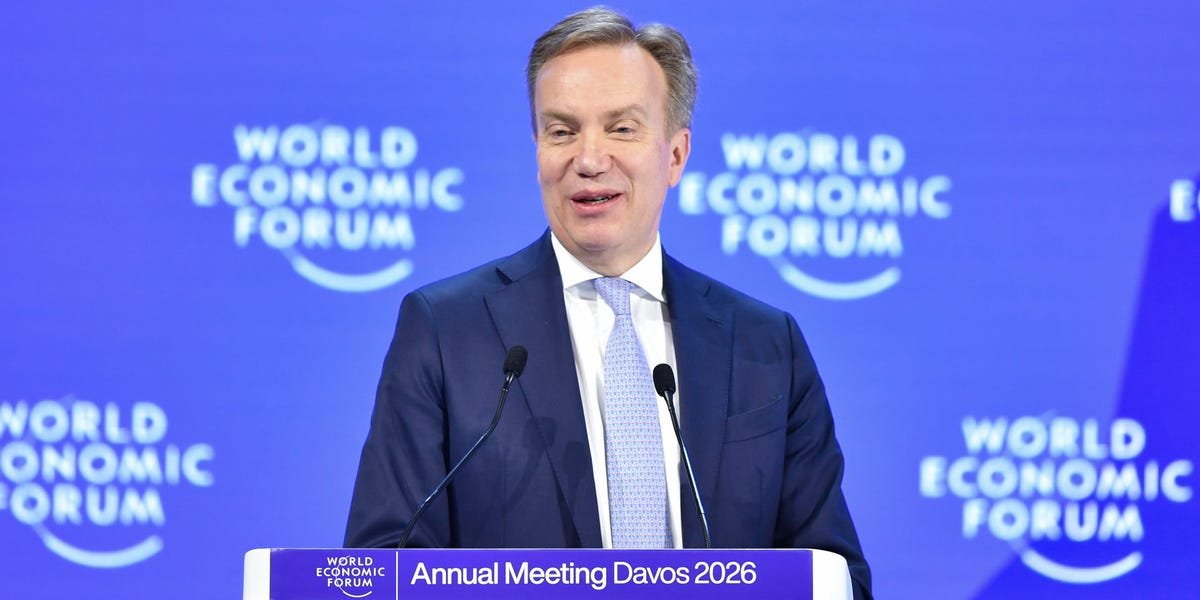
The president and CEO of the World Economic Forum, Børge Brende, has announced he will step down in the wake of an investigation into his relationship with Jeffrey Epstein.

“I believe now is the right moment for the Forum to continue its important work without distractions,” Brende, who led the organisation behind the annual Davos conference for over 8 years, said.

The WEF co-chairs, André Hoffman and Larry Fink, said the independent review, which was made public earlier in February, found “there were no additional concerns beyond what has been previously disclosed.”

Emails released by the Department of Justice appeared to show Brende had dinner with Epstein three times in 2018 and 2019.

In a statement to Reuters earlier this month, Brende said he was “completely unaware of Epstein’s past and criminal activities.”

Hoffman and Fink said Alois Zwinggi will serve as the WEF’s interim president and CEO.

This is a breaking news story. Check back for updates.


Source link

Workdays-stock-has-been-in-a-slump-Its-CEO-is.jpeg

Workday’s stock has been in a slump. Its CEO is leaning into agentic AI.

Workday is betting on artificial intelligence taking over more work.

While software stocks — including Workday’s — have sunk recently amid concerns over AI advancements, the company framed the technology as a growth opportunity on its Tuesday earnings call.

“We’re working really hard to figure out how do we improve business process execution for our customers at a lower cost,” CEO Anil Bhusri said.

“I think that’s where the agentic model fits in. What can agents do to replace human labor?” he said. “And then obviously longer term, we’ve got to figure out what we’re going to do with those humans that are displaced.”

Bhusri’s remarks came after Workday reported revenue and net-income growth for the January-ended quarter. Shares fell around 10%, however, as the company projected slower subscription revenue growth than Wall Street expected for the fiscal year ahead.

A spokesperson for Workday said that Bhusri’s comments were not about Workday planning to replace its employees or its customers’ employees, but rather about industry-level shifts.

Bhusri said the outlook reflects that the AI products Workday is building aren’t expected to generate meaningful revenue until later in the year.

Workday’s stock drop marks another setback for the company, whose shares have slid in recent weeks amid a broader software selloff driven by fears that artificial intelligence could upend the industry.

The rout began in early February, tipping the sector into a deep bear market and spilling into adjacent industries as investors grapple with AI’s disruptive potential. Other companies affected include LegalZoom, Thomson Reuters, and Okta.

On the call, Workday didn’t directly address those concerns directly and instead emphasized its investments in agentic products to expand its footprint in HR and finance software.

Earlier this month, Workday said it was laying off about 400 employees, citing a need to realign its resources to meet its top priorities. A week later, Bhursi was renamed CEO, succeeding Carl Eschenbach, who stepped down.

Bhusri has held the top job three times before. He told analysts on Tuesday’s earnings call that while he’s optimistic about the business, he tends to set guidance cautiously and aim to outperform it.

“I don’t know if you know you remember me when I was a CEO before, but I do try to be conservative on the guide and then beat it,” he said.


Source link