Headshot of Ben Shimkus

Ford CEO shares photos teasing $30,000 EV pickup

Ford is undergoing a radical factory overhaul to compete with Chinese automakers. Its CEO just offered a peek inside.

On Thursday, Ford CEO Jim Farley shared four behind-the-scenes photos on X of engineers working on the automaker’s Universal Electric Vehicle project. It’s a new platform and manufacturing system designed to underpin a family of smaller, lower-cost EVs.

Farley described the effort as “one of the most audacious and important projects in Ford’s history.”

“American innovation is how we compete and win against China and the rest of the world,” Farley wrote in the post.

The update adds new detail to Ford’s sweeping rethink of how it designs and assembles electric vehicles, as Chinese EV makers — led by BYD, now the world’s largest EV seller — rapidly expand in foreign countries with lower-priced models.

Farley’s photos focus on the first vehicle expected to launch on the platform: a midsize electric pickup truck starting at $30,000. They show Ford employees working on vehicle prototypes — and reveal an early look at what appears to be its grille-less design.

The company confirmed to Business Insider that it plans to launch the vehicle in the US in 2027.

“A Ford team member working on the front end of a prototype – one of the hundreds of prototypes the team has designed and developed to shape the face of the truck over the last few years,” Farley wrote about one of the images.

Engineers are spending “countless hours” refining the truck’s aerodynamics, Farley said.

A massive manufacturing re-think

The manufacturing changes behind the vehicle may be even more significant than the design itself. Farley unveiled the new manufacturing plan during an August event dubbed the “Latest Model T Moment.”

Unlike the traditional assembly line — a single, linear conveyor made famous by Ford’s 1908 launch of its first mass-produced car, the Model T — the new system uses a three-pronged “assembly tree” approach. Separate lines build the front, rear, and battery underbody of the vehicle in parallel before they are joined later in the process.

Ford says the redesigned system uses 25% fewer fasteners and roughly half as many cooling hoses and connections.

Other images from Farley’s post show the factory’s new unicasting system — which Farley says reduces the number of vehicle parts — and engineers working on new designs.

Fewer parts could mean lower car prices, the company said in August.

Responding to billion-dollar pressures

The push comes as Ford makes costly changes to its EV strategy. In December, the company discontinued the F-150 Lightning pickup and scrapped plans for a large all-electric commercial van, recording a $19.5 billion write-down tied to canceled EV programs.

Going forward, Ford plans to focus on smaller, more affordable electric vehicles, as well as extended-range electric vehicles, or EREVs, which pair electric drivetrains with onboard gas generators.

The strategy reflects mounting pressure from China’s EV industry. BYD overtook Tesla last year to become the world’s top EV seller. Chinese EV sales have been gaining momentum across Europe — and last month, Canadian officials announced plans to lower tariffs on Chinese-made cars.

That momentum could prompt further changes at Ford. Earlier this week, Reuters reported that Ford is in advanced talks with China’s Geely about potential manufacturing cooperation.



Source link

Taco-Bells-CEO-says-the-chains-magic-formula-is-fueling.jpeg

Taco Bell’s CEO says the chain’s ‘magic formula’ is fueling growth as rivals fall flat

Taco Bell CEO Sean Tresvant has a simple explanation for why his brand keeps winning while much of the fast-food industry is struggling: it’s doing more than one thing well at once.

“When you look at being a buzzy brand, you look at value, you look at digital, you look at category entry points and innovation, and all those things are working in concert with each other,” Tresvant told Business Insider. “Other brands can do one or two. When we do it, we get all four right, and we’re very good in each part of that magic formula.”

Yum! Brands, Taco Bell’s parent company, announced during its earnings report on Wednesday that the Mexican-inspired chain delivered 7% same-store sales growth in the fourth quarter, far outpacing the rest of the segment as consumers continue to pull back on dining out.

While much of the fast-food industry is grappling with slowing traffic as customers watch their wallets, Taco Bell’s growth was driven by bigger-ticket transactions, especially among younger diners, even as competitors relied heavily on discounting.

Foot-traffic data backs that up. A Placer.ai analysis of Yum Brands’ fourth-quarter performance found that Taco Bell locations held up better than many quick-service competitors during key value-driven periods, even as broader fast-food visits softened amid inflation fatigue.

Tresvant says Taco Bell’s advantage comes from combining the things competitors often struggle to balance: offering consistently good value rather than short-term deals, rapid-fire menu innovation, and a growing loyalty program that’s actually driving incremental visits. That formula, he told Business Insider, has allowed Taco Bell to keep growing traffic and relevance “in any environment,” even as other fast-food brands fight simply to stay flat.

Taco Bell’s numbers reflect its loyalty push. Tresvant said active loyalty members climbed 31% in the fourth quarter, while digital channels grew 29%, as app-exclusive drops and rewards nudged customers to visit more often. Tresvant said the goal isn’t just engagement, but turning loyalty into repeat traffic — which keeps the brand resilient.

Although value-focused options now make up 17% of Taco Bell’s menu, like its $5, $7, and $9 bundle offerings, what especially appeals to Taco Bell consumers is its pace of menu innovation — even when they’re full price. From the return of its Quesarito and recent launch of its sauce collaboration with Frank’s RedHot, to limited-time beverage offerings at its Live Más Café locations, every new rollout, Tresvant said, is “determined on consumer needs and wants.”

Fast food’s old playbook is breaking down

Across the restaurant industry, traditional quick-service strategies aren’t working as they once did because of the uneven pressure of the K-shaped economy, where lower-income consumers have pulled back on dining out while higher-income spending remains stable.

Many chains have leaned hard into deep discounting and short-term deals to lure customers back, but analysts and industry executives warn that constant promotions can erode pricing power and fail to drive meaningful traffic growth.

At the same time, competitors like Chipotle are recalibrating for smaller, wealthier consumer segments, underscoring how uneven the recovery has been across the sector.

That’s not the strategy for Taco Bell. Instead of narrowing its focus, the chain has leaned on loyalty perks and app-exclusive offers to keep a broad range of customers coming back — particularly younger diners who are more likely to engage digitally even as they cut costs elsewhere.

“We continue to innovate on the menu, but not only on the menu,” Tresvant added. “We’re going to make sure we’re innovating from a guest hospitality standpoint, we’re going to innovate in operations and innovate around the brand, not just in food.”

That means continued exploration of voice AI ordering systems, which are being tested at 600 Taco Bell locations, as well as other efficiency-optimizing technologies to streamline back-of-house operations and improve the guest experience.

It also means giving consumers new ways to stay connected to the Taco Bell brand, like its Y2K-era cross-brand collaboration with Hollister, which sold out late last year.

For Tresvant, that momentum has created rare room to experiment at a time when much of the fast-food industry is still focused on defense.

“The things we’re doing are working, and that just gives us a little bit of permission to take big swings in 2026,” Tresvant said.


Source link

Screen Shot 2020 09 04 at 6.22.07 PM

CEO Dara Khosrowshahi says Uber has a quiet edge in the robotaxi wars

Uber Eats might end up playing a key role in its parent company’s robotaxi business, Uber CEO Dara Khosrowshahi said.

The ride-hailing app is working with multiple companies, such as Alphabet-backed Waymo, to make self-driving cars available through its app. Waymo’s robotaxis have already proven more efficient than most human Uber drivers in cities such as Atlanta and Austin, Uber has said.

One big question hanging over robotaxis, though, is what happens to the vehicles during times of the day when demand for rides is low, Khosrowshahi said on Uber’s fourth-quarter earnings call on Wednesday.

He pointed to one solution: Have them drive orders to customers through Uber’s food delivery and freight businesses.

Some delivery services, such as DoorDash, are also experimenting with robotaxis for food deliveries. Uber offers both ride-hailing and delivery, meaning robotaxis on its network could shift between the two as demand for each changes, Khosrowshahi said on Wednesday.

“Having delivery and freight as part of our logistics ecosystem gives us an opportunity to actually use these vehicles at a structurally higher utilization than anyone else,” Khosrowshahi said.

While ride-hailing accounted for over half of Uber’s revenue in the fourth quarter, its delivery business grew by 29%, a faster clip than the 18% growth rate its ride-hailing segment posted in the same period.

How efficiently companies use the autonomous vehicles that they put on the streets is one of the challenges hanging over the technology.

Safety is another. Last month, a Waymo car injured a child near a school in Santa Monica, California, the latest in a series of accidents involving self-driving cars. Waymo said it is cooperating with a federal probe into the accident.

While it doesn’t operate self-driving cars directly, Uber is experimenting with ways to train the AI behind robotaxis using data it collects from human drivers, Khosrowshahi said. Uber has a partnership with Nvidia to collect that data, for instance. Last month, Uber said it would launch AV Labs, an arm focused on similar training efforts.

Khosrowshahi said the goal is to make self-driving cars more reliable and avoid situations such as last year’s Waymo blackout in San Francisco, when a power outage prompted the company to suspend services. “The real world can create unexpected circumstances,” he said.

Robotaxis also require infrastructure to store, charge, and repair. Some companies, such as startup Voltera, are building depots for those purposes in anticipation of a robotaxi boom in the coming years.

Have a tip? Contact this reporter at abitter@businessinsider.com or via encrypted messaging app Signal at 808-854-4501. Use a personal email address, a nonwork WiFi network, and a nonwork device; here’s our guide to sharing information securely.


Source link

Bob-Igers-longtime-billionaire-nemesis-Nelson-Peltz-is-unimpressed-with.jpeg

Bob Iger’s longtime billionaire nemesis, Nelson Peltz, is unimpressed with Disney’s new CEO

Close to two years after losing a proxy fight to longtime Disney boss Bob Iger, billionaire investor Nelson Peltz is still a skeptic.

Activist investor and Trian Partners founder Nelson Peltz said at a Florida event on Tuesday that Disney picked Josh D’Amaro as its new CEO because “Iger needs a reason to stay on.”

By Peltz’s telling, D’Amaro’s lack of entertainment experience — he has run the parks and experiences side of the Mouse House since 2020 — will give Iger an excuse to stick around.

Peltz said to expect an announcement from Iger saying, “Josh doesn’t know anything about the movie business, the entertainment business; therefore, I’m going to stay on and guide him.”

“Poor Josh,” Peltz said, with a laugh.

D’Amaro’s appointment as CEO was approved by Disney’s board in a unanimous vote led by former Morgan Stanley CEO James Gorman, who managed his own succession at the bank.

D’Amaro “demonstrated a strong vision for the company’s future and a deep understanding of what makes Disney unique in an ever-changing marketplace,” Gorman said in a statement, and the division he leads was more than 70% of the company’s operating income last quarter. Iger, meanwhile, called D’Amaro the “right person to become our next CEO.”

Iger will remain at the company in a senior advisor role until the end of the year. This is Iger’s second retirement from Disney. He previously tapped Bob Chapek, who’d also run Disney’s experiences business before becoming CEO in early 2020. Iger returned from retirement in 2022 after Chapek’s bumpy, tumultuous tenure.

Peltz waged a proxy battle with Disney to gain board seats in early 2024, while criticizing its streaming division’s losses, unstable stock, and uncertain succession plans. He sold his Disney shares after shareholders voted to support Iger.

Peltz said D’Amaro has his work cut out for him when he takes over on March 18.

“I hope he’s given the opportunity to do it,” Peltz said.


Source link

James Faris headshot

Read the memo Disney sent employees as it said Josh D’Amaro would be its next CEO

Disney just made it official: Josh D’Amaro is its next CEO.

D’Amaro, the experiences chairman who’s been at the Mouse House since 1998, will take over for longtime CEO Bob Iger on March 18, Disney announced on Tuesday morning.

“Josh possesses that rare combination of inspiring leadership and innovation with a keen eye for strategic growth opportunities and a deep passion for the Disney brand and its people — all of which make him the right person to take the reins as Disney’s next CEO,” wrote James Gorman, Disney’s board chairman, in a memo to employees, which was viewed by Business Insider.

Read the full memo from Gorman below:

Dear Disney Employees and Cast Members,

On behalf of the Board of Directors, I am pleased to announce that Josh D’Amaro, Chairman of Disney Experiences, will be the next Chief Executive Officer of The Walt Disney Company, effective at the Annual Meeting on March 18. Josh possesses that rare combination of inspiring leadership and innovation with a keen eye for strategic growth opportunities and a deep passion for the Disney brand and its people — all of which make him the right person to take the reins as Disney’s next CEO.

This is wonderful news for all of us at Disney and I know you will join me in congratulating Josh on this well-deserved appointment.

Over the past three years, the Disney Board has undertaken an exhaustive and disciplined process to identify and prepare the right leader for Disney’s next chapter. Josh demonstrated a strong vision for the company’s future and a deep understanding of what makes Disney unique in an ever-changing marketplace. He has collaborated with some of the biggest names in entertainment to bring their stories to life in our parks, advancing the power of immersive, human storytelling with cutting-edge technology. The Board believes he is exceptionally well prepared to guide this global company forward.

Bob Iger, who has led Disney to unprecedented success during his nearly two decades as CEO, has provided extensive mentorship to Josh throughout the succession process, and will continue to serve as Senior Advisor until his retirement from the company at the end of the year. Bob returned from retirement in 2022 at the Board’s request to stabilize the company and make it fit for purpose, and to prepare Disney for this moment with a strong leadership bench, including potential successors. He has achieved all of this and more, and the Board and I are deeply grateful to Bob for his longstanding dedication to Disney.

We also announced today that Dana Walden will assume the role of President and Chief Creative Officer of The Walt Disney Company, also effective at the Annual Meeting. Dana is one of the most accomplished creative leaders in entertainment, and has done an outstanding job as Co-Chairman of Disney Entertainment since its formation in 2023. In this new role, she will report to Josh and work with him in ensuring that storytelling and creative expression across every audience touchpoint consistently reflect the brand, engage audiences at scale, and advance core business objectives — while driving enterprise-wide initiatives and translating vision into action.

Over the past century since Walt and Roy founded this company, Disney has had a remarkable and storied history, built on creativity, imagination, and a unique ability to touch people’s lives around the world. As we look to the future, we are lucky to have someone like Josh ready to guide this global company forward as CEO. We are also fortunate to have a deeply experienced management team in place, including Disney Entertainment Co-Chairman Alan Bergman, ESPN Chairman Jimmy Pitaro, and Disney executive officers. Their experience, judgment, and continuity will be an important asset to Josh as he begins this next chapter in Disney’s history.

And finally, allow me to thank you, our Disney Board, I am also confident that this company’s greatest strength is its people — the employees and Cast Members whose creativity, talent, and dedication bring the magic of Disney to life every day. On behalf of the Board and myself, I want to thank you for all you do as we prepare for this company’s exciting next chapter. We are deeply honored to serve as your Directors.

Warmly,

James Gorman

Chairman of the Board

The Walt Disney Company


Source link

Wix-CEO-says-entry-level-engineers-need-this-trait.jpeg

Wix CEO says entry-level engineers need this trait

AI isn’t just reshaping the role of software engineers — it’s also making them more skilled.

That’s according to Avishai Abrahami, the CEO and cofounder of website management company Wix. He told Business Insider that the technology equips developers with “superpowers” and that the value of smart, talented engineers will be “dramatically enhanced” with AI tools.

“What would take you a month, you can do in a few hours,” Abrahami said, adding that not every task can be reduced in this way, but most can.

What entry-level candidates need

A Google Cloud report released in September found that AI adoption had surged to 90% among software professionals, up 14% from the year prior. Abrahami said that the emergence of AI tools means the “quality of the software engineer is more important than ever.”

He said the first thing “every company” looks for is candidates who know how to code and understand AI models. Beyond that baseline, he said Wix aims to hire entry-level candidates with a “tremendous amount of passion” for the role, which he said is essential to meeting the demands of the job [didn’t want to repeat roles] .

“Now with AI, the speed of change is so fast that you have to spend a lot of time learning and experimenting,” Abrahami said, adding that this makes passion is even more important.

John Stecher, Blackstone’s chief technology officer, similarly told Business Insider that many junior software engineers have “insane skill sets” and that the best hires are deeply passionate about their work.

As tools take on more of the coding, Stecher said companies are increasingly looking to hire those who understand how to use the tools, and recognize when they’re producing the wrong answers.

How work is changing

For more senior engineers, the role will increasingly shift toward architecture and code review, he said, rather than writing code. Abrahami said experienced engineers will need to read code “much faster,” adding that architecture, software design, and code comprehension will become even more critical.

The CEO, however, warned that AI can be a double-edged sword for engineers.

“You can do so much more if you’re smart,” Abrahami said about engineers who use AI. “And you can do really bad things if you’re not.”


Source link

Thibault

China’s AI push is about spreading economic gains, not enriching tech giants, a finance CEO says

Open source — that might be the clearest signal of how China wants artificial intelligence to reshape its economy.

Hisham Alrayes, the group CEO of Bahrain-based GFH Financial Group, said China is prioritizing open models and broad deployment to spread AI’s gains across the economy, instead of funneling them to a few tech giants.

Speaking at a Davos panel on China’s “AI+ Economy” strategy on Wednesday, Alrayes said the country’s approach reflects a fundamentally different economic philosophy.

“You look at the open structure of the China AI philosophy — then you have the non-open structure,” Alrayes said. “That signals that the benefit they want to see is to trickle down into the economy, into the companies.”

Open source as economic strategy

China’s most prominent AI breakout, DeepSeek, reflects that philosophy.

It mostly uses open-source models that have drawn global attention, in contrast to many large US language models that remain closed and proprietary, reaping the benefits of tightly controlled commercial ecosystems.

Meta’s former chief AI scientist Yann LeCun, has said that a key reason behind DeepSeek’s success is its open-source model, which, he said, can outperform proprietary models in terms of efficiency and innovation by building on shared research.

Meanwhile, former Google CEO Eric Schmidt has said that China’s open-source AI models could gain an edge globally because they’re free, making them more attractive than costly proprietary US systems for governments and countries that can’t afford closed models.

Similarly, Alrayes said, China — in pursuing the open model — is aiming for affordability and scale.

“It’s not the benefit of that company, of that product, the return of that individual. It’s not an individual — it’s an economy,” Alrayes said.

That philosophy is reflected in China’s national “AI Plus” action plan, which prioritizes diffusion, said fellow panelist Gong Ke, executive director of the Chinese Institute for New Generation AI Development Strategies at Nankai University.

The policy, he said, focuses on embedding AI across manufacturing, healthcare, finance, education, and other sectors, rather than on breakthroughs such as artificial general intelligence.

He added that the plan sets explicit adoption targets, with AI agents and intelligent terminals expected to reach 70% penetration by 2027 and 90% by 2030.

AI as infrastructure, not a profit engine

Alrayes said China’s open-source tilt ultimately reflects a broader goal: making AI an economic utility rather than a profit center for a small group of companies.

“China is looking to create value throughout the economy, very clear, with very specific objectives across the economy,” he said. “Not just as a benefit to those companies. This is the difference in the philosophy.”


Source link

Aditi Bharade

Gen Zers date for financial stability, says Coffee Meets Bagel’s CEO

Adios to casual dating: Young Americans are seeking committed life partners to split bills with.

Quincy Yang, the co-CEO of dating app Coffee Meets Bagel, told Business Insider that money and economics are huge considerations for Gen Z when choosing a partner.

“It’s so hard to afford to buy a house, or any property,” Yang said, adding that a lot of younger people are staying at home with their parents. He said for older generations, it was more affordable to “live the American dream” of buying a home and starting a family.

“Now, you need dual incomes to afford just the median condo or house. You need to have a pretty good job; you can’t slack off too much,” he said.

Yang said the affordability crisis has affected dating. “There’s an incentive now to find a good partner who is financially stable and ambitious.”

Shn Juay, Yang’s co-CEO, said that this is evident in Gen Zers not being as into hookups as older generations.

“When you talk about dating apps, the first thing that comes to mind will be hookups,” she said. “But the Gen Zs are really more conscious about more real things in their life, they’re not into hookups. Unlike the previous generation, what they imagine of an ideal partner is very pragmatic.”

The CEOs said that daters should choose dealbreakers judiciously while finding a partner.

“You can always go for a higher degree, or you get promoted along the way, but not at age 28 years old, where everybody’s probably still really early in their career,” Juay told Business Insider.

Dual incomes are needed to achieve the American dream

Living in the US is more expensive than ever.

Housing costs have been rising faster than incomes over the last two decades, according to a June 2024 report by the US Treasury Department.

Grocery prices are not providing any relief. US food prices rose nearly 25% from 2020 to 2024, according to data from the US Department of Agriculture.

The Trump administration’s imposition of tariffs on foreign goods this year has exacerbated this problem by forcing retailers like Walmart and Target to raise prices.

In this climate, living alone has become an unaffordable luxury for many Americans.

A Pew Research Center study released in January said more US adults are living with a partner. The study analyzed US Census Bureau data and found that the percentage of adults living without a partner decreased from 44% in 2019 to 42% in 2023.

Life costs more, so money is a priority for younger daters

So naturally, finances are a big priority for daters.

In November, the dating app, which has around 20 million users worldwide, conducted a survey of about 1,050 of its users in the US between the ages of 21 and 35. The respondents were working professionals who said they were either actively seeking a relationship or open to one.

The survey revealed that financial stability was a top priority for them, with 54% of the respondents listing it as such. Almost 60% labeled “ambition/drive” as a must-have in a potential partner, even more than having shared interests.

“While many are looking for someone to spend their life with, practical matters still reign supreme,” said Coffee Meets Bagel, which markets its app as “for serious daters.”


Source link

Figma-CEO-Dylan-Field-says-he-has-a-bias-for.jpeg

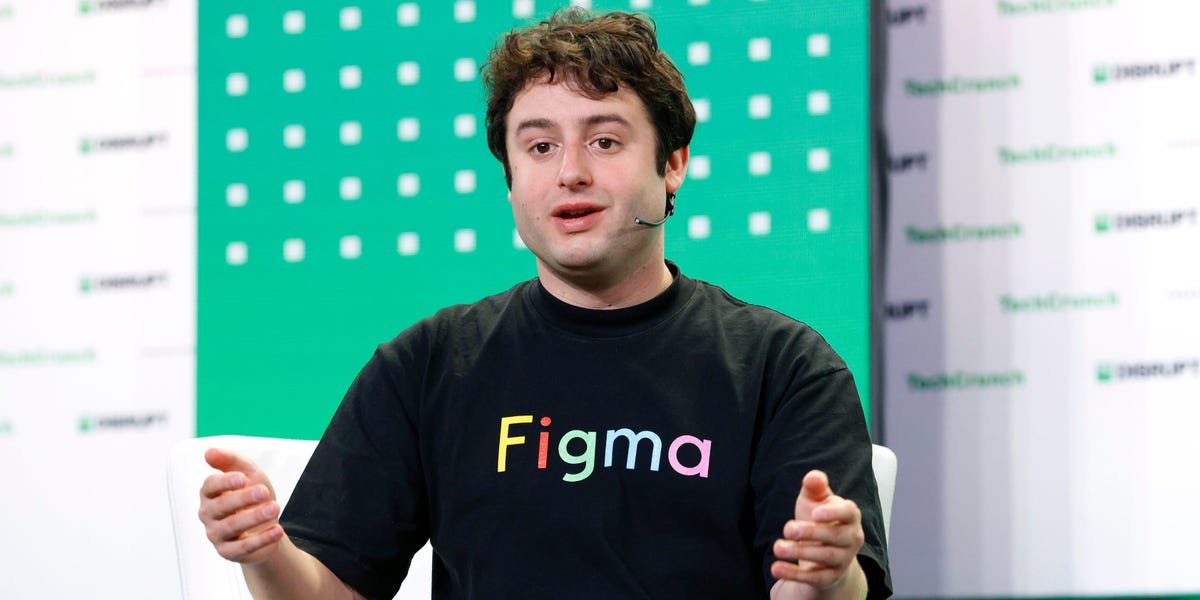
Figma CEO Dylan Field says he has a ‘bias’ for hiring young workers because they’re likely AI natives

Many young people are worried that AI is muscling in on the entry-level job market.

Dylan Field, the 34-year-old billionaire CEO of Figma, however, says AI gives young people an advantage in the hiring process.

During a recent appearance on the “In Good Company” podcast, produced by Norges Bank Investment Management, Field said the effect of AI on hiring is a “critical” debate happening now in the software industry.

“Does AI mean that you should hire senior people or middle-level, or junior, or are all the jobs going to go away because AI will replace them all?” Field asked. “I’ve heard that last one a bunch of times, and it hasn’t come true yet. All the people have said that. They continue to hire.”

Field said that, in his opinion, young professionals have an advantage because they tend to have a better understanding of AI, an increasingly important skill.

“My bias actually is a lot more toward the junior folks, and I think people that are younger are AI native in a way that folks that are older have to learn,” Field said.

He said Figma, which offers design products and services and competes directly with Adobe, has always hired a mix of ages, but that an understanding and passion for AI is a must going forward.

“I think that it is important that people come in, first of all, knowing that we’re pushing full steam ahead into the AI era,” Field said. “So, if you have a bias against AI, that’s a great dinner-table conversation between us, but we’re very focused on making sure that we build for this AI age.”

Young professionals are navigating a labor market bogged down in unemployment and uneven job growth. The Bureau of Labor Statistics in December published its final 2025 jobs report, which showed that the job market has remained stagnant, economists said.

The rise of AI has only added to that instability. Many companies these days are betting that AI will be able to do many of the tasks of entry-level workers, and economists say that could lead them to pause hiring young professionals.

Field, however, doesn’t share that outlook.

During an October 2025 appearance on “Lenny’s Podcast,” Field said he doesn’t think AI will take human jobs at all.


Source link

McKinsey-CEO-Bob-Sternfels-says-AI-is-changing-how-the.jpeg

McKinsey CEO Bob Sternfels says AI is changing how the firm views the perfect job candidate

Landing a job at McKinsey & Company has never been easy. The firm has long been known for recruiting top talent from top schools and leading industry experts.

AI, however, is forcing the firm to rethink the types of applicants it considers in the hiring process, CEO Bob Sternfels said.

On Harvard Business Review’s IdeaCast podcast this week, Sternfels said the firm used AI to analyze its past 20 years of hiring data to understand where it may have overlooked talent for its coveted class of partners.

The firm found that applicants who had setbacks and recovered were more likely to become partners. So, now, Stenfels said, the firm looks for resilience in its interview process.

“It turned out we had some bias in our system,” he said, adding that the firm was too focused on whether candidates had “perfect marks” instead of how they bounced back from difficulties.

In December, the firm promoted about 200 employees to partner — one of the smallest classes in years, The Wall Street Journal reported. In 2022, it promoted about 400 people to partner.

McKinsey partners typically earn under $500,000 in base pay, but they can expect to earn hundreds of thousands more in bonuses and profit sharing.

McKinsey receives about 1 million résumés annually. In 2024, the firm told Business Insider that it planned to hire about 1% of applicants, in line with 2023.

The firm’s spokesperson also said at the time that it looks for “distinctive students just starting their careers” and experts in industries ranging from technology to finance to law.

The company also looks for strong problem-solving skills, which it gauges through a game-based assessment called Solve.

To help candidates prepare, the company offers candidates resources ahead of time.

“This helps to ensure candidates from any background — regardless of whether they have exposure to resources like consulting clubs — can demonstrate their distinctiveness in our process,” the firm told Business Insider.


Source link