Madeline berg on grey background

Trump wants to cap defense CEO pay. Here’s how much they make now.

President Donald Trump is targeting the bank accounts of defense contractor CEOs.

On Wednesday, Trump signed an executive order outlining new rules for defense contractors that would ban stock buybacks and dividends “until such time as they are able to produce a superior product, on time and on budget” — as well as limit executive compensation.

The order stipulates that in future contracts, if the Secretary of War were unsatisfied with a company’s performance, executive base salaries would be capped at current levels. Future contracts would also ensure compensation “not be tied to short-term financial metrics” and instead be “linked to an on-time delivery, increased production, and all necessary facilitation of investments and operating improvements.”

The goal, per the executive order, is to increase the speed of innovation at defense companies, rather than focus on corporate profits.

Trump also took aim at the leaders of defense contractors in a series of posts on Truth Social on Wednesday.

“Executive Pay Packages in the Defense Industry are exorbitant and unjustifiable given how slowly these Companies are delivering vital Equipment to our Military,” Trump wrote. “Salaries, Stock Options, and every other form of Compensation are far too high for these Executives.”

He proposed that no executive should earn “in excess of $5 million” until their production speed and maintenance improve, though the executive order did not cap pay at that exact amount.

The leaders of the big five defense contractors — Lockheed Martin, RTX (formerly known as Raytheon), Northrop Grumman, Boeing, and General Dynamics — each earned more than $18 million in total compensation in 2024, the most recent year for which data is available. Their total income was a combination of salary, incentives, stock options, and other forms of compensation, including the value of security services and changes in the value of pension funds.
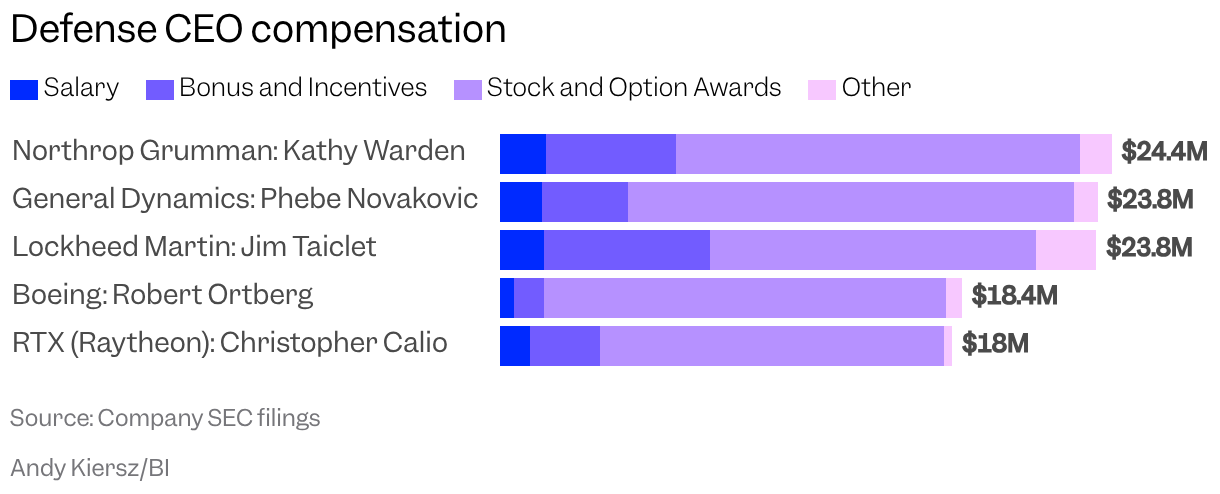
While exceeding the $5 million cap proposed by Trump by magnitudes, the CEOs’ compensation pales in comparison to that of some other business leaders.

Dozens of CEOs earned more than them in 2024. James Robert Anderson, who runs materials manufacturer Coherent, had a pay package of more than $100 million last year. The CEOs of Starbucks, GE, and Microsoft each made more than $75 million.

Executive pay and stock transactions are part of Trump’s larger plans for the military. On Wednesday evening, he said on Truth Social that America’s military budget should be increased to $1.5 trillion in 2027, up from the record 2026 defense budget of $901 billion.

That sent defense stocks climbing on Thursday morning, gaining back what they’d lost following the signing of the executive order.

In a statement to Business Insider regarding the order, a spokesperson for Lockheed Martin said the company “shares President Trump’s and the Department of War’s focus on speed, accountability, and results, and will continue to invest and innovate at scale to ensure our warfighters maintain a decisive advantage and are never sent into a fair fight.”

Boeing and General Dynamics declined to comment, and Northrop Grumman and RTX did not immediately respond to requests for comment.




Source link

Berkshire-Hathaways-new-CEO-has-a-higher-salary-than-Warren.jpeg

Berkshire Hathaway’s new CEO has a higher salary than Warren Buffett

  • Berkshire Hathaway disclosed that Greg Abel will make $25 million in his new CEO role.
  • Abel’s pay is a significant increase from Warren Buffett’s famous $100,000 salary.
  • Abel is expected to maintain Berkshire Hathaway’s investment philosophy.

Berkshire Hathaway is paying its new CEO, Greg Abel, $25 million each year, a big bump from Warren Buffett’s pay.

The company disclosed Abel’s annual cash salary in a filing with the Securities and Exchange Commission on Tuesday. He took on the role at the Omaha-based company on January 1.

Buffett, who retired last year, famously took an annual salary of $100,000 with no bonus or stock awards for over 40 years. Bloomberg estimates his net worth at $150 billion, the tenth-richest person in the world.

As Berkshire Hathaway’s former CEO and current chairman, Buffett recommended to his board of directors how much he should be paid and set compensation for Abel and other executives.

Abel, who was previously Buffett’s deputy, was paid $21 million last year. CEOs of S&P 500 companies were paid an average of $18.9 million in 2024.

At Berkshire’s annual shareholder meeting last year, Buffett, who is 95, announced that he would be stepping down after 55 years as the conglomerate’s CEO. Hours later, the board unanimously voted for Abel to replace him.

“I think the time has arrived where Greg should become the chief executive of the company at year end,” Buffett told the audience at the meeting.

Abel, 62, has been Berkshire Hathaway’s vice chair of non-insurance operations since 2018. He’s also chair of Berkshire Hathaway Energy, which Buffett hailed as one of the conglomerate’s four “jewels” in his annual shareholder letter in 2021, the same year Buffett first tapped Abel as his successor.

Investors expect Abel to maintain the company’s current investment philosophy. He is known for having a more hands-on leadership style than Buffett.


Source link

AMDs-CEO-says-AI-will-need-10-yottaflops-of-compute.jpeg

AMD’s CEO says AI will need 10 ‘yottaflops’ of compute — here’s what that actually means

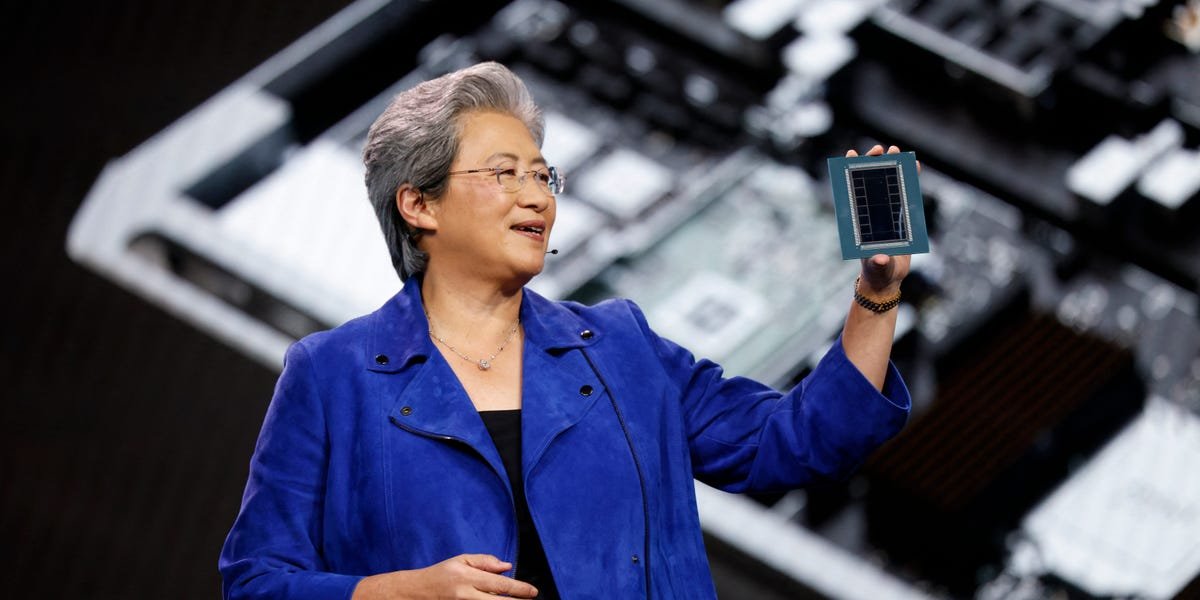
AI needs so much computing power that AMD CEO Lisa Su put it in terms of a unit most people have never heard of: the yottaflop.

Su said in her keynote at CES 2026 on Tuesday that the world would need more than “10 yottaflops” of compute a measure of how fast a computer is over the next five years to keep up with AI’s growth.

“How many of you know what a yottaflop is?” Su asked the audience. “Raise your hand, please,” she added, before quickly explaining the term herself when no one appeared to raise their hand.

“A yottaflop is a one followed by 24 zeros. So 10 yottaflop flops is 10,000 times more compute than we had in 2022,” she said.

In computing, a flop is a single basic math calculation. A computer doing 1 billion calculations per second is equal to a gigaflop. A yottaflop is equivalent to a computer performing one septillion calculations per second.

In theory, scientists say 10 yottaflops would be enough computing power to run complex, atom-level simulations for entire planets.

In 2022, global AI compute stood at about one zettaflop — a one followed by 21 zeros. By 2025, Su said, that figure had already surged to more than 100 zettaflops.

“There’s just never, ever been anything like this in the history of computing,” she said at the Las Vegas conference.

Su’s 10 yottaflop prediction is about 5.6 million times faster than the most powerful supercomputer today — the US Department of Energy’s El Capitan.

However, powering today’s AI compute is already putting a strain on the US power grid. The build-out of energy infrastructure would be a big bottleneck in scaling up AI compute power.

During the keynote, Su also used the stage to unveil AMD’s next generation of AI chips, including its MI455 GPU, as the company pushes deeper into supplying data-center hardware for customers such as OpenAI.


Source link

Jamba-Juices-former-CEO-says-middle-management-is-crucial-for.jpeg

Jamba Juice’s former CEO says middle management is crucial for success.

In the era of America’s “Great Flattening,” one longtime executive still believes that middle management has an important role to play.

Speaking in a Monday episode of Yahoo Finance’s “Opening Bid” podcast, Jamba Juice’s former CEO, James D. White, said companies should not lose sight of the fact that humans and company culture drive bottom-line growth.

And White said that middle managers are crucial for driving a good company culture.

“It’s really hard to drive culture into an organization if you’re not focused on the middle management of the organization,” he told host Brian Sozzi.

White said one reason for this is because most workers report to middle management.

“If that part of the organization doesn’t have the tools, hasn’t bought into the mission and vision, and they’re not being appropriately rewarded or invested in, you don’t have the best chance of getting that message into the heart of the organization,” White said.

White was the CEO of Jamba Juice from 2008 to 2016 and has held executive roles in Gillette, Coca-Cola, and Nestlé Purina. He now sits on the board of directors for several consumer companies, including Cava Group and Simply Good Foods.

White’s advice contrasts with that of other executives, who have sworn by a flat company hierarchy.

In recent years, companies like Microsoft, Meta, Amazon, Intel, and Google have all slashed their middle management head count in the name of efficiency. But it’s not just Big Tech: retail giants like Walmart have followed suit.

And in November, Keily Blair, the CEO of OnlyFans, said her company was making $7 billion in annual revenue with a staff count of only 42.

She said her company thrives from having only “incredibly senior talent” and “incredibly hungry junior talent.”

“We do not have that sort of squidgy layer of middle management in the middle, because nobody’s ever had a really good middle manager in my experience,” Blair said in the interview during a Web Summit technology conference in Lisbon.


Source link

Theron Mohamed — Profile Picture

Warren Buffett resigning as CEO but not chairman, said retiring worse than death

Warren Buffett is days away from stepping down as Berkshire Hathaway’s CEO, but at age 95, he’s skipping retirement to stay on as chairman. That’s not a shock from the investor who “tap dances to work.”

After revealing his resignation plans to Berkshire shareholders in May, Buffett said he would “still hang around” and “could conceivably be useful” to his successor, Greg Abel.

“I’m not going to sit at home and watch soap operas,” Buffett told The Wall Street Journal after his big reveal. “My interests are still the same.”

In his Thanksgiving letter, Buffett said he still works at Berkshire’s Omaha headquarters five days a week, and sometimes has a “useful idea” or gets approached with an offer.

Buffett’s lasting dedication isn’t surprising, as he’s famously devoted to Berkshire. Since taking control in 1965, he has transformed it from a failing textile mill into a world-beating conglomerate that owns scores of businesses such as Geico and NetJets, and huge stakes in public companies including Coca-Cola and Kraft Heinz.

“We’ve got the best job in the world,” Buffett said about himself and the late Charlie Munger during Berkshire’s annual meeting in 2000. “We get to work with people we like and admire and trust every day of the year. We get to do what we want to do, the way we want to do it.”

Investing Berkshire’s capital inside and outside the company is the “most enjoyable thing to do in the world,” Buffett said during the 2012 meeting. “I get to paint my own painting,” he continued, adding that he has “a lot of fun” with his coworkers.

Buffett has said for decades that retirement doesn’t appeal to him, and he much prefers to keep working as long as possible.

“Berkshire is my first love and one that will never fade,” he wrote in his 1991 shareholder letter, recalling that when a student asked when he planned to retire, he replied: “About five to 10 years after I die.”

Buffett said during Berkshire’s 1996 meeting that the idea of retiring was “unthinkable” for him: “That would be the worst. I think death would be second.”


Source link

Jordan Hart's face on a gray background.

5 big changes Nike CEO Elliott Hill is making to turn around the struggling sportswear giant

Nike CEO Elliott Hill inherited an uphill battle when he took over at the sports giant in October 2024.

Since then, Hill has made changes — both big and small — to the company as part of its turnaround strategy. After retiring from Nike in 2020, the former president of consumer and marketplace returned to guide the company amid declining sales, sluggish growth, and increased pressure from upstart rivals.

During the quarter preceding Hill’s start, Nike’s revenue declined 10% year over year to $11.6 billion, following flat growth in the 2024 fiscal year. Nike shares jumped about 8% on the day Hill’s appointment was announced in September.

The Nike veteran didn’t waste time launching his strategy when he took the helm, reevaluating the existing practices and adjusting them as needed.

“We lost our obsession with sport,” Hill said on a December 2024 earnings call. “Moving forward, we will lead with sport and put the athlete at the center of every decision.”

Last week, during the company’s most recent quarter, Hill told investors that the comeback “won’t be a straight line.”

Here’s what Hill has been up to in 2025.

Hill kick-started his turnaround plan

Nike’s “win now” strategy — Hill described it on last week’s earnings call as Nike’s “immediate response to our biggest challenges and opportunities” — focuses on five key areas: culture, product, marketing, marketplace, and in-person presence.

The plan leans on a sports-driven reset that has “realigned” about 8,000 employees around its core sports categories, the company said. Those categories include running, basketball, football, and training, as well as sportswear.

The idea is to put the athlete “at the center of everything that we do,” Hill said in a March earnings call.

The running category is leading the effort and reflects the direction Hill is steering the company. Nike said its running business grew by more than 20% last quarter, which ended in November, marking the second consecutive period of comparable growth.

Nike’s senior leadership team got a revamp

Hill shook up Nike’s leadership this year.

In May, he restructured its consumer, product, and brand leadership to focus on three areas: consumer and sport, marketing, and product creation. As part of that overhaul, Nike’s former president of consumer, product, and brand retired, and Hill promoted four other Nike insiders to senior roles reporting to him: president of Nike (Amy Montagne), chief innovation, design, and product officer (Phil McCartney), chief marketing officer (Nicole Graham), and chief growth initiatives officer (Tom Clarke).

Hill also hired a new communications chief this year, Michael Gonda.

And he made another round of changes in December, eliminating the roles of chief technology officer and chief commercial officer. At the same time, Nike established the role of chief operating officer, which reports to Hill. The new job’s function is to “integrate technology more seamlessly into our sport offense,” Hill said in a note to employees that Nike released publicly. Venkatesh Alagirisamy, a 20-year veteran of Nike, transitioned into the role on December 8.

As part of the shake-up, general managers in all regions now report directly to Hill.

“It’s clear how important it is to stay closely connected to what’s happening on the ground, from intern to CEO, and every role I’ve held in between, I’ve felt that way,” Hill said on last week’s earnings call.

He began mending relationships with wholesale partners

Hill said Nike’s ties with wholesalers such as Foot Locker and Dick’s Sporting Goods had frayed amid its aggressive shift toward direct-to-consumer sales.

Since Hill’s return, he said he’s been mending those relationships. For example, Nike is back on Amazon and has struck partnerships with smaller retailers, such as Urban Outfitters and Aritzia.

Nike’s wholesale revenues increased 8% year over year to $7.5 billion during its most recent quarter, which ended November 30.

Hill pulled back on promotions and raised prices

Hill said that Nike would strive to provide a more “elevated” experience for consumers, speaking in a January interview with Fortune. He said Nike had become “too promotional” on its own site.

“Being premium also means full price,” Hill told Fortune. “We’ll focus on promotions during traditional retail moments, not at the consistent levels we are today.”

He said in March that Nike Digital, which includes its website and app, ran zero promotions in North America in January and February, down from over 30 during the same months in 2024. The cutback on promotions came alongside “surgical” price increases Nike made to mitigate tariffs in 2025.

He gave the House of Innovation concept store a makeover


Nike 26.2 collection

The House of Innovation is Nike’s six-floor flagship store.

Jordan Hart/Business Insider


Nike’s 68,000-square-foot House of Innovation is the blueprint for its stores. It’s a six-story flagship store that opened in 2018, showcasing the company’s most advanced products. The first floor is dedicated to running, and the rest of the sprawling store is organized by sport, gender, and age.

Hill has frequently pointed to the revamped store in his first year as a model for Nike’s move to sports-driven retail layouts.

“It’s an immersive sport experience, and the refresh has already led to double-digit revenue increases,” Hill told investors in September.

Nike did not respond to a request for comment from Business Insider.


Source link

What-is-Elon-Musks-net-worth-Find-out-the-wealth.jpeg

What is Elon Musk’s net worth? Find out the wealth of the Tesla, SpaceX CEO

Elon Musk has a net worth of around $638 billion, according to Bloomberg’s Billionaires Index.

His net worth is closely tied to Tesla’s share price, but the tech mogul’s wealth comes from several sources and often fluctuates. He crossed over the $600 billion threshold in December following an $800 billion valuation of SpaceX.

That means Musk regularly trades places with Amazon founder Jeff Bezos, Meta CEO Mark Zuckerberg, and Oracle CEO Larry Ellison for the title of world’s richest person.

How has Musk’s net worth changed over time?

Musk, who was born in South Africa, moved to Canada and dropped out of a Ph.D. at Stanford, became a millionaire before he hit 30. Musk started Zip2, a website that provided city travel guides to newspapers, with his brother Kimbal Musk, and sold it to Compaq for more than $300 million in 1999. Musk, then aged 27, is believed to have got $22 million from the deal.

He went on to cofound online bank X.com in 1999. It soon merged with Peter Thiel’s Confinity to become PayPal, and the company was bought for $1.5 billion by eBay in 2002. Despite having been ousted as CEO, Musk walked away with around $165 million. 

Musk cofounded space-exploration company SpaceX in 2002. In 2004, he became an investor in and the chairman of EV company Tesla.

During the financial crisis in 2008, he saved Tesla from bankruptcy with a $40 million investment and a $40 million loan. That same year, he was named Tesla’s CEO.

Musk said 2008 was “the worst year of my life.” Alongside problems in his personal life, Tesla kept losing money and SpaceX was having trouble launching the first version of its Falcon rocket. By 2009, Musk was living off personal loans.

Tesla went public in 2010, though, and Musk’s estimated net worth steadily climbed. In 2012, he debuted on Forbes’ Billionaires List with an estimated wealth of $2 billion. 

In 2016, Musk set up the tunnel-digging business, the Boring Company.

The next year, he founded the neurotechnology startup Neuralink.

Musk’s net worth began a rapid ascent at the start of the pandemic as Tesla stock prices soared. Musk started 2020 with an estimated net worth of just under $30 billion and was worth around $170 billion just a year later — a more than five-fold increase in just a year. His estimated fortune peaked at around $340 billion in November 2021.

Musk also bought Twitter for $44 billion in October 2022, serving as its CEO until he stepped down in early June 2023.

The stock is known to be volatile and has had its ups and downs since then.

The morning of Trump’s reelection on November 6, 2024, which Musk heavily campaigned for, Tesla’s stock was up about 15%, for instance.

Following an insider share sale at SpaceX, which boosted the startup to a $350 billion valuation, Musk’s wealth surged again in December 2024 by about $50 billion in one day, making Musk the first billionaire to reach the $400 billion mark.

But in the months following its election highs, Tesla’s stock dropped by over 50% following a number of factors, including a vehicle sales slump, a rising Tesla boycott movement, and Musk’s stint in the US government, which some investors felt took him away from his day-in-day-out Tesla CEO duties.

Tesla’s stock rose back up following the CEO taking a step back from his role in the Department of Government Efficiency, but it continues to have big swings. Musk had one of his single-day highest net worth losses in June 2025 following a public spat on social media with the President, in which Trump floated the idea of having his government contracts revoked, and Musk repeatedly criticized Trump’s “Big Beautiful Bill.”

The stock has since rebounded and was up over 25% in 2025 as of December.

Musk’s net worth reached unprecedented heights in December 2025, as Musk confirmed SpaceX was planning an IPO. After an insider share sale valued the private company at $800 billion, Musk’s estimated net worth surpassed $600 billion.

Musk was the first billionaire to have reached a net worth of over $500 billion, according to Forbes, making him one step closer to becoming the world’s first trillionaire.

Where does Musk’s fortune come from?

Musk’s wealth is largely dependent on Tesla shares. Though he takes no salary from Tesla, he’s awarded stock options when the company hits challenging performance metrics.

Musk’s previous $55 billion compensation plan was voided in January 2024 on the grounds that Musk had undue influence over the package and its approval due to close ties with several board members. At its annual shareholder meeting in 2024, investors voted to approve Musk’s pay package. However, the judge upheld the original ruling, and the company has since appealed the decision.

A compensation package Tesla proposed for its CEO in September 2025 could turn Musk into the first trillionaire. The unprecedented plan included a new set of 12 milestones to be completed over a 10-year period, such as boosting the company’s valuation to $8.5 trillion, selling 12 million cars, getting a million robotaxis on the road, and coming up with a succession plan.

A large part of Musk’s net worth comes from Tesla shares, while roughly over 20% comes from SpaceX stock.

The rest of his wealth comes from shares in Twitter and The Boring Company, as well as other miscellaneous liabilities.


Source link

Figure-AI-CEO-says-over-170000-people-have-applied-to.jpeg

Figure AI CEO says over 170,000 people have applied to his robot company in the last 3 years. He hired fewer than 500.

A humanoid robotics startup in Silicon Valley appears to have an acceptance rate lower than any Ivy League university.

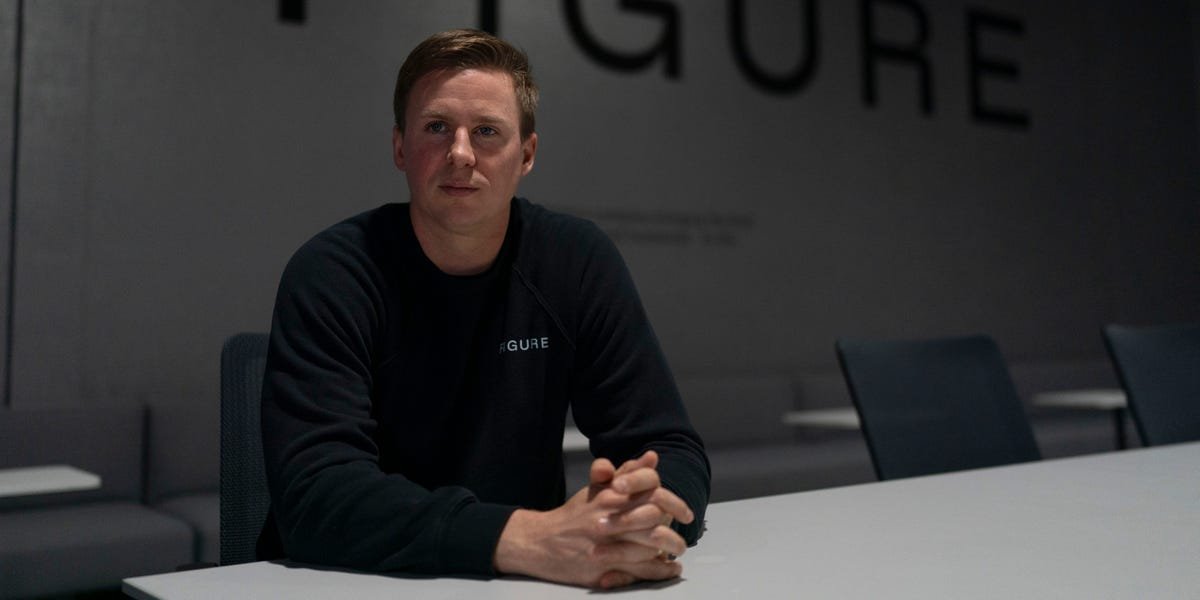
Figure AI has been flooded with résumés since its founding in 2022, according to the startup’s founder and CEO, Brett Adcock.

“Just checked, 176,000 job applications at Figure the last 3 years,” he wrote in an X post on Saturday. “We’ve hired ~425 people.”

That amounts to a hiring rate of about .24% within the three years. Adcock wrote that most of the submissions were “slop.”

The spread of the 176,000 applications over the three years is unclear. Adcock did not immediately respond to a request for comment.

Even if the number of applications were divided equally among the years Figure AI was operating — just under 59,000 applications a year — the acceptance rate would still be lower than that of the hardest university to get into. Caltech had the lowest acceptance rate of 3%, according to US News & World Report’s rankings list.

Adcock wrote in the comments of his X post that the review process has been a slog.

“We go through these one by one like a monkey — it’s incredibly time consuming,” he wrote.

According to the CEO, the “ATS” or applicant tracking system — a software employers use to sift through résumés — can’t save a lot of time if a company is being barraged with hundreds of thousands of applications.

“In the ATS it takes at least 20 seconds of button clicks per submission even if it’s garbage,” he wrote.

Adcock did not immediately respond to a request for comment.

A company like Figure AI sits right in the intersection of two trends within the job market.

Today’s job candidates aren’t applying to just a handful of roles. Business Insider’s chief correspondent Aki Ito reported that the average job opening saw 242 applications, citing data from Greenhouse, a leading ATS platform.

“Applying to a job in 2025 really is the statistical equivalent of hurling your résumé into a black hole,” Ito wrote.

On the other hand, Figure AI operates in one of the hottest spaces of the tech industry, that is, robotics and artificial intelligence.

Top tech firms like Meta and OpenAI are in the midst of an AI talent war, offering up to seven- to nine-figure pay packages just to poach superstar AI researchers.

Even tech startups are scrapping for AI talent, floating higher equity packages and other perks that may not come as easily at a big company, such as a co-founding title or more time for research.

Figure AI happens to be one of the leading names in the humanoid robotics space.

The company recently raised more than $1 billion in its Series C funding round — with backing from Parkway Venture Capital, Brookfield Asset Management, and Nvidia, among others — for a $39 billion valuation.

Adcock said on X that he may need to find another way to sift through résumés.

“Need a model to do this for us better, maybe I’ll work on one,” he wrote.


Source link

Lululemon-CEO-Calvin-McDonald-is-stepping-down.jpeg

Lululemon CEO Calvin McDonald is stepping down

  • Lululemon CEO Calvin McDonald will step down at the end of January, the company said.
  • The board is launching a comprehensive search for Lululemon’s next CEO.
  • Lululemon’s stock spiked after the announcement and an earnings beat.

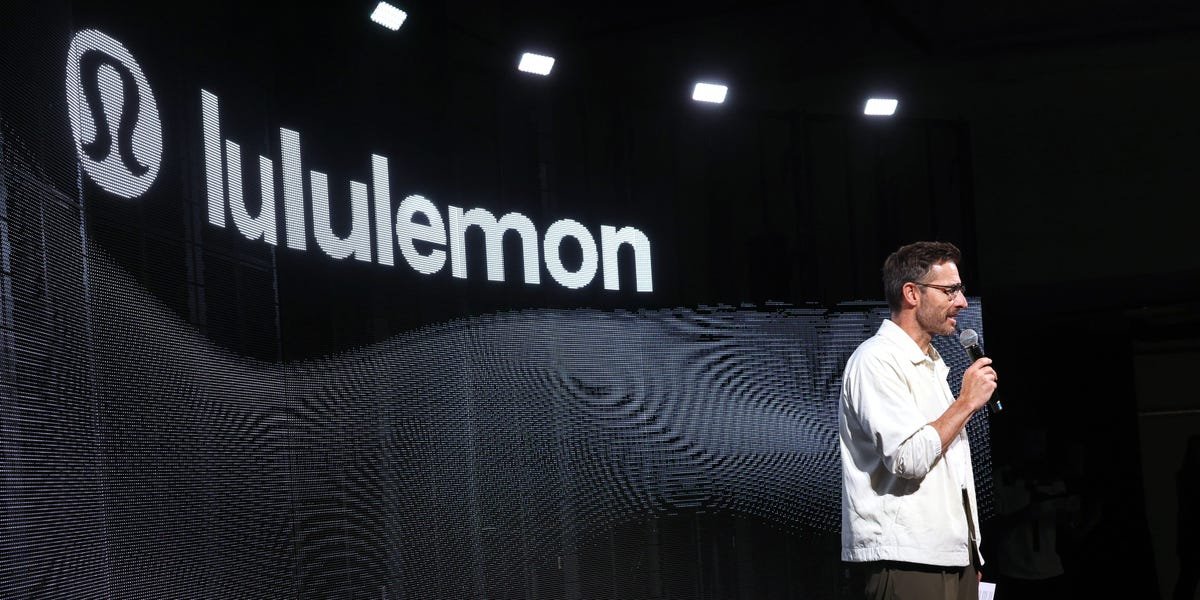
Calvin McDonald, CEO of Lululemon, is stepping down from that role at the end of January, the company announced Thursday.

McDonald is also stepping down from the board of directors and will serve as an advisor to the company through March.

Lululemon’s board is conducting a “comprehensive search process” for its next CEO, the company said.

Lululemon’s stock spiked in after-hours trading following an earnings beat and the announcement about its CEO. The company’s third-quarter results, posted Thursday, surpassed Wall Street expectations, including a reported revenue of $2.57 billion.

Marti Morfitt, the board chair, will immediately take on the role of executive chair to “to ensure the continued execution of the company’s near- and long-term growth strategy during the leadership transition,” the company said.

Lululemon CFO Meghan Frank and CCO André Maestrini will be interim co-CEOs after McDonald steps down.


Source link

Legal-tech-is-too-big-for-one-winner-says-Harveys.jpeg

Legal tech is too big for one winner, says Harvey’s CEO

The legal tech market is only just beginning, and it’s huge, says Harvey’s CEO.

Winston Weinberg said during a Reddit “Ask Me Anything” session on Wednesday that the opportunity ahead for the legal tech industry is so massive that no single company — including his — could own it.

“I don’t think a single player is going to capture all of the pretty enormous amount of value that will be created in the next 10 years in this space,” said the CEO of the $8 billion legal tech startup.

Harvey announced last week that it raised $160 million in a round led by a16z, pushing the startup’s valuation to $8 billion.

Despite being one of the most closely watched startups in the sector, Weinberg said Harvey is barely scratching the surface of who AI tools can reach.

“There are around 10 million global legal professionals, and Harvey serves just single-digit percentage points of them,” he said.

He also said the legal tech sector represents only a tiny slice of the overall legal economy. The global legal market is worth an estimated $1 trillion, but only about $30 billion of that is spent on technology today, Weinberg said.

“Long term, it seems clear that technology penetration in the legal market will grow significantly,” he said.

“If we build a great product, we hopefully capture some of that very large upside,” Weinberg said, adding that there is “clearly” room for other legal AI startups.

Weinberg said the startup needs to “earn that valuation every day.”

The share of monthly users who return daily is up 81% since the company launched in 2023, and lawyers using multiple features show engagement patterns “similar to Slack or email,” said Weinberg.

“We have a long way to go with building out a full platform of use cases for lawyers,” he added.

AI is coming for law firms

Weinberg said many legal tasks will be absorbed by technology.

“That doesn’t mean the entire job of a lawyer gets consumed; it’ll evolve,” he added.

Weinberg told Business Insider in September that AI is already reshaping the industry, creating new practice areas while reducing the size of some in-house teams.

Some law firms are rethinking their staffing models entirely, flattening their traditional pyramid structures by relying more on associates and fewer partners, he said in an interview on the sidelines of TechLaw Fest in Singapore.

Younger lawyers who grew up using AI tools may gain an edge over senior partners when it comes to fluency, speed, and adaptability, he added.

AI has become an unavoidable part of lawyers’ work. Five of the 10 largest US law firms by revenue told Business Insider in July they were already embedding AI into their workflows — including document review, legal research, and spotting compliance risks.

Investor enthusiasm has also surged alongside the transformation. Legal-tech funding reached $3.2 billion this year, according to Business Insider’s December analysis of Crunchbase data and recent deals.


Source link