A headshot of Insider's Pete Syme

What the Iran war means for US airlines, according to United, Delta, and American’s CEOs

Airline bosses are raising ticket prices to keep turning a profit due to the Iran war.

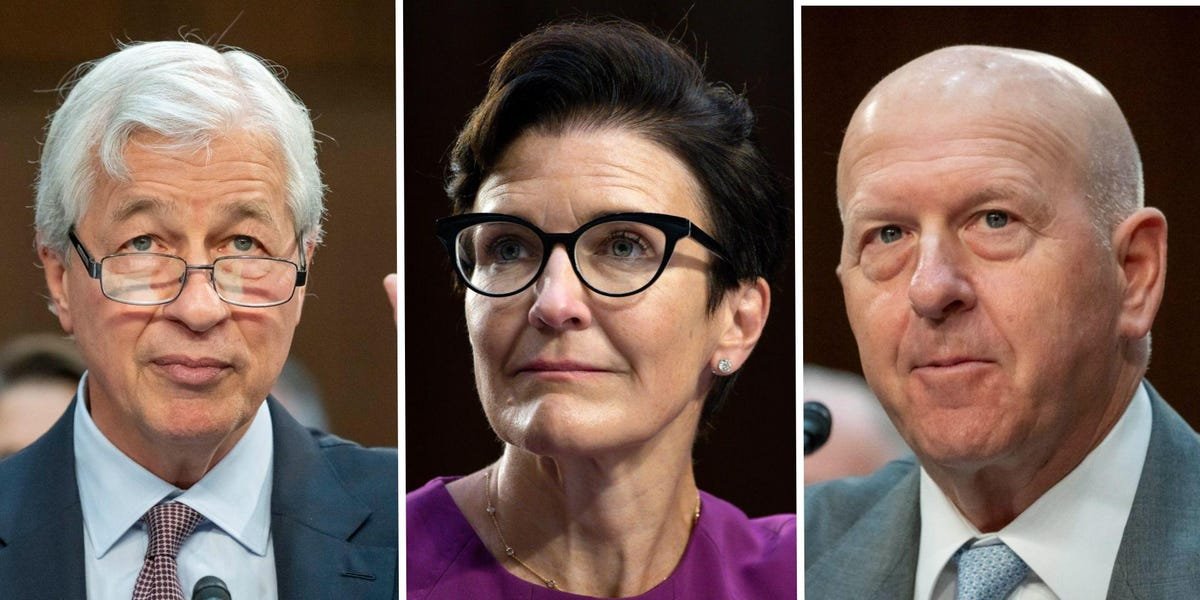
That was the main message from the Big Three airlines — Delta, United, and American — whose CEOs spoke Tuesday at a JP Morgan conference.

While oil prices have risen to over $100 a barrel, jet fuel has risen faster. Brent crude is up 45% over the last month, but the Argus US Jet Fuel Index rose 72% in that time.

United Airlines has even been testing a scenario in which oil prices rise to $175, its CEO said.

Jet fuel is typically the second-largest expense for airlines, after labor.

At the conference, airline executives warned of the impact of rising oil prices but also sought to reassure investors that they’re well positioned to contain them.

Here’s what they said:

Delta Air Lines

Since the Iran war started, Delta Air Lines has seen a “very modest decline” in sales to people in Europe, CEO Ed Bastian said. Although they only make up less than a fifth of its transatlantic business.

“When you’ve got a war in your backyard, people tend to stay home,” he added.

Bastian also told the conference that Delta is “well-positioned” to “recapture” the rise in fuel costs, giving two main reasons.

First, he cited Delta’s premium brand that gives it a “position of strength” to raise ticket prices.

“All those moves, in my opinion, are just going to make the carriers that are strong even stronger in terms of our ability to continue to grow and continue to expand,” the CEO said.

He also said that Delta has a “meaningful hedge” against fuel prices thanks to its own oil refinery, Monroe Energy.

Unlike their counterparts around the world, most US airlines do not hedge against fuel costs with financial derivatives.


Delta CEO Ed Bastian speaks at the Economic Club of Washington at the JW Marriott on September 10, 2025 in Washington, DC

Delta Air Lines CEO Ed Bastian. 

Andrew Harnik/Getty Images


“This will be the first time with a pretty sudden fuel shock that we as an industry will go through it with no one with fuel hedges, which will be, I think, also adding to the need for people to move with a sense of pace,” Bastian said.

“Who knows what the duration of the events that we see unfolding in the Middle East are?” he added. “However they unfold, the one thing I can guarantee you is Delta will be stronger as a result of that.”

United Airlines

United CEO Scott Kirby said the airline has a goal this year to “fully offset the increase in fuel prices.”

However, this would require it to earn an extra 8.5 percentage points of revenue for each seat it flies

“It’s an interesting kind of thought experiment,” he added. “Is that doable or not?”

He then said that the first 10 weeks of 2026 have been the strongest in the airline’s history for bookings. So, strong demand suggests that it might be able to raise prices without losing too many customers.

United is also proactively preparing for the worst by cutting some capacity.

“I’d much rather make the mistake of leaving a couple of months’ worth of demand on the table because we cut more, and then you can get it back, as opposed to making the mistake of oil prices staying higher and longer, and you’re flying flights that lose cash,” Kirby said.

Like Bastian, he also said that if fuel prices stay higher for longer, the airline brand is significant.


A United Airlines 767-300ER is seen at a gate with the Manhattan skyline in the background at Newark Liberty International Airport in Newark, New Jersey, on March 18, 2026

A United Airlines Boeing 767 at Newark Liberty International Airport. 

kena betancur / AFP via Getty Images


“That’s really where it gets interesting. I think there’s a reasonable chance that that happens,” Kirby said. “If it does, it’s going to, I think, further accelerate the gap between the brand-loyal airlines and everyone else.”

United has looked at a scenario where the Strait of Hormuz is closed for three months and oil prices go up to $175 a barrel, then ends 2027 at $100, Kirby said.

“I think that’s a world where we have the ability to grow earnings next year,” he added.

American Airlines

CEO Robert Isom said American Airlines has spent an additional $400 million on fuel.

If the rising prices are short-term, “there’s absolutely an impact to the first quarter in terms of profitability, and likely an impact in the second quarter as well,” Isom said. “But we’re going to make sure that we do the right things to react to that.”

If oil prices stay higher for longer, Isom said: “We’re certainly going to be nimble in terms of capacity, to make sure that supply and demand stay in balance.”

In other words, taking similar action to what United is already doing proactively: cutting some flights.

Isom said he has “great confidence” that American will be profitable this year.

If fuel prices hadn’t gone up, he added, American’s first-quarter earnings would still be profitable despite the huge impact of Winter Storm Gianna.


Source link

Person at computer with robots in the background

Bank employees, rejoice: 60% of finance CEOs don’t see head count shrinking because of AI


AndreyPopov/Getty Images

  • Of the 240 financial CEOs EY surveyed, only 28% see AI reducing head count in 2026.
  • Nearly half of the CEOs said AI is the most critical factor in their company’s ability to adapt.
  • Some Wall Street leaders have said AI will eliminate some roles, but ultimately increase head count.

Banks’ analyst classes probably won’t swap fresh-faced college grads for bots — at least not this year.

Some 60% of the 240 financial services CEOs that EY surveyed for its Quarterly CEO Outlook Survey said they think investing in AI will maintain or even increase their current head count in 2026. Only 28% of those surveyed predicted head count would drop this year.

Leaders at some of the biggest banks, including JPMorgan and Goldman Sachs, have said that they’re resisting hiring growth where it makes sense to prioritize efficiency. They, along with some other bulge-bracket leads, have predicted that AI could grow head count in the long run, though. Still, some roles are becoming obsolete: Citi CEO Jane Fraser said in a recent internal memo that some jobs “will no longer be required” as AI advances.

For their part, the financial services CEOs that EY surveyed are similarly bullish about AI’s capacity to transform the workplace, and nearly half see AI and digital investment as the most important factor in their companies’ ability to thrive and adapt this year.

Around a quarter said their AI initiatives have significantly beaten expectations, and 57% said they’ve shown results faster than expected. Just more than half said they expect the biggest transformations to come from generative AI.

When it comes to hiring for AI talent — itself a highly competitive market — 87% of CEOs in EY’s survey are optimistic about their ability to attract and keep talent in 2026. The question of returns on the AI investment, for talent and in general, also seems top of mind for the financial services leaders. Seventy-six percent of boards in the survey said they’ll review transformation ROI metrics as often as financial results.

Firms of all sizes are being asked to justify their AI spends, as analysts and investors begin to wonder whether the sometimes billion-dollar bets will show up on balance sheets.


Source link

Why-more-CEOs-and-boards-are-worrying-about-security-The.jpeg

Why more CEOs and boards are worrying about security: ‘The risk is everywhere.’

For decades, executive security followed a familiar playbook: Most CEOs traveled freely at home, accepted protection only in high-risk foreign countries, and treated personal safety as a private concern rather than a boardroom imperative.

That world no longer exists.

Mentions of exec security protocols are popping up in more proxy filings, and companies like Starbucks are changing corporate jet policies due to what it calls “significant heightened security concerns.”

These moves follow the December 2024 killing of UnitedHealthcare CEO Brian Thompson in New York City and a shooting at a Park Avenue office building about eight months later.

Both instances shattered long-held assumptions that corporate leaders were at least somewhat insulated from the types of violence more often associated with politicians or celebrities, several security executives told Business Insider.

There isn’t a distinction between low-, medium-, or high-risk anymore, said Dale Buckner, head of the security firm Global Guardian, which works with Fortune 1000 companies.

“The risk is everywhere,” he said.

The news of the disappearance of “Today” co-host Savannah Guthrie’s mother, Nancy, has only added to a sense of unease for high-profile leaders, several of these execs said.

Boards step in

Buckner, a retired US Army colonel who served for more than two decades, said his firm has briefed more boards in the past 11 months than in the previous 14 years combined. Increasingly, Buckner said, boards view CEOs and other C-suite members as assets that must be protected, even if some leaders are leery of perceived constraints on their freedom.

“The board is overruling the CEO who is going, ‘I don’t need this,'” he said.

In regulatory filings, companies have begun to spell out their decisions. Starbucks said last month that, following a security review, it recommended that CEO Brian Niccol use company aircraft for both personal and work travel. While it’s made that recommendation before, the company lifted a spending cap it had in place for personal travel and will instead review those costs each quarter.

Unlike in its previous proxy a year earlier, Starbucks also cited “the existence of credible threat actors.”

Those concerns extend beyond the coffee chain.

Disney requires Bob Iger, who is set to step down as CEO next month, to use company aircraft for both business and personal travel. A security consultant identified “bona-fide, business-related security concerns” for Iger, Disney said in a January filing. That language didn’t appear in the company’s prior filing.

Meatpacking giant Tyson Foods said it hired a consultant during its fiscal year that ended in September to review risks associated with its senior management team “based on the evolving security environment for corporate executives.” One resulting change: requiring certain execs to use company aircraft for both business and personal travel.

Proxy filings by large US public companies that mention “executive security” or “corporate security” rose from 69 in 2023 to 87 in 2025, according to an AlphaSense analysis.

Representatives from Starbucks, Disney, and Tyson Foods didn’t respond to Business Insider’s requests for comment on the nature of the threats executives face.

18 armed agents

While high-profile CEOs have long had protection in high-risk zones, Buckner said what’s grown more common is keeping executives under a 24/7 safety umbrella.

Buckner said that the protocol for one of his protectees, a Fortune 500 CEO, includes 18 armed agents, camera surveillance of the executive’s home, and monitoring of its WiFi network. A former garage on the property now serves as an “op center,” he said.

“I have two to four roving armed agents around their home, 24 hours a day,” Buckner said.

It can be a challenge to determine whether something that starts as disapproval over a company or leader could morph into something more nefarious, security veterans said.

A threat might start out as a joke in poor taste, and a group targeting a company might pick it up. Then, all of a sudden, it becomes a real risk, said Lisa Kaplan, founder and CEO of the risk-intelligence firm Alethea.

‘The reality of risk’

Caleb Gilbert, founder of White Glove Protection Group, a security firm serving large companies and family offices, said the range of people who feel threatened has widened over the past six months.

“The reality of risk is resonating with more people. And that’s different than I’ve seen in the last 30 years,” he said.

One reason is that the cadence of high-profile incidents — from the attempted assassination of President Donald Trump in 2024 to the killing of conservative activist Charlie Kirk in September — hasn’t seemed to slow, Gilbert said. While attacks on business leaders remain rare, many nonetheless feel rattled, he said.

“It used to be where something bad would happen, there’d be time in between, and the executives would forget about it,” Gilbert said. Now, “with the security-minded glasses that they put on, it’s brought everything into focus.”

The cost of protection is part of that view. A small protective detail can cost about $1 million a year, while a full-scale operation can reach $30 million, he said.

In some cases, Gilbert said, even without a board’s prodding, executives are “willing to give up personal liberties that they cherished before for the sake of feeling safe.”

The apparent kidnapping of Nancy Guthrie could lead to demand from executives to detect threats against parents, Kaplan said. Typically, she receives requests from executives to monitor risks to their children.

Buckner said he recently spoke to a group of CEOs in Washington, DC, on security threats. Many reported feeling unnerved, he said.

“It’s palatable,” he said. “They’re scared that they’re in a new world order. They’re not quite sure how to navigate it.”


Source link

7-of-the-most-interesting-quotes-from-Anthropic-CEOs-sprawling.jpeg

7 of the most interesting quotes from Anthropic CEO’s sprawling 19,000-word essay about AI

Dario Amodei still has a lot to say.

On Monday, the Anthropic CEO dropped an over 19,000-word essay entitled “The Adolescence of Technology” on the future of AI on Monday, opining on everything from his fellow CEOs to feudalism, and even the Unabomber.

Best known for his warning that AI could eliminate up to 50% of entry-level white-collar jobs in the next 1 to 5 years, Amodei has tangled with Nvidia CEO Jensen Huang and the Trump White House over his views.

Here are seven of the most alarming and surprising quotes.

‘This is a serious civilizational challenge’

Amodei remains optimistic about AI overall, but his essay detailed “an intimidating gauntlet that humanity must run” to reap the benefits of AI without letting the breakthrough technology destroy the world.

“I believe if we act decisively and carefully, the risks can be overcome — I would even say our odds are good. And there’s a hugely better world on the other side of it,” he wrote. “But we need to understand that this is a serious civilizational challenge.”

AI development can’t be stopped, Amodei wrote, a conclusion even some of AI’s skeptics share. The financial and security benefits are just too massive for the private and public sectors to pass up.

It’s why winning the AI race and doing so in an ethical way is so critical, he concludes.

‘This is like selling nuclear weapons to North Korea and then bragging that the missile casings are made by Boeing’

Jensen Huang hasn’t changed Amodei’s mind on China.

“A number of complicated arguments are made to justify such sales, such as the idea that ‘spreading our tech stack around the world’ allows ‘America to win’ in some general, unspecified economic battle,” Amodei said. “In my view, this is like selling nuclear weapons to North Korea and then bragging that the missile casings are made by Boeing and so the US is ‘winning.'”

In November, Nvidia announced a partnership with Anthropic that includes an investment of up to $10 billion in the AI startup. The news sparked speculation that tensions between Amodei and Huang might be cooling.

Whatever the status of their relationship, Amodei is resolute that it is a horrendous decision to allow US companies to sell advanced chips to China.

“China is several years behind the US in their ability to produce frontier chips in quantity, and the critical period for building the country of geniuses in a data center is very likely to be within those next several years,” Amodei wrote. “There is no reason to give a giant boost to their AI industry during this critical period.”

‘Many people have told me that we should stop doing this, that it could lead to unfavorable treatment’

Amodei would like his critics to see the scoreboard.

Anthropic’s leader hasn’t tried to curry favor with the White House, nor has he vocally embraced President Donald Trump’s AI policies to the same degree as his rival CEOs. Amodei’s outspoken call for AI regulation even led David Sacks, Trump’s AI czar, to publicly rebuke him.

None of it has changed Amodei’s view that the AI industry “needs a healthier relationship with government — one based on substantive policy engagement rather than political alignment.”

“Many people have told me that we should stop doing this, that it could lead to unfavorable treatment, but in the year we’ve been doing it, Anthropic’s valuation has increased by over 6x, an almost unprecedented jump at our commercial scale,” he wrote.

Of all of his hopes, this one appears the unlikeliest. Already, AI CEOs have formed dueling super PACs ahead of the 2026 midterm elections.

‘It is sad to me that many wealthy individuals (especially in the tech industry) have recently adopted a cynical and nihilistic attitude that philanthropy is inevitably fraudulent or useless’

The tech elite made AI, and they should help society grapple with its fallout, he wrote in the essay. Amodei has long called on governments to prepare for mass job displacement. In one of the most eyebrow-raising parts of the essay, Anthropic CEO detailed what his fellow billionaires and companies must do.

Beyond philanthropy, Amodei said companies need to be “creative” in how they stave off layoffs.

In the long term, he wrote, “It may be feasible to pay human employees even long after they are no longer providing economic value in the traditional sense.”

‘Some AI companies have shown a disturbing negligence towards the sexualization of children’

One of the biggest themes of Amodei’s essay is the risk that AI companies themselves pose. It’s a conclusion that he admits is “somewhat awkward” for him to reach. As an example, he points to the roiling topic of the sexualization of children. While he does not name xAI directly, Grok is facing investigations in multiple countries over the non-consensual sexualization of images of real people.

“Some AI companies have shown a disturbing negligence towards the sexualization of children in today’s models, which makes me doubt that they’ll show either the inclination or the ability to address autonomy risks in future models,” he wrote.

Overall, he expressed skepticism that AI companies will sacrifice profit for broader societal good. “Ordinary corporate governance,” Amodei wrote, is ill-equipped to address his worries.

Amodei said that fears that AI models may defy orders and perhaps even try to eliminate humanity are complicated by bad actors in the industry who aren’t as transparent about the risks they are seeing in their models.

“While it is incredibly valuable for individual AI companies to engage in good practices or become good at steering AI models, and to share their findings publicly, the reality is that not all AI companies do this, and the worst ones can still be a danger to everyone even if the best ones have excellent practices,” he wrote.

‘Models are likely now approaching the point where, without safeguards, they could be useful in enabling someone with a STEM degree but not specifically a biology degree to go through the whole process of producing a bioweapon’

Amodei doesn’t see the largest risks to humanity coming from AI pursuing total domination, but rather in what AI could enable humans to unleash.

Amodei described his fears that AI is lowering the barrier of entry necessary to make killer biological weapons. His greatest concern is that AI could provide the step-by-step know-how that could eventually enable even an average person to produce a bioweapon.

AI companies, Amodei said, need to ensure they create sufficient backstops to block such inquiries, including by making it difficult for hackers to jailbreak models. Adding such security is expensive, Amodei said, noting that these measures are “close to 5% of total inference costs” for some of the companies’ models.

“I am concerned that over time there may be a prisoner’s dilemma where companies can defect and lower their costs by removing classifiers,” he wrote. “This is once again a classic negative externalities problem that can’t be solved by the voluntary actions of Anthropic or any other single company alone.”

‘I would support civil liberties-focused legislation (or maybe even a constitutional amendment)’

Amodei is one of the AI industry’s most vocal proponents of AI legislation. While Meta and Microsoft supported a federal preemption of state-level AI laws, Anthropic supported AI transparency bills in California and New York that are now law.

Throughout the essay, Amodei outlined multiple areas for future legislation, including industry-wide transparency requirements like those at the state level. Even he concludes that new laws might not be enough.

“The rapid progress of AI may create situations that our existing legal frameworks are not well designed to deal with,” he wrote.

It’s why Amodei said he would go so far as to support a constitutional amendment. The US has not amended the Constitution since 1992, when the over two-century-long battle to add a limitation on congressional pay finally passed the 38th state legislature.

“I would support civil liberties-focused legislation (or maybe even a constitutional amendment) that imposes stronger guardrails against AI-powered abuses,” he wrote.


Source link

Lloyd Lee

Tech workers want their CEOs to speak out against ICE and cancel contracts

A small group of tech workers is calling on their CEOs to speak out against Immigration and Customs Enforcement, as the Trump administration deploys federal agents into metropolitan areas.

The petition, titled “Tech demands ICE out of our cities,” calls on tech leaders to “pick up the phone” and call the White House to demand Immigration and Customs Enforcement agents “leave our cities.”

Other demands include canceling company contracts with ICE and speaking out publicly against “ICE’s violence.”

The petition has received more than 250 signatories, which represents a small sliver of the overall tech workforce in the US.

Employees from Google and Amazon make up a plurality of the signatories, although not every participant chose to disclose their name; at the time of publication, roughly 170 of the signatories were named, the others chose only to share their title and or company.

Organizers of the petition were not disclosed. Business Insider reached out to the contact provided on the website and did not immediately get a response.

A spokesperson for Amazon declined to comment. A Google spokesperson did not immediately respond to a request for comment.

The Trump administration has been aggressively executing on immigration enforcement; some of the tactics have led to highly publicized clashes between local community members and ICE agents.

Minneapolis — the city where George Floyd was killed by a police officer — recently became a focal point of an immigration crackdown, and where an ICE officer fatally shot Renee Good, a US citizen.

The Minneapolis Regional Labor Federation, an AFL-CIO affiliate, endorsed a move on Saturday encouraging local residents to skip work on January 23.

The White House has also targeted the tech industry by attaching a higher fee to the H-1B visa — a program tech companies and other industries have relied on to hire overseas talent.

The move has seen ripple effects from Big Tech, down to higher education.

Data from the National Student Clearinghouse Research Center showed a 5.9% decline in enrollment at US universities by graduate international students for the Fall 2025 semester.


Source link

Heres-what-Wall-Street-bank-CEOs-are-saying-about-head.jpeg

Here’s what Wall Street bank CEOs are saying about head count in the age of AI

Jamie Dimon has stuck to his trademark bluntness when talking about AI and jobs.

“It will eliminate jobs,” Dimon said at a Fortune conference in December. “People should stop sticking their heads in the sand.”

In the near term, Dimon said in an interview with CNN that JPMorgan’s head count remains steady, or even rises, as AI continues to roll out — if the bank does a “good job.”

The bigger promise is efficiency. “It will affect every job,” Dimon said at a 2024 Alliance Bernstein conference, describing a future where AI handles tasks like note-taking and summarization at the push of a button.

That efficiency could still mean more hiring in areas like cybersecurity, where Dimon says banks will need AI to counter increasingly sophisticated fraud.

CFO Jeremy Barnum said during the company’s fourth-quarter earnings call on Tuesday that the bank is allowing for some additional hiring in technology “at the margin.”

On that same call, however, Barnum said that, generally speaking, they “want to make sure that when someone needs to get something done, whether it’s in technology or elsewhere, their first reaction is not, ‘Hire more people.'”

He has previously said JPMorgan is asking people to “resist head count growth where possible” and focus instead on efficiency.

The head of JPMorgan’s consumer business, Marianne Lake, has said operations staff could be 40% to 50% more productive over the next five years — a shift she said would lead to slower net head count growth, as each employee can handle far more work through automation, digital assistants, and self-service tools.


Source link

Meet-the-new-class-of-retail-CEOs-set-to-take.jpeg

Meet the new class of retail CEOs set to take the reins at Walmart, Target, and more

  • 2025 has been a big year for retail CEO transition announcements.
  • Roughly 45 retailers said they are changing leadership, up from about 32 the year before.
  • Here are some of the more notable retail chains that are getting a new CEO.

2025 may go down as the end of an era in retail.

This was the year that the longtime CEOs at two of the largest chains decided to hand the reins over to their corporate proteges.

The retirements of Walmart’s Doug McMillon and Target’s Brian Cornell come as the industry is facing an array of new (and long-term) challenges in the form of a global trade rebalancing, accelerated adoption of AI, and increasingly stretched US household budgets.

Fresh legs might be a welcome addition in this race.

Dozens of smaller retailers have taken the opportunity to shake up the C-suite as well.

Analysis from leadership consultancy Challenger, Gray & Christmas found that 43 retail companies announced CEO exits in the first 10 months of this year, up from 32 in the same period last year. A few more announcements have come through since.

Here are some of the major retail chains that are getting a new CEO in the new year.

Walmart — John Furner

Walmart’s incoming CEO, John Furner.

Walmart

Walmart said in November that the company’s US division CEO, John Furner, would become president and CEO on February 1.

Like outgoing CEO Doug McMillon, Furner has been with Walmart for decades, starting as an hourly associate and working his way up through the ranks.

Target — Michael Fiddelke


Target's new CEO Michael Fiddelke.

Target has tapped Michael Fiddelke as its new CEO.

Target

Target said in August that chief operating officer Michael Fiddelke would succeed Brian Cornell on February 1, with Cornell remaining on the board as Executive Chair.

Fiddelke has been with the company for 20 years, starting as a finance intern and moving through roles in merchandising, finance, operations, and human resources.

Camping World — Matthew Wagner


A Camping World RV dealership in Florida.

A Camping World RV dealership in Florida.

John Greim/LightRocket via Getty Images

RV dealer Camping World said in December that founder Marcus Lemonis would step down as CEO on January 1, with company president Matthew Wagner taking over.

Wagner has been with Camping World since 2007, serving in numerous leadership roles before being appointed chief operating officer in 2023 and president in 2024.

Kraft Heinz — Steve Cahillane


Kraft Heinz has tapped Steve Cahillane as its new CEO.

Kraft Heinz has tapped Steve Cahillane as its new CEO.

Kraft Heinz

Kraft Heinz said in December that it has snagged Kellanova CEO Steve Cahillane to take over from Carlos Abrams-Rivera on January 1.

The company will later split into two publicly traded companies, North American Grocery Co. and Global Taste Elevation Co., with Cahillane remaining in charge of the latter.

Cahillane has a long career leading consumer products companies like The Nature’s Bounty Co. and Coca-Cola’s Americas division. He also spent eight years with AB InBev.

Kohl’s — Michael Bender


Kohl's CEO Michael J. Bender

Kohl’s has made Michael Bender its permanent CEO.

Kohl’s

In fairness, Michael Bender’s transition effectively happened back in May, but Kohl’s made it official in late November when the retailer said Bender would go from interim CEO to a permanent appointment.

That means Kohl’s will start the new year with one less distraction under the leadership of a highly experienced retail executive who has already had a positive impact on the company.

Lululemon — Meghan Frank and André Maestrini (for now)


Lululemon interim co-CEOs Meghan Frank and André Maestrini

Lululemon has appointed Meghan Frank and André Maestrini as interim co-CEOs.

Lululemon

Athleisure brand Lululemon said in December that it was parting ways with CEO Calvin McDonald on January 31, but hasn’t yet identified a permanent successor.

In the meantime, the company said board chair Marti Morfitt would expand her role to become executive chair, and that CFO Meghan Frank, chief commercial officer André Maestrini would serve as interim co-CEOs following McDonald’s departure.

7-Eleven — Stan Reynolds and Doug Rosencrans


7-Eleven convenience store chain, close-up exterior sign logo.

A 7-Eleven store in Florida.

Jeffrey Greenberg/Universal Images Group via Getty Images

Parent company Seven & i Holdings said in December that CEO Joe DePinto would retire at the end of the year. The company’s current president, Stan Reynolds, and chief operating officer, Doug Rosencrans, are set to serve as co-CEOs until a permanent successor is hired.


Source link