
My-99-year-old-grandma-taught-me-important-lessons-about-the-power.jpeg

My 99-year-old grandma taught me important lessons about the power of silence, change, and living a good life

My grandma and I spent most of our lives apart, yet she taught me a deeper way to live.

I grew up in California, while my Grandma Jackie lived in Minnesota. We saw each other only on special occasions — summer visits, my high-school graduation, and a few holidays.

Because of the distance, I got to know her through stories from my parents. Most of what I knew about my grandma came from tales of her days fishing, playing slots, and trying her luck at Pokeno.

These stories, mixed in with my own memories of her wide smile and the taste of her one-of-a-kind sweet-potato pie, cemented my connection to her. Yet when she passed away at 99, I felt guilty for not being closer to her.

During my grieving, I reflected on our relationship that flourished despite the time and miles between us. Through our scattered time together, Grandma Jackie gave me three lessons that shape how I live today.

Love doesn’t need many words


Woman smiling in chair lift wearing Minnesota sweatshirt

Although my grandma didn’t always say much, I knew she loved me.

Kiersten Brown


My grandma wasn’t much of a talker — oftentimes, she could communicate more with a smile than with words.

Whenever I visited her, her brown eyes would light up, and in her raspy voice, she would say, “Well, hi sweetie, how ya doing?”

After a few minutes of pleasantries, the conversation would end. Then we would sit together and watch “Wheel of Fortune.” Occasionally, I’d glance at her, and she’d shoot me a smile.

The same pattern played out during her yearly birthday calls, which lasted three minutes, at best. She would sing “Happy Birthday,” ask how I was doing, and end with, “Well, I’ll holla at you later.”

Interactions felt more like small talk with a coworker than chats with a loved one, and these brief interactions made me question our connection. Short conversations made me feel like we weren’t close because we didn’t have much say.

Yet one day after my grandma’s passing I was talking with my aunt who revealed that love is measured in time spend together.

My aunt mentioned that Grandma Jackie often asked about me and prayed for me nightly. Although we didn’t speak often and saw each other less, she was always thinking of me.

This insight made me realize that silence was more of a way of being than a reflection of our relationship. I realize now that not having much to say was a choice rooted in acceptance and love — she was content with simply having me around.

Because of her, I now focus more on appreciating someone’s presence rather than filling space with chatter.

It’s never too late to change how you live and chase life — no matter the circumstances

My grandma had an unwavering will to live and really took charge of her health at the age of 80 when the doctor’s told her that her she might not have much time left.

She quit smoking, cold turkey. She enrolled in exercise programs, walked daily laps around the house, took supplements, and focused on eating more fruits and vegetables.

More than fearing death, I believe my grandma enjoyed life too much not to fight for it. She had always been someone who loved spending time with her friends, enjoyed traveling within her own state, and considered everyone she met a friend.

When I visited my family a year ago, my grandma attended nearly every event. If she saw someone getting ready to leave, she’d ask, “Where we going?” and expected us to bring her with us. It didn’t matter whether we went to the park or out to eat; she made sure to tag along.

Every day I’m reminded that circumstances don’t have to dictate how I live, and her strength has inspired me to live life to the fullest.

Never stop doing what you enjoy


Group of women smiling outside

My grandma tried to spend time with friends and family as much as she could.

Kiersten Brown


As a music lover, she danced whenever her favorite songs came on. When she became less mobile, she would still rock her hips and sway in her chair.

She loved visiting casinos, never focusing on hitting big wins, but rather finding pleasure in simply playing. During her last few years of life, she attended virtual and in-person family bingo every Friday night. When she craved cake and ice cream, she would have some — in moderation, of course.

As time goes on and I grow older, I’m committed to following my grandma’s example. I will be dancing, hiking, and hanging out with friends for as long as I’m alive.

I’d say my grandma reached 99 for two reasons: good genes and complete dedication to living her life the best way she could. Because of her, I live with more purpose and intention.



Source link

Major-airlines-are-making-it-free-to-change-travel-plans.jpeg

Major airlines are making it free to change travel plans ahead of a huge winter storm

Major airlines are making it free to change your flights ahead of a dangerous winter storm.

Southwest Airlines, American Airlines, United Airlines, and JetBlue are waiving rebooking fees for flights to and from affected regions this weekend.

If your travel plans this weekend include major cities such as Dallas, Austin, Oklahoma City, Nashville, Atlanta, Charlotte, Washington, DC, Baltimore, Philadelphia, New York City, and Boston, you may want to contact your airline to avoid prolonged delays or cancellations at the airport. The National Weather Service is warning that more than 230 million Americans will be affected, from the Southwest to New England.

Even if you won’t change your plans, your flight may still get canceled. Delta Air Lines said Thursday it is canceling flights at airports in Texas, Oklahoma, Arkansas, Louisiana, and Tennessee, citing safety concerns caused by heavy snow, sleet, and freezing rain. The airline will also be bringing in cold-weather specialists.

As of Thursday evening, based on the Misery Map, which tracks real-time flight disruptions, there hasn’t been a spike in delays or cancellations.

Based on recent storms, such as the one that hit over Thanksgiving and coincided with the end of the government shutdown, mass cancellations may be inevitable. So it’s good to know your passenger rights and your options when things don’t go according to plan.

Know your rights as a passenger


A passenger checks the flight board at Boston airport.

Opt in to automatic flight updates via text or email so you don’t miss a flight delay or cancellation notification.

JOSEPH PREZIOSO/AFP via Getty Images


If your flight is canceled and you choose not to rebook, the airline is legally required to provide you with a cash refund — not a voucher or credit.

However, things are different for delays. The Trump Administration recently killed a proposal that would have required airlines to compensate passengers for long delays, so flyers largely have to rely on airline goodwill or their credit cards to get anything for the inconvenience.

Some airlines have committed to providing accommodations, transportation, and food during a controllable overnight delay or cancellation, as outlined in the Airline Customer Service Dashboard.

Controllable disruptions include issues such as maintenance or crew staffing. Frontier Airlines is the only carrier that does not offer accommodations in the event of a controllable overnight delay or cancellation, but it will provide a meal voucher.

It still doesn’t hurt to ask for a meal or hotel voucher when a non-controllable issue arises, such as the weather. The worst they can say is no.

Use your airline’s mobile app to change or cancel your flight


United mobile app.

Most airlines also offer a chat function if you prefer to text.

United Airlines


During disruptions, airlines often allow you to make changes via their mobile app or website, rather than waiting on clogged phone lines or in long customer service lines.

If this isn’t an option, try an online chat. Carriers like Delta Air Lines allow you to text a representative for help.

You can put yourself in the virtual queue and wait in line at the airport, potentially upping your chances of speaking with an agent sooner.

Here are the phone numbers for each airline:

  • Alaska: 1-800-252-7522 or text 82008
  • Allegiant: 1-702-505-8888
  • American: 1-800-433-7300
  • Avelo: 1-346-616-9500
  • Breeze: No phone number to call, but you can text the airline at 501-273-3931.
  • Delta: 1-800-221-1212
  • Frontier: No phone number. The best way to contact Frontier is via online chat or email.
  • JetBlue: 1-800-538-2583
  • Southwest: 1-800-435-9792
  • Spirit: 1-855-728-3555
  • Sun Country: 1-651-905-2737
  • United: 1-800-864-8331

Check if you have travel insurance through your credit card


Passport and Chase Sapphire Reserve credit card

Some travelers rely on their travel credit card to recoup costs during non-airline-controlled flight delays.

Evgenia Parajanian/Shutterstock


Travel credit cards, such as the Chase Sapphire Reserve and the American Express Platinum, offer built-in insurance that reimburses travelers for hotel, meal, and transportation expenses incurred due to certain flight disruptions.

The weather is typically covered. For this to work, the traveler would have needed to book their flight with that travel card.

If your credit card doesn’t offer travel insurance, it may be worthwhile to purchase a separate trip insurance policy before traveling. This type of insurance can help reimburse costs you might lose due to flight problems, such as prepaid hotel stays or cruise bookings.

However, you must purchase this insurance before any travel disruptions occur — once you know a flight might be affected, it’s likely too late.


Source link

Dan Whateley

The TikTok deal is done. Here’s what will change and what will stay the same.

TikTok’s US workers can finally breathe a sigh of relief.

The company announced Thursday that it has closed a deal to spin off parts of its US business in a new joint venture with an investor group.

“The safeguards provided by the Joint Venture will also cover CapCut, and Lemon8, and a portfolio of other apps and websites in the US,” the company said.

Adam Presser is leading the new venture, according to the company’s announcement. Presser has worked at TikTok for nearly four years, most recently leading operations and trust and safety. The venture’s seven-man, majority-American board includes TikTok’s CEO Shou Chew.

The agreement should keep the US government off its back as TikTok’s parent, ByteDance, now owns just under 20% of the new US venture. That ownership stake meets a divestment requirement set by a 2024 US sell-or-ban law targeting TikTok and other apps with owners based in countries like China, which the US has deemed a foreign adversary.

TikTok’s new US owners include tech company Oracle, private-equity firm Silver Lake, and Abu Dhabi investment firm MGX, each of which owns 15% of the new venture. ByteDance will own around 20% of the entity, and affiliates of existing ByteDance investors will own around 30%, according to a December memo from Chew. Other investors include Michael Dell’s family office and a venture run by the partners of growth investor Dragoneer.

What comes next is less clear.

While Oracle, MGX, and Silver Lake will serve as managing investors in the new US joint venture, their focus will be on areas such as data security. Key commercial activities, including e-commerce, advertising, and marketing, will remain with ByteDance.

The company began splitting up its US staff into different legal entities in January based on whether their work would remain under ByteDance’s purview, Business Insider first reported.


Source link

Katherine Tangalakis-Lippert's face on a white background

Chipotle’s new PAC signals a change in how the company engages in politics

Chipotle Mexican Grill has filed paperwork to form a political action committee, marking a shift in how the burrito chain engages in US politics.

The filing, a Statement of Organization submitted to the Federal Election Commission early this month, establishes a corporate PAC, a vehicle that allows companies to collect voluntary political donations from employees and executives and give that money to federal candidates.

Two corporate governance and political campaign finance experts said that, for a consumer-facing brand that has previously kept its distance from direct campaign giving, the move signals a more formal and proactive approach to federal politics — just as the 2026 midterm elections are heating up.

The decision also represents a departure from Chipotle’s prior stance. In versions of its Government Affairs Engagement Policy dating from 2021 and 2024, the company said it did not operate a PAC, though it noted that it could form one in the future.

“As Congress debates critical issues in 2026, the PAC is a meaningful way to give our 130,000 employees a voice in the political process that impacts their lives, communities, and our business, on a day-to-day basis,” Laurie Schalow, Chipotle’s Chief Corporate Affairs Officer, told Business Insider.

Why now?

The timing of Chipotle’s move is notable. The 2026 midterm elections are expected to be exceptionally competitive, in part because several states have undertaken mid-decade redistricting — a move that can make races more unpredictable and more expensive.

“When elections are heavily contested, they tend to cost more money,” Ciara Torres-Spelliscy, a professor of law at Stetson University College of Law and a Brennan Center fellow, told Business Insider. “Candidates for Congress are subject to hard money limits, so they may want money from corporate PACs to run their campaigns.”

Corporate PACs can also serve longer-term strategic goals. Companies may give to lawmakers with influence over issues that affect their business, or to candidates they believe will appoint regulators aligned with their interests.

“Rather than just lobbying, a PAC allows a company to directly influence the election of officials, ensuring that legislators understand the company’s specific business interests,” Anat Alon-Beck, an assistant professor at Case Western Reserve University School of Law, whose research focuses on corporate law and governance, said.

While corporate PACs are common across many sectors, restaurants have historically been smaller players in federal campaign finance. Trade groups like the National Beer Wholesalers Association and companies like American Crystal Sugar have been among the more active PACs in the food and drink space, but restaurant brands themselves have not ranked among the top corporate PAC spenders.

That context makes Chipotle’s filing less about joining a dominant political force and more about signaling a shift in posture.

By forming a PAC, Chipotle’s strategy is a more direct and structured way to engage with federal candidates at a moment when control of Congress is likely to be up for grabs. What remains to be seen is how active the PAC will become — and which candidates it ultimately supports.

Some clues can be found in Chipotle’s previous government affairs contribution reports, which outline the company’s contributions to political organizations and in support of state and local ballot measures.

In 2023 and 2024, Chipotle as a company gave $50,000 each to both the Democratic and Republican Governors Associations and $25,000 to the Democratic Mayors Association. It also made annual contributions of $150,000 to the National Restaurant Association, in addition to $625,000 in 2024 and $408,000 in 2023 to Save Local Restaurants, a coalition led by the National Restaurant Association to lobby for pro-restaurant legislation.

The National Restaurant Association has its own PAC that has historically donated primarily to Republican candidates, according to OpenSecrets data.

How corporate PACs work

Corporate PACs — formally known under federal law as “separate segregated funds” — exist because corporations are barred from donating money from their own treasuries directly to federal candidates.

“That ban comes from the Tillman Act of 1907,” Torres-Spelliscy said. “To avoid that ban, corporations ask people who are associated with the company, typically executives, to donate up to $5,000 to the corporate PAC.”

Those funds can then be donated directly to candidates within federal contribution limits — $5,000 per candidate per election if the PAC contributes to at least five candidates, or a maximum of $3,500 if the PAC supports fewer than five candidates.

One advantage of corporate PACs, Torres-Spelliscy said, is transparency. “Everyone who donates knows that the money is going into politics,” she said. “And the public can see who has given to the corporate PAC and who the corporate PAC has donated money to.”

Since 2010, corporations have also been able to spend money through Super PACs, which can accept unlimited funds — including corporate treasury money — as long as they operate independently of candidates. Creating a Super PAC requires a separate filing with the FEC, which Chipotle had not submitted at the time of publication.

“The catch is a Super PAC spends money independently of a candidate,” Torres-Spelliscy said.

That independence can be a drawback for companies that want a more direct relationship with lawmakers. While Super PACs allow for far larger sums, they can’t coordinate with campaigns or give directly to candidates.

In practice, the biggest corporate donors to Super PACs in recent election cycles have come from industries like cryptocurrency and fossil fuels — not restaurants or food companies, according to data from OpenSecrets.

“A corporation may still want to have a corporate PAC if it wants to make donations directly to federal candidates,” Torres-Spelliscy said.


Source link

Oprah-has-endured-as-a-weight-loss-icon-Not-even-GLP-1s.jpeg

Oprah has endured as a weight-loss icon. Not even GLP-1s can change that.

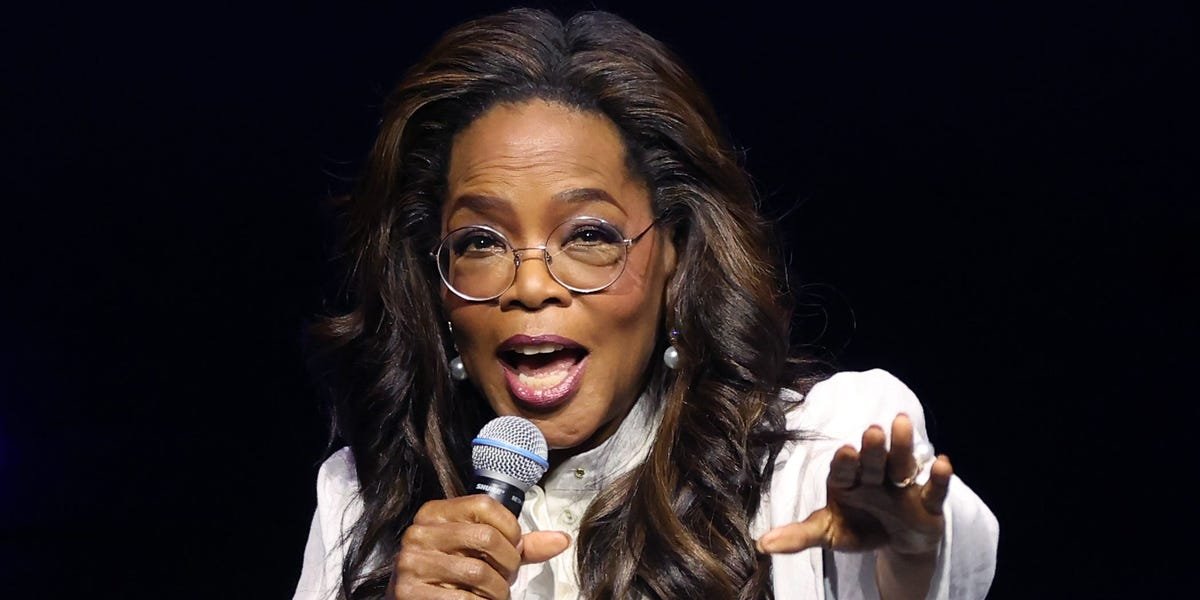
Nothing has been more earthshaking than the meteoric rise of GLP-1 drugs for weight loss in the health industry — except perhaps one woman: Oprah Winfrey.

Just when we thought weight loss meds had hit Peak Hype, Winfrey has entered the chat, releasing her latest book, “Enough: Your Health, Your Weight, and What It’s Like To Be Free,” cowritten with Dr. Ania Jastreboff. The book catalogs her seemingly on-again, off-again, now committed relationship to the medication, starting in 2023.

It also comes after her full-throated endorsement of the medications. Winfrey’s embrace of GLP-1s signals a decisive shift away from willpower-based weight loss and toward a medical model that is defining the American wellness zeitgeist.

“She’s giving people permission to talk about it,” said Dr. Holly Wyatt, an endocrinologist who specializes in weight management and metabolism. “It validates what the doctors and scientists have been saying for years, but Oprah brought it to the public in a way that people really heard it.”

How Oprah remains a weight loss icon

Winfrey secured her status as a health authority from early in her career with a unique empathy toward personal weight loss stories.

Her eponymous talk show provided a rare safe space for overweight people to open up about their experiences, said Sabrina Strings, author of “Fearing the Black Body: The Racial Origins of Fat Phobia.”

“It was probably the only place you could go in public and not be shamed as long as you were repentant,” she told Business Insider.

A key part of the weight-loss narratives on her show — including Winfrey’s own experience — is the redemption arc, Strings said, offering a vulnerable perspective on how people felt about gaining and losing weight.

That’s particularly poignant in a time when celebs like Serena Williams, Lizzo, and Queen Latifah once pushed back against body shaming — but have lately been called out for promoting weight loss products or routines. Black women have been a particular audience for this new era of marketing, Strings wrote in her blog.

Winfrey has spent decades leveraging her business savvy to make her personal struggle a source of strength and profit.

“She’s open in saying ‘I want to be thin and I have a path to do that,'” Strings said. “That’s why she remains an icon for weight loss in the age of Ozempic.”

Driving the ‘Wagon of Fat’

Three moments explain why Winfrey still moves the weight-loss market. It started with a little red wagon.

In 1988, Winfrey made TV history by sharing her recent weight loss, represented by 67 pounds of animal fat in a Radio Flyer, in the most-watched episode of the already hit show (even beating out later career-highlight interviews with Michael Jackson and Meghan Markle).

In response, liquid diets saw unprecedented success as viewers reached for the products Winfrey credited for helping her shed the pounds. It was an early instance of the “Oprah Effect” that appearing on her show or among her recommendations could lead to almost overnight success.

Decades later, Oprah said the wagon of fat was one of her biggest regrets, and apologized for what she described as her role in shame-centered diet culture.

Dr. Oz makes the mainstream

Starting around 2004, a charismatic heart surgeon, Dr. Mehmet Oz, began appearing on Oprah’s show.

Across more than 50 episodes (and later his own show backed by Oprah’s production company), Oz solidified the “Ask a Doctor” era of TV as audiences clamored for the MD’s advice on everything from supplements to cancer risk.

He also courted controversy over the years through lucrative partnerships with questionable weight-loss products and through hotly criticized statements about COVID-19.


Dr. Oz

Dr. Oz, a former staple of Oprah’s talk show through the 2000s, now works for the Trump Administration alongside Health Secretary Robert F. Kennedy Jr.

Celal Gunes/Anadolu via Getty Images


Oz is now the administrator of the Centers for Medicare & Medicaid Services, appointed to the position by President Donald Trump shortly after the 2024 election.

‘I Love Bread:’ the WeightWatchers era (and breakup)

In the mid-2010s, Winfrey took on a new role as defender of our right to enjoy carbs.

As keto and Atkins diets were exploding in popularity, she backed WeightWatchers, snapping up 10% of shares and becoming the face of the company in an ad proclaiming her love of bread.


Oprah Winfrey speaks during Oprah's 2020 Vision: Your Life in Focus Tour presented by WW (Weight Watchers Reimagined) at Chase Center on February 22, 2020

Oprah Winfrey speaks during Oprah’s 2020 Vision: Your Life in Focus Tour presented by WW (Weight Watchers Reimagined) at Chase Center on February 22, 2020

Steve Jennings/Getty Images


SNL and other internet parodies had a field day, but WeightWatchers, then struggling to compete in an increasingly competitive industry, increased its value by 1200% over the subsequent three years.

It wasn’t happily ever after, however. Winfrey announced she was leaving WeightWatchers in 2024. Stocks immediately tumbled by 25%.

It seemed to signal a dramatic pivot from old-school American weight loss plans full of calorie-counting and color-coding — ushering in the new Age of GLP-1s.

A messy situationship turned into a commitment with GLP-1s

Even while she was with WeightWatchers, Winfrey was already starting her next big love affair in the health industry.

In 2023, she announced publicly that she had used GLP-1s to lose weight and spoke out about the misconception that medication is somehow a shortcut or easy way out.

The moment coincided with widespread acceptance of Wegovy, Zepound, and their cohort in the mainstream. As many as one in eight Americans had tried the drugs at some point, embracing the idea that biological “food noise” and processed food — not a lack of discipline — can drive us to overeat.


A close-up image of currently available injectable medications Wegovy and Ozempic along with pills for weight loss.

A new generation of weight loss drugs could follow up on the success of Wegovy and Ozempic with more powerful medications that are faster, longer-lasting, and even in pill form.

Michael Siluk/UCG/Universal Images Group via Getty Images


Since then, Winfrey has wrestled with the notion that weight loss or maintenance is about willpower. Late last year, she shared her experience quitting medication through 2025, to see if she could keep her weight stable with lifestyle changes. She said she regained 20 pounds.

Now 71, Winfrey is back on the drugs and considers them a lifelong routine similar to high-blood pressure medication. Her one regret, she said, is not finding GLP-1s sooner.

Now that the Oprah Effect and GLP-1s have converged, the world will be watching for Version 2.0 — the next generation of GLP-1s in pill form or with even more benefits not just for weight but potentially longevity and brain health, too.


Source link

Hate-your-old-Gmail-address-Google-is-quietly-letting-some.jpeg

Hate your old Gmail address? Google is quietly letting some people change it without losing data

It looks like you may soon be able to change that old email address you made in high school.

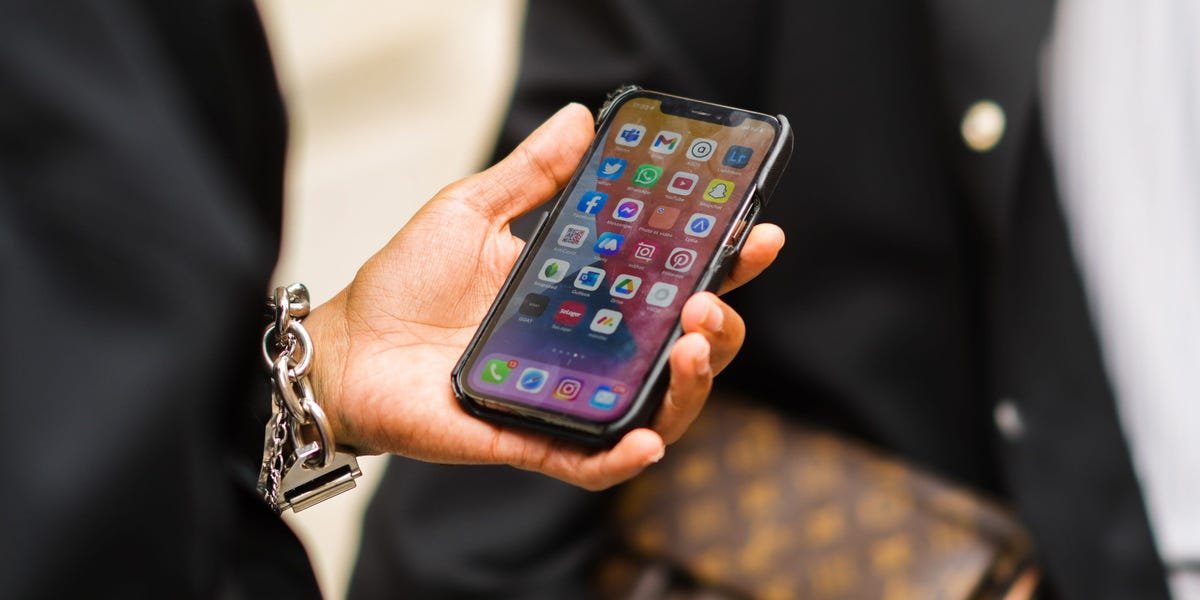
Google account users have long been unable to change their email addresses without creating a whole new account, but Google seems to be quietly rolling out an option to update them. That’s according to a support page published by the company, which outlines a new process to change the email or username used to identify your account.

The update on Google’s account help page says certain account holders can now change their @gmail.com address without losing access to their data or services. The feature was first reported in the Google Pixel Hub Telegram group in a message that said the update is being gradually rolled out to users. As of Friday morning, the modified instructions were available on the Hindi version of Google’s support page.

The support page suggests this option is currently only available in some regions, including Hindi-speaking areas.

According to a translated version of the Hindi support page, the new email must end in @gmail.com, and it can only be changed up to three times. Once the address has been changed, it’s irreversible.

To make the change, you would visit your Google Account page, click “Personal Info,” and go to the “Email” section, according to the Telegram message.

It’s unclear when it will roll out more widely, and Google didn’t immediately respond to a request for comment from Business Insider. As of Friday morning, the English support page said usernames ending in @gmail.com usually can’t be changed.

Once the change is made, the Hindi page said, your old Gmail address will be used as an alias to receive emails. You can reuse your old Google account email address at any time, but you can’t create a new Gmail address for the next 12 months.

You can sign in to Google services like Gmail, YouTube, Google Play, or Drive with your old or new email address.


Source link