
2-charts-show-why-families-need-159000-a-year-to.jpeg

2 charts show why families need $159,000 a year to afford NYC

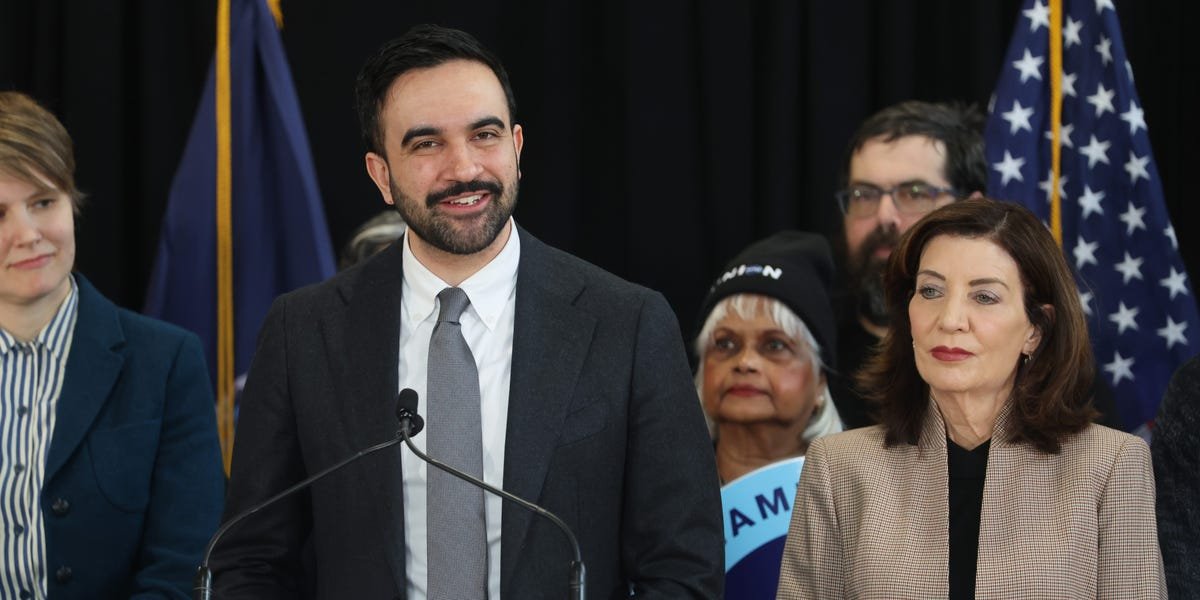
New York City Mayor Zohran Mamdani has a new warning: Living in the city with kids could cost you at least $150,000 a year.

The Mayor’s Office of Equity & Racial Justice released its inaugural “NYC True Cost of Living Measure” report Monday. The TCOL figure adapts an economic security framework used by the Urban Institute, comparing a household’s financial resources to their actual cost of living. Using 2022 data, it accounts for line items like housing, food, healthcare, childcare, transportation, and taxes.

The report found that it costs the median New York couple with kids $159,197 to live in the city, and that number varies depending on their number of children. That’s the equivalent of paying cash for a house in Rockford, Illinois, or shelling out for a four-year degree at a top university. And it’s just the price of basic bills.

For a single parent with two children, the cost is still staggering, at $114,108. Per the report, the only group in NYC who consistently makes enough income to afford expenses are dual-income households without children — who still must earn about $131,000 a year to live comfortably.

For comparison, the Urban Institute found that the median American family with kids needs $134,800.

Overall, 62% of New Yorkers — or 5 million people — do not earn enough to meet their cost-of-living threshold, according to the report, and the average person is $39,603 short. Per the report, children and communities of color are disproportionately impacted by high prices. Bronx residents are most likely to have resource gaps, followed by residents of Brooklyn, Queens, and Manhattan. Residents of Staten Island have the smallest resource gap at 48.2%.

The city’s TCOL measure is built around estimates for a typical household, and individual circumstances will vary. It doesn’t directly take into account, for example, residents’ disabilities or their student loan debt.

There are also 3.58 million New Yorkers whose income is above the federal poverty line but falls short of their cost-of-living threshold, the report said. This means that these households likely don’t qualify for aid programs like Section 8 or SNAP, but still struggle to afford housing, groceries, or other bills.

Business Insider has heard from parents trying to balance work with childcare, gig workers trying to cover their bills, creatives hustling to build a stable income, and young people splitting rent amongst roommates. Regardless of their income or profession, most are on a tight budget.

For many New Yorkers, the exorbitant cost of daily life is exhausting. In a Monday afternoon Reddit “Ask Me Anything” forum, residents posted queries and comments to be answered by Mayor Zohran Mamdani, Deputy Mayor for Housing Leila Bozorg, and Cea Weaver from the Mayor’s Office to Protect Tenants about housing.

On r/nyc, posters wrote about their steep property taxes, sky-high rents, backbreaking daycare costs, and concerns about construction zoning for affordable apartments. They asked how to navigate “bad” landlords — and what it means to be a “good” one.

“Expensive and frequent inspections that are lining pockets of scaffolders and facade inspectors. It’s extremely costly and drives up costs for renters and homeowners,” said one poster. “I’d love more generous incentives as it’s clearly a net positive for society to be producing ample housing,” said another. “I’m now within striking distance of finally being able to buy a home in NYC, something that’s been my dream for years,” said a third.

“Every one of our efforts is driven by a singular focus on making the most expensive city in the country affordable,” Mamdani wrote in one response. Alongside housing reforms, his administration has proposed universal daycare, city-run grocery stores, free buses, and additional housing construction to improve affordability. “We’re just getting started,” he added.



Source link

Taylor-Swifts-latest-business-move-is-another-attempt-to-hack.jpeg

Taylor Swift’s latest business move is another attempt to hack the charts — and it’ll probably work

Taylor Swift is the biggest-selling artist in the world by most reliable measures, so when she makes an unconventional business move — no matter how random or trivial it may appear — it’s worth paying attention.

On Friday, Swift unveiled the self-directed music video for “Opalite,” her latest single from “The Life of a Showgirl.” Upon release, the cameo-laden clip was available exclusively on Spotify and Apple Music, with its YouTube premiere scheduled for a two-day delay.

Streamers like Spotify and Apple Music specialize in hosting songs, albums, podcasts, and playlists — not visual works. Meanwhile, YouTube is famously a destination for music video lovers. So what gives?

As usual, when it comes to Swift, the answer seems to lie with her bottom line. In December, YouTube announced it would withdraw its streaming data from Billboard’s chart formulas because the music company tweaked its methodology so that streams from YouTube subscribers were weighted even more heavily than free streams. YouTube’s stance is that the ratio is unfair to fans.

Swift recently scored her longest reign yet on the Billboard Hot 100 with “The Fate of Ophelia,” the lead single from “Showgirl,” which charted at No. 1 for 10 weeks. With “Opalite” officially serving as its follow-up, Swift appears to be making moves to boost the song’s chart performance.

If fans were flocking to YouTube today to watch her new music video, none of those views would help “Opalite” reach No. 1 — and nobody wants to follow a personal best with a personal flop, least of all an athlete-style competitor like Swift.

Of course, this savvy tweak to the song’s promo schedule was paired with a physical release: a seven-inch vinyl single in “pearlescent blue,” only available in Swift’s online store for 48 hours.

How Taylor Swift moves, other artists tend to follow

Swift’s unyielding commitment to commerce isn’t just something to behold. It’s something to study. Swift’s sales tactics often become instructive for other artists.

Much has been made about Swift’s push to sell physical albums, for example, but many fellow pop stars have followed suit. Charli XCX released about two dozen vinyl variants for her 2024 album “Brat” and its deluxe editions. Sabrina Carpenter, a self-professed disciple of Swift’s work, released 13 vinyl variants last year for “Man’s Best Friend,” in addition to seven-inch singles, cassettes, and CDs. As a result, “Man’s Best Friend” scored the ninth-biggest vinyl sales week of the modern era, according to Billboard. (Seven of the top eight slots on that list belong to albums by Swift.)


Taylor Swift in the music video for

“The Fate of Ophelia” reached No. 1 on the chart dated October 18, 2025.


Taylor Swift/YouTube


So, it could very well mean that Swift’s strategic video rollout will start a trend as well. Although YouTube is the customary platform for music videos, customs can be changed, and she isn’t the only artist who cares about climbing the charts.

It could also be that Swift’s premiere delay will inspire YouTube to rethink its attitude toward Billboard. If one of the most influential celebrities in the world is delaying their content to your product, that could be bad for business — and it wouldn’t be the first time Swift convinced a major company to change its tune. Back in 2015, she criticized Apple Music for refusing to pay artists during a new user’s free trial. Within 24 hours, Apple updated its policy and tagged Swift in the announcement online.

It remains to be seen whether “Opalite” will affect the music industry beyond Swifties, but if the song’s lyrics are any indication, Swift is content to manufacture success on her terms — or, in her words, to make her own sunshine.


Source link