I-asked-ChatGPT-to-tweak-my-diet-to-lose-fat.jpeg

I asked ChatGPT to tweak my diet to lose fat and gain muscle. It spotted the habits holding me back.

I could never stick to food-tracking weight loss apps for more than a few days.

I’d quickly get frustrated when I couldn’t find the exact product on the app’s database or recall the portion size I consumed, which is important when tracking every calorie.

Plus, over time, as my knowledge of nutrition developed, I didn’t want to just focus on calorie restriction or fat loss. I also wanted to build muscle mass and eat more fiber, which wasn’t the primary goal of the apps I used.

So, I tried using ChatGPT to track my protein, fiber, and calorie intake for two weeks. I hoped it would be better at recognizing larger patterns in my eating habits, which could help me tweak my diet.

Every day, I typed everything I ate and drank into the same chat conversation. I included the estimated amounts, brands when applicable, and specific restaurants I visited. It felt easier to dump everything into one chat instead of searching for each individual product like I did on food-tracking apps.

I also included how many calories I burned in my Orangetheory classes (as estimated by a heart rate monitor I wore in class), how many steps I walked, and how many calories I burn at rest, which I learned from my latest body composition analysis.


ChatGPT analyzing diet

I tried to get as specific as possible in the chat, listing brands when it felt relevant. 

ChatGPT/Julia Pugachevsky


I’m not the only one using AI to fine-tune my diet. Lately, Shannon O’Meara, a registered dietitian at Orlando Health, a healthcare organization in Florida, has seen patients use AI to whip up recipes based on what’s in their fridge or within their budgets. I asked her to help me assess how helpful ChatGPT’s advice was, and if she’d recommended using it for diet tips in general.

“There are a lot of positive aspects,” she said, noting that, as with any AI-related task, how you interact with the technology determines the results. “You’re only going to get out what you put in,” she said.

By the end of the two weeks, I got better at choosing protein-rich meals, which helped me stay fuller without relying on empty calories.

Here’s where AI was useful, and where it fell short.

AI gave sound advice on sneaking more protein into my diet


Grain bowl

Adding nuts to meals is an easy way to get more protein. 

Julia Pugachevsky


Based on the advice a Life Time trainer gave me in January with the aim of helping me build muscle mass and lose fat, I’d been aiming to consume between 90 to 100 grams of protein a day, particularly on the three to four days per week that I work out. I’d consume a full scoop of protein powder and eat meal-prepped, protein-forward dinners, but still struggled to hit the target.

I tended to drop off on rest days, omitting the protein powder because I didn’t want to consume more ultra-processed food than I had to. Those were days I was also more likely to be in the office or going out after work, where I could lose track of my protein goals.

ChatGPT advised aiming for at least 80 grams of protein on rest days — slightly more doable.


Protein advice from ChatGPT

I started snacking on the Greek yogurt and nuts in the office instead of chips. 

ChatGPT/Julia Pugachevsky


I liked when ChatGPT encouraged me to eat more food and make more helpful, satiating choices, such as Greek yogurt over chips. I also appreciated that, even though I forgot to mention that I’m a pescetarian, ChatGPT seemed to have picked up on my habits from my meal outlines, and never suggested products like meat sticks.

Looking at the protein advice ChatGPT gave me, O’Meara said the tips made sense. “Those are protein-containing foods, so I think it sounds fine,” she said.

Her only concern was who set the nutrition goal: a professional — such as a doctor, dietitian, or personal trainer — or AI?

“If you want to hit a certain calorie or protein goal, just make sure those goals are sound,” she said.

AI was great at recognizing hidden eating patterns that made it harder to lose fat


Salmon with veggies

On days I work out, I usually eat home-cooked, protein-forward meals. On rest days, not so much. 

Julia Pugachevsky


One of the biggest perks of using ChatGPT was how quickly it identified patterns in my eating, which helped me to make more conscious decisions around my meals and snacks.

I realized that I essentially had two modes. Half the time, I’d finish my morning Orangetheory class, chug my protein shakes, and eat my meal-prepped sheet pan salmon dinners. I normally abstained from alcohol on these days.

The rest of the time, I’d walk for exercise (the length of walking greatly varying), generally eat less protein, and have no limitations at dinners out. I’d get drinks, order appetizers, and split desserts, feeling like I’d earned it.


ChatGPT diet patterns

I needed more structure on rest days. 

ChatGPT/Julia Pugachevsky


ChatGPT taught me that a few tweaks on my rest days could better set me up for success. It suggested doing more steps, and making cuts to help achieve my fat loss goal, like dialing down the cheese in salads or using slightly less peanut butter in my morning oats.

O’Meara said noting patterns — such as consistently surpassing calorie goals — makes it easier to course-correct. “If someone does tend to go over on calories, limiting that extra stuff could really help with actually getting to whatever your calorie goals are,” she said. “Maybe we cut back on the portion sizes, but we don’t have to totally eliminate the food from your diet.”


pasta + salad

ChatGPT would tell me to skip the cheese. 

Julia Pugachevsky


O’Meara’s only concern was that AI was responding to a pattern, not a one-off indulgent dinner, when recommending cuts. She said it’s good to pay attention to how often you overeat, to see if it’s a pattern actually worth tweaking.

“Honestly, the issue I have with most of my patients is that they don’t eat enough,” she said. Being in a major calorie deficit, such as eating as little as 1,200 calories a day, can backfire and slow your metabolism.

Some of the tips felt restrictive


Olive oil cake

I raged against the machine: I had a dessert with my drink. 

Julia Pugachevsky


ChatGPT seemed to give me trustworthy advice. It’s just that sometimes it felt overwhelming to hear that, despite burning 538 calories in the morning, I should slow down on the goat cheese in my grain bowl. It was a little demoralizing, after eating the majority of my protein-centric meals at home, that I should feel a little bad for having a cocktail with a slice of cake.

What was worse, ChatGPT always couched these notes with lots of faux cheerfulness, reassuring me that I was on the overall “right track.” It felt condescending after being told to not “free-pour” my homemade salad dressing.


ChatGPT diet advice

If someone in my life told me I shouldn’t “free-pour” my dressing, that would be the end of that relationship. 

ChatGPT/Julia Pugachevsky


“AI is essentially a robot, it’s going to give you that robot response,” O’Meara said. Unlike a dietitian, it’s not going to think about the emotional benefits of a dinner out with friends where no one utters the word “macros.”

Unless prompted, it might also give you more restrictions than swaps. A dietitian, O’Meara said, might suggest a mocktail or cutting back on appetizers if you really want the dessert and drink.

Overall, I was very impressed with how easily I tracked my eating habits with ChatGPT, and I was left with clear action steps. I got closer to building more muscle mass and cutting back on fat, and believe the habits helped me lose a pound since I started.

I also felt like a computer speaking to another computer, obsessively reducing my life to calorie and step counts. I took my Americanized gym rat lifestyle to its final conclusion, all the while imagining a chiller European sitting on a lawn somewhere, laughing into their buttered baguette.

It really made me want a glass of wine — with a side of dessert.



Source link

Image of Lakshmi Varanasi

Claude hits No. 1 on App Store as ChatGPT users defect in show of support for Anthropic’s Pentagon stance

While OpenAI locks down Washington, Anthropic is locking down users and rocketing to the top of the App Store.

Anthropic has been sidelined in Washington following a public dispute with the Department of Defense over how its AI models would be deployed. President Donald Trump ordered federal agencies to phase out its technology.

Meanwhile, OpenAI has secured new ground, with CEO Sam Altman announcing in a Friday night post on X that it had reached an agreement with the Department of War to deploy AI models in its classified network.

OpenAI’s agreement has left some loyal ChatGPT users uneasy about OpenAI’s ambitions, prompting online debates about the ethical implications — and some saying they were defecting to its rival Claude.

As of 6:38 p.m. ET on Saturday, Claude ranked number one among the most downloaded productivity apps on Apple’s App Store, trailing ChatGPT.


A screencap of the app store

BI


Converts have taken to social media to share screenshots documenting their switch.

Pop musician Katy Perry wrote that she was “done” on X, alongside a screenshot of Claude’s pricing page, with a red heart around the $20-per-month “Pro” plan.

Another X user, Adam Lyttle, wrote “Made the switch,” alongside a screenshot of his email inbox with a receipt from Anthropic and cancellation confirmation from OpenAI.

On Reddit’s ChatGPT subreddit, dozens of users say they’ve deleted their accounts and are urging others to do the same.

“Cancel ChatGPT” has become a common refrain online, while some users have taken a more personal tone, saying Altman’s move “crossed the line.”

The agreement hasn’t polarized all AI users, however.

In one Reddit thread, several commenters said the news does not affect their choice of AI model, arguing that Anthropic’s work with Palantir raises similar concerns. In November 2024, Anthropic, Palantir, and Amazon Web Services struck an agreement to provide US intelligence and defense agencies access to Claude models.

After Secretary of War Pete Hegseth said he would designate Anthropic as a “supply chain risk to national security,” Anthropic said it would “challenge any supply chain risk designation in court.”

In his Friday post, Altman said the Department of War had agreed with two of OpenAI’s safety principles.

“Two of our most important safety principles are prohibitions on domestic mass surveillance and human responsibility for the use of force, including for autonomous weapon systems,” Altman wrote on X. “The DoW agrees with these principles, reflects them in law and policy, and we put them into our agreement.”

By Saturday afternoon, OpenAI published a more detailed description of its contract with the DoW, including the specific language it used surrounding the use of its models for surveillance and autonomous weapons.

On the topic of autonomous weapons, OpenAI said:

The AI System will not be used to independently direct autonomous weapons in any case where law, regulation, or Department policy requires human control, nor will it be used to assume other high-stakes decisions that require approval by a human decisionmaker under the same authorities.

On the topic of mass surveillance, OpenAI said:

The AI System shall not be used for unconstrained monitoring of U.S. persons’ private information as consistent with these authorities.

While some chatbot users suggested it’s all fair in business, war, and federal procurement, others suggested the Pentagon’s stance may have handed Anthropic a public relations win.

X user Tae Kim joked that Hegseth might need a new title: “Secretary Hegseth Chief of Claude Marketing.”


Source link

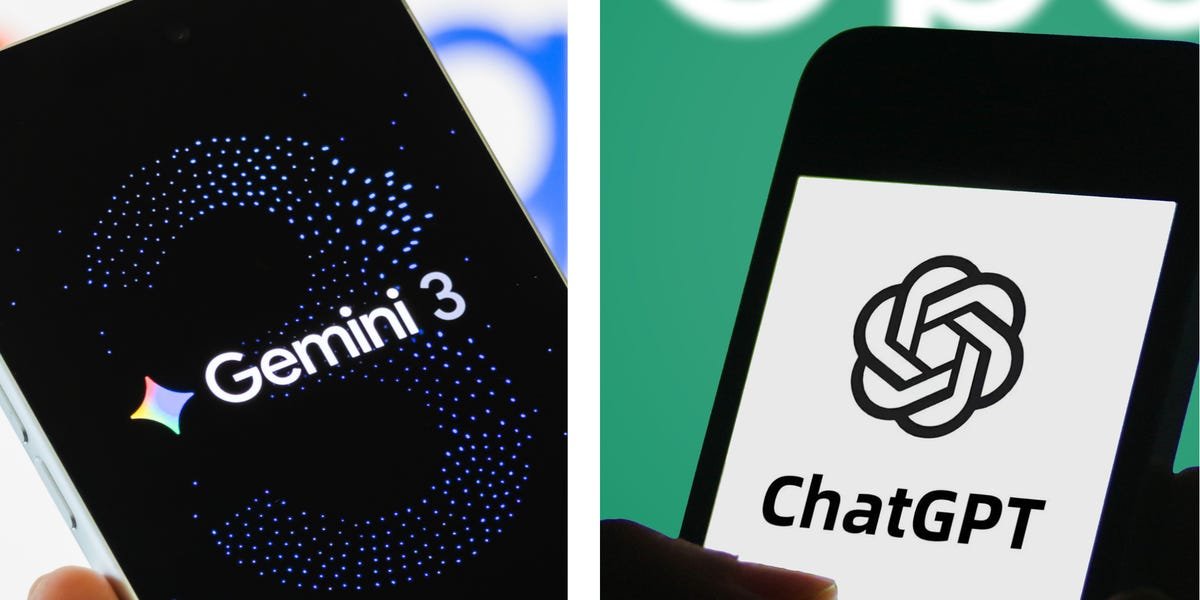
The-gap-between-Gemini-and-ChatGPT-is-narrowing.jpeg

The gap between Gemini and ChatGPT is narrowing

Gemini is on a roll.

After a slow start, Google’s AI chatbot is rapidly gaining users, topping AI benchmark leaderboards, and forcing its biggest competitor, OpenAI’s ChatGPT, into “code red” emergencies.

Now, in another big leap, Walmart, the world’s largest retailer, is partnering with Gemini on a new shopping experience — similar to one it struck with ChatGPT in October.

When people use Gemini to ask questions or search, the assistant will now automatically recommend relevant products from Walmart and Sam’s Club, drawing on users’ past online and in-store purchases, Walmart said in a press release on Sunday.

For users who have linked their Walmart accounts, Gemini can tailor recommendations based on purchase history and enable delivery of in-store items within three hours, or as little as 30 minutes.

Walmart CEO John Furner said the partnership marks a shift in how people shop.

“The transition from traditional web or app search to agent-led commerce represents the next great evolution in retail. We aren’t just watching the shift, we are driving it,” Furner said in the press release.

In recent years, discovery-led shopping experiences on social media platforms like TikTok Shop, Instagram Shopping, and live shopping services like Whatnot have disrupted the traditional digital shopping experience.

AI is reshaping the discovery process even further.

Gemini 3 plays catch-up

While Gemini still trails ChatGPT in overall number of users by a significant margin, it’s closing the gap and even outperforming OpenAI in other key ways.

In November, after years of taking heat as the slow-moving leviathan in the AI race, Google redeemed itself with the launch of Gemini 3.

The latest version of Google’s chatbot was well received by both consumers and industry leaders. Its stock price surged in the weeks following the rollout, and Salesforce CEO Marc Benioff said he would switch from ChatGPT to Gemini, calling the latter “insane” in a viral post.

The hype forced OpenAI CEO Sam Altman to declare a “code red” at his company.

Gemini also benefits from Google’s larger ecosystem of products, like Search, Workplace, Android, and Google TV.

The protocol battle

Another promising development for Gemini, underpinning its partnership with Walmart, is the launch of a new retail protocol, which Google refers to as the Universal Commerce Protocol.

“AI agents will be a big part of how we shop in the not-so-distant future,” Google CEO Sundar Pichai said in a post on X on Sunday. “To help lay the groundwork, we partnered with Shopify, Etsy, Wayfair, Target and Walmart to create the Universal Commerce Protocol, a new open standard for agents and systems to talk to each other across every step of the shopping journey.”

Protocols have long served as the invisible scaffolding of the digital realm, and streamlining a new era of agent-to-agent communication is a critical step in unlocking an agent-powered world, founders building AI protocols previously told Business Insider.

OpenAI unveiled its own commerce protocol in September, following the launch of Instant Checkout. The new feature lets users buy items directly in ChatGPT from Etsy and over a million Shopify merchants, the company said in a blog post announcing the feature.

OpenAI also said the protocol behind it, the Agentic Commerce Protocol, is “an open standard for AI commerce that lets AI agents, people, and businesses work together to complete purchases.” It was developed alongside Stripe.

Google’s mission appears to be similar.

In response to a request for comment, a Google spokesperson referred Business Insider to a blog post Pichai wrote about its new Unified Commerce Protocol.

In it, he explains how the new protocol will change the consumer shopping experience.

He said if a shopper is looking for a suitcase, the protocol allows retailers to instantly offer a new-member price or prompt loyalty enrollment. Returning customers might see tailored discounts or product suggestions, such as packing cubes, when they check out. The transaction can then be completed in just a few taps through Google Pay — without leaving the chat, Pichai said.


Source link

Holiday-gifting-just-got-a-creative-boost-from-ChatGPT.jpeg

Holiday gifting just got a creative boost from ChatGPT

This as-told-to essay is based on a conversation with Rashel Hariri, a 38-year-old founder and host of “She’s Interesting,” who lives in Arkansas. It’s been edited for length and clarity.

I’ve always shown care through gift-giving. When I choose something for someone, I want them to feel seen and have something they’ll actually use. I’m not someone who is going to give luxurious, massive gifts — but the gifts I give are meaningful.

Over the last year, AI has become the most effective way for me to do that. ChatGPT has become like a gifting concierge, helping me organize my brainstorming and land on presents that feel thoughtful, personal, and aligned with someone’s real life.

I developed a framework for what makes a good gift

Through conversations with the women in my podcast community, “She’s Interesting,” I realized that people — particularly women in their 30s like myself — value three main things: gifts that feel a little luxurious, gifts that expand our brains (like books or courses), and gifts that make the day-to-day easier. This became my three-part framework for ChatGPT.

With this information, I started a project in ChatGPT — which creates a space to group similar chats around the gifting topic — and provided custom instructions for the AI to follow, like background information on my framework.

If you want to create your own framework, think about what’s most important to you and the people around you. What makes you the happiest? What types of things make your life easier? Use the answers to those questions as main points in your framework.


A conversation with ChatGPT about what types of gifts to give friends and family

Create a project in ChatGPT to organize similar topics and ideas.

Photo courtesy of Rashel Hariri


I started an ongoing conversation for each recipient in ChatGPT

Within my ChatGPT project, I have separate conversations for each of the people I’m shopping for: my husband, friends, and colleagues.

I start by describing each person, including basic demographics, as well as deeper information, such as what’s important to them, their likes and dislikes, personal goals, and things they’re struggling with. I might also include their astrological sign and their favorite colors.

You have to be someone who pays attention to your friends, because otherwise, AI will give you basic suggestions. I try to give ChatGPT everything I know about the person. If I have a conversation with a friend or family member and something stands out, I can go into the chat and say, “Take note that this person said X.” The more I use it, the more it learns.

When it’s time to buy a gift, even if it’s months later, all those details are stored. It’s a mental relief, like your notes app, but way smarter because it responds to you.

With all of that information uploaded, I prompt ChatGPT to come up with gift ideas within my framework for each person. You can also give it a specific budget to work within.

The tool comes up with initial ideas and explains why each gift works for the recipient. From there, it becomes a conversation — almost like talking to the person I’m shopping for. I might ask for more ideas within a category, or the ideas might remind me of something else about the person, and I’ll ask it to generate new suggestions with that information.

I still make the final gift decision, but ChatGPT can be speedy and creative

I used to brainstorm all of this myself, but AI has made the process 60 to 70% faster, and given me a tool I can return to for future gift ideas.

I still choose the final gifts to give, but if I’m feeling stuck between ideas, I’ll go back to ChatGPT and say, “Here are two items I’m deciding between. Help me narrow it down.” It asks me questions to help decide: Does she need this? What’s her plan for the next three months?

AI often makes suggestions I wouldn’t have thought of. I told ChatGPT about a friend who struggles to find any time for himself while balancing a busy career and two kids. The tool recommended “The Five-Minute Journal.” He loved it — it was thoughtful and tailored.

The best part of gift-giving is that moment when someone opens it and says, “Oh my God, you know me so well!” We want to give the people we love something that makes them feel good, and this process has made it easier for me to do that.


Source link