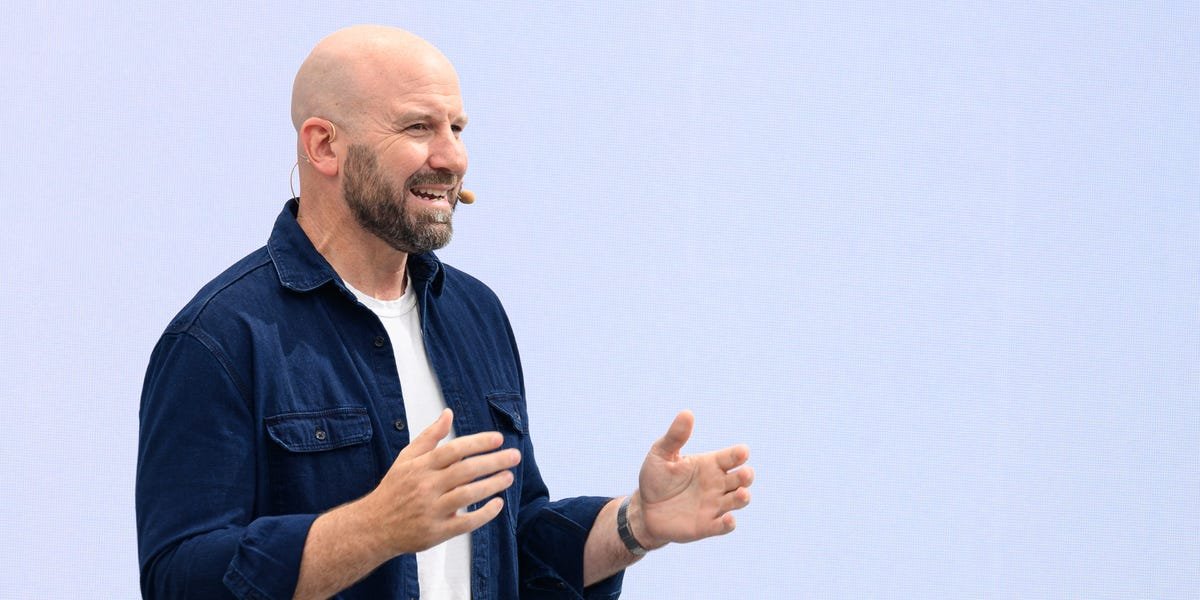
Zooms-marketing-chief-explains-the-insight-behind-its-revolutionary-campaign.jpeg

Zoom’s marketing chief explains the insight behind its “revolutionary” campaign

When Kimberly Storin joined Zoom as chief marketing and communications officer in April 2025, she did her own research to learn what users thought of the brand. Storin said she discovered a strong affinity for Zoom compared to its competitors. Still, many of the platform’s features are not well known.

That insight inspired a campaign and commercial titled “Zoom Ahead,” created by Saturday Night Live’s Colin Jost’s production company, and featuring former SNL cast member Bowen Yang. In the spot, Yang plays a tyrannical head of IT who is powerless to prevent employees from declaring their love of Zoom.

Zoom extended the theme of worker empowerment with an in-person activation: a Hard Stop Burger Shop pop-up in New York City on March 26-27. The idea was based on research the company conducted with Morning Consult that showed workers are skipping breaks or eating lunch at their desks.

In a video interview, Business Insider spoke with Storin about the strategy behind the campaign and why she’s such a fan of the company’s AI Companion tool.

The following transcript has been edited for length and clarity.

The biggest challenge Zoom has is that ultimately, we are a ubiquitous brand. We have 99% brand awareness, which is a bit of a double-edged sword.

What people don’t realize is the breadth and depth of our portfolio. They don’t realize we have a customer support platform, a marketing platform with events and webinars, a recruiting platform, or a sales platform.

Before I started at Zoom, I talked to about 50 of the company’s customers. Those customers told me, over and over again, about their affinity for the platform.

Then I went down this rabbit hole of Reddit and social media, and I kept seeing this theme in the conversations I didn’t see with any of our competitors — it was really anchored in this preference for the Zoom platform, the simplicity, the ease of use, the fact that Zoom just works.

That was the genesis, the nugget that really inspired our campaign. We wanted to start a revolution.

I had a chief information officer ask me, “Are you trying to encourage shadow IT?” And I said, “No, we’re actually trying to do the opposite.” We’re trying to encourage people to come out of the shadows and share their love for the platform in the ways that they’re sharing it on Reddit, social media, and in our customer satisfaction scores — and we want them to tell you.

Colin Jost was able to find the right humorous tone for the ad

Humor is hard for a brand. And to get humor right really requires people who understand comedy, who understand how humor can play a role in communication, and who can explain something in a way that a straight-faced ad really can’t. And so, of course, we wanted to tap into the best of the best.


Man in suit standing on desk with another man in a suit in front of him pointing in the air.

Bowen Yang stars in Zoom’s recent campaign. 

No Notes Productions for Zoom


Colin Jost really reflects the cultural zeitgeist in a lot of ways. Every single week, he’s writing comedy that resonates and stands up to the news of the week. We felt that with Zoom being such a cultural brand and part of so many people’s cultural experience, having somebody who understands humor in that way would really help elevate us.

So we brought in Colin and his team from his agency called No Notes Productions. They helped us understand a lot of different ways that we could leverage humor and heart to bring this product to life. Some of it was outrageous. Some of it was formulaic in terms of leveraging a celebrity.

Where we ended up landing, and what ended up testing really well with our customers, was this idea that we call “Dead Poets Society” meets “Severance.” It just really worked.

The AI Companion helps connect daily conversations to strategy

I don’t know how many folks are familiar with our AI Companion, but that is absolutely my favorite tool. The reason I love it so much is because I believe that so much of the data and the information that matters to us as executives happens in those conversations.

Unlike a traditional LLM like ChatGPT or Claude, which is really focused on external data, the beauty of Zoom AI Companion is that you can pull in all your meetings.

At the click of a button, you can build an agent that effectively taps into all of the conversations that you’ve had and is able to leverage those conversations to help you build a strategy or to help you build messaging.

Now that we have automated gestures, I often give a thumbs up at very inappropriate times because I’m a very hand-gesturing person. Sometimes I’ll do a hand gesture, and the next thing you know, I’ve got a thumbs up flying across the screen. So that’s my typical go-to embarrassing moment.


Source link

Employees-who-dont-vibe-code-are-probably-underperforming-fintech-startup.jpeg

Employees who don’t vibe code are ‘probably underperforming,’ fintech startup product chief says

The product chief of a $32 billion fintech startup has called out employees who aren’t using AI-assisted coding tools.

Geoff Charles, chief product officer of Ramp, an AI fintech startup that helps companies pay their bills, said in a Sunday episode of “Behind the Craft” podcast that employees are expected to be AI-native.

“If you’re not using Claude code this year, no matter what your role is, you’re probably underperforming compared to others on the company,” he added.

Charles said that the company frames AI proficiency across multiple levels. At the bottom level — level zero — are people who “sometimes use ChatGPT.” At the top, level three, are people who are “systems builders.”

Employees who vibe code and can proficiently build apps that automate parts of their job belong to level two, while staff who have built custom GPTs and have some experience with Claude Code fall under level one.

“Our job is to get everyone in the organization up the ladder,” Charles said.

“The people who are still in L0, they will most likely not be at the company,” he added, referring to level zero.

“If you’re not a self-starter and you don’t have that growth mindset, it’s going to be very, very hard to train,” he said.

Charles said 50% of the company’s code is built by AI, and it would probably be 80% by March. He added that the role of product managers will evolve in the AI-native era, with some becoming builders and others focusing on business strategy.

The fintech startup announced in November that it raised $300 million in funding, bringing its valuation to $32 billion. The round was led by Lightspeed Venture Partners, with investors including Founders Fund, Coatue, GIC, Thrive Capital, and Khosla Ventures, among others.

Companies going all in on AI

Charles’ comments come as tech companies increasingly reshape their workforces around AI.

Block last month cut nearly half of its workforce, saying advancements in AI were behind the layoffs.

Last week, Atlassian laid off about 1,600 roles, roughly 10% of its global staff, as the Australian-American proprietary software company reorganizes to prioritize AI development and enterprise growth.

“It would be disingenuous to pretend AI doesn’t change the mix of skills we need or the number of roles required in certain areas. It does,” CEO Mike Cannon-Brookes wrote in a message to employees.

Ramp is not the only company paying closer attention to how employees use AI at work.

In February, managers at Google told some staff in non-technical roles that they are expected to incorporate AI into their daily workflows, four employees familiar with the matter told Business Insider.

In some cases, non-technical employees were told their use of AI could factor into their performance reviews later this year, two of the employees said.

Daniel Yanisse, the CEO of background-check startup Checkr, said the company has pushed employees across departments to adopt AI tools, not just engineers.

“We gave every employee a monthly stipend to try AI tools, and we did AI days and demos. After one year, 95% of the employees use prompting daily,” Yanisse said last month.


Source link

Julia Hood headshot

EY’s chief digital officer says marketing is at an AI ‘inflection point’

Lou Cohen, EY’s chief digital officer, said many marketers are not yet taking advantage of the benefits of artificial intelligence.

Cohen, who is also a professor at New York University, Yeshiva University, and Baruch College, said marketing is at an “inflection point,” with investment shifting from general digital innovation to AI transformation.

Cohen said that marketers who understand how to use AI in an assistive way, by focusing on what outcomes it delivers best, will access a deeper level of audience segmenting, targeting, and testing. He was interviewed for CMO Insider at Business Insider’s studio in New York City.

Ultimately, Cohen said, the marketing function will embrace the new opportunity. “Marketers, they’re not afraid to try things,” Cohen said. “We’re going to learn more from the things that we fail with and that don’t work than the things that do.”

The following transcript has been edited for clarity.

We are at an interesting inflection point. In today’s marketing environment, you really need to understand how to make AI work for you; otherwise, you will end up working for it.

There are efficiency and operational gains to be had. But if you think about the outcomes that AI can enable from a marketing perspective, we could be smarter about how we segment our audiences for different campaigns. We could be more efficient in the ways our advertising runs. We could test more rapidly to get better-quality content in front of the right audiences at the right time in the right place.

But most marketing teams are not yet set up to take advantage of this potential. So the investments of the last 15 years in digital transformation are now shifting into AI transformation.

It’s a bit unknown now. Marketers are not totally comfortable with this because we’re so worried that it’s going to hallucinate or give us something that isn’t accurate. Marketers, they’re not afraid to try things. We’re going to learn more from the things that we fail with and that don’t work than from the things that do.

My colleague came up with a great way to evaluate the quality of our content using AI. We can paste in an article that a partner of ours wrote, and it will give us recommendations on how to make that piece of content better. But we’re never — I shouldn’t say never — we’re not likely to use content created by AI. But we certainly can use AI to enhance and give feedback to our content creators.

Hallucinations are real. The challenge is that as consumers of these technologies, we don’t yet understand the difference between probabilistic and deterministic outcomes. Probabilistic is the likely correct response that the AI is trying to give us. Deterministic is “one plus one equals two,” and arguably, one plus one always equals two.

When you’re doing a search on Google or Bing, for example, you are getting a deterministic response. You’re getting what it believes to be the likely to answer your question. Versus with the LLMs, the ChatGPTs, the Llamas, the Geminis of the world, you’re getting a probabilistic response. The model is bringing a bunch of different sources together to determine the answer it thinks you should get based on your prompt.

That means if we were using these tools for their designed purpose, we’d still need search engines to just navigate to the things we’re looking for, or to find the needles in the haystack of the internet. But LLMs give us a different opportunity. They can be assistants. That was some of the original idea behind these AI tools, to assist people in doing different tasks.

I think of these LLMs more as marketing assistants to give me real-time ideas, feedback, or suggestions, rather than doing the task for me. That’s a human putting AI to work to get better outcomes faster than if I were to just do it myself.


Source link

Melia Russell smiles

Harvey makes a big chief product officer hire as legal tech competition heats up

Harvey, the $8 billion legal software startup, is becoming a default vendor in Big Law. Now, with rival startups nipping at its heels and AI model providers moving closer to legal workflows, Harvey is bringing in a new executive to help defend its lead.

The company tells Business Insider it has hired Anique Drumright as its first chief product officer. In this role, she’ll shape what Harvey builds next and how quickly it can ship. Drumright has held roles at Uber, TripActions, Loom, and, most recently, HR software startup Rippling, where she led the company’s push into IT management software.

“Her slope of learning is very high,” said Winston Weinberg, Harvey’s chief executive. He described sending Drumright a lengthy Google Doc on the state of law firm technology and the day-to-day mechanics of legal work. She came back quickly with “really good product ideas,” he said.

The C-suite hire comes at a critical moment for Harvey — and for legal tech more broadly. Law firms are pouring money into new software meant to help lawyers work faster and save costs. Clients are driving much of that spend. After seeing chatbots and virtual assistants transform their own operations, they now expect the same efficiency from outside counsel.

Those tools don’t come cheap, and recent moves by the model providers themselves have complicated the picture. Anthropic’s release last week of a contract-review tool sent ripples through the industry and led to a major sell-off of legal-research stocks. It raised a pointed question: If a foundation model can review contracts, on top of handling tasks across the rest of the organization, how much specialized legal software will firms still pay for?

Harvey sits at the top of the heap for now. The startup has emerged as one of the best-known and best-funded players in legal tech, with licenses at over half of the 100 largest US law firms. The company said it ended last year with more than $190 million in annual recurring revenue. And job postings reviewed by Business Insider suggest it is pushing into mid-market and smaller firms, a long tail of potential growth beyond Big Law.

Earlier this week, Forbes reported that Harvey is raising a new round of funding that would value the company at $11 billion, citing unnamed people familiar with the deal. A Harvey spokesperson declined to comment on the report.

Harvey’s dominance comes with pressure. The company still needs to show lawyers its product can boost revenue, not just save hours. At the same time, competition is intensifying, from legal software startups like Legora and from OpenAI and Anthropic, the same companies whose technology powers Harvey’s platform.

Weinberg said Anthropic’s latest release doesn’t change Harvey’s product direction, but it does emphasize the need to move faster on shipping what makes the company distinctive. “Part of hiring Anique is to accelerate that,” he said.

If the next fight is adoption, Drumright has put in the reps. She’s spent years building products that ask people to change their habits.

At Uber, she worked in product and marketing as the ride-hailing giant scaled to billions of trips a year. Later, at Loom, she helped grow a product that nudged office workers away from meetings and long email chains, replacing them with screen-recorded video messages.

Drumright faces a similar challenge at Harvey, where the company has to convince reluctant lawyers, a famously luddite profession, to trade the familiar way of doing things for new tools. Those take time to use effectively.

“When something is new, even if it’s powerful, it’s still harder to do than the way you’ve always done it,” she said. Her job, she said, is to make those new capabilities feel intuitive.

Drumright is the daughter of two lawyers, and she has seen firsthand how low-tech legal work can be. She remembers her mother siting on the couch, preparing for a deposition by speaking into a tape recorder.

Drumright starts on Tuesday. Her first weeks at Harvey will be spent on a listening tour, meeting lawyers using the product and legal teams deciding whether to buy it. “Legal is a very specific domain,” she said, but the work starts with understanding how lawyers actually work today, and designing products that don’t slow them down.

Have a tip? Contact this reporter via email at mrussell@businessinsider.com or Signal at @MeliaRussell.01. Use a personal email address and a non-work device; here’s our guide to sharing information securely.


Source link

Lauren Edmonds Profile Photo

Trump’s former chief economic advisor says workers are ‘suffering’ in America’s K-shaped economy

President Donald Trump has boasted about strengthening the US economy since returning to the Oval Office. Meanwhile, millions of Americans say they’re struggling to afford food, rent, and other basic necessities.

Gary Cohn, Trump’s former chief economic advisor, said both these realities are true right now in America.

“If you look at gross domestic product, which is the overall output of the US economy, we’re trending about 5% right now, which is a very high growth rate in the United States,” Cohn said on CBS’ “Face the Nation” on Sunday.

Cohn, who is now IBM’s vice chairman, also cited promising trends in inflation and unemployment rates.

However, those numbers don’t give the whole picture.

“That said, we’ve got an interesting economy,” Cohn said. “We have a massive wealth effect at the top end, and we have got hardworking Americans having a very difficult time paying their bills, and they are suffering in this economy.”

That’s why, Cohn said, the Trump administration is making affordability a key issue going forward.

“The White House is going on the offensive. The president is going to spend time out on the road talking about affordability,” Cohn said. “Affordability will be the issue between now and the mid-term elections.”

The widening gap between wealthy and lower-income Americans is often described as a “K-shaped economy.” That’s when people at the top see profound economic growth, while those at the bottom, who are more sensitive to economic shifts, face financial stress. Some economists have cautioned that a K-shaped economy portends bad days ahead.

“A silent majority of consumers is increasingly strained by a two-year affordability crisis and elevated borrowing costs,” Gregory Daco, a chief economist at EY, said in a recent LinkedIn post. “Slower income growth is pushing many upper-median, median, and lower-income families to draw down savings and rely more heavily on credit to sustain their habits.”

The chief economist of RSM, Joe Brusuelas, said in a recent briefing that the US would need to undergo policy shifts to reshape the economy, but that likely won’t happen in 2026.

“When I take a look at the policy landscape, it’s all tilted toward the upper spur of the K,” he said. “So I’m expecting a further widening of that fundamental inequality in coming years.”


Source link

Metas-Reality-Labs-chief-is-calling-the-most-important-meeting.jpeg

Meta’s Reality Labs chief is calling the ‘most important’ meeting of the year and says employees should show up in person

Meta’s Chief Technology Officer and head of Reality Labs, Andrew Bosworth, has called an all-hands meeting for January 14, describing it as the “most important” of the year.

Bosworth is also strongly recommending that Reality Labs employees attend the division’s meeting in person, two Meta employees told Business Insider.

The emphasis on in-person attendance is unusual for the division, which oversees the company’s wearables, virtual and augmented reality initiatives, and a nascent robotics unit, these employees said. Some managers have told employees to “drop what they’re doing” to attend the all-hands in person, one employee told Business Insider.

Meta did not immediately respond to a request for comment about the meeting.

While the division has seen some success, such as its Ray-Ban smart glasses, Reality Labs has been a costly venture for Meta, incurring losses of more than $70 billion since 2020.

Last year, Meta CEO Mark Zuckerberg shifted the company’s strategic focus toward AI and away from the metaverse. In 2025, Meta invested $14.3 billion in Scale AI and hired its CEO, Alexandr Wang, as part of the major reset of the company’s AI efforts. Meta then embarked on a multibillion-dollar hiring spree, poaching top-tier AI researchers and engineers from rivals such as OpenAI and Google DeepMind.

Reality Labs has faced repeated rounds of cuts over the past year. In December, Business Insider reported that Meta was planning budget cuts up to 30% and considering job cuts in Reality Labs.

Last April, Meta laid off employees in Oculus Studios, its in-house gaming division, and the team behind Supernatural, the VR fitness app Meta acquired for over $400 million. Those cuts followed Meta’s broader January 2025 layoffs that eliminated nearly 4,000 roles companywide, with at least 560 affecting Reality Labs employees.

In a memo obtained by Business Insider earlier last year, Bosworth referred to 2025 as “the most critical” year in his eight-year tenure at Reality Labs.

“This year likely determines whether this entire effort will go down as the work of visionaries or a legendary misadventure,” he wrote.

Have a tip? Contact Pranav Dixit via email at pranavdixit@protonmail.com or Signal at 1-408-905-9124. Use a personal email address, a nonwork WiFi network, and a nonwork device; here’s our guide to sharing information securely.


Source link

cherylt_headshot

Critical Role’s chief creative officer, Matt Mercer, explains how he avoids burnout

Critical Role’s chief creative officer, Matthew Mercer, had been spearheading his eight-member crew’s relentless push into the big leagues of nerdworld for 10 years.

That was until this July, when he announced that he’d be giving up control of one of the crew’s biggest priorities, their long-running “Dungeons & Dragons” Twitch livestream.

In an August appearance on the podcast “Crispy’s Tavern: Tales and Tea,” Mercer said he’d felt the threat of burnout and thought he needed a break. He said he’d started to feel a “continuous need to produce creatively,” which was “a very draining and very scary thing.”

To be sure, Mercer and his seven cofounders still have a full slate of projects to work on. That includes an ongoing sold-out arena tour, as well as two Amazon-backed animated series on Prime Video. Mercer also has a key role in the team’s game publishing arm, Darrington Press, home to “Daggerheart,” their flagship game and their answer to “D&D.”

Still, Mercer says, it’s important to be able to admit when you’re done, and to give yourself permission to step away from the work for as long as you need to.

“My biggest advice for burnout is to acknowledge when you’re at the edge and take every opportunity you can to step away and replenish your cup,” Mercer told Business Insider.

Brennan Lee Mulligan of “Dimension 20” fame, Mercer’s longtime friend and collaborator, is the game master for Campaign Four, the team’s ongoing “D&D” stream. Mulligan taking over the main stream means Mercer is no longer solely in charge of captaining the team’s regular episodes, which often run to the four-hour mark.

“There’s this concept, the idea that just pushing through and sometimes necessity requires you to do that to a certain point,” Mercer said.

“But I find walking away and taking some time to enrich your creative input means that whatever time you lost beating your head against the wall will be more than made up for when you can return from a place of genuine inspiration and renewal,” Mercer added.

Campaign Four airs on Beacon, Critical Role’s in-house streaming platform, as well as on Twitch and YouTube.


Source link

Business Insider BI breaking blue logo

Lou Gerstner, the former IBM chief credited with turning the company around, has died at 83

Lou Gerstner, the former CEO of IBM who led the company through one of the most consequential turnarounds in corporate history, died on Saturday at the age of 83, the company said.

Gerstner ran IBM from 1993 to 2002, arriving at a time when the company was under severe pressure, and its future was in doubt. IBM was losing money, the tech industry was shifting rapidly, and there was widespread expectation that the company would be broken up.

Instead, Gerstner chose to keep IBM together. He pushed the company to organize around customer needs rather than internal divisions, helping reposition IBM as a provider of integrated technology and services for large enterprises. That decision became central to IBM’s recovery and renewed relevance.

Gerstner also drove cultural change inside the company. He emphasized direct decision-making, accountability, and execution, while insisting that innovation mattered only if it translated into real value for clients. The approach marked a sharp break from IBM’s inward-looking habits that had taken hold before his arrival, IBM said in its announcement of Gerstner’s death.

His tenure included painful restructuring. IBM abandoned long-standing traditions, including its decades-long “cradle to grave” no-layoff policy, as it sought to stabilize its finances and compete more aggressively. Many credit those moves, along with Gerstner’s strategic focus, with saving the company from collapse.

Before joining IBM, Gerstner built a high-profile career in corporate America. He was a partner at McKinsey & Company, later served as president of American Express, and was CEO of RJR Nabisco. After leaving IBM, he chaired the Carlyle Group and focused on philanthropy, particularly in education and biomedical research.

A native of Long Island, New York, Gerstner earned a degree from Dartmouth College and an MBA from Harvard. IBM said it plans to hold a celebration of his legacy in the new year.

This story was written using Business Insider’s AI tools and edited by a Business Insider editor.


Source link

Rivians-autonomy-chief-says-lidar-is-very-affordable-and-a.jpeg

Rivian’s autonomy chief says lidar is ‘very affordable’ and a ‘no-brainer’ decision

For Rivian’s chief of autonomy, the decision to put in lidar for the EV company’s coming R2 SUV was obvious.

James Philbin, Rivian’s VP of autonomy and AI, told Business Insider that the price of lidar has decreased significantly enough in recent years to be able to put the sensor inside a personally-owned, mass-production vehicle.

“It’s been on this incredible cost curve, where 10 years ago, it would be just unimaginable that you could put a lidar on a consumer vehicle. And now it’s getting into that price point, kind of in the range of a radar,” Philbin said. Radar, a sensor that uses radio waves, is commonly seen in modern cars that have an advanced driver-assistance system (ADAS) or blind spot detection.

Lidar is a sensor that uses laser light to measure depth. While it’s historically been used for topography, the sensor has gained more visibility in the automotive world with the advent of self-driving cars.

Most notably, Waymo’s robotaxis have multiple lidar sensors, including the spinning lidar on the roof of the vehicle. Waymo has said that lidar provides additional safety to the vehicle’s AI driver.

On Thursday, Rivian announced a road map to fully autonomous driving, which includes building an in-house chip and installing a lidar sensor in the company’s coming SUV, the R2.

Philbin, who previously worked at Zoox and Waymo, told Business Insider that lidar makes an autonomous system “more robust” and can help the company get to its self-driving goal “faster.”

“It’s very affordable,” he said. “The performance it gives you for that cost is really amazing. And so to me, it’s kind of a no-brainer that you would want more sensors and more modalities for something that’s so safety critical.”

Using lidar diverges from the strategy of Rivian’s main EV competitor, Tesla, which has taken a strong stance on pursuing self-driving with cameras only.

Tesla CEO Elon Musk once called lidar an expensive “crutch.”

In the late 2000s, during the days of the Google Self-Driving Car Project, a single lidar unit could come with a five-figure price tag. Today, industry leaders say a similar unit could cost a few hundred dollars.

Rivian employees, including Philbin, did not disclose the cost of the lidar unit in the R2 when asked by Business Insider.

R2 will first be launched without the sensor in early 2026. It’s slated to be Rivian’s cheapest car to date, with a starting price of $45,000. The company aims to launch an R2 with lidar in late 2026.

When asked what the cost difference was to put a lidar in the R2, Philbin declined to comment but said that it was “not a significant consideration.”


Source link

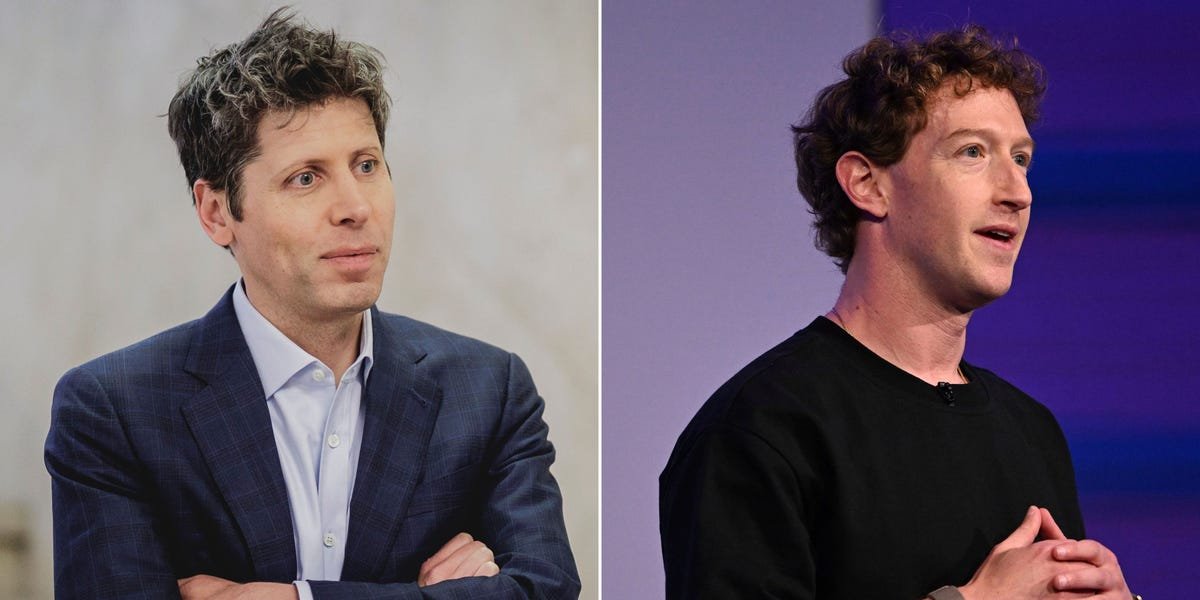
OpenAIs-chief-researcher-says-Mark-Zuckerberg-hand-delivered-soup-to-an.jpeg

OpenAI’s chief researcher says Mark Zuckerberg ‘hand-delivered soup’ to an employee in a recruiting effort

It’s been said that the way to one’s heart is through their stomach. It sounds like Meta CEO Mark Zuckerberg wanted to see if the AI talent war, or at least one skirmish, could be won the same way.

Mark Chen, chief research officer at OpenAI, recently said that Zuckerberg personally delivered homemade soup to an OpenAI employee as part of a campaign to recruit the unnamed worker to Meta.

“It’s been kind of interesting and fun to see it escalate over time. You know, some interesting stories here are Zuck actually went and hand-delivered soup to people that he was trying to recruit from us,” Chen told Ashlee Vance on the author’s “Core Memory” podcast.

Chen said Zuckerberg’s move was “shocking to me at the time” but since then, he said he’s returned the favor.

“I’ve also delivered soup to people we’ve been recruiting from Meta,” Chen said, laughing.

The poaching efforts focused on OpenAI’s researchers and engineers underscores the company’s position in the AI race, Chen said.

“We’re always under attack,” Chen told Vance. “This is how I know we’re in the lead, right? Any company starts, where do they try to recruit from? It’s OpenAI. They want the expertise, they want our vision, our philosophy of the world. And we’ve made so many star researchers, right? I think OpenAI, more than anywhere else, has been a place that makes names in AI today.”

Arguably, no other rival tech company has been as aggressive in the so-called AI talent wars against OpenAI as Zuckerberg’s Meta.

In June, OpenAI CEO Sam Altman said that Meta tried to lure some of his engineers with $100 million signing bonuses. The CEO said at the time that none of his top talent was poached, but ChatGPT co-creator Shengjia Zhao later joined Meta’s Superintelligence Lab.

Chen said that Meta tried to recruit “half” of Chen’s direct reports unsuccessfully, but that OpenAI has been “fairly good” at retaining top talent. A Meta spokesperson declined to comment.

Top AI researchers have become a hot commodity in the AI race, as it’s generally believed that there is a relatively small number of researchers and engineers capable of achieving breakthroughs or building new LLMs from the ground up.

“It’s like looking for LeBron James,” Databricks’ vice president of AI, Naveen Rao, told The Verge’s Command Line newsletter last year. “There are just not very many humans who are capable of that.”


Source link