CBS-News-is-hiring-a-former-ABC-News-bureau-chief.jpeg

CBS News is hiring a former ABC News bureau chief who abruptly left last year

CBS News is hiring a former newsroom leader at ABC News who abruptly left last year, Business Insider has learned.

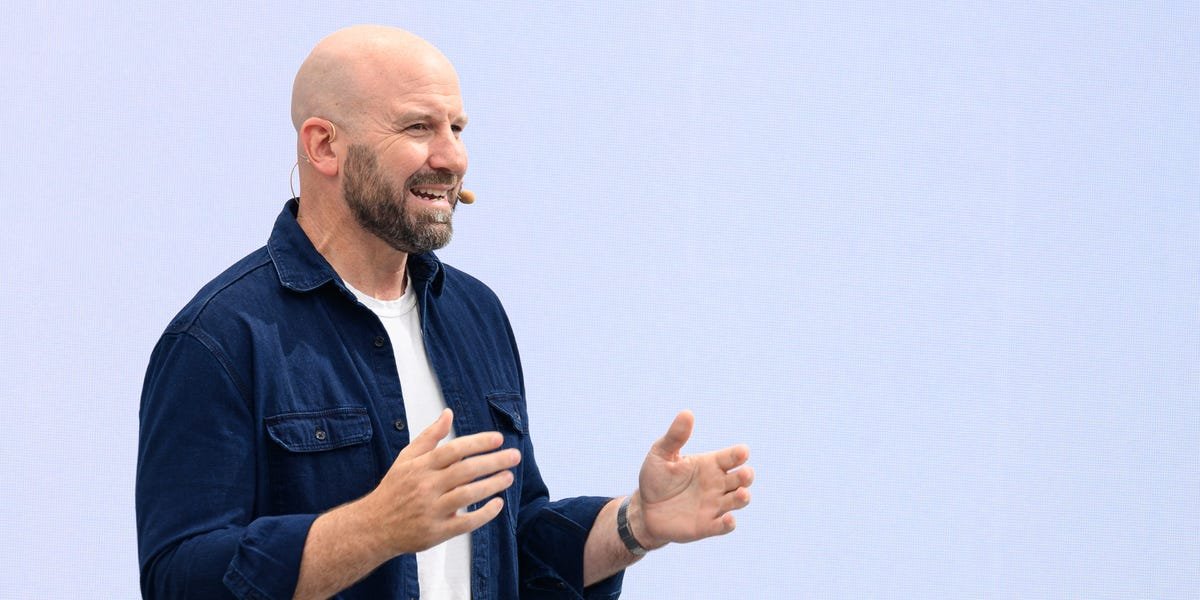
Joshua Hoyos, formerly the New York bureau chief at ABC News, is joining Bari Weiss’ broadcast network as the editorial director of CBS News 24/7, the news organization’s free livestream news service.

Hoyos left ABC News last February after more than 12 years, following an HR investigation, a person familiar with the situation confirmed. Status first reported the news of the investigation into Hoyos.

A spokesperson for ABC News declined to elaborate on the nature of the HR investigation or whether fault was found.

The former ABC bureau chief will join CBS next Monday and report to Robert Gifford, the vice president and managing editor of CBS News 24/7. Gifford told staffers about the hire in a memo sent Thursday.

Hoyos is “an award-winning journalist and media executive who brings more than a decade of experience directing breaking news and live coverage at the highest levels of broadcast journalism,” Gifford said in his memo, which was obtained by Business Insider.

A spokesperson for CBS News declined to comment. Hoyos didn’t respond to several requests for comment.

Read the full memo from Gifford:

24/7 Team,
I am very happy to share that Joshua Hoyos is joining us as our new Editorial Director.
Joshua is an award-winning journalist and media executive who brings more than a decade of experience directing breaking news and live coverage at the highest levels of broadcast journalism.
Most recently, he served as New York Bureau Chief at ABC News, where he led newsgathering teams across the Eastern United States — overseeing correspondents, reporters, and producers through breaking news and major continuing coverage. His work at ABC was recognized with Emmy Awards, Peabody Awards, a duPont-Columbia Award, and multiple Edward R. Murrow Awards.
Joshua is a committed advocate for diverse voices in journalism and an active member of NLGJA: The Association of LGBTQ+ Journalists and the National Association of Hispanic Journalists. He recently served as Executive Producer on a documentary exploring the history and legacy of the New York Amsterdam News.
In his spare time, Joshua is an avid runner — with 15 marathons completed — and a devoted movie buff.
He starts next Monday, reporting to me. I am looking forward to introducing you all to him in person soon.
Please join me in welcoming Joshua to the team!



Source link

Julia Hood headshot

EY’s chief digital officer says marketing is at an AI ‘inflection point’

Lou Cohen, EY’s chief digital officer, said many marketers are not yet taking advantage of the benefits of artificial intelligence.

Cohen, who is also a professor at New York University, Yeshiva University, and Baruch College, said marketing is at an “inflection point,” with investment shifting from general digital innovation to AI transformation.

Cohen said that marketers who understand how to use AI in an assistive way, by focusing on what outcomes it delivers best, will access a deeper level of audience segmenting, targeting, and testing. He was interviewed for CMO Insider at Business Insider’s studio in New York City.

Ultimately, Cohen said, the marketing function will embrace the new opportunity. “Marketers, they’re not afraid to try things,” Cohen said. “We’re going to learn more from the things that we fail with and that don’t work than the things that do.”

The following transcript has been edited for clarity.

We are at an interesting inflection point. In today’s marketing environment, you really need to understand how to make AI work for you; otherwise, you will end up working for it.

There are efficiency and operational gains to be had. But if you think about the outcomes that AI can enable from a marketing perspective, we could be smarter about how we segment our audiences for different campaigns. We could be more efficient in the ways our advertising runs. We could test more rapidly to get better-quality content in front of the right audiences at the right time in the right place.

But most marketing teams are not yet set up to take advantage of this potential. So the investments of the last 15 years in digital transformation are now shifting into AI transformation.

It’s a bit unknown now. Marketers are not totally comfortable with this because we’re so worried that it’s going to hallucinate or give us something that isn’t accurate. Marketers, they’re not afraid to try things. We’re going to learn more from the things that we fail with and that don’t work than from the things that do.

My colleague came up with a great way to evaluate the quality of our content using AI. We can paste in an article that a partner of ours wrote, and it will give us recommendations on how to make that piece of content better. But we’re never — I shouldn’t say never — we’re not likely to use content created by AI. But we certainly can use AI to enhance and give feedback to our content creators.

Hallucinations are real. The challenge is that as consumers of these technologies, we don’t yet understand the difference between probabilistic and deterministic outcomes. Probabilistic is the likely correct response that the AI is trying to give us. Deterministic is “one plus one equals two,” and arguably, one plus one always equals two.

When you’re doing a search on Google or Bing, for example, you are getting a deterministic response. You’re getting what it believes to be the likely to answer your question. Versus with the LLMs, the ChatGPTs, the Llamas, the Geminis of the world, you’re getting a probabilistic response. The model is bringing a bunch of different sources together to determine the answer it thinks you should get based on your prompt.

That means if we were using these tools for their designed purpose, we’d still need search engines to just navigate to the things we’re looking for, or to find the needles in the haystack of the internet. But LLMs give us a different opportunity. They can be assistants. That was some of the original idea behind these AI tools, to assist people in doing different tasks.

I think of these LLMs more as marketing assistants to give me real-time ideas, feedback, or suggestions, rather than doing the task for me. That’s a human putting AI to work to get better outcomes faster than if I were to just do it myself.


Source link

Melia Russell smiles

Harvey makes a big chief product officer hire as legal tech competition heats up

Harvey, the $8 billion legal software startup, is becoming a default vendor in Big Law. Now, with rival startups nipping at its heels and AI model providers moving closer to legal workflows, Harvey is bringing in a new executive to help defend its lead.

The company tells Business Insider it has hired Anique Drumright as its first chief product officer. In this role, she’ll shape what Harvey builds next and how quickly it can ship. Drumright has held roles at Uber, TripActions, Loom, and, most recently, HR software startup Rippling, where she led the company’s push into IT management software.

“Her slope of learning is very high,” said Winston Weinberg, Harvey’s chief executive. He described sending Drumright a lengthy Google Doc on the state of law firm technology and the day-to-day mechanics of legal work. She came back quickly with “really good product ideas,” he said.

The C-suite hire comes at a critical moment for Harvey — and for legal tech more broadly. Law firms are pouring money into new software meant to help lawyers work faster and save costs. Clients are driving much of that spend. After seeing chatbots and virtual assistants transform their own operations, they now expect the same efficiency from outside counsel.

Those tools don’t come cheap, and recent moves by the model providers themselves have complicated the picture. Anthropic’s release last week of a contract-review tool sent ripples through the industry and led to a major sell-off of legal-research stocks. It raised a pointed question: If a foundation model can review contracts, on top of handling tasks across the rest of the organization, how much specialized legal software will firms still pay for?

Harvey sits at the top of the heap for now. The startup has emerged as one of the best-known and best-funded players in legal tech, with licenses at over half of the 100 largest US law firms. The company said it ended last year with more than $190 million in annual recurring revenue. And job postings reviewed by Business Insider suggest it is pushing into mid-market and smaller firms, a long tail of potential growth beyond Big Law.

Earlier this week, Forbes reported that Harvey is raising a new round of funding that would value the company at $11 billion, citing unnamed people familiar with the deal. A Harvey spokesperson declined to comment on the report.

Harvey’s dominance comes with pressure. The company still needs to show lawyers its product can boost revenue, not just save hours. At the same time, competition is intensifying, from legal software startups like Legora and from OpenAI and Anthropic, the same companies whose technology powers Harvey’s platform.

Weinberg said Anthropic’s latest release doesn’t change Harvey’s product direction, but it does emphasize the need to move faster on shipping what makes the company distinctive. “Part of hiring Anique is to accelerate that,” he said.

If the next fight is adoption, Drumright has put in the reps. She’s spent years building products that ask people to change their habits.

At Uber, she worked in product and marketing as the ride-hailing giant scaled to billions of trips a year. Later, at Loom, she helped grow a product that nudged office workers away from meetings and long email chains, replacing them with screen-recorded video messages.

Drumright faces a similar challenge at Harvey, where the company has to convince reluctant lawyers, a famously luddite profession, to trade the familiar way of doing things for new tools. Those take time to use effectively.

“When something is new, even if it’s powerful, it’s still harder to do than the way you’ve always done it,” she said. Her job, she said, is to make those new capabilities feel intuitive.

Drumright is the daughter of two lawyers, and she has seen firsthand how low-tech legal work can be. She remembers her mother siting on the couch, preparing for a deposition by speaking into a tape recorder.

Drumright starts on Tuesday. Her first weeks at Harvey will be spent on a listening tour, meeting lawyers using the product and legal teams deciding whether to buy it. “Legal is a very specific domain,” she said, but the work starts with understanding how lawyers actually work today, and designing products that don’t slow them down.

Have a tip? Contact this reporter via email at mrussell@businessinsider.com or Signal at @MeliaRussell.01. Use a personal email address and a non-work device; here’s our guide to sharing information securely.


Source link

Lauren Edmonds Profile Photo

Trump’s former chief economic advisor says workers are ‘suffering’ in America’s K-shaped economy

President Donald Trump has boasted about strengthening the US economy since returning to the Oval Office. Meanwhile, millions of Americans say they’re struggling to afford food, rent, and other basic necessities.

Gary Cohn, Trump’s former chief economic advisor, said both these realities are true right now in America.

“If you look at gross domestic product, which is the overall output of the US economy, we’re trending about 5% right now, which is a very high growth rate in the United States,” Cohn said on CBS’ “Face the Nation” on Sunday.

Cohn, who is now IBM’s vice chairman, also cited promising trends in inflation and unemployment rates.

However, those numbers don’t give the whole picture.

“That said, we’ve got an interesting economy,” Cohn said. “We have a massive wealth effect at the top end, and we have got hardworking Americans having a very difficult time paying their bills, and they are suffering in this economy.”

That’s why, Cohn said, the Trump administration is making affordability a key issue going forward.

“The White House is going on the offensive. The president is going to spend time out on the road talking about affordability,” Cohn said. “Affordability will be the issue between now and the mid-term elections.”

The widening gap between wealthy and lower-income Americans is often described as a “K-shaped economy.” That’s when people at the top see profound economic growth, while those at the bottom, who are more sensitive to economic shifts, face financial stress. Some economists have cautioned that a K-shaped economy portends bad days ahead.

“A silent majority of consumers is increasingly strained by a two-year affordability crisis and elevated borrowing costs,” Gregory Daco, a chief economist at EY, said in a recent LinkedIn post. “Slower income growth is pushing many upper-median, median, and lower-income families to draw down savings and rely more heavily on credit to sustain their habits.”

The chief economist of RSM, Joe Brusuelas, said in a recent briefing that the US would need to undergo policy shifts to reshape the economy, but that likely won’t happen in 2026.

“When I take a look at the policy landscape, it’s all tilted toward the upper spur of the K,” he said. “So I’m expecting a further widening of that fundamental inequality in coming years.”


Source link

Metas-Reality-Labs-chief-is-calling-the-most-important-meeting.jpeg

Meta’s Reality Labs chief is calling the ‘most important’ meeting of the year and says employees should show up in person

Meta’s Chief Technology Officer and head of Reality Labs, Andrew Bosworth, has called an all-hands meeting for January 14, describing it as the “most important” of the year.

Bosworth is also strongly recommending that Reality Labs employees attend the division’s meeting in person, two Meta employees told Business Insider.

The emphasis on in-person attendance is unusual for the division, which oversees the company’s wearables, virtual and augmented reality initiatives, and a nascent robotics unit, these employees said. Some managers have told employees to “drop what they’re doing” to attend the all-hands in person, one employee told Business Insider.

Meta did not immediately respond to a request for comment about the meeting.

While the division has seen some success, such as its Ray-Ban smart glasses, Reality Labs has been a costly venture for Meta, incurring losses of more than $70 billion since 2020.

Last year, Meta CEO Mark Zuckerberg shifted the company’s strategic focus toward AI and away from the metaverse. In 2025, Meta invested $14.3 billion in Scale AI and hired its CEO, Alexandr Wang, as part of the major reset of the company’s AI efforts. Meta then embarked on a multibillion-dollar hiring spree, poaching top-tier AI researchers and engineers from rivals such as OpenAI and Google DeepMind.

Reality Labs has faced repeated rounds of cuts over the past year. In December, Business Insider reported that Meta was planning budget cuts up to 30% and considering job cuts in Reality Labs.

Last April, Meta laid off employees in Oculus Studios, its in-house gaming division, and the team behind Supernatural, the VR fitness app Meta acquired for over $400 million. Those cuts followed Meta’s broader January 2025 layoffs that eliminated nearly 4,000 roles companywide, with at least 560 affecting Reality Labs employees.

In a memo obtained by Business Insider earlier last year, Bosworth referred to 2025 as “the most critical” year in his eight-year tenure at Reality Labs.

“This year likely determines whether this entire effort will go down as the work of visionaries or a legendary misadventure,” he wrote.

Have a tip? Contact Pranav Dixit via email at pranavdixit@protonmail.com or Signal at 1-408-905-9124. Use a personal email address, a nonwork WiFi network, and a nonwork device; here’s our guide to sharing information securely.


Source link

cherylt_headshot

Critical Role’s chief creative officer, Matt Mercer, explains how he avoids burnout

Critical Role’s chief creative officer, Matthew Mercer, had been spearheading his eight-member crew’s relentless push into the big leagues of nerdworld for 10 years.

That was until this July, when he announced that he’d be giving up control of one of the crew’s biggest priorities, their long-running “Dungeons & Dragons” Twitch livestream.

In an August appearance on the podcast “Crispy’s Tavern: Tales and Tea,” Mercer said he’d felt the threat of burnout and thought he needed a break. He said he’d started to feel a “continuous need to produce creatively,” which was “a very draining and very scary thing.”

To be sure, Mercer and his seven cofounders still have a full slate of projects to work on. That includes an ongoing sold-out arena tour, as well as two Amazon-backed animated series on Prime Video. Mercer also has a key role in the team’s game publishing arm, Darrington Press, home to “Daggerheart,” their flagship game and their answer to “D&D.”

Still, Mercer says, it’s important to be able to admit when you’re done, and to give yourself permission to step away from the work for as long as you need to.

“My biggest advice for burnout is to acknowledge when you’re at the edge and take every opportunity you can to step away and replenish your cup,” Mercer told Business Insider.

Brennan Lee Mulligan of “Dimension 20” fame, Mercer’s longtime friend and collaborator, is the game master for Campaign Four, the team’s ongoing “D&D” stream. Mulligan taking over the main stream means Mercer is no longer solely in charge of captaining the team’s regular episodes, which often run to the four-hour mark.

“There’s this concept, the idea that just pushing through and sometimes necessity requires you to do that to a certain point,” Mercer said.

“But I find walking away and taking some time to enrich your creative input means that whatever time you lost beating your head against the wall will be more than made up for when you can return from a place of genuine inspiration and renewal,” Mercer added.

Campaign Four airs on Beacon, Critical Role’s in-house streaming platform, as well as on Twitch and YouTube.


Source link