
kelly burch

I’ve been running a business with my childhood best friend. We set commandments to make sure our relationship always comes first.

This as-told-to essay is based on a conversation with Ashley Morris, CEO of Capriotti’s. It has been edited for length and clarity.

My whole career is based on a love affair with food — and a lifelong friendship. I grew up on the West Coast, but had tried cheesesteaks on trips east, and adored them. In college, I was living with Jason, who has been my best friend since we were 10. One day, he came home talking about the best sandwich he’d ever eaten. He told me I had to go to Capriotti’s.

I was busy, studying finance and working at a bank. By that Friday, when I still hadn’t gone, Jason dragged me to the sandwich shop. I was just as blown away as he was. I’d eaten a lot of cheesesteaks, but this was the best of the best. It was true love.


Men at train station

Ashley Morris went into business with his best friend Jason.

Courtesy of Ashley Morris


Jason and I went to Capriotti’s so much that when we needed a new apartment, we chose one further from school, but closer to the restaurant. That was the first sign of the role Capriotti’s would play in our lives.

My banking success helped us go into business together

I started working as a bank teller at Wells Fargo when I was 18 because it was the only finance job they’d let me do at that age. After I graduated from college, I moved to the financial services team, and by the time I was 25, I was earning more than any young kid should: about half a million a year.


Friends at restaurant

Ashley Morris and his best friend Jason went into business together.

Courtesy of Ashley Morris


Jason and I had always wanted to get into business together, and now I had the financial resources to make that a reality. We decided to spend a week thinking about business ideas, then decide what to do. When the meeting came, we each brought one idea: open a Capriotti’s franchise.

We quickly opened 3 restaurants, but wanted more

We planned to be 50/50 business partners while both maintaining our day jobs. I would put in more capital, and Jason would do more of the hands-on work, while keeping his government job.

However, we quickly learned that running a passive business just isn’t a reality. The restaurant wasn’t going to be a side hustle, especially because we were so cocky that we opened two franchises at the same time. Before long, we had a third. My girlfriend at the time (now wife) handled a lot of the operations, while Jason and I supported her as much as we could.

We wanted to own 10 restaurants, but we started butting heads with Capriotti’s CEO. I thought she had an old-fashioned mindset, and each time we asked to open another location, she said no.

After a year of that, I’d had enough. I realized if I waited for her to say yes, I’d be 40 and not living my dream. After speaking with Jason, I told the CEO we wanted to buy the whole company. It took everything Jason and I had, but we purchased Capriotti’s in 2008, when I was 27.

We established rules to protect our relationship

We’ve been running the company together since — Jason’s the CEO and I’m the president. We have a lot of the same values, probably because we forged them growing up together. We know each other inside and out, like brothers. That allows us to give really honest feedback. Jason has no problem walking into my office and saying, “You’re missing the boat on this one,” and instead of getting defensive, I immediately open my mind to what he has to say.

When we decided to buy the business, we established commandments to make sure our business partnership wouldn’t ruin our friendship. First, there’s a hierarchy: if we reach an impasse on a decision, I have the final say. That’s only happened twice, and Jason has graciously accepted my decision.

Our second commandment is that if either of us wants out, the other must be fully committed to helping him exit. Luckily, we’ve never had to use that, but we know that we could part ways amicably, fairly, and with integrity if we wanted to.

Today, Jason’s four boys are close with my sons and daughter. We all went on vacation together for New Year’s. Life is busy, and it’s not always easy to find time together outside work, but we try. It’s wonderful to see our friendship recreated with our kids.


Source link

Im-set-to-inherit-my-childhood-home-abroad-Im-not.jpeg

I’m set to inherit my childhood home abroad. I’m not sure it will be worth the headache.

This as-told-to essay is based on a conversation with Katarina Polonska, a relationship scientist and coach who will be inheriting her childhood home in Slovakia. Vancouver-based Polonska, 36, said the home needs a lot of work, and it may not be worth managing renovations from abroad. The conversation has been edited for length and clarity.

I’m going to be inheriting my childhood home where I was born. I love it, and it’s very precious to me. But I don’t have any right to it yet.

It’s mostly used as a family holiday home, but ultimately when my mother passes, it’s going to be given to me.

My mother owns it, and there’s no plan to sell it — the value of the home isn’t very high, in fairness. It’s a two-bedroom, one-bathroom. It’s not worth much at all; maybe $80,000 CAD. I don’t think the money would go very far in Canada.

Also, selling it would require a lot of renovations. It’s very old school and needs a lot of TLC, and my mother doesn’t live in Slovakia, she lives in England. So from her perspective, she’s thinking, “Why would I invest 30,000 or 50,000 euros (about $35,245 or $58,742) in a property that I go to a few times a year max? What’s the point?”

She also knows it would to be really complicated to sell it from abroad, having to navigate viewings and trusting realtors and all of this stuff.

The reality is, I’m going to own this foreign property when she passes.

My husband is in a similar situation with a Barbados property

My husband is also waiting to inherit. His mother inherited a property in Barbados from her parents, though she never lived in Barbados.

His mother had to wait to take over the Barbados property, and by the time she took it over, it had declined a little bit and there are always complications with it.


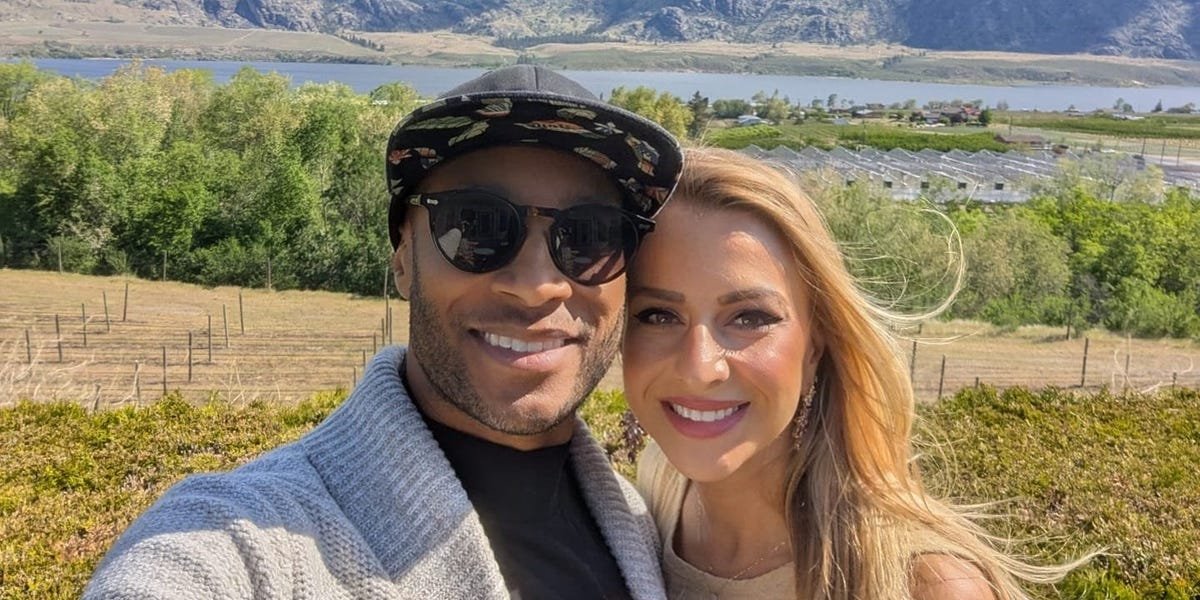
A man and a woman taking a selfie with a mountain range behind them.

Polonska and her husband.

Courtesy of Katarina Polonska


I’ve actually never seen it myself, but I know that there’s a lot of work to be done with the house. But his mother has been holding onto it saying, “You can inherit it and you and Kat can enjoy it.”

But he’s like, “We don’t go to Barbados enough.” It’s just more hassle having to manage and protect a property when you’re not physically in the country.

I think from my perspective, because I’m naive about it, I’m like, keep it, it’d be really nice to have it. But his argument is that the place isn’t in the area of Barbados that I would necessarily want to go to.

He’s really wary. He doesn’t want to be managing the property and he would rather sell it and then distribute the money within his family.

So we both know that there’s going to be this new responsibility on our heads and, candidly, I think life is difficult enough as it is.

The home in Slovakia needs so much work that I probably can’t rent it out as-is

I’m not going to rent the Slovakia home out because it’s from, like, the 1980s. It’s not been renovated. It’s ancient; the wallpaper’s faded.

While Slovakia is kind of an up-and-coming country from a tourism perspective, I don’t think anyone would want to stay in this place as an Airbnb unless it was literally advertised as a historical relic: “Come stay in this ancient old-school apartment!”


The exterior of a residential building in Slovakia.

Polonska’s property in Slovakia.

Courtesy of Katarina Polonska


My husband and I have talked about how we’re probably going to have to renovate it. We know that at some point, we’re probably going to have to take a couple of months to be there physically to renovate it. But when is that going to happen? We both work, and getting to Slovakia is like a 20-hour journey from here.

I think, more realistically, we could just keep the place and treat it as a little getaway to escape to. There is really lovely nature nearby and I don’t have any other properties, so there is merit psychologically to knowing that there is a place that’s home, even if it is halfway across the world.

There needs to be more dialogue between parents and children about inheritances

When it comes to inheriting property, I think there needs to be more dialogue between the parent and the child of, “What do you actually want to do?”

I think a lot of parents have this assumption that leaving a kid the property is the ultimate goal; we’ve made it, we’ve paid off the mortgage, we have this home, and now the kid gets it. Those days are kind of gone.

We don’t live in a world where everyone grows up and lives in the same town or city as their parents. We live in a really global economy. People are moving, people are more transient, and the world has become smaller. It’s also become a lot more expensive, and home ownership isn’t what it used to be.

Parents need to recognize that the world we’re in is very different, and Millennials are not an anxious generation for no reason. We have a lot of stresses. It makes more sense to have a dialogue with your kid around what they want.

I wish parents would ask, “What do you want? Where are you at with your life, and what kind of inheritance makes sense?”

Is it, in fact, a lump sum of cash, because maybe you’re a busy entrepreneur and you don’t have time to sell? Maybe you actually would prefer the parent to sell, which is annoying for the parents, but maybe the kid would prefer that.

Thank you for the inheritance — that’s very generous. But I think quite a lot of kids would probably say it’s not worth it. Either enjoy the money, mom and dad, or cash out, downsize, and just give us a down payment or something.


Source link