
China-is-going-after-US-defense-firms-and-execs-over.jpeg

China is going after US defense firms and execs over weapons sales to Taiwan — and Palmer Luckey’s on the list

China announced sanctions against 20 US defense companies and 10 senior executives on Friday, citing US arms sales to Taiwan as its motive.

In a statement, China’s foreign ministry said its assets within China, including movable and immovable properties, would be frozen and that domestic organizations and individuals would be prohibited from doing business with them.

Individuals named on the list would also be denied visas and entry to the country, the ministry added.

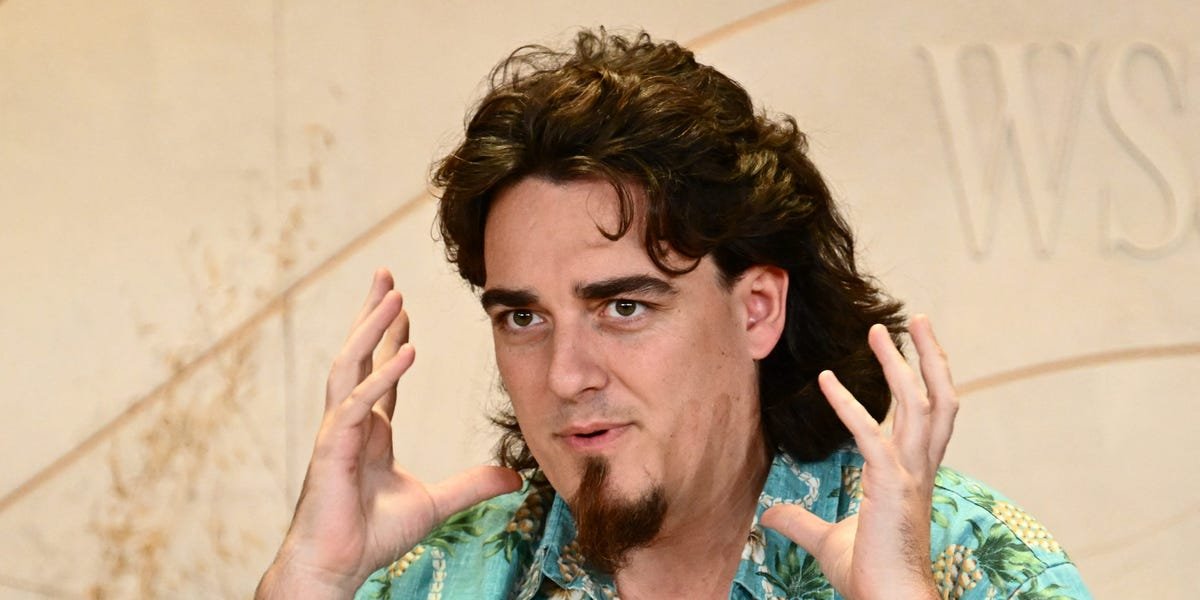
The sanctions list includes Northrop Grumman Systems Corporation, Boeing’s St. Louis branch, Epirus, and Anduril Industries founder Palmer Luckey.

In a statement, a spokesperson for the foreign ministry said: “We stress once again that the Taiwan question is at the very core of China’s core interests and the first red line that must not be crossed in China.”

“Any company or individual who engages in arms sales to Taiwan will pay the price for the wrongdoing,” they added.

When reached for comment, Anduril pointed Business Insider to an X post from Luckey in which the CEO joked that he was honored.

“I want to thank my family, my team, and my Lord Jesus Christ for this award,” Luckey wrote on X. “Anduril has been sanctioned for a while now, as have many of my peers, but it means so much to finally have my non-existent Chinese assets seized and repurposed.”

China’s sanctions follow the US announcement of a $11 billion military package for Taiwan last week.

The deal, which includes self-propelled Howitzers and HIMARS rocket launchers, still needs to be approved by Congress — but it drew a swift response from Beijing.

Lin Jian, a spokesperson for the foreign ministry, said in a statement at the time that China “strongly deplores and firmly opposes” the sales.

China regards Taiwan as a breakaway province that will one day come under Beijing’s control, and Chinese President Xi Jinping has refused to rule out an invasion of the island. Taiwan’s ruling Democratic Progressive Party views Taiwan as separate from China.

Under the Taiwan Relations Act, the US is obligated to assist Taiwan in defending itself.

Beijing has ramped up pressure around the island in recent years, holding frequent military exercises in the surrounding skies and waters.

A 2024 report by the Washington, D.C.-based think tank the Center for Strategic and International Studies suggested that China may be able to exert power over Taiwan without launching an invasion.

The report said China could impose a quarantine of the island using its coast guard.

“The purpose of a quarantine is not to completely seal Taiwan off from the world but to assert China’s control over Taiwan by setting the terms for traffic in and out of the island,” it argued.

“A key goal is to compel countries and companies to comply with China’s terms.”


Source link

Trump-gives-Nvidia-the-green-light-to-sell-its-H200.jpeg

Trump gives Nvidia the green light to sell its H200 chips in China

Nvidia just scored a win from President Donald Trump.

In a post on Truth Social on Monday, Trump said he told Chinese leader Xi Jinping that the US would allow Nvidia to sell its H200 chips to “approved customers” in China.

“This policy will support American Jobs, strengthen US Manufacturing, and benefit American Taxpayers,” Trump said in the post.

Trump said, “$25% will be paid to the United States of America.” He has previously proposed having the US take a cut of chip sales to China.

Nvidia’s stock was up in after-hours trading following Trump’s announcement.

“We applaud President Trump’s decision to allow America’s chip industry to compete to support high paying jobs and manufacturing in America,” a spokesperson for Nvidia said in a statement to Business Insider. “Offering H200 to approved commercial customers, vetted by the Department of Commerce, strikes a thoughtful balance that is great for America.”

Nvidia’s powerful H200 chips have been in high demand as AI models become more powerful.

While Nvidia was already able to sell some of its other chips to China, the US government has limited its ability to sell some powerful chips due to national security concerns. Sales of its H20 chips to China during Q3 were “insignificant,” CFO Colette Kress said on its latest earnings call.

“While we were disappointed in the current state that prevents us from shipping more competitive data center compute products to China, we are committed to continued engagement with the US and China governments and will continue to advocate for America’s ability to compete around the world,” Kress said during the Q3 earnings call.

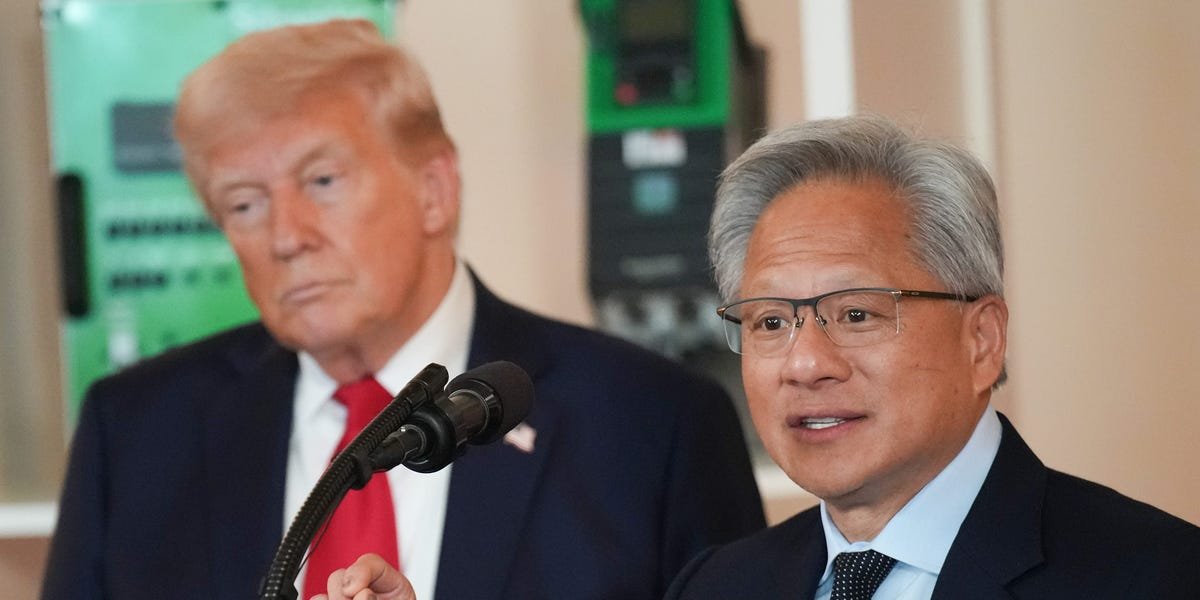
Nvidia CEO Jensen Huang met with Trump last week to discuss export controls on chips.

“I’ve said repeatedly that we support export control, that we should ensure that American companies have the best and the most and first,” Huang told reporters last week.

Nvidia stock was up roughly 2% after hours.


Source link

Tesla-scored-a-win-in-China-just-as-its-biggest.jpeg

Tesla scored a win in China just as its biggest rival stumbled

  • Tesla scored a rare win in China, earning bragging rights over its biggest rival in the process.
  • Elon Musk’s automaker saw its sales rise by nearly 10% in November, while its arch-rival BYD’s fell.
  • Tesla has had a difficult year, with sales underwhelming in China and collapsing in Europe.

Things are finally looking up for Tesla in China.

The US automaker’s sales rose 9.9% in November compared to the same month last year, according to data released by China’s Passenger Car Association on Tuesday.

That’s a rare win for Tesla, which has had a difficult year in almost all of its biggest markets. The company has faced a sales collapse in Europe, been squeezed by intense competition in EV-friendly China, and is on track to see its overall sales decline for the second consecutive year.

One bright spot for Tesla: it’s not the only one with problems. The Elon Musk-run automaker’s biggest Chinese rival, BYD, has hit some speed bumps in recent months.

The Shenzhen-based EV giant, which has become one of China’s largest carmakers thanks to a range of affordable and high-tech electric models, has had three straight months of sales declines.

BYD said it sold just over 480,000 EVs and hybrids in November, its highest total this year, but still around 5.3% less than the same period in 2024.

The Chinese automaker, which was once backed by Warren Buffett, has struggled in the face of a renewed price war in China’s ultra-competitive EV market and a government crackdown on aggressive discounting.

Despite these headwinds, BYD is still on course to take Tesla’s crown as the world’s largest seller of battery EVs this year, and the company is rapidly taking market share from Musk and co. outside China.

BYD’s overseas sales hit a record 131,935 in November. The Chinese auto giant is taking advantage of Tesla’s woes in Europe, with BYD outselling its US rival by more than two to one in October.


Source link