

Taylor Rains

United is rolling out ‘basic business class’ to make premium flying cheaper. Here’s how it will work.

United Airlines is changing how people fly in its most expensive cabins.

The airline said Friday it’s soon rolling out new “basic” fares for its Polaris business class and Premium Plus premium economy cabins that strip out some perks — like seat selection and lounge access — in exchange for lower prices.

It’s essentially basic economy for premium seats. The goal is to let customers tailor their experience based on what they actually value, while simultaneously monetizing the growing demand for premium comfort.

For example, flyers who already get lounge access via a credit card can opt out of paying for a bundled perk they would not use. They can also save if they don’t care where they sit or that their ticket is nonrefundable.

United is also targeting travelers who may have considered upgrading but were previously priced out. By dangling the carrot of more “affordable” premium fares, the airline can make money off of seats that would otherwise fly empty.

The on-board experience won’t change. All Polaris customers will still get beds, chef-curated meals, and more privacy; Premium Plus still includes better food, a large recliner, and a leg and footrest.

The unbundled fares will launch “later this year” on long-haul international, transcontinental, and select Hawaii routes. United outlined how its new “Base,” Standard,” and “Flexible” fares will work:


United Polaris fare chart.

The fares have different rules around seat selection, baggage, lounge access, changes, upgrades, and refunds. 

United Airlines


United’s Polaris lounge is more upscale than its regular Club lounges. The upgrade option to United Polaris Studio refers to the new suite-style pod it’s launching on future Boeing 787s in late April.

United is applying the same new fare structure to its Premium Plus cabin. Those revamped fares — also called Base, Standard, and Flexible — mirror the Polaris options, minus lounge access.

United Chief Commercial Officer Andrew Nocella framed the changes as offering customers “more choice,” saying the new pay-as-you-go structure will make it “easier to find a fare that includes the benefits they want most — whether that’s a great value, added perks, or maximum flexibility.”

The reworked business class is part of a broader wave of new products, like door-equipped business class and beds in economy, coming to United as it chases premium revenue.

United joins a larger basic business class trend

United is the first US airline to deploy basic premium fares, but it’s not the first globally.

Air France, KLM, Finnair, Emirates, and Qatar Airways have experimented with stripped-down business-class options for years, unbundling seat selection, lounge access, and other previously free add-ons.

Delta Air Lines has also been signaling a similar direction, teasing a “business-class-lite” product since 2024. Former company president Glen Hauenstein, who retired in February, said on a January earnings call that the fare type was a “2026 initiative.”

It’s still unclear how the new à la carte premium structure will ultimately affect pricing or the customer experience. Some industry analysts have said basic business class could gradually erode the traditional premium cabin without necessarily making flying cheaper over time.

Henry Harteveldt, a travel analyst and president of Atmosphere Research Group, previously told Business Insider that fares for the new business-class ticket are likely to be similar to current levels, while the cost of fully flexible tickets would steadily rise.

He added, however, that corporate customers who pay for business class primarily to ensure employees are rested and well-fed may welcome lower fares that strip out perks they deem unnecessary.

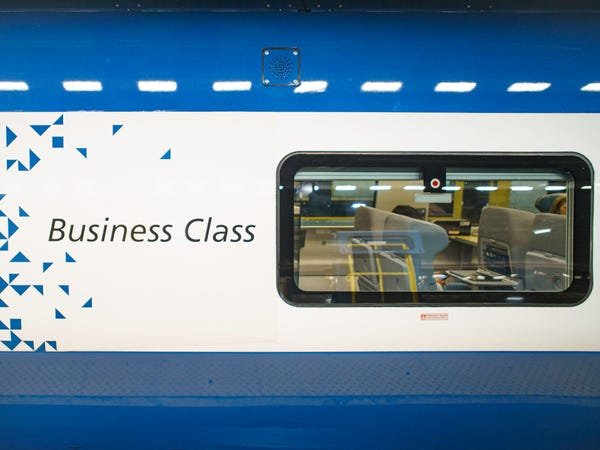


Source link

Taylor Rains

Lufthansa is finally selling its complex Boeing 787 business class seats after a certification debacle

Lufthansa can finally start making money on its Boeing 787 Dreamliners after a certification debacle left one of its most lucrative cabins largely empty for months.

The German flag carrier said on Monday that it will begin selling tickets for its Allegris business class on the 787. Allegris, Lufthansa’s signature cabin concept, spans economy, premium economy, business, and first class, but the business class rollout has been particularly tricky.

The program first launched on the Airbus A350 in May 2024, with the cabin spanning the entire plane. The first Allegris-equipped 787 followed in October 2025, but certification of business class dragged on due to the cabin’s complexity: there are five staggered seat configurations in a single airplane cabin — some with doors or more legroom, others with extra-long beds.


Lufthansa's Allegris business class layout.

The first-row window seats have extra workspace. Some window seats don’t have doors but are billed as being more private.

Lufthansa


This is because the Dreamliner’s geometry — including a slightly tighter usable footprint and different fuselage contouring compared to the A350 — made it harder to demonstrate to regulators that passengers could evacuate quickly from every seat, whether staggered, partially enclosed, or fully cocooned, in an emergency.

The result? For months, only four of the 28 business class seats could be sold — the front-row Business Class Suites — leaving the remaining 24 empty. Business class is a cash cow for airlines, and by flying most of the cabin empty as competitors pour investments into their own premium seats, Lufthansa was essentially leaving money on the table.

It has been a particularly costly headache for a carrier in the midst of a multi-year turnaround plan to restore profitability after years of financial pressure from frequent maintenance, aircraft shortages, rising operating costs, and labor strikes.

Lufthansa even opted for an already-certified business-class seat to retrofit onto its Airbus A380s rather than risk another prolonged and costly certification process.

But the saga is nearing the finish line. Beginning April 15, Lufthansa plans to carry passengers in 25 business-class seats on its 787s, with three remaining blocked in the second row of the cabin.

Bookings are open, though it’s unclear whether the news indicates the seats have been fully certified or if that’s just Lufthansa’s expected timeline.

Lufthansa said “Classic” seats — one of the Allegris categories available — are free to secure with the premium fare.

The others require an extra fee: this includes the first-row suites, the “Privacy” seat next to the window, the “Extra Space” seat with more legroom, and the “Extra Long Bed” with an over seven-foot sleeping surface.

The three second-row seats that are blocked — and not yet available for booking — are two privacy seats and an extra-legroom seat.


Allegris business class.

One of the large, door-equipped Allegris suites on Lufthansa’s A350. It has a larger business-class cabin than the 787 and also features a luxe, ultra-private first class.

LUKAS BARTH/AFP via Getty Images


Lufthansa flies eight Allegris-equipped Dreamliners and expects to have 29 by the end of 2027.

They are set to first fly from Frankfurt to Rio de Janeiro, Bogota, Cape Town, Shanghai, Hyderabad, Hong Kong, and Austin; New York-JFK and Los Angeles join the roster in June, followed by Delhi in July.

As part of Lufthansa’s greater multibillion-dollar fleet overhaul plan, Allegris is also being fit onto the airline’s existing A350s and Boeing 747-8s, as well as its future, yet-to-be-certified Boeing 777Xs.

A similar spacing issue on the 747 double-deckers’ upper level means it will have a split business class: the lower deck will have Allegris, while upstairs will feature the plane’s original cabin.


Source link

I-rode-in-business-and-first-class-on-Amtraks-NextGen.jpeg

I rode in business and first class on Amtrak’s NextGen Acela, the fastest train in the US. Here’s how they compared.

  • The Amtrak NextGen Acela is the fastest train in the US.
  • I booked a business-class ticket from New York City to Washington, DC, for $180.
  • Then, I traveled from Washington, DC, to NYC in first class for $450.

I spent six hours and $630 on the fastest train in America.

The Amtrak Acela is the express option for travelers in the Northeast with only business and first-class seating. In August 2025, the route got a fresh new fleet called the NextGen Acela. In addition to a futuristic look and modern amenities, the train has a top speed of 160 miles per hour, making it the fastest train in the US.

In September 2025, I booked round-trip tickets between my home in New York City and Washington, DC, on the NextGen Acela. I got a taste of both classes.

First, I spent $180 for a three-hour business-class ride from New York City to Washington, DC.

A business-class car on the NextGen Acela train.

Joey Hadden/Business Insider

Since the Acela doesn’t have coach seating, business class is the standard ticket.

Then, I rode home to New York in first class for $450.


Passengers on the left board a first-class train car on the Amtrak Acela NextGen

Passengers board a first-class car on the NextGen Acela train.

Joey Hadden/Business Insider

My first-class ticket included a meal, priority boarding, attendant service, and lounge access at the train station.

The differences between these two bookings began when I arrived at each station.


A composite image of passengers standing with luggage in a train station and a wide view of an Amtrak lounge with two tiers of seating

Inside NYC’s Penn Station (left) and inside the Metropolitan Lounge at DC’s Union Station.

Joey Hadden/Business Insider

I waited for my business-class train to Washington, DC, on the floor of NYC’s Penn Station. The waiting room was full, and it would have cost me $50 to access the Metropolitan Lounge, which is complimentary for first-class passengers.

Since I held a first-class ticket for my ride home from Washington, DC, I had access to the Metropolitan Lounge at Union Station. Other passengers can pay $35 to enter the space.

The lounge was quiet and calm. There were couches, comfy chairs, tables, and colorful works of art on the walls. I especially appreciated the espresso and beverage station, snack bins stocked with a variety of treats — all of which were complimentary — and the clean bathroom.

I boarded earlier for the first-class ride.


Passengers walk into the priority boarding line inside a train station

The priority boarding line at Union Station in Washington, DC.

Joey Hadden/Business Insider

After relaxing in the lounge, I waltzed into the priority boarding lane for my first-class ride to New York. There were fewer than a dozen people in front of me.

Unlike when I rode in business class, where I was toward the back of a long line, I had several minutes to get situated on board before the train departed.

Inside the train, the cars were color-coded.


A composite image of the inside of a blue business-class train car and a red first-class train car

Inside a business-class car (left) and a first-class car (right) on the NextGen Acela train.

Joey Hadden/Business Insider

Aboard the Acela train, I quickly caught on that blue meant business class and red meant first class. From the headrests to the bathroom doors, the matching colors made it easy to tell which car I was in.

Another key difference was the layout. There were two rows of seats on either side of the aisle in business class, while first class had a single row of seats on one side of the aisle.

The seats had all the same amenities, but my first-class one was slightly more spacious.


A composite image of a business-class seat and two first-class seats on an Amtrak NextGen Acela train

A business-class seat (left) and a first-class seat (right).

Joey Hadden/Business Insider

The NextGen Acela seats had smooth lining, soft cushions, and supportive, winged headrests. They also had reading lights, USB ports between seats, and a reclining function.

The only significant difference I noticed was that the first-class seats were larger and had more legroom. I found both to be more comfortable than any other Amtrak seat I’ve booked.

Only the first-class ticket included a meal.


An aerial view of an Amtrak chicken dinner on a tray table

The author’s complimentary lunch on the NextGen Acela.

Joey Hadden/Business Insider

During my business-class ride, I grabbed a bite in the café car, where passengers can purchase grab-and-go meals from a self-service station, as well as snacks, drinks, and quick hot meals prepared by an attendant. I ordered a breakfast sandwich, which I thought tasted pretty decent for a microwaved meal, and brought it back to my seat.

In first class, I received attendant service and had a menu of complimentary meals to choose from.

I selected the chicken dish, which consisted of a charred thigh paired with roasted squash, verde sauce, a hard roll, and a Key-lime pie in a jar.

It was the most delicious and satisfying meal I’d ever had on an Amtrak train.

The bathrooms were identical.


The author stands in front of a mirror in an Amtrak NextGen Acela train with a red shelf on the left

Inside a bathroom on the NextGen Acela train.

Joey Hadden/Business Insider

Save for the color of the door, the bathrooms in each class are the same, an Amtrak representative told Business Insider. I was impressed by how clean, spacious, and high-tech they were.

These bathrooms featured automatic doors, lights to indicate when the space was in use, and ample room to stretch. I also appreciated the touch-free faucets, soap dispensers, and hand dryers.

Ultimately, I discovered that the fastest train in America was also the most comfortable.


A composite image of the author sitting in a first-class Amtrak NextGen Acela seat and the exterior of the front of the train

The author enjoys her ride on the NextGen Acela.

Joey Hadden/Business Insider

After my back-to-back three-hour journeys on the Amtrak NextGen Acela train, I expected to be thrilled to get off the rails. But my experiences were so comfortable that I was in no rush to exit. When we pulled into NYC’s Penn Station, I let other passengers get off first while I soaked up a few more minutes in my first-class seat.


Source link

Meet-the-new-class-of-retail-CEOs-set-to-take.jpeg

Meet the new class of retail CEOs set to take the reins at Walmart, Target, and more

  • 2025 has been a big year for retail CEO transition announcements.
  • Roughly 45 retailers said they are changing leadership, up from about 32 the year before.
  • Here are some of the more notable retail chains that are getting a new CEO.

2025 may go down as the end of an era in retail.

This was the year that the longtime CEOs at two of the largest chains decided to hand the reins over to their corporate proteges.

The retirements of Walmart’s Doug McMillon and Target’s Brian Cornell come as the industry is facing an array of new (and long-term) challenges in the form of a global trade rebalancing, accelerated adoption of AI, and increasingly stretched US household budgets.

Fresh legs might be a welcome addition in this race.

Dozens of smaller retailers have taken the opportunity to shake up the C-suite as well.

Analysis from leadership consultancy Challenger, Gray & Christmas found that 43 retail companies announced CEO exits in the first 10 months of this year, up from 32 in the same period last year. A few more announcements have come through since.

Here are some of the major retail chains that are getting a new CEO in the new year.

Walmart — John Furner

Walmart’s incoming CEO, John Furner.

Walmart

Walmart said in November that the company’s US division CEO, John Furner, would become president and CEO on February 1.

Like outgoing CEO Doug McMillon, Furner has been with Walmart for decades, starting as an hourly associate and working his way up through the ranks.

Target — Michael Fiddelke


Target's new CEO Michael Fiddelke.

Target has tapped Michael Fiddelke as its new CEO.

Target

Target said in August that chief operating officer Michael Fiddelke would succeed Brian Cornell on February 1, with Cornell remaining on the board as Executive Chair.

Fiddelke has been with the company for 20 years, starting as a finance intern and moving through roles in merchandising, finance, operations, and human resources.

Camping World — Matthew Wagner


A Camping World RV dealership in Florida.

A Camping World RV dealership in Florida.

John Greim/LightRocket via Getty Images

RV dealer Camping World said in December that founder Marcus Lemonis would step down as CEO on January 1, with company president Matthew Wagner taking over.

Wagner has been with Camping World since 2007, serving in numerous leadership roles before being appointed chief operating officer in 2023 and president in 2024.

Kraft Heinz — Steve Cahillane


Kraft Heinz has tapped Steve Cahillane as its new CEO.

Kraft Heinz has tapped Steve Cahillane as its new CEO.

Kraft Heinz

Kraft Heinz said in December that it has snagged Kellanova CEO Steve Cahillane to take over from Carlos Abrams-Rivera on January 1.

The company will later split into two publicly traded companies, North American Grocery Co. and Global Taste Elevation Co., with Cahillane remaining in charge of the latter.

Cahillane has a long career leading consumer products companies like The Nature’s Bounty Co. and Coca-Cola’s Americas division. He also spent eight years with AB InBev.

Kohl’s — Michael Bender


Kohl's CEO Michael J. Bender

Kohl’s has made Michael Bender its permanent CEO.

Kohl’s

In fairness, Michael Bender’s transition effectively happened back in May, but Kohl’s made it official in late November when the retailer said Bender would go from interim CEO to a permanent appointment.

That means Kohl’s will start the new year with one less distraction under the leadership of a highly experienced retail executive who has already had a positive impact on the company.

Lululemon — Meghan Frank and André Maestrini (for now)


Lululemon interim co-CEOs Meghan Frank and André Maestrini

Lululemon has appointed Meghan Frank and André Maestrini as interim co-CEOs.

Lululemon

Athleisure brand Lululemon said in December that it was parting ways with CEO Calvin McDonald on January 31, but hasn’t yet identified a permanent successor.

In the meantime, the company said board chair Marti Morfitt would expand her role to become executive chair, and that CFO Meghan Frank, chief commercial officer André Maestrini would serve as interim co-CEOs following McDonald’s departure.

7-Eleven — Stan Reynolds and Doug Rosencrans


7-Eleven convenience store chain, close-up exterior sign logo.

A 7-Eleven store in Florida.

Jeffrey Greenberg/Universal Images Group via Getty Images

Parent company Seven & i Holdings said in December that CEO Joe DePinto would retire at the end of the year. The company’s current president, Stan Reynolds, and chief operating officer, Doug Rosencrans, are set to serve as co-CEOs until a permanent successor is hired.


Source link