
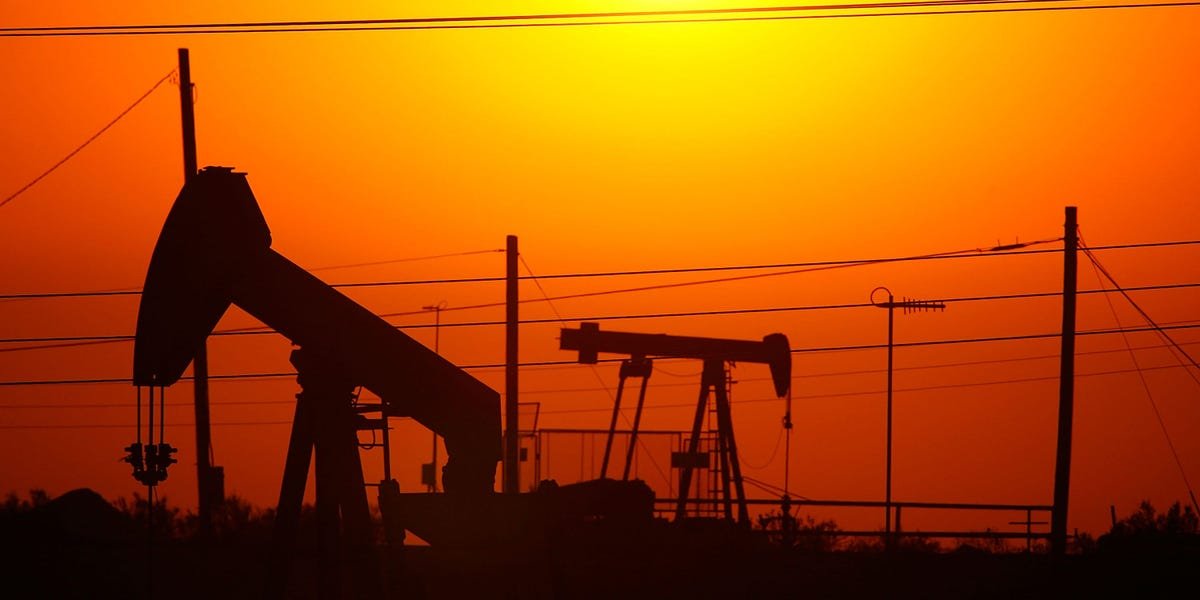
Oil-prices-climb-as-the-US-and-Israels-war-on.jpeg

Oil prices climb as the US and Israel’s war on Iran enters its 3rd week

Oil futures climbed in early trading on Sunday as the US and Israel’s war with Iran entered its third week, disrupting the global supply chain.

Brent oil reached $106.33, up nearly $3 from when the market closed on Friday. West Texas Intermediate hit $101.19 on Sunday.

For Americans, surging oil prices mean spending more at the pump. The national average price for gasoline hit $3.69 on Sunday. Gas prices have surpassed $3 in all 50 US states for the first time since 2023.

The International Energy Agency said last week the war has caused the largest oil market disruption in history, and that global oil supply will drop by 8 million barrels per day in March.

Kevin Hassett, the US director of the National Economic Council and a top aide to President Donald Trump, said Sunday on CBS News’ “Face the Nation” that the US is working to minimize the fallout for American consumers.

“The big problem right now would be energy prices, and we’re watching and monitoring closely,” Hassett said.

Much of the instability in the oil market stems from the near-closure of the Strait of Hormuz, which Iran controls and through which about 20% of the world’s petroleum passes. Trump has called on other nations to help secure the strait, but has so far received either lukewarm replies or none at all.

Attacks on major oil hubs are also likely driving up prices. Trump said late Friday that the US had “totally obliterated” military targets on Iran’s Kharg Island, where refineries process almost all of the nation’s oil exports.

The president threatened to target oil infrastructure on the island if Iran continued to prevent ships from passing through the Strait of Hormuz. An attack on the key Iranian oil center would further destabilize the global oil market.

In response, Iran said that ports, docks, and “American hideouts” in the United Arab Emirates could be targeted. Fire later broke out near the Port of Fujairah in the United Arab Emirates, the only multipurpose maritime facility on the UAE’s east coast and a major oil depot, on Saturday. The local government said an intercepted drone caused the fire.

Any end to the conflict, meanwhile, appears to be a long way off. Iran’s foreign minister, Abbas Araghchi, said on Sunday that there has been no discussion of a ceasefire.

“We are only defending our people from this act of aggression,” Araghchi said on “Face the Nation.”We don’t see any reason why we should talk with Americans, because we were talking with them when they decided to attack us, and that was for the second time.”


Source link

Line chart

US gas prices climb to the highest point in Trump’s second term. He says, ‘If they rise, they rise.’

Gas prices continued their ascent on Friday as the escalating conflict with Iran sends shockwaves through global energy markets.

The national average price for a gallon of regular gasoline climbed to $3.32 on Friday, according to AAA — that’s an 11.4% increase from last week’s price and the highest level since August 2024.

The jump follows a surge in crude oil prices after the United States and Israel launched strikes on Iranian targets last Saturday, prompting retaliatory attacks from Tehran.

Brent crude, the global benchmark, traded above $91 a barrel Friday morning, its highest level since mid-2024, according to GasBuddy.

US pump prices could continue to climb. BloombergNEF estimates that about half of the eventual increase in retail gasoline prices typically shows up within 10 to 13 days, with roughly 90% reflected within about 21 days.

The firm added that if crude rises by $10 a barrel amid escalating tensions, US gas prices could climb by roughly 30 to 40 cents per gallon in the short term.

Oil supply chains have been particularly sensitive to threats around the Strait of Hormuz, a narrow waterway along Iran’s southern coast that handles roughly one-fifth of global oil consumption.

Iran said it attacked a tanker passing through the waterway on Thursday.

Any disruption there could quickly drive oil prices higher — and those moves would show up at the pump within weeks.

Iran has also targeted regional energy infrastructure, including facilities tied to Qatar’s massive liquefied natural gas exports.

President Donald Trump downplayed the retail price increase when asked by Reuters about rising fuel costs this week, saying he does not “have any concern about it.”

“They’ll drop very rapidly when this is over, and if they rise, they rise, but this is far more important than having gasoline prices go up a little bit,” he said.

He has said that the US Navy will escort tankers passing through the Strait.

Retail analysts warn that the impact of higher energy prices could extend beyond drivers. Higher fuel costs raise shipping and distribution expenses for businesses and can weigh on consumer spending.

“As oil prices rise, gas prices follow,” Carol Spieckerman, an independent retail analyst, told Business Insider. “And with the administration promising lower prices and consumers laser-focused on the pump, this metric has been given arguably more political and psychological energy than any other economic variable.”

She added that the impact will stretch far beyond the gas station. Higher fuel costs can push up travel, delivery, and retail prices — including goods made with petroleum-based materials.

“The ripple effects of fuel prices are far-reaching and underestimated,” she said. “It’s a compounding effect that touches nearly every corner of retail.”


Source link