More than 1.1 million people were laid off in the US in 2025, and there were more job cuts in January 2026 than any January since 2009, according to reports. Business leaders are predicting that things will only get worse as AI disrupts the workforce.
When Amazon announced layoffs earlier this year, the tech career coach Kyle Elliott shared what he thinks employees should do immediately after being laid off to put them in the best position to find a new role.
He also shared three common mistakes to avoid after a layoff.
1. Posting a hit piece on LinkedIn
After the sting of a layoff, Elliott has seen workers turn to LinkedIn to share negative posts about their former employer.
“Sometimes people just really react from that emotion or wound, instead of waiting until it heals,” he said.
Such posts could be detrimental when applying for a new job, when recruiters and hiring managers check your LinkedIn profile.
“People want to work with other positive people, so if they see that you’re venting, they may worry, ‘if we have to conduct layoffs in the future, are you going to then put a hit piece out on us as soon as you get laid off?” Elliott said.
Instead, consider waiting until you are more able to position the event differently in your post, which could be a month or two after, Elliot said. In the post, share lessons you learned and the amazing work you did at your previous company, he added.
2. Venting to former colleagues
Former colleagues can be a good resource when you’re looking for jobs in the future. In your last conversation with your former colleagues before leaving the company, reiterate the work you’re proud of and share what kind of opportunity you’re looking for next, Elliott said.
With this in mind, it may be better to vent about your layoff experience to a trusted confidant like a spouse, best friend, or therapist rather than a former colleague, he added.
Venting to a colleague could damage their perception of you and jeopardize the connection.
“A lot of people will remember that last piece, and you don’t want them to be like, ‘oh, they’re bitter.'” he said.
3. Being afraid to network
Elliott has noticed that clients are sometimes afraid to network because of the stigma associated with layoffs, and their fear that they can’t add value to conversations while unemployed.
“Layoffs are normal now,” Elliott said, so there’s no need to avoid reaching out to people out of fear.
He recommended starting small. For example, meet a former colleague whom you were close to.
In your first conversation, focus on putting yourself out there and taking small steps toward your next role, and don’t expect to be offered a job, he said.
“If you were fired and you’re calling it a layoff, it’s a little different. But if you were truly just laid off as part of a reorganization or cost-cutting measures, people understand that, and there shouldn’t be shame in that,” he said.
Coach and Kate Spade designers have added AI to their design workflow.
On a Thursday earnings call, CEO Joanne Crevoiserat was asked how and where Tapestry is investing in AI.
She answered that Coach and Kate Spade’s designers now use AI in their day-to-day work, but the design process starts with hand-drawn sketches.
“So there is still a human and a need for design eye, right,” Crevoiserat said. “They do a sketch. But what AI helps is they can iterate on that sketch.”
“They can do color multipliers. They can make design tweaks, much faster than we could in the past,” she added.
Every time Aditi publishes a story, you’ll get an alert straight to your inbox!
Stay connected to Aditi and get more of their work as it publishes.
She said AI tools have sped up the supply chain and product development timelines, which then drive the company’s growth.
Coach and Kate Spade are both known for their affordable luxury handbags, popular with aspirational luxury shoppers.
Tapestry isn’t the only fashion company that’s invited AI into its design studios.
A designer for the fashion label Alice + Olivia told The Wall Street Journal in January that she sees AI as a “creativity explosion,” and that the brand’s recent collection featured tarot-card-inspired prints generated with AI tools like Leonardo AI and Adobe Firefly.
An IT and tech director for LVMH told the Journal in June that design teams in the French luxury giant are using AI to generate mood boards for inspiration.
Smaller independent designers are also using AI in their processes. Business Insider reported in September that Jasline Ang, a silk designer in Singapore who worked at Goyard and Louis Vuitton, uses ChatGPT and Midjourney to create visuals for her social media campaigns. However, Ang said the tools have not been helpful in her artmaking itself.
Tapestry reported second-quarter revenue of $2.5 billion, a 14% increase from the same period last year. The company’s stock rose more than 10% after the strong earnings. It’s up 95% in the past year.
Coach’s sales contributed heavily to the company’s success in the last quarter, rising about 25% year over year. Crevoiserat said this was driven by Coach’s Tabby handbag collection, which is popular with Gen Z customers, Tapestry’s target audience.
However, Kate Spade reported a 14% drop in revenue in the last quarter compared to last year, to $360 million. Crevoiserat said this was because there had been a deliberate attempt to reduce Kate Spade’s promotional activity.
What do Timothée Chalamet, Ariana Grande, Sabrina Carpenter, Addison Rae, and Blackpink’s Rosé have in common?
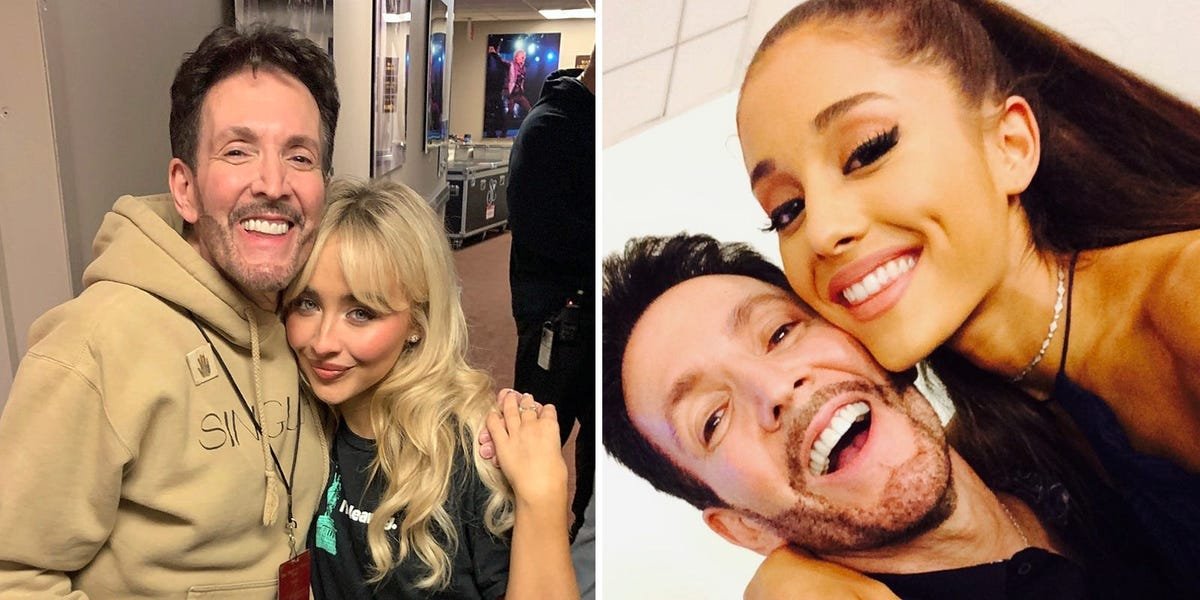
They’re all nominated for Grammy Awards this year, and they’ve all worked closely with the same vocal coach: Eric Vetro.
In an industry that runs on pomp and publicity, Vetro is the man behind the curtain shaping the voices of some of Hollywood’s biggest stars. Over the decades, his A-list roster has grown largely by word of mouth, with happy students across all genres recommending him to friends and coworkers.
In addition to counting many of today’s biggest pop stars like Grande, Katy Perry, and Carpenter as clients, he’s been involved in over 40 feature films, training actors like Chalamet, Angelina Jolie, and Jeremy Allen White to emulate musicians like Bob Dylan, Maria Callas, and Bruce Springsteen. He’s done his time coaching rock singers (Meat Loaf, Weezer’s Rivers Cuomo), Broadway stars (Bette Midler, Kristin Chenoweth) and Oscar winners (Emma Stone, Renée Zellweger). He even got a shoutout in an Ariana Grande lyric in her 2019 single “Monopoly” (“I never track my vocals, so shout out to Eric Vetro / I love Eric Vetro, man”).
Vetro’s vocation may keep him in close proximity to the limelight, but he’s never wanted to step into it himself, preferring to play his coaching role with a proudly gentle touch. Being a vocal coach, he said, is as much about building confidence and managing his famous clients’ stress as it is about delicately giving feedback when they don’t hit the high notes.
“I’m pretty good at delivering a negative in a way that they know I’m only doing it because I care about them,” Vetro explained. “A lot of times I say to people, look, I’m going to be honest with you because I don’t want you to come back to me later and say, ‘You told me I was doing a great job, but I really wasn’t,’ or, ‘You said I sounded great on this song, but I really didn’t.'”
“Most of them are pretty open. They want to hear what can make them sound better,” he added. “I’m not really interested in working with someone who’s just phoning it in.”
Vetro himself certainly isn’t. His job has seen him huddled in public bathrooms with pop stars (for better acoustics, of course) and ferried to LAX at 6 a.m. to run vocal warmups with a client as soon as they deplaned. Once, he had a session with Julia Louis-Dreyfus in the middle of a poison ivy patch while she was filming the 2000 musical “Geppetto.”
Despite the ever-frenzied logistics, Vetro said he loves his job now more than ever.
“I wouldn’t have it any other way,” he said.
Ahead of the 2026 Grammys, Vetro spoke to Business Insider about what it’s like to teach, critique, and win affection from some of the biggest names in show business.
On managing the stresses and vulnerabilities of A-list stars while giving honest feedback
Ariana Grande performs at the 2024 Met Gala.
Kevin Mazur/MG24/Getty Images for The Met Museum/Vogue
You work with a lot of people on the cusp of something big — a movie, a tour, a performance. How much of your job is stress management?
Well, picture singing at the Grammys, which is live. So if they screw up, that’s not good. Or the Oscars. That’s live, so if they make a mistake, that’s not good.
So a lot of it is stress management. But I try to think of all the things that the person needs, and then I try to fulfill all of those needs in every session that we do.
I try to get them to really learn how to use their voice the best way they possibly can, how to warm up their voice the best way they possibly can, how to find the correct placement for the song that they’re going to be singing, or songs that they’re going to be singing. But also how to stay grounded, how to stay relaxed.
It’s kind of like a holistic approach. What they eat and drink is going to affect how they sound, how much sleep they get is going to affect how they sound, the environment they’re in. It might be very dry, so they need to have a humidifier going, or they might have to make sure they have a personal steamer with them, depending on how much hydration they get. It entails a lot of different things. So I just try to fit all of that in as much as I can.
What have you learned about what it’s like to be famous through working with some of your students?
I’ve learned it’s exhausting. It’s intrusive. It can be really fun and wonderful, but it also makes people much more self-conscious because they don’t want to get caught looking their worst. They don’t want to get caught tripping, looking foolish.
Sometimes they just want to be with their friends alone. And how often can you really do that? You might be in a city and go, “I just want to take a walk up and down this strip where there are some great stores,” or, “I’ve heard this is a really fun walking path.” Well, how can you just be yourself when people are taking pictures of you? And not just paparazzi now. It’s anybody.
Eric Vetro with Jeremy Allen White.
Courtesy of Eric Vetro
You necessarily see a vulnerable side of very famous people, because it’s vulnerable to sing in front of someone — especially if you’re tired, if you’re doing it a cappella, if your voice may be a little strained.
I do, but I get also a really sweet, wonderful side, people who are so appreciative. I don’t have any bad stories. I couldn’t sell a bad story about someone. I’ve had such great experiences with people — and most of them, when you really get to the heart of things, are pretty humble. Even the biggest stars are the most humble, and they aren’t arrogant about what they do.
A lot of people come across much more confident and assured on camera when they’re doing an interview, because that’s basically what’s expected of them. The fans want them to be that way. But in person, when we’re just alone, they’re really very sweet people who want to do the best job they can, who don’t want to disappoint. They don’t want to disappoint their family. They don’t want to disappoint their teams, and they don’t want to disappoint their fans. So they’re working really hard to do the best possible job they can.
I used to have this image in my head of a pyramid: all the bricks on the bottom of the pyramid represented agent, manager, labels, choreographers, vocal coaches, stylists, hair, makeup — all these people holding this one person up, whether it’s an actor or a music artist, at the top. That’s how I used to see it before I really worked in the “big time” or the professional realm.
Now I see it as completely opposite: The person who is the artist or the actor is at the bottom, holding up all of this. Because without that person, none of these people have jobs. So they have to be successful in order for all these people to have jobs, and people feel that. They feel the pressure of making sure their team is taken care of, making sure their team has work.
On Sabrina Carpenter’s work ethic and helping Timothée Chalamet sing like Bob Dylan
Eric Vetro with Rosé and Addison Rae.
Courtesy of Eric Vetro
I’m so glad Addison Rae is nominated for best new artist at the Grammys. Since she came from the TikTok world, what was something you focused on to develop her voice as someone who wasn’t known as a singer before?
My main focus with her was just to get her to understand her voice, so that she would know how to sound like she wanted to sound.
She was working with two excellent female songwriters. They all were on the same page with everything, and especially after I heard “Diet Pepsi,” I was like, “Oh, OK. I completely get what they’re going for.” So now, let me try to keep working with her to be able to have her voice sound the best it can — in that world, in that sound, in that genre, keeping that vibe.
Addison has a phenomenal personality, and she also has a very creative mind. I think if you watch any of the videos of her performing, you go, “Oh, this is very specific to her.” Addison has her own thing going on, and so I just wanted her to feel confident when she got onstage that she could sound like the album.
Timothée Chalamet is also nominated for a Grammy for the “A Complete Unknown” soundtrack. What’s the biggest difference between training someone who is trying to emulate a certain singer versus somebody who is singing as themselves?
I start out basically the same with both, just trying to teach them how best to use their voice, how to understand their voice, vocal exercises to strengthen their voice, to increase their range.
Then we start listening, and I try to get them to really listen: What are the characteristics that make this singer special? Is it the way they pronounce a word? Is it the way they attack a note? We start really discovering the essence of these singers that they’re going to emulate — not as a carbon copy, because a carbon copy then becomes an impersonation.
With Timothée Chalamet, it’s like, why did Bob Dylan sound a certain way? And then when you look at him, you go, oh, well, he had a certain posture about him. You can see maybe his leg twitching a little or tapping on the beat. Whereas Joan Baez was very aggressive in her tone. So I would say to Monica Barbaro, who was playing Joan Baez, why do you think it was so aggressive? Do you think it was just, that was her naturally? Or maybe she felt like she had to be a woman in a man’s world, especially in those days? Or is it because the subject matter she’s singing about is so powerful to her and so strong, and she wants to get it across?
So then you start thinking why they are singing a certain way. That’s a better way to capture the essence of them organically.
Timothée Chalamet as Bob Dylan in “A Complete Unknown.”
Macall Polay/Searchlight Pictures
If I’m working with a singer who just wants to sound like themselves, then I start by saying, what do you think is special about your voice? What do we want to bring out about it? Or what is it you want to sound like?
I usually ask, if someone is listening to you in a concert, what do you want them to walk away with? How would you want your voice to be described? That’s a huge question to ask. Sometimes they haven’t even thought about that, and they might think, oh, I want my voice to have a really warm tone, or I want to have a tone that they can relate to, so they can relate to what I’m singing about.
Another big nominee this year is Sabrina Carpenter. I know that you two have worked together for a long time. From the perspective of someone on the inside, what would you say is most notable about her growth over the last couple of years?
Sabrina worked so hard for so many years. She’s one of those performers that, kind of like Ariana, once they get on a roll, they know what they’re doing. Once they find their voice, find out how they want to sound, what they want their vibe to be, what they want their performances to look like and sound like, they just get on a roll, and then it’s almost like a freight train. It just goes.
Sabrina has really honed in on having the best possible time being authentically herself, and I think that that’s what’s so great. She takes episodes out of her own life and puts them into her music, and she’s been doing that for a long time, but I think she just keeps getting better and better and better at it.
That’s the thing about someone who’s continually doing it. Now, if they’re the type of person who takes big vacations, big chunks of time off in between, I don’t think you can have that momentum, but these girls don’t take time off. They’re constantly moving and doing things. You might not see what they’re doing because they’re prepping for something else or prepping for something for the future, but she’s working all the time. She is the least lazy person on the planet.
It sounds like a big part of your job is focused on longevity, making sure people keep their voices healthy through the craziness.
I focus a lot on that. I think that’s so important. I don’t want anyone to burn out, or miss a really great opportunity, or to sing incorrectly, then get a vocal nodule, then have vocal cord surgery, then lose several months out of their life. I try to avoid that at all costs.
I say this every year, so I think people probably go, “Yeah, right,” but I enjoy it more now than ever. I keep enjoying it more as I get older.
I feel like I’m more empathetic than I’ve ever been, because I really understand how difficult it is.
This interview has been edited and condensed for length and clarity.