Over the nine months of pregnancy with my first baby, I mentally prepared myself for those middle-of-the-night feedings (and the resulting exhaustion), the postpartum mood swings, and other inevitable life changes.
One thing I didn’t prepare myself for? The identity crisis set in as soon as I became someone’s mother. In an effort to navigate this crisis, I decided to work with a career coach for the first time.
Time felt more precious than ever to me after bringing my son into the world, and I wanted to make sure I was using it wisely. With so much new meaning in my personal life, I longed to find that meaning in my work.
First, I vetted some coaches to find the right fit
While breastfeeding in the dark one night, I impulsively searched Google and Instagram for career coaches and began emailing a few people. After my first call with Gracie Miller, founder of Live Life Purpose Coaching, I knew I had found my match.
The author hired a career coach after the birth of her first baby.
Courtesy of the author
She explained that her program was designed to suss out A) what unique skills and talents make me valuable in the workforce and B) what causes, activities, and subjects light me up inside, so that, ultimately, I can pinpoint new career possibilities that encompass both.
The process helped me home in on my strengths — and build confidence
During our first session, I mentioned that a lack of confidence was one of the things holding me back professionally. Fortunately, our sessions together — and the “homework” sheets she assigned me — helped to address that. By identifying my strengths — for example, by reflecting on what people in my life tend to come to me for help with, or by reminiscing about times when I overcame a challenge — I began to feel an increasingly strong sense of self-worth.
I also discovered interests I never knew I had
One of the exercises she assigned me involved recalling times in my life when I felt at my best. I recounted an experience I had giving a motivational speech to a group of patients in an eating disorder treatment program, and told Miller how rewarding it felt to share my success story with them and inspire some much-needed hope on their recovery journey. That triggered another memory of giving a speech to a group of clinicians at Mass General Hospital. I suddenly realized how much I loved public speaking — something I’d never taken into account in my search for job opportunities, let alone acknowledged at all.
Another worksheet Miller gave me required me to list the things I could talk about forever without ever getting bored. While answering this question, I discovered how excited I get discussing psychology and human behavior — which explains my fascination with true crime.
I was surprised to learn I had changed
While I know some aspects of who I am are unlikely to change — like being emotionally driven and idealistic — I recently began to wonder if motherhood might cause some subtle shifts in my personality.
After a few sessions, Miller had me take the Myers-Briggs Type Indicator test so I could find out the best jobs for my personality type. I already took this test in college, but I was surprised to find that my personality had shifted since then from the “Campaigner” (ENFP) to the “Advocate” (INFJ). Knowing my new personality type then empowered me to consider new potential careers that better fit my strengths — including intuitive insight, deep empathy, and creativity.
I clarified my priorities
I’ve been a work-from-home freelancer for about seven years now, and while there are definitely a lot of perks to my situation, there are some pitfalls, too.
I hadn’t really considered what my ideal work situation might look like, until Miller assigned me a multiple-choice worksheet that involved clarifying whether I prefer working indoors our outdoors, how much travel I’d like my work to entail, whether I’d rather my work duties to change a lot day to day or stay the same, and what size company and setting I’d like to work in.
For example, I learned that I actually enjoy working alone more than working with a team, and that I work better when there aren’t strict time constraints than under pressure. Keeping all this in mind on my job search will help me to find roles that minimize stress and anxiety.
I learned about jobs I never knew existed
After our first handful of sessions, Miller used all the data she’d gathered on my strengths and passions to compile a list of possible careers where they overlap. Some of the options she came up with were jobs I had never heard of, like narrative coach, director of brand storytelling, and trend researcher.
She tasked me with doing some quick research on what a day in the life looks like for each of these roles, and then jotting down the pros and cons so I could narrow the list down to my favorites. This exercise gave me a concrete list of new jobs I’d never previously considered — jobs I now have alerts set for on LinkedIn and Indeed.
What really matters to me finally became clearer than ever
Miller’s program isn’t designed to help clients figure out what they enjoy; it’s designed to help them determine their reason for getting up in the morning. To that end, she assigned worksheets that asked me about the areas and issues I’d like to make a difference in. By far the most difficult but valuable assignment involved crafting my “mission statement.”
My mission statement is still a work in progress, but I came up with “To uplift and influence others, inspiring a sense of hope and belonging.”
I plan to keep coming back to this mission statement whenever I’m evaluating job opportunities, so I can determine whether they align with my true life purpose.
Coach and Kate Spade designers have added AI to their design workflow.
On a Thursday earnings call, CEO Joanne Crevoiserat was asked how and where Tapestry is investing in AI.
She answered that Coach and Kate Spade’s designers now use AI in their day-to-day work, but the design process starts with hand-drawn sketches.
“So there is still a human and a need for design eye, right,” Crevoiserat said. “They do a sketch. But what AI helps is they can iterate on that sketch.”
“They can do color multipliers. They can make design tweaks, much faster than we could in the past,” she added.
Every time Aditi publishes a story, you’ll get an alert straight to your inbox!
Stay connected to Aditi and get more of their work as it publishes.
She said AI tools have sped up the supply chain and product development timelines, which then drive the company’s growth.
Coach and Kate Spade are both known for their affordable luxury handbags, popular with aspirational luxury shoppers.
Tapestry isn’t the only fashion company that’s invited AI into its design studios.
A designer for the fashion label Alice + Olivia told The Wall Street Journal in January that she sees AI as a “creativity explosion,” and that the brand’s recent collection featured tarot-card-inspired prints generated with AI tools like Leonardo AI and Adobe Firefly.
An IT and tech director for LVMH told the Journal in June that design teams in the French luxury giant are using AI to generate mood boards for inspiration.
Smaller independent designers are also using AI in their processes. Business Insider reported in September that Jasline Ang, a silk designer in Singapore who worked at Goyard and Louis Vuitton, uses ChatGPT and Midjourney to create visuals for her social media campaigns. However, Ang said the tools have not been helpful in her artmaking itself.
Tapestry reported second-quarter revenue of $2.5 billion, a 14% increase from the same period last year. The company’s stock rose more than 10% after the strong earnings. It’s up 95% in the past year.
Coach’s sales contributed heavily to the company’s success in the last quarter, rising about 25% year over year. Crevoiserat said this was driven by Coach’s Tabby handbag collection, which is popular with Gen Z customers, Tapestry’s target audience.
However, Kate Spade reported a 14% drop in revenue in the last quarter compared to last year, to $360 million. Crevoiserat said this was because there had been a deliberate attempt to reduce Kate Spade’s promotional activity.
What do Timothée Chalamet, Ariana Grande, Sabrina Carpenter, Addison Rae, and Blackpink’s Rosé have in common?
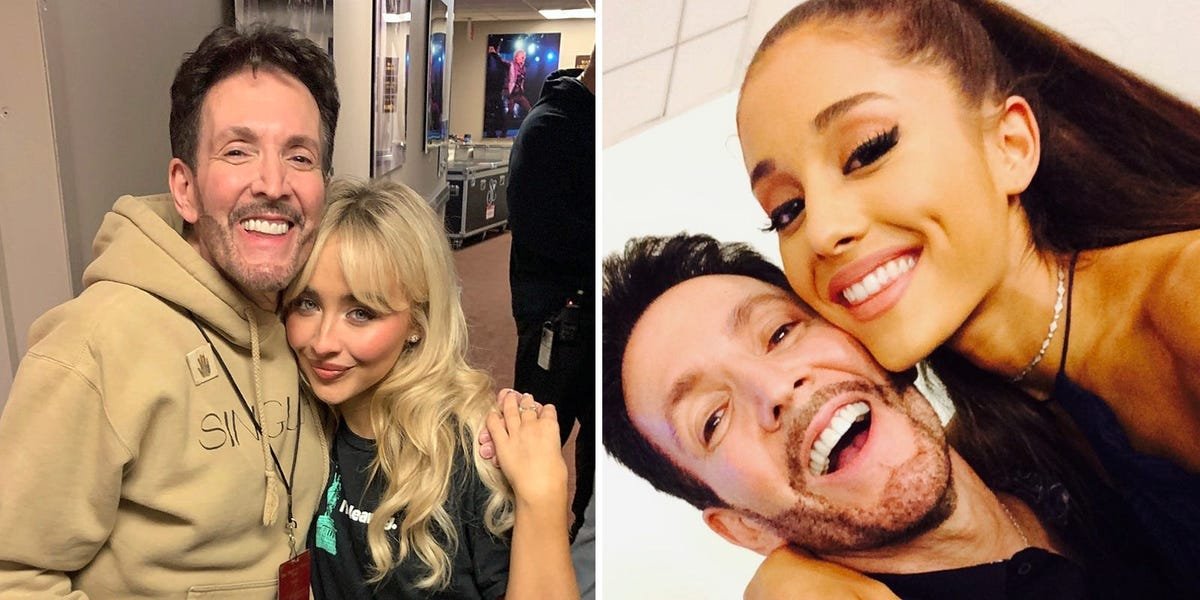
They’re all nominated for Grammy Awards this year, and they’ve all worked closely with the same vocal coach: Eric Vetro.
In an industry that runs on pomp and publicity, Vetro is the man behind the curtain shaping the voices of some of Hollywood’s biggest stars. Over the decades, his A-list roster has grown largely by word of mouth, with happy students across all genres recommending him to friends and coworkers.
In addition to counting many of today’s biggest pop stars like Grande, Katy Perry, and Carpenter as clients, he’s been involved in over 40 feature films, training actors like Chalamet, Angelina Jolie, and Jeremy Allen White to emulate musicians like Bob Dylan, Maria Callas, and Bruce Springsteen. He’s done his time coaching rock singers (Meat Loaf, Weezer’s Rivers Cuomo), Broadway stars (Bette Midler, Kristin Chenoweth) and Oscar winners (Emma Stone, Renée Zellweger). He even got a shoutout in an Ariana Grande lyric in her 2019 single “Monopoly” (“I never track my vocals, so shout out to Eric Vetro / I love Eric Vetro, man”).
Vetro’s vocation may keep him in close proximity to the limelight, but he’s never wanted to step into it himself, preferring to play his coaching role with a proudly gentle touch. Being a vocal coach, he said, is as much about building confidence and managing his famous clients’ stress as it is about delicately giving feedback when they don’t hit the high notes.
“I’m pretty good at delivering a negative in a way that they know I’m only doing it because I care about them,” Vetro explained. “A lot of times I say to people, look, I’m going to be honest with you because I don’t want you to come back to me later and say, ‘You told me I was doing a great job, but I really wasn’t,’ or, ‘You said I sounded great on this song, but I really didn’t.'”
“Most of them are pretty open. They want to hear what can make them sound better,” he added. “I’m not really interested in working with someone who’s just phoning it in.”
Vetro himself certainly isn’t. His job has seen him huddled in public bathrooms with pop stars (for better acoustics, of course) and ferried to LAX at 6 a.m. to run vocal warmups with a client as soon as they deplaned. Once, he had a session with Julia Louis-Dreyfus in the middle of a poison ivy patch while she was filming the 2000 musical “Geppetto.”
Despite the ever-frenzied logistics, Vetro said he loves his job now more than ever.
“I wouldn’t have it any other way,” he said.
Ahead of the 2026 Grammys, Vetro spoke to Business Insider about what it’s like to teach, critique, and win affection from some of the biggest names in show business.
On managing the stresses and vulnerabilities of A-list stars while giving honest feedback
Ariana Grande performs at the 2024 Met Gala.
Kevin Mazur/MG24/Getty Images for The Met Museum/Vogue
You work with a lot of people on the cusp of something big — a movie, a tour, a performance. How much of your job is stress management?
Well, picture singing at the Grammys, which is live. So if they screw up, that’s not good. Or the Oscars. That’s live, so if they make a mistake, that’s not good.
So a lot of it is stress management. But I try to think of all the things that the person needs, and then I try to fulfill all of those needs in every session that we do.
I try to get them to really learn how to use their voice the best way they possibly can, how to warm up their voice the best way they possibly can, how to find the correct placement for the song that they’re going to be singing, or songs that they’re going to be singing. But also how to stay grounded, how to stay relaxed.
It’s kind of like a holistic approach. What they eat and drink is going to affect how they sound, how much sleep they get is going to affect how they sound, the environment they’re in. It might be very dry, so they need to have a humidifier going, or they might have to make sure they have a personal steamer with them, depending on how much hydration they get. It entails a lot of different things. So I just try to fit all of that in as much as I can.
What have you learned about what it’s like to be famous through working with some of your students?
I’ve learned it’s exhausting. It’s intrusive. It can be really fun and wonderful, but it also makes people much more self-conscious because they don’t want to get caught looking their worst. They don’t want to get caught tripping, looking foolish.
Sometimes they just want to be with their friends alone. And how often can you really do that? You might be in a city and go, “I just want to take a walk up and down this strip where there are some great stores,” or, “I’ve heard this is a really fun walking path.” Well, how can you just be yourself when people are taking pictures of you? And not just paparazzi now. It’s anybody.
Eric Vetro with Jeremy Allen White.
Courtesy of Eric Vetro
You necessarily see a vulnerable side of very famous people, because it’s vulnerable to sing in front of someone — especially if you’re tired, if you’re doing it a cappella, if your voice may be a little strained.
I do, but I get also a really sweet, wonderful side, people who are so appreciative. I don’t have any bad stories. I couldn’t sell a bad story about someone. I’ve had such great experiences with people — and most of them, when you really get to the heart of things, are pretty humble. Even the biggest stars are the most humble, and they aren’t arrogant about what they do.
A lot of people come across much more confident and assured on camera when they’re doing an interview, because that’s basically what’s expected of them. The fans want them to be that way. But in person, when we’re just alone, they’re really very sweet people who want to do the best job they can, who don’t want to disappoint. They don’t want to disappoint their family. They don’t want to disappoint their teams, and they don’t want to disappoint their fans. So they’re working really hard to do the best possible job they can.
I used to have this image in my head of a pyramid: all the bricks on the bottom of the pyramid represented agent, manager, labels, choreographers, vocal coaches, stylists, hair, makeup — all these people holding this one person up, whether it’s an actor or a music artist, at the top. That’s how I used to see it before I really worked in the “big time” or the professional realm.
Now I see it as completely opposite: The person who is the artist or the actor is at the bottom, holding up all of this. Because without that person, none of these people have jobs. So they have to be successful in order for all these people to have jobs, and people feel that. They feel the pressure of making sure their team is taken care of, making sure their team has work.
On Sabrina Carpenter’s work ethic and helping Timothée Chalamet sing like Bob Dylan
Eric Vetro with Rosé and Addison Rae.
Courtesy of Eric Vetro
I’m so glad Addison Rae is nominated for best new artist at the Grammys. Since she came from the TikTok world, what was something you focused on to develop her voice as someone who wasn’t known as a singer before?
My main focus with her was just to get her to understand her voice, so that she would know how to sound like she wanted to sound.
She was working with two excellent female songwriters. They all were on the same page with everything, and especially after I heard “Diet Pepsi,” I was like, “Oh, OK. I completely get what they’re going for.” So now, let me try to keep working with her to be able to have her voice sound the best it can — in that world, in that sound, in that genre, keeping that vibe.
Addison has a phenomenal personality, and she also has a very creative mind. I think if you watch any of the videos of her performing, you go, “Oh, this is very specific to her.” Addison has her own thing going on, and so I just wanted her to feel confident when she got onstage that she could sound like the album.
Timothée Chalamet is also nominated for a Grammy for the “A Complete Unknown” soundtrack. What’s the biggest difference between training someone who is trying to emulate a certain singer versus somebody who is singing as themselves?
I start out basically the same with both, just trying to teach them how best to use their voice, how to understand their voice, vocal exercises to strengthen their voice, to increase their range.
Then we start listening, and I try to get them to really listen: What are the characteristics that make this singer special? Is it the way they pronounce a word? Is it the way they attack a note? We start really discovering the essence of these singers that they’re going to emulate — not as a carbon copy, because a carbon copy then becomes an impersonation.
With Timothée Chalamet, it’s like, why did Bob Dylan sound a certain way? And then when you look at him, you go, oh, well, he had a certain posture about him. You can see maybe his leg twitching a little or tapping on the beat. Whereas Joan Baez was very aggressive in her tone. So I would say to Monica Barbaro, who was playing Joan Baez, why do you think it was so aggressive? Do you think it was just, that was her naturally? Or maybe she felt like she had to be a woman in a man’s world, especially in those days? Or is it because the subject matter she’s singing about is so powerful to her and so strong, and she wants to get it across?
So then you start thinking why they are singing a certain way. That’s a better way to capture the essence of them organically.
Timothée Chalamet as Bob Dylan in “A Complete Unknown.”
Macall Polay/Searchlight Pictures
If I’m working with a singer who just wants to sound like themselves, then I start by saying, what do you think is special about your voice? What do we want to bring out about it? Or what is it you want to sound like?
I usually ask, if someone is listening to you in a concert, what do you want them to walk away with? How would you want your voice to be described? That’s a huge question to ask. Sometimes they haven’t even thought about that, and they might think, oh, I want my voice to have a really warm tone, or I want to have a tone that they can relate to, so they can relate to what I’m singing about.
Another big nominee this year is Sabrina Carpenter. I know that you two have worked together for a long time. From the perspective of someone on the inside, what would you say is most notable about her growth over the last couple of years?
Sabrina worked so hard for so many years. She’s one of those performers that, kind of like Ariana, once they get on a roll, they know what they’re doing. Once they find their voice, find out how they want to sound, what they want their vibe to be, what they want their performances to look like and sound like, they just get on a roll, and then it’s almost like a freight train. It just goes.
Sabrina has really honed in on having the best possible time being authentically herself, and I think that that’s what’s so great. She takes episodes out of her own life and puts them into her music, and she’s been doing that for a long time, but I think she just keeps getting better and better and better at it.
That’s the thing about someone who’s continually doing it. Now, if they’re the type of person who takes big vacations, big chunks of time off in between, I don’t think you can have that momentum, but these girls don’t take time off. They’re constantly moving and doing things. You might not see what they’re doing because they’re prepping for something else or prepping for something for the future, but she’s working all the time. She is the least lazy person on the planet.
It sounds like a big part of your job is focused on longevity, making sure people keep their voices healthy through the craziness.
I focus a lot on that. I think that’s so important. I don’t want anyone to burn out, or miss a really great opportunity, or to sing incorrectly, then get a vocal nodule, then have vocal cord surgery, then lose several months out of their life. I try to avoid that at all costs.
I say this every year, so I think people probably go, “Yeah, right,” but I enjoy it more now than ever. I keep enjoying it more as I get older.
I feel like I’m more empathetic than I’ve ever been, because I really understand how difficult it is.
This interview has been edited and condensed for length and clarity.