
Billionaire-Netflix-cofounder-Reed-Hastings-is-leaving-the-company.jpeg

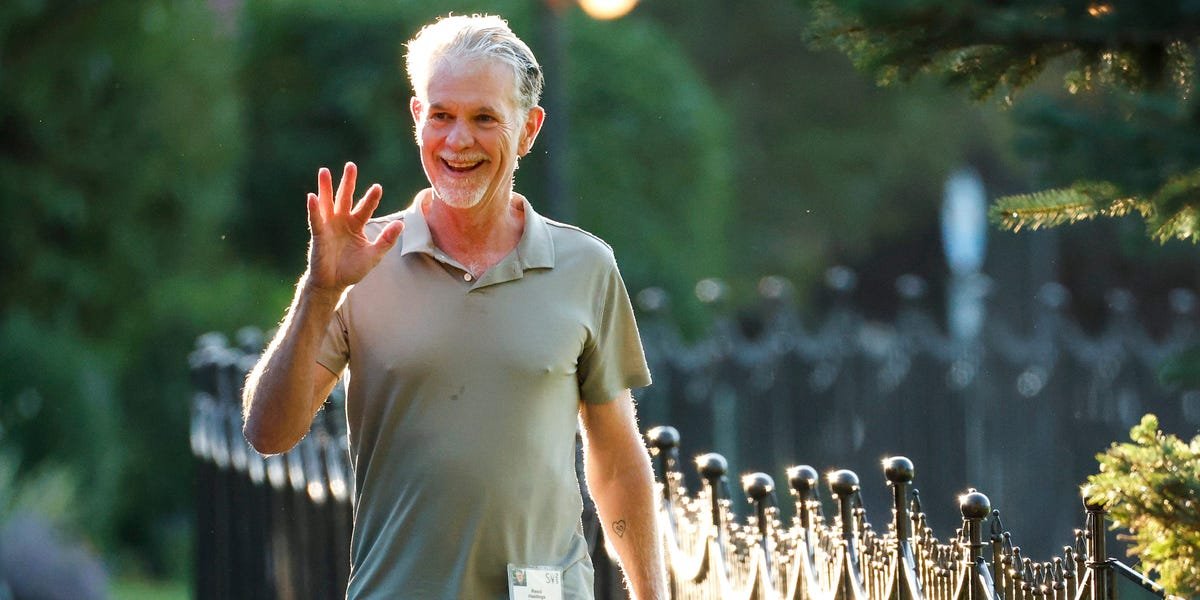
Billionaire Netflix cofounder Reed Hastings is leaving the company

Netflix cofounder Reed Hastings will soon leave the company he helped turn from a DVD rental business into a streaming TV giant.

Hastings won’t seek reelection to Netflix’s board and will split from the company in June, Netflix said on Thursday as it shared its first-quarter earnings report.

Hastings, who was Netflix’s CEO until 2023, will focus on “philanthropy and other pursuits,” the company said. The Netflix cofounder’s philanthropy includes giving $1.1 billion to the Silicon Valley Community Foundation, a large Bay Area charity, and helping launch the Hastings Initiative for AI and Humanity at Bowdoin College.

Hastings has also been heavily involved in developing the Utah ski resort Powder Mountain.

Forbes estimates Hastings’ net worth at $5.8 billion.

“Reed built a culture of innovation, integrity and high performance that defines who we are today,” Netflix said in its first-quarter shareholder letter. “His vision and leadership pioneered how the world is entertained, and his legacy and impact are not only felt by all of us at Netflix, but by audiences around the world.”

In the shareholder letter, Hastings, who cofounded the company in 1997, said his “real contribution at Netflix wasn’t a single decision.”

“It was a focus on member joy, building a culture that others could inherit and improve, and building a company that could be both beloved by members and wildly successful for generations to come,” Hastings said in the letter.

Hastings gave a shout-out to his successors, co-CEOs Greg Peters and Ted Sarandos, “whose commitment to Netflix’s greatness is so strong that I can now focus on new things.”

Peters said in the shareholder letter that “Reed will always be Netflix’s founder and biggest champion,” adding that “his vision, entrepreneurship, and steadfast commitment to our values have shaped every stage of our journey and continue to shape how Ted and I lead Netflix today.”

Sarandos said that Hastings “has modeled for Greg and me a selfless, disciplined leadership style that will continue to shape how we lead Netflix in the exciting times ahead.”

Netflix shares fell over 9.1% in after-hours trading following its first-quarter earnings report. Its second-quarter guidance came in lower than some investors anticipated.

Source link

Shield-AI-cofounder-says-the-need-to-arm-the-V-BAT.jpeg

Shield AI cofounder says the need to arm the V-BAT drone is a big misconception

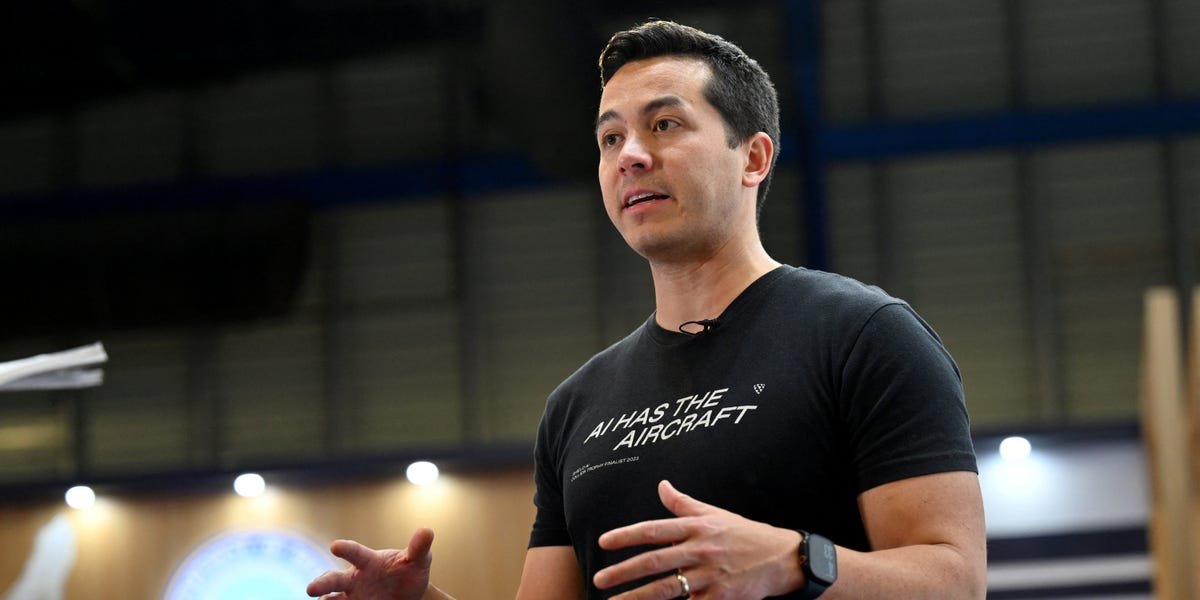
Brandon Tseng, Shield AI’s cofounder, said there’s a common misconception about his company’s signature software-powered drone: People say it needs to be armed.

The more experienced militaries who work with Shield AI, however, know they don’t need that capability in modern war, Tseng told Business Insider.

“Who doesn’t ask for that? The US military doesn’t ask for that because we understand joint fires. The Ukrainians don’t ask for it anymore, either,” said the former Navy SEAL, who is Shield AI’s president.

The V-BAT, a vertical takeoff and landing drone that uses artificial intelligence to fly in jammed environments, has primarily been used for intelligence and reconnaissance missions in high-profile conflict zones such as Ukraine. Shield AI said the V-BAT flew over 200 missions there in 2025.

The drone is still meant to be a multi-mission platform, Tseng said, and Shield AI has been exploring ways to mount weapons on it. The firm announced a partnership last month with South Korean arms manufacturer LIG Nex1 to equip the V-BAT with six-pound guided missiles.

“But at the end of the day, look: I describe V-BAT as a mini predator, reaper drone,” Tseng said. “That’s the mission it’s doing, which is: It’s finding targets. And it’s hard to find targets, you have to be out there for a long period of time.”


A South Korean Navy V-BAT flies through the sky in September 2025.

The V-Bat is being primarily used for ISR missions, but there are also options for the AI-powered drone to be equipped with weapons.

Kim Hong-Ji/REUTERS


To be fair, the MQ-9 Reaper is also commonly equipped with missiles.

However, Tseng said sophisticated militaries already have a vast array of other weapons that can turn the V-BAT’s intel into a precision strike.

“If you have been in these combat zones, the US allies who fought closely with us in Afghanistan, they do not ask for organic fires on board the V-Bat,” Tseng said. “Because everybody is so used to just saying: ‘Okay, I have a targeting package. What fires asset do I have lined up? Is it a one-way attack drone? Is it HIMARS? Is it artillery? Is it an SM-6? SM-3?”

“Doesn’t matter. You can find weapons,” he added. “The weapons are available. You need, actually, more intelligence.”

V-BAT’s early use in Ukraine

This was a framework that Ukraine still needed to improve when the V-BAT began spotting targets there in early 2024, Tseng said. The drone is meant to fly for over 13 hours and be easily deployable, requiring a two-person launch crew and no runway.

Tseng said that while Ukraine excelled in tactical drone warfare, its troops weren’t used to having a long-range asset that could spot targets for regular strategic attacks as the US military did.

“The strategic effects would happen, but they would be rare,” he said. “They’d be very, very deliberately planned operations, very expensive operations, things like what they did to the Russian runways with sending quadcopters deep into Russia via trucks.”

Ukrainian drone teams would use the V-BAT to find important targets, such as Russian S-300 and S-400 air defense systems, only to realize they hadn’t linked up with the right teams to strike them, Tseng said.

“We’d say: ‘Why didn’t you guys have these weapons lined up?’ They’d say: ‘Oh, well, we didn’t think to coordinate,'” Tseng said.

Since then, Kyiv’s forces have been using intelligence from V-BATs to carry out strikes with systems such as one-way attack drones or US-made HIMARS, Tseng said.

“There was a lot of learning over the past year for the Ukrainians,” he added.


Source link

Elon-Musks-xAI-loses-second-cofounder-in-48-hours.jpeg

Elon Musk’s xAI loses second cofounder in 48 hours

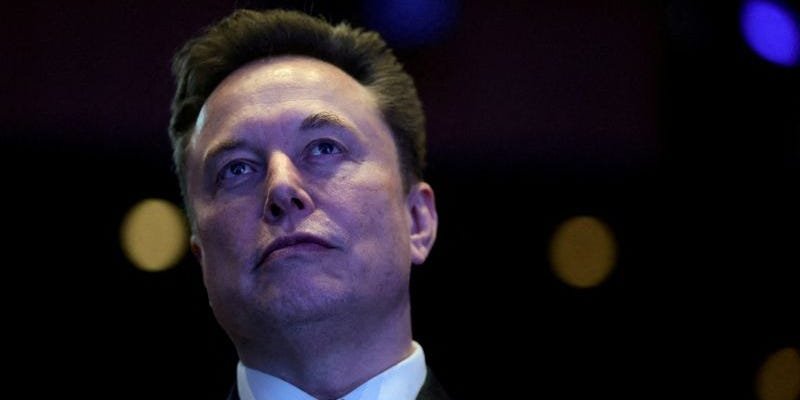
XAI cofounder Jimmy Ba said he left Elon Musk’s startup on Tuesday.

“It’s time to recalibrate my gradient on the big picture. 2026 is gonna be insane and likely the busiest (and most consequential) year for the future of our species,” Ba wrote on X.

Ba reported directly to Musk. He ran a large portion of the company until late last year, when several of his responsibilities were split between two other cofounders, Tony Wu and Guodong Zhang, people with knowledge of the move told Business Insider.

Ba also previously ran the team that oversaw more than a thousand AI tutors, according to an org chart from earlier last year. That role was given to Diego Pasini in September, Business Insider previously reported.

Ba is the second cofounder to depart the company in less than 48 hours. Wu announced he’d resigned from the AI startup on Monday night. Wu’s Slack account was deactivated shortly before the announcement, Business Insider previously reported.

Ahead of Wu’s departure, xAI underwent another restructuring, and several of his responsibilities were shifted under Zhang.

Musk launched the AI company in 2023 with 11 other founders. Six have now left the company — five of them within the last year.

In addition to his work at xAI, Ba is an assistant professor at the University of Toronto in the computer science department. He received his Ph.D. from the school while studying under Nobel Prize winner Geoffrey Hinton, often referred to as the “godfather of AI.”

Musk has said he built xAI as an alternative to what he’s called “woke” chatbots, like OpenAI’s ChatGPT. Over the past year, the company has become known for pushing the envelope. Last July, xAI launched a sexy digital avatar called “Ani,” and its Grok chatbot went on an antisemitic rant.

Most recently, xAI has come under fire after Grok began generating nonconsensual sexual images of real people in response to X user prompts. The backlash eventually prompted the company to restrict Grok’s image-generation features on X.

Last week, Musk announced that xAI would merge with his rocket company, SpaceX. The company is reportedly gearing up for an initial public offering this year that could value SpaceX at $1.5 trillion.

Ba and xAI did not immediately respond to a request for comment.

Do you work for xAI or have a tip? Contact this reporter via email at gkay@businessinsider.com or Signal at 248-894-6012. Use a personal email address, a nonwork device, and nonwork WiFi; here’s our guide to sharing information securely.


Source link

LinkedIn-cofounder-Reid-Hoffmans-go-to-gift-this-Christmas-was-an.jpeg

LinkedIn cofounder Reid Hoffman’s go-to gift this Christmas was an AI-generated music album

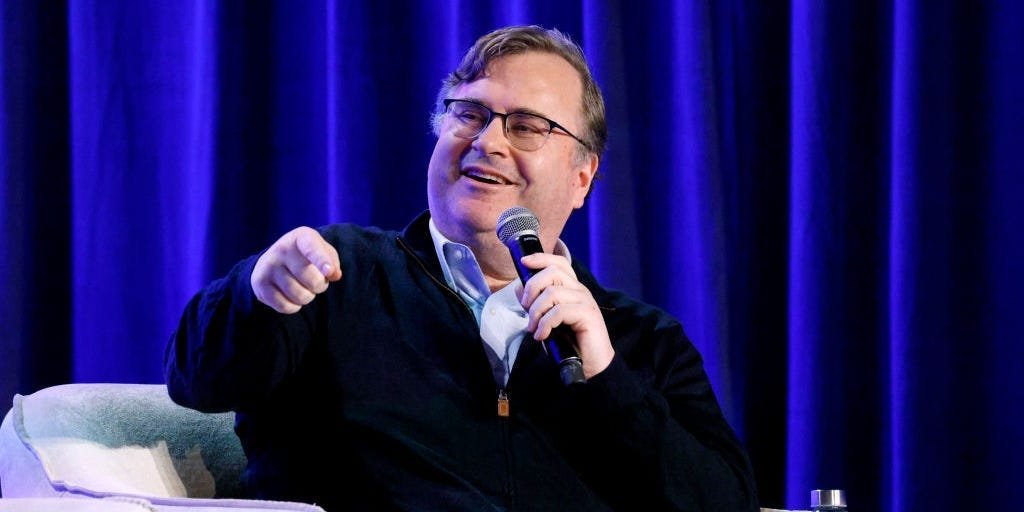
Reid Hoffman loves AI. So much so that, for Christmas, instead of fuzzy socks or wool sweaters, he gave his friends and family an AI music album.

The LinkedIn cofounder and Greylock partner, who Forbes estimates has a $2.5 billion net worth, recently told Wired he generated silly Christmas songs using AI and pressed them onto records.

“There’s a song on ugly sweaters and all of this kinda stuff,” he said. “As opposed to the ‘Holly, Jolly Christmas,’ you know, something that actually has some humor. Almost like what ‘Weird Al’ Yankovic would do if he was doing a Christmas album.”

To create the Christmas music, Hoffman said he used two different AI agents: one to write the lyrics and another to compose the music.

It’s not clear which AI tool Hoffman used to generated the songs. His current firm, Greylock, doesn’t list any of the major music-generating apps — like Suno, Udio, or AIVA — in its investment portfolio.

But, whichever tool he used, Hoffman said he was impressed by the result.

He said he told everyone who received the gift that it was AI, but when he played it for his wife, she couldn’t tell it was computer-generated.

The Christmas surprise comes as Hoffman has been talking about AI while promoting a new book published with journalist Greg Beato titled “Superagency: What Could Possibly Go Right with Our AI Future.”

In it, the two argue that AI doesn’t need to be a dystopian technology destined to displace workers or lead to human extinction, as some more pessimistic about the technology have warned.

Hoffman argues that AI skeptics are falling into the same trap that has gripped tech cynics in the past, including existential complaints during the rollouts of the printing press, electricity, and the internet.

“My push for people is if you are not using AI in a way today that isn’t seriously helpful to you, you are not actually trying hard enough,” he told Wired. “Now, of course it’ll transform jobs, and there’ll be a bunch of pain in that transformation. But the way that you as an individual can avoid that is to be engaged.”


Source link