
The-US-Army-is-test-driving-a-new-hotline-for-soldiers.jpeg

The US Army is test-driving a new hotline for soldiers overwhelmed with too much data — both in and out of combat

As the Army transforms into a more data-centric force, it’s testing out how to support soldiers navigating data problems, drowning in battlefield information, and adapting to new systems.

The US Army Data Operations Center, a 180-day pilot program, is the service’s solution to data management, providing a hotline for soldiers across the Army to receive help with problems ranging from data on the Next Generation Command and Control system to troubleshooting new software or issues in the cloud. It’s the latest element of what Army leadership describes as a generational shift in how the service operates and fights.

ADOC went live last week, with a small team of civilian and soldier data specialists and engineers taking requests from different organizations. As of Tuesday, officials told reporters, the center had received seven requests.

The warfighting engagement cell, operating 24/7, receives questions, essentially tickets in a dashboard, and then analyzes the issues, works with data engineers to provide solutions, and sends them back to the user.

While the center is currently in test-mode, it could be the nexus of how the Army manages its data problems across the service. “I think ADOC will serve as the Army’s single authoritative organization for anything when it comes to data operations,” Lt. Gen. Jeth Rey, deputy chief of staff of the Army’s G-6, said. ADOC, Army leaders said, could be vital to helping the Army’s transition to fully maturing in the data space.


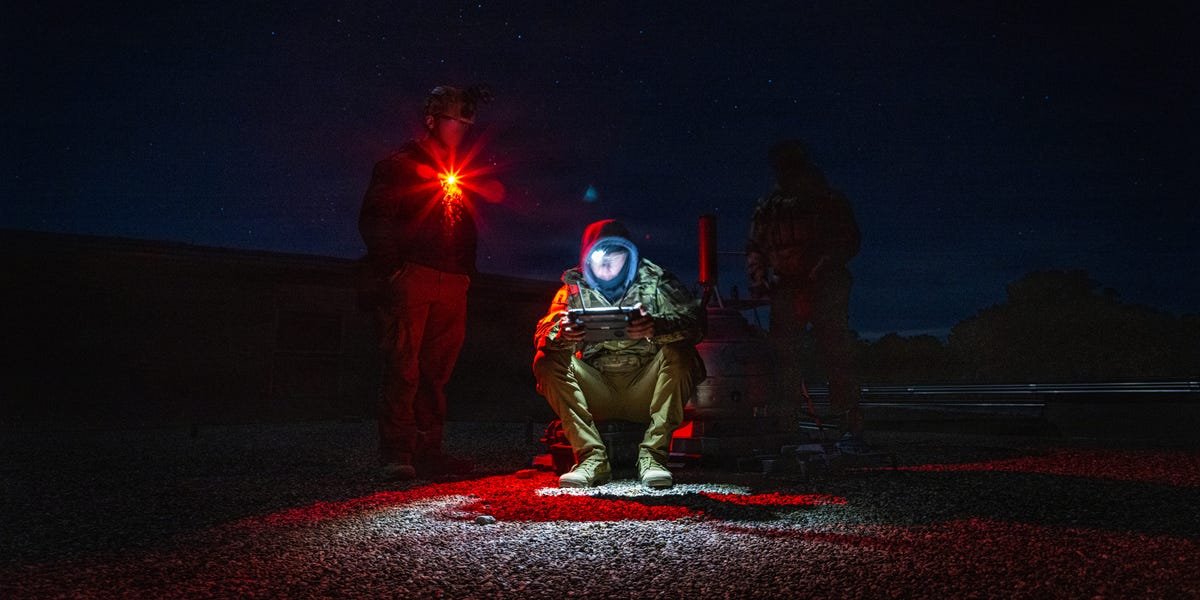
A laptop computer sits at a desk with people standing around it.

The Army is undergoing a major, data- and software-driven transformation. 

US Army photo by Cpl. James Robinson


The center has so far received requests related to unit training. But ADOC is able to respond to tickets from soldiers in conflict or battlefield environments.

“We haven’t received anything yet to support those operations, but if there were to be a request, we would surge on that and prioritize that appropriately,” said Brig. Gen. Michael Kaloostian, director of Command and Control Future Capabilities Directorate at Army Transformation and Training Command.

One major aspect of the first 180 days of ADOC is tracking trends in the types of problems it receives, what types of information related to data could be implemented in training, and whether the center should be expanded.

Conversations are already underway about what role artificial intelligence can play in help requests and whether an AI agent could field a call and provide a solution before a specialist gets involved.

The center helps address what Army leaders have referred to as data silos in the service, separating different programs, weapons, and software. It was born out of the Army recognizing frustration over red tape that prevented full-picture understandings of information.


Soldiers stand around in a white tent. One soldier holds a laptop.

ADOC is currently a 180-day pilot for the Army to gather information and feedback before seeking next steps. 

US Army photo by Pfc. Thomas Nguyen


“We’re seeing these lieutenant colonels and these operational data teams that are banging their heads against the wall trying to figure out how to make these connections happen,” Kaloostian said.

“They need somebody to call,” he continued. “There isn’t a help desk for them to call. That’s why we say we’re the 9-1-1 for those operational data teams… We’re just there to augment and help. Let’s alleviate some of that burden.”

There is a surge in data from across the battlefield, and the Army believes accessing, analyzing, and understanding all of that data quickly will be essential in a potential future war.

But with more sensors, weapons, and systems, and therefore more data, comes the potential for data overload. ADOC, Army officials said, is an example of the service trying to help cut through the noise and move faster, with an ultimate goal being, as Lt. Gen. Chris Eubank, head of US Army Cyber Command, said, that the service is “creating soldiers that are data-smart more and more, and the heavy lifting is done inside of a central organization, if need be.”

The Army has undergone a seismic shift in how it thinks about battlefield data, specifically getting information to commanders and decision-makers and how weapons and technologies communicate and work together. It’s a transformation initiative perhaps best exemplified by NGC2, the Army’s future warfighting software, which is heavily data-driven.

“It used to be about firepower, but it isn’t really about that anymore,” Rey argued. “It’s really about who can get the data to make decisions faster, to dominate.”



Source link

Israel-says-an-F-35-shot-down-an-Iranian-jet-in.jpeg

Israel says an F-35 shot down an Iranian jet in air-to-air combat, a first for the stealth fighter

An Israeli F-35 just scored the stealth fighter jet’s first-ever air-to-air combat victory against a crewed aircraft.

An F-35I “Adir” shot down an Iranian Air Force Yak-130 over Tehran, marking its “first shootdown in history of a manned fighter aircraft,” the Israeli military said in a statement on Wednesday.

Lockheed Martin’s F-35 Lightning II entered service in 2015 and is operated by around a dozen countries, including Israel, which fields its own variant of the fighter jet called the “Adir.”

The F-35 has intercepted missiles and drones in combat in the Middle East, but it had never shot down a crewed jet — until now. The incident also marks the first time in more than 40 years that Israeli fighters have downed a crewed enemy aircraft.

The Yakovlev Yak-130, which NATO calls the “Mitten,” is a subsonic twin-seater light combat aircraft that also serves as a training jet. Russia has built hundreds of these planes, which entered service in 2010. Several have been delivered to Iran.


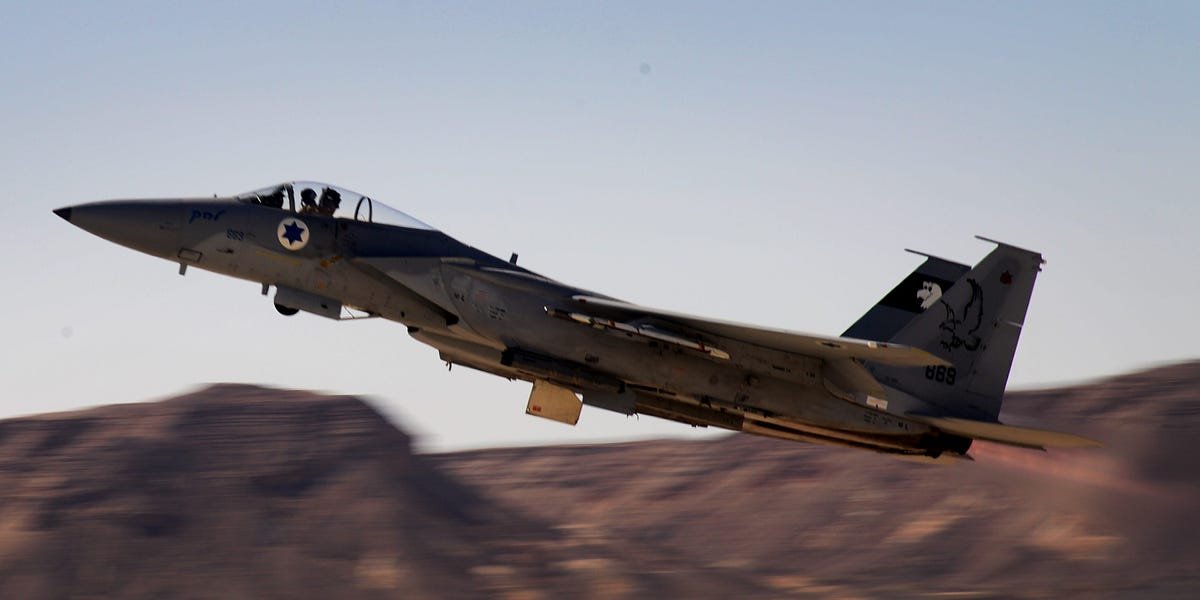
An Israeli Air Force F-35I Adir takes off for a mission during Red Flag-Nellis 23-2 at Nellis Air Force Base, Nevada, March 20, 2023.

Israel operates its own variant of the F-35 called the “Adir.”

US Air Force photo by William R. Lewis


Since the start of operations on Saturday, Israeli fighter jets have bombed targets across Iran, hitting air defense systems, missile launchers, and military facilities across the country. Hundreds of people have been killed, including dozens of military and government officials, as well as Iranian Supreme Leader Ayatollah Khamenei.

Israeli F-35s are operating in the Middle East alongside US and British F-35s. The UK Ministry of Defense said Monday that Royal Air Force F-35s shot down drones over Jordan, marking the first time one of its stealth fighters has destroyed a hostile target in combat.

American F-35 fighters are one of many US combat aircraft participating in the operations against Iran, including other stealth fighters, electronic attack jets, surveillance planes, airlifters, refueling tankers, and bombers.

US Central Command, which oversees Middle East operations, said on Monday that American forces have bombed more than 1,700 targets in Iran since the strikes began on Saturday.

The US military has targeted Iranian command and control facilities, air defense systems, ballistic missile sites, naval infrastructure, and communications capabilities.


Source link

Headshot of Chris Panella.

Israeli combat footage shows it bombing vintage American-made fighter jets in Iran

Israel shared new footage of it bombing two of Iran’s American-made fighter jets preparing to take off as joint US-Israeli combat operations against Iran continue.

Iran’s fleet includes several vintage US aircraft, including the McDonnell Douglas F-4 Phantom II and legacy Northrop Grumman F-5s. Along with Iran’s few US-provided Tomcats, which were iconized in the “Top Gun” movies, these aircraft are part of an aging Iranian Air Force that has limited air combat capabilities against advanced Israeli and US aircraft.

The Israel Defense Forces video captured strikes on the F-5 and F-4 jets at an airport in Tabriz in western Iran on Sunday morning. The IDF said that it hit the aircraft as they were preparing to take off. The footage shows direct hits on each aircraft.

Israel and the US launched massive attacks on Iran on Saturday, dubbed Operation Epic Fury by Washington and Operation Roaring Lion by Israel. The attacks are aimed at eliminating Iranian leadership and ushering in regime change in Tehran. As of Sunday, Israel and the US say they’ve taken out dozens of Iranian officials, including Supreme Leader Ayatollah Ali Khamenei.

Iran has launched several phases of retaliatory missile and drone strikes against Israel and bases hosting US troops in the region, including Qatar and the United Arab Emirates. The US and Israel have said the operations will continue into the coming weeks.

In sharing the video on the F-4 and F-5 strikes, the IDF said the attacks “were conducted to degrade the Iranian Air Force’s activities and to further expand the degradation of their aerial defense.” The US has said operations are aimed at crippling Iran’s military.

Vintage US-made aircraft


An F-4 Phantom II aircraft painted with a camouflage color scheme.

The F-4 Phantom II was a workforce fighter bomber for the Air Force and Navy during the Vietnam War.

Vincent De Groot/185th Air Refueling Wing, Iowa Air National Guard


Iran operates a fleet of aging aircraft, including some that are US-made but have become obsolete over the years due to international sanctions and embargoes that have prevented the country from modernizing its fleet.

The F-4 Phantom II, manufactured by the McDonnell Aircraft Corporation and later McDonnell Douglas, now part of Boeing, entered service in the US in early 1960s and was a workhorse during the Vietnam War and Cold War. The two-seat, twin-engine fighter was flown by the US Air Force, Navy, and Marine Corps for decades as a principal air superiority fighter.

Through the 1970s and the end of the 20th century, the F-4 was gradually replaced by the F-15 Eagle, F-16 Fighting Falcon, and F/A-18 Hornet, as well as the F-14 Tomcat for various US armed forces.


A F-4 Phantom II is seen sitting on tarmac.

The F-4 was retired by the US in 1990s, while other countries gradually stopped flying the aircraft through the 2020s.

AFSC/Defense.gov


Prior to the 1979 Iranian Revolution, which upended ties, the US sold many of these aircraft to Iran.

Iran still fields large numbers of the aging fighters — among the most numerous of these Cold War designs still in service globally — but their operational rates have fallen sharply due to sanctions and the difficulty of sustaining upgrades and spare parts.

Iran has kept some aircraft flying due to reverse-engineering, but it’s been estimated to only have about 60 F-4s, fewer than 50 F-5s, and 20 to 30 F-14s in its inventory. Combat over the past year may have reduced those numbers even further.

Actual airworthy numbers are likely lower than reported, with some jets stripped for parts. Iran’s effective airpower remains contested and constrained by attrition and long-running maintenance hurdles.

In contrast, Israel and the US fly newer, more powerful aircraft, including the fifth-generation F-35 stealth fighter, as well as a mix of highly capable fourth-generation jets like F-16s and F-15s.

In previous conflicts, as well as the current one, Israel has said that it’s achieved air superiority over swaths of Iran with a mix of fourth- and fifth-gen fighters and by degrading Iran’s air defenses.


Source link

Trump-says-US-has-started-major-combat-operations-against-Iran.jpeg

Trump says US has started ‘major combat operations’ against Iran as strikes hit Tehran

President Donald Trump announced early Saturday that the US had begun “major combat operations in Iran.”

“Our objective is to defend the American people by eliminating imminent threats from the Iranian regime, a vicious group of very hard, terrible people,” he said in a video statement posted on Truth Social.

The US and Israel carried out airstrikes against Iran on Saturday, following months of tensions between Tehran and Washington.

The Israeli government first announced the airstrikes, which were carried out in broad daylight, as “preemptive.”

“The government of Israel has carried out a preemptive strike against the Islamic Republic to eliminate threats against the country of Israel,” Israeli Defense Minister Israel Katz said in a statement carried by government channels.

“As a result, a missile and drone attack against Israel and its civilian population is expected in the near future,” he added.

A US official confirmed to Business Insider that American forces were involved, adding that the strikes were ongoing.

Footage circulating on social media appeared to show explosions and plumes of smoke in Iran.

The attack marks the second time that the Trump administration has taken military action against Iran. In June 2025, the US bombed the country’s nuclear facilities as part of Operation Midnight Hammer, and Trump said at the time these had “obliterated” Iran’s nuclear sites.

This new round of strikes comes on the heels of negotiations between the US and Iran, part of the Trump administration’s efforts to pressure Tehran into a deal that would severely limit its nuclear and military capabilities. It also follows the withdrawal of Western diplomats from several Middle East countries.

In recent weeks, as Trump has issued repeated threats and warnings to Iran, pushing it to make a deal, the US has built up a large military footprint in the Middle East and nearby European waters.

The Pentagon has surged hundreds of fighter jets, aerial refueling tankers, reconnaissance planes, support aircraft, and warships into the region.

One complicating factor has been public resistance from US allies to operations against Iran. The UK barred the US from using its nearby bases, and Jordan said its bases couldn’t be used for attacks on Iran, despite imagery showing the US has shifted cargo planes and F-35 stealth fighters to one of its bases.

The significant US naval presence on station or taking up position in the area includes at least two aircraft carriers, more than a dozen guided-missile destroyers, and three littoral combat ships, which are designed for near-shore operations.

The two aircraft carriers — USS Abraham Lincoln and USS Gerald R. Ford — are each equipped with dozens of embarked fighters, electronic attack jets, early warning planes, and helicopters. The Lincoln’s air wing includes F-35 stealth fighters.

On Friday, a day after the Trump administration’s negotiations with Iranian officials in Geneva, White House official Dan Scavino posted a photograph on social media of eight B-2 Spirit stealth bombers on a runway, suggesting these aircraft could be used to strike Iran again.

This story is breaking. Please check back for updates.


Source link