The-rise-and-fall-of-Allbirds-The-sneaker-company-once.jpeg

The rise and fall of Allbirds: The sneaker company, once valued at $4 billion, just sold for $39 million

Editor’s note: This list was first published in August 2023 and has been updated to reflect recent developments.

After years of losses, Allbirds has agreed to a sale.

The company announced on Monday that it would be acquired by American Exchange Group, a New York-based fashion and consumer goods company, for $39 million.

The announcement follows several years of plummeting sales for the shoemaker, once famous for its wool sneakers worn by tech bros and venture capitalists. At the height of its popularity, during its IPO trading debut in 2021, its stock soared about 116% and gave the company a $4 billion valuation. It has reported declining net revenue every quarter since 2022.

In November, the company posted quarterly net revenue of $33 million, a 23.3% decrease from the same period a year earlier.

The company had 23 stores globally, including 21 in the US, at the end of September 2025 — down from over 50 stores worldwide at the end of 2022 — and said earlier this year it planned to close nearly all remaining stores.

Here’s a history of Allbirds and how it went from a buzzy sustainable footwear brand to a company on the brink.

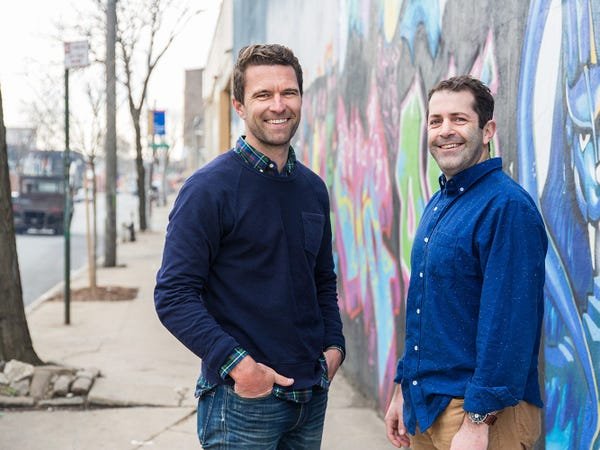
Tim Brown and Joey Zwillinger cofounded Allbirds in 2015 as a sustainable-footwear company

Tim Brown and Joey Zwillinger, the cofounders and co-CEOs of Allbirds. 

Allbirds

According to its initial filing with the SEC, Allbirds’ mission was to “make better things in a better way, through nature.” 

Zwillinger previously worked as a vice president of industrial products at a biotechnology company


Joey Zwillinger, who is sitting in a boat, and Tim Brown posing for a picture on a dock with boats moored around them.

Allbirds’ Joey Zwillinger and Tim Brown. 

Allbirds

Brown’s background included serving as the vice-captain of New Zealand’s soccer team.

Allbirds roared to life in 2016 with a Kickstarter campaign that hit its $30,000 goal in five days.


Allbirds' Kickstarter page where a banner has been added to note that their wool runner shoes are now sold out.


Kickstarter

The company raised nearly $120,000 to make a wool running shoe designed to make a lighter environmental impact than traditional athletic shoes.

In 2016, Allbirds received B Corp certification, a designation given to companies that work to advance environmental and social causes, and shareholder concerns.


A model's legs from the thigh down. They are wearing green trousers and AllBirds Wool Runners.


Allbirds

For Allbirds, the designation codified, “how we take into account the impact our actions have on all of our stakeholders, including the environment, our flock of employees, communities, consumers, and investors.”

In only its second year in business, Allbirds gained the title of world’s most comfortable shoe.


A man sitting on a flower-lined sidewalk with his legs out to show off his Allbirds wool runners.


Allbirds

Time magazine said Allbirds’ hero product, the Wool Runner, was the “World’s Most Comfortable Shoes.”

By 2017, Allbirds, Warby Parker, and Casper were considered among the “DTC pioneers” shaking up their respective industries — sneakers, eyeglasses, and mattresses.


A street window looking into a Warby Parker store with artistic patterns on the walls.

Warby Parker and Allbirds were among the DTC pioneers. 

Interim Archives/Getty Images

By 2018, direct-to-consumer business plans proliferated. In 2018, Inc. reported that more than 400 startups were trying to “become the next Warby Parker.”

Allbirds sneakers became synonymous with Silicon Valley dressing


A screenshot of an article by The New York Times article with an image of a model wearing a pair of Allbirds sneakers.


The New York Times

In August 2017, Allbirds got another shot of national publicity when The New York Times described Wool Runners as part of the Silicon Valley uniform.

A month later, Allbirds opened its first store,


Multiple pairs of sneakers lined up on a wall in Allbirds' first store in Soho, New York City.

The first Allbirds store was in NYC’s Soho neighborhood. 

Business Insider/Jessica Tyler

The 1,450-square-foot store is located in New York City’s Soho neighborhood. In 2022, the company operated 58 stores.

By 2020, Allbirds’ popularity had spread well beyond Silicon Valley. President Barack Obama was repeatedly spotted wearing Wool Runners.


President Barack Obama standing at a podium and speaking with his finger raised in a questioning manner.

Former President Barack Obama has worn Allbirds sneakers. 

Brynn Anderson/AP

But the shoe started to fall out of favor with the trendsetters and the press, with GQ even lamenting the sight of Obama wearing them. “Can’t someone send him a pair of Jordans?” the magazine wrote.

Allbirds launched the Dasher in 2020.


A promotional-style image of Allbirds Tree Dasher in front of a white background.

Allbirds’ Wool Runners. 

Allbirds

With the success of Wool Runners waning, Allbirds launched its first performance-running shoe, called the Dasher, in May 2020. Gear Patrol called it “shockingly good.”

Also in 2020, Allbirds partnered with Adidas to make a low-carbon shoe, another sign of the company’s willingness to disrupt industry norms.


Adizero x Allbirds sneakers

The Adizero x Allbirds 2.94 kg CO2e. 

Allbirds

Large footwear brands are typically reluctant to partner with one another. The shoe, called the Adizero x Allbirds 2.94 kg CO2e, had the lowest carbon footprint of any Adidas or Allbirds sneaker.

In August 2021, ahead of a public offering, Allbirds disclosed growing annual sales and mounting losses.


A woman walking inside an Allbirds store, with sneakers on the wall behind her.

People shopping inside an Allbirds store in NYC in 2021. 

Spencer Platt/Getty Images

Sales increased from $193.7 million in 2019 to $219.3 million in 2020, but losses also increased, growing from $14.5 million in 2019 to $25.9 million in 2020. 

Allbirds went public in 2021.


allbirds


Allbirds

A little more than 2,100 days after it launched its Kickstarter campaign, Allbirds went public on November 3, 2021. Shares soared 90% on the opening day of trading, a sign of Wall Street’s bullish outlook for the company.

Allbirds dropped claims about being the first “sustainable” IPO.


A wall with sneakers on display in the Allbirds store in Soho.

The Allbirds store in Soho. 

Business Insider/Jessica Tyler

After the Securities and Exchange Commission objected, Allbirds dropped claims about being the first “sustainable” IPO, the Financial Times reported in November 2021.

Allbirds launched wholesale in 2022.


A set of doors outside a Nordstrom department store.


Jeff Greenberg/Contributor/Universal Images Group Editorial via Getty

Although it was launched as a direct-to-consumer company, in May 2022, Allbirds announced its first wholesale partners, Zalando and Public Lands, then Nordstrom — a signal that DTC sales would not be enough to get the company to profitability.

As Allbirds added wholesale partners, the backlash began to build against DTC companies.


The Allbirds store in Green Hills, Nashville.

Allbirds has announced plans to slow store openings and increase wholesale partnerships. 

Allbirds

“It’s the de-DTC era,” said Simeon Siegel, the managing director for equity research at BMO Capital Markets. Analysts including Siegel said the benefits of direct sales were often overstated.

As DTC companies started to fall out of favor and investors started to pay more attention to profitability, Allbirds’ stock started to drop.


A blue and red collage depicting Allbirds's drop in stock price over the last six months.


Allbirds; Insider

Allbirds shares, which hit $28.64 on the company’s first day of trading, had fallen to under $5 fewer than eight months later. Stock pickers said the company needed to expand beyond Wool Runners.

In 2022, Allbirds officially lost its novelty in Silicon Valley wardrobes.


A screengrab of an Allbirds story from The Wall Street Journal which includes an image of a flock of birds are attacking a scarecrow that is dressed up like a


Wall Street Journal

Roughly five years after The New York Times christened Wool Runners part of the Silicon Valley uniform, The Wall Street Journal in December 2022 said that “tech bros” had moved on.

In March 2023, Allbirds’ shares plummeted 47% after a disastrous earnings report that included a $101 million annual loss.


A promotional-style image of Allbirds' Tree Flyers in front of a white background.

Allbirds’ Tree Flyers. 

Allbirds

On a call with stock analysts, executives announced a sweeping four-part reorganization, including slowing the pace of store openings, adding more wholesale partners, and working to “reignite product and brand.” Co-CEO Joey Zwillinger also said some of the company’s marketing veered too far from what Allbirds consumers wanted, including marketing for the Tree Flyers, above, which focused on its technical-performance attributes.

Allbirds began to rethink its big bet on DTC.


A logo for Dick's Sporting Goods on the side of a building.


Reuters

As part of the reorganization plan, Zwillinger said the company was considering adding more wholesale partners. By then, the company’s wholesale partners included Nordstrom, REI, Scheels, and Dick’s.

In 2022, while still based in San Francisco, Allbirds quietly opened an office in Portland, Oregon, to take advantage of the city’s talented-footwear workforce.


Allbirds' office, a red building on a city street in Portland, Oregon.

In 2022, Allbirds opened an office in Portland, Oregon. 

Matthew Kish/Business Insider

Nike is based in a Portland suburb, and Adidas has its North American headquarters in the city.

Allbirds hired several Nike and Adidas veterans to run the office, including Ashley Comeaux, who spent more than 10 years at Nike before becoming Allbirds’ vice president of product design.

In early 2023, Allbirds released a string of products designed and developed by Comeaux and her team.


A model in a white gown jumping out of frame to reveal a grey pair of SuperLight sneakers.

SuperLights, the latest shoe from Allbirds, doesn’t have a Strobel board, which makes the shoe lighter and more comfortable. 

Courtesy Allbirds

Risers and Pacers got strong reviews from Business Insider.  Although the new products were well received, shares of the company traded below the $15 IPO price, trading for $1.23.

In March 2023, Allbirds announced disappointing earnings, and Zwillinger told analysts that the company had lost focus on its core.


Allbirds M0.0nshot carbon neutral shoes

Allbirds claims its M0.0NSHOT is the world’s first carbon-negative shoe. 

Allbirds

Since then, the company has focused on its best-sellers, the Wool Runner and Tree Dasher, while it discontinued underperforming products, like much of its apparel, the Wall Street Journal reported. 

In June 2023, the company released what it said was the world’s first carbon-negative shoe, which it calls the M0.0NSHOT.

In May 2023, Allbirds announced a leadership shake-up.


Allbirds cofounder Tim Brown

Allbirds co-founder Tim Brown 

Tommaso Boddi/Getty Images

Brown said he would step into the role of chief innovation officer, leaving fellow cofounder Joey Zwillinger as the sole CEO.

The company also laid off 21 employees globally in May 2023, it said in a filing with the US Securities and Exchange Commission.


allbirds 2847

An Allbirds store. 

Business Insider/Jessica Tyler

The shoe company generally had a disappointing start to 2023. The company reported a 13% decline in year-over-year revenue in the first quarter.

‘As we’ve tried to expand and grow the brand, we created products that haven’t quite met the mark,’ Brown told The Wall Street Journal.


A pair of the Allbirds Tree Flyer in the Blizzard color.

The Allbirds Tree Flyer sneakers. 

Mara Leighton/Insider

In a July 2023 article, Brown and Zwillinger told The Wall Street Journal that their attempts to appeal to customers younger than its 30- to 40-year-old base didn’t go over well. The Tree Flyer was one of those attempts that missed the mark. 

The company reported second-quarter earnings were above expectations. Sales fell 10% compared to a projected 18%.  

“We laid out a road map for our strategic transformation back in March, and now two quarters into our work, we have gained traction and are solidly on track to drive toward profitability expectations,” Zwillinger said in an August 2023 earnings call. 

In November, Allbirds released an updated version of its first Wool Runner.


screenshot of new wool runner advertised on allbirds website

The new Wool Runner is available on the Allbirds website. 

Allbirds/Screenshot

The Wool Runner 2 has been updated with a new version of its SweetFoam midsole and improved durability.

Full-year earnings for 2023 were dismal indeed, with sales down 14.7% and a net loss of $152.5 million for the year.


The Allbirds Pacer doesn't look anything like the company's iconic Wool Runner.


Courtesy Allbirds

The company also promoted Joe Vernachio from COO to CEO, with Zwillinger stepping down to serve as a special advisor and remaining on the board of directors.

The company continued to struggle with declining sales.


Allbirds store

Earlier this year, the company said it would close most of its remaining stores. 

Business Wire/AP

Allbirds lost more than $20 million in the quarter ending September 30, according to its most recent earnings report. The company noted “substantial doubt” about its future in that filing and said it could “engage in strategic transactions.”

From March 2025 to March 2026, shares slid more than 50%.

In January, the company said it would close its remaining full-price stores in the US by the end of February, leaving it with two discount stores in the US and two full-price stores in London. The US made up the bulk of its revenue.

Allbirds said in March 2026 that American Exchange Group would buy it for $39 million.


An Allbirds store on Fifth Avenue in New York, US, on Wednesday, May 4, 2023. Allbirds Inc. is scheduled to release earnings figures on May 9.


Bloomberg/Getty Images

Allbirds said in a statement on Monday, March 30, that American Exchange Group, a New York-based fashion and consumer company, would acquire it for $39 million.

The company added in the statement that the sale would close in the second quarter. The distribution of the net proceeds of the sale to stockholders would be made in the third quarter, it said.

Allbirds’ stock has fallen about 50% in the past year. However, it rose about 24% in after-hours trading on Monday after the sale was announced, to $3.70 per share.

Matthew Kish, Ben Tobin, and Jennifer Ortakales-Dawkins contributed to earlier versions of this article.


Source link

Arizona-accuses-Kalshi-of-illegal-gambling-in-first-ever-criminal-lawsuit.jpeg

Arizona accuses Kalshi of illegal gambling in first-ever criminal lawsuit against the online betting company

Kalshi’s legal battle with states is heating up.

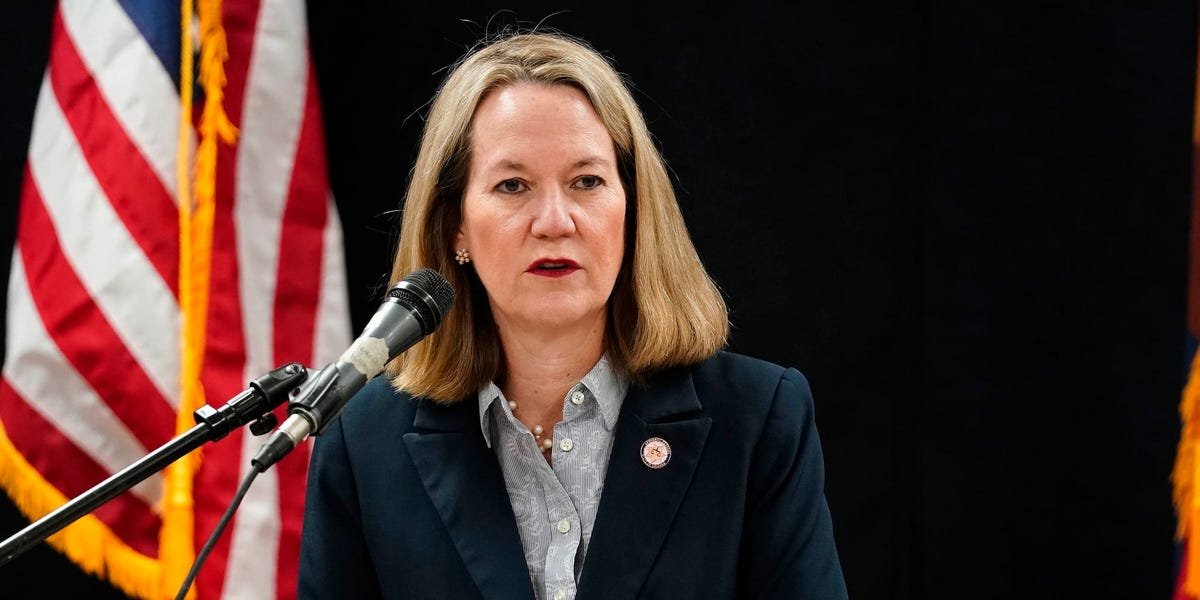
Arizona Attorney General Kris Mayes on Tuesday filed criminal charges against the online gambling company — a first for the company that lets people bet on real-world events, from who will win a pro sports game to the weather.

Mayes’s 20-count filing against the prediction market platform includes 16 charges of operating an unlicensed gambling business and four charges of election wagering.

“Kalshi may brand itself as a ‘prediction market,’ but what it’s actually doing is running an illegal gambling operation and taking bets on Arizona elections, both of which violate Arizona law,” Mayes said in a statement on Tuesday. “No company gets to decide for itself which laws to follow.”

Kalshi spokeswoman Elisabeth Diana told Business Insider that Arizona’s charges were “seriously flawed” and an example of “gamesmanship.”

“These charges are meritless, and we look forward to fighting them in court,” Diana said.

Kalshi and other prediction markets, such as Polymarket, have been sued by several states in an ongoing legal battle over whether the companies should be subject to state-level gambling laws, a battle that’s likely to eventually end up before the Supreme Court.

Commodity Futures Trading Commission Chair Michael Selig, the Trump administration’s prediction market regulator, has said that the commission will seek to defend federal jurisdiction over the platforms.

Mayes’ charges came several days after Kalshi sued the state preemptively.

Diana said that the state filed the charges against Kalshi to “circumvent federal court and short-circuit the normal judicial process,” including allowing federal courts to evaluate “whether Kalshi is subject to exclusive federal jurisdiction.”


Source link

Screen Shot 2020 09 04 at 6.22.07 PM

This AI company is hiring improv actors — and willing to pay them $74 an hour

If you’re an actor, your next role could involve performing for an AI company.

Handshake AI is hiring performers, including those with improv skills, to record themselves responding to a “light prompt or scenario” with other actors, according to a job posting.

The work is part-time, remote, open to workers with at least a bachelor’s degree, and pays up to $74 an hour, per Handshake’s description. For actors, the work is “easy to fit alongside auditions, classes, or rehearsals,” the company says.

“You’ll improvise scenes, explore characters, and respond naturally in the moment, with plenty of creative freedom to shape how each interaction unfolds,” the job listing reads. Embedded in the job description is a video of two people talking in an apparently improvised scene.

The listing says the project is for “one of the leading AI companies,” though it doesn’t mention how the work will be used.

A Handshake spokesperson did not immediately respond to a request for comment.

Last year, the company launched an AI division after about a decade as a social network for college students and young professionals looking for career opportunities.

On Reddit, as The Verge reported, some users debated what Handshake’s plans for the recordings might be. One user posted: “It’s clearly just an attempt to get people to train AI models to create AI generated videos.”

Another predicted that it could lead to more demand for “real, unpolished” live comedy from humans, even if the work is used to create AI that can generate comedy.

Handshake’s listing is the latest example of the different professions, including some in the arts and creative roles, that AI companies are calling on.

Jobs in training AI have grown over the past few years. Many companies don’t require trainers to have experience with AI or a tech background.

Some do the work as a side-hustle as students or artists, Business Insider previously reported, and the tasks can involve recounting childhood memories or even bullying AI.

Uber, known for its gig-work ride-hailing drivers and delivery people, has branched out into AI training and has headhunted trainers with graduate degrees and job experience outside tech to do it.

Many training jobs are independent contractor roles, meaning companies don’t offer benefits like healthcare and retirement account contributions that they do for full-time employees.

Do you do gig work and have a story idea to share? Contact this reporter at abitter@businessinsider.com or via encrypted messaging app Signal at 808-854-4501. Use a personal email address, a nonwork WiFi network, and a nonwork device; here’s our guide to sharing information securely.


Source link

Nvidia-CEO-Jensen-Huang-says-every-company-needs-to-have.jpeg

Nvidia CEO Jensen Huang says every company ‘needs to have an OpenClaw strategy’

Nvidia CEO Jensen Huang says companies can’t ignore the OpenClaw moment.

“Every company in the world today needs to have an OpenClaw strategy, an agentic system strategy,” Huang said during Nvidia’s 2026 GTC conference in San Jose on Monday. “This is the new computer.”

Huang offered deep praise for OpenClaw, previously known as Clawdbot and Moltbot, an open-source AI agent that has taken Silicon Valley by storm. Though OpenAI lured away OpenClaw creator Peter Steinberger, the service will live on as an open-source project.

“OpenClaw has made it possible for us to create personal agents,” he said. “The implication is incredible.”

Huang said that OpenClaw “gave the industry exactly what it needed at exactly the time.”

OpenClaw will do for AI what Windows did for personal computing, Huang said. He also compared OpenClaw to other influential technologies, such as the Linux operating system, the Kubernetes cloud project, and HTML.

“It made it possible for the entire industry to grab onto this open-source stack and go do something with it,” Huang said.

Huang said there’s one big caveat about using OpenClaw that Nvidia has been working to address: security. Nvidia announced its spin on OpenClaw, called NemoClaw, which allows users to add privacy and security controls to their AI agents, or “claws.”

“It has a network guardrail, it has a privacy router, and as a result, we could protect and keep the claws from executing inside our company, and do it safely,” Huang said.

Nvidia is promoting NemoClaw at its conference by hosting a “build-a-claw” event where attendees can develop their own custom-made AI agent.

“OpenClaw brings people closer to AI and helps create a world where everyone has their own agents,” Steinberger said in a statement released by Nvidia. “With Nvidia and the broader ecosystem, we’re building the claws and guardrails that let anyone create powerful, secure AI assistants.”

Huang made a host of other announcements at Nvidia GTC on Monday, including a new inference system that incorporates technology from Groq, an AI chip startup with which Nvidia made a $20 billion deal. He also projected $1 trillion in demand for its Blackwell and Rubin AI chips through 2027.


Source link

Addiction-nearly-killed-me-Once-I-got-sober-I-started.jpeg

Addiction nearly killed me. Once I got sober, I started my own company and shared my story to help others.

This interview is based on a conversation with Lisa Devine, 37, a candle studio owner from Queens, New York. It has been edited for length and clarity.

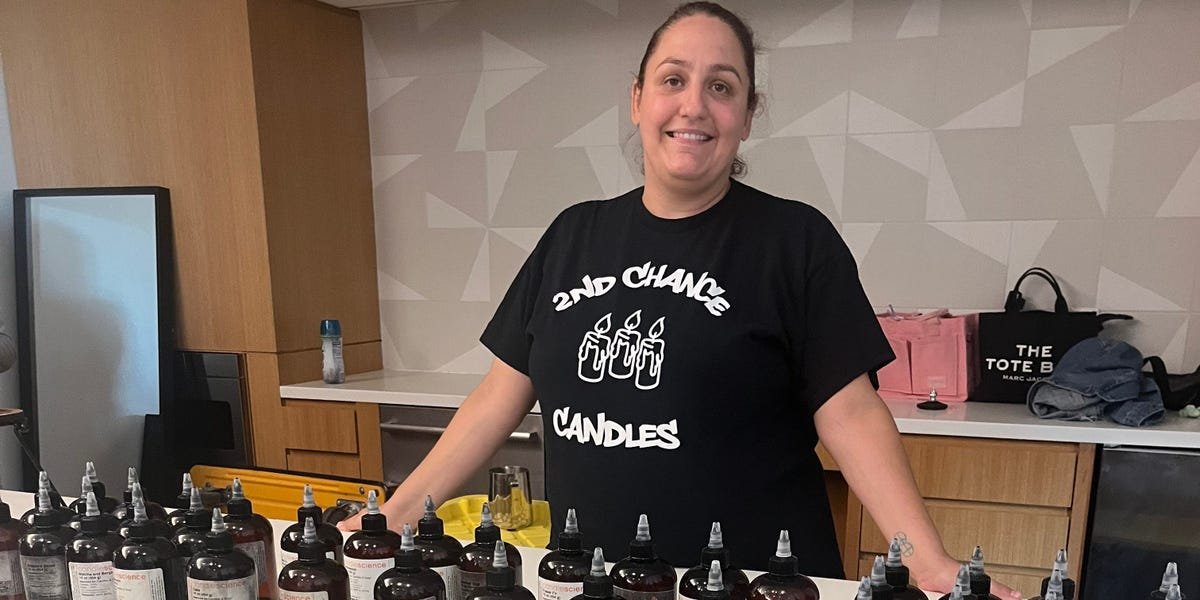
People often ask me why my Mom and Pop’s arts-and-crafts studio in New York is called “2nd Chance Candles.”

The answer is simple: your past doesn’t define your future, and everyone deserves a second chance.

I’m living this truth after overcoming an addiction that nearly killed me. I am now sober, running a business that brings me joy and fulfillment.

I got kicked out of the college dorms

I’d always been a great kid growing up in Putnam County, New York. I had a high GPA and planned to start a career in dental hygiene.

But the alcohol and weed in which I dabbled during my senior year of high school took hold in college.

It was a dry campus, and I got kicked out of the dorms after being caught drinking with friends. I didn’t have a car, so I couldn’t commute. At 19, I had to move back in with my parents.


A woman outside a candle-making store.

Devine outside her studio.

Courtesy of Lisa Devine


Back at home, I couldn’t follow the rules. It was a small town, and I left for New York City. Real fast, I got my first job working in a café.

I’d come home after work and smoke pot. Then, in 2011, someone offered me heroin. I knew I was in trouble when my dealer didn’t pick up one day, and I started to throw up from withdrawal.

When you’re a functioning addict, your new normal is under the influence. If I didn’t have drugs, I didn’t feel normal. Still, I kept getting high while holding down my job.

I went through a 5-day detox

In 2016, I was arrested on charges relating to drugs. I had no criminal record at that point, and I was clearly an addict. The court mandated that I either go to prison or enter treatment for a year. I chose rehab.

I’d already gone through a five-day detox. It was awful and took me about six months to start feeling OK.

In the end, I remained in sober living for 19 months. Next I studied at a trade school for dentistry.

I worked as a barista during that time, which was a great opportunity to get back on my feet. It was exactly what I wanted and needed.

Things went well for five years. Then, in 2021, I stopped caring for myself and relapsed. This time, my drug of choice was cocaine.

I’ll never forget those incredibly miserable days. I hit rock bottom and found the strength to check myself into rehab. I worked hard on my recovery, and my new clean date is April 2022.

Meanwhile, my partner had read up about the candle-making business. He suggested it might be a good way to make money; a means for me to become the upstanding person in society I longed to be.

I host groups like the Girl Scouts

I started making hand-poured candles at home and opened a brick-and-mortar store in October 2023. I felt immensely proud of how far I’d come.

It made perfect sense to call it “2nd Chance Candles.” I loved telling customers about the name because it’s inspiring.

I sold my scented candles in jars. The real joy came from doing workshops for groups like the Girl Scouts. I got such a kick out of the sessions because I got to share my craft.


A woman with rows of bottles in front of her.

Devine with the scent bottles clients use during their candle-making.

Courtesy of Lisa Devine


I’m an open book, and though I don’t particularly like talking about my past, it’s a good conversation starter. A lot of people in the community know my recovery story and give support.

I’ve vowed never to return to my addiction because I’ll always remember the horrible fog of my 20s and early 30s. It’s terrifying to think I could have died from an overdose.

As for work, I’ve hosted many fun events, including kids’ birthday parties and corporate workshops. We’ve branched out into slime-making and drop painting with acrylics, and I employ part-time staff to help in the studio.

If I could give my younger self advice, it would be this: You are not your worst mistake. Shame keeps you stuck longer than addiction does. Ask for help sooner, and know that rebuilding and success are possible.


Source link

I-never-left-Travis-Kalanick-launches-new-company-Atoms.jpeg

‘I never left’: Travis Kalanick launches new company Atoms

The former Uber CEO is venturing into robotics.

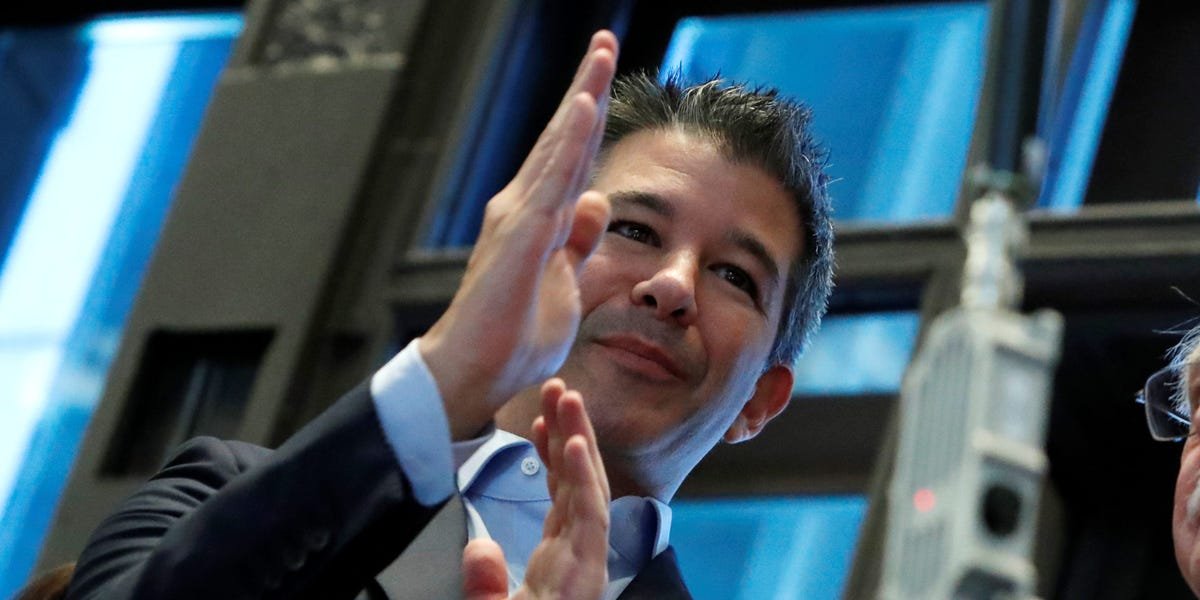
Travis Kalanick announced that Atoms is out of stealth mode and expanding beyond food delivery infrastructure into industries such as food service, mining, and transportation.

“When I told my friends, family, and colleagues about my plans for what was next, they were really excited that I was ‘coming back,'” Kalanick wrote on the website for the new venture.

“The thing is, I never left.”

In an interview on “TBPN” on Friday, Kalanick told show hosts John Coogan and Jordi Hays that he will be folding his ghost-kitchen startup CloudKitchens into the new venture, a detail that is also mentioned on Atoms’ website.

Atoms’ webpage says the company plans to build a “wheelbase for robots,” a platform designed to power specialized machines rather than humanoid robots. Kalanick said on “TBPN” that the company will focus on practical industrial systems instead of humanlike designs, and that the venture was just renamed as “Atoms” from “City Storage Systems” today.

“We’ve been in stealth mode for eight years,” said Kalanick. “Employees were not allowed to put the name of the company on their LinkedIn. We have thousands of employees.”

“Humanoids have their place, but there’s a lot of room for specialized robots that do things in an efficient, sort of industrial-scale kind of way, which is sort of where we play,” he added.

According to Kalanick, Atoms is close to acquiring Pronto, an autonomous vehicle startup focused on industrial and mining sites that was founded by his former Uber colleague, Anthony Levandowski.

Uber didn’t immediately respond to a request for comment.


Source link

Oracle-to-investors-Dont-worry-about-data-center-spending-company.jpeg

Oracle to investors: Don’t worry about data center spending, company is ‘very, very good’ at cost-cutting

Oracle has two magic words for investors concerned with the company’s aggressive data center spending: fast and cheap.

Shares of the cloud giant rose as much as 10% on Tuesday after it surpassed investor expectations for the third quarter and raised revenue guidance to $67 billion for fiscal 2026.

Still, Oracle faced some questions about its AI data center buildout and how it plans to justify the billions of dollars it burns along the way. In February, Oracle announced a $50 billion debt raise to help fund its AI ambitions. In the last year, the company has announced major data center projects in Texas, New Mexico, and Michigan.

On Oracle’s third-quarter earnings call Tuesday, Bernstein analyst Mark Moerdler asked, “How comfortable are you with the values you’re creating from the AI data center business itself?”

Oracle co-CEO Clay Magouyrk reassured Moerdler that the company is focused on minimizing the cost of its data center buildout to maximize future profitability.

“We continue to get better and better at running these data centers, delivering them more cheaply, optimizing the amount of cost for networking and hardware spend, as well as power,” said Magouyrk.

He added that Oracle is focused on accelerating the time its buildings spend under construction.

“We’re very good at it,” he said.

“We’re very, very good at reducing those costs during that time period.”

He did not give any other details on how exactly Oracle manages its data center budget.

In 2022, Oracle undertook significant cost-cutting measures, laying off thousands of people in the wake of its $28 billion acquisition of medical records giant Cerner.

In January, Business Insider reported that Oracle was struggling to find financing for Stargate, its $500 billion data center initiative with OpenAI.

Lenders and investors told Business Insider they were growing weary of the project’s lofty ambitions as it races to keep up with the rest of Big Tech amid the AI race.

Amazon, Microsoft, Google, and Meta are on track to spend $600 billion on data centers and AI infrastructure in 2026 alone.


Source link

Katherine Li, West Coast breaking news reporter at the Business Insider.

AI researchers rally in support for Anthropic as company says it risks losing $5 billion in Pentagon feud

Employees at rival companies — including OpenAI — are rallying behind Anthropic as the startup warns its escalating dispute with the Pentagon could cost $5 billion in lost business.

More than 30 researchers from OpenAI and Google, including Jeff Dean, the chief scientist of Google DeepMind, filed a joint amicus brief on Monday supporting Anthropic in its legal battle with the government. The employees signed in a personal capacity and do not represent their companies’ official views.

Their filing argues that the Pentagon’s decision to label Anthropic a “supply-chain risk” could harm the broader US AI industry.

“If allowed to proceed, this effort to punish one of the leading US AI companies will undoubtedly have consequences for the United States’ industrial and scientific competitiveness in the field of artificial intelligence and beyond,” the employees wrote.

The dispute stems from a breakdown in negotiations between Anthropic and the Pentagon over guardrails around how its AI models could be used, particularly around mass domestic surveillance and autonomous lethal weapons.

Last month, Defense Secretary Pete Hegseth said that “no contractor, supplier, or partner that does business with the United States military may conduct any commercial activity with Anthropic,” marking a dramatic expansion of the “supply chain risk” designation.

Anthropic has since sued the government in two courts, arguing the decision violates its First Amendment rights and unfairly retaliates against the company.

In court filings, Anthropic executives warned that the fallout is already hitting the company’s finances. Chief financial officer Krishna Rao wrote in a court statement that hundreds of millions of dollars in expected revenue tied to Pentagon-related work are at risk this year. If the government succeeds in discouraging companies from working with Anthropic more broadly, Rao added, the company could ultimately lose up to $5 billion in sales, which is roughly equivalent to its total revenue since commercializing its AI technology in 2023.

Anthropic’s chief commercial officer, Paul Smith, wrote in a separate court statement that the pressure from the government is causing business partners to take steps that “reflect deep distrust and a growing fear of associating with Anthropic.” Smith added that some customers have paused negotiations or demanded escape clauses, while others have canceled meetings entirely after the supply-chain designation.

The situation has also drawn criticism from industry leaders. OpenAI CEO Sam Altman, despite singing its own contract with the Pentagon after Anthropic’s fell apart, wrote on social media that enforcing the supply chain risk designation “would be very bad for our industry and our country.”

Major cloud providers like Amazon and Microsoft have said they will continue offering Anthropic’s Claude AI models to customers without ties to the Pentagon.

Anthropic is now seeking a temporary court order that would allow it to continue working with military contractors while the legal fight continues. The first hearing could take place in San Francisco as soon as Friday.

The Pentagon did not immediately respond to a request for comment outside normal business hours.


Source link