AI’s biggest impact will likely happen far from laptops, says the CEO of a $15 billion AI company.
Qasar Younis, the cofounder and CEO of Applied Intuition, said on an episode of “Lenny’s Podcast” published Sunday that “the real impact of AI in the next 5 to 10 years” would show up in physical industries, like “in farming, in mining, in construction, in self-driving trucks.”
Applied Intuition develops software to test and power autonomous vehicles and other machines. The company said in June that it raised $600 million in a funding round, valuing it at $15 billion.
Software tools like Moltbook and OpenClaw may excite developers, but Younis said they touch only a small slice of society.
“I love the stuff that’s happening on these platforms, but it’s still segregated to, like, frankly, developers,” he added.
Every time Lee Chong Ming publishes a story, you’ll get an alert straight to your inbox!
Stay connected to Lee Chong Ming and get more of their work as it publishes.
Instead, he said the biggest shift will come from adding intelligence to machines already embedded in the physical economy.
“More pragmatically, it’s actually just putting intelligence into things that already exist all around us.”
Industries like trucking and farming urgently need that kind of autonomy, he said.
“People are not fighting for those trucking jobs,” Younis said. The average farmer is already in their late 50s, meaning many will retire in the coming decade, potentially worsening labor shortages.
AI is more likely to help fill labor shortages in these industries than replace them entirely, he added.
The company has tested autonomous trucks in Japan, where an aging workforce means a driver shortage, and it’s working on AI in mining safety and efficiency.
AI’s impact on blue-collar industries
Earlier this year, Wall Street grew worried that new AI tools and agents could replace some software products entirely.
A research paper by Citrini, an investment firm focused on thematic equity investing, triggered a global stock sell-off last month after researchers outlined a scenario in which the AI boom wipes out white-collar jobs and ultimately slows economic growth.
Against that backdrop, some industry leaders say physical industries could end up benefiting from the technology.
For instance, robots could help address labor shortages in manufacturing. Daniel Diez, the chief business officer of Agility Robotics, told Business Insider in a report published on Sunday that manufacturers globally “simply can’t find the people to do this work.”
Ford CEO Jim Farley said last year that AI-powered augmented-reality tools are helping technicians repair trucks more efficiently, though he warned that automation could still reshape jobs across the broader economy.
Business Insider reported last year that some Gen Z workers are increasingly considering trade and blue-collar careers as automation and AI create uncertainty around traditional white-collar professions.
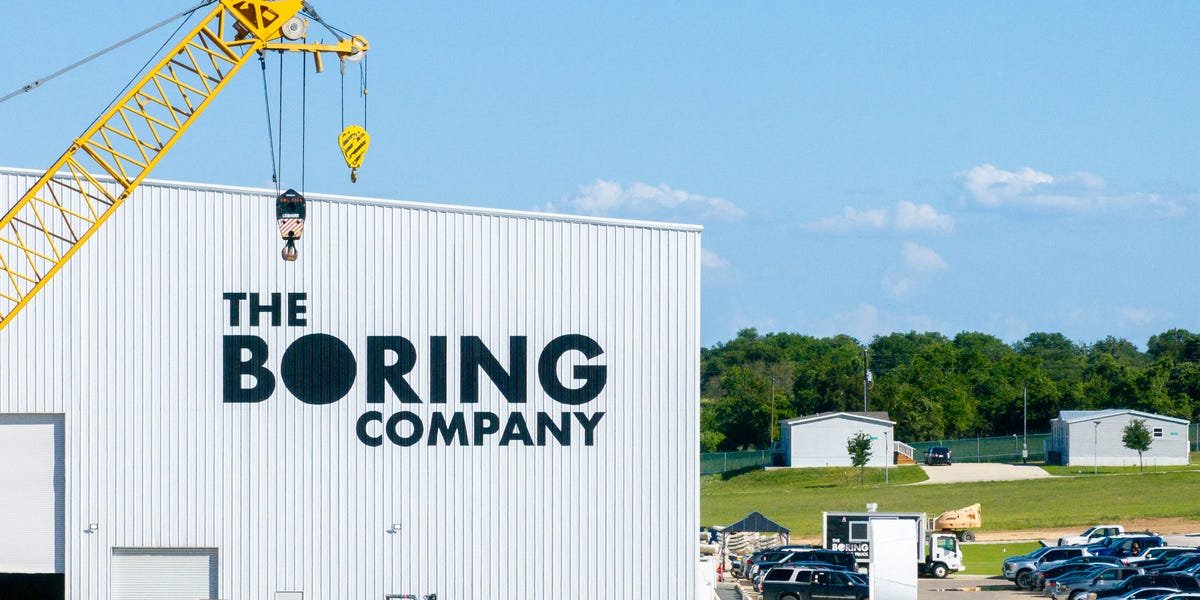
Mayer Mizrachi, the 38-year-old mayor of Panama City, wants Elon Musk to build him a pedestrian tunnel under the Panama Canal. And Musk’s Boring Company recently announced it just might.
Panama City this week was named one of 16 finalists — the only one outside the United States — in the company’s Tunnel Vision challenge, which offers the winning municipality a free tunnel that can be used for freight, pedestrians, water, utilities or Loop — the electric, underground system that uses Tesla vehicles to transport people.
Mizrachi’s idea is a 0.6 mile pedestrian tunnel under the Panama Canal, which would give city residents a chance to “live” its history and take advantage of the vital maritime trade route that is critical to the global economy. More recently, the canal has been the subject of geopolitical tensions as President Donald Trump threatened to take control of the waterway because, he said, the US was being ripped off by high fees and that it had come under Chinese influence. In February 2025, Panama withdrew from China’s Belt and Road initiative.
The winner will be announced on March 23. Of the 16 finalists, half were in Tennessee or Texas, where the Boring Company is headquartered and where Mizrachi recently went to make his pitch. The project, if chosen, has the potential to tie together Mizrachi, the former DOGE leader, and the Panama Canal that Trump once fixated on seizing.
Mizrachi, the youngest mayor in the city’s history, founded Criptext, a secure email platform, and, like Trump, has styled himself as an outsider. Like Musk, he came to office looking to cut government in the name of efficiency and insists he has succeeded.
In an interview with POLITICO, which is, along with Business Insider, part of the Axel Springer Global Reporters Network, Mizrachi said the tunnel proposal began as a last-minute response to a Boring Company social media post and ballooned from there.
This interview has been edited for length and clarity.
How did the tunnel idea begin, and what exactly was your pitch to The Boring Company?
Mizrachi: I merely just ran into a tweet by the Boring Company in January, and they had this tunnel vision challenge, and they were offering a free tunnel up to a mile long anywhere around the world to the best idea. I did a visit in January to the existing tunnel that’s being built for a subway station in Panama City, and I said, “What if we built a pedestrian tunnel crossing the canal with parks on either side? You can tell the story of how the canal was built and the history of the country, and the biodiversity.”
City planners started working on a proposal, and they kind of really brought the plane in for a landing with a beautiful proposal, and we submitted that on the last minute of the last day.
What did you learn in Texas about how The Boring Company would approach this project?
Mizrachi: We met with Jim Fitzgerald, the VP for global, and we kind of took a 101 on how a Boring Company project works. Tunnels are freaking expensive. But it turns out that the way that they do it makes it actually feasible, and it’s quite a wonder the way that they have put this together.
And as I told Jim, I said, “Listen, I know this is very preliminary, and here are many other projects that they’re considering, but you know, it would be quite a marvel that 100 years ago, you know, the US built the canal, and then 100 years later, that they would build a tunnel that crosses the canal in a modern marvel of engineering in the way that they do it.”
They reuse their tunneling machines. Whereas typically, the tunneling machines are built specifically for a given project, and then they get buried with the project.
The Boring Company’s headquarters in Texas.
Brandon Bell/Getty Images
What would this tunnel mean for Panama, especially at a moment when the canal is caught up in broader geopolitical tensions?
Mizrachi: First of all, Panamanians, we’re really proud of the canal, its management, its history, but we seldom get to live it. So it’s like the rest of the world uses the canal. But you know, Panamanians, we don’t live the canal. You could go to the Miraflores Locks, and you go to the tourist center. You can maybe see a ship, but we don’t really live it.
So the vision here is you create a public space where you integrate families, tourists, and they can cross the canal themselves with an underground tunnel that’s 0.6 miles, the distance. It’s quite short, and I can only imagine it being almost an educational experience, where you can have screens, very thin screens, because the space is not that big, but thin screens that are showing the story, the history of how the canal was built, the biodiversity of Panama, and then stats on the canal, the impact that it has on world trade, etc. It started as an idea, but it’s shaping up. And I think it goes above my pay grade. I spoke to the president [of Panama] about this. This needs to be handled by a task force designated by the president in representation with the entire country.
Why do you think Panama City could beat out American cities for this project?
Mizrachi: Well, there’s one very unique thing about this. They don’t have a canal. The Boring Company has never bored underwater, much less crossing a canal. And I think it’s part of the value proposition to show themselves as engineers, how far they can go with their mindset, with their methodology and their ingenuity.
Also it’s a pedestrian tunnel. So it’s not a loop tunnel that is managed and operated by the Boring Company. So if you think of Vegas, they operate the Loop itself. So, here, it’s a lot more hands off. They build a tunnel, and they don’t have to have an active operation.
The Boring Company-built tunnel at the Las Vegas Convention Center.
AaronP/Bauer-Griffin/GC Images
You’ve drawn comparisons between your work and DOGE-style cost cutting in Washington. How do you describe your governing approach?
Mizrachi: I mean, honestly, I still consider myself an outsider. I am not subscribed to any political party, and I still very much employ the mindset of the tech entrepreneurial efficiency and try things before you scale things, which is uncommon in politics.
As soon as I came into office in July 2024, I realized people’s money was being wasted on a scale that I was just shocked to see. So we were able to reduce the size of City Hall personnel by 50% so it used to have 6,500 people. We reduced it to about 3,500 people. And by all counts, City Hall is operating faster and better with more impact, tangible, visible impact, with less people. And also, we reduced the budget by about 32%, so we did the biggest budget reduction in the history of the city as well.
This story originally ran in POLITICO’s West Wing Playbook and appears on Business Insider through the Axel Springer Global Reporters Network. The network publishes major stories from the Axel Springer network of publications, a worldwide group of news outlets that includes Business Insider.
This story is available exclusively to Business Insider
subscribers. Become an Insider
and start reading now. Have an account? .
Lamborghini’s CEO said the company shelved its EV project late last year.
He said that an EV’s silent powertrain lacked the ’emotional connection’ Lamborghini owners expected.
Instead, Lamborghini will shift its focus to plug-in hybrid vehicles.
The roar of Lamborghini’s screaming V10 and V12 engines won’t go silent.
In an interview with The Sunday Times, CEO Stephan Winkelmann said the Italian supercar maker has scrapped plans for its first all-electric model, the Lanzador, after consumer interest in high-priced EVs flattened to “close to zero.”
“EVs, in their current form, struggle to deliver this specific emotional connection,” he told the Times, adding that engine noise is often a selling point for luxury sports cars. “The decision was made after over a year of continuous internal discussion, engaging with customers, dealers, market analysis, and global data.”
Lamborghini first announced the Lanzador EV in 2023, and the high-riding two-door coupe was scheduled to hit dealerships by 2029.
Winkelmann said the car will now come to market as a plug-in hybrid instead.
The shift marks a notable recalibration for the Volkswagen-owned supercar brand. In 2021, Lamborghini laid out an electrification road map that was supposed to add a fully-electric car by the “second half of the decade.” The company said it wanted to cut its 2024 carbon emissions in half.
Winkelmann told the Times that by 2030, its entire lineup will feature a gas engine and a battery that can be plugged into an electrical outlet.
He added that it will continue building internal combustion engines “for as long as possible.”
“Lamborghini is fully prepared for full electric,” the company said in a statement to Business Insider. “However, market readiness within the segment is not yet aligned with this transition.”
I hadn’t always been a believer in working from home. When remote work first became part of my life, I resisted it. I missed the structure of an office, the separation between work and everything else. Home felt like the wrong setting for serious work.
Then, slowly, it didn’t. I found a rhythm I hadn’t expected. Mornings became mine. I cooked real lunches. I thought more clearly.
More importantly, my girlfriend and I have been living together in London for a year, and we have built a life around being home together that feels chosen rather than forced. I’ve stopped seeing remote work as a compromise and started seeing it as the better version of my day.
So when the email came from work that said I’d have to return to office, it wasn’t just a scheduling change. It was a disruption to something we had spent months building, a routine that had come to feel like the foundation of everything else.
It has only been a few weeks since the announcement, and already, almost nothing looks the same — especially my relationship.
My partner and I both worked from home, so we had to rethink everything
The first thing we’ve had to confront was practical. Two people who both work from home occupy a shared space in a very specific way. That balance had taken time to calibrate. We had never sat down and designed it. It had just formed, organically, around our needs. The return-to-office policy exposed how deliberate that accidental life actually was.
My girlfriend still works remotely, so the shift hasn’t been symmetrical. I now leave each morning to head into a version of London we rarely engaged with during the week — the commuter version, the structured version — while she stays inside the life we’d built together. That asymmetry requires more honest conversation than either of us expected.
We’ve had to redesign things we never explicitly designed in the first place. What do mornings look like now? Who handles what, and when? The small, invisible agreements that hold a shared life together suddenly need to be spoken out loud. That process, still ongoing after just a few weeks, has been more revealing than disruptive. But it has required real effort.
Commuting in London comes with a price, and it goes beyond the cost of a train ticket
The financial reality surfaced quickly. Commuting to London isn’t cheap, and the daily arithmetic of transport, lunches, and the small expenses that accumulate when you’re out of the house adds up faster than expected. We had saved money by being home — on food, on travel, on the general inefficiency of city life when you’re moving through it daily. That buffer has started to shrink almost immediately.
But the more significant cost has been time. The commute is carving hours out of the day that had previously been ours. Mornings that once felt spacious have become logistical, and evenings are now shortened. The long, unhurried romantic dinners that had been a quiet anchor in our week are starting to require more effort to protect. Time, it turns out, had been our most abundant resource when we were both at home. We hadn’t noticed until it started running out.
There is also an energy cost that is harder to quantify. Offices are stimulating in ways that are both useful and exhausting. I now come home differently — more depleted, less present. After just a few weeks, my girlfriend has already noticed the shift before I fully named it myself. The version of me that walks through the door at the end of the day is not quite the same one that used to simply close the laptop and call it done.
Going back to the office has asked something new of our relationship
What surprised me most wasn’t the logistics. It was how much our new relationship had quietly depended on proximity: a shared lunch, a passing conversation in the kitchen, the low-level awareness of each other that comes with being in the same space. Those things weren’t dramatic, but their absence has been.
We are now trying to be more intentional. Dinners that used to happen naturally now need to be protected. Check-ins that once occurred organically require more deliberate effort. It isn’t a strain exactly; it’s a recalibration.
The return-to-office policy hasn’t damaged anything between us. But it is revealing how much of our relationship had been built on the life we’d created around being home. Losing some of that structure forced us to be more conscious about what we actually wanted, and more honest about what we weren’t willing to give up.
We have only been doing this for a few weeks. Something tells me the real adjustments are still ahead.
Casey Wasserman is selling his high-profile sports marketing and talent agency after his correspondence with Ghislaine Maxwell surfaced in the Epstein files.
The entertainment executive informed the Wasserman Group’s 4,000 staffers about the sale in a memo on Friday.
“At this moment, I believe that I have become a distraction to those efforts,” he wrote. “That is why I have begun the process of selling the company, an effort that is already underway.”
In January, the Justice Department began to release more than 3 million pages of documents related to convicted sex offender Jeffrey Epstein, who died in jail in 2019 while awaiting trial on sex-trafficking charges.
The names of numerous prominent people, such as Bill Gates and US Commerce Secretary Howard Lutnick, have shown up in the documents. While appearing in the files does not mean a person is associated with Epstein’s crimes, some have nonetheless faced a public fallout by association.
Every time Lauren publishes a story, you’ll get an alert straight to your inbox!
Stay connected to Lauren and get more of their work as it publishes.
In Wasserman’s case, the documents revealed that the entertainment mogul flew on Epstein’s jet with several people, including former US President Bill Clinton. He also exchanged emails with Maxwell, who is serving a 20-year prison sentence for sex trafficking girls for Epstein. Wasserman’s emails with Maxwell were dated 2003, long before police began to investigate Epstein and over a decade before police arrested Maxwell.
Wasserman issued an apology following the revelations, but a backlash from his roster of top talent had already begun. Singer Chappell Roan, Olympian Abby Wambach, and others said they intended to leave his agency over his association with Epstein.
“It was years before their criminal conduct came to light, and, in its entirety, consisted of one humanitarian trip to Africa and a handful of emails that I deeply regret sending,” Wasserman wrote in the memo to staff on Friday. “And I’m heartbroken that my brief contact with them 23 years ago has caused you, this company, and its clients so much hardship over the past days and weeks.”
Read the full memo Wasserman sent to his employees:
Team:I wanted to write to you all directly to share a few important updates. Over the past couple of weeks, I have spoken to many of you directly — and I wish I could have spoken with every one of you because you all have put your hearts and souls into this incredible organization.First and foremost, I want to apologize to you. I’m deeply sorry that my past personal mistakes have caused you so much discomfort. It’s not fair to you, and it’s not fair to the clients and partners we represent so vigorously and care so deeply about.The pain experienced by the victims of Jeffrey Epstein and Ghislaine Maxwell is unimaginable – and I’m glad, as I’m sure you all are, that those who helped them commit their crimes are rightly being held accountable.Hopefully by now you know the facts about my limited interactions with those two individuals. It was years before their criminal conduct came to light, and, in its entirety, consisted of one humanitarian trip to Africa and a handful of emails that I deeply regret sending. And I’m heartbroken that my brief contact with them 23 years ago has caused you, this company, and its clients so much hardship over the past days and weeks.Other than my children and my fiancée, there are two things that matter most to me in this world: this company that I founded 24 years ago, and the dream I’ve pursued for more than a decade of bringing the Olympic Games back to the city I love.This organization, its leadership and the entire team mean the world to me. Our 4,000 employees are the absolute best in the business. I see you put it all on the line for your clients every day. Our clients expect — and deserve — world-class representation. And that’s exactly what they get because of all of you.At this moment, I believe that I have become a distraction to those efforts. That is why I have begun the process of selling the company, an effort that is already underway. During this time, Mike Watts will assume day-to-day control of the business while I devote my full attention to delivering Los Angeles an Olympic Games in 2028 that is worthy of this outstanding city.I so appreciate the passion and fight you bring to your jobs. It’s why you succeed.I am beyond proud of what this company has accomplished to date and excited to watch its next chapter.All my best,Casey
XAI just had its first all-hands meeting since its merger with SpaceX.
In the recorded event on Tuesday night, CEO Elon Musk outlined a new organizational structure — the main Grok product and Grok Voice, Grok Code, Grok Imagine, and the company’s Macrohard project. The all-hands was later posted on X on Wednesday.
From a plan to build a catapult, or mass driver, on the moon to soothing nerves after the restructuring, here are the main takeaways from xAI’s latest all-hands meeting.
1. Addressing the restructure
There are now only six members left of an original founding team of 12 at xAI, following two more exits earlier this week.
Musk addressed the new restructuring.
Every time Katherine publishes a story, you’ll get an alert straight to your inbox!
Stay connected to Katherine and get more of their work as it publishes.
“Because we’ve reached a certain scale, we’re organizing the company to be more effective at this scale,” said Musk. “Now, naturally, when this happens, there are some people who are better suited for the early stages of a company and less suited for the later stages.”
On Monday, Tony Wu announced his resignation in a post on X, writing that it was “time for my next chapter.” Less than 24 hours later, fellow cofounder Jimmy Ba followed suit, posting that Tuesday was his last day and thanking Musk for “bringing us together on this incredible journey.”
2. Shooting from the moon
Musk is promising the moon, literally.
“Ultimately, we see a path to maybe launching as much as a terawatt per year of compute from earth, but what if you want to go beyond a mere terawatt per year?” said Musk. “In order to do that, you have to go to the moon.”
His goal is to launch AI sattelites from the moon, he told employees.
“I can’t imagine anything more epic than a mass driver on the moon and a self-sustaining city on the moon, and then going beyond the moon to Mars, going throughout our solar system, and ultimately being out there among the stars and visiting all these star systems,” Musk added. “Maybe we’ll meet aliens.”
Google CEO Sundar Pichai is also researching the feasability of data centers in space, citing limited resources on Earth, such as water and electricity. Data centers are already facing backlash for driving up utility costs for average households.
3. Product updates and launches
A stand-alone app for XChat and a new transaction app called X Money are coming in the next few months, according to Musk.
During the all-hands meeting, Musk said that users who only want to use the messaging function could use the standalone XChat app without visiting the X platform. He said the app will also be on desktop and can handle multi-user video calls.
“For XMoney, we actually had XMoney live in closed beta within the company, and we expect in the next month or two to go to a limited external beta and then to go worldwide to all X users,” said Musk.
“And this is really intended to be the place where all the money is, the central source of all monetary transactions,” Musk added. “So it’s really going to be a game changer.”
Uber has a new plan to get 25,000 robotaxis on the road — and it will come with the aid of some Uber alums and an autonomous trucking company.
On Wednesday, the ride-hailing giant announced a partnership with Waabi, a Canadian self-driving trucking startup founded by Raquel Urtasun. The partnership will include a $250 million investment from Uber, dependent on a set of milestones Waabi will have to achieve. The companies did not disclose what those were.
There are a few familiar faces here. Urtasun was the chief scientist at Uber’s self-driving car division, Advanced Technologies Group. That division was sold in 2020 to Aurora Innovation, another autonomous trucking company and Waabi’s competitor.
Waabi’s chief operating officer, Lior Ron, is also an Uber alum who founded and led the ride-hailing company’s trucking business, Uber Freight.
“Uber has always been great in building marketplaces, in matching supply and demand, and in pricing,” Ron told Business Insider. “That’s what created Uber, that what’s created Uber Eats, and that’s what I created with Uber Freight.”
Every time Lloyd publishes a story, you’ll get an alert straight to your inbox!
Stay connected to Lloyd and get more of their work as it publishes.
Alphabet’s Waymo and Amazon’s Zoox are already on the ground providing unsupervised rides. Even in its core business, that is, autonomous trucking, Waabi has yet to deploy a fully driverless truck without safety drivers on commercial routes.
The startup didn’t disclose a timeline or announce a partnership with an automaker that can deliver that many cars.
However, Ron dismissed the first-mover advantage narrative.
“I think it’s really about: Can the system scale? Can the system be mass-deployed?” he said. “It’s not about getting the first driver out of the car or truck. It’s not about the first lane. It’s not about the first neighborhood.”
How will an autonomous trucking startup cater to robotaxis?
Trucking and ride-hailing are two different beasts. One has set routes and long stretches of highway driving; the other sees dense neighborhoods and unpredictable pedestrians.
Ron told Business Insider that Waabi has been building a generalizable AI “brain” that can be transferred to different vehicle platforms since “day one.”
“Nothing needs to be rebuilt,” Ron said.
In addition, Ron said Waabi has built a sophisticated simulator that allows the AI driver to learn from an infinite number of scenarios that can’t easily be replicated in the real world.
The simulation allows for “mixed reality testing”: An AI driver steering a truck or car is deployed on aclosed coursebut responds to simulated events like a traffic jam or a lane-changing car that isn’t really there.
Video from Waabi shows how a truck driving on a closed-course environment can slow down, reacting to a virtual traffic jam.
“Now we can test anything you can imagine — every permutation of traffic jam under the sun, every millions of different scenarios of construction zone,” Ron said. “A motorbike cutting you off — you can never do that because you’ll be endangering the tester.”
Internal memos from Amazon executives explained the company’s decision to lay off 16,000 corporate workers as necessary to become the “world’s largest startup,” according to the messages viewed by Business Insider.
“Our ambition is to be the world’s largest startup,” Amazon executives wrote in two such memos viewed by Business Insider. “That means doubling down on a culture of ownership, speed, and experimentation — which requires us to continue evolving how we’re structured.”
The “world’s largest startup” has become a common refrain under Amazon CEO Andy Jassy, who repeatedly referenced the company’s ability to operate like a startup in his latest shareholder letter.
The memos viewed by Business Insider, written by Amazon Web Services vice president Prasad Kalyanaraman and senior vice president Colleen Aubrey, include other similarities, providing insight into how Amazon likely directed its top executives to communicate about the layoffs:
Notifications within the teams in the US and Canada have been completed.
Identical language stating, “Please take care of yourselves and each other,” and that “the Employee Assistance Program (EAP) is available 24/7 for free and confidential support.”
Acknowledging that changes are difficult and ending with a forward-looking statement about what remaining teams can accomplish.
Every time Ashley publishes a story, you’ll get an alert straight to your inbox!
Stay connected to Ashley and get more of their work as it publishes.
Greg Pearson, another AWS VP, also addressed layoffs in a memo and urged staff to “use technology to simplify work,” Business Insider previously reported. Amazon also shared more information for laid-off employees in an FAQ and emails from Amazon HR chief Beth Galetti.
Internal Slack messages viewed by Business Insider suggest affected teams include those within the company’s AWS cloud unit, such as the AI cloud service Bedrock, the cloud data warehouse service Redshift, and the ProServe consulting team, as well as retail business teams such as the Prime subscription service and the last-mile Delivery Experience team.
Amazon did not immediately respond to a request for comment from Business Insider.
Read the memos below:
Prasad Kalyanaraman, VP of AWS Infrastructure:
Team,I want to provide an update on the organizational changes that Beth Galetti shared in her A to Z post earlier today. As Beth noted, these decisions are part of our ongoing effort to position the organization for the future while staying nimble and focused on delivering for our customers. Our ambition is to be the world’s largest startup. That means doubling down on a culture of ownership, speed, and experimentation—which requires us to continue evolving our structure.The notifications to impacted colleagues in our organization who are based in the U.S. and Canada, have now been completed. In other regions, we are following local processes, which may include time for consultation with employee representatives and possibly result in longer timelines to communicate with impacted employees.First and foremost, I want to thank the impacted colleagues who have worked tirelessly for our customers. I want to acknowledge that changes like this can be hard on our entire team. These decisions are difficult and are made thoughtfully as we position our organization for future success. Changes like these are difficult, especially when they affect colleagues we value. These decisions don’t diminish what we’ve built together; rather, they’re about positioning us to sustain and extend that impact as we continue to build the foundation for the future.I also want to recognize what our team has accomplished this past year as we’ve made tremendous progress on scaling to meet unprecedented customer demand. These results reflect the talent, dedication, and collaboration across the breadth of our very diverse organization that must work together seamlessly — and those are qualities that will remain our foundation as we move forward.Please take care of yourselves and each other. Remember that the Employee Assistance Program (EAP) is available 24/7 for free and confidential support.Thank you for your resilience and continued focus on delivering for our customers. I’m confident in our team’s ability to navigate this transition and emerge stronger.I’m looking forward to what we’ll accomplish together in the months ahead.Prasad
Colleen Aubrey, SVP of Applied AI Solutions:
Hi,I wanted to follow up on Beth Galetti’s post about organizational changes to A to Z earlier today. As Beth noted, this is a continuation of the work we’ve been doing for more than a year to strengthen the company by reducing layers, increasing ownership, and removing bureaucracy, so that we can move faster for customers. Our ambition is to be the world’s largest startup. That means doubling down on a culture of ownership, speed, and experimentation—which requires us to continue evolving how we’re structured.Our organization plays a critical role in putting AI to work for our customers, transforming how companies deliver value to their customers, and these changes will help us sharpen our focus. I’ve seen how this team innovates and collaborates to solve real-world business challenges through applied Al. These strengths will be essential as we move forward with focus and clarity.The notifications to impacted colleagues in our organization who are based in the U.S., Canada, and Costa Rica have now been completed. In other regions, we are following local processes, which may include time for consultation with employee representative bodies and possibly result in longer timelines to communicate with impacted employees. Changes like this are hard on everyone. These decisions are difficult and are made thoughtfully as we position our organization and AWS for future success. Please take care of yourselves and each other. The Employee Assistance Program (EAP) is available 24/7 for free and confidential support.Thank you for your continued focus on delivering for our customers. I’m confident in our team’s ability to navigate this transition and emerge stronger, and I am positive that we’ll accomplish great things together in the months ahead.Colleen
Have a tip? Contact Ashley Stewart via email at astewart@businessinsider.com or Signal at +1-425-344-8242. Use a personal email address and a nonwork device; here’s our guide to sharing information securely.
Starbucks is getting CEO Brian Niccol to use the company jet for all his travels — and removing his quarter-million travel budget cap.
In a Monday filing, the Seattle-based coffee chain said that it was changing its agreement on how much Niccol could use the company’s private jet for his personal travel. And the main reason for this change is to ensure Niccol’s safety.
Before September, Niccol’s use of the Starbucks plane for non-work reasons was subject to an annual cap of $250,000, and if he exceeded that amount, he had to reimburse the company, the Monday filing wrote.
But after September, the board removed the $250,000 annual cap and replaced it with a “more frequent quarterly review of Mr. Niccol’s personal flights by the chair of the Compensation Committee,” per the filing. Starbucks has not imposed a new maximum spending limit.
“This change was driven by the security study’s recommendation that Mr. Niccol use Company aircraft for all air travel, including personal travel, and the Company’s ongoing monitoring of Mr. Niccol’s security situation,” the filing wrote.
Every time Aditi publishes a story, you’ll get an alert straight to your inbox!
Stay connected to Aditi and get more of their work as it publishes.
A Starbucks spokesperson said the company’s board recently decided to enhance security measures for Niccol, following a review of threats and risks to the chief executive.
Following the review, the board has made it a requirement to use private aircraft for all his travels, the spokesperson added.
Last year, Starbucks was hiring for a pilot to fly its private Gulfstream jets. In the job listing, the company said it would pay the pilot a salary between $207,000 and $360,300.
The filing also wrote that Niccol was paid about $31 million in compensation in 2025, a drop from the $95.8 million he was paid in 2024. His 2024 compensation was boosted by $90.2 million in stock awards he received as part of his signing contract.
Niccol started at the company in September 2024, moving over from Chipotle. He has helmed the chain’s “Back to Starbucks” turnaround plan, an effort to turn around several quarters of poor results because of a declining customer experience.
His offer letter in August 2024 showed that Starbucks had permitted him to use the company jet to commute from his home in California to the company’s headquarters in Seattle. In July last year, Business Insider learnt that Starbucks had set up a satellite office close to Niccol’s residence in Newport Beach.
Target employees are pushing the company to take a firmer stand against ICE.
In a letter emailed to management on Friday, employees called on Target to “do the right thing” and bar federal immigration authorities from its stores. The letter, viewed by Business Insider, was signed by 284 employees, many of whom said they were residents of Minnesota, where Target is headquartered.
“Target’s continued inaction in the face of the current administration puts all of us at risk of more harm in our workplaces and represents a moral failure to protect those in our community,” said the letter, which included current CEO Brian Cornell and incoming CEO Michael Fiddelke as recipients.
A day after the letter was sent, federal agents shot and killed a second Minneapolis resident, Alex Pretti, further complicating tensions between protesters and the Trump administration.
The letter also highlights the January 7 death of Renee Good after her encounter with immigration authorities in Minneapolis. No charges have been filed in connection with Good’s death, and Deputy Attorney General Todd Blanche has said there is currently no basis for a criminal civil rights investigation. Homeland Security Secretary Kristi Noem said the officer fired in self-defense, while Minnesota Gov. Tim Walz has called for a transparent investigation.
Every time Dominick publishes a story, you’ll get an alert straight to your inbox!
Stay connected to Dominick and get more of their work as it publishes.
Target has made several public moves since the letter was sent, including joining a statement with more than 60 other Minnesota businesses calling for de-escalation. Cornell also met with local faith leaders on Thursday to discuss the situation.
On Monday, Fiddelke sent a video message to staff that did not mention Trump or ICE by name, but said “the violence and loss of life in our community is incredibly painful.”
The Minneapolis-based retailer employs roughly 7,000 corporate employees at its headquarters offices, among its 440,000 employees across the US and around the world. The company also operates roughly 50 stores in the Twin Cities market.
The letter from employees highlighted Target’s scaled-back LGBTQ+ Pride collection, its wind-down of certain DEI initiatives, and its donation to Donald Trump’s inauguration fund as examples of how the company has “abandoned its community” in recent years.
Some of the demands may be outside Target’s legal ability to fully address, such as the calls on Target to block immigration authorities from its properties.
Corporate immigration attorney John Medeiros told the AP last week that law enforcement officers are typically allowed to operate in publicly accessible areas of retail businesses, like parking lots and sales floors.
Guidance from the Minnesota Attorney General’s office says employees should not interfere with agents’ lawful activities at their places of business, but neither are workers required to answer questions or tell agents whether a certain person is on the premises.
In a memo last week, chief HR officer Melissa Kremer said Target “does not have cooperative agreements with any immigration enforcement agency.”
Read the full letter from employees here:
TO: Target LeadersFROM: Concerned Team MembersDate: Fri, Jan 23rd, 2026Subject: Urgent Actions to Protect our Communities from ICEWe, the undersigned, are writing this letter to express solidarity with our neighbors, guests, and team members targeted by the violence perpetrated by agencies like ICE, and demand urgent action from the Target Enterprise and its leadership.Target’s previous acts have left many rightfully concerned for its integrity. Target abandoned its community with its scale back of its Pride collection, year after year, and its winding down of DEI initiatives across the Enterprise. Then, Target went beyond mere “business decisions” when it directly funded the current administration through its $1 million donation to Donald Trump’s inauguration officially stating “We work with elected officials at all levels of government to provide the best retail experience for the more than 2,000 communities we’re proud to serve”, despite the fact that Target has never previously donated to an inauguration. On the contrary, the current ICE invasion lays bare the contempt the current administration has for the communities Target lives in as starkly shown with the cold blooded murder of our neighbor Renee Good (in which, ICE denied her accessible, lifesaving care after she had been shot by Jonathan Ross) or Trump’s threats to invoke the insurrection act against a population of peaceful protesters.In the face of this tyranny, continued silence from our leaders will never make us safer, as already evidenced by ICE’s kidnapping and assault of two Target Richfield employees who were both minors and citizens. Target’s continued inaction in the face of the current administration puts all of us at risk of more harm in our workplaces and represents a moral failure to protect those in our community.Despite its previous failures, Target still has ample opportunity to do the right thing. In line with the demands of community leaders like ICE Out MN and ISAIAH, we, the undersigned, demand the following immediate actions from our leaders:
Issue a public statement from the leadership team and enterprise to call for an immediate end to the ICE “surge” into MN and for ICE to leave the state.
Exercise Target’s Fourth Amendment right to its maximum and keep ICE out of Target stores, properties, and parking lots;
Update training and policy to enable team members such as AP and Corporate Security to trespass, de-escalate, and remove any ICE agents operating illegally without a judicial warrant.
Publicly post signage denying entry into Target properties to immigration authorities.
Cut current and future funding from Target and its affiliates to the current administration and any causes that support ICE and its occupation of the Twin Cities.
Follow the recommendations of local community leaders in what Target can do to help heal the damage our previous inaction has brought, as well as future steps of what Target can do to support our communities going forward.
Have a tip? Contact Dominick Reuter via email at dreuter@businessinsider.com or call/text/Signal at 646.768.4750. Use a personal email address, a nonwork WiFi network, and a nonwork device; here’s our guide to sharing information securely.