Katherine Tangalakis-Lippert's face on a white background

Chipotle’s new PAC signals a change in how the company engages in politics

Chipotle Mexican Grill has filed paperwork to form a political action committee, marking a shift in how the burrito chain engages in US politics.

The filing, a Statement of Organization submitted to the Federal Election Commission early this month, establishes a corporate PAC, a vehicle that allows companies to collect voluntary political donations from employees and executives and give that money to federal candidates.

Two corporate governance and political campaign finance experts said that, for a consumer-facing brand that has previously kept its distance from direct campaign giving, the move signals a more formal and proactive approach to federal politics — just as the 2026 midterm elections are heating up.

The decision also represents a departure from Chipotle’s prior stance. In versions of its Government Affairs Engagement Policy dating from 2021 and 2024, the company said it did not operate a PAC, though it noted that it could form one in the future.

“As Congress debates critical issues in 2026, the PAC is a meaningful way to give our 130,000 employees a voice in the political process that impacts their lives, communities, and our business, on a day-to-day basis,” Laurie Schalow, Chipotle’s Chief Corporate Affairs Officer, told Business Insider.

Why now?

The timing of Chipotle’s move is notable. The 2026 midterm elections are expected to be exceptionally competitive, in part because several states have undertaken mid-decade redistricting — a move that can make races more unpredictable and more expensive.

“When elections are heavily contested, they tend to cost more money,” Ciara Torres-Spelliscy, a professor of law at Stetson University College of Law and a Brennan Center fellow, told Business Insider. “Candidates for Congress are subject to hard money limits, so they may want money from corporate PACs to run their campaigns.”

Corporate PACs can also serve longer-term strategic goals. Companies may give to lawmakers with influence over issues that affect their business, or to candidates they believe will appoint regulators aligned with their interests.

“Rather than just lobbying, a PAC allows a company to directly influence the election of officials, ensuring that legislators understand the company’s specific business interests,” Anat Alon-Beck, an assistant professor at Case Western Reserve University School of Law, whose research focuses on corporate law and governance, said.

While corporate PACs are common across many sectors, restaurants have historically been smaller players in federal campaign finance. Trade groups like the National Beer Wholesalers Association and companies like American Crystal Sugar have been among the more active PACs in the food and drink space, but restaurant brands themselves have not ranked among the top corporate PAC spenders.

That context makes Chipotle’s filing less about joining a dominant political force and more about signaling a shift in posture.

By forming a PAC, Chipotle’s strategy is a more direct and structured way to engage with federal candidates at a moment when control of Congress is likely to be up for grabs. What remains to be seen is how active the PAC will become — and which candidates it ultimately supports.

Some clues can be found in Chipotle’s previous government affairs contribution reports, which outline the company’s contributions to political organizations and in support of state and local ballot measures.

In 2023 and 2024, Chipotle as a company gave $50,000 each to both the Democratic and Republican Governors Associations and $25,000 to the Democratic Mayors Association. It also made annual contributions of $150,000 to the National Restaurant Association, in addition to $625,000 in 2024 and $408,000 in 2023 to Save Local Restaurants, a coalition led by the National Restaurant Association to lobby for pro-restaurant legislation.

The National Restaurant Association has its own PAC that has historically donated primarily to Republican candidates, according to OpenSecrets data.

How corporate PACs work

Corporate PACs — formally known under federal law as “separate segregated funds” — exist because corporations are barred from donating money from their own treasuries directly to federal candidates.

“That ban comes from the Tillman Act of 1907,” Torres-Spelliscy said. “To avoid that ban, corporations ask people who are associated with the company, typically executives, to donate up to $5,000 to the corporate PAC.”

Those funds can then be donated directly to candidates within federal contribution limits — $5,000 per candidate per election if the PAC contributes to at least five candidates, or a maximum of $3,500 if the PAC supports fewer than five candidates.

One advantage of corporate PACs, Torres-Spelliscy said, is transparency. “Everyone who donates knows that the money is going into politics,” she said. “And the public can see who has given to the corporate PAC and who the corporate PAC has donated money to.”

Since 2010, corporations have also been able to spend money through Super PACs, which can accept unlimited funds — including corporate treasury money — as long as they operate independently of candidates. Creating a Super PAC requires a separate filing with the FEC, which Chipotle had not submitted at the time of publication.

“The catch is a Super PAC spends money independently of a candidate,” Torres-Spelliscy said.

That independence can be a drawback for companies that want a more direct relationship with lawmakers. While Super PACs allow for far larger sums, they can’t coordinate with campaigns or give directly to candidates.

In practice, the biggest corporate donors to Super PACs in recent election cycles have come from industries like cryptocurrency and fossil fuels — not restaurants or food companies, according to data from OpenSecrets.

“A corporation may still want to have a corporate PAC if it wants to make donations directly to federal candidates,” Torres-Spelliscy said.





Source link

James Faris headshot

Paramount’s head of streaming product and tech is leaving the company. Read his Slack message to colleagues.

The head of Paramount Skydance’s streaming product and tech is leaving the company, Business Insider has learned.

Vibol Hou told colleagues in the company’s streaming tech Slack channel that he’s leaving Paramount at the end of January.

“After nearly 12 years of exhilarating work pushing our businesses to new heights, it feels like the right time to hand the torch to the next wave of leaders while I take a much-needed pause to rest, focus on my health (including some serious marathon training), and spend more time with my family before I jump into whatever comes next,” Hou wrote in the Slack message, which was viewed by Business Insider.

Hou’s exit has been anticipated within Paramount for months.

In Hou’s Slack message, he referenced a previous memo from Dane Glasgow, Paramount’s chief product officer, that hinted at the move.

“Vibol has expressed interest in exploring other opportunities, and while he will remain in his role with an anticipated transition early next year, we will continue to explore new projects together,” Glasgow wrote in a mid-October email viewed by Business Insider.

Hou was at Paramount or its subsidiaries for over a decade, including six years at its free streamer, Pluto TV. In that span, Paramount went through several corporate changes, from a ViacomCBS merger to the Paramount Skydance merger that closed in the summer of 2025.

“What we’ve built together across Pluto TV, CBS All Access/Paramount+, and Network Streaming was never easy,” Hou wrote in the Slack message. “But we built these products from the ground up, in tough environments that didn’t necessarily believe in our vision, with limited resources and non-existent technology where we often had to build our own, and under constant pressure to deliver.”

Hou’s Slack message was received warmly, with 118 “care” emojis, 67 classic “red heart” emojis, and 43 “thank you” emojis, among other signals of support as of early Thursday afternoon.

Since Paramount Skydance CEO David Ellison took over in early August, he’s made several noteworthy moves, like landing UFC rights in the US and hiring Bari Weiss to lead CBS News.

Ellison is now focused on buying Warner Bros. Discovery, which has rejected its takeover offer eight times.

Paramount did not immediately respond to a request for comment.

Read Hou’s Slack message to colleagues announcing the move:

@channel Team,

As Dane shared in his note, I’ll be transitioning out of my role and leaving the company at the end of January. After nearly 12 years of exhilarating work pushing our businesses to new heights, it feels like the right time to hand the torch to the next wave of leaders while I take a much-needed pause to rest, focus on my health (including some serious marathon training), and spend more time with my family before I jump into whatever comes next.

What we’ve built together across Pluto TV, CBS All Access/Paramount+, and Network Streaming was never easy — but we built these products from the ground up, in tough environments that didn’t necessarily believe in our vision, with limited resources and non-existent technology where we often had to build our own, and under constant pressure to deliver. Yet again and again, this team showed grit, creativity, and passion. Whether you came from Pluto or another part of Streaming, the story is the same: we took on impossible problems and innovated our way through.

The culture we live — being curious about everything, feeling that hunger to solve problems, caring deeply for others, iterating constantly, and innovating in everything we do — belongs to all of you now. You should be proud of what you’ve achieved, and you should be confident that this is a team that can handle anything thrown its way.

As to the future, I have a lot of confidence in Dane and the vision and strategic pillars he’s laid out for the year ahead. They set a strong foundation for where this organization can go over the next several years, and I’m excited to see what you all do together under his leadership.

I plan to hold my last open office hours next Friday so anyone who wants to drop in, ask questions, or just say hello/goodbye has a space to do that together. In the meantime, if you’d like to stay in touch beyond my time here, please feel free to connect with me on LinkedIn.

Serving alongside you has been one of the great privileges of my life, and I’ll be proudly cheering you on as you write the next chapter together.

Boldly go, always. ❤️

Vibol


Source link

Wix-says-US-employees-will-remain-hybrid-as-the-Israel-based.jpeg

Wix says US employees ‘will remain hybrid’ as the Israel-based company announces 5-day office return

Wix is asking employees in three countries to come back to the office. US workers will remain hybrid, though, Business Insider has confirmed.

Nir Zohar, president of the Israeli website management company, told employees in an email Wednesday that “Wix is moving to a full office work week” and impacted workers must come back to the office five days a week starting February 1.

The return-to-office mandate applies to workers in Tel Aviv and Beersheba, Israel; Kraków, Poland; and Vilnius, Lithuania. Ukrainian employees will continue working remotely “from wherever is safest,” Zohar wrote in the email, which he posted to X and LinkedIn.

A Wix spokesperson confirmed to Business Insider that all US employees “will remain hybrid.” The company declined to elaborate on why American workers are excluded from the RTO policy.

“Customer Care and the rest of the global teams will have direct communication with local leadership about how this change will affect them,” Zohar emailed his employees.

Zohar framed the return-to-office push as essential for collaboration and innovation, echoing arguments made by other CEOs — like AT&T’s John Stankey and Starbucks’ Brian Niccol — rolling back remote work.

“The unique energy in the office, the quick chats, the unplanned ideas, the feeling of being around each other — it all makes a real difference in how fast things move, how much easier it is to solve problems and how much more connected we feel,” he wrote. “Working together also means challenging each other, encouraging creativity and innovation.”

Wix was initially planning its in-office mandate for the Tel Aviv office in October 2023, but put those plans on hold due to the Israel-Hamas war, Zohar said in the email.

In November, the company reported having 5,344 staffers globally.

Zohar emphasized that Wix would remain flexible for personal circumstances like sick children or family emergencies, saying managers would work with employees on a case-by-case basis.

Wix, which launched in 2006, services more than 200 million users from 10 global corporate offices, according to its website.

The company’s stock jumped 1.4 percent after the RTO announcement. It’s 53 percent in the red in the past year, including a 37 percent loss in the past six months.

Read Wix president Nir Zohar’s email to employees below

Hi everyone,
I want to share an update about how we’ll be working as we head into 2026.
Wix has always been about working side by side, collaborating and building a culture of personal as well as team growth.
The unique energy in the office, the quick chats, the unplanned ideas, the feeling of being around each other — it all makes a real difference in how fast things move, how much easier it is to solve problems and how much more connected we feel. Working together also means challenging each other, encouraging creativity and innovation.
Historically, Covid and lack of office space in Israel pushed us to WFH and then to hybrid mode.
We actually originally planned to move back to full WFO in Israel a few months after we made the full move to the Campus in October 2023, but for obvious reasons decided to hold off.
Now we think it is finally the right time to go back to a full work week at the office.
To give the Campus and different site ops teams time to prepare, we’ll start this on February 1, 2026. This change will be effective for Israel (TLV & BY), Kraków and Vilnius teams.
Our teams in Ukraine will continue working from wherever is safest and works for them best.
Customer Care and the rest of the global teams will have direct communication with local leadership about how this change will affect them.
This will take into account each site’s specific constraints, regulations and needs, so everyone receives clear and relevant information about what working from the office will look like for them.
I want to point out something very important:
Long before 2020, COVID, and the WFH era, Wix has always been a very flexible work place.
This will NOT change. However, this flexibility isn’t about everyone taking a day at home; rather, it’s based on personal needs and managers’ attentiveness to their people’s needs. Some people who live very far from the office may need different considerations. Others may go through specific periods that require more flexibility on where to work from, and for all of us “life happens” every now and then. Kids get sick, family may require attention, and unexpected things come up.
Managers will keep working with you to ensure you have what you need. If something personal comes up, talk to your manager or HR. We’ll handle it together, the same way we always have.
Wix has always been at its best when we’re around each other — learning, building, laughing, solving things, creating things.
I’m really looking forward to bringing that energy back into the office every day.
Nir


Source link

Business Insider BI breaking blue logo

Lou Gerstner, the former IBM chief credited with turning the company around, has died at 83

Lou Gerstner, the former CEO of IBM who led the company through one of the most consequential turnarounds in corporate history, died on Saturday at the age of 83, the company said.

Gerstner ran IBM from 1993 to 2002, arriving at a time when the company was under severe pressure, and its future was in doubt. IBM was losing money, the tech industry was shifting rapidly, and there was widespread expectation that the company would be broken up.

Instead, Gerstner chose to keep IBM together. He pushed the company to organize around customer needs rather than internal divisions, helping reposition IBM as a provider of integrated technology and services for large enterprises. That decision became central to IBM’s recovery and renewed relevance.

Gerstner also drove cultural change inside the company. He emphasized direct decision-making, accountability, and execution, while insisting that innovation mattered only if it translated into real value for clients. The approach marked a sharp break from IBM’s inward-looking habits that had taken hold before his arrival, IBM said in its announcement of Gerstner’s death.

His tenure included painful restructuring. IBM abandoned long-standing traditions, including its decades-long “cradle to grave” no-layoff policy, as it sought to stabilize its finances and compete more aggressively. Many credit those moves, along with Gerstner’s strategic focus, with saving the company from collapse.

Before joining IBM, Gerstner built a high-profile career in corporate America. He was a partner at McKinsey & Company, later served as president of American Express, and was CEO of RJR Nabisco. After leaving IBM, he chaired the Carlyle Group and focused on philanthropy, particularly in education and biomedical research.

A native of Long Island, New York, Gerstner earned a degree from Dartmouth College and an MBA from Harvard. IBM said it plans to hold a celebration of his legacy in the new year.

This story was written using Business Insider’s AI tools and edited by a Business Insider editor.


Source link

Im-a-14-year-old-founder-whose-YC-application-went-viral-There.jpeg

I’m a 14-year-old founder whose YC application went viral. There are pros and cons to starting a company young.

This as-told-to essay is based on a conversation with Alby Churven, the 14-year-old founder of Clovr, who lives in Wollongong, Australia. It’s been edited for length and clarity.

When I was younger, I started an e-commerce grip socks brand called Alpha Grips. It failed, but that’s what got me interested in business. I was 12.

A lot of kids’ first businesses is always something to do with e-commerce, like drop-shipping or clothing brands. Social media does saturate you with that “get rich quick” idea with drop-shipping or crypto. Although 90% of the time it’s a scam, it still ignites an interest.

Then I came up with the idea of Finkel, the startup I applied to Y Combinator with. I sent a cold email to Frank Greeff who’s a pretty big founder here. He recommended I started building in public on social media, so I started doing that. X is full of startups.

Social media played a big role, seeing other people building brands and businesses. That’s what got me into it. I used to do code camps when I was younger, so I’ve always been interested in tech and entrepreneurship.

I applied to YC. Apparently I wasn’t supposed to do this big video with all the editing. It’s supposed to be, you sit down and turn on the webcam and talk. I didn’t actually read the instructions when I did it, but I guess that’s what made it pretty viral.

There’s a new social media ban in Australia for people under 16. All these great things have happened for me with it, but the social media ban is taking that away. I don’t agree with it, but it is what it is.

I’m young. I think my advantage being a teenage entrepreneur is I’ve got time. My goal right now is to build as many things as possible, learn as much as possible, and see where it goes.

You decide you want to do maybe when you’re 18 or 16. But I know what I want to do. I want to be in startups and tech.

The benefits of starting young is that you don’t have as much pressure on you financially, so you can just build things.

In the future, I’ll have had experience. It’s about learning. I have time on my hands, and I enjoy it.

The younger generation thinks a bit differently. Some older people may not even know how to use AI.

I’m in the US right now, and I’ve been meeting with a lot of really cool people. When you’re young, you can utilize your age to make a lot of connections. It’s more rare. It’s crazy you’re doing it this young.

My age is a wow factor, but it also limits legitimacy.

It also can be a negative. People might not take you seriously if you’re really trying to pursue something. All the things I’m building are bootstrapped, because it’s impossible to raise funding when you’re young.

I’m getting to stages in my projects where I do need some money. I’ve applied to these accelerators. I had a very low expectation for Y Combinator. I got an interview about my other startup, Clovr, but then I got rejected.

I’ve heard you have to get in the system early, so when I’m older and I apply, I’ll already be in the system and have experience with how the process works.

I do think grants are a really good opportunity. You won’t raise nearly as much, but you’re not giving away any equity. I think giving away equity young is not a good decision. It gives pressure to perform and deliver, and when you’re young, you want to build stuff.


Source link

kelly burch

While I led my company through a $150 million acquisition, my husband handled the parenting. Here’s how we make it work in our house.

This as-told-to essay is based on a conversation with Tiffany Haynes, host of the Between Builds podcast and Substack. It has been edited for length and clarity.

I was entirely on my own when I was 19. While I was enrolled in college, I worked full-time at night in the call center of a fintech company, Jack Henry & Associates. It was a gritty, hands-on role, but an exciting time to be with the company, which was growing quickly.

I didn’t have a typical college experience. I worked a lot so I could pay for my car and home. At work, I put my hand up any chance I could. I was never the smartest person, but I worked really hard and was always willing to figure out problems. Even if I’d never done something, I would figure it out. I couldn’t afford to fail, personally or professionally.

That served me well. I gained a reputation as someone who could execute tasks with a high degree of excellence, while also operating with empathy. By the time I left Jack Henry in 2022, after 20 years, I had become a vice president.

My husband handled childcare while I worked in NYC

At that point, I was a wife, mom of five, and had been a foster mother to seven children. I live in Missouri, but my reputation was so strong that the team at Fingercheck, a New York-based HR platform, approached me about scaling the company with a goal of acquisition.

I started traveling a lot, and spending two weeks in Brooklyn at a time, with a week at home in between. My husband handled childcare, loading up the kids and bringing them to the school that they attended, where he was the superintendent.

Over three years, I helped scale Fingercheck. In October 2024, it was acquired for $150 million.


Tiffany Haynes wearing a white zip-up sweater and standing in a field.

Tiffany Haynes wants her kids to know the value of hard work.


Photo credit: Teresa’s PHOTOWORKS


After the acquisition, my husband and I founded a school

I stayed at Fingercheck until this July to help with the transition. After that, the plan was to take time to reorient myself and rest.

Yet, life had other plans. The school my husband led was affiliated with a local church. It grew so much that the church could no longer handle it, and this summer, we had a choice to make: let 100 kids find a new school community, or open our own.

It was a whirlwind four months, but we did it. I call myself the quiet cofounder of the school, and I’m not involved in day-to-day operations. Now, I’m doing some advising work and have a podcast called Between Builds. I’m also taking some time for myself to be whole, rather than hurried.


Tiffany Haynes and her husband

Tiffany Haynes and her husband connect every day over coffee.


Photo credit: Teresa’s PHOTOWORKS


We connect almost daily over coffee

My husband doesn’t take a salary — his work is our way of giving back. When he left his paying job 13 years ago to enter education, I became the breadwinner. We’ve had a lot of practice respecting one another’s domains.

The work I did with Fingercheck in New York was very fast-paced, urban, and growth-focused. The work he does here in Missouri is rural, quiet, and focused on community. It’s two different ends of the spectrum.

We appreciate each other’s different skill sets. I support the school, because he loves the school and I love him. He handled the family when I needed to travel for work, even if he didn’t fully understand the fintech world. We connect almost every morning over coffee, before the kids are up, and talk about how we can support each other. We aimed to do that even when I was working full-time, but it’s easier in the months since I left Fingercheck.

I want my kids to understand the joy that comes from hard work

I grew up poor, and I understand how privileged my family is today. We have more than enough, so we aim to give not only money but time. I try to be the advocate I never had growing up, both to my own kids and the children we foster. I’ve done a lot of work to process my own trauma from a difficult childhood, and I want my children to have a foundation of emotional intelligence and health.

I also want them to understand that it takes a lot of hard work and consistency to be excellent. They see YouTube influencers talking about making millions, and I worry that creates a short-sighted view of worth ethic and personal meaning.

I hope my kids understand the joy you get from doing hard things. I want a space where they can sit with frustrations and build resilience; I know that will serve them well in life.


Source link

Inside-xAIs-all-hands-Elon-Musk-says-if-the-company-can.jpeg

Inside xAI’s all-hands: Elon Musk says if the company can survive the next 2 to 3 years, it will come out on top

Elon Musk appears to be feeling upbeat about the future of his AI company.

At a companywide meeting at xAI’s San Francisco headquarters last week, Musk told staff that if the company could survive the next two to three years, xAI would triumph over its competitors, several sources with knowledge of the meeting said.

The xAI CEO said that the company’s ability to rapidly scale its power and data capacity would be a key ingredient in the race to achieve superintelligence — which surpasses human intelligence — and become the most powerful AI company.

Musk said that xAI could achieve artificial general intelligence, which matches or exceeds human intelligence, in the next few years, even as soon as 2026, sources said.

Musk said in November that xAI had a 10% likelihood of achieving AGI with its Grok 5 model, which he has said the company plans to release early next year.

The CEO also told staff that xAI would have an advantage over other AI companies because it would have access to around $20 billion to $30 billion in funding per year, and it could benefit from its proximity to his other companies, sources said. Tesla integrated Grok into its vehicles earlier this year.

Overall, workers said Musk appeared happy with the company’s progress. One insider described the meeting as “peppy.”

Musk also theorized about building data centers in space and his plans to colonize Mars, the sources said. He said that Tesla’s Optimus humanoid robot could eventually man such extraterrestrial data centers, the people said.

Musk has previously said that Optimus could provide support for SpaceX missions as soon as next year. Google CEO Sundar Pichai and OpenAI CEO Sam Altman have publicly talked about the possibility of building data centers in space, though Pichai acknowledged that it is a “moonshot.”

In response to Business Insider’s request for a comment, the company responded with an automated message: “Legacy Media Lies.”

Over the past year, xAI has rapidly expanded the footprint of its data centers, a project it has named Colossus. Earlier this year, the company said it had around 200,000 GPUs, and Musk has said it plans to expand to 1 million GPUs.

xAI is one of many companies racing to build AGI and justify valuations worth hundreds of billions of dollars. Despite Musk’s outsize profile, xAI is still a relatively new player in a race dominated by giants like OpenAI and Google.

The AI race shows no signs of slowing down. Earlier this month, OpenAI entered a state of emergency as it raced to push out its latest model, according to reports. Google released a new Gemini model in November, and xAI has pushed new versions of Grok in rapid succession.

During the all-hands, xAI leads demonstrated several updates to existing products, such as Grok Voice, the company’s app for Tesla owners, and its agents, sources said. Some of the updates included improvements to Grok’s ability to predict outcomes, better listening functions for Grok voice, and video editing, the people said.

Do you work at xAI or have a tip? Contact this reporter via email at gkay@businessinsider.com or Signal at 248-894-6012. Use a personal email address, a nonwork device, and nonwork WiFi; here’s our guide to sharing information securely.


Source link

I-sold-my-company-for-hundreds-of-millions-and-have.jpeg

I sold my company for hundreds of millions and have more money than I’d ever need. Yet at 66, I have no plans to retire.

This as-told-to essay is based on a conversation with David Chung, owner and chairman of Amare Global. It has been edited for length and clarity.

I couldn’t believe there was a banana just sitting on the kitchen table. In Korea, having a banana was a big deal, but when I immigrated to New York City at 12, we had fruit and even M&Ms. Everything was so luxurious.


David Chung and mom

David Chung and his mom moved to New York.

Courtesy of David Chung


My mother immigrated to the US in 1963 with less than $100. When she arrived in New York, she started a small, mom-and-pop gift shop. She grew the business through and eventually got her green card. I joined her about eight years later, in the middle of a New York winter. I didn’t speak the language, but I felt lucky to be in the US.

I decided to get into cosmetics after watching my mom’s business

My mother continued to grow her store, expanding into a drugstore and pharmacy. By the early 2000s, she had a business worth tens of millions.

She was very, very entrepreneurial. Watching her journey inspired me and has carried over even today. I have a lot of her DNA when it comes to business. Now that I’m 66, I’ll think, “I’m just like my mother!” It’s scary.

My mom’s business set the stage for mine. Working in her shop, I saw that beauty products provided a great business opportunity. The products are small, which reduces warehousing and shipping costs. They’re consumable, so customers return again and again. And even if the economy is bad, people don’t give up on their skin.

I started my first business at 23

I went to college, but I found it difficult to concentrate because I was always thinking about starting my business. Even today, I don’t drive much because I get so distracted thinking about running my companies (instead, I use a driver). Eventually, I graduated with a degree in engineering.

Right next to my school, there was a small video rental store. These were the days before Blockbuster. I bought that store when I was 23, and expanded it slowly to sell gifts and cosmetics.


David Chung in his first business

David Chung started his business at the age of 23.

Courtesy of David Chung


That was my start in business. Other than my mom, I’ve never worked for anyone else. That meant I had to learn hard lessons about business structure, processes, and systems on my own.

I have more money than I could ever spend, but still love building businesses

Over time, I pivoted from retail to research, design, and manufacturing. In 2018, I sold my shares in one company for $53.7 million. In 2021, I sold my company, Farmacy Beauty, for hundreds of millions (I’m not allowed to share the specific amount). I remember being at my computer on December 31st, watching the funds being deposited into my account. I didn’t feel anything. I didn’t think “I’m rich now.” I didn’t even go out to dinner to celebrate.

Entrepreneurship has never been about money for me. It’s more about the accomplishment and excitement of building something. I remember the first time I was in a room with people who had more credentials than me. I came up with an idea they hadn’t considered. That’s the first time I realized that I had a different way of thinking about things.

I have a huge amount of money now — I could never spend it all. And yet, when those funds hit my account, I didn’t buy a Rolex or a fancy car. I went out and bought another company to run.

I want to build wealth in order to give back

Recently, I told an employee that I’m going to retire in three years. She laughed and said I told her the same thing 15 years ago.

I don’t think I will ever retire fully. God has given me a talent for being business-minded and good at what I’m doing. I want to utilize that as long as I’m able to.

My mother was very passionate about giving back, particularly to the Korean American community. I figure the more money I make, the more I can give back. So, why not use this skill?


Source link

Reddit-is-arguing-its-a-collection-of-public-fora-and.jpeg

Reddit is arguing it’s a ‘collection of public fora’ and not a social media company. Here’s why.

A new law barring children under 16 from opening or maintaining social media accounts took effect last week in Australia, forcing platforms to deactivate accounts for swaths of young users.

In the words of Taylor Swift, however, Reddit would very much like to be excluded from this narrative because, it says, it’s not a social media platform.

Reddit made the argument in a lawsuit it filed against the Commonwealth of Australia and its Minister of Communications on Friday. The Australian law is meant to protect young people from what it says are the harmful and addictive effects of social media use.

Reddit is seeking to overturn the country’s new law, which it says “infringes the implied freedom of political communication.”

As part of the legal filing, Reddit also pushed back at being labeled an “age-restricted social media platform” within the meaning of Australia’s law.

Instead, Reddit said it “operates as a collection of public fora arranged by subject.”

“That is because it is not the case that the sole purpose, or a significant purpose, of Reddit is to enable ‘online social interaction’ between two or more end-users,” the company said in its 12-page legal filing.

The company added that, in most cases, users don’t know each other’s real identities.

“Reddit does not import contact lists or address books. The ‘upvote/downvote’ functionality enables users to indicate how helpful they found the information that was posted by an end-user,” the company said in the lawsuit. “It is not intended to be used as a way for users to express any view about the poster themselves. In this way, Reddit is significantly different from other sites that allow for users to become ‘friends’ with one another, or to post photos about themselves, or to organise events.”

Reddit, founded in 2005, allows users to post and reply to those posts on “subreddits” dedicated to almost any topic imaginable. Users have the option to upvote or downvote posts and can send each other direct messages. While Reddit users can use their real names, most of them operate anonymously.

The company went public in 2024 with a valuation of $6.4 billion.

Reddit elaborated on its argument in a statement addressed to its users, which was shared on the platform last week.

“This law is applied to Reddit inaccurately, since we’re a forum primarily for adults and we don’t have the traditional social media features the government has taken issue with,” the company said in the statement.

Australia’s new law, which would place the onus on social media platforms to verify users’ ages, has drawn criticism from other companies it targets as well, such as TikTok’s parent company, ByteDance, and Meta, which owns Facebook and Instagram.

Reddit, which says it is complying with the law, told its users that doing so could have unintended consequences.

“This law has the unfortunate effect of forcing intrusive and potentially insecure verification processes on adults as well as minors, isolating teens from the ability to engage in age-appropriate community experiences (including political discussions), and creating an illogical patchwork of which platforms are included and which aren’t,” the company said.

Australia isn’t the only country considering restricting social media use among young people.

Malaysia plans to ban children under 16 from having social media accounts in 2026. In Norway and Denmark, lawmakers have proposed laws that would ban social media accounts for children under 15.

A handful of US senators earlier this year introduced the Kids Off Social Media Act, which would bar social media platforms from allowing children under 13 years old to create or maintain accounts. The act would also bar platforms from using algorithms to target children under 17.

“Australia is stepping up to protect kids from the addictive and harmful content being constantly fed to them on social media. It’s now time for Congress to do the same and pass the Kids Off Social Media Act,” Sen. Brian Schatz of Hawaii, a Democrat, said in a statement to Business Insider.


Source link

Figure-AI-CEO-says-over-170000-people-have-applied-to.jpeg

Figure AI CEO says over 170,000 people have applied to his robot company in the last 3 years. He hired fewer than 500.

A humanoid robotics startup in Silicon Valley appears to have an acceptance rate lower than any Ivy League university.

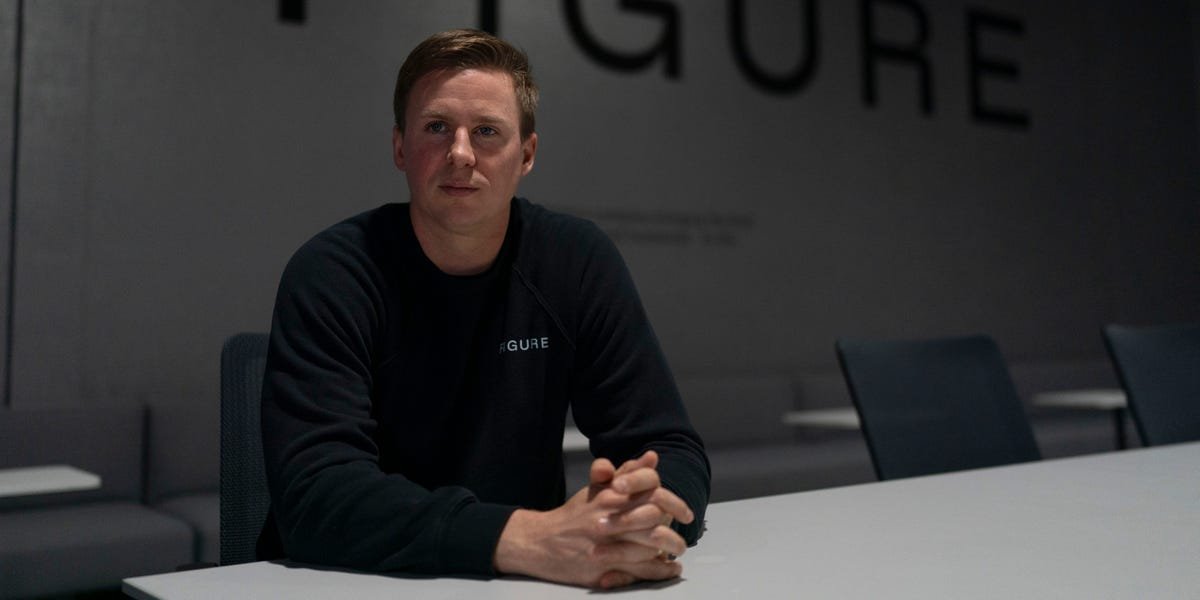
Figure AI has been flooded with résumés since its founding in 2022, according to the startup’s founder and CEO, Brett Adcock.

“Just checked, 176,000 job applications at Figure the last 3 years,” he wrote in an X post on Saturday. “We’ve hired ~425 people.”

That amounts to a hiring rate of about .24% within the three years. Adcock wrote that most of the submissions were “slop.”

The spread of the 176,000 applications over the three years is unclear. Adcock did not immediately respond to a request for comment.

Even if the number of applications were divided equally among the years Figure AI was operating — just under 59,000 applications a year — the acceptance rate would still be lower than that of the hardest university to get into. Caltech had the lowest acceptance rate of 3%, according to US News & World Report’s rankings list.

Adcock wrote in the comments of his X post that the review process has been a slog.

“We go through these one by one like a monkey — it’s incredibly time consuming,” he wrote.

According to the CEO, the “ATS” or applicant tracking system — a software employers use to sift through résumés — can’t save a lot of time if a company is being barraged with hundreds of thousands of applications.

“In the ATS it takes at least 20 seconds of button clicks per submission even if it’s garbage,” he wrote.

Adcock did not immediately respond to a request for comment.

A company like Figure AI sits right in the intersection of two trends within the job market.

Today’s job candidates aren’t applying to just a handful of roles. Business Insider’s chief correspondent Aki Ito reported that the average job opening saw 242 applications, citing data from Greenhouse, a leading ATS platform.

“Applying to a job in 2025 really is the statistical equivalent of hurling your résumé into a black hole,” Ito wrote.

On the other hand, Figure AI operates in one of the hottest spaces of the tech industry, that is, robotics and artificial intelligence.

Top tech firms like Meta and OpenAI are in the midst of an AI talent war, offering up to seven- to nine-figure pay packages just to poach superstar AI researchers.

Even tech startups are scrapping for AI talent, floating higher equity packages and other perks that may not come as easily at a big company, such as a co-founding title or more time for research.

Figure AI happens to be one of the leading names in the humanoid robotics space.

The company recently raised more than $1 billion in its Series C funding round — with backing from Parkway Venture Capital, Brookfield Asset Management, and Nvidia, among others — for a $39 billion valuation.

Adcock said on X that he may need to find another way to sift through résumés.

“Need a model to do this for us better, maybe I’ll work on one,” he wrote.


Source link