I-compared-Martha-Stewarts-and-Ina-Gartens-BLT-sandwiches-and.jpeg

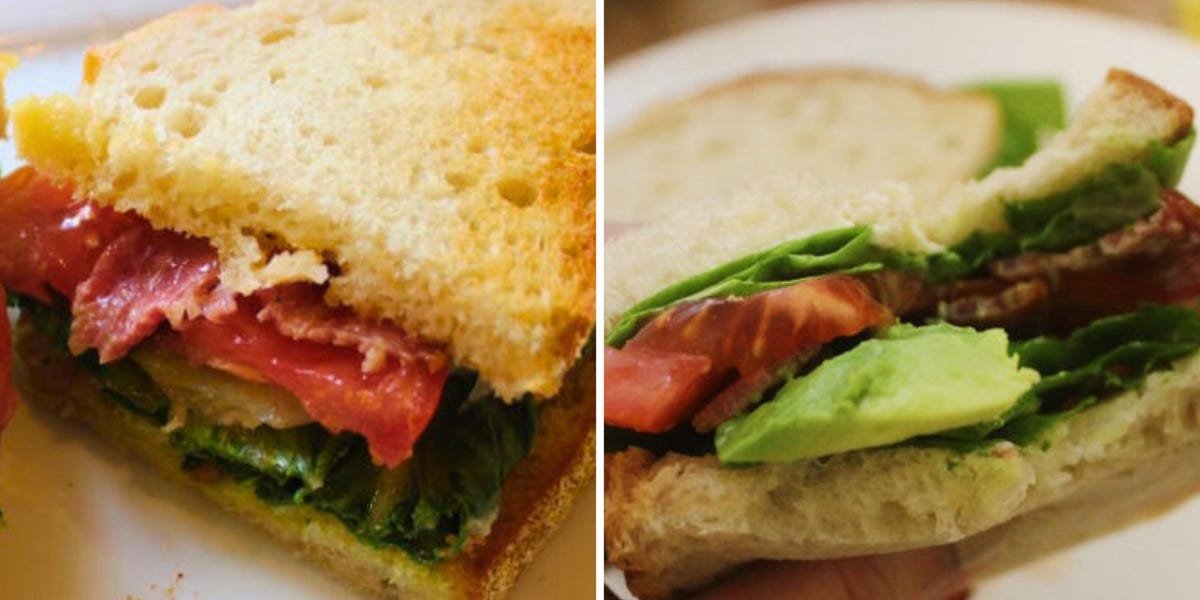
I compared Martha Stewart’s and Ina Garten’s BLT sandwiches, and I preferred the recipe with store-bought mayo

For Stewart’s homemade mayo recipe, you’ll need one large egg yolk, one teaspoon of Dijon mustard, one teaspoon of fresh lemon juice, coarse salt, white pepper — I substituted it with black pepper, as that’s what I had — and a cup of lightly flavored oil.

Stewart’s recipe called for grapeseed, sunflower, or safflower oil, but I used vegetable oil — which is also mild in flavor — because I already had it in my kitchen.

The first step in making homemade mayo is mixing the egg yolk, Dijon mustard, salt, pepper, and lemon juice.


Source link

I-rode-in-business-and-first-class-on-Amtraks-NextGen.jpeg

I rode in business and first class on Amtrak’s NextGen Acela, the fastest train in the US. Here’s how they compared.

  • The Amtrak NextGen Acela is the fastest train in the US.
  • I booked a business-class ticket from New York City to Washington, DC, for $180.
  • Then, I traveled from Washington, DC, to NYC in first class for $450.

I spent six hours and $630 on the fastest train in America.

The Amtrak Acela is the express option for travelers in the Northeast with only business and first-class seating. In August 2025, the route got a fresh new fleet called the NextGen Acela. In addition to a futuristic look and modern amenities, the train has a top speed of 160 miles per hour, making it the fastest train in the US.

In September 2025, I booked round-trip tickets between my home in New York City and Washington, DC, on the NextGen Acela. I got a taste of both classes.

First, I spent $180 for a three-hour business-class ride from New York City to Washington, DC.

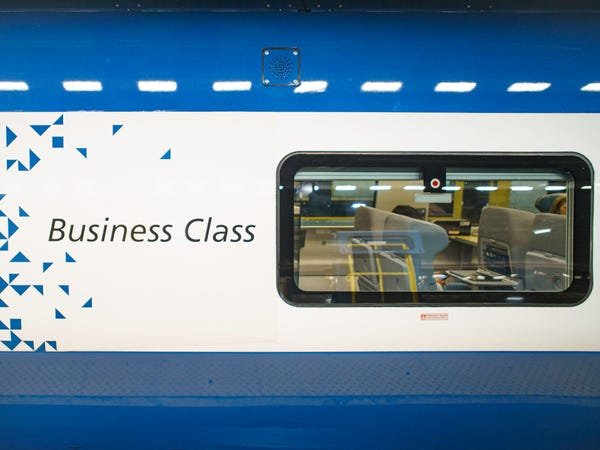
A business-class car on the NextGen Acela train.

Joey Hadden/Business Insider

Since the Acela doesn’t have coach seating, business class is the standard ticket.

Then, I rode home to New York in first class for $450.


Passengers on the left board a first-class train car on the Amtrak Acela NextGen

Passengers board a first-class car on the NextGen Acela train.

Joey Hadden/Business Insider

My first-class ticket included a meal, priority boarding, attendant service, and lounge access at the train station.

The differences between these two bookings began when I arrived at each station.


A composite image of passengers standing with luggage in a train station and a wide view of an Amtrak lounge with two tiers of seating

Inside NYC’s Penn Station (left) and inside the Metropolitan Lounge at DC’s Union Station.

Joey Hadden/Business Insider

I waited for my business-class train to Washington, DC, on the floor of NYC’s Penn Station. The waiting room was full, and it would have cost me $50 to access the Metropolitan Lounge, which is complimentary for first-class passengers.

Since I held a first-class ticket for my ride home from Washington, DC, I had access to the Metropolitan Lounge at Union Station. Other passengers can pay $35 to enter the space.

The lounge was quiet and calm. There were couches, comfy chairs, tables, and colorful works of art on the walls. I especially appreciated the espresso and beverage station, snack bins stocked with a variety of treats — all of which were complimentary — and the clean bathroom.

I boarded earlier for the first-class ride.


Passengers walk into the priority boarding line inside a train station

The priority boarding line at Union Station in Washington, DC.

Joey Hadden/Business Insider

After relaxing in the lounge, I waltzed into the priority boarding lane for my first-class ride to New York. There were fewer than a dozen people in front of me.

Unlike when I rode in business class, where I was toward the back of a long line, I had several minutes to get situated on board before the train departed.

Inside the train, the cars were color-coded.


A composite image of the inside of a blue business-class train car and a red first-class train car

Inside a business-class car (left) and a first-class car (right) on the NextGen Acela train.

Joey Hadden/Business Insider

Aboard the Acela train, I quickly caught on that blue meant business class and red meant first class. From the headrests to the bathroom doors, the matching colors made it easy to tell which car I was in.

Another key difference was the layout. There were two rows of seats on either side of the aisle in business class, while first class had a single row of seats on one side of the aisle.

The seats had all the same amenities, but my first-class one was slightly more spacious.


A composite image of a business-class seat and two first-class seats on an Amtrak NextGen Acela train

A business-class seat (left) and a first-class seat (right).

Joey Hadden/Business Insider

The NextGen Acela seats had smooth lining, soft cushions, and supportive, winged headrests. They also had reading lights, USB ports between seats, and a reclining function.

The only significant difference I noticed was that the first-class seats were larger and had more legroom. I found both to be more comfortable than any other Amtrak seat I’ve booked.

Only the first-class ticket included a meal.


An aerial view of an Amtrak chicken dinner on a tray table

The author’s complimentary lunch on the NextGen Acela.

Joey Hadden/Business Insider

During my business-class ride, I grabbed a bite in the café car, where passengers can purchase grab-and-go meals from a self-service station, as well as snacks, drinks, and quick hot meals prepared by an attendant. I ordered a breakfast sandwich, which I thought tasted pretty decent for a microwaved meal, and brought it back to my seat.

In first class, I received attendant service and had a menu of complimentary meals to choose from.

I selected the chicken dish, which consisted of a charred thigh paired with roasted squash, verde sauce, a hard roll, and a Key-lime pie in a jar.

It was the most delicious and satisfying meal I’d ever had on an Amtrak train.

The bathrooms were identical.


The author stands in front of a mirror in an Amtrak NextGen Acela train with a red shelf on the left

Inside a bathroom on the NextGen Acela train.

Joey Hadden/Business Insider

Save for the color of the door, the bathrooms in each class are the same, an Amtrak representative told Business Insider. I was impressed by how clean, spacious, and high-tech they were.

These bathrooms featured automatic doors, lights to indicate when the space was in use, and ample room to stretch. I also appreciated the touch-free faucets, soap dispensers, and hand dryers.

Ultimately, I discovered that the fastest train in America was also the most comfortable.


A composite image of the author sitting in a first-class Amtrak NextGen Acela seat and the exterior of the front of the train

The author enjoys her ride on the NextGen Acela.

Joey Hadden/Business Insider

After my back-to-back three-hour journeys on the Amtrak NextGen Acela train, I expected to be thrilled to get off the rails. But my experiences were so comfortable that I was in no rush to exit. When we pulled into NYC’s Penn Station, I let other passengers get off first while I soaked up a few more minutes in my first-class seat.


Source link

Kalshis-CEO-compared-his-companys-net-positive-rivalry-with-Polymarket.jpeg

Kalshi’s CEO compared his company’s ‘net positive’ rivalry with Polymarket to Tom Brady and Eli Manning

Kalshi’s CEO says his company’s rivalry with Polymarket has parallels to two sets of sporting legends.

In an episode of the “20VC” podcast released on Monday, Tarek Mansour explained how prediction market rival Polymarket has encouraged his company to work harder.

“What I’m learning over time is that an industry truly becomes an industry when there’s a rivalry, because that rivalry will push you beyond the limits of what you thought you could get to,” Mansour said.

He compared the companies to National Football League quarterbacks Tom Brady and Eli Manning.

“When Tom Brady kind of reflected on that back in the day, he’s like, ‘You know, we were like the most ferocious on the field, and we fought each other,'” Mansour said. “But then over time, he became grateful for that because he realized that without Manning being in there and vice versa, he would have never achieved what he achieved.”

“I think that’s happening in prediction markets,” he added.

Kalshi, founded in 2018, lets users bet on the outcome of events such as elections, sports matches, and economic indicators. Last week, it announced partnerships with media giants CNN and CNBC, and said that it raised $1 billion at a valuation of $11 billion.

Polymarket, its blockchain-enabled competitor, was founded in 2020 and offers similar services. It was last valued at $13.5 billion in November, per PitchBook.

The popularity of prediction platforms has exploded since a legal victory for Kalshi in the US last fall. Now, users can bet on questions ranging from the popularity of Labubu dolls to Elon Musk’s net worth.

Last year, Mansour said in an interview that his employees asked social media influencers to promote memes about an FBI raid on the home of Polymarket CEO Shayne Coplan. On Monday’s podcast, Mansour called the move a “mistake” and said he “made clear to the team: ‘Don’t ever do this again.'”

Mansour also compared the two companies to soccer stars Lionel Messi and Cristiano Ronaldo, and said that it was not a coincidence that the two “greatest” players exist in the same era.

“Without Polymarket, we wouldn’t have pushed our marketing and pushed our product as hard,” he said. “That sort of infighting is going to push both of us to scale this industry and reach heights that we honestly wouldn’t have been able to otherwise, which long-term is actually net positive for the customer.”

Polymarket did not immediately respond to Business Insider’s request for comment about Mansour’s comparisons.


Source link