Some-ships-are-sailing-through-the-Strait-of-Hormuz-Others.jpeg

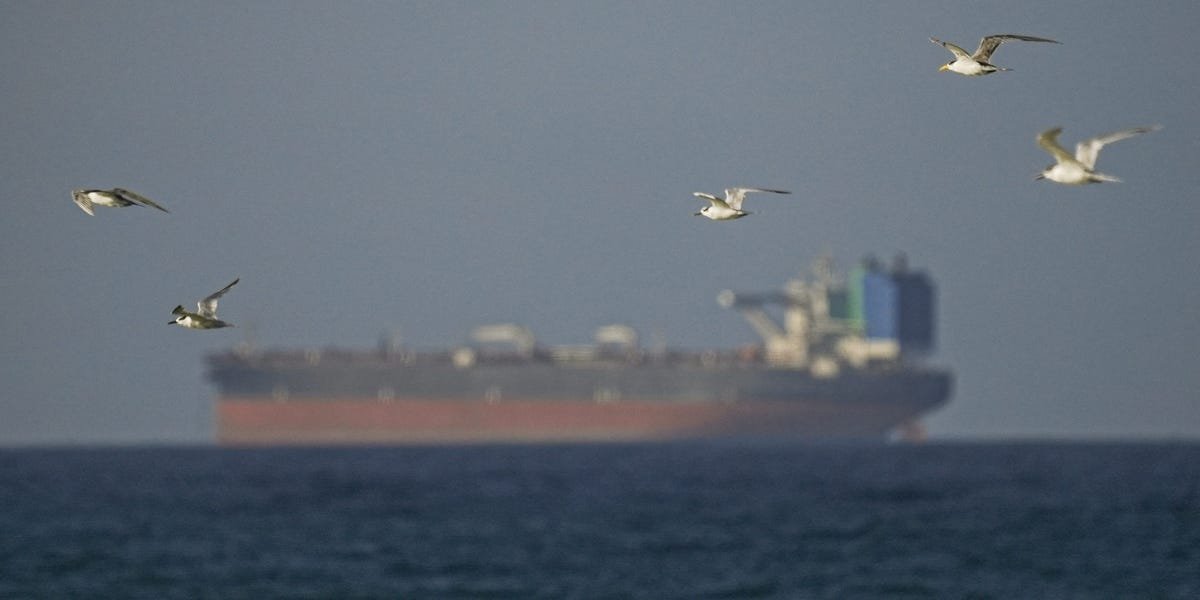
Some ships are sailing through the Strait of Hormuz. Others are turning around. Here’s what ‘completely open’ looks like for now.

Iran announced Friday morning that the Strait of Hormuz is open for maritime traffic, and mid-afternoon data showed that commercial vessels were passing through the strategic waterway, though only a small number.

Friday evening, a large group of vessels sailed toward the strait but inexplicably turned away, ship-tracking data shows, raising questions about the status of this critical chokepoint.

Opening the strait has been a central demand since the start of a fragile ceasefire earlier this month and amid the ongoing negotiations between Washington and Tehran.

Seyed Abbas Araghchi, Iran’s foreign minister, said in a statement on social media Friday that “the passage for all commercial vessels through Strait of Hormuz is declared completely open for the remaining period of ceasefire, on the coordinated route as already announced by Ports and Maritime Organization of the Islamic Rep. of Iran.” The announcement follows a ceasefire between Israel and Lebanon.

Iran’s coordinated route appears to refer to previously released guidance that takes ships through the northern part of the waterway closest to Iran, which has said that the route was determined by security needs. Separate from Iranian considerations, US forces have been working to establish safe passage in the strait, where mines continue to represent a potential threat.

Shipping organizations have had mixed reactions. Some welcomed the news as a positive signal, while others urged caution. It is unclear how much has changed with Friday’s announcement from Iran.

President Donald Trump acknowledged Iran’s Friday statement in a Truth Social post, writing that “Iran has just announced that the Strait of Iran is fully open and ready for passage.” The market reaction to the announcement saw stocks climb higher and oil fall.

The strategic Strait of Hormuz is a narrow chokepoint linking the Persian Gulf to the Gulf of Oman and a major artery for global shipments of oil and natural gas.

MarineTraffic data from Friday afternoon showed that just over half a dozen commercial vessels had transited the strait since the announcement.

Data from KPler, a real-time trade intelligence platform, showed that eight commercial vessels had crossed as of 2 pm EST Friday compared to five on Thursday. The data refers to commercial fleets of crude tankers, LPG, LNG, and dry bulk vessels. Containerships are not included in the count. But by the evening, new data showed ships were turning back.

The limited number of ships that have gone through is a fraction of the pre-war normal. Before the war, the strait saw an average of over 120 transits daily.

Earlier in the week, days before the announcement on the strait, US Navy warships set up a blockade of Iranian ships and ports. Trump said the blockade will remain in effect until Washington and Tehran reach a deal to end the war.

US Air Force Gen. Dan Caine, chairman of the Joint Chiefs of Staff, has highlighted the role of the Navy’s Arleigh Burke-class destroyers in the blockade during a briefing Thursday but didn’t specify numbers involved.

Dozens of surveillance aircraft, refueling planes, and drones are also involved in the blockade. US Central Command, which oversees operations in the Middle East, said Friday that 19 vessels have turned around to comply with blockade restrictions since it began on Monday.

The US set up the blockade amid a tenuous ceasefire between the US and Iran, which was reached after more than a month of war. US military leaders have asserted that American forces remain poised to resume combat operations should the negotiations fail.


Source link

Snap-CEO-Evan-Spiegel-says-his-work-schedule-is-completely.jpeg

Snap CEO Evan Spiegel says his work schedule is ‘completely insane’ but he reserves Sundays for family

Evan Spiegel seems to be adeptly juggling work and family — while also finding time to crusade against excessive screentime.

The CEO and cofounder of Snap, the parent company of Snapchat, spoke at length about his work-life balance during the latest episode of the “David Senra” podcast.

Spiegel, 35, is raising four children with supermodel Miranda Kerr. He said the older three kids attend the same school in Santa Monica that he did, and insist that he escorts them into the building at drop-off.

“I’m used to doing the long walk in while everyone’s in the carpool line,” the tech billionaire said, adding that “what’s fun about that is you get to connect with everyone and say hi to other parents and teachers,” including some who once taught him.

However, Spiegel acknowledged there have been “a lot of days” recently where he’s left for work before the kids wake up, and returned after they’ve gone to bed.

He explained that he’s leading Snap at a critical juncture. The company is hustling to reaccelerate Snapchat’s advertising growth while also gearing up to launch its augmented-reality (AR) glasses, Spectacles, later this year.

The upshot is that Spiegel’s schedule is “completely insane” and “untenable,” he said, adding that his role now feels like a “seven-day-a-week job.”

Yet he still appears to be striking a balance between leading a $8 billion public company, and finding time for his young family.

“I always try to keep Sunday protected,” Spiegel said. “We go to church as a family, we go to brunch, and then I spend the afternoon with our kids and that’s super important to me.”

Spiegel said that he manages his stress by spending time with his wife and kids, trying to exercise every morning, and practicing Kriya meditation a couple days a week, which he finds to be “incredibly energizing.”

He said that Kerr, best known for her time as a Victoria’s Secret Angel, is “brutally honest in a very loving way.”

Living in the same city that he grew up in, Los Angeles, also means he has a circle of “high-school buddies” close by who he can speak to about what’s going on in his life and “count on” to be honest with him.

Spiegel said Kerr is “obsessed” with her health-tracking Oura Ring, and eventually convinced him to wear one for a week. She was “shocked to learn” that he was “in the relaxed state all day long” and slept seven to eight hours a night, he added.

The Snap CEO said that his job has high stakes and time pressure, but he finds those to be “more exciting than stressful” as he enjoys and feels inspired by “periods of intense change.”

The social-media entrepreneur also said he seeks to “reframe stress as an opportunity” to grow. He gave the example of initially shying away from public speaking and holding company-wide Q&As as a young executive, then forcing himself to learn how to love those occasions.


Evan Spiegel and Miranda Kerr.

Spiegel sounded the alarm on people staring at their smartphone screens. 

Steve Granitz/FilmMagic


War on screens

Surprisingly, for the creator of a mobile app with around 950 million monthly users, Spiegel is known for being anti-screen and minimizing his children’s exposure to smartphones, tablets, and TVs.

He bemoaned that many people today are “staring at screens” for seven or eight hours a day, and report they’re “pulling them out of the moment or away from friends” and stopping them from connecting with their loved ones at the dinner table.

The Snap chief said he wants people to harness the power of computing while still connecting with other people, the outdoors, and the world.

“What if aliens are watching Earth right now and they’re terrified that smartphones have taken over humanity,” he said. “We’re spending all day long caring for these things, and plugging them in, and tending to them, and our lives are all oriented around these little screens.”

Spiegel added that he imagines “aliens are sending specs, sending these glasses to save people from their lives that I think have become so oriented around screens.”


Source link

Katherine Tangalakis-Lippert's face on a white background

Bill Gates says claims in Epstein email are ‘absolutely absurd and completely false’

Bill Gates, through a spokesperson, issued a strongly worded denial Friday on the latest allegations to emerge about his relationship with disgraced financier and accused sex trafficker Jeffrey Epstein.

The Department of Justice, as part of more than 3 million pages of documents related to Epstein, released on Friday, unsealed 2013 emails Epstein wrote to himself.

They appear to be notes he was drafting for a person named Boris, who worked for the Bill & Melinda Gates Foundation, to send to Bill Gates after a dispute.

One of the emails, with the subject line “bill,” suggests that Bill Gates had requested medication for a sexually transmitted disease to “surreptitiously” give to his now ex-wife, Melinda French Gates.

Another email said Boris had helped Bill Gates “get drugs,” and helped facilitate “illicit trysts” between the billionaire Microsoft founder and “Russian girls” as well as “married women.”

The emails contain no corroboration of the claims.

“These claims are absolutely absurd and completely false,” a spokesperson for Bill Gates told Business Insider in a statement. “The only thing these documents demonstrate is Epstein’s frustration that he did not have an ongoing relationship with Gates and the lengths he would go to entrap and defame.”

It’s unknown whether the emails’ text was ever sent to Gates, the founder of Microsoft, a global philanthropist, and once the richest man in the world. Since Epstein’s 2019 suicide at a federal jail, Gates has faced questions about the extent of their relationship.

In the past, Gates has said he attended several dinners with Epstein for philanthropic reasons and now regrets spending time with him.

The Wall Street Journal reported in 2021 that Melinda Gates began seeking divorce counsel in 2019, around the time news of Bill’s meetings with Epstein surfaced publicly. She told CBS in 2022 that her ex-husband’s ties to Epstein were a factor in their split.

Correction: January 31, 2026 — An earlier version of this story indicated that Gates’ philanthropic foundation issued a statement. It was made by a personal spokesperson.


Source link

After-spending-150-days-on-Princess-Cruises-I-earned-Elite.jpeg

After spending 150 days on Princess Cruises, I earned Elite status. These 4 perks have completely elevated my experience.

Even after working on cruise ships for years, I love this form of travel. And although I’ve sailed with many cruise lines over the years, Princess stands out for its beautiful ships and interesting itineraries.

Just like airlines, most major cruise lines offer loyalty programs, and on every sailing, guests earn credit toward their status.

Although chasing status is never my goal, I gained the highest level — known as Elite — on Princess Cruises’ Captain’s Circle program, after spending 150 days at sea over three years.

Here are five Elite status perks that have completely elevated my sailing experience.

Priority access to water shuttles means more time spent at our destinations


A person holds a priority water shuttle ticket for Elite guests.

I love not having to wait for a water shuttle.

Tammy Barr


Some ports have small or shallow harbors that require cruise ships to anchor offshore and use smaller boats (known as tenders or water shuttles) to take guests ashore.

It’s often a confusing and irking part of the cruising experience because it takes time to load and maneuver these small boats to the pier, which can result in guests waiting hours to go ashore.

Luckily, as an Elite member, I now receive priority access to these water shuttles. My last cruise had three ports where a water shuttle was required to go ashore, and this benefit alone saved me from waiting and worrying about how long it would take to leave the ship.

In the past, I’ve woken up very early and waited in long lines for water shuttle tickets. I’ve also had my independent port plans ruined because of slow tender operations.

With Elite status, though, I’m able to take my entire family on the first tender of the day without having to set an early alarm.

I also have access to complimentary laundry services


Slips of paper and a paper bag on a bed.

As an Elite member, I can have my clothes washed and folded for free.

Tammy Barr


On Princess ships, passengers can pay to access self-service laundromats, as well as full-service laundry and dry cleaning. As an Elite passenger, however, I can send out my dirty laundry and have it washed and folded for free.

This means I no longer have to spend time doing laundry on vacation. Instead, I put my clothes in a bag, and they return clean and folded within a day or two.

I like to use the service for things like socks and underwear, and it’s nice to know I can pack less for long cruises.

Internet access is offered at half price

Although I try my best to disconnect when I’m on vacation, I typically purchase a WiFi package to check in with family members and friends back home.

WiFi is included in some bundled packages, but can also be purchased separately. Luckily, as an Elite member, I receive 50% off all WiFi packages.

There are opportunities for free and discounted food and drinks


An alcoholic beverage and hors d'oeuvres on a table.

I love enjoying free drinks and hors d’oeuvres.

Tammy Barr


One of my favorite parts about being an Elite member is that I get access to discounted food and drinks. For example, certain suites on Princess cruises come with a one-time mini bar, but as an Elite member, this is a perk I get to enjoy on every sailing.

My room comes stocked with 10 alcoholic and 10 non-alcoholic drinks, which include a mix of liquor, beer, soda, and sparkling water. With the price of alcoholic drink packages now up to about $100 per day for each guest, I think this perk provides a good value.

On one formal night each cruise, Elite loyalty members are also invited to the Captain’s Circle party, which includes live music, complimentary drinks, and hors d’oeuvres.

Plus, on formal night, I have the opportunity to order and enjoy delicious hors d’oeuvres while getting ready. I’ve enjoyed small plate options like seared tuna, salmon, and beef — all paired with the mini-bar drinks to create a fun happy hour vibe in my cabin.

I save a lot of money by taking advantage of the various hosted food and drink events on board. In fact, I don’t even purchase a drink package anymore.


Source link