
ABC-cast-a-Bachelorette-known-for-scandal-It-couldnt-handle.jpeg

ABC cast a ‘Bachelorette’ known for scandal. It couldn’t handle it when she gave them another one.

Taylor Frankie Paul’s “Bachelorette” season was shaping up to be the Most Dramatic Season Ever. Now, it will go down in history as the Most Dramatic Season to Never Exist.

In September, the decision to cast 31-year-old Paul, a TikToker and the star of Hulu’s hit reality series “The Secret Lives of Mormon Wives,” as the next Bachelorette was framed as a groundbreaking change of pace for the famously risk-averse juggernaut. The long-running franchise’s ratings have been in steady decline since the late 2010s, so things were finally dire enough to cast their first lead from outside the franchise. Enter Paul, a messy single mom whose exploits on “Mormon Wives” had already buoyed ABC’s Disney-owned sister network to record-breaking ratings.

It was a surprisingly big swing for the network that was praised for promising to breathe new life into the franchise. But when you swing that big, you have to be ready to whiff spectacularly.

That’s what happened on Wednesday, when the network made the decision to pull the plug on Paul’s season of “The Bachelorette” amid a police investigation into a February incident of alleged domestic violence between Paul and her ex, Dakota Mortensen, and the leak of a disturbing video from Paul’s previously reported altercation with Mortensen in 2023.

Never mind the gauntlets of already-completed press, the estimated $8.2 million in TV promos, or the fact that the season had already wrapped filming and was set to premiere in three days’ time. The dream was over for Paul.

Perhaps it’s time the dream of “The Bachelor” and “The Bachelorette” is, too.

Casting Taylor Frankie Paul was always going to be risky


A man in a suit sits on a couch next to a woman in a white dress who's wiping away tears.

Dakota Mortensen and Taylor Frankie Paul’s off-and-on relationship has been chronicled on “The Secret Lives of Mormon Wives.” 

Fred Hayes/Disney


Chaos has always been Paul’s brand. Before Paul was poised to be the star of not one but two television shows, she was the self-destructive and eminently watchable leader of MomTok, a loose collection of Mormon moms who make TikToks together in Utah. Though the women gained followings for their perfect barrel curls and silly dancing videos, it was a bombshell 2022 video of Paul admitting to “soft swinging” with other members of MomTok and their husbands that catapulted her and her circle of friends to infamy — and got them a Hulu reality show.

Hulu learned early in filming “Mormon Wives” that the very qualities that made Paul a compelling reality-television character would also make her a liability. In 2023, the show paused production when Paul was arrested after an altercation with Mortensen and was charged with aggravated assault, child abuse, and domestic violence in the presence of a child. She pleaded guilty to the aggravated assault charge — a third-degree felony — in exchange for the other charges being dropped, and entered a plea of abeyance for 36 months, after which time the charge would be lessened to a misdemeanor if she abided by the terms of her probation.

“Mormon Wives” chronicles this incident in its very first episode, airing police bodycam footage of a distraught Paul being arrested at her home in Utah. The next episode picks up a year later, with Paul pregnant with Mortensen’s child and the couple back together. (Their child, Ever True, was born in March 2024.)

Throughout the show’s four seasons, Paul has emerged as one of the most compelling, frustrating, and mesmerizing characters on reality television. She takes the arrest and subsequent therapy and treatment hard, sobbing onscreen in moments that feel too private to be broadcast to the world. She repeatedly admits to being at fault in the 2023 incident in interviews and on “Mormon Wives.”

She prostrates herself so deeply at the altar of accountability that she can only counterbalance it by doing something so self-destructive — posting shady TikToks about her friends, sleeping with Mortensen the night before leaving to film “The Bachelorette” — that she’s forced to repeat the cycle anew.

That’s all to say that ABC should have seen this coming. The fact that they didn’t or couldn’t course-correct in time underscores the Bachelor Nation’s Achilles’ heel: inflexibility.


A still from

Paul and Mortensen share one child, Ever True, born in March 2024. 

Fred Hayes / Disney


After over 50 seasons of “The Bachelor” and “The Bachelorette” combined, plus dozens more spinoffs, the franchise has done precious little to evolve as the pool of reality dating shows has become increasingly crowded. Its efforts to increase racial diversity among the cast have backfired several times, and its format of dates and rose ceremonies has remained almost entirely unchanged over two decades. A change in showrunners and a new aesthetic for the 10th season of the spinoff “Bachelor in Paradise” caused a minor stir, mostly serving as a reminder of just how stale the flagship series has become by comparison.

For all the promo material that boasted Paul’s “Bachelorette” season would “break the mold,” ABC dropped their star the moment her signature brand of chaos — not to mention her previously known 2023 arrest, which acts as part of her origin story on season one of “Mormon Wives” — became a drawback to the network instead of a selling point.

Whatever you think of the leaked video, of Paul and Mortensen’s relationship dynamic, and whether either of them should have a platform or be on reality television while both openly battling issues with addiction and mental health, the fact remains that “The Bachelorette” tried and failed to have it both ways. The most frustrating part is that the franchise may learn the wrong lesson from the fiasco.

‘The Bachelor’ franchise needs to stop pretending its leads are role models


A woman in a red dress stands in front of a stained glass window holding a book that says

Taylor Frankie Paul’s Bachelorette promo photos leaned into her Mormon background. 

Disney


From the moment a gaggle of women stepped out of the limo in the series’ groundbreaking 2002 premiere, “The Bachelor” has been committed to selling the idea of a romantic fairy tale. Red roses are currency toward earning the man or woman of your dreams. Contestants talk about meeting the love of their life, of the engagement they’ve been dreaming of since they were little girls. Overnight dates are still called the “Fantasy Suites.”

While two-plus decades of competitive romance have softened some of the franchise’s buzzwords into meta-commentary on the show itself (who is “here for the right reasons?“), the show’s operating principle still rests on the idea that its lead is the most perfect person worthy of “finding love.”

The concept of casting a complex, deeply flawed woman as a romantic lead was inspired and would no doubt have made for a compelling season of television. But the show chose Paul without considering the shackles it would inherently place on her. Bachelor Nation viewers still expect leads to be unimpeachable role models — Taylor Frankie Paul was a fascinating choice because she got famous precisely because she is not.

Where this leaves “The Bachelorette,” ABC, Paul, Mortensen, and the rest of the “Mormon Wives” cast remains to be seen. Disney Entertainment, Paul, and Mortensen have all released statements that emphasize they will be “focusing on family” amid the news; filming for the fifth season of “Mormon Wives” is currently on pause.

But as the dust settles in Hollywood and Salt Lake City, Paul shouldn’t be the only one doing some repenting. Scrapping the season shouldn’t teach ABC brass that risks aren’t worth taking. It should show them that if they’re going to shake up the franchise, they can’t expect one woman’s unpredictable personality to provide an advertiser-safe earthquake that will do the work of dozens of top producers and executives.

If the franchise is going to stay afloat, it needs to find something new, entertaining, and poignant to say about modern dating and the concept of a happy ending. At one time, Paul’s casting represented a chance to do exactly that. Pulling her season shows the network was more interested in juicing ratings, as long as the outcome wasn’t as messy as its lead. Perhaps it’s time to question if ABC cast her for the wrong reasons.


Source link

I-moved-from-the-US-to-Brazil-after-losing-my.jpeg

I moved from the US to Brazil after losing my job. Despite the intense culture shock, I couldn’t be happier with my decision.

After an incredible three weeks traveling around Brazil, I was on the first leg of my flight home to Chicago when I received a message from my director at work — a 15-minute “check-in” with an HR representative.

Worried I might receive news of a layoff, I frantically deboarded the plane after landing in Rio de Janeiro and joined the call in a quiet corner of the duty-free section of the airport. There, I was informed that my role had been eliminated.

Faced with the reality of returning home to the frigid Chicago temperatures with no job, I quickly changed my connecting flight and decided to hostel-hop around Brazil for another month.

However, even that extra month didn’t feel like long enough in the country I’d fallen in love with. Exploring beautiful destinations while practicing a new language every day was incredibly fulfilling for me.

Once I went back to the US, I realized I was looking for ways to push myself out of my comfort zone. I had always wanted to live abroad, and my unemployment seemed like the perfect alignment to make that move to another part of the world.

So, a few months after my original trip, I relocated from Chicago to São Paulo and was greeted by lots of surprises along the way.

Coming from Chicago, I didn’t expect to feel chilly in São Paulo


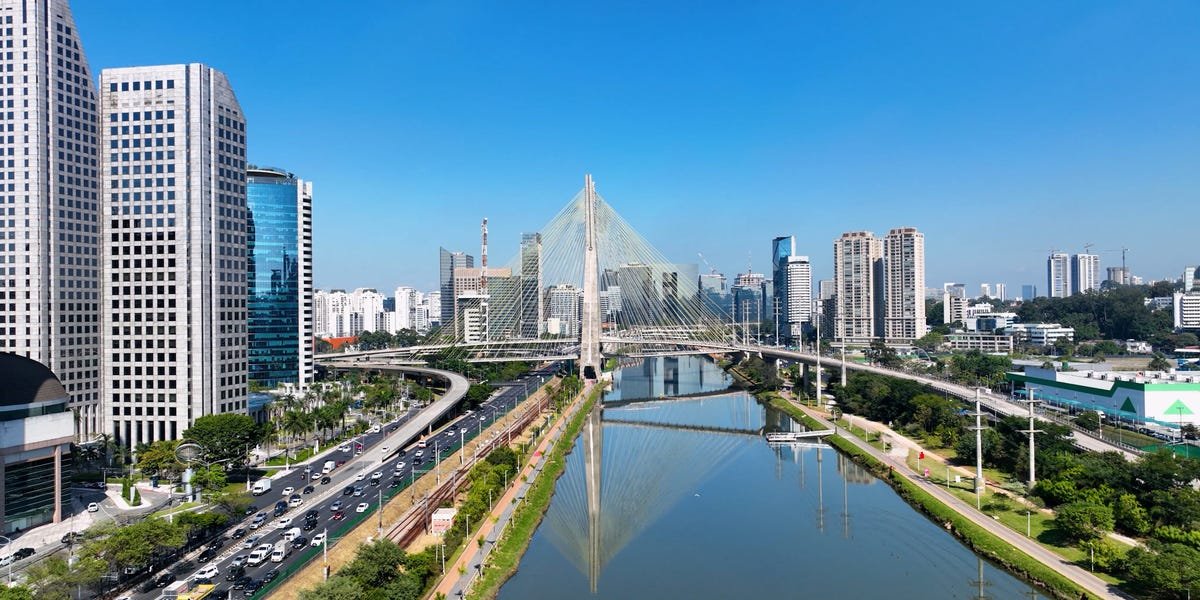
The cityscape of São Paulo.

The temperatures in São Paulo caught me by surprise.

Cristian Lourenço/Getty Images


Growing up in the Midwest, I’ve endured my fair share of snowstorms and wind chills so cold that I felt as though my eyelids would freeze together. So, I felt well-equipped for any kind of cold weather Mother Nature could ever throw my way.

Even so, I wasn’t prepared for just how chilly Brazil could feel — especially during a springtime cold front while living in an area without access to central heating.

Although Brazil’s springtime temperatures (which last from September through November) are similar to what I experienced during the Chicago fall, it was difficult to adjust to the lack of central heating. So, I found myself wearing multiple layers of T-shirts and the only hoodie I brought with me.

Before I moved, I’d only visited Brazil during its smoldering summer months, so I had naively assumed the subtropical temperatures in São Paulo would be pleasant year-round.

The food is different — and that’s not a bad thing


A plate of acarajé with shrimp.

I’ve grown to love acarajé: stuffed black-eyed-pea fritters

Isaiah Reynolds


Between seeing unrefrigerated milk in grocery stores to trying vegetables I’ve never heard of, the day-to-day food in Brazil is a lot different than what I was used to in the States.

For example, contrary to the common American adage, breakfast doesn’t seem to be the most important meal of the day here; many Brazilians opt for bread or fruit instead of the hefty pancakes or sausage links I was accustomed to.

For lunch and dinner, many locals seem to rely on a tried-and-true formula: arroz (rice), feijão (beans), some meat, and salad.

Classic dishes like stroganoff (a creamy chicken or beef dish topped with crispy shoestring potatoes) or feijoada (pork and black bean stew) may enter the rotation. Still, the aforementioned combo is a popular default dish that I’ve grown to love.

Although tavern-style Chicago pizza still holds a special place in my heart, my new Brazilian favorites include acarajé (stuffed black-eyed pea fritters fried in dendé oil), acerola (a sweet cherry fruit), and doce de leite (sweet caramelized milk used as a topping or filling).

Plus, there’s a pretty great international food scene here, too. While wandering around the city, I’ve come across a wide range of cuisines, from Lebanese and West African restaurants to Colombian and Venezuelan spots.

Although I was initially worried about feeling welcomed, I can see myself putting down roots here

One thing I’ve noticed since my first visit to the country is that Brazilians are very proud to be Brazilian.

From football matches to the celebrations that occur when Brazilian films are nominated for Academy Awards, the people here seem to be the loudest and proudest fans in the room.

Because of this, I was worried I might not feel as welcome as an outsider. Instead, I’ve found an endearing level of curiosity among many Brazilians I’ve met, who either want to practice English or ask how I’m enjoying their beloved country.

This openness to connect has softened a lot of the original culture shock during my move. Although very different from my life in Chicago, I’m excited to continue building a life for myself in São Paulo.


Source link

Will-Lewis-couldnt-fix-the-Washington-Post-Thats-on-Jeff.jpeg

Will Lewis couldn’t fix the Washington Post. That’s on Jeff Bezos.

Will Lewis, the former CEO and publisher of the Washington Post, had a terrible tenure at the paper. The two years he spent there, which ended Saturday with a two-paragraph memo, are chiefly notable for a series of cuts and layoffs, culminating in a 30% bloodletting days ago.

But let’s be clear: This one is on Jeff Bezos.

Most obviously, that’s because Bezos owns the Post, and Bezos was the one who hired Lewis to run the business for him.

Bezos was also the one signing off on Lewis’s actions at the paper, which mostly amounted to making the paper smaller while telling the staff that “people are not reading your stuff.”

And slightly less obviously, it was Bezos who dramatically worsened the Post’s business outlook. He decided not to endorse a presidential candidate in 2024, weeks before the election — a move that outraged many Post readers, who saw the non-endorsement as an attempt to cater to Donald Trump.

That led to more than 250,000 subscriber cancellations, a huge problem for a paper whose circulation peaked at 3 million in 2021.

The best case argument you could make for Lewis era at the Post, if you are inclined, would go something like this: Bezos, who bought the Post in 2013 and then invested heavily in staff, realized a few years ago that he now employed many more people than his business would support. So he brought Lewis in to do the grim work of shrinking the publication. Now that work is done, so Lewis can do something else and Bezos can find someone to help the Post grow again.

But the timing of Lewis’ departure — late afternoon on a Saturday, following days of howling from Post employees and many others about Lewis and Bezos’ stewardship of the paper — suggests this was not a long-in-the-making move.

And again, whether Lewis jumped or was pushed doesn’t matter in the end. The Washington Post is Jeff Bezos. He gets praise if things are going well — which, for several years after his purchase, seemed to be the case — and blame when it doesn’t.

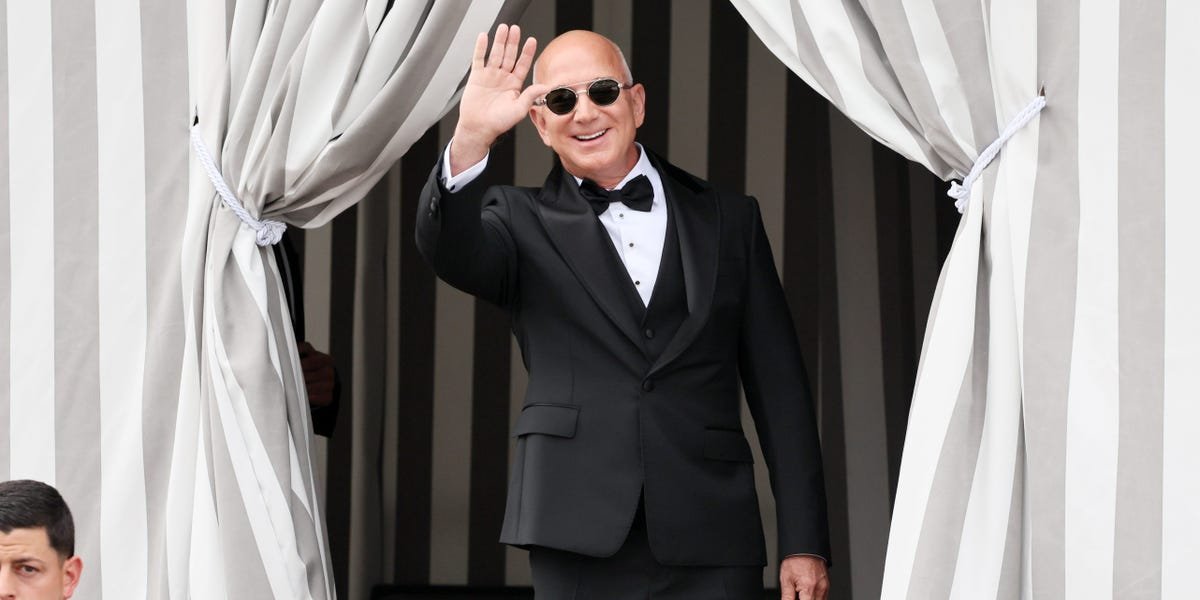
Here I’ll also point out that Bezos, who has no problem being seen jet-setting around the world in a style befitting the world’s fourth-richest man, has been totally MIA during his paper’s recent turmoil.

On Saturday, when the paper announced it had promoted Post CFO Jeff D’Onofrio to acting publisher and CEO, Bezos finally attached his name to a public statement, promising that the new Post would thrive by giving readers things they wanted to read.

“The data tells us what is valuable and where to focus,” he said in a Post press release.

That might qualify for an insight 30 years ago, when newspapers were struggling to respond to the internet. Now that’s table stakes, and you would hope the guy who created Amazon has more up his sleeve.

I have a bunch of ideas,” for the Post, Bezos said in the fall of 2024. “I’m working on that right now.”

We’re still waiting.


Source link