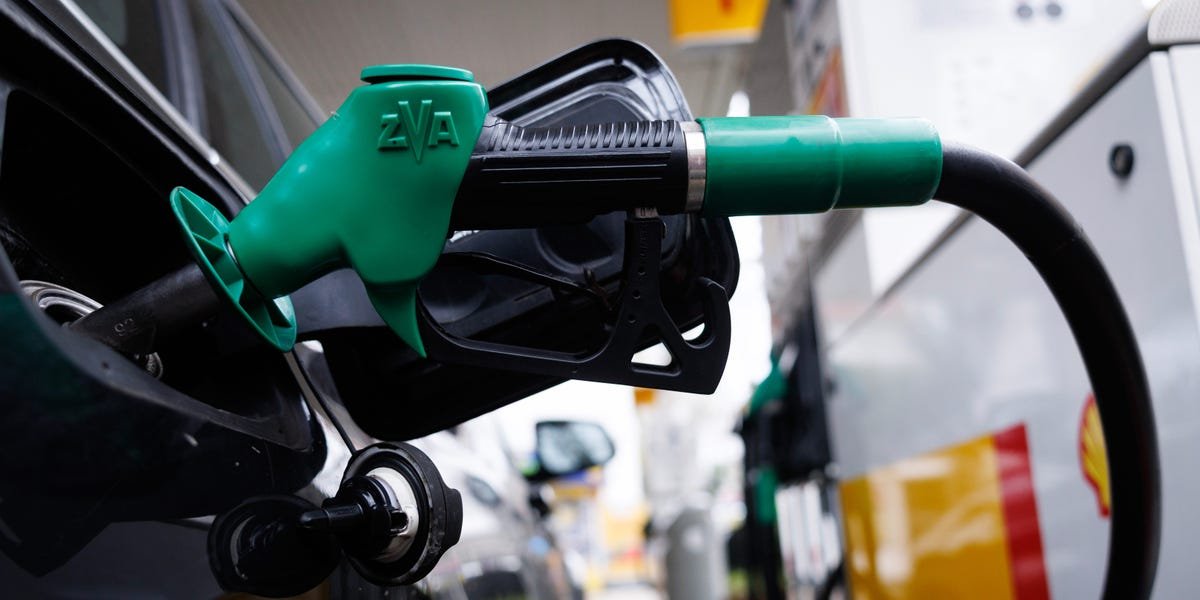
The Philippines has taken several measures in order to bring down energy use, including a four-day workweek for government staff and orders to cut the use of electricity and fuel costs in government agencies.
Government offices were told in early March to implement flexible working arrangements where practical, turn off lights and computers during lunch breaks, and adjust air conditioning unit thermostats to no lower than 75 degrees.
President Ferdinand Marcos Jr. said in a video message that the four-day workweek would be temporary and does not include emergency services.
“With the expected global oil price increase, the government is preparing measures to reduce its impact on Filipino families,” the Facebook caption for the video said.
The Philippines is vulnerable to disruptions caused by the conflict, as it “relies on the Middle East for almost 90% of its oil supply,” according to ING Think.
On March 18, Marcos said that the country is seeking alternative sources of petroleum products and asked the public not to worry.
“We are trying to find different methods to provide subsidies to give assistance,” said Marcos in a press address. “The problem is that oil prices are very volatile. We can’t anticipate them. So we are still adjusting right now.”
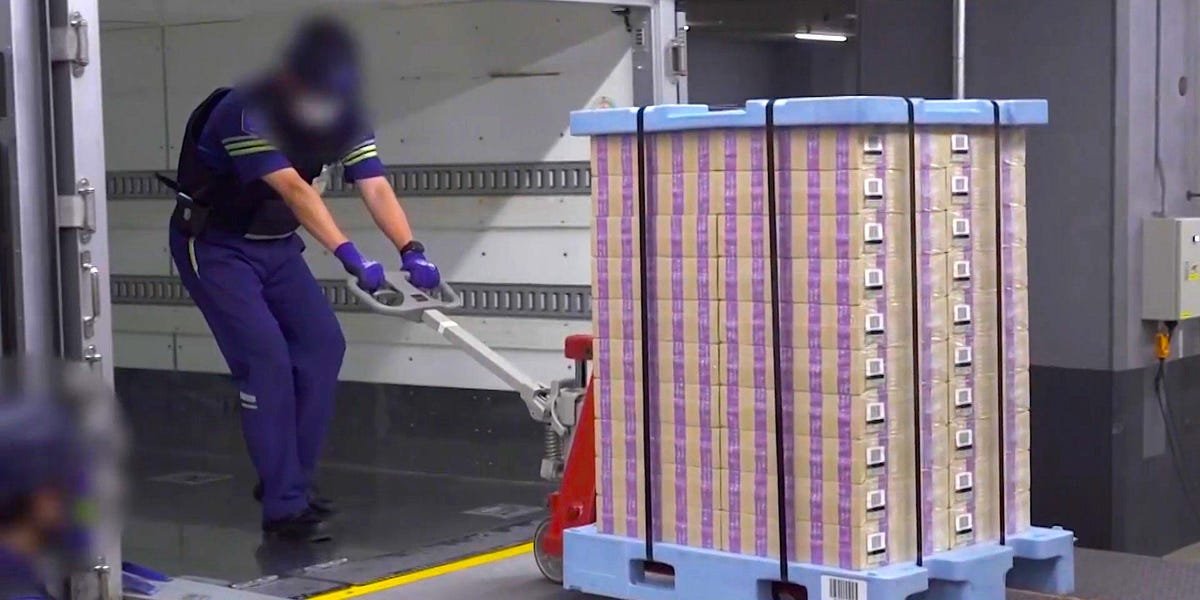
Japan has long harvested a shrub called mitsumata for its money supply. But when mitsumata started dying out, Japan frantically searched for alternatives to make yen.
It found a lifeline in the foothills of the Himalayas. A low-value crop called argeli grew abundantly and served as a perfect replacement for mitsumata.
Argeli was worth very little and was often the only option for farmers who’d lost their crops to wild animals. When the Japanese arrived, they turned the once low-value argeli into a cash crop.
Now, one of Asia’s poorest countries is growing the money for one of Asia’s richest nations. And the influx of cash brought industry and investment to Nepal’s small villages.
But while Japan loves its physical yen now, what will happen to Nepal’s new big business if the country goes cashless like much of the rest of Asia?
With its dizzying height of over 3,000 feet, the Salto Ángel waterfall has drawn tourists for decades, though it’s notoriously tricky to access. It’s found in the southeast of Venezuela, in the Canaima National Park, in the Amazon rainforest near the border with Brazil and Guyana.
The country is in the midst of an economic and political crisis. Heavily reliant on oil for income, it suffered years of recession. In 2024, the US and several other countries refused to recognize the results of its presidential election, calling it fraudulent, BBC News reported at the time.
Since then, the US has launched a multifaceted military presence that has increased naval posture and tensions in the Caribbean and led to the capture of Venezuelan President Nicolás Maduro by US military forces in January.
The US Embassy ceased operations in Caracas in 2019 amid the country’s deep economic crisis. Since Maduro’s capture by the US, diplomatic relations between the two countries have eased under Venezuela’s interim government, and the US State Department announced in early March that the two countries had agreed to “re-establish diplomatic relations,” although a re-opening date for the US Embassy in the country has not yet been announced.
With relations between the countries developing rapidly in the past months, US firms have been invited to do business in the country, and direct flight routes from major US airlines are opening for the first time since 2019. Yet the State Department hasn’t updated its travel advisory for the country, which has been at level four since 2019.
In its last advisory, issued in December 2025 without edits, the State Department warned about arbitrary detentions and unpredictable enforcement of local laws. In 2023 and 2025, Venezuela released several Americans, some of whom were “wrongfully detained,” according to the US government.
The US State Department’s travel advisory emphasizes the “extreme danger to US citizens living in or traveling to Venezuela” and urges all US citizens and lawful permanent residents to leave the country immediately.
The travel advisory warns of wrongful detention and torture, arbitrary law enforcement, civil unrest, widespread violent crime, including kidnapping, and poor health services throughout the country.
Travelers who still choose to visit the country may want to hire a professional security team during their stay and prepare a will before their trip, according to the US travel advisory site.
After a 30-minute bus ride from Pisa, I arrived in Lucca and walked through the city’s Renaissance-era walls into the historic center.
I found it to be the perfect place to wander in December, and because many roads were blocked off to cars, it felt very peaceful.
Within the walls, there are Romanesque churches and striking medieval towers. I started at Guinigi Tower, where visitors can climb to the top for panoramic views of terracotta rooftops and rolling Tuscan hills.
Afterward, I wandered along the city walls, where I admired colorful murals, and dined at Osteria da Pasqualino, where I enjoyed fettuccine with cream of zucchini and prawns with lemon, along with an afternoon glass of wine in a beautiful courtyard.
Clothing shops and gelaterias surround Lucca’s charming squares. When I was there, there were hardly any crowds, and the city felt cinematic.
No one really tells you how to look for a home — and I don’t mean a structure with four walls and a front door.
I mean the place you’re proud to be part of, to describe to people who’ve never been, to bond over with strangers you’ve just met.
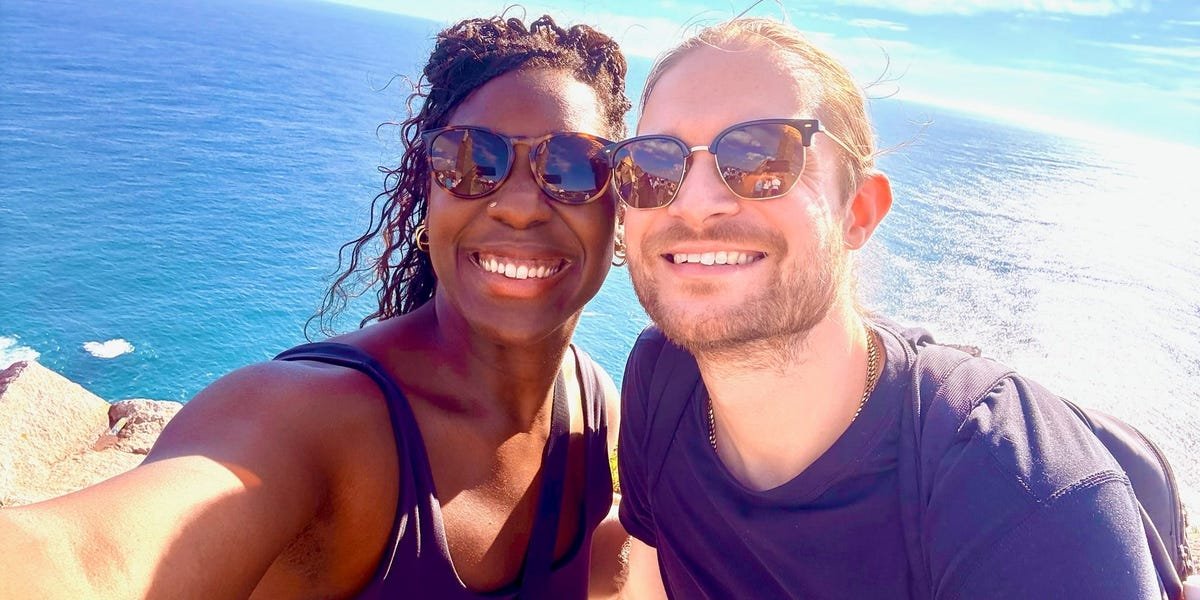
If I’m honest, my husband Cody and I started our search for a new home from vastly different perspectives: I’m a Guyanese-American Black woman raised by Caribbean parents in an eclectic corner of North Jersey.
I grew up proudly wearing my badge of independence as I took the bus and train between my hometown and New York City, the sound of different languages lulling me to sleep on the way home from Manhattan.
Cody, the firstborn in a blended, mostly evangelical family, jumped at the chance to leave rural Indiana as soon as he was able. He craved walkability, third spaces, and access to culturally diverse communities.
We met nearly 12 years ago in North Carolina and, for a while, found some common ground in Durham — its tight-knit community felt familiar to me, and the (semi) walkable neighborhoods suited him.
When remote companies became our sole source of work, we found ourselves with the freedom and opportunity to do what we hadn’t before: travel overseas.
Soon, we began to wonder if home might exist outside the contiguous US.
Throughout our summer of travel, we began looking for a place to settle
We spent time exploring London.
Ashley Stahm
We’d never been to Europe, so we took two months in the summer of 2023 to travel to Paris, Nice, and Cassis, France; Brussels, Belgium; Amsterdam, Netherlands; and London, England.
Those cities, of course, are as different as the four corners of the US, and perhaps even more so due to linguistic, cultural, and climate differences.
We packed a single checked bag and hauled it from city to city on trains and across cobblestones, shedding our crewnecks and rain jackets as we walked along Amsterdam’s canals for shorts and bathing suits in the south of France.
We loved the bicycle infrastructure in Amsterdam, the café culture in Paris, and the cultural diversity and ample green space in London.
However, our research taught us that the Netherlands, France, and the UK would not be particularly easy countries for us to immigrate to.
Not to mention, we stayed in each city during the summer, experiencing the most vibrant version of each. What would living in London feel like in winter, with the sun lost behind endless overcast skies? What would Paris be like when it rained days on end?
We enjoyed visiting Amsterdam during the summer.
Ashley Stahm
Around six weeks into our foray across those four countries that summer, we took a beat. What, exactly, were we looking for?
We’d seen Big Ben. We’d seen the Eiffel Tower. We’d biked across canals in Amsterdam, and had Belgian waffles in the place they originated because, well, of course we did.
The magic of our first European tour was captivating, sure, but we were looking for a home.
We realigned on the basics: We specifically wanted a place where we could build a childfree community. We craved places for adults to meet and support one another, with the intent of growing old together.
We never, ever wanted to own a car again. We wanted healthcare to feel accessible. We needed a feasible way to immigrate and integrate, language, bureaucracy, and all.
We wanted to be in this new home for the long haul.
As our travels continued, we found a not-so-great fit and one city that felt right
We spent our travels exploring new places and celebrating milestones.
Ashley Stahm
It was with that renewed direction that we went home and planned for our next trip across the Atlantic: this time to Lisbon, Portugal, and Barcelona, Spain.
Although their two countries shared a border, these two cities couldn’t have been more different to us.
In Barcelona, Catalan was spoken so widely that my high-school Spanish wasn’t as useful as I’d hoped. Between the stifling summer heat and what I perceived as a noticeable lack of visible representation of dark-skinned Black (and Afro-Caribbean) women like myself, the city just wasn’t a match for me.
I wasn’t expecting to see reflections of myself everywhere; I was in Europe, after all. However, knowing that Spain is home to millions of immigrants, I also hadn’t expected to feel so conspicuous and be pored over so much.
Although I left Spain feeling more alienated than ever, Portugal soon stole our hearts.
Everywhere I looked, I saw melanin. Throughout our time in Lisbon, I heard a mix of languages and accents — not just European Portuguese, but also Brazilian, Angolan, and Mozambican Portuguese, along with French and English — reflecting the diversity of the people around me.
I sat among greenery, quiosques, miradouros, and old ladies in crisp slacks with beers in hand at 11 a.m., gossiping with their neighbors before heading to the local tasca for almoço and a pastel de nata.
For us, Lisbon felt like it could be home.
After 2 years of searching, we’ve settled on Lisbon
From the north in Porto to the south in the Algarve, I couldn’t pick my jaw up off the floor.
Ashley Stahm
Eventually, we decided to move to Portugal’s capital city, where we had found walkable neighborhoods and a social community of both locals and expats — just as we’d hoped.
It’s warm and sunny year-round, so we didn’t need to worry so much about possible gloominess during other seasons.
Portugal also offers a universal public healthcare system that seems accessible, plus more visa routes than some other countries we’d considered.
Like most truly multicultural countries, though, it is grappling with geopolitical and economic friction that we’re still learning about.
However, there was what was on our list, and then there was what our hearts needed: A country willing to welcome us, teach us, and be patient (as we figured out how to file our immigration paperwork in a language we’re still learning).
We’re immigrants in a land whose respect we are still earning, alongside friends from all over the globe who are starting over, just like us. The effort is well worth it.
From where we stand, a full two years after we began our search, we’re finally home.
Iran launched missile strikes into at least six countries in retaliation for the Saturday morning attack by the US and Israel.
Multiple countries across the Middle East reported Iranian bombardments, with the IRGC, the Islamic Revolutionary Guard Corps, saying that it had launched attacks on US bases.
Iran said it targeted at least four bases hosting US forces in the Middle East. Details about the scale and the impact of the strikes are still emerging, but multiple nations reported being able to intercept the attacks. Some have reported damage and at least one death from debris. At least one US base appears to have been hit.
Bahrain’s state news agency said that the US Navy’s 5th Fleet service center was the subject to a missile attack, without offering details or reporting any casualties. Iran also said it targeted the base. The agency also reported Bahrain’s defense forces saying that its air-defense systems successfully intercepted multiple missiles from Iran.
Qatar’s defense ministry said successfully intercepted three waves of attacks that had targeted multiple areas of the country, and that all missiles were intercepted before they reached the country’s territory, the state-run Qatar News Agency reported.
Qatar hosts Al Udeid, the biggest US base in the region. Iran said it targeted the base, without giving details over whether it was successful. The US has not confirmed an attack. Qatar condemned what it said were Iranian strikes on US bases in Qatar and neighboring countries.
Jordanian state media reported the country’sair defense systems successfully intercepting two ballistic missiles that targeted the country.
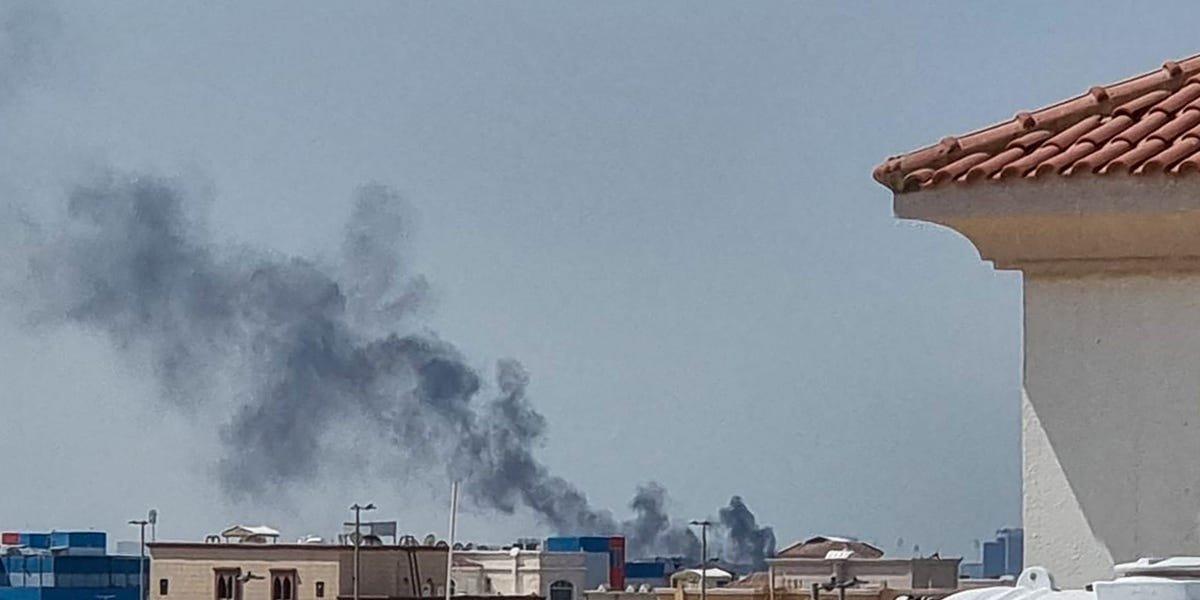
A smoke plume rises over Abu Dhabi from the site of an Iranian missile strike.
AFP via Getty Images
The country’sPublic Security Directorate said there have been 12 separate incidents created by falling debris across the country, causing some damage but with no reported civilian casualties.
The Muwaffaq Al-Salti Air Base in Jordan, which is key for the country’s air force and also has a US military presence, was targeted, Iranian state media reported. It did not give any details over whether the reported attack was successful, and the US has not confirmed any attack.
The United Arab Emirates’ defense ministry said it intercepted Iranian ballistic missiles across multiple attacks. It said one person was killed by falling debris in Abu Dhabi, the country’s capital.
It shared images of what appears to be downed Iranian missiles.
It said that missile debris also damaged some infrastructure. Explosions were also reported in Abu Dhabi and Dubai. Its Al Dhafra Air Base hosts US forces. The IRGC said that the base was targeted, but that has not been confirmed.
A plume of smoke rises over Tehran, Iran.
Mahsa / Middle East Images / AFP via Getty Images
Kuwait’s army said its air defenses intercepted missiles that were detected in the country’s airspace. The country hosts the US military at its Al Salem Air Base, another base the IRGC said was targeted but with no confirmation.
Israel reported multiple missile barrages from Iran, but has not reported any deaths or major damage to the country.
Successful attacks have been reported in Iran, and its people are trying to flee the capital city, Tehran. Iranianofficials said an Israeli attack on a girls elementary school in southern Iran killed least 51 people. Israel has released video footage of strikes in Western Iran against missile launchers and other targets.
US embassies in countries across the region have given advice to Americans to shelter-in-place.
Attacks and counter-attacks are still ongoing. US President Donald Trump said that he would destroy Iran’s missile program and navy and make sure that the country can “never” have a nuclear weapon.
“The lives of courageous American heroes may be lost, and we may have casualties. That often happens in war,” Trump said in a statement. “But we’re doing this not for now — we’re doing this for the future. And it’s a noble mission.”
Flights have been cancelled across the region with multiple countries closing their air spaces, creating major disrupution in one of the world’s busiest flight routes.
We were racing to keep up with our packed family schedule. Days blurred into school, work, gymnastics, birthdays, and dinner parties — energizing in theory, exhausting in reality. We were scraping by.
I remember peak multitasking: listening to my 6-year-old read aloud while making breakfast, and trying to finish putting on eyeliner while the eggs finished cooking in the pan.
My husband and I longed for wide-open days to actually connect, but school holidays were never long enough to decompress. We could see how easily the years might slip by, buried in logistics, until suddenly the kids were packing for college.
We wanted to freeze time. So we hatched a plan to leave our “normal” life for a year and have a wild adventure together as a family.
We came up with a plan
In July 2024, we rented out our London home, stored our belongings, and took the bus to Heathrow with two backpacks and a carry-on.
We weren’t wandering aimlessly. We planned to live in three locations, traveling for five weeks before and after each stop.
I pivoted my marketing consultancy toward travel writing and speaking, while my husband’s academic research guided our shortlist of places we wanted to live. His research enabled legal residency which allowed the girls to attend school. We chose Japan, the US, and the Netherlands, staying three to four months in each.
We picked Tsukuba, Japan, to immerse ourselves in a completely unfamiliar culture; Great Neck, New York, near where we’re both from, to give our daughters a taste of American life and spend rare time with family; and Leiden, the Netherlands, to experience its bike- and water-centered lifestyle.
Residency came with a lot of admin.
Lucas had a plan to homeschool her daughters in Japan (pictured), but ended up sending them to a local school.
Provided by Lisa Lucas
For Japan, we had originally planned to homeschool. Our 8-year-old surprised us by asking to attend a local Japanese school, despite only knowing a few phrases she had picked up during the three weeks we spent traveling around the country.
The school welcomed both girls. Like their classmates, they walked to school alone, changed into indoor shoes, helped serve lunch, and cleaned the classrooms.
In New York, we lived with family outside the city. The girls rode a yellow school bus for the first time, while my husband commuted by train. It was a stark contrast to London — no uniforms, more complicated mornings, and the sobering reality of active-shooter drills.
In Leiden, the girls attended a small international school. Students biked along canals and tended their own garden plots as part of a Dutch gardening program.
Their daughters enjoyed cycling while living in Leiden, the Netherlands.
Provided by Lisa Lucas
We packed light
Living out of backpacks forced minimalism. I loved escaping the endless to-do list of home life and focusing on actually living.
I wore a single black maxi dress almost every day in Asia — biking through alleys or hiking through the jungle — and it somehow worked.
If anything, I’d bring even less next time. With fewer possessions, our mental bandwidth expanded. We could focus on fun, without guilt.
Parenting on the road
When we first told the girls about our plan, our youngest cried. They loved their friends, their teachers, and the rhythm of school. They couldn’t imagine leaving and not coming back. We tried tempting them with volcanoes and snorkeling in Indonesia.
They came around, somewhat. They loved most moments, but they also always wanted to go home. We promised it would only be a year.
The family spent time exploring other parts of Asia, including a trip to Mount Bromo, a volcano in Indonesia.
Provided by Lisa Lucas
Our priority was making them feel safe and secure. We talked about adaptability as a life skill, but we also held them close and reminded them they were loved.
Most days, we’d say, “We’re still on the trip,” and it made us feel like a team. The girls learned how to be the new kid, make friends, and settle into unfamiliar rhythms. They learned you can reinvent your life more than once.
The intensity bonded us. We had waterfalls to ourselves, watched wild snow monkeys, and made friends who invited us to visit them in Cozumel. I celebrated my usually grim January birthday on a Thai beach.
In the US, we were present for heavy family moments, including my grandfather’s passing.
We were still on the trip — until we weren’t
Returning to London after 13 months felt surreal. Our 6-turned-7-year-old kissed the ground at Heathrow.
The trip changed us. It gave us shared memories — Hokkaido cream, a road trip from New York to Miami, sunsets from an Alpine hut — but more importantly, it clarified what matters: slow time together, not renovations or packed calendars.
We’re happy to be home, blender included. But we’re already dreaming about our next extended adventure.
Do you have a story about taking a gap year that you want to share? Get in touch with the editor: akarplus@businessinsider.com.
When my husband Shayne and I sold nearly everything we owned to travel the world full-time, we thought we were ready for anything. We had spreadsheets, backup plans, a carefully managed budget, and, as two adults in our 50s, decades of experience behind us.
What could go wrong? Turns out, plenty.
Over the past two and a half years, we’ve lived in more than a dozen countries and traveled thousands of miles. We’ve hiked to waterfalls in Bali, wandered the streets of Barcelona, and eaten our way through Thailand.
But we’ve also made mistakes that cost us time, money, and more than a little peace of mind. Some were honest slip-ups, while others came from overconfidence, but they all taught us lessons we’ll never forget. Here are five of the biggest mistakes we’ve made.
Overplanning made us feel burned out
We’ve learned to leave room for spontaneity when traveling.
Shelly Peterson
At first, we packed every destination with nonstop activities. Sunrise temples, food tours, museums, waterfalls, cultural shows — we didn’t want to miss anything.
Every time Shelly publishes a story, you’ll get an alert straight to your inbox!
Stay connected to Shelly and get more of their work as it publishes.
But within a few months, we were running on fumes. The pace was unsustainable, and on some days, it felt like we weren’t even enjoying ourselves.
These days, we travel more slowly. We leave room for naps, long walks, and spontaneous days with no agenda.
Some of our best memories now come from lazy mornings and quiet moments, not the things we planned, but the ones we stumbled into.
We underestimated how hard it is to build a real community
We assumed full-time travel would mean constantly meeting fascinating people and forming deep connections around the globe.
Although we’ve met plenty of kind and interesting travelers, most friendships are fleeting, shared over a meal or a few days before everyone moves on. We didn’t expect how lonely it can feel to always be “the new people.”
Now, we intentionally choose places with digital nomad scenes, coworking spaces, and expat meetups. In Vietnam, for example, we love that locals and expats gather for weekly street-food tours and surf lessons.
It takes effort, but building community on the road is possible. We just had to actively seek it out.
One time, we misread our visa and had to change plans at the last minute
We’ve learned to always double-check visa rules.
Shelly Peterson
When traveling to Vietnam, we completely misunderstood how our visa worked and accidentally arrived in the country on the day it expired.
Immigration let us in, but warned us we had to leave almost immediately and apply for a new visa. We scrambled to book a last-minute flight to Cambodia and ended up paying a fine.
It was stressful, chaotic, and expensive. Oddly enough, though, our visit to Cambodia became one of our favorite unexpected adventures. But now, we double and triple-check visa rules and requirements ahead of time.
We’ve also let our guard down
Travelers should always be aware and alert to their surroundings.
Shelly Peterson
In Paris, Shayne had his crossbody bag slung around his back while boarding a crowded metro train. Seemingly within seconds, his phone was gone.
It was a rookie mistake, and we knew better, but sometimes travel lulls you into a false sense of security.
That one slip-up cost us days of frustration replacing his device and updating accounts, not to mention a chunk of money.
Even seasoned travelers need to stay alert, especially in busy cities and transit hubs.
Choosing accommodations with zero walkability made exploring more difficult
When we started traveling full-time, our first stop was Bali. We booked a picture-perfect villa with sweeping ocean views and dreamy Instagram potential. What we didn’t realize, though, was that it was over an hour away from the nearest town.
It was beautiful, but it made everyday activities like walking to cafés, exploring neighborhoods, or talking with locals nearly impossible.
Now, we prioritize location over aesthetics. Being able to walk out the door and explore a neighborhood, find a local market, or grab lunch at a street stall makes us feel like we’re actually living somewhere, not just passing through.
Despite the bumps in the road, traveling full-time has been incredibly rewarding
The mistakes we’ve made haven’t just taught us how to travel smarter. They’ve reminded us to stay humble, adaptable, and patient with ourselves.
We’ve learned to slow down, embrace the unexpected, and let go of the need for every day to be perfect, because no matter how experienced you are, travel always has something new to teach you.
And often, the detours become the best parts of the journey.
Back in 2010, a three-day layover in Cairo on an EgyptAir flight from London to Johannesburg felt like destiny calling. I’d always been mesmerized by ancient Egypt’s pharaohs, myths, and architecture. Stepping off the plane, however, the Egypt of my imagination vanished almost instantly.
In its place was a sprawling, brown city of intense heat, dilapidation, and overwhelming frenzy. From the moment I left the airport, I felt like a walking target. Every interaction, from a forced perfume-shop detour to navigating the aggressive markets, felt like a potential scam.
And then, there they were. The Pyramids of Giza. They are, undeniably, breathtaking. More massive, more majestic, more impossible than any picture could capture. Standing before them, I felt a genuine awe I will never forget. But the magic was short-lived.
Turning around, the view was dominated by fast-food joints directly across from the Sphinx. The air was thick not with ancient mystery, but with the shouts of hundreds of vendors and the exhaust of countless tour buses. Even the famous Nile River turned out to be a polluted dump, with a stench so foul that Baby Moses would rot in his little basket.