Ye, formerly known as Kanye West, has been blocked from traveling to the UK in light of his history with antisemitism.
The UK government told the BBC on Monday that Ye applied for an Electronic Travel Authorization (ETA) to travel to the UK but was denied on the grounds that his presence “would not be conducive to the public good.”
Ye had been scheduled to headline all three days of London’s Wireless Festival in July, which has since been canceled.
“As a result of the Home Office banning YE from entering the United Kingdom, Wireless Festival has been forced to cancel,” the event’s website reads as of Tuesday morning. “All ticket holders will receive an automatic full refund.”
The government’s decision comes after several of the festival’s sponsors, including Pepsi and Anheuser-Busch InBev, withdrew from the event. Although neither brand explicitly cited Ye as the reason for their withdrawal, UK Prime Minister Keir Starmer had recently spoken out against Ye’s scheduled performances.
Every time Callie publishes a story, you’ll get an alert straight to your inbox!
Stay connected to Callie and get more of their work as it publishes.
“It is deeply concerning Kanye West has been booked to perform at Wireless despite his previous antisemitic remarks and celebration of Nazism,” Starmer said in a statement to the British newspaper The Sun.
After the UK government confirmed that Ye would not be allowed to enter the country, Starmer cosigned the decision in a post on X.
“Kanye West should never have been invited to headline Wireless,” Starmer wrote. “This government stands firmly with the Jewish community, and we will not stop in our fight to confront and defeat the poison of antisemitism. We will always take the action necessary to protect the public and uphold our values.”
Ye did not respond to a request for comment.
Kanye West should never have been invited to headline Wireless.
This government stands firmly with the Jewish community, and we will not stop in our fight to confront and defeat the poison of antisemitism.
We will always take the action necessary to protect the public and…
Over the past decade, Ye has regularly been criticized for offensive and bigoted remarks, especially those described as antisemitic. In 2022, he peddled conspiracy theories about Jewish people controlling the entertainment industry and openly praised Adolf Hitler. Although Ye lost numerous business deals and brand partnerships in the fallout — reportedly losing his billionaire status as a result — he doubled down in 2025, when he wrote “I am a Nazi” on X and released a song titled “Heil Hitler.”
More recently, Ye took out a full-page ad in The Wall Street Journal for a public apology, linking his outbursts to a 2002 car accident and what he described as an undiagnosed brain injury. He also said his bipolar disorder caused him to lose touch with reality.
“In that fractured state, I gravitated toward the most destructive symbol I could find, the swastika, and even sold T-shirts bearing it,” Ye wrote. “I regret and am deeply mortified by my actions in that state, and am committed to accountability, treatment, and meaningful change. It does not excuse what I did though. I am not a Nazi or an antisemite. I love Jewish people.”
The apology was published shortly before Ye’s newest album was expected to be released. After multiple delays, “Bully” arrived on streaming platforms in late March.
Ye returned to the stage last week for a two-night stint at SoFi Stadium in Los Angeles. Both shows were sold out and reportedly grossed $33 million, proving that despite the UK government’s objections, there is still an appetite for Ye’s volatility among his loyal fans.
This as-told-to essay is based on a conversation with Andrew Athias, 33, a Philadelphia-based digital marketer and content creator. It has been edited for length and clarity.
I was one of the 500 bunches of dancing grass at Bad Bunny’s Super Bowl halftime show. I got paid $18.70 per hour for the gig, but I would’ve done it for free.
I’m a big Bad Bunny fan. I’ve been to three of his concerts since my girlfriend introduced me to him in 2021.
I found the grass gig through a company called Backlit, which handles finding extras for the halftime show. I found it last year when I saw Kendrick Lamar at the Super Bowl halftime show, but I forgot about it until Bad Bunny was announced as Super Bowl’s headliner in October, and I decided to apply.
I was one of the few crazy people to fly over from the East Coast to be part of the field cast. I flew out to San Francisco from Philadelphia in the middle of a snowstorm and have been out here for two weeks, rehearsing for the big day, and it has been worth it.
Job description: Be athletic
The requirements for the role were pretty basic. You had to be no taller than six feet, no shorter than five feet seven inches, and of an athletic build.
Every time Aditi publishes a story, you’ll get an alert straight to your inbox!
Stay connected to Aditi and get more of their work as it publishes.
The listing said we had to be able to wear a 40-plus-pound costume and to be comfortable dancing in proximity with other performers for long periods. Other than that, we had to measure every part of our body from head to toe, elbow to floor, shoulder to clavicle, etc. Those were the only requirements.
They didn’t tell us we’d be wearing a grass costume and kept it super vague.
12-hour rehearsals with a 40-pound grass costume
My part was actually really easy. They just told me where to stand, and they said, “Don’t move. Stand here and be one with the grass.”
The suits were heavy and uncomfortable. Every now and again, you’ll have a blade of plastic grass going places where grass should not go. Fortunately, we were given some protective goggles.
There were definitely times when we were wearing the suits for about six or seven hours because they had to make alterations. There were about eight practices in total, with the last three lasting 12 hours each.
But the production crew did their best to make this suit as wearable as possible; they listened to every complaint and tried to fix it.
And getting to see behind the scenes of the production was a treat.
It was really cool to see Bad Bunny perform just a foot away. But because he was in LA for the Grammys during some of our rehearsals, the crew had a Bad Bunny stand-in they called “Good Rabbit.”
An electrifying atmosphere
Bad Bunny’s Super Bowl halftime performance.
Kevin Mazur/Getty Images for Roc Nation
One of the other things they asked for in the application was whether you had marching band experience or experience in the entertainment industry. I was in a collegiate a capella group, so I’m not scared of performing in front of big crowds.
But it’s definitely different when you have a stadium full of people vibing, moving, grooving to Bad Buddy’s music.
I spent about $2,600 on flights, hotels, and a rental car for the two weeks. I’m a content creator without a full time job now, so I didn’t have to take any paid time off for this.
The hardest part of the gig was keeping quiet
The hardest part of the whole thing wasn’t the long hours or the heavy costume, but rather keeping quiet about it. They made us sign an NDA to not talk about it or post anything on social media for two weeks.
So when I saw people posting about what his setlist was going to be, it was so hard to have so much knowledge and power and not be able to do anything with it.
I told only a very small handful of people that I was going to San Francisco and would be involved in the half-time show.
I didn’t tell them what I was dressed as. I didn’t tell them where to look for me on the field. All I said was, “You’re going to see me. You just didn’t know that you saw me.”
This story is available exclusively to Business Insider
subscribers. Become an Insider
and start reading now. Have an account? .
I spent a year hiking in 11 countries, visiting some of the world’s most beautiful natural regions.
My favorite trails, including the Lago di Sorapis in Italy, had stunning views and less traffic.
Although I enjoyed every hike, there were some trails that I wouldn’t revisit because of the crowds.
Exploring the mountains is my favorite way to see a new place.
So, when I spent a year as a traveling winemaker and nomadic freelance writer in Europe and Oceania, I set out to hike in every country I visited.
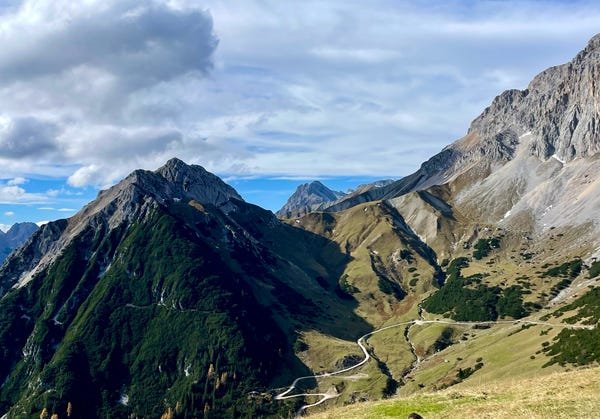
I traversed narrow, rocky paths in the Dolomites, meandered through Scotland’s sweeping green valleys, and trekked past kangaroos in the Australian bush.
Now, over a year later, I can say I’ve hiked in some of the most awe-inspiring corners of the world. There are four trails I’d return to in a heartbeat, and three ticketed ones that felt crowded and overhyped.
I’d love to hike in Leutasch, Austria, again.
I hiked the Rotmoosalm-to-Wettersteinhütte loop, and found the experience so worthwhile. Sierra Newell
In the Austrian Alps, just south of the iconic Zugspitze mountain, lies Leutash, a lush, pristine alpine valley with an immense network of trails.
The circular Rotmoosalm-to-Wettersteinhütte tour was tough — the full loop is around 9 miles with over 3,000 feet of elevation gain — but in my opinion, it condensed the most idyllic aspects of the Austrian experience into one hike.
I saw dense forests, stunning craggy peaks, green meadows, mountain streams, ice-blue lakes, and traditional mountain huts, all in one day.
My hike to Lago di Sorapis in Italy was worth the effort.
I’m still thinking about my hike in the Dolomites. Sierra Newell
After traveling through the Dolomites last October with my boyfriend, I still dream about our 7.5-mile hike to Lago di Sorapis.
Carved into the rockface with a dramatic dropoff to the autumnal forest below, the technical out-and-back trail definitely required some steady footing on the ascent.
That said, the lake’s opaque turquoise waters, contrasted by pale rocky mountains, made it well worth the journey.
I’d definitely hike to the Kozjak waterfall in Slovenia again.
I loved my experiences hiking in the Soča Valley. Sierra Newell
My best friend and I road-tripped through Slovenia in the fall, traveling north to south along the Italian border. Deep within the magical Soča Valley is Slap Kozjak, a 49-foot emerald waterfall tucked inside an open gorge.
Just over 2 miles, the waterfall loop follows a scenic route along a cliff’s edge, over a wooden suspension bridge, and through ankle-high forest creeks.
Although I usually prefer longer, more challenging hikes, I loved that this route was easy enough that I still had energy to explore the area.
The iconic Hérisson waterfalls in France were stunning.
My hike to the Hérisson waterfalls was unforgettable. Sierra Newell
Over the summer, I traveled to the Jura region of France and hiked the iconic 4.3-mile trail that tours past a steep succession of seven unique waterfalls.
I found that this was the perfect time to visit — I loved watching the dappled sunlight filter through the bright green tree canopy, and almost glitter against the trail’s flowing rivers.
It’s a popular hike, though. Next time, I would start earlier to avoid the crowds and enjoy the picturesque views in solitude.
On the other hand, I’d skip the Italian Dolomites’ Tre Cime di Lavaredo next time — or plan my visit more strategically.
The Tre Cime di Lavaredo is a famous hike, but I was surrounded by tons of tourists. Sierra Newell
Most famously known as the Three Peaks of Lavaredo, this UNESCO World Heritage Site lies in the heart of the Dolomites.
I thoroughly enjoyed my fall visit here, but I made the mistake of starting in the early afternoon, and the hordes of visitors made my €40 parking fee much less worthwhile.
Even during the Dolomites’ low season, the popular, 6.3-mile trail was already filled with hikers, climbers, and beer drinkers by the time I started it.
I found the Eisriesenwelt in Austria to be too overcrowded.
This short ice-cave hike was memorable, but very crowded. Sierra Newell
The Eisriesenwelt was the first — and arguably the most memorable — hike I completed after moving abroad in August 2024.
South of Salzburg, it’s a relatively short but steep climb along an open rock face that leads to the largest ice cave in the world.
Although this hike was a fascinating and unique experience, it’s also easily accessible by cable car, which — in my experience — meant large crowds and long wait times.
The Fairy Glen trail in Scotland’s Isle of Skye was beautiful, but I wouldn’t go back.
The Fairy Glen was an easy, picturesque trail, but not one I’d necessarily visit again. Sierra Newell
My sister and I walked the Fairy Glen trail on the Isle of Skye during our Thanksgiving road trip through Scotland.
It’s an easy, mile-long path up grassy hills, past unusual rock formations and herds of roaming sheep. The views were beautiful and fairy-tale-like, but the small paid car park became flooded with visitors as the day progressed.
Between that, the short trail length, and the wet, gray weather that turned the trails into mud, I’d prefer to explore Scotland’s more dramatic and remote long-distance trails.
Growing up in a remote California suburb, I spent most of my childhood counting down the days until I could leave for a big city.
When the time came to move to New York for college, I was prepared to say goodbye to country living for good. I spent six years in New York, and then another four in Berlin.
Although I loved my experiences in both cities, I was exhausted. Years of apartment hopping, navigating dirty subways, and dealing with nonstop hustle left me craving a reprieve — and wondering why I’d been so quick to swear off a quainter life in the country.
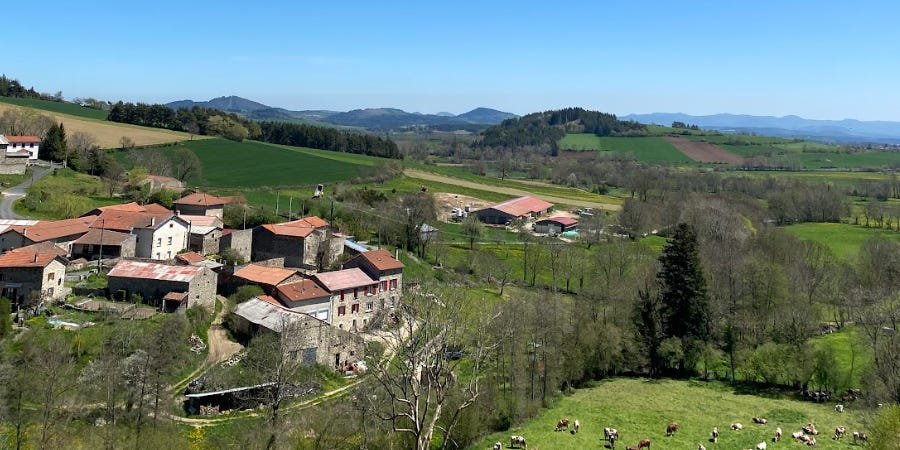
So, when my husband proposed that we move to a little village near his family in France, I surprised myself by agreeing to give it a try.
This was in 2021, when COVID-19 restrictions were making it challenging to live in Berlin, and we were both desperate for the benefits that such a relocation could offer — like more square footage, a yard, and, most importantly, proximity to our loved ones and their support.
The reservations I had about residing in the country were still nagging me, but I figured things would be different this time. I was older, wiser, and doing it in beautiful France, of all places.
I wish I had listened to my gut, though, because all my old qualms with country living ended up rearing their ugly heads — and we ended up leaving after two years.
Without a driver’s license, I felt isolated by the lack of public transit
I’d hoped my new home would be a bit more walkable.
Audrey Bruno
I never needed a driver’s license when I lived in cities, but that all changed when we moved to the French village. There, we simply couldn’t get around without a car — but we sure tried.
I knew going in that my public transportation options would be more limited than they were in a city, but I didn’t expect to be as isolated as we were.
When we first arrived, it took us over a month to work up the funds to buy a car. In the meantime, we attempted one very hilly bike ride, but had to call it quits before we’d even made it halfway to our destination.
Walking was no better — it took hours to get to the nearest shops, and sometimes they wouldn’t even be open when we finally arrived.
Even after we obtained a vehicle, I couldn’t navigate on my own without my husband, since he was the only one with a license.
He was always willing to drive me around, but I was frustrated by my newfound lack of independence. I considered getting a license of my own, but the cost of driving school was out of our budget at the time, so it really seemed like there was no way out of the situation I’d gotten myself into.
I wasn’t prepared for the demands of caring for a house after years of apartment dwelling
Years of living in apartments didn’t prepare me for the hard work of cleaning and maintaining a house.
Audrey Bruno
Apartment life certainly has its drawbacks, but extra square footage comes with pitfalls, too.
We loved that our rental home gave us the newfound ability to stretch out and make noise without bothering each other. The downside, though, was that it was up to us to care for and maintain all that extra space.
It wasn’t just the house, either — it was also our responsibility to tend to the adjoining garden, barn, and the attached horse stables. It was a full-time job’s worth of work, and I started to miss the days when I could clean my whole apartment in just an afternoon.
Living without any takeout options was harder than I expected
Normally, I’m a proponent of cooking as much of my own food as possible, but I at least like to have the option of ordering in or eating out — especially on days full of chores and work.
Unfortunately, getting to the closest takeout restaurant took an hour round-trip, and delivery applications like Uber Eats didn’t service our small village.
What’s more, our dining options were severely limited compared to what we’d had in Berlin. I realized that I missed trying different cuisines and checking out new restaurants, and even when cooking,
I didn’t have access to the same wide variety of ingredients that I’d had in the city. One example was sesame oil — if I wanted to use this pantry staple in a recipe, I’d have to go to a big city to find it.
Connecting with neighbors wasn’t easy
Our village was extremely small — as of 2020, the population was under 400 — and many of the people I met were much older.
Needless to say, our rhythms and beliefs didn’t always match up. We often had debates over everything from politics to local initiatives — like what to do with all the feral cats — and it wasn’t always easy to argue my point in my then-limited French.
Since most folks in Berlin are fluent in English, I’d never been up against such a language barrier before. All that and more made it challenging to form true connections and further contributed to my feelings of isolation.
That said, there were things I missed about country life once I left
When I lived in the countryside, I got to grow my own fruits and vegetables.
Audrey Bruno
Despite all my frustrations, there were a few great things about living in the French countryside.
For starters, it really is beautiful, and being there allowed me to grow my own fruit and vegetables, forage wild blackberries in the forest, and perfect my French with the folks in town who were willing and patient enough to help me out.
After two years, we ended up moving to Lyon, the nearest city, because it offered the best of both worlds. At only 84 miles away, we’d have proximity to my husband’s family and access to nature, plus all the advantages of living in a major city.
I’ll always remember the beautiful memories from my time in the village — but I’ll also always prefer to reminisce about them from an apartment in a city.
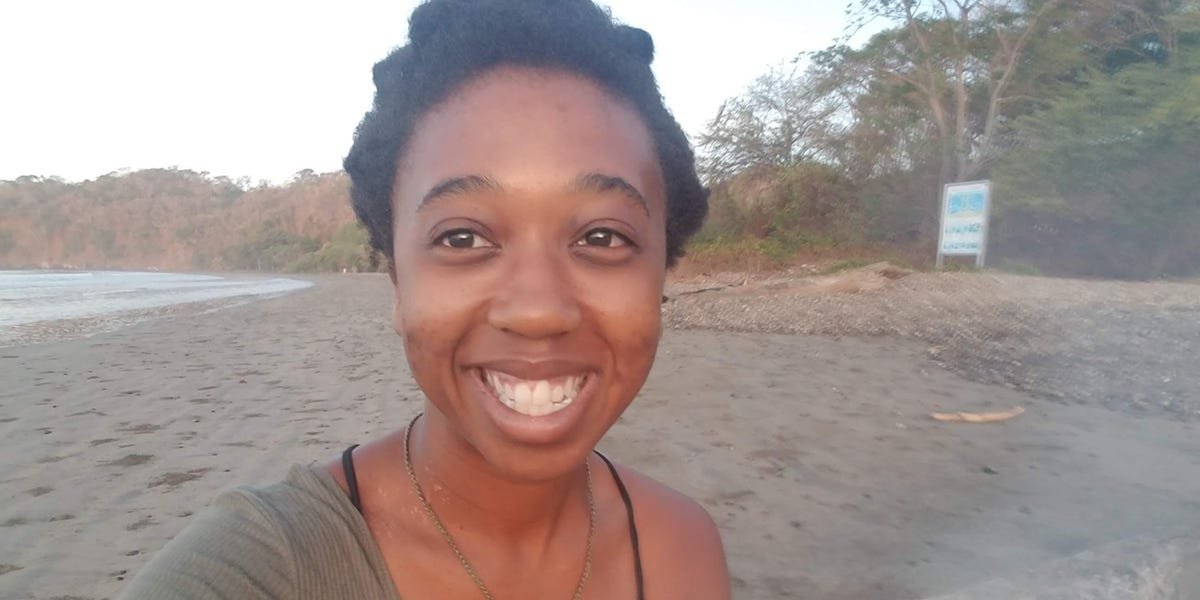
In 2017, I moved from Los Angeles to Panama to teach English.
My first year in the country was filled with excitement. I was based in Panama City, and I found it easy to make friends through the many dance classes and meet-ups.
My social life felt full, and most weekends were spent wandering through Casco Viejo (the downtown area), trying to find the best rooftop bars and underground nightclubs playing a mix of Reggaeton and pop music.
Soon, though, the fast-paced lifestyle, combined with the constant traffic and sweltering heat, became overwhelming. I grew tired of living in a city of millions and craved a slower pace.
So, I relocated to a small coastal town called Playa Venao, which is about 200 miles and a five-hour drive from Panama City.
I hoped I could quickly build a community there as I did in the capital, but it didn’t come nearly as easily to me.
At first, my quieter town felt like paradise
Many parts of Panama have a rich surfing culture.
Kiersten Brown
Although Playa Venao is now more developed, at the time I lived there, it was primarily a handful of hotels, hostels, and homes scattered along the shoreline.
A single road split the town: real estate on one side, jungle and cow pastures on the other. Only a few hundred people called Playa Venao their full-time home.
I was living in a place where there were more trees than buildings. In fact, I could pick and eat papayas, coconuts, and mangos straight from the trees on the property of my rental.
The school I worked at was quite small and, because of our remote location, nature often became our third instructor. Children shared their outdoor play area with centipedes and howler monkeys, and splashed in the nearby stream and waterfall.
Between teaching, I spent my days peacefully walking along the beach and hiking near the river. I was no longer overwhelmed by the sounds of honking horns and revving engines. Instead, I was soothed by the songs of exotic birds.
My social life wasn’t bustling like it was before, though at first, I enjoyed meeting people from all over the world who were in the area on vacation.
But once the novelty of being somewhere new wore off, I started to see the downside of living in a place that felt like paradise.
Unfortunately, I didn’t feel like I fit in with most of the visitors or locals
I didn’t have much to say about surfing — a popular topic among tourists.
helivideo/Getty Images
I struggled to find my place in a community that felt largely split between locals and tourists.
I was a bit of an in-between: I’d only been in the country for a year, so I wasn’t a local … but I’d been living in this beach town for a few months, so I wasn’t a tourist, either.
Building community with transient tourists seemed impossible.
Many tourists I met spent their time surfing or talking about surfing, not surprising given Playa Venao’s reputation as one of the best surf spots in the world.
Unfortunately, as a beginner, I couldn’t keep up with the experienced surfers during conversations or out on the water.
Whenever I’d meet someone who had more to talk about than waves, we only had a week or two to get to know each other because they were vacationing where I was living.
I felt I never had time to share more about myself beyond surface-level topics, like work, hobbies, and where I was from. These limited interactions made my relationships feel shallow and made me feel like I didn’t have any real friends.
Over time, the loneliness ate away at me, and I grew tired of reintroducing myself to a new tourist every other week. So, I tried connecting with the locals. This wasn’t an easy task.
The director of the school I was working at had warned me that locals were often closed off to newcomers. I felt it.
One night, I managed to play a game of pool with some locals at a nearby bar. I thought I’d made a breakthrough, but the next morning, the same people who had been friendly the night before wouldn’t give me the time of day — it hurt.
I could understand why a tight-knit community of people who grew up together might be wary of trusting outsiders. However, it was hard being treated like just another visitor in the place I lived.
After weeks of failing to make lasting connections, part of me wanted to call it quits and return to the city. I missed feeling like I belonged and having a calendar filled with dance classes and happy hours with friends.
However, I’d committed to working through the whole school year, and I didn’t want to walk away from the children — some of the only people I had created bonds with.
Finally, one conversation with my mom helped me reevaluate and give my new home another shot.
Focusing on gratitude and living in the moment helped me feel more at home
Panama has several famous beaches.
Piero Zanetti/Getty Images
After listening to my sorrows, my mom reminded me that life wasn’t happening to me, it was happening for me.
I needed to embrace each moment, even the not-so-great ones, and treat my situation as an opportunity. So, instead of ruminating on what I lacked, I focused on appreciating more of what I had.
To ease my frustration of not being able to pop over to a movie theater or hop into a nightclub like in the city, I found entertainment within nature.
I’d wake up early to enjoy the colorful sunrises and collect different rocks and shells along the shore. I’d pass the time by going for a swim or setting up my speaker and dancing barefoot in the sand.
Focusing on my internal peace helped me to stop forcing connections, and I allowed them to form naturally.
I stopped viewing relationships as temporary experiences. It didn’t matter if a friendship lasted five days or four months — I cherished every connection made.
Soon, routine visits to the local coffee shop led to casual chats with the barista. I ordered the same dish so often that one day, they wrote out the recipe for it and gave it to me — it kick-started our friendship.
More connections began to blossom as I prioritized attending community events, from kayak races to surfing competitions. As time passed, locals could see that I was consistently making an effort, and perhaps they started to view me as less of a tourist.
Meanwhile, I was forming stronger relationships with the parents of the children I worked with, and they helped advocate for me to the other locals. I’d also started to build a strong connection with my coworker, who became one of my first real friends in the area.
With a little bit of patience and a mindset shift, I eventually found the community I craved and ended up staying in Playa Venao for about a year.
In that time, I learned that sticking through uncomfortable situations — and staying present for both the good and the bad — can lead to unexpected peace and happiness.
This story is available exclusively to Business Insider
subscribers. Become an Insider
and start reading now. Have an account? .
The best-selling country artists of all time include Elvis Presley, Tim McGraw, and Shania Twain.
We used RIAA’s data to compile this list based on total album units sold in the US.
Only three artists on this list debuted in the 2000s: Carrie Underwood, Taylor Swift, and Luke Bryan.
Did you know two of the top three best-selling musicians of all time are country music artists?
Elvis Presley and Garth Brooks trail only the Beatles in record sales.
Country music is one of the most popular genres in music, with its own set of stars, award shows, and hall of fame.
We used the Recording Industry Association of America’s (RIAA) list of best-selling artists, ranked by albums sold, to pick out the top 25 most successful country musicians of all time.
To qualify as a country star, a musician’s output had to primarily appear on country charts, or the artist had to be inducted into the Country Music Hall of Fame, nominated in the country genre at the Grammys, or have received nominations at country award shows like the CMAs or the ACM Awards.