Samantha Grindell's face on a gray background.

The best reading order to catch up on all 16 of Sarah J. Maas’ books before the next ‘A Court of Thorns and Roses’ novel

Sarah J. Maas is back, baby.

On March 5, Maas announced she was releasing not one but two new “A Court of Thorns and Roses” novels. The bestselling author announced the books on the “Call Her Daddy” podcast, telling host Alex Cooper that they would form a single story arc.

Maas’ romantasy novels, which include 16 books across her “ACOTAR,” “Throne of Glass,” and “Crescent City” series, are typically split into parts. Rather than releasing the parts of her sixth “ACOTAR” story as a single book, she told Cooper she would publish them as separate volumes. Book six will be released on October 27, 2026, and cover part one; book seven will contain parts two and three and hit bookshelves on January 12, 2027; and book eight will tell the story of part four and be released at a later date.

“It’s meant to be read ideally as one massive, massive story as opposed to in a trilogy,” Maas said of the books. “It’s not a trilogy. Like, arcs aren’t wrapped up.”

The world of “ACOTAR” has grown drastically since Maas’ first installment was published in 2015, particularly in her latest works. When she released the third “Crescent City” book, “House of Flame and Shadow,” in January 2024, Maas created an interconnected literary universe between all three of her series, much like the Marvel Cinematic Universe (fans fondly refer to it as the Maasiverse).

Maas has yet to release any information about the plot of her coming books, but it seemed clear that the events of “House of Flame and Shadow” had a lasting impact on Prythian and the characters in “ACOTAR.” Therefore, readers will need to be familiar with all of Maas’ works to understand everything that happens in “ACOTAR” six and seven.

However, because her massive catalog overlaps at different points, it can be confusing to know where to start. Whether you’re just getting started reading Maas’ books or want to revisit her novels before her next works are released, here’s the best reading order to follow.

Start with the first three ‘A Court of Thorns and Roses’ books

If you want to make sure you’re ready for the sixth and seventh “A Court of Thorns and Roses” books, it makes sense to read the earliest installments in the series first as you dive into Maas’ work.

“ACOTAR” follows Feyre Archeron, a human huntress who gets pulled into the faerie world after killing a fae. As the novels progress, Feyre dives deeper into the magical world of Prythian, discovering unexpected power and love as Maas flexes her world-building skills.

“A Court of Thorns and Roses” offers the best introduction to Maas’ work for those who haven’t read any of her writing before, even though she published “Throne of Glass” first. The otherworldly elements of the series are built slowly, the books offer a comprehensive view of Maas’ writing style, and the romance is steamy and compelling. 


A collage of the

“A Court of Thorns and Roses” by Sarah J. Maas. 

Bloomsbury


Read the first three books in the series first, in the order they were released: 

  • “A Court of Thorns and Roses”
  • “A Court of Mist and Fury”
  • “A Court of Wings and Ruin”

Then, take a break from “ACOTAR.” Books one through three wrap up Feyre’s story, while four and five are arguably more closely tied plotwise to “Crescent City” and the coming “ACOTAR” books. More on that in a bit.

The ‘Throne of Glass’ series was released first, but it works best as the second Maas series

When readers enter the expansive and epic world of “Throne of Glass,” they meet Celaena Sardothien, an 18-year-old assassin imprisoned in Adarlan, a kingdom where magic disappeared years ago.

The crown prince of Adarlan offers Celaena a chance at freedom, proposing she compete as his contestant to become the king’s champion by defeating 23 other criminals. When other competitors start dying mysteriously around her, she will have to confront the pain of her past to face the battles ahead. 

The world of “Throne of Glass” becomes enormous as the books progress, and the rich, developed fantasy world is so complex that it’s easier to read once you’re already familiar with Maas’ style.


A collage in the books of the

“Throne of Glass” by Sarah J. Maas. 

Bloomsbury


However, reading the “Throne of Glass” books in the order they were published doesn’t offer the best narrative experience for the series.

Mass originally wrote one of the novels in the series, “The Assassin’s Blade,” as four novellas that she published as e-books between January and July 2012. Bloomsbury released “Throne of Glass” in August 2012 and later released the novellas, including one additional story, as “The Assassin’s Blade” in March 2013.

Chronologically, the events of “The Assassin’s Blade” take place before the rest of the series, but reading it first reveals details Maas intentionally leaves out of “Throne of Glass,” “Crown of Midnight,” and “Heir of Fire” that quickly become relevant in “Queen of Shadows.” The mystery surrounding Celaena’s past is part of what makes the first three books in the novel so captivating, so you shouldn’t read “The Assassin’s Blade” first.

In addition, the events of “Empire of Storms” and “Tower of Dawn” take place at the same time in different parts of the “Throne of Glass” world, so there’s debate among the fandom on how they should be read. They were released in 2016 and 2017, respectively, and although “Empire of Storms” was released first, it leaves off on a cliffhanger, while “Tower of Dawn” does not.

To maintain the series’ suspense without revealing spoilers, the best “Throne of Glass” reading order is: 

  • “Throne of Glass”
  • “Crown of Midnight”
  • “Heir of Fire”
  • “The Assassin’s Blade”
  • “Queen of Shadows”
  • “Empire of Storms”
  • “Tower of Dawn”
  • “Kingdom of Ash”

Maas recommends “The Assassin’s Blade” as the third book in the series on her website, but you will experience more drama from “Heir of Fire” if you leave it for before “Queen of Shadows.” Either way works, though.

Maas readers will be ready for ‘Crescent City’ after finishing books four and five of ‘ACOTAR’

Half-fae Bryce Quinlan is at a crossroads when the “Crescent City” series begins, grieving the murders of her best friends by a demon.

She believes the killer was apprehended, but when similar murders start taking place in Crescent City, Bryce agrees to investigate the deaths with Hunt Athalar, a Fallen Angel who has been enslaved for hundreds of years by the all-powerful Archangels after an attempted coup.

The series has three installments to date, and the most recent book, “House of Flame and Shadow,” was published in January 2024.


A side-by-side of the

“Crescent City” by Sarah J. Maas. 

Bloomsbury


“Crescent City” doesn’t work as an introduction to Maas’ novels for a few reasons.

First, the fantasy is more complex than in her other two series. It combines technology and magic, and it includes a wider variety of fantastical creatures from the get-go, like werewolves and mermaids. Elements from the other series are also key to understanding the climax of the second installment in the “Crescent City” series, and Maas herself recommends reading “ACOTAR” before starting “Crescent City.”

The events of the fifth “ACOTAR” book, “A Court of Silver Flames,” are particularly pertinent to “Crescent City.” In addition, the novel focuses on Feyre’s sister, Nesta Archeron, so it also feels like a different story arc than the first three “ACOTAR” books, a jump that the novella “A Court of Frost and Starlight” helps to bridge.

So after you finish the “Throne of Glass” series, return to “ACOTAR”:

  • “A Court of Frost and Starlight”
  • “A Court of Silver Flames”

It’s ideal to go into “Crescent City” with the events of “ACOSF” fresh on your mind. Then, you can read the “Crescent City” series as it was released:

  • “House of Earth and Blood”
  • “House of Sky and Breath”
  • “House of Flame and Shadow”

Once books six and seven in the “ACOTAR” series are published, they should be read after “HOFAS,” since it’s the latest installment in the Maasiverse and offers clues at what may be going on in “Prythian” when book six begins.

Happy reading! 


Source link

12-perks-of-being-a-Supreme-Court-justice.jpeg

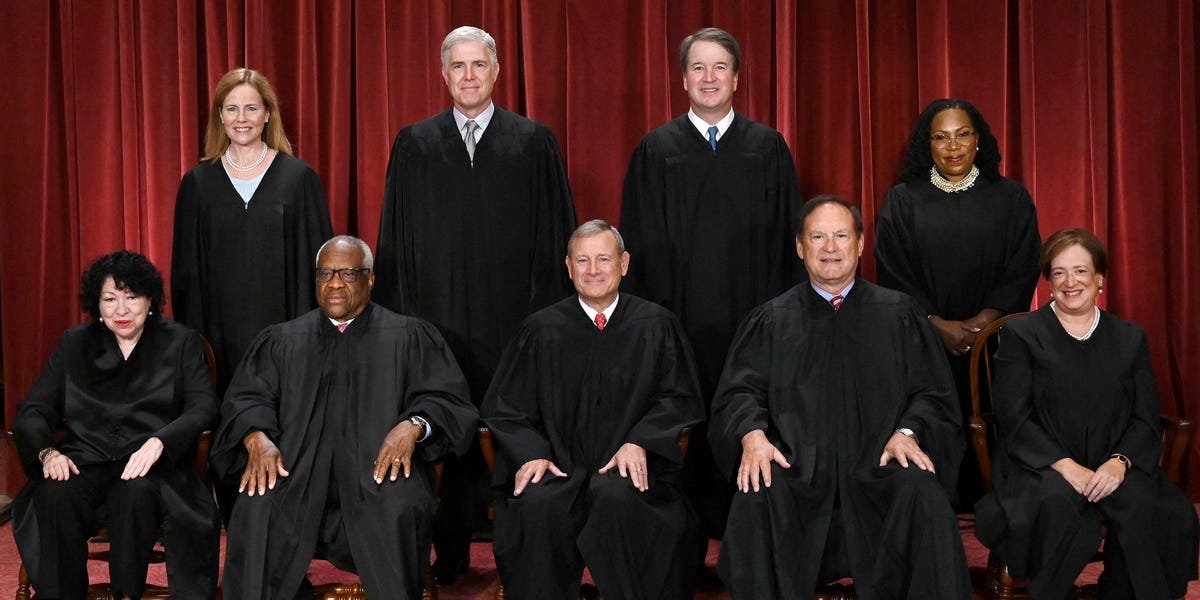
12 perks of being a Supreme Court justice

Financial disclosure laws apply to justices, but with some caveats. All federal employees (including judges) have to disclose “income, dividends, most capital gains, significant debts, the purchase or sale of land, and gifts, among other things,” per the Brennan Center.

However, Supreme Court justices aren’t beholden to the code of conduct for other federal judges, the “Judicial Conference’s interpretations of the ethics law.”

In 1991, the justices agreed to follow these lower-court rules, but it was voluntary. Then, in 2023, the Court adopted its own formal Code of Conduct for Justices, but it did not include a mechanism for enforcement.

This means it’s a bit of a legal gray area if they don’t follow the code. On occasion, justices have been called out for being less than forthcoming with gifts and perks they receive.

For example, in 2024, Justice Clarence Thomas faced ethics questions for failing to disclose luxury trips funded by billionaire GOP donor Harlan Crow, including travel on his private jet.

In response, Thomas said he thought he didn’t need to report the trips because he believed they were considered “personal hospitality” as he was friends with Crow. He later said he would comply with newer, stricter guidelines about personal hospitality.

He’s not the only one who’s received perks. In 2024, Justice Ketanji Brown Jackson received Beyoncé tickets worth almost $4,000. Jackson reported the tickets in her financial disclosure form.


Source link

Judge-clears-path-for-refunds-on-Trump-tariffs-ruled-unlawful.jpeg

Judge clears path for refunds on Trump tariffs ruled unlawful by the Supreme Court

  • A Supreme Court ruling recently struck down President Donald Trump’s IEEPA tariffs.
  • A federal judge on Wednesday said companies are entitled to benefit from that ruling.
  • US Customs must recalculate duties on imports, disregarding Trump’s IEEPA tariffs, per court order.

A federal trade judge on Wednesday cleared the path for refunds on President Donald Trump’s tariffs, applied through the International Emergency Economic Powers Act, after the Supreme Court recently struck them down.

In the ruling, Judge Richard K. Eaton of the US Court of International Trade said that US importers who were subject to those tariffs are “entitled to the benefit” of the Supreme Court ruling.

Eaton also ordered the US Customs and Border Protection — the agency responsible for collecting import duties — to “liquidate” import entries without regard to the tariffs Trump imposed through the IEEPA, a national emergency law that gives a president broad authority to regulate economic transactions.

The judge is essentially ordering the government agency to calculate the final bill for certain shipments entering the US as if the IEEPA tariffs never applied. Any accounting on goods that have already been calculated, or “liquidated,” but are not legally final, needs to be redone without the duties, the judge ordered.

Importers generally have 180 days after goods are liquidated before the accounting is legally finalized.

The move is another blow to the Trump administration, which sought to raise government revenue through taxes on imports. Trump applied double-digit tariffs through an executive order on nearly every country in April 2025, calling it “Liberation Day.”

On February 20, the Supreme Court struck down, in a 6-3 ruling, Trump’s IEEPA duties, stating that the national emergency law does not give the president the ability to unilaterally impose tariffs. The ruling made no explicit mention of refunds.

In the Wednesday order, Eaton indicated he will serve as the sole judge overseeing cases involving refunds of IEEPA duties.

The exact dollar figure for refunds remains unclear. The Penn Wharton Budget Model estimates that the tariff reversals could generate up to $175 billion in refunds.

Spokespeople for the White House and CBP did not immediately return a request for comment.


Source link

Ayelet Sheffey

Trump’s attempt to quickly axe a key affordable student-loan repayment plan gets shut down in court

Student-loan borrowers might not lose a key affordable repayment plan just yet.

On Friday, a court dismissed a proposed settlement announced by the Department of Education and the state of Missouri in December that would have eliminated the SAVE income-driven repayment plan ahead of schedule.

President Donald Trump’s “big beautiful” spending legislation called for phasing out SAVE by 2028. This latest update means that the department has to stick with that timeline, and it cannot eliminate the plan before 2028 without court approval or a lengthy negotiated rulemaking process.

John Ross, Missouri’s district court judge, wrote in his ruling that the settlement was not presented to the court, and that federal law allows courts to “exercise jurisdiction only over cases or controversies,” which he said does not exist in this case because both the Department of Education and Missouri have agreed on the outcome they’re seeking without debate.

“It appears that there is no longer a live case or controversy sufficient to authorize the Court to enter a judgment on the merits,” Ross wrote.

The SAVE plan was created by former President Joe Biden in 2023, and it intended to give borrowers cheaper monthly payments with a shorter timeline to loan forgiveness. The plan has been halted since 2024 due to lawsuits seeking to block it, and while Trump’s “big beautiful” spending legislation included a provision to eliminate SAVE over the next few years, the settlement would have done so much sooner than anticipated.

Ross also wrote in a footnote that it’s “not lost on the Court that millions of borrowers who enrolled in the SAVE plan have patiently awaited clarity while this litigation has proceeded. However, that clarity must come from the Department of Education, and not from this Court, which is no longer empowered to weigh the merits of a case that is now moot.”

Winston Berkman-Breen, legal director at advocacy group Protect Borrowers, said in a statement that the court’s ruling means the department can now move forward with relief under the SAVE plan.

“As of today, not only is there no legal barrier to delivering those rights through the SAVE plan, but the Secretary has a legal obligation to do so,” Berkman-Breen said. “The U.S. Department of Education must immediately identify borrowers who are eligible to have their loans cancelled under SAVE and instruct their student loan servicers to cancel those loans.”

A Department of Education spokesperson told Business Insider that the department is evaluating the court’s decision.

The department said in December that, should the settlement be approved, it would not enroll any new borrowers in the SAVE plan, it would deny pending applications, and move the 7 million enrolled borrowers to other repayment plans. Those borrowers would have a limited time to prepare to make their payments.

Have a story to share? Contact this reporter at asheffey@businessinsider.com.


Source link

Kelsey Vlamis's face on gray background.

Small-business owner has paid $12,000 in tariff fees and says Supreme Court ruling leaves uncertainty

This as-told-to essay is based on a conversation with Marc Bowker, owner of Alter Ego Comics, a comic book shop in Lima, Ohio, after the Supreme Court overturned some of President Donald Trump’s tariffs. This story has been edited for length a clarity.

My first reaction to the Supreme Court decision was, “This is awesome and long overdue.” The second was, “Okay, what’s next?”

Then I saw the president say there would now be a new 10% global tariff and that the Supreme Court justices who ruled against him are unpatriotic and unloyal. So it feels like this is going to drag on forever and ever until he gets his way. It’s like death by a thousand paper cuts.

I think there are more questions remaining than answers. I appreciate the Supreme Court siding with Americans and American businesses, but it feels like it’s going to be a tug-of-war that may go on throughout this entire administration.

This administration has created a level of uncertainty in the small business landscape that I haven’t seen in 23 years of owning my store.

In addition to being a small-business owner in America, I’m a consumer in America, so I’m paying more for everything that my family consumes, from food to physical products. It’s a one-two punch for us.

I’ve already paid thousands, and there’s still uncertainty

I’ve kept a spreadsheet of every shipment that had a tariff charge, and as of today, we’ve paid over $12,000 since Trump started all of this.

We’ve had to pass on a percentage of that to our customers, and as a result, we’ve seen a slowdown in orders. Some are taking a wait-and-see mentality, or they just don’t want to pay the extra fee.

Comics themselves — a lot of which are printed in Canada — have not been impacted by tariffs. But for me and for other comic book stores, action figures, board games, and comic book supplies, like storage items, are being impacted. Action figures account for about 65% of my shop’s revenue, and they are made in China.

A lot of these orders are made far in advance, too. We were being charged tariffs on items ordered in 2023 and 2024. There’s stuff I need to order next week that ships in June of 2027. Is the tariff going to be 6%? Is it going to be zero? Is it going to be 100%? I have no idea.


Marc Bowker and his family in front of his store, Alter Ego Comics.

Marc Bowker and his family in front of his store.

Marc Bowker


It’s unclear if small businesses will get refunds or what will happen next

As for the tariff costs small businesses have already paid, are we getting that back? Probably not. Are the corporations that paid the bulk of the tariffs going to be reimbursed? Where does that come from? I feel like this is just going to cause more paperwork, more red tape, more headaches. I don’t know what the next step is.

If I could wave a magic wand, yes, there would be some reimbursement of the fees that all American businesses have had to pay. If I had to settle for something, it would be that, effective today, there are no more of these Trump tariffs.

It’s hard to be excited about the Supreme Court ruling when, within hours, the White House says it’s going to push back with more tariffs.

The administration is throwing so much at us every day that we can’t make any progress. It’s hard to see what the future will look like.

I would hate to see this stretch on the next three years of the administration. It’s going to take all this extra time that could be spent running our businesses and serving our customers, just trying to stop the government from getting its hands in our pockets.

It really feels like our elected officials are not listening to us. Historically, the Republican Party has been promoted as the party of business in the United States. If they truly were, they would be listening to constituents who are saying these tariffs are hurting our businesses.


Source link

Kelsey Vlamis's face on gray background.

Democrats demand Trump issue $1,700 tariff refunds to Americans after Supreme Court ruling

President Donald Trump previously promised Americans tariff dividend checks, but if Democrats have their way, he could be issuing refunds instead.

After a Supreme Court ruling on Friday struck down Trump’s tariffs levied under the International Emergency Economic Powers Act, Democratic lawmakers were quick to demand that the president repay Americans through tariff refunds.

“Donald Trump should return that money immediately. He has an obligation,” California Gov. Gavin Newsom said on Friday. “$1,751 per family that were taxed by Donald Trump. He took hundreds of billions of dollars from working folks, from the ag community, from small businesses for this vanity play, this illegal action, and he finally was held to account. The rule of law won out.”

Illinois Gov. JB Pritzker sent a letter to Trump calling for refunds to families in his state.

“Your tariff taxes wreaked havoc on farmers, enrage our allies, and sent grocery store prices through the roof,” Pritzker said in the letter. “On behalf of the people of Illinois, I demand a refund of $1,700 for every family in Illinois.”

The governor also sent an invoice billing that amount for more than 5.1 million Illinois families, totaling more than $8.6 billion. The invoice said it was “PAST DUE – DELINQUENT.”

When reached for comment, White House spokesman Kush Desai responded in part by saying if Pritzker “really cared about delivering economic relief for Illinois, he’d start with his own state government instead of chasing another stupid headline.”

The offices of Newsom and Pritzker did not respond to requests for comment.

Both Newsom and Pritzker are considered potential candidates for the presidential election in 2028, and they’ve both been highly critical of Trump.

The governors appeared to be basing their requests for refunds of that amount on a report released this month by Democrats on the Joint Economic Committee in Congress. The report found American families paid an average of $1,745 in tariff costs between February 2025 and January 2026, for a total of over $231 billion paid by consumers.

Other studies, including from Harvard Business School and The Budget Lab at Yale, have found that tariff costs are largely paid by American businesses and consumers.

The Supreme Court on Friday ruled that tariffs issued under the IEEPA, a national security act, had exceeded the president’s authority. Trump denounced the decision and said he would pursue additional tariffs through other avenues.

In November, Trump touted the money being collected from tariffs and floated the idea of sending $2,000 tariff dividend checks to middle and low-income Americans, though issuing such checks would likely have required an act of Congress. In January, Trump gave mixed messages about his plans for tariff rebate checks.

Now, with the IEEPA tariffs struck down, it’s likely some American businesses will try to receive refunds for the tariff costs they paid.

Despite Democrats’ stance on the issue, there’s a lot of uncertainty about whether or how refunds would happen.

The Supreme Court ruling did not touch on issuing tariff refunds.

When Trump was asked Friday if the government would now have to issue refunds, he said, “I guess it has to get litigated for the next two years.”

Treasury Secretary Scott Bessent said Friday it was “unlikely” Americans would receive tariff refunds.

“I got a feeling the American people won’t see it,” Bessent said, adding, “My sense is that could be dragged out for weeks, months, years.”


Source link

Supreme-Court-strikes-down-swath-of-Trumps-tariffs-—-but.jpeg

Supreme Court strikes down swath of Trump’s tariffs — but he has other options

The Supreme court struck down a chunk of President Donald Trump’s sweeping tariff policy on Friday, finding a new limit to the expansive presidential powers he has sought.

The 6-3 decision centered on the tariffs Trump justified under the International Emergency Economic Powers Act, a national security law that allows the president to regulate economic activity during emergencies.

Those IEEPA-justified tariffs have been one of Trump’s most powerful weapons in his efforts to renegotiate trade agreements around the globe. They include Trump’s so-called “Liberation Day” tariffs, announced in April, which are at least 10% on nearly every country in the world.

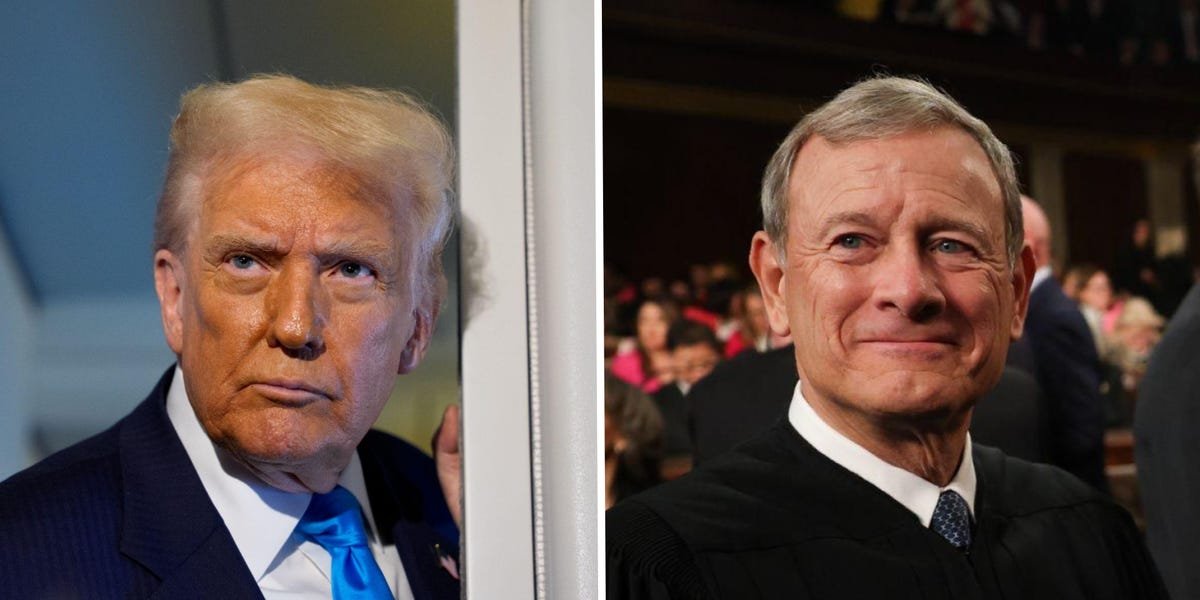
The Trump administration’s use of the law went too far, wrote Chief Justice John Roberts in the majority opinion. Trump would need a distinct law from Congress “to justify his extraordinary assertion of the power to impose tariffs,” he wrote.

“What common sense suggests, congressional practice confirms,” he wrote. “When Congress has delegated its tariff powers, it has done so in explicit terms, and subject to strict limits.”

The Supreme Court’s decision comes as the United States trade deficit is shrinking, largely due to the Trump administration’s tariffs, which are taxes on imported goods. It shrank to $29.4 billion in October, the lowest figure since 2009, according to recently published Commerce Department data.

Two groups of businesses filed lawsuits challenging Trump’s authority to impose tariffs through IEEPA. The Supreme Court combined their cases and put it on the fast track, holding oral arguments at the beginning of its November term.

IEEPA, a Carter-era law, gives presidents the power to “regulate” importation in times of emergency. The Trump administration claimed that it included the ability to impose tariffs — a position no other president has taken.

Lawyers representing the businesses argued that Congress has been clear about taxation and tariff powers in other laws, and would have been clear if IEEPA were meant to confer those powers to the president.

During oral arguments, most judges expressed skepticism about the Trump administration’s arguments. Justice Neil Gorsuch, whom Trump appointed to the bench in his first term, said taxes were “part of the spark of the American Revolution” and should get careful treatment.

“The power to reach into the pockets of the American people is just different,” Gorsuch said. “And it’s been different since the founding.”

The Supreme Court’s ruling does not affect the tariffs that Trump has imposed using other laws, and Trump still has the power to issue additional tariffs using those laws.

But his administration has favored IEEPA because of its perceived flexibility. The other laws that allow presidents to impose tariffs without explicit Congressional approval have limits — including built-in expiration dates and caps on the amount taxed. They also make it more difficult to target particular countries, rather than certain industries.

This is a breaking story. Please check back for updates.


Source link