
Patreons-CEO-says-AI-will-be-a-bloodbath-for-the.jpeg

Patreon’s CEO says AI will be a ‘bloodbath for the world’s creative people’ unless tech companies pay up

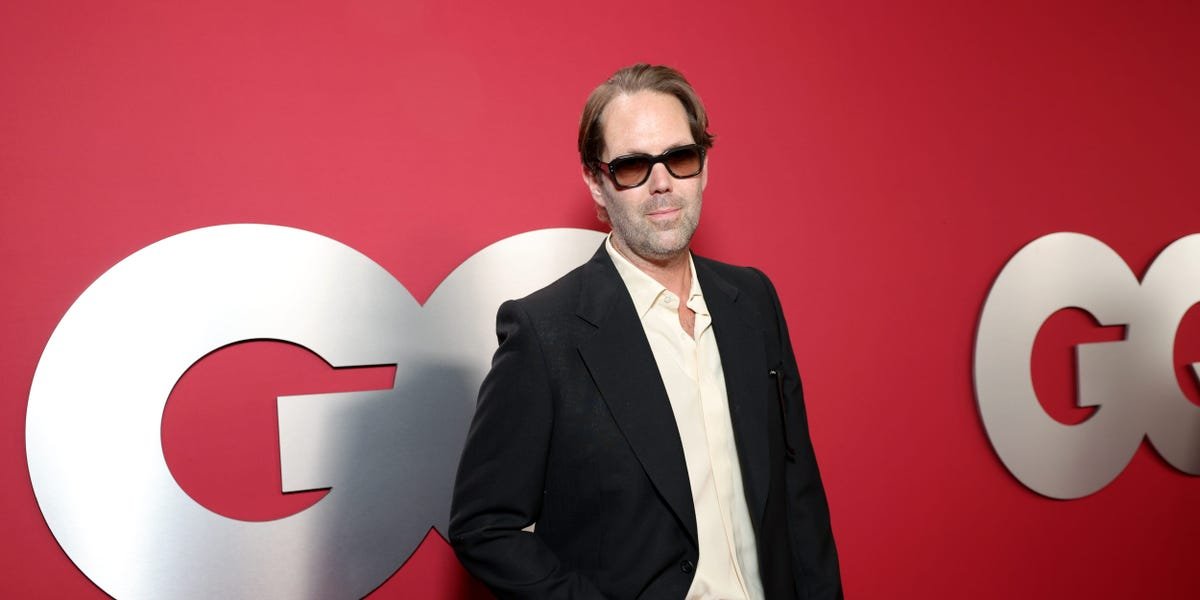
Jack Conte, the CEO of creator subscriptions platform Patreon, has a bone to pick with the Big Tech AI models.

It’s about compensation.

“The creator economy is being left out, loudly and notably,” Conte told Business Insider in an interview. “And by the creator economy, I don’t mean companies, I don’t mean Patreon. I mean creators.”

While AI companies like OpenAI and Meta are striking deals to license content from traditional media companies, “none of that infrastructure exists for independent creators,” Conte said.

In a roughly 45-minute video posted to Patreon on Tuesday, Conte further explained his personal stance on AI and the creator economy.

Conte said the key problem is that Big Tech companies don’t have much of an incentive to pay individual creators right now.

“I’m heavily in favor of some type of regulation that protects the rights holders and creators who are unable to protect themselves and go to the table with a bunch of leverage in moments like this,” he said.

AI’s standing under existing copyright law is still being assessed in real time. For example, in 2025, a federal court in California ruled that Anthropic’s training of its models on copyrighted books could be considered “fair use” if the material was lawfully obtained. Still, the AI company agreed to pay a $1.5 billion settlement to the author plaintiffs in the case after the judge ruled that copying and storing pirated books without consent did not meet the criteria for fair use. In January, a bipartisan bill was introduced in Congress to address transparency around how AI companies train on copyrighted material.

Conte wants to see AI companies start taking creators — and the rights to their content — seriously.

“I’m not anti-AI,” he said.

Patreon, a creator economy unicorn startup, has been internally using AI tools like Anthropic’s Claude and Cursor.

“I think it’s going to help humans make really beautiful things and be really self-expressive in an amazing way, just like synthesizers, just like sound and picture with movies,” Conte said. “But that doesn’t give people carte blanche to roll it out in a way that just creates a bloodbath for the world’s creative people.”

Conte doesn’t have a solution in mind yet for how creators should be compensated by companies training AI models.

“What we need to solve for is what the spirit of IP is solving for, which is how do you incentivize novelty creation?” he said.

He pointed to YouTube’s rights management system, Content ID, as a potential model. Content ID lets rights holders detect, remove, and monetize YouTube videos that feature their copyrighted work.

“Either I can remove my work from the training data, or I get paid when it’s used as training data and when it’s replicated, and I get credit for that,” Conte said. “I don’t know how to build that, but humans have done harder things.”

AI companies could start — and potentially already are — ripping a page out of social media’s playbook for paying or courting creators. Last year, Bloomberg reported that several AI companies were paying creators to license their unpublished content, including startup Moonvalley. OpenAI also recently hired Meta’s former head of partnerships, who oversaw Instagram’s relationships with celebrities and creators.

“We’re going to see some type of model emerge that compensates artists for their work,” Conte said.



Source link

cherylt_headshot

Critical Role’s chief creative officer, Matt Mercer, explains how he avoids burnout

Critical Role’s chief creative officer, Matthew Mercer, had been spearheading his eight-member crew’s relentless push into the big leagues of nerdworld for 10 years.

That was until this July, when he announced that he’d be giving up control of one of the crew’s biggest priorities, their long-running “Dungeons & Dragons” Twitch livestream.

In an August appearance on the podcast “Crispy’s Tavern: Tales and Tea,” Mercer said he’d felt the threat of burnout and thought he needed a break. He said he’d started to feel a “continuous need to produce creatively,” which was “a very draining and very scary thing.”

To be sure, Mercer and his seven cofounders still have a full slate of projects to work on. That includes an ongoing sold-out arena tour, as well as two Amazon-backed animated series on Prime Video. Mercer also has a key role in the team’s game publishing arm, Darrington Press, home to “Daggerheart,” their flagship game and their answer to “D&D.”

Still, Mercer says, it’s important to be able to admit when you’re done, and to give yourself permission to step away from the work for as long as you need to.

“My biggest advice for burnout is to acknowledge when you’re at the edge and take every opportunity you can to step away and replenish your cup,” Mercer told Business Insider.

Brennan Lee Mulligan of “Dimension 20” fame, Mercer’s longtime friend and collaborator, is the game master for Campaign Four, the team’s ongoing “D&D” stream. Mulligan taking over the main stream means Mercer is no longer solely in charge of captaining the team’s regular episodes, which often run to the four-hour mark.

“There’s this concept, the idea that just pushing through and sometimes necessity requires you to do that to a certain point,” Mercer said.

“But I find walking away and taking some time to enrich your creative input means that whatever time you lost beating your head against the wall will be more than made up for when you can return from a place of genuine inspiration and renewal,” Mercer added.

Campaign Four airs on Beacon, Critical Role’s in-house streaming platform, as well as on Twitch and YouTube.


Source link

Holiday-gifting-just-got-a-creative-boost-from-ChatGPT.jpeg

Holiday gifting just got a creative boost from ChatGPT

This as-told-to essay is based on a conversation with Rashel Hariri, a 38-year-old founder and host of “She’s Interesting,” who lives in Arkansas. It’s been edited for length and clarity.

I’ve always shown care through gift-giving. When I choose something for someone, I want them to feel seen and have something they’ll actually use. I’m not someone who is going to give luxurious, massive gifts — but the gifts I give are meaningful.

Over the last year, AI has become the most effective way for me to do that. ChatGPT has become like a gifting concierge, helping me organize my brainstorming and land on presents that feel thoughtful, personal, and aligned with someone’s real life.

I developed a framework for what makes a good gift

Through conversations with the women in my podcast community, “She’s Interesting,” I realized that people — particularly women in their 30s like myself — value three main things: gifts that feel a little luxurious, gifts that expand our brains (like books or courses), and gifts that make the day-to-day easier. This became my three-part framework for ChatGPT.

With this information, I started a project in ChatGPT — which creates a space to group similar chats around the gifting topic — and provided custom instructions for the AI to follow, like background information on my framework.

If you want to create your own framework, think about what’s most important to you and the people around you. What makes you the happiest? What types of things make your life easier? Use the answers to those questions as main points in your framework.


A conversation with ChatGPT about what types of gifts to give friends and family

Create a project in ChatGPT to organize similar topics and ideas.

Photo courtesy of Rashel Hariri


I started an ongoing conversation for each recipient in ChatGPT

Within my ChatGPT project, I have separate conversations for each of the people I’m shopping for: my husband, friends, and colleagues.

I start by describing each person, including basic demographics, as well as deeper information, such as what’s important to them, their likes and dislikes, personal goals, and things they’re struggling with. I might also include their astrological sign and their favorite colors.

You have to be someone who pays attention to your friends, because otherwise, AI will give you basic suggestions. I try to give ChatGPT everything I know about the person. If I have a conversation with a friend or family member and something stands out, I can go into the chat and say, “Take note that this person said X.” The more I use it, the more it learns.

When it’s time to buy a gift, even if it’s months later, all those details are stored. It’s a mental relief, like your notes app, but way smarter because it responds to you.

With all of that information uploaded, I prompt ChatGPT to come up with gift ideas within my framework for each person. You can also give it a specific budget to work within.

The tool comes up with initial ideas and explains why each gift works for the recipient. From there, it becomes a conversation — almost like talking to the person I’m shopping for. I might ask for more ideas within a category, or the ideas might remind me of something else about the person, and I’ll ask it to generate new suggestions with that information.

I still make the final gift decision, but ChatGPT can be speedy and creative

I used to brainstorm all of this myself, but AI has made the process 60 to 70% faster, and given me a tool I can return to for future gift ideas.

I still choose the final gifts to give, but if I’m feeling stuck between ideas, I’ll go back to ChatGPT and say, “Here are two items I’m deciding between. Help me narrow it down.” It asks me questions to help decide: Does she need this? What’s her plan for the next three months?

AI often makes suggestions I wouldn’t have thought of. I told ChatGPT about a friend who struggles to find any time for himself while balancing a busy career and two kids. The tool recommended “The Five-Minute Journal.” He loved it — it was thoughtful and tailored.

The best part of gift-giving is that moment when someone opens it and says, “Oh my God, you know me so well!” We want to give the people we love something that makes them feel good, and this process has made it easier for me to do that.


Source link

Meta-hires-longtime-Apple-design-leader-Alan-Dye-to-run.jpeg

Meta hires longtime Apple design leader Alan Dye to run a new Reality Labs creative studio

Meta has hired longtime Apple design leader Alan Dye to run a new creative studio inside its Reality Labs division, CEO Mark Zuckerberg announced in a series of posts on Threads on Tuesday.

“Today we’re establishing a new creative studio in Reality Labs led by Alan Dye, who has spent nearly 20 years leading design at Apple,” Zuckerberg wrote on Threads, saying the group will help define “the next generation of our products and experiences.”

Zuckerberg said the studio will bring together “design, fashion, and technology” and that Meta wants to “treat intelligence as a new design material and imagine what becomes possible when it is abundant, capable, and human-centered.”

The goal, he added, is to “elevate design within Meta” by assembling a team with “craft, creative vision, systems thinking, and deep experience building iconic products that bridge hardware and software.”

Dye will work alongside several high-profile design leaders. He will report to Meta’s chief technology officer and Reality Labs head Andrew Bosworth.

Dye is one of the most prominent figures in Apple’s modern design history. He has led Apple’s design studio since 2015 and has played a key role in shaping the company’s software and the look and feel of many of its devices, including the interfaces for products such as the Apple Watch, iPhone X, and Vision Pro headset.

Most recently, Dye was responsible for Liquid Glass, Apple’s new design across its devices that makes elements of the user interface look transparent.

His team has also worked on a slate of new smart home hardware, according to Bloomberg, which first reported his move to Meta.

Zuckerberg said that Dye will be joined by “another acclaimed design lead from Apple,” Billy Sorrentino, as well as Joshua To, who leads interface design across Reality Labs; industrial design lead Pete Bristol; and metaverse design and art teams led by Jason Rubin.

The CEO framed the move as part of Meta’s push into AI-powered devices such as smart glasses.

“We’re entering a new era where AI glasses and other devices will change how we connect with technology and each other,” Zuckerberg wrote.

While the potential is “enormous,” he said the new studio will focus on making every interaction “thoughtful, intuitive, and built to serve people.”

Earlier this year, Meta hired another Apple engineer, Ruoming Pang, to its new Superintelligence Labs organization. Pang led Apple’s AI models team.

Apple did not respond to a request for comment from Business Insider. A Meta spokesperson pointed to Zuckerberg’s posts on Threads.

Have a tip? Contact Pranav Dixit via email at pranavdixit@protonmail.com or Signal at 1-408-905-9124. Use a personal email address, a nonwork WiFi network, and a nonwork device; here’s our guide to sharing information securely.


Source link