
I-moved-my-family-from-Florida-to-Colombia-The-lifestyle.jpeg

I moved my family from Florida to Colombia. The lifestyle is affordable and we love the vibrant culture, but it’s hard to adjust to the lack of urgency.

This as-told-to essay is based on a conversation with Alyssa Bolaños, a 35-year-old creative freelancer living in Medellín, Colombia. It’s been edited for length and clarity.

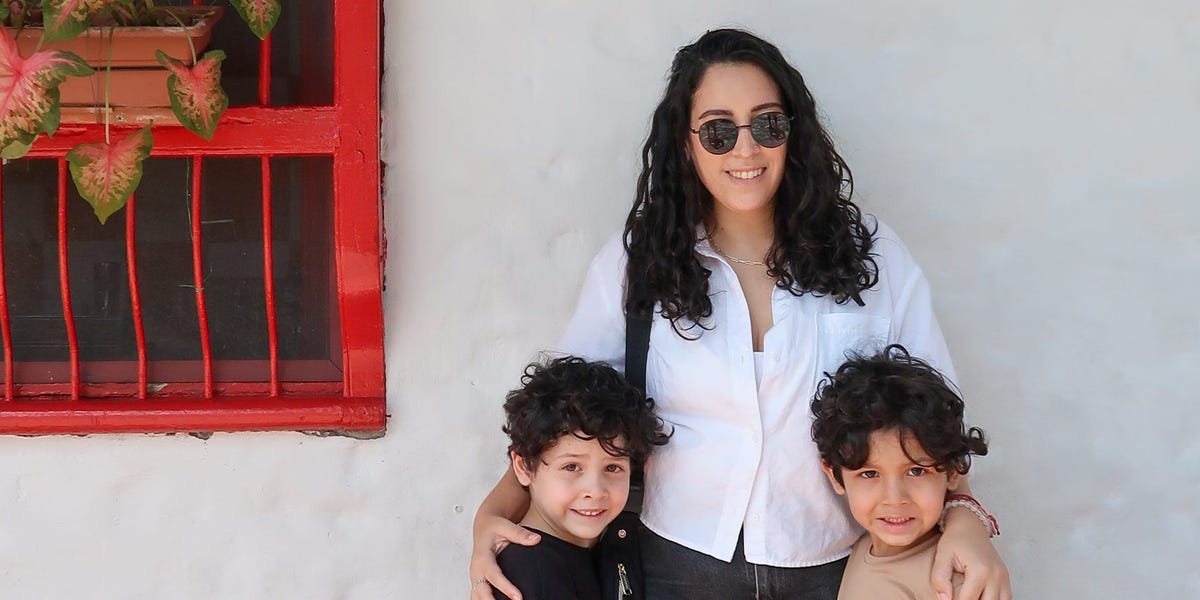
My husband, two sons —who were four and five at the time — and I moved from Orlando to Medellín, Colombia, in August 2025.

My husband is from Colombia, and he always said he never wanted to move back, but when the Trump administration took office a second time, we started having serious conversations about it.

We also had safety concerns about our children’s school and decided we absolutely did not want to raise our kids in a place with a threat of school shootings. That’s what really clicked with my husband and made him think, “We can’t stay here.”

Since moving, we’re spending more time as a family, enjoying the affordable lifestyle, and integrating into Colombia’s vibrant culture. I’m still adjusting to some of the differences in work culture, and I miss my family, but I have no plans of moving back.

Our families were concerned about us leaving

Once we made the decision to move, I really didn’t have any fears. The only problem was that our immigrant families questioned why we would move back after they sacrificed so much to move to the States — my parents are from Cuba.

We weren’t going to let anyone’s perspective hold us back because, at the end of the day, we have to focus on the lives of our children and ourselves. It was really only six months from that point that we actually moved.

The emotional aspect of moving, saying goodbye to friends and family, was the hardest. Family is a big part of Latino culture, so it was hard being the first of our family to leave.

The whole process of selling and donating our belongings was also exhausting. We shipped two big boxes of our belongings, but we had to be really discerning about only taking the most sentimental things with us.

I’m able to be present in my kids’ lives here

Colombian culture is so family-oriented. When people finish work, they spend time with their families and enjoy life. Every day is a reason to celebrate, and I love that about Colombia.

My husband is a stay-at-home dad, and I do a little bit of everything as a freelancer, like social media strategy and marketing for brands and small businesses. We’re currently homeschooling our kids while we wait for them to be accepted into a school in the area.

Actually being present with your kids is a blessing that you don’t always get as a parent in the States. In Colombia, we spend lunchtime from 11 a.m. to 2 p.m. playing with them or exploring. It’s tiring to be with your kids all the time, but it’s a luxury.

The food and the walkability are also amazing. We don’t have a car, so we walk most places or take public transit. Our kids also scooter around. Worst case, we take an Uber.

The lack of urgency here is good and bad

People work to live here, not live to work. It’s an amazing change of pace, but it’s still taking some getting used to. I used to sit at my desk job all day and work the entire time. Here, there are lots of holidays and a strong emphasis on getting outside and spending time with loved ones.

One thing I didn’t expect was the overall lack of urgency. In the States, we’re so used to the “go go go” hustle culture. I got so accustomed to constantly moving and feeling like I was doing something wrong if I wasn’t being productive.

In Colombia, there aren’t as many strict timelines, and people are more focused on enjoying little moments in their day. If I’m being honest, the lack of urgency stresses me out sometimes, but I’m really trying to be chill with it and remember that not everything is an emergency.

This change of pace is good for me, but it’s hard.

I miss my family, but I prefer the Colombian version of things

There’s not much I really miss about the United States other than family and friends. We’re lucky to have some family and friends here who have introduced us to others, and we’ve attended some events for other immigrants, but building new connections is taking time.

Other than that, we have all of the same comforts like public transportation, air conditioning, and stores. People have this misconception that Colombia is a backward place, and it’s absolutely not like that.

Medellín is innovative and full of life, culture, and community. There are even some Colombian versions of things I prefer, like the Colombian Frisby instead of KFC. I miss IHOP a little bit, though.

Our lifestyle is affordable, but there’s a caveat

Our groceries are less than they used to be for our family of four, and my personal cellphone bill is $30 a month. Everything here has been much more affordable and accessible for us.

That being said, I always want to be careful saying that our lifestyle is affordable because Colombia is experiencing a big problem with gentrification. If you move here, my advice is to support local Colombian stores and really integrate with the culture. Colombia is a beautiful place, and we have no plans to leave.

Do you have a story to share about leaving the United States? If so, please reach out to the reporter at tmartinelli@businessinsider.com.

Source link

I-moved-from-the-US-to-Brazil-after-losing-my.jpeg

I moved from the US to Brazil after losing my job. Despite the intense culture shock, I couldn’t be happier with my decision.

After an incredible three weeks traveling around Brazil, I was on the first leg of my flight home to Chicago when I received a message from my director at work — a 15-minute “check-in” with an HR representative.

Worried I might receive news of a layoff, I frantically deboarded the plane after landing in Rio de Janeiro and joined the call in a quiet corner of the duty-free section of the airport. There, I was informed that my role had been eliminated.

Faced with the reality of returning home to the frigid Chicago temperatures with no job, I quickly changed my connecting flight and decided to hostel-hop around Brazil for another month.

However, even that extra month didn’t feel like long enough in the country I’d fallen in love with. Exploring beautiful destinations while practicing a new language every day was incredibly fulfilling for me.

Once I went back to the US, I realized I was looking for ways to push myself out of my comfort zone. I had always wanted to live abroad, and my unemployment seemed like the perfect alignment to make that move to another part of the world.

So, a few months after my original trip, I relocated from Chicago to São Paulo and was greeted by lots of surprises along the way.

Coming from Chicago, I didn’t expect to feel chilly in São Paulo


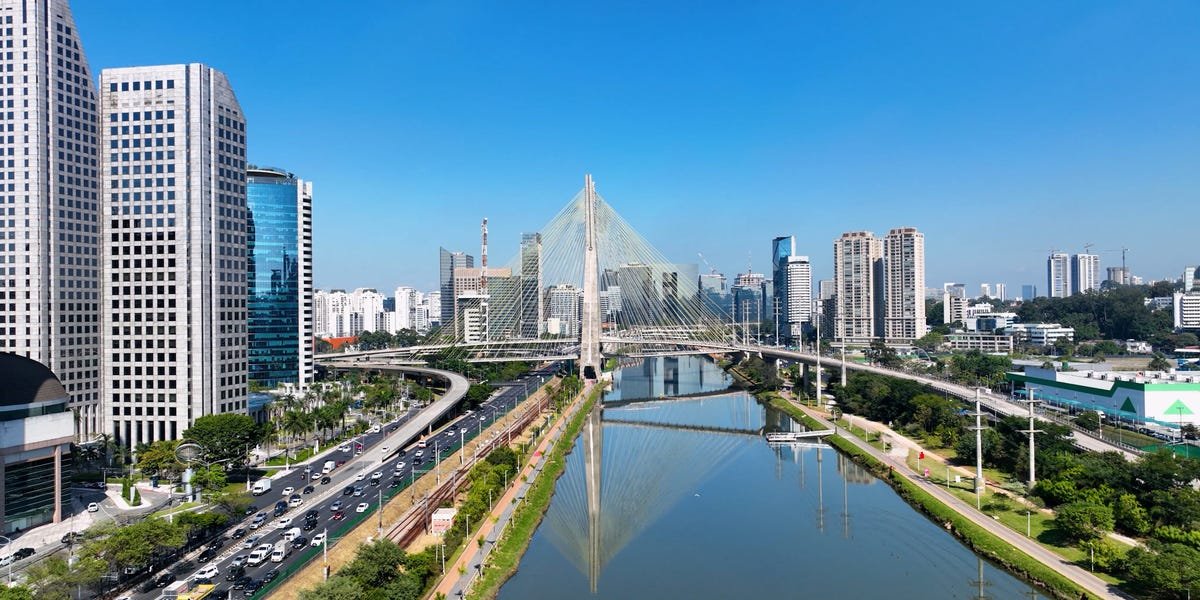
The cityscape of São Paulo.

The temperatures in São Paulo caught me by surprise.

Cristian Lourenço/Getty Images


Growing up in the Midwest, I’ve endured my fair share of snowstorms and wind chills so cold that I felt as though my eyelids would freeze together. So, I felt well-equipped for any kind of cold weather Mother Nature could ever throw my way.

Even so, I wasn’t prepared for just how chilly Brazil could feel — especially during a springtime cold front while living in an area without access to central heating.

Although Brazil’s springtime temperatures (which last from September through November) are similar to what I experienced during the Chicago fall, it was difficult to adjust to the lack of central heating. So, I found myself wearing multiple layers of T-shirts and the only hoodie I brought with me.

Before I moved, I’d only visited Brazil during its smoldering summer months, so I had naively assumed the subtropical temperatures in São Paulo would be pleasant year-round.

The food is different — and that’s not a bad thing


A plate of acarajé with shrimp.

I’ve grown to love acarajé: stuffed black-eyed-pea fritters

Isaiah Reynolds


Between seeing unrefrigerated milk in grocery stores to trying vegetables I’ve never heard of, the day-to-day food in Brazil is a lot different than what I was used to in the States.

For example, contrary to the common American adage, breakfast doesn’t seem to be the most important meal of the day here; many Brazilians opt for bread or fruit instead of the hefty pancakes or sausage links I was accustomed to.

For lunch and dinner, many locals seem to rely on a tried-and-true formula: arroz (rice), feijão (beans), some meat, and salad.

Classic dishes like stroganoff (a creamy chicken or beef dish topped with crispy shoestring potatoes) or feijoada (pork and black bean stew) may enter the rotation. Still, the aforementioned combo is a popular default dish that I’ve grown to love.

Although tavern-style Chicago pizza still holds a special place in my heart, my new Brazilian favorites include acarajé (stuffed black-eyed pea fritters fried in dendé oil), acerola (a sweet cherry fruit), and doce de leite (sweet caramelized milk used as a topping or filling).

Plus, there’s a pretty great international food scene here, too. While wandering around the city, I’ve come across a wide range of cuisines, from Lebanese and West African restaurants to Colombian and Venezuelan spots.

Although I was initially worried about feeling welcomed, I can see myself putting down roots here

One thing I’ve noticed since my first visit to the country is that Brazilians are very proud to be Brazilian.

From football matches to the celebrations that occur when Brazilian films are nominated for Academy Awards, the people here seem to be the loudest and proudest fans in the room.

Because of this, I was worried I might not feel as welcome as an outsider. Instead, I’ve found an endearing level of curiosity among many Brazilians I’ve met, who either want to practice English or ask how I’m enjoying their beloved country.

This openness to connect has softened a lot of the original culture shock during my move. Although very different from my life in Chicago, I’m excited to continue building a life for myself in São Paulo.


Source link

I-left-the-US-in-2015-and-have-since-lived.jpeg

I left the US in 2015 and have since lived around the world. Reverse culture shock hit me harder than leaving ever did.

This as-told-to essay is based on a conversation with Kat Smith, 35, who has lived abroad since 2015. Smith, the founder of Away Abroad, a website for female travelers, currently lives in Trieste, Italy, with her husband. This conversation has been edited for length and clarity.

I think people don’t always believe me when I say it, but living abroad has always felt more fun to me. I love the cultural challenges, the language barrier, the different food, and the process of figuring out the day-to-day.

I’m originally from Conyers, a small town just outside Atlanta. In high school, I moved to Athens, Georgia. It was a typical small, suburban place — there weren’t many people traveling internationally. Certainly, no one was moving abroad the way I eventually did.

When I was 18, between graduating from high school and starting at the University of Georgia, my parents basically forced a gap semester on me. They came home from a dinner party one night and were like, “Instead of going to college, you’re going to Guatemala.”

I did not want to go, but hindsight is 20/20.

Going to Guatemala was the best thing that could have happened to me. While I was there, I met a Peace Corps volunteer. Spending time with them and being in the country changed my perception of the world and opened my eyes to what was even possible.

When I got back and started university, I met with an advisor who had also served in the Peace Corps. After talking with him more, it just felt like the right path for me.

Living abroad changed me as a person

In 2013, almost exactly a month after I graduated from university, I joined the Peace Corps and left the US for Ecuador.

At the time I applied, you didn’t really have much say in where you went. I basically said, “Send me anywhere in the world,” and they sent me to Ecuador. During training, they placed me in a community based on my skill set and the community’s needs.

I ended up in Tumbaco for 3 months for training and then in Arenillas, a really small town in the southwestern province of El Oro, where I lived for about two years.

When my service ended, a friend of mine and I hitchhiked through the Peruvian Amazon and ended up working at an eco-lodge in the middle of the rainforest for a few months.


A man sits in a boat, bananas sit on the boat's floor, and a sunset looms in the background.

Smith’s boat ride on the Amazon River.

Courtesy of Kat Smith


Around that time, in 2015, my dad was like, “Okay, you haven’t been home in almost three years. I’m buying you a ticket—you’re coming to visit.” So, begrudgingly, I went back to the US.

I remember feeling reverse culture shock more intensely than I ever felt culture shock. It completely caught me off guard. All of a sudden, the US didn’t feel like home anymore. I felt like I didn’t fit in.

I also knew I wasn’t the same person I’d been when I’d left, which created an internal conflict. I don’t want to be that dramatic, but I had a different mindset, and trying to be the old me was hard.

I’ve traveled and lived all around the world

Over the years, I’ve lived in Panama City, been to Colombia, worked on a yacht in the South of France, and backpacked through Eastern Europe for a couple of months. I also backpacked between Vietnam and Thailand, and taught English in South Korea.


A man and woman, in wedding attire, stand in front of a bright pink wall in Colombia.

Smith and her husband, Rafael Tudela, in Cartagena, Colombia.

Courtesy of Kat Smith


Somewhere in the middle of all of that, I fell in love and got married in Colombia in 2018. Not long after, my husband and I moved to Vietnam, where we stayed for three years while I was teaching English, before leaving in 2021 because of COVID restrictions.

After Vietnam, we went back to the US for a while. We bought a van, converted it, and traveled up and down the West Coast. I loved nature, but after a few months, I was ready to leave again.


A woman sits in the back of an open van, mountains stand before her.

Smith inside of the van she traveled with across the West Coast.

Courtesy of Kat Smith


So we tried Albania next. We stayed for a couple of months, but it didn’t feel like the right long-term fit. Instead, we kept moving and spent time around the Balkans — traveling through Montenegro, Serbia, Bosnia, and Croatia.

My journey hasn’t been perfect

Looking back, I’ve made a few mistakes along the way.

One of the things I cringe about most is how I treated my friends and family back home. I was pretty insensitive about their choices — friends who just wanted to graduate, buy a house 10 minutes from where they grew up, and settle into a typical, structured, no-surprises kind of life. I think I judged that because I felt like what I was doing was so extravagant.

But honestly, I was a bit of a brat about accepting other people’s paths.

I did something similar with my family, too. I didn’t really consider what it meant for them when I left. I was so focused on what it meant for me, and not necessarily on how it was affecting everyone around me.


A group of friends walk down a street in Seoul, Korea.

Smith and friends exploring a neighborhood in Seoul.

Courtesy of Kat Smith


Italy is home — for now

In 2023, we moved to Italy for a job opportunity for my husband. He has an EU Blue Card — basically a work permit for skilled workers — and I’m on a family reunification visa linked to his.

We’ve been living in Trieste for the past 2.5 years. Trieste is fantastic, but it’s also an up-and-coming city that’s gotten really expensive, fast. Even in the short time we’ve been here, we’ve seen a big jump in costs. Our rent, for example, increased by $308 a month, which still feels crazy.

Our apartment is really nice: one bedroom, one bath, open floor plan, and close to everything. I’m really into nature, and we have a beautiful view of the sea and the hills. We were paying $1,423 a month, and now it’s $1,732.


A city view of Trieste.

The view from Smith’s apartment in Trieste.

Courtesy of Kat smith


That rising cost of living is one of the reasons we started looking at other places — just to get more for our money.

We ended up buying an apartment in Belluno for $260,955, and we’ll move in April. Belluno is a much smaller town, kind of a gateway to the Dolomites, and it sits north of Venice. We’re big mountain people, and the Dolomites are genuinely my happy place. Being closer to them means we can hike and snowboard more regularly without a long drive, which was a huge perk for us.

Although we didn’t choose Italy initially and only moved here for my husband’s job, there are a lot of reasons we’ve chosen to stay rather than move on like we typically do after a few years.

Italy has a strategic geographic position. I love living smack dab in the middle of the world. Not only is this exciting adventure-wise, but it’s also meant more people have been able to visit us, including our parents, who aren’t as keen on the long-haul flights.


A woman and her dog stand on a walking trail, sitting high above a city in Montenegro.

Smith and her dog on a hike in Montenegro.

Courtesy of Kat Smith


On top of that, the culture clicks for both of us. As an intercultural couple, we have different triggers, things we look for, and things we want to avoid. Northern Italy has provided the perfect balance for us.

I really hope Italy can be our home base, at least for the foreseeable future. But I also know myself: If, two years from now, it doesn’t feel right, we’ll pivot. I’m not setting a deadline; it’s more about whether it still feels like home. And right now, it does.


Source link

I-moved-back-to-Australia-after-decades-in-the-US.jpeg

I moved back to Australia after decades in the US. The culture shock stunned me

When I was in my early 30s, I went for a three-week holiday to my home in Sydney and never left.

For years, I had toyed with the idea of moving back home, a place I had not lived since I was 7 years old. I’d even made a couple of attempts at it, but the comfortable pull of family and more than 25 years of life in the US always lured me back.

When extending my trip week by week turned into deciding to stay, I assumed slotting back into life in Australia would be the easiest move of my life. After all, I was used to adjusting to a new environment. My father’s job in the film industry meant I spent my childhood moving frequently (13 different schools in multiple cities and countries).

Surely moving back home would feel as comforting as slipping on a well-worn, much-loved cardigan. I was wrong.

The unexpected culture shock of coming home

I never thought I would experience culture shock moving back to Australia, but that was exactly what happened. All my years overseas meant I had missed large parts of general knowledge, I didn’t understand cultural references or sayings, and I found Australian politics completely befuddling.

Although I still sounded Australian, a quick conversation, which inexplicably always started with “where did you go to high school?” quickly established I was not from here. After being viewed as a foreigner my whole life in the US, I was now viewed as a foreigner in Australia, too.

What’s more, I realized with surprise that I was culturally very American. All the things I had taken for granted in the US (convenience, customer service, and affordability) just didn’t exist in Australia.

I had to do some life adjustments

There were the daily frustrations of not being able to get a coffee past 3 p.m. (or before 7 a.m.), no salad bars or real Mexican food, and the expense of absolutely everything (Sydney is Australia’s most expensive city).

Cultural norms were an even bigger adjustment. Handshakes for acquaintances and bear hugs for friends (standard etiquette in the US) were replaced with one or two kisses to the side of (not on) the cheek.

Making friends with Sydney-siders felt hard, so I initially gravitated toward foreigners who were generally open and friendly. When I’d meet Americans, I felt an innate level of comfort and familiarity unlike anything else.

I had expected it to be easy to move back

In my first year back home, I thought a lot about the phrase “you can never go home again.” I’d always been pretty dismissive of it, believing I could return to Australia at any time and it would feel like home. Finally, I came to understand the truth in the phrase. We just can’t return to a previous place or point in life and recapture our original experience.

Just like I adjusted to the culture shock of moving to the US as a little girl (hello, mayo on sandwiches, ice in water, and excessive air conditioning), I needed to acclimatize to Australia. I had been making the move so much harder than it needed to be because I expected it to be easy and familiar.

As I started to let go of the expectation that I’d fit right in, I started to feel more at home, back home. I built up experiences and connections that grounded me, and as I got older, my American background became less noticeable and less relevant. It’s taken a long time, but I now feel entirely at home here. In the end, the key was to start from scratch and get to know my hometown as an adult, rediscovering my Australian identity along the way.


Source link

ATT-CEO-says-he-made-a-mistake-in-how-he.jpeg

AT&T CEO says he made a mistake in how he went about fixing company culture — but the viral memo wasn’t it

CEO John Stankey said he made some missteps in addressing company culture at AT&T — and shed some new light on his internal memo that went viral.

The lengthy memo, which was first reported by Business Insider in August, described how the company was moving to a “more market-based culture,” setting off discourse about the state of workplace loyalty.

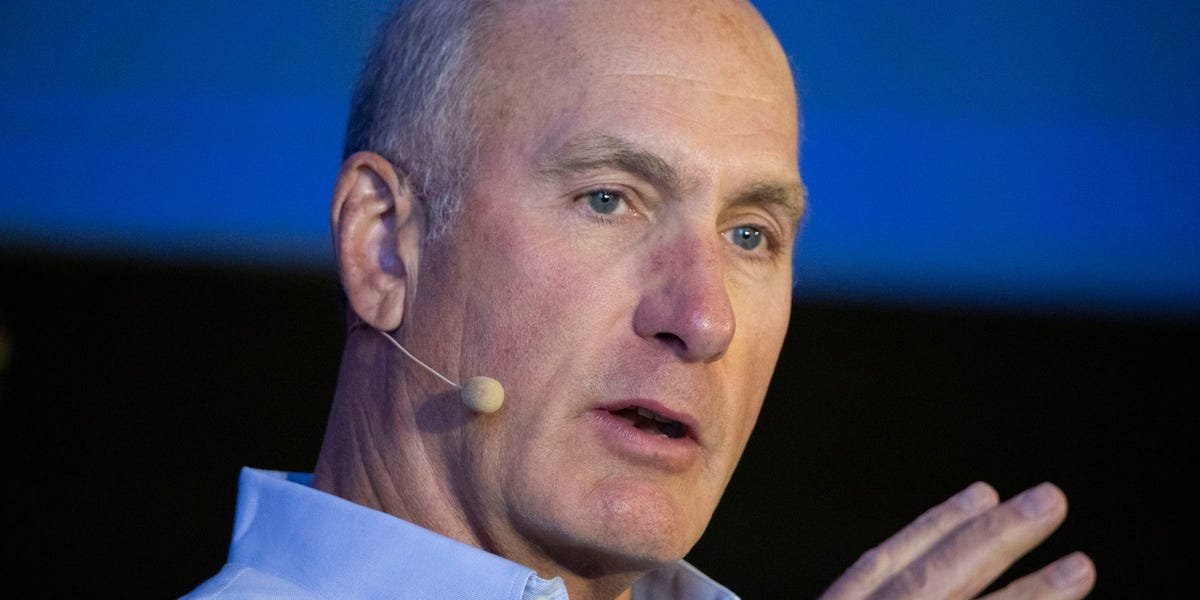
Stankey gave some insight into the goal behind the memo during a conversation at the Wall Street Journal CEO Council Summit on Tuesday.

When asked to name a mistake he’s made, Stankey said he was too slow to tackle the “culture evolution” that was needed. He said he put it among several areas of focus for the company and that instead he should’ve put it at the forefront and forced specific actions to make it happen.

Alan Murray, president of the WSJ Leadership Institute, suggested that was why Stanley sent that memo this year, rather than sooner.

“The memo shouldn’t be over-rotated on. It’s one of a series of steps in trying to put a framework out there and remove excuses for leaders to lead,” Stankey said, adding the memo gave context on the framework he was building for the business.

“That memo outlined my point of view on it, and it gives leaders that want to lead all the air cover in the world they need to go and execute around that framework,” he said.

AT&T has undergone a number of changes as a company in the past year, including a return-to-office mandate of five days a week.

In the memo to employees, Stankey effectively said they should get on board with changes to the company culture, or get out.

“We run a dynamic, customer-facing business, tackling large-scale, challenging initiatives,” Stankey said in the memo. “If the requirements dictated by this dynamic do not align to your personal desires, you have every right to find a career opportunity that is suitable to your aspirations and needs.”

At the event on Tuesday, Stankey also outlined how AT&T is pushing employees to adopt AI. He said the company has tutorials and other educational tools for employees to upskill with AI, and that he’s paying attention to who is using them.

“I want to see who’s building their skill set, where they’re building, and this is just the next set of skills that people are going to have to have,” he said.


Source link