CBS-News-plans-to-imminently-cut-dozens-of-employees-as.jpeg

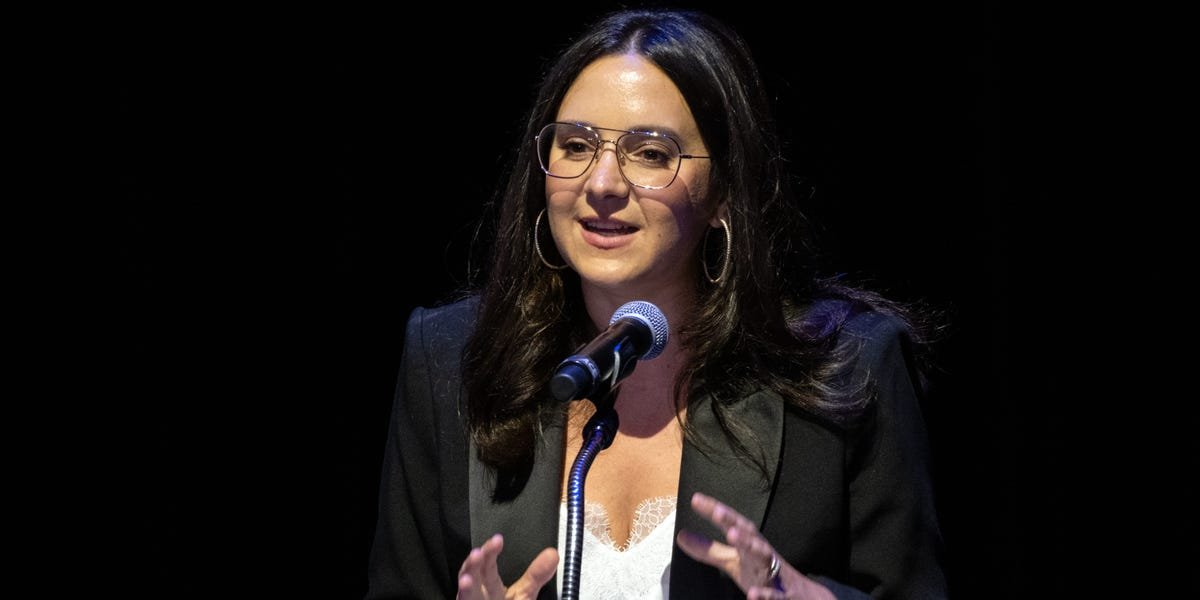
CBS News plans to imminently cut dozens of employees as Bari Weiss remakes the broadcast network

CBS News is planning to shed dozens of staffers as top editor Bari Weiss reshapes the storied broadcast network, Business Insider has learned.

The network plans to announce the layoffs imminently, a source with direct knowledge told Business Insider.

Weiss foreshadowed these cuts some weeks ago, telling CBS News employees at a late-January all-hands meeting that a “tsunami of technological change” could force staffing changes at the network.

“I can’t stand up here and tell you that in a moment of incredible transformation that that’s not going to mean transformation of our workforce,” Weiss told staffers at the town hall.

When asked about specific personnel changes at the town hall, Weiss said CBS needs to shift away from undifferentiated “commodity news” toward exclusive reports that people “can’t get anywhere else.”

“If you can get what we’re selling in five other places, in 10 other places, in 100 other places — that’s probably not a thing we need to double down on,” Weiss said.

Eleven employees on “CBS Evening News” took buyouts last month as former “CBS This Morning” cohost Tony Dokoupil became anchor, multiple outlets reported. Business Insider could not independently confirm the figure.

CBS News is also growing in certain areas. The broadcast network brought on over a dozen new contributors in January, and Weiss has said she’s looking to hire more people who can help CBS transform into a digital-focused company.

“Our strategy until now has been to cling to the audience that remains on broadcast television. I’m here to tell you that if we stick to that strategy, we’re toast,” Weiss said in late January.

Weiss was hired by Paramount Skydance CEO David Ellison to shake up CBS News, whose ratings have long trailed broadcast peers ABC and NBC.

The former New York Times editor, who founded anti-establishment news site The Free Press, was a polarizing choice for the top spot.

Her decision to delay a story that criticized President Donald Trump’s deportation efforts, as Paramount tried to buy Warner Bros. Discovery, prompted backlash inside and outside CBS News. In response to a question from a staffer about political bias, Weiss said she’s not “a mouthpiece for anybody.”


Source link

AI logo

Atlassian lays off 10% of its global workforce and attributes the cut to the ‘AI era’


Dado Ruvic/REUTERS

  • Atlassian announced plans to cut 1,600 jobs to focus on AI and enterprise growth initiatives.
  • CEO Mike Cannon-Brookes cited AI’s impact on workforce needs as a reason for the layoffs.
  • 30% of the job cuts impact Atlassian employees based in Australia, reflecting global changes.

Another tech company is making job cuts and attributing them to AI.

Atlassian, an Australian-American proprietary software company, said on Wednesday that it is cutting about 1,600 jobs, roughly 10% of its global workforce, as the company restructures to focus on AI and enterprise growth.

In a filing with the US Securities and Exchange Commission, the Sydney-headquartered company said the layoffs are part of a broader effort to reposition the business for what CEO Mike Cannon-Brookes described as the “AI era.” About 30% of the affected roles are based in Australia.

In a message to employees, Cannon-Brookes acknowledged the growing influence of AI on the company’s workforce needs.

“It would be disingenuous to pretend AI doesn’t change the mix of skills we need or the number of roles required in certain areas. It does,” Cannon-Brookes wrote.

“I believe this is the right decision for Atlassian. But that doesn’t mean it’s easy. Far from it,” Cannon-Brookes added. “I know this has a huge impact on each of you, and it weighs heavily on me and Atlassian today.”

This is a developing story. Check back for updates.


Source link

A-57-billion-AI-startup-wants-to-help-cut-government.jpeg

A $5.7 billion AI startup wants to help cut government benefit fraud. Experts aren’t so sure.

An AI startup in SF focused on identity verification has set a lofty goal: securing government contracts.

Daniel Yanisse, the CEO of Checkr, told Business Insider that the company wants to help the government reduce “fraud and waste” by not only screening new employees but also verifying people’s eligibility for benefits such as Medicare and Social Security.

Though Yanisse said the company isn’t ready to make any product announcement yet, he said a frictionless government assistance system may be just years away.

AI and safety experts, however, told Business Insider that there are legal and technical hurdles for any company to undertake the task of automating benefit and welfare systems with AI.

Checkr primarily uses AI to run background checks and surface information such as criminal records and motor vehicle reports. The company has major contracts with Uber and Lyft to screen new drivers, and is valued at more than $5.7 billion after raising $120 million in funding in 2022. In 2025, Checkr reported over $800 million in revenue and surpassed 120,000 customers.

When asked what Checkr wants to do for the government, Yanisse said that for Medicare and other programs, “there’s a lot of fraud happening and just bad actors getting the government dollars instead of the right people who need help,” adding that it’s very hard for the government to actually verify people’s employment status and income.

The Medicare Fee-for-Service program estimated that there were $28.83 billion in “improper payment” in 2025 at a rate of 6.55%, though not all such cases are the result of intentional fraud. Payments made to individuals who did not submit sufficient documentation and have unverified income levels are also considered improper by Medicaid.

“With AI, unfortunately, there’s going to be even more fraud, identity theft, and scams,” said Yanisse. “It’s a lot of friction, it’s a lot of repetition, and now there are also deepfakes.”

Checkr’s spokesperson told Business Insider that the company’s potential involvement in government is “still conceptual at this point.”

The company also pointed toward a study by Middesk, a business identity verification platform, that out of $1.09 trillion in Medicaid payments that went to around 1.6 million providers between 2018 and 2024, $563 million in payouts went to providers that are blacklisted from federal healthcare programs for criminal activity or misconduct.

Automating identity verification can be challenging

Stuart Russell, professor of computer science at UC Berkeley and an AI pioneer, told Business Insider that he is “not optimistic” that the plan to use AI to determine benefits eligibility will work as advertised.

“An AI system of this kind, some version of an LLM, is incapable of producing veridical explanations of its decisions, making it impossible to challenge false decisions,” Russell said.

Russell also cited the General Data Protection Regulation in the European Union, which bars decisions with significant legal effects on individuals from being made entirely by automated systems.

Baobao Zhang, the Maxwell Dean associate professor of the politics of AI at Syracuse University, told Business Insider that though she cannot assess exactly how good Checkr’s verification system is right now, past government attempts to mix people’s benefits with an automated system are cautionary tales.

“If the federal government or other state governments are trying to contract with a vendor to automate welfare fraud detection, they need to have a serious evaluation in the real world before they deploy it, because the stakes are high, as history has proven,” said Zhang.

In Indiana, an attempt to streamline and automate its welfare eligibility system by outsourcing a contract to IBM ended in a legal battle in which the state sued the company for $1.3 billion for the scrapped project in 2010. Based on court records, the Indiana Family and Social Services Administration said that processing errors from IBM led to faulty benefits denials that brought harm to the needy.

In Australia, an automated government plan called Robodebt, designed to detect fraud, told welfare recipients to repay benefits and sent letters claiming they owed thousands of dollars in debt, based on an incorrect algorithm. A royal commission, which is Australia’s highest form of public inquiry, found that at least three people died by suicide after being falsely told to pay back debt they don’t owe by Robodebt. The system was ruled illegal by a court in 2019.

Ifeoma Ajunwa, the founding director of the AI and the Future of Work Program at Emory University, told Business Insider that if any government agency is to adopt AI, there should be an advisory council made up of technologists and social scientists, and affected constituencies should be given a say.

“I think we need to move cautiously when delegating governmental functions to AI technologies,” said Ajunwa. “While these tools are touted to increase efficiency and lower costs, we also need to establish guardrails for their use to protect citizens.”



Source link

Ukrainian-soldiers-armed-with-scissors-say-they-cut-any-fiber-optic.jpeg

Ukrainian soldiers armed with scissors say they cut any fiber-optic drone cable they see — even if it might be their own

Ukrainian soldiers are out cutting and snapping any fiber-optic drone cables they come across, regardless of which side they belong to. They use scissors, knives, even their bare hands.

Troops say it doesn’t matter if a drone is Ukrainian or Russian. If they’re not sure, they just assume it’s hostile.

These unjammable drones controlled by long, thin cables have flooded the battlefield as a countermeasure to the electronic warfare that often renders radio-frequency drones inoperable.

As these drones have become increasingly prolific, the result has been forests and trenches snarled with discarded and active cables.


A snowy field with brown shubbery with thin white cables running across it and a small drone in a grey sky

Fiber-optic drones can leave webs of cables across Ukraine.

Francisco Richart/SOPA Images/LightRocket via Getty Images


Dimko Zhluktenko, an analyst with Ukraine’s Unmanned Systems Forces, said that he always carries scissors so that he can “cut each and every optic fiber that we see.”

He said that his unit “actually stopped considering them friendly or foe. We think that all of them are kind of the enemy drones.”

In a YouTube video about the gear he carries, Zhluktenko said scissors became so essential that when his unit started operating in areas littered with fiber-optic cables, every team member was required to carry a pair. He said that he bought retractors for his team so no one would lose them.


A man in khaki gear stands in a dark space with stairs leading up to light behind him, pulling out scissors from a pouch at his chest

An analyst with Ukraine’s Unmanned Systems Forces said he carries scissors to cut the cables of fiber-optic drones he comes across.

Dimko Zhluktenko


A Ukrainian soldier who spoke with Business Insider on the condition of anonymity said troops can often break the thin strands with their hands; that isn’t often necessary, though. Soldiers in his unit already carry scissors for medical purposes. Many also have knives.

He said that there can be so many cables about on the battlefield that “you don’t know if it’s a new thread or if it’s an old one that’s been lying around for a long time.” So his unit severs any they find as often as possible.

Not just fiber-optic cables

Other similar behaviors have been observed on the battlefield.

There are sometimes so many drones in the sky that soldiers looking up from the ground can’t even begin to tell which is friendly and which is hostile. In such cases, soldiers can be ordered to shoot down any drone they see.

Soldiers in charge of electronic warfare systems sometimes panic and jam everything in the air when they can’t tell drones apart, Zhluktenko previously told Business Insider.


Thin pale wires come out of a black and white cylinder with a gloved hand holding them

Drones controlled by fiber-optic cables are popular as they can’t be jammed.

Viktor Fridshon/Global Images Ukraine via Getty Images


Zhluktenko told Business Insider that cutting the fiber-optic cables is not something that he had to do often, as his unit was typically working in areas further from the front-line fighting that had fewer of the fiber-optic drones. He described it as something that they “sometimes” encountered.

Soldiers in Ukraine’s 15th Mobile Border Detachment “Steel Border” previously said in a video for Ukraine’s state border service that using scissors is a reliable way to disable the Russian drones. Russian soldiers have reportedly done the same.

If the cable is intact on an active and operational drone, the only other way to stop it is to physically shoot it (troops say a shotgun works best); that requires a mix of skill and luck, though.

Fiber-optic drones are a relatively new feature in this war that have not previously been fielded at this scale. That these drones can be disabled with simple tools — scissors, knives, bare hands — underscores a broader pattern in Ukraine: sophisticated systems are often countered with low-tech fixes.

In many cases, some of the most effective counters to advanced technology have been older or improvised combat tools — from shotguns used against small drones to nets draped over vehicles and positions to blunt aerial attacks. Even the drones themselves are cheap innovations designed to overcome more expensive equipment and wartime demands.


Source link

Nike-plans-to-cut-775-employees-in-a-push-to.jpeg

Nike plans to cut 775 employees in a push to accelerate automation

  • Nike plans to cut 775 jobs at its distribution centers in Tennessee and Mississippi.
  • The layoffs aim to streamline operations amid supply chain and tech enhancements.
  • Companies, including Amazon and HP, have cited tech advancements among the reasons for recent layoffs.

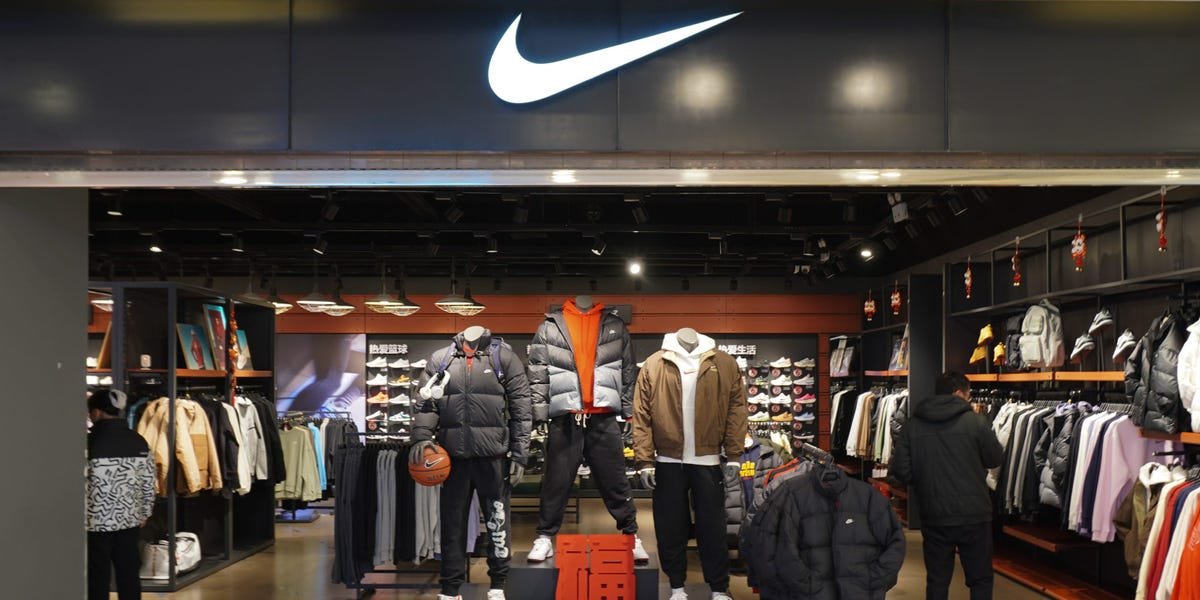
Sportswear giant Nike is set to cut hundreds of jobs as it consolidates its US distribution center operations.

The company said it plans to let go of 775 employees across Tennessee and Mississippi, citing efforts to “streamline” operations. Nike operates warehouses in both states.

“We are sharpening our supply chain footprint, accelerating the use of advanced technology and automation, and investing in the skills our teams need for the future,” Nike said in a statement to Business Insider on Monday.

The move is a part of CEO Elliott Hill’s larger comeback plan, known as the “win now” strategy, which aims to return Nike’s revenue to growth. Hill took over the sportswear giant in October 2024 as it faced significant challenges, including declining sales and increased pressure from rivals.

Nike made previous cuts in 2024 and last year, reducing its corporate workforce by 1% in 2025 as part of its realignment plan under Hill. The senior leadership team also saw a shake-up in 2025, with Nike eliminating the chief technology officer and chief commercial officer roles, among other changes.

In its statement, Nike said it’s taking steps to move faster, serve consumers better, and reduce the complexity of its operations footprint. The company had about 77,800 employees worldwide as of May.

The latest cuts come as concerns that AI will replace human workers grow stronger, with companies like HP and Amazon citing AI-related efficiency as a factor in recent workforce reductions. A recent study by researchers at the Massachusetts Institute of Technology found that AI’s skills overlap with over 11.7% of the US labor market.

The company said it expects the reduction to support its “path back to long-term, profitable growth.”


Source link

Amazon-expected-to-cut-thousands-more-corporate-jobs-soon.jpeg

Amazon expected to cut thousands more corporate jobs soon

  • Amazon plans to lay off thousands of corporate employees in coming days.
  • This second major round of Amazon layoffs since October would bring the total to about 30,000 jobs.
  • Amazon is trying to streamline operations and reset its culture.

Amazon is planning to eliminate thousands of corporate employees, with cuts expected to begin as soon as next week, according to people familiar with the matter.

The reductions would mark the company’s second wave of mass layoffs since October, when Amazon cut about 14,000 jobs. Two of the people said the company is expected to eliminate a similar number of roles in the coming round, bringing total job cuts to almost 30,000.

The latest cuts underscore Amazon’s continued efforts to streamline operations and reset its culture.

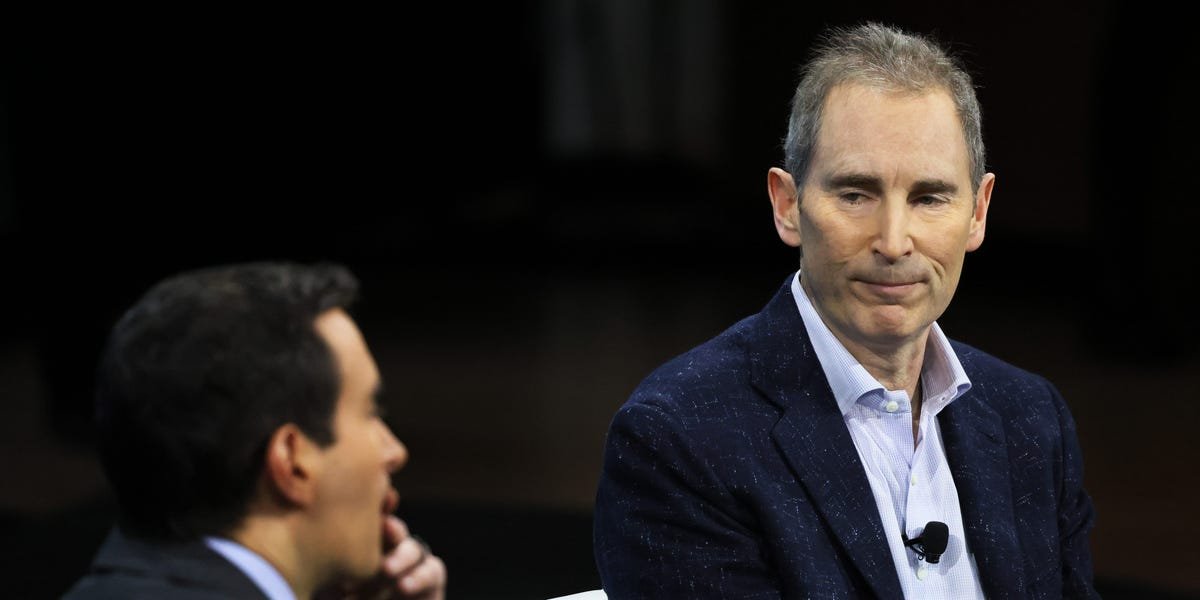
Amazon first attributed the October job cuts to changes brought on by AI. But CEO Andy Jassy later said the layoffs were instead tied to cultural fit, not cost savings or AI.

Amazon employs more than 1.5 million people globally, though its corporate workforce makes up a relatively small share, at about 350,000.

An Amazon spokesperson did not respond to a request for comment.

Have a tip? Contact this reporter via email at ekim@businessinsider.com or Signal, Telegram, or WhatsApp at 650-942-3061. Use a personal email address, a nonwork WiFi network, and a nonwork device; here’s our guide to sharing information securely.


Source link

Fed-meeting-updates-Federal-Reserve-to-decide-on-interest-rate.jpeg

Fed meeting updates: Federal Reserve to decide on interest rate cut at final 2025 meeting

Fed leaders have kept monetary policy moderately restrictive in recent months, holding rates steady until September before introducing two quarter-point cuts.

Chair Jerome Powell said in the last meeting that a rate change in December is “not a foregone conclusion, far from it” and “policy is not on a preset course,” though on Wednesday morning, CME FedWatch is showing a roughly 90% chance of another quarter-point reduction.

Fed leaders have kept monetary policy moderately restrictive in recent months, holding rates steady until September before introducing two quarter-point cuts.

Chair Jerome Powell said in the last meeting that a rate change in December is “not a foregone conclusion, far from it” and “policy is not on a preset course,” though on Wednesday morning, CME FedWatch is showing a roughly 90% chance of another quarter-point reduction.

Investors and consumers are hopeful for more cuts. Americans could see more affordable mortgage, auto, and credit card rates in the new year, and businesses would be able to borrow money more easily — a move that could juice the sluggish job market.


Source link

Vanity-Fair-and-Olivia-Nuzzi-cut-ties-as-RFK-Jr.jpeg

Vanity Fair and Olivia Nuzzi cut ties as RFK Jr. relationship drama continues to unfold

Journalist Olivia Nuzzi and Vanity Fair are severing ties.

Nuzzi joined Vanity Fair in September 2025, after departing New York magazine in 2024 in the wake of revelations that she’d had a relationship with her source, Robert F. Kennedy, Jr, then a presidential candidate.

The fallout from the affair has continued after Nuzzi’s ex-fiancé, former Politico correspondent Ryan Lizza, recently accused Nuzzi of additional ethical breaches.

“Vanity Fair and Olivia Nuzzi have mutually agreed, in the best interest of the magazine, to let her contract expire at the end of the year,” according to a joint statement from spokespeople for Vanity Fair and Nuzzi provided to Business Insider.

A third-party investigation into her reporting at New York magazine revealed no bias, but the magazine said at the time that her relationship with the ex-presidential candidate violated their conflict-of-interest standards.

Following her split with Lizza and New York magazine, Nuzzi, a former star political reporter, moved to Los Angeles. She published a memoir, “American Canto” on Tuesday, in which she detailed the past 10 years of political reporting and her relationship with “the politician,” understood to be RFK Jr.

Since their split, Lizza and Nuzzi have been engaged in an ongoing reputational battle, with each publicly accusing the other of engaging in behaviors that, while not illegal, undermine each other’s journalistic credibility.

Nuzzi, in a petition for a temporary protective order against him in late 2024, accused Lizza of blackmailing her and threatening to destroy her career, which Lizza has denied. She later withdrew the petition.

After a lull, the public acrimony continued with the revelation of Nuzzi’s book, followed by a series of Substack posts from Lizza.

He has suggested in online postings that Nuzzi used her position as a reporter to “catch and kill” unflattering stories about RFK Jr. He also accused her of having another unusual relationship with a different subject.

A spokesperson for Nuzzi did not respond to questions about Lizza’s allegations. In a post for Emily Sundberg’s Substack, Feed Me, she wrote it was “another attempt to harass, humiliate, and harm me until I am as destroyed as he seems to be,” and called Lizza’s posts “fan fiction-slash-revenge porn.”


Source link