
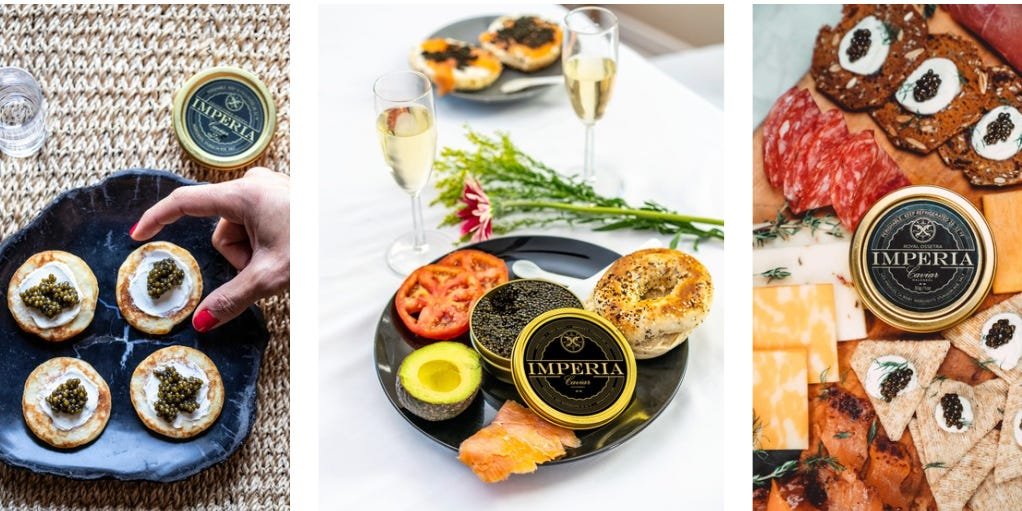
Ive-eaten-caviar-almost-daily-for-15-years-so-I.jpeg

I’ve eaten caviar almost daily for 15 years, so I built a brand to bring prices down

This as-told-to essay is based on a conversation with Sony Mordechai, the founder of Imperia Caviar and entrepreneur behind companies including Sport Couture Group and Alesonor Real Estate Development. It has been edited for length and clarity.

About 15 years ago, a friend of mine who works in the alcohol space organized a week of tastings in Bordeaux. That’s when I first discovered the world of caviar.

I became fascinated with it. I started tasting different types, visiting farms, and really trying to understand the industry. What I saw surprised me: the margins were very high, and the system felt outdated. It was very exclusive.

About six or seven years ago, I saw an opportunity. I wanted to create a global brand that could offer the highest-quality product at the best possible price, with great customer service. That’s how Imperia Caviar started.

From the beginning, the idea was simple: democratize caviar.

In other parts of the world, people eat caviar much more regularly. So we saw an opportunity not just to sell a product, but to educate people and expand the market.

I’ve personally been eating caviar almost every day for the past 15 years. I love it so much that I combine it with almost anything.

That includes traditional caviar pairings, as well as very unconventional ones. I’ve had it with potato chips, fried chicken, and even ice cream. My sister says I eat it like ketchup.

Early on, part of our marketing strategy was to shock people — to show them you don’t have to follow rules to enjoy caviar.

At the time, industry insiders told us to stop “defaming” caviar. It was seen as something you could only eat in a formal, luxury setting. But I believe that if you enjoy something, you should experience it however you like.

Now, that mindset is becoming more mainstream.

You see people putting caviar on chicken nuggets, on pizza, on all kinds of foods. What was once taboo is now part of a larger trend. It’s less about status and more about experience.

Younger generations, in particular, are very focused on sharing experiences. They’re less interested in owning things and more interested in moments they can enjoy and share — often on social media. Caviar fits very well into that.

At the same time, lowering the price point has been critical.

A lot of people assume caviar is only for the ultra-rich. That’s a misconception. Yes, it’s a premium product, but it doesn’t have to be out of reach. You can spend $50 or $100 and have a meaningful experience.

In many ways, I think of what we’re doing as similar to what happened with sushi. Years ago, sushi wasn’t widely consumed in the US. Now, a large percentage of the population eats it regularly. We believe caviar can follow a similar path.

An important piece to making that happen is quality. For many of our customers, trying our brand is their first time trying caviar, and you only get one chance at a first impression. If that experience isn’t great, they may decide they don’t like caviar at all.

That’s why we’ve always focused on offering the highest-quality product possible. And that approach has helped us grow.

We started as a direct-to-consumer brand, but many of our customers own restaurants, hotels, and even airlines. They began introducing our caviar into their businesses, and our enterprise side has grown quickly as well.

More restaurants are now offering caviar — not as a stand-alone luxury item, but as an upgrade. Similar to how you might add truffles to a dish, you can now add caviar to pasta, pizza, or other foods.

I think that’s a big shift. It’s moving from something reserved for special occasions to something that can elevate everyday moments.

In the past, demand was concentrated around holidays like New Year’s or Christmas. Now, we’re seeing people enjoy caviar for many special occasions — Mother’s Day, brunches, parties, and even regular weekends. We even have a caviar subscription, like a wine club, for people who want to enjoy it more frequently.

Personally, I also see a wellness angle.

Caviar naturally contains omega-3s, vitamin B12, iron, and other nutrients. It’s something that makes you feel good while you’re eating it and afterward. I’m very focused on how food impacts energy and overall well-being, and caviar fits into that.

I don’t think the industry is fully there yet in terms of positioning it as a wellness product, but I believe that in the future, for something to be considered truly luxurious, it will also have to be healthy and produced the right way.

Ultimately, our goal is to make caviar an everyday delight.

We believe the timing is right. In some parts of the world, it’s already part of the culture. Now, we’re seeing that shift happen more globally.

Caviar doesn’t have to be about exclusivity anymore. It can be about celebration — big or small — and about sharing experiences with others.



Source link

Amanda Goh

Olympic skier Tess Johnson, 25, says one simple daily habit powers her performance — and it doesn’t involve the gym

Olympic skier Tess Johnson, 25, starts and ends every day with the same ritual that helps her perform under pressure.

In an interview with Town & Country Magazine published on Wednesday, the American mogul skier said she always packs her journal when she travels for competitions.

“I do a little bit of journaling in the morning to set my day, set my goals for the day and a little bit of gratitude, but then in the evening I let it all out and it’s a little bit like word vomit, but whatever I need to just get out to get a good night of sleep,” Johnson said.

Johnson made the US national team at 14 — the youngest athlete to do so at the time — and later became the youngest American freestyle skier to medal at the World Championships.

She debuted at the 2018 PyeongChang Olympics and reached the finals at the 2026 Milan Cortina Games, where she finished 10th.

Johnson, whose grandfather was a former Sports Illustrated writer who covered the Olympics, said journaling plays a key role in her mental preparation.

She believes she inherited her love of writing from her grandfather and now uses journaling as a practical training tool to track her progress in skiing.

“And also an emotional tool to just work through whatever anxieties are happening because this is a very intense sport and process that we’re going through,” Johnson said.

“It’s really helpful to get it all out on paper and sift through it just by putting pen to paper. So it does a lot for me. And at the very least, it’s just a way to stay present and get off my phone from time to time,” she continued.

Johnson added that she occasionally rereads her old journals, including those from the 2018 Olympics.

“It’s really cool to see the progress I’ve made over the years,” she said.

Apart from being a part of her daily routine, journaling is also a key part of her pre-race ritual.

“The night before I like to journal, whatever in training that day, any other thoughts that I need to get out. Then the morning of, I’ll write down three goals for the day, usually relating to my skiing or a mental performance goal, or just something even maybe not related to skiing, just that I have for the day, and then I’ll write down a couple things that I’m grateful for as well,” Johnson said, adding that she does her warm ups after that.

Johnson isn’t the only elite athlete who has embraced journaling as part of their routine.

Michael Phelps told Business Insider in 2023 that he uses writing to reflect and unwind, while WNBA star Caitlin Clark has incorporated journaling into her pregame ritual to clear her head and stay focused.

Meanwhile, other Olympians are leaning into surprisingly old-school hobbies in their downtime, including cross-country skier Ben Ogden, who said knitting helps him relax.


Source link

Google-engineer-said-landing-an-AI-role-took-a-year.jpeg

Google engineer said landing an AI role took a year and daily studying

This as-told-to essay is based on a conversation with Maitri Mangal, a 26-year-old software engineer at Google, based in New York. Her identity and employment have been verified by Business Insider. The following has been edited for length and clarity.

When I started off as a software engineer, my dad, who also works in tech, kept telling me to get into AI.

I brushed it off because I was just starting off my engineering career, and no one was really talking about AI in 2019, unless they were getting a PhD.

Then in 2023, the tech industry changed and everyone started going into AI. That led me to want to start pursuing AI as a job, and also creating content about it. When trying to join an AI team, I think having a strong presence and personal brand is crucial for others to take you seriously.

In my three years at Google, I’ve changed roles three times, most recently switching to the Workspace AI team.

It’s important to make a distinction between an AI machine learning engineer and an AI software engineer. An AI ML engineer creates the model, trains it, and evaluates it. An AI software engineer integrates AI capabilities into software applications, and builds APIs and infrastructure to serve the model to the end user.

My transition to an AI team didn’t happen overnight. It required spending about a year upskilling through courses and creating content about the material, which forced me to learn the concepts.

Here’s how I made the switch:

Creating content about AI

In the spring of 2024, I started creating tech content on Instagram and LinkedIn, outside my job. That became a major factor in my transition to an AI team.

Making content motivated me to keep learning and also made me confident about sharing what I knew. Once I started seeing how much it helped people, I wanted to learn more. So that’s where the upskilling started, and I started taking courses to understand the fundamentals of AI.

Eventually, I started applying to AI teams at Google. I felt like if I was going to spend so much time upskilling and making content about AI, I should make the most of what I had. I started searching for new roles in January, about seven months after I started upskilling. In March, I landed the new job.

I still spend an hour a day upskilling

I typically take Google’s internal courses to upskill. Coursera also has amazing courses.

The easiest way to start is by taking the basics of AI, like Google’s Introduction to Generative AI and Google Prompting Essentials. Since I have a computer science background, I was able to get more in-depth with concepts like linear regression and vector analysis.

I took courses for about two hours a day, but in order to absorb the material, I had to talk about it, not just read. When I verbalized the concepts through making content, it helped me understand the material.

I also get feedback from my followers, and when they ask follow-up questions in the comments, it makes me go even deeper into understanding a topic. Talking to friends or teammates who are excited about AI also helps me better understand the material.

In this field, it’s very hard not to learn. I’m not necessarily still dedicating two hours daily to courses, but I still spend about an hour a day upskilling, whether that’s in the form of internal trainings for my job, or watching YouTube courses for the content I create.

Not everyone wants to create content, so that’s not always the best way to go about transitioning to an AI team. If you’re just starting out in tech, my biggest piece of advice would be to take on projects. You should definitely take courses about AI, but keeping up-to-date with the news and doing AI projects also really helps. Many AI courses have users do mini projects, so you get to know how to work with it.

Since I applied internally, I didn’t have to go through the same interview process. However, I still had to submit my résumé, which included all of my side projects, and I think that really helps.


Source link