Im-anxious-about-my-daughters-college-applications-so-Im-often.jpeg

I’m anxious about my daughter’s college applications, so I’m often nagging her. I’m now trying to save our relationship.

At a recent workshop for parents of high school juniors, I felt my eyes glaze over as the facilitator shared some discouraging trends about the college landscape.

More students than ever are applying to college, he explained, but schools haven’t kept up with demand. With acceptance rates falling, the colleges we once considered safety schools have become a lot more selective. “No wonder these kids are so stressed out,” I thought as I scribbled in my notebook.

I’ve now started absorbing my teen’s stress as we navigate this complicated process.

The high schoolers I know are feeling a lot of pressure

Unlike when I was a teenager, factors such as the Common App and the widespread adoption of test-optional policies have made it easier for students to apply to multiple schools at once.

One college consultant told me that the high schoolers he works with apply to between 10 and 12 schools on average. With more applicants for a limited number of spots, kids are feeling increased pressure to distinguish themselves — and at earlier ages.

While I didn’t take any AP classes until my senior year of high school, my daughter will have completed several by the time she graduates.

For my daughter and her peers, junior year has been exciting but fraught with anxiety, as every test, grade, and decision feels critical. I want to reassure them, but I know they’re facing an uphill battle. My daughter regularly hears from older classmates who were rejected from their dream colleges despite near-perfect grade point averages and deep involvement in extracurricular activities.

I’m helping my daughter much more than my parents helped me

Looking back on my own college search process, I vaguely recall meeting with a guidance counselor who told me to apply to a mix of safety, target, and reach schools. Sometime during the fall of my senior year, I picked several colleges, filled in the applications, and mailed them off one by one. Aside from paying the application fees and proofreading my essays, my parents didn’t get involved.

By contrast, I’ve helped my daughter research schools and brainstorm ideas for personal statements. I’ve suggested service projects and summer programs to boost her résumé.

Sometimes I’ve crossed that delicate line between helping and pestering. When my daughter doesn’t jump on a task with the urgency I think is warranted, for instance, I launch into lectures about time management.

The truth? I overstep because, like many parents, I’m anxious about my daughter’s college options.

The Princeton Review’s 2025 College Hopes & Worries Survey indicates 71% of parents feel “high” or “very high” stress about college applications. Over the past year, that stress has seeped into day-to-day interactions with my daughter. This winter, I was texting with another mom about how the college process has impacted our relationships with our kids.

“It’s so hard for them!” she said. “All we do is nag!”

Building in time to connect 1:1 has helped

I want my daughter to have every option she desires when it comes to college. But I’ve realized our relationship is far more important than getting her into a particular school. In less than two years, she could be living far away, on her own for the first time. I don’t want to spend her last months at home squabbling about applications and task lists.

With deadlines looming this fall, I’m trying to prioritize our relationship over her résumé. I avoid discussing anything college-related right before bedtime or if my daughter is having a tough day. We make time for relaxed excursions that have nothing to do with school, from dog walks in the neighborhood to shopping for fun snacks. Sometimes we meet up virtually, diving into a session of an online game my daughter loved when she was younger and recently rediscovered.

While it’s still a struggle, I’m trying to manage my own anxiety by finding support from peers. Talking with other parents whose kids are a year or two ahead of us in the process has helped. As one friend whose son is a college freshman told me, “It will all work out.”

Somehow, I know it will.



Source link

Billionaire-investor-Chamath-Palihapitiya-sparred-with-an-X-user-over.jpeg

Billionaire investor Chamath Palihapitiya sparred with an X user over an investment loss — then offered to fund his daughters’ college

After sparring with an X user over an investment loss, billionaire investor Chamath Palihapitiya offered to fund the user’s daughters’ college accounts.

In an X post on Thursday evening, Palihapitiya wrote: “This guy clapped at me. I clapped back. We then spoke.”

“I also think he was very mature in how he internalized our conversation. Onwards!” he said, adding that he “funded his two daughters’ college accounts.”

The back-and-forth began after an X user 0xParabolic_ criticized Palihapitiya over a losing investment.

In an X post responding to the attention the exchange received, the user wrote: “a lot of people saw my replies to @chamath so I want to make something clear.”

“I’m fully aware any losses I incurred are on me,” he said.

After Palihapitiya saw his criticism, the two spoke privately, according to the user.

The conversation made him “stop and think,” the X user said, adding that “most usually don’t get that kind of opportunity, and I appreciated him taking the time.”

“At the end of the day, investing carries risk, lessons are learned, and as they say, there’s no crying in the casino,” 0xParabolic_ wrote.

He added that he was “extremely grateful for the very generous contribution” Palihapitiya made to his daughter’s college funds.

At press time, the X user’s posts criticizing Palihapitiya were no longer visible on the platform.

Palihapitiya is active on social media, frequently weighing in on markets, technology, and venture investing.

The billionaire investor rose to prominence as an early Facebook executive before launching Silicon Valley VC firm Social Capital, which has backed a number of startups and later became known for its role in the SPAC boom of the early 2020s.

His investments have drawn both praise and criticism over the years, particularly during the SPAC frenzy, when several companies he helped take public later saw their shares slump.


Source link

We-wanted-to-freeze-time-with-our-daughters-So-we.jpeg

We wanted to freeze time with our daughters. So we rented out our house and sent them to school in 3 countries in one year.

We were racing to keep up with our packed family schedule. Days blurred into school, work, gymnastics, birthdays, and dinner parties — energizing in theory, exhausting in reality. We were scraping by.

I remember peak multitasking: listening to my 6-year-old read aloud while making breakfast, and trying to finish putting on eyeliner while the eggs finished cooking in the pan.

My husband and I longed for wide-open days to actually connect, but school holidays were never long enough to decompress. We could see how easily the years might slip by, buried in logistics, until suddenly the kids were packing for college.

We wanted to freeze time. So we hatched a plan to leave our “normal” life for a year and have a wild adventure together as a family.

We came up with a plan

In July 2024, we rented out our London home, stored our belongings, and took the bus to Heathrow with two backpacks and a carry-on.

We weren’t wandering aimlessly. We planned to live in three locations, traveling for five weeks before and after each stop.

I pivoted my marketing consultancy toward travel writing and speaking, while my husband’s academic research guided our shortlist of places we wanted to live. His research enabled legal residency which allowed the girls to attend school. We chose Japan, the US, and the Netherlands, staying three to four months in each.

We picked Tsukuba, Japan, to immerse ourselves in a completely unfamiliar culture; Great Neck, New York, near where we’re both from, to give our daughters a taste of American life and spend rare time with family; and Leiden, the Netherlands, to experience its bike- and water-centered lifestyle.

Residency came with a lot of admin.


A woman wearing a fluffy hat in Hokkaido, Japan.

Lucas had a plan to homeschool her daughters in Japan (pictured), but ended up sending them to a local school.

Provided by Lisa Lucas


For Japan, we had originally planned to homeschool. Our 8-year-old surprised us by asking to attend a local Japanese school, despite only knowing a few phrases she had picked up during the three weeks we spent traveling around the country.

The school welcomed both girls. Like their classmates, they walked to school alone, changed into indoor shoes, helped serve lunch, and cleaned the classrooms.

In New York, we lived with family outside the city. The girls rode a yellow school bus for the first time, while my husband commuted by train. It was a stark contrast to London — no uniforms, more complicated mornings, and the sobering reality of active-shooter drills.

In Leiden, the girls attended a small international school. Students biked along canals and tended their own garden plots as part of a Dutch gardening program.


Two young girls wearing bike helmets looking out to the water in Leiden, the Netherlands.

Their daughters enjoyed cycling while living in Leiden, the Netherlands.

Provided by Lisa Lucas


We packed light

Living out of backpacks forced minimalism. I loved escaping the endless to-do list of home life and focusing on actually living.

I wore a single black maxi dress almost every day in Asia — biking through alleys or hiking through the jungle — and it somehow worked.

If anything, I’d bring even less next time. With fewer possessions, our mental bandwidth expanded. We could focus on fun, without guilt.

Parenting on the road

When we first told the girls about our plan, our youngest cried. They loved their friends, their teachers, and the rhythm of school. They couldn’t imagine leaving and not coming back. We tried tempting them with volcanoes and snorkeling in Indonesia.

They came around, somewhat. They loved most moments, but they also always wanted to go home. We promised it would only be a year.


Family in a truck with Mount Bromo, Indonesia in the background

The family spent time exploring other parts of Asia, including a trip to Mount Bromo, a volcano in Indonesia.

Provided by Lisa Lucas


Our priority was making them feel safe and secure. We talked about adaptability as a life skill, but we also held them close and reminded them they were loved.

Most days, we’d say, “We’re still on the trip,” and it made us feel like a team. The girls learned how to be the new kid, make friends, and settle into unfamiliar rhythms. They learned you can reinvent your life more than once.

The intensity bonded us. We had waterfalls to ourselves, watched wild snow monkeys, and made friends who invited us to visit them in Cozumel. I celebrated my usually grim January birthday on a Thai beach.

In the US, we were present for heavy family moments, including my grandfather’s passing.

We were still on the trip — until we weren’t

Returning to London after 13 months felt surreal. Our 6-turned-7-year-old kissed the ground at Heathrow.

The trip changed us. It gave us shared memories — Hokkaido cream, a road trip from New York to Miami, sunsets from an Alpine hut — but more importantly, it clarified what matters: slow time together, not renovations or packed calendars.

We’re happy to be home, blender included. But we’re already dreaming about our next extended adventure.

Do you have a story about taking a gap year that you want to share? Get in touch with the editor: akarplus@businessinsider.com.


Source link

I-invented-a-new-type-of-landline-for-kids-and.jpeg

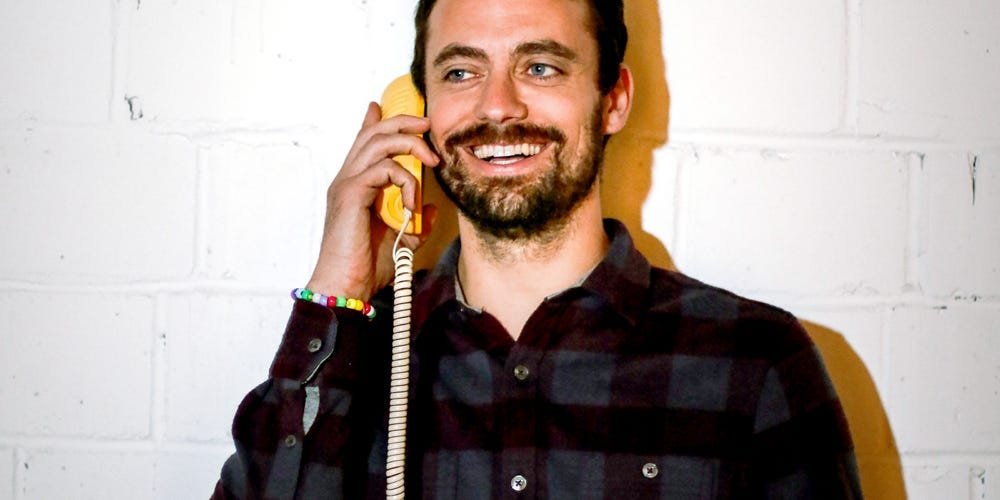
I invented a new type of landline for kids, and my daughter’s friends tested it out. This year, we’ve raised $3.5 million in funding.

This as-told-to essay is based on a conversation with Chet Kittleson, founder of Tin Can. It has been edited for length and clarity.

About three years ago, I was picking my daughter up from school and started chatting with parents about how arduous it is to run the kids’ social lives. One mom said that she felt like an executive assistant for her daughter. There was a lot of frustration and angst toward the kids, and as a dad of three, I understood it.

But that day, I played devil’s advocate. What else are the kids supposed to do, I asked. My first social network was the landline, but my kids didn’t have that. Most of the parents I knew were delaying cellphones, but that left the kids reliant on us for coordinating meet-ups.

I got to thinking: wouldn’t it be cool if there was a landline my kids — who are now 10, 8, and 5 — could use to organize their own social dates?

The phone led to my daughter walking to school with friends

I had been working at the tech and real estate company Redfin, which I loved because the company environment allowed me to be a rising executive and an active dad. Still, I had this itch to build a company of my own. I left to start another real estate-related company, but ultimately, we didn’t have a product-market fit, and had to call it quits after about two years.


Kids on the phone

The cofounder’s daughter started walking to school with friends thanks to her landline.

Courtesy of Tin Can


The same week I wrapped up that venture, I brought my co-founders over to talk about making my landline idea a reality. We spent a week at my kitchen table, making prototypes. By the end of the week, we had five phones.

Two of the prototypes went to my daughter’s friends. Right away, we started noticing the kids organizing more playdates and sleepovers. My favorite moment came when the phone rang at about 8:15 in the morning. My daughter’s friend was inviting her to walk to school for the first time.

I want to use tech to build better in-person connections

Right away, I started getting texts from other local parents, asking if they could get a phone. I made about 50 prototypes and installed them myself. I asked customers what they liked about the phone and what they were worried about when it comes to kids and tech, which helped me refine the product.

We officially started selling Tin Cans in April of this year. For parents, the phone is a symbol of a simpler time. For kids who have often never experienced independent communication, it delivers a new superpower they didn’t know they wanted.


Tin Cans

The company has raised $3.5 million in funding.

Courtesy of Tin Can


Today, we have Tin Cans in every state and Canada. We’ve raised $3.5 million. I’m excited to build a different type of technology company: one that uses tech to build connections and healthy relationships.

We’re trying to foster independent kids

Personally, that’s extremely meaningful to me because I’ve always struggled with anxiety and had my own challenges with screen addiction. I stopped using social media a few years ago after noticing that it was distracting me from moments with my kids.

Today, my family has two Tin Cans: one in a shared area of the home and another in my oldest’s room. These days, my kids frequently get calls from friends asking them to walk to school. They have more sleepovers or just chat with their grandparents.

There are also more subtle changes. When we pick up takeout, my kids are often the ones to go in and claim the order. That confidence is a symbol of the strong, autonomous children my wife and I are trying to raise.

One mother told us that Tin Can helped her daughter find her voice — literally. The girl started off talking quietly and timidly, but within weeks, was louder. That confidence translates to the real world, and the Tin Can lifestyle we’re hoping to foster.


Source link