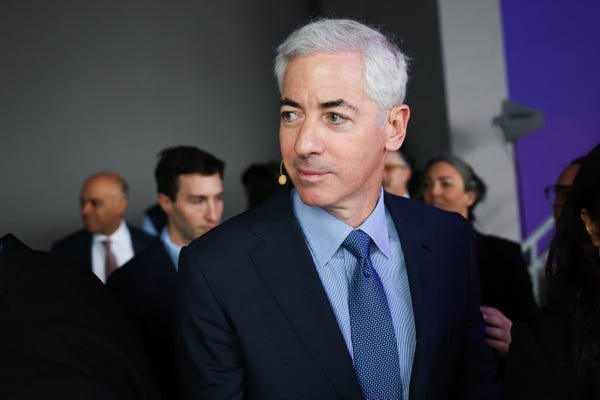
How-Paramount-wants-its-managers-to-talk-about-David-Ellisons.jpeg

How Paramount wants its managers to talk about David Ellison’s new RTO mandate

Paramount Skydance has unveiled “Phase 2” of its return-to-office plan, and it’s telling managers how to sell the changes to staffers.

Employees assigned to US offices outside New York or Los Angeles were told Thursday that they’d be expected to return to in-person work full-time starting on September 14. Staffers at Paramount’s NY and LA offices have already been working five days in the office since January.

Additionally, some full-time remote employees — who don’t live near any Paramount offices — will be expected to return to the office starting in 2027.

Managers who encounter resistance to RTO should help their team bond by inviting them “out for a coffee or lunch, or hold a team-building activity,” Paramount said in an “RTO People Leader Toolkit” obtained by Business Insider.

Bosses who can’t think of a way to unite their team can turn to AI, the document said: “You can also prompt Microsoft Copilot: give me examples of team-building activities.”

“Strong relationships build trust, help people feel part of a community, and enhance well-being,” the document said.

Paramount said it would track RTO compliance and may discipline those who don’t show up when they’re supposed to.

“Managers will be responsible for ensuring team members meet the full-time in-office requirement,” Paramount said in a separate RTO FAQ document. “When expectations aren’t met, it will lead to discipline up to and including dismissal.”

In the toolkit document, Paramount shared specific questions that managers can ask reports to check in or flag noncompliance:

  • “How’s it going coming back into the office every day? Is there anything you need or anything I can do to support you?”
  • “What’s keeping you from coming into the office on those days?”

Paramount’s toolkit document also said that bosses won’t initially have access to attendance data.

“In the beginning, managers will not have access to data to show them who is and is not coming into the office. Managers will eventually have access to this information,” the document said.

A Paramount manager told Business Insider that the responsibility of tracking where employees work “seems daunting.”

“I don’t want to be a hall monitor on top of all the work we already have to do,” they said.

Paramount has said that in-person work is a key to building a “next gen media and entertainment company,” a theme CEO David Ellison has spoken about.

Paramount isn’t the only media company that’s pushed for in-person work, though most of its rivals let staffers work from home sometimes.

NBCUniversal implemented a four-day-per-week RTO mandate in January, and Disney employees are also expected to work at the office four days a week. Employees at Warner Bros. Discovery — which Paramount is buying — commute to the office three days a week, while Netflix lets staffers work remotely.


Source link

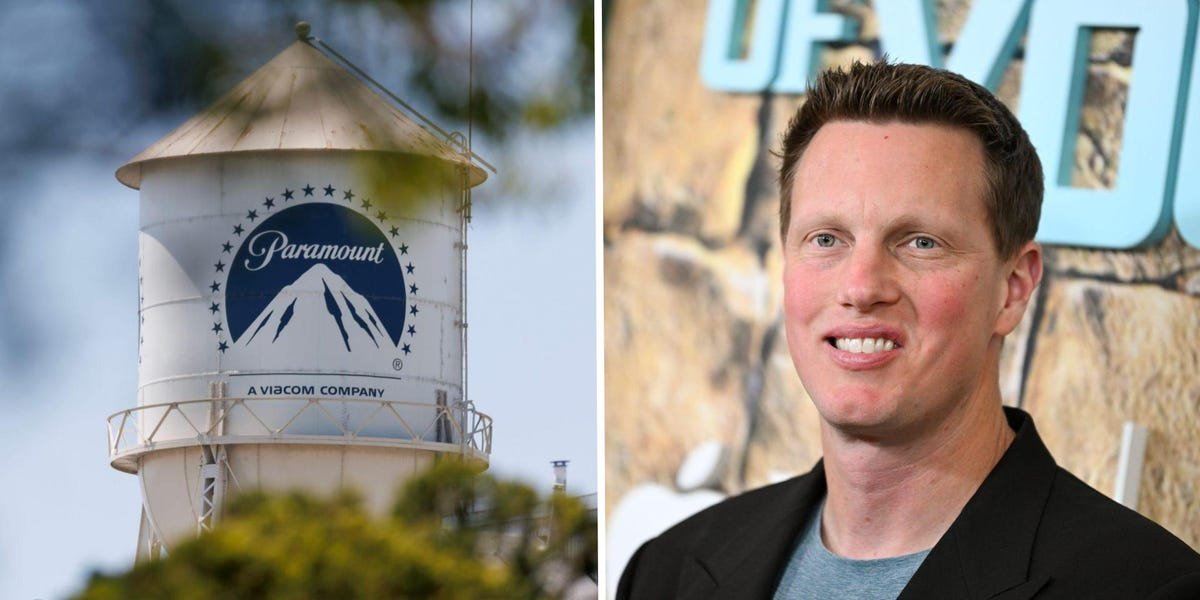
David-Ellison-has-a-message-for-Paramount-staffers-tech-is.jpeg

David Ellison has a message for Paramount staffers: tech is a key to winning

Paramount Skydance CEO David Ellison gave employees a shoutout after the media company roughly met Wall Street’s estimates in the fourth quarter.

“The progress we’ve made over the past 6+ months — from advancing our strategy to strengthening our portfolio and reorganizing our businesses to operate more efficiently and effectively — is a direct reflection of your hard work and commitment,” Ellison wrote in an email to staffers, which was viewed by Business Insider.

Ellison, who wants to turn his 114-year-old Hollywood studio into a tech-forward company, said in his memo that Paramount is focused on supercharging its tech and data capabilities.

“We recognize that in today’s highly competitive marketplace, sustainable growth depends not only on what people watch, but on the quality of the overall user experience,” Ellison wrote. “That’s why we are prioritizing investments in advanced technology and data capabilities to strengthen and differentiate our DTC offering. We are making meaningful investments across the company in innovation and technology, and we look forward to sharing more details in the coming months.”

That message comes weeks after Ellison made data a bigger part of Paramount by expanding the role of the company’s streaming data and insights team.

Paramount is planning to add short-form video to Paramount+ and is exploring ways to bring interactive features and user-generated content to its streamers, Business Insider previously reported.

In the memo, Ellison also emphasized storytelling, saying that he wants Paramount to be “the home for the industry’s leading creative talent.” While Ellison lured former Netflix original content executive Cindy Holland to run its streaming business, Paramount is losing star TV creator Taylor Sheridan to rival NBCUniversal when his contract expires.

Paramount’s biggest initiative is its quest to buy Warner Bros. Discovery, which seems increasingly open to Ellison’s advances, even though it has a signed deal with Netflix.

Paramount’s results were roughly in line with analyst expectations in its latest quarter, the first full quarter since Ellison took the helm in early August. As expected, Paramount’s full-year revenue shrank for a second straight year to $28.89 billion, just under the estimate of $28.95 billion.

Paramount+ now has 78.9 million paid subscribers, up from 77.9 million last quarter and 4% higher than a year ago. Paramount’s product chief told employees that its flagship streamer added about 1 million customers on the first day it carried UFC rights in the US, Business Insider previously reported.

Read Ellison’s memo to Paramount employees here:

Team,
Today we held our 4th quarter and fiscal year-end earnings call, where we reviewed our performance and reinforced our commitment to executing against our strategy and roadmap. Anchored by our North Star priorities, we continue to drive measurable progress across all areas of the business and remain confident that we are on the right path to deliver sustained, long-term value for our shareholders.
First and foremost, I want to take this opportunity to thank all of you. The progress we’ve made over the past 6+ months — from advancing our strategy to strengthening our portfolio and reorganizing our businesses to operate more efficiently and effectively — is a direct reflection of your hard work and commitment.
This shared commitment powers our primary focus here at Paramount: delivering exceptional storytelling. We want to be the home for the industry’s leading creative talent, ensuring they have the resources, platform and reach to bring their best stories to the broadest possible audience across film, television and streaming. Every decision we make — from capital allocation to operational priorities — is in service of this objective. And our increased investment in content creation reflects this commitment, with 11 films and 11 series greenlit since August and more to come.
We recognize that in today’s highly competitive marketplace, sustainable growth depends not only on what people watch, but on the quality of the overall user experience. That’s why we are prioritizing investments in advanced technology and data capabilities to strengthen and differentiate our DTC offering. We are making meaningful investments across the company in innovation and technology, and we look forward to sharing more details in the coming months.
One of our greatest strengths as a company is our ability to mobilize the entire ecosystem behind key priorities and events through our “Paramount One” initiative. We saw this clearly demonstrated with the launch of the UFC on Paramount+ in January. Every part of the organization — from CBS Sports to Pluto, marketing to ad sales — contributed to the promotion of this landmark partnership. This all-hands on deck mentality is a true force multiplier for the Company — and I know you’ve put the same firepower behind Survivor 50, premiering tonight on CBS!
I encourage you to review our shareholder letter for more details on our quarter and full fiscal year 2025 performance. A replay of the earnings call will be available shortly on our Investor Relations site.
I couldn’t be prouder of this team. Keep up the great work.
Let’s go!
Best,
David


Source link

Goldmans-CEO-David-Solomon-says-he-reluctantly-let-top-lawyer.jpeg

Goldman’s CEO David Solomon says he ‘reluctantly’ let top lawyer Kathy Ruemmler resign after Epstein fallout

Goldman Sachs CEO David Solomon addressed the complicated situation the firm faced this week as its general counsel and chief legal officer, Kathy Ruemmler, dominated headlines for her past connections and thousands of emails with disgraced former financier Jeffrey Epstein.

She is now set to step down this summer.

Ruemmler submitted her resignation on Thursday, which Solomon said he reluctantly accepted as the media storm grew about a variety of her contacts with Epstein and his lavish gifts to her, all of which transpired before she joined Goldman as its top legal official in 2020.

“She called me yesterday afternoon and told me that the press coverage of the work she had done previously and of this whole situation had just gotten to a level of noise and distraction that she thought it was distracting the firm,” Solomon told CNBC during a live interview on Friday. He added that he had “reluctantly accepted her resignation, but I respect her decision, and she and the firm are looking forward.”

“It was putting her in a position where it was hard for her to execute on her job and her responsibilities,” Solomon said, “and she just thought it was time to step away.”

The CEO said said that Ruemmler’s connections with Epstein predated her time at the Wall Street bank, but acknowledged the complexity the situation presented for the firm’s top leadership. Previously, Ruemmler was a member of President Barack Obama’s White House counsel, advising him on matters related to foreign policy and national security, and later served as a partner at the elite law firm Latham & Watkins before joining Goldman.

“As a CEO and a leadership team, we’re making real-time decisions with a very valued colleague that we worked with very closely, and that’s not an easy thing to work through. There is a lot of nuance to that.” He added that he was “proud of the way Kathy has handled herself and the way we’ve worked through this.”

And he added that Goldman wasn’t the only large organization facing the fallout of high-powered individuals’ apparent connections to Epstein, who died in 2019 but whose legacy has continued to cast a pall over large segments of the corporate sector.

“A lot of people are trying to work through it,” Solomon told CNBC’s Andrew Ross Sorkin when pressed for more detail on how the decision came about. He praised Ruemmler’s contributions, calling her “a tremendous human being” who had served as an “extraordinary general counsel with deep, deep experience” for the banking institution.

Ruemmler’s last day at Goldman is set to be June 30, the bank said.

Last month, Goldman representative Tony Fratto said in a statement that it is “well known that Epstein often offered unsolicited favors and gifts to his many business contacts.”

“As Kathy has said many times, she had a professional association with Jeffrey Epstein when she was a lawyer in private practice, heading the defense and investigations practice at a global law firm,” the statement said. “She regrets ever knowing him.”


Source link

Netflix-strengthens-its-Warner-Bros-bid-as-Paramounts-David-Ellison.jpeg

Netflix strengthens its Warner Bros. bid as Paramount’s David Ellison tries to wreck its deal

Netflix is breaking open its piggy bank to keep Paramount Skydance CEO David Ellison from crashing its Warner Bros. deal.

The streaming giant just sweetened its offer for the Warner Bros. studio and HBO by offering all-cash, matching a key feature of Paramount’s hostile bid. Warner Bros.’ board of directors has approved the all-cash bid, and the companies said they expect Warner shareholders to vote on the transaction by April.

“Our revised all-cash agreement will enable an expedited timeline to a stockholder vote and provide greater financial certainty,” Netflix co-CEO Ted Sarandos said in a statement announcing the news.

“Today’s revised merger agreement brings us even closer to combining two of the greatest storytelling companies in the world,” David Zaslav, president and CEO of Warner Bros. Discovery, said in a statement on Tuesday.

While Netflix isn’t raising its bid from $27.75 per share, converting $4.50 per share in stock to cash takes away a variable for Warner Bros. Discovery shareholders. Netflix shares are down 13% since the Warner Bros. deal was made public and have fallen 28% since late October.

Paramount believes its all-cash offer of $30 per share for all of WBD is superior to Netflix’s winning bid for WBD’s key assets, which include its studio, HBO, and HBO Max, but not its TV networks. Ellison has made eight bids for WBD, all of which have been rejected. Paramount is now suing WBD while fighting for spots on its board.

A key remaining point of difference between the two bids hinges on the perceived value of WBD’s networks. Paramount is looking to buy them, while Netflix is not.

If WBD’s cable channels, such as CNN, TNT, and HGTV, are valued at less than $2.25 per share, or $5.9 billion, then Paramount’s proposal appears, at first glance, to be more appealing than Netflix’s. However, WBD has said that it must knock off $1.79 per share from Paramount’s bid to account for costs it would incur by changing course, like a $2.8 billion breakup fee to Netflix. That would mean WBD’s cable networks only need to be worth $0.46 per share for Netflix’s bid to be financially superior in the board’s eyes.

Paramount has argued that the WBD cable networks it wants to buy are worth $0 per share, or only as much as the debt they’re expected to carry. Ellison and company acknowledged “the theoretical possibility” that those TV assets could be worth $0.50 per share.

Most media analysts have a rosier view of WBD’s cable business, valuing its channels anywhere from the low single digits to $3.51 per share. Even a glass-half-empty view based on the valuation of new cable company Versant would put WBD’s networks at $1.20 per share as of last week, a Business Insider analysis found.

Netflix’s updated all-cash offer helps solidify WBD’s decision to choose it, after accounting for the added costs from Paramount’s bid.

Unless WBD shareholders band against its board of directors, Paramount may face pressure to sweeten its offer by raising its bid.


Source link

Business-leaders-from-Palmer-Luckey-to-David-Sacks-react-to.jpeg

Business leaders from Palmer Luckey to David Sacks react to California’s proposed billionaire tax

  • Bill Ackman, Palmer Luckey, Garry Tan, and more are sharing their opinions on a California wealth tax proposal.
  • State labor groups proposed a 5% tax for California residents whose assets exceed $1 billion.
  • Ackman called for a “fairer tax system”; Tan wrote that he would consider opening Y Combinator programs in other cities.

Some of the biggest names in business are speaking up about California’s billionaire tax proposal.

The measure proposed a one-time 5% tax for California residents whose assets exceed $1 billion. If the proposal receives enough signatures, it would appear on the state ballot in November.

If the proposal passes, the tax would apply retroactively to all California residents as of January 1, 2026.

Proposed by the Service Employees International Union-United Healthcare Workers West labor union, the bill attempts to fill a projected multibillion-dollar state budget deficit.

California is home to some of the biggest companies — in both value and prestige — in the US. The state boasts Hollywood and Silicon Valley, although some of the industries’ key players have relocated.

In a letter to Gov. Gavin Newsom obtained by Business Insider, attorney Alex Spiro wrote that his clients would “permanently relocate” if the tax becomes law. Spiro has previously represented billionaires and celebrities.

Here’s how several business leaders and politicians have reacted to the tax proposal:

Bill Ackman

Bill Ackman wrote in favor of a “fairer tax system,” but not a wealth tax.

PATRICK T. FALLON/AFP via Getty Images

The billionaire CEO of Pershing Square Holdings wrote Monday on X that he was “opposed to wealth taxes because they effectively represent an expropriation of private property,” which can have “unintended and negative consequences.”

However, he said he’s in favor of a “fairer tax system.”

For example, Ackman wrote that an individual who had amassed a billion dollars or more in wealth could pay no personal income tax by living off loans secured by stock in their company. A change in the tax code could fix that problem, he wrote.

“One shouldn’t be able to live and spend like a billionaire and pay no tax,” Ackman wrote.

As for California’s “budget problems,” Ackman wrote that the issue wasn’t a lack of tax revenue — it was about “how the money is being spent.”

David Sacks


White House crypto czar David Sacks is pictured.

David Sacks analogized California’s tax increases to a frog in boiling water.

Chip Somodevilla/Getty Images

The White House AI and crypto czar took aim at California’s government in an X post on Sunday.

Red states like Texas and Florida don’t employ state income taxes, let alone wealth taxes, Sacks wrote. “Democrats steal everything, then blame job creators for their ‘greed,'” he wrote.

Sacks said in an October episode of the “All-In” podcast, which he cohosts, that a wealth tax “always backfires,” because tax benefits are outweighed by wealthy residents leaving.

Sacks threatened to leave the state, analogizing steady tax increases to boiling a frog on the podcast.

“I’m going to have to jump out of the pot with this,” he said.

Ro Khanna


Representative Ro Khanna is pictured.

Ro Khanna said Nvidia would be built all over again in California, even with the wealth tax.

Tom Williams/CQ-Roll Call, Inc via Getty Images

The Congressman for California’s 17th district, which covers much of Silicon Valley, said that the proposal was “good for American innovation.”

After receiving thousands of comments on a Friday post bidding a sarcastic goodbye to those threatening to leave the state, Khanna explained his support in a seven-paragraph X post on Saturday.

He wrote that Nvidia would be built all over again, even with the wealth tax.

“Jensen [Huang] wasn’t thinking I won’t start this company because I may have to one day pay a 1% tax on my billions,” Khanna wrote. “He built here because the talent is here.”

Khanna argued that innovation would be further stifled by the “political dysfunction and social unrest” that comes with wide wealth gaps.

In a statement to Business Insider, Sarah Drory, a spokesperson for Rep. Khanna, wrote that the representative has “always supported a modest wealth tax on billionaires to deal with staggering inequality and to make sure people have healthcare.”

“He has advocated for common sense workarounds for startup founders whose companies are not profitable and who have illiquid stock,” Drory wrote.

Palmer Luckey


Palmer Luckey is pictured.

Palmer Luckey wrote that the wealth tax would force startups to pivot to profit.

PATRICK T. FALLON/AFP via Getty Images

The Oculus founder and Anduril cofounder wrote in a Sunday X post that the tax would force founders to “sell huge chunks of our companies.”

Luckey wrote that he made money from Oculus — which he sold to Facebook in 2014 — and paid millions in taxes on it. Then he used the “remainder” to start Anduril, he wrote.

“Now me and my cofounders have to somehow come up with billions of dollars in cash,” Luckey wrote.

Luckey also wrote that the policy made no provision for companies that funnel revenue back to research and development, rather than paying cash incomes sizable enough to cover the tax.

“You are effectively forcing companies to immediately pivot into profit obsession over mission or long-term sustainability,” he wrote.

Garry Tan


Y Combinator CEO Garry Tan is pictured.

Garry Tan wrote that the wealth tax would “kill little tech in California.”

Seb Daly/Web Summit via Getty Images

The CEO of startup accelerator Y Combinator wrote in a Saturday X post that the tax would “kill little tech in California.”

Unicorn startup founders become a “paper billionaire” — as in, having cash on hand — around the $5 billion valuation point, Tan wrote.

The proposed tax is on unrealized gains, meaning founders would be put on the line even before their wealth is liquid, Tan wrote.

If the tax passed, Tan wrote that Y Combinator would consider opening Austin or Cambridge programs.

Bernie Sanders


Senator Bernie Sanders is pictured.

Bernie Sanders wrote in support of wealth taxes on X.

Heather Diehl/Getty Images

The Vermont senator has long been a proponent of taxes on the wealthy, introducing a bill in 2019 that aimed to halve the wealth of billionaires over a 15-year period.

While Sanders didn’t explicitly comment on the California proposal, he posted Monday on X broadly supporting wealth taxes.

“We can respect innovation & entrepreneurship, but we cannot respect the extraordinary greed that now exists,” Sanders wrote. “We need a wealth tax.”

Elon Musk


Elon Musk at the US-Saudi Investment Forum at the John F. Kennedy Center for the Performing Arts in Washington, DC, on November 19, 2025.

Elon Musk wrote that he was a “maker,” not a “taker.”

BRENDAN SMIALOWSKI/AFP via Getty Images

The Tesla CEO reposted another user’s X post that commented on the tax, saying that his stocks weren’t wealth.

Musk wrote in his Tuesday post that his “wealth” was mostly tied up in Tesla and SpaceX shares.

“This means my ‘wealth’ can only increase due to producing more products and services for the public,” he wrote.

While not directly commenting on the California tax, Musk wrote that he was a “maker,” unlike “taker” politicians like Sanders.

Musk said in 2020 that he had moved from California to Texas.

Gavin Newsom


California governor Gavin Newsom is pictured.

Gavin Newsom said that California had to stay competitive with other states.

David Dee Delgado/Getty Images for The New York Times

The governor of California has spoken against the wealth tax. At The New York Times’ Dealbook conference in December, Newsom said that California had to stay competitive with other states.

“People of that status, they already have two or three homes outside the state,” he said. “You’ve got to be pragmatic about it.”

If the tax passes as a ballot measure, Newsom would not have the ability to veto it.


Source link