
After-visiting-Florida-for-decades-Id-choose-this-gorgeous-uncrowded.jpeg

After visiting Florida for decades, I’d choose this gorgeous, uncrowded beach town over Miami any day

In 1974, my grandma bought a home in Fort Pierce, Florida, where she would raise her three kids and live for the rest of her life.

Her house was surrounded by tall palm trees and faced the Indian River, an estuary where inland freshwater met the ocean’s salty waves, welcoming manatees, pelicans, and other wildlife.

Growing up, this house in southwest Florida was a kind of second home for my siblings and me — especially after my parents got divorced and my mom moved back in. It was a sunny, peaceful place where we were always welcome.

When my grandma passed away a few years ago and our family had to sell the house, I was devastated. Still, I typically return to the area a few times a year.

Whenever I do, I’m reminded how special this place is. I know I already have a strong emotional connection to the area, but I still believe that Fort Pierce is a true hidden gem.

With a population of 50,000 — compared to the millions living in the greater Orlando and Miami areas — Fort Pierce offers more solitude and natural beauty than other major Florida destinations I’ve visited.

Being in Fort Pierce feels like stepping back in time


The P.P. Cobb building and a bunch of palm trees in Fort Pierce, Florida.

The city’s downtown area is full of history and charm. 

Michelle Polizzi


My mom always reminisces about growing up in “old Florida,” the time period in her youth when the state felt uncrowded and underdeveloped, and you could have a whole beach to yourself.

There weren’t high-rise condos clustering every inch of the shore, and the only other people on the beach were their neighbors.

These “old Florida” traits are still alive on the beaches in Fort Pierce, where it’s easy to step onto the sand and not see a soul, save for the occasional person walking their dog. Even cooler than the lack of crowds, though, are the signs of living history.

Walking around downtown, you’ll see the P.P. Cobb building, built in the late 1800s, and the House of Seven Gables, which was built in 1905 and is now the town visitor center.

Standing at the waterfront in downtown Fort Pierce, you can look out at the Treasure Coast, named for the fleet of Spanish ships that sank in a hurricane in 1715, dumping their gold along the ocean floor.

I love retracing the steps my family members did when they were younger; it makes me feel connected to both the place and to my ancestors.

The sunrises and beaches are the best around


A sunset over the water in Fort Pierce, Florida.

Walking around Fort Pierce feels like stepping back in time. 

Michelle Polizzi


Fort Pierce’s official nickname is “Sunrise City” because its downtown offers a clear view of the sun every morning, unobstructed by high-rise buildings, with lush palm trees and nature all around.

There are miles of beaches to explore in Fort Pierce, too. Even if I do happen to run into a crowded parking lot, perhaps on a busy holiday weekend, I can simply keep driving to the next beach to find a beautiful, tranquil space to relax.

Some of my favorite places to go are Hutchinson Island South, Blind Creek Beach, and Avalon State Park, though I’m always discovering new corners of the area to love.

Convenient eateries make beach snacks easy

Since the beaches in this area aren’t necessarily tourist hot spots, you won’t find the snack shacks typical of urban boardwalks. Instead, you’ll have to bring your own food if you want to stay awhile.

Before heading to the beach in the morning, we love to grab lattes and pastries at Old Florida Coffee Co. in downtown Fort Pierce, which is just a 10-minute drive from our favorite stretch of remote beaches.

Archie’s Seabreeze is our favorite spot for lunch after a morning at the beach. We always used to eat here with my grandparents, listening to live music, talking about life, and chowing down on blackened mahi-mahi sandwiches and fries.

All in all, it’s one of my favorite spots in Florida


The author standing with her sister on a Fort Pierce beach.

Even if I didn’t have a personal connection to Fort Pierce, I’d still choose it over Miami or Orlando any day. 

Michelle Polizzi


After countless trips to Fort Pierce, I believe that the history and solitude here offer far better opportunities than what you’d find at a crowded beach in Miami.

I also know that someday, this region of Florida could become developed and busy like the rest — for now, though, I plan on soaking up as many sunrises as I can.


Source link

The-Army-is-getting-a-new-lethal-hand-grenade-for.jpeg

The Army is getting a new lethal hand grenade for the first time in decades

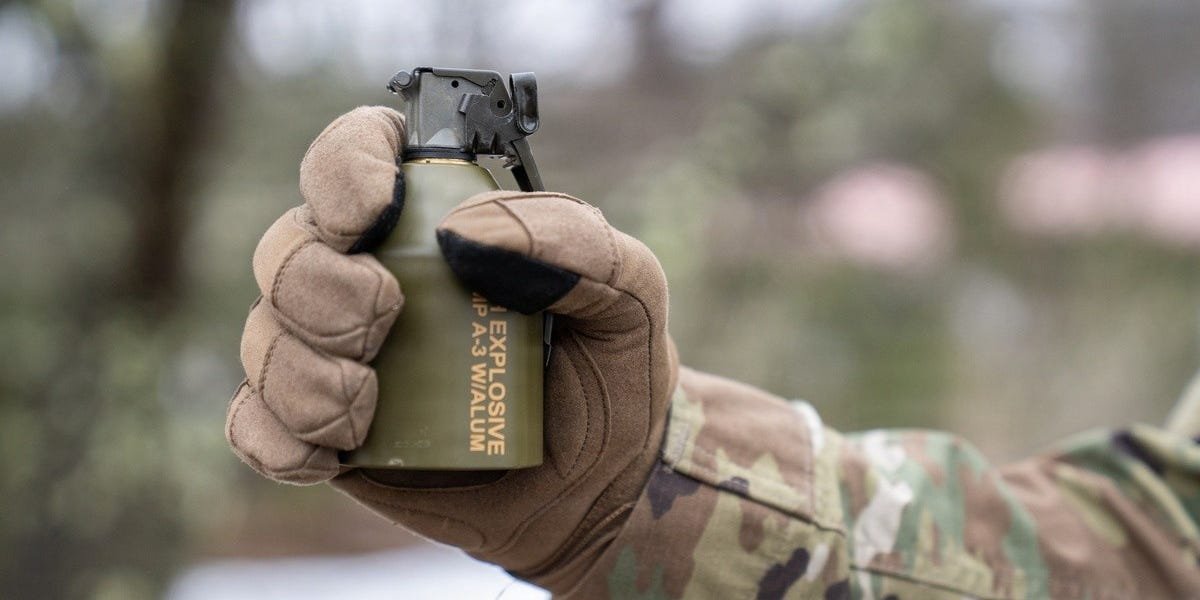
For the first time in nearly six decades, the US Army is getting a new lethal hand grenade.

The Army cleared the new M111 Offensive Hand Grenade for full production this week. The new blast overpressure grenade is replacing the now-obsolete MK3A2 grenades, which were first adopted by the military in 1968, around the same time as the M67 fragmentation grenade.

The Capabilities Program Executive Ammunition and Energetics, together with US Army Combat Capabilities Development Command Armaments Center at Picatinny Arsenal, developed the new hand grenade, the first for the Army since Vietnam.

The M111 is made of plastic that is consumed during detonation. The older MK3A2 blast/concussion grenades, on the other hand, were made from asbestos, a carcinogenic substance that forced the service to put restrictions on the use of these grenades. The old M67 grenades are still in use.

The value of having a blast overpressure grenade is that it decreases the risk of unintentional fratricide, the accidental killing of one’s own troops at war, during close-quarters combat, but the limitations on the use of the MK3A2 meant soldiers only had the fragmentation M67 available to them in combat.

The M67 grenade propels metal fragments outward in all directions when it explodes. In tight indoor spaces like rooms or hallways, those fragments can bounce off walls or be blocked by furniture, reducing effectiveness and potentially hurting friendly troops.

The M111 grenade, similar to the MK3A2, works differently, instead producing a powerful blast and pressure wave less likely to be stopped by walls or obstacles, making it more effective inside buildings and other confined spaces.

“One of the key lessons learned from the door-to-door urban fighting in Iraq was the M67 grenade wasn’t always the right tool for the job. The risk of fratricide on the other side of the wall was too high,” said Col. Vince Morris, the Army project manager for close combat systems, in a service press statement.

Using blast overpressure instead, “can clear a room of enemy combatants quickly leaving nowhere to hide while ensuring the safety of friendly forces,” he said.

Soldiers can still use the M67 fragmentation hand grenade in open terrain, the statement said, but should rely on the newer version for “enclosed and restricted terrain.”

Blast overpressure weapons can be harmful for troops using them, and the US military has been grappling with the effects of these systems. Service members, as a result of their continuous work with artillery, breaching charges, and other heavy weaponry, have suffered traumatic brain injuries, which can come with debilitating effects.

The Army, along with other services, has sought to mitigate these risks.


Source link

Anderson-Cooper-is-leaving-CBSs-60-Minutes-after-nearly-2.jpeg

Anderson Cooper is leaving CBS’s ’60 Minutes’ after nearly 2 decades

  • Anderson Cooper is leaving CBS’s “60 Minutes” after two decades in the gig.
  • The correspondent said he balanced his CNN and CBS jobs for 20 years.
  • Now, he’s quitting one gig to spend more time with his children.

Anderson Cooper has called it quits on CBS’s “60 Minutes” after nearly two decades with the show.

Cooper, who is a political commentator on CNN’s “Anderson Cooper 360” and a correspondent on “60 Minutes,” said on Monday that he would be leaving the latter job.

“Being a correspondent at 60 Minutes has been one of the great honors of my career,” he said in a statement to multiple news outlets.

“For nearly twenty years, I’ve been able to balance my jobs at CNN and CBS, but I have little kids now and I want to spend as much time with them as possible, while they still want to spend time with me,” he added.

Cooper, 58, joined “60 Minutes” in 2006 and has become one of its most recognizable hosts.

In a statement to Business Insider, a CBS spokesperson said, “For more than two decades, Anderson Cooper has taken 60 Minutes viewers on journeys to faraway places, told us unforgettable stories, reported consequential investigations and interviewed many prominent figures.”

“We’re grateful to him for dedicating so much of his life to this broadcast, and understand the importance of spending more time with family,” the spokesperson added. “60 Minutes will be here if he ever wants to return.”

This is a developing story. Please check back for updates.


Source link

I-moved-back-to-Australia-after-decades-in-the-US.jpeg

I moved back to Australia after decades in the US. The culture shock stunned me

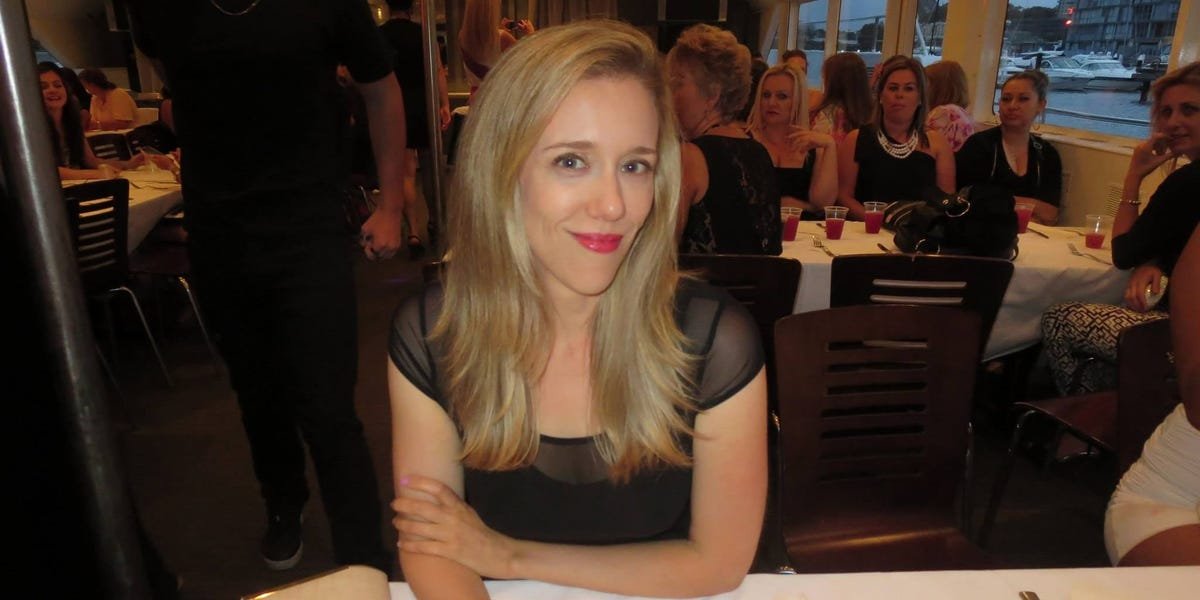
When I was in my early 30s, I went for a three-week holiday to my home in Sydney and never left.

For years, I had toyed with the idea of moving back home, a place I had not lived since I was 7 years old. I’d even made a couple of attempts at it, but the comfortable pull of family and more than 25 years of life in the US always lured me back.

When extending my trip week by week turned into deciding to stay, I assumed slotting back into life in Australia would be the easiest move of my life. After all, I was used to adjusting to a new environment. My father’s job in the film industry meant I spent my childhood moving frequently (13 different schools in multiple cities and countries).

Surely moving back home would feel as comforting as slipping on a well-worn, much-loved cardigan. I was wrong.

The unexpected culture shock of coming home

I never thought I would experience culture shock moving back to Australia, but that was exactly what happened. All my years overseas meant I had missed large parts of general knowledge, I didn’t understand cultural references or sayings, and I found Australian politics completely befuddling.

Although I still sounded Australian, a quick conversation, which inexplicably always started with “where did you go to high school?” quickly established I was not from here. After being viewed as a foreigner my whole life in the US, I was now viewed as a foreigner in Australia, too.

What’s more, I realized with surprise that I was culturally very American. All the things I had taken for granted in the US (convenience, customer service, and affordability) just didn’t exist in Australia.

I had to do some life adjustments

There were the daily frustrations of not being able to get a coffee past 3 p.m. (or before 7 a.m.), no salad bars or real Mexican food, and the expense of absolutely everything (Sydney is Australia’s most expensive city).

Cultural norms were an even bigger adjustment. Handshakes for acquaintances and bear hugs for friends (standard etiquette in the US) were replaced with one or two kisses to the side of (not on) the cheek.

Making friends with Sydney-siders felt hard, so I initially gravitated toward foreigners who were generally open and friendly. When I’d meet Americans, I felt an innate level of comfort and familiarity unlike anything else.

I had expected it to be easy to move back

In my first year back home, I thought a lot about the phrase “you can never go home again.” I’d always been pretty dismissive of it, believing I could return to Australia at any time and it would feel like home. Finally, I came to understand the truth in the phrase. We just can’t return to a previous place or point in life and recapture our original experience.

Just like I adjusted to the culture shock of moving to the US as a little girl (hello, mayo on sandwiches, ice in water, and excessive air conditioning), I needed to acclimatize to Australia. I had been making the move so much harder than it needed to be because I expected it to be easy and familiar.

As I started to let go of the expectation that I’d fit right in, I started to feel more at home, back home. I built up experiences and connections that grounded me, and as I got older, my American background became less noticeable and less relevant. It’s taken a long time, but I now feel entirely at home here. In the end, the key was to start from scratch and get to know my hometown as an adult, rediscovering my Australian identity along the way.


Source link