
I-moved-from-the-US-to-Brazil-after-losing-my.jpeg

I moved from the US to Brazil after losing my job. Despite the intense culture shock, I couldn’t be happier with my decision.

After an incredible three weeks traveling around Brazil, I was on the first leg of my flight home to Chicago when I received a message from my director at work — a 15-minute “check-in” with an HR representative.

Worried I might receive news of a layoff, I frantically deboarded the plane after landing in Rio de Janeiro and joined the call in a quiet corner of the duty-free section of the airport. There, I was informed that my role had been eliminated.

Faced with the reality of returning home to the frigid Chicago temperatures with no job, I quickly changed my connecting flight and decided to hostel-hop around Brazil for another month.

However, even that extra month didn’t feel like long enough in the country I’d fallen in love with. Exploring beautiful destinations while practicing a new language every day was incredibly fulfilling for me.

Once I went back to the US, I realized I was looking for ways to push myself out of my comfort zone. I had always wanted to live abroad, and my unemployment seemed like the perfect alignment to make that move to another part of the world.

So, a few months after my original trip, I relocated from Chicago to São Paulo and was greeted by lots of surprises along the way.

Coming from Chicago, I didn’t expect to feel chilly in São Paulo


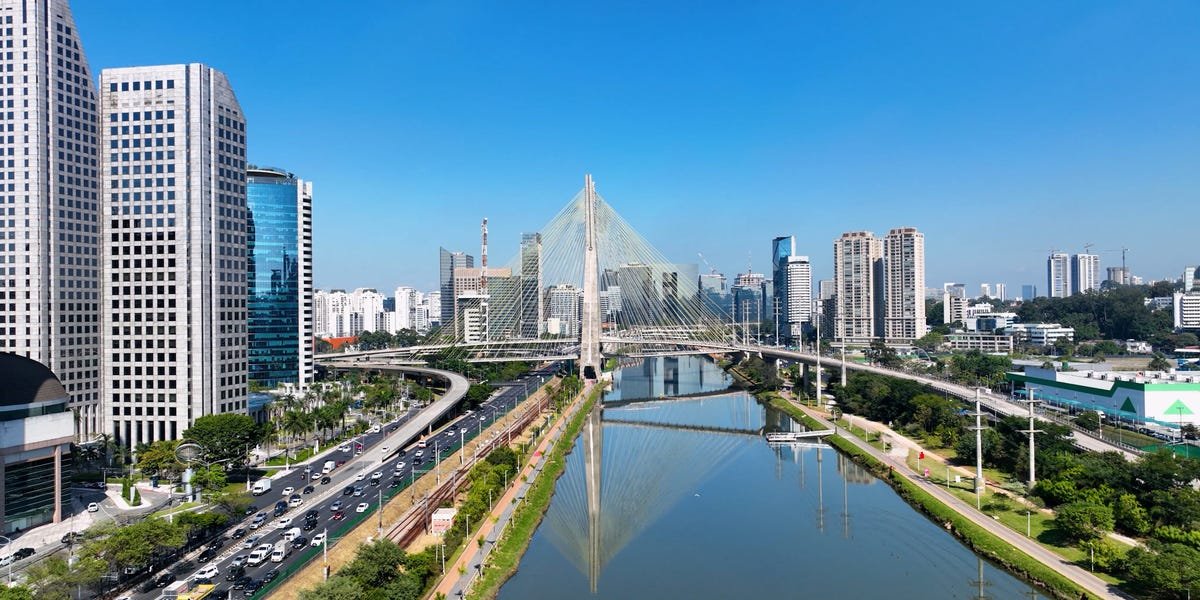
The cityscape of São Paulo.

The temperatures in São Paulo caught me by surprise.

Cristian Lourenço/Getty Images


Growing up in the Midwest, I’ve endured my fair share of snowstorms and wind chills so cold that I felt as though my eyelids would freeze together. So, I felt well-equipped for any kind of cold weather Mother Nature could ever throw my way.

Even so, I wasn’t prepared for just how chilly Brazil could feel — especially during a springtime cold front while living in an area without access to central heating.

Although Brazil’s springtime temperatures (which last from September through November) are similar to what I experienced during the Chicago fall, it was difficult to adjust to the lack of central heating. So, I found myself wearing multiple layers of T-shirts and the only hoodie I brought with me.

Before I moved, I’d only visited Brazil during its smoldering summer months, so I had naively assumed the subtropical temperatures in São Paulo would be pleasant year-round.

The food is different — and that’s not a bad thing


A plate of acarajé with shrimp.

I’ve grown to love acarajé: stuffed black-eyed-pea fritters

Isaiah Reynolds


Between seeing unrefrigerated milk in grocery stores to trying vegetables I’ve never heard of, the day-to-day food in Brazil is a lot different than what I was used to in the States.

For example, contrary to the common American adage, breakfast doesn’t seem to be the most important meal of the day here; many Brazilians opt for bread or fruit instead of the hefty pancakes or sausage links I was accustomed to.

For lunch and dinner, many locals seem to rely on a tried-and-true formula: arroz (rice), feijão (beans), some meat, and salad.

Classic dishes like stroganoff (a creamy chicken or beef dish topped with crispy shoestring potatoes) or feijoada (pork and black bean stew) may enter the rotation. Still, the aforementioned combo is a popular default dish that I’ve grown to love.

Although tavern-style Chicago pizza still holds a special place in my heart, my new Brazilian favorites include acarajé (stuffed black-eyed pea fritters fried in dendé oil), acerola (a sweet cherry fruit), and doce de leite (sweet caramelized milk used as a topping or filling).

Plus, there’s a pretty great international food scene here, too. While wandering around the city, I’ve come across a wide range of cuisines, from Lebanese and West African restaurants to Colombian and Venezuelan spots.

Although I was initially worried about feeling welcomed, I can see myself putting down roots here

One thing I’ve noticed since my first visit to the country is that Brazilians are very proud to be Brazilian.

From football matches to the celebrations that occur when Brazilian films are nominated for Academy Awards, the people here seem to be the loudest and proudest fans in the room.

Because of this, I was worried I might not feel as welcome as an outsider. Instead, I’ve found an endearing level of curiosity among many Brazilians I’ve met, who either want to practice English or ask how I’m enjoying their beloved country.

This openness to connect has softened a lot of the original culture shock during my move. Although very different from my life in Chicago, I’m excited to continue building a life for myself in São Paulo.



Source link

I-quit-my-job-at-JPMorgan-to-run-a-restaurant.jpeg

I quit my job at JPMorgan to run a restaurant group with my dad. It’s the best decision I’ve ever made.

This as-told-to essay is based on a conversation with Kassidy Angelo, a 25-year-old managing director at Gioia Hospitality Group in Fort Lauderdale, Florida. It has been edited for length and clarity.

I never imagined myself entering the restaurant business at the age of 24. I majored in American Studies at Georgetown University with the hope of attending law school.

Instead of pursuing a law career, I decided to apply for finance jobs and eventually landed an internship at JPMorgan in New York. Ultimately, I became an analyst in Miami, but I quit after two years.

My dad, an attorney by trade and restaurateur for many years, asked me if I’d ever consider partnering with him on a new venture. He already owned successful restaurants, and I thought this was a unique opportunity to learn from him and pursue my own entrepreneurial path. It’s the best decision I have ever made.

My biggest concern was how working together would change our father-daughter dynamic

Together, my dad and I are attempting to create a new world-class dining experience from the ground up, Daniel’s Steakhouse, in Fort Lauderdale. My dad is 62 years old and already owns several other successful restaurants, so he doesn’t really need to build this brand for himself.

Working with him, I can gain hands-on experience alongside someone who has already mastered the art of entrepreneurship. We’ve always had a close relationship, and I’ve long admired his work ethic; however, I wasn’t sure how it would feel to work side by side, day in and day out.

Before I left my job at JPMorgan, we had a long conversation about expectations and how we wouldn’t only build a strong professional relationship but also maintain the personal closeness we had created throughout my life. He’s an amazing dad and has become an incredible business partner.

If the opportunity to work with my dad had not happened, I probably would have stayed in finance

Working in finance is always a great opportunity to seize. It helped me become more financially literate and gave me a lot of experience working with all types of people.

Ultimately, you’re in a client service role. Private finance, especially, is a people business. Every single day, I communicated with clients, assistants, coworkers, and others, and ultimately, I learned to work as part of a team and how to correspond effectively with high-net-worth individuals. But working in finance has a lot of pressures too.

The analyst role at JPMorgan is intended to be a two-year program. When the opportunity to work with my father came up, I had to make a decision: stay for the full two years and then make the leap, or leave to go through the process of a true restaurant opening.

Ultimately, I realized that if I were going to pursue a career in the restaurant industry, learning the ins and outs of an opening would be the best way to truly understand the business. I viewed it as a once-in-a-lifetime opportunity not only to work with my dad, but to build something from the ground up.

There are lots of positives, but it’s sometimes difficult to separate work and family

Working with family has been one of the most rewarding experiences of my life. One of the biggest pros is the amount of quality time I get to spend with my father. He understands my day-to-day, where my head is at, and where I may be struggling, and he’s always in my corner — not just as a resource, but as a true partner.

In terms of cons, I wouldn’t say there’s anything inherently negative, but it can sometimes be hard to find the “off button.” Family dinners, vacations, and time away often circle back to conversations about how we can improve and grow the business.

Being a financial analyst helped prepare me for building a new restaurant

I entered the restaurant industry with less experience, but more authority than I had as an analyst, which is the bottom of the totem pole in finance. Having worked with senior management at JPMorgan, I had the confidence to run the restaurant.

I also believe it was important that I worked for someone else before working with my dad. It taught me how to take constructive criticism, recognize my shortcomings, and develop confidence outside of my family’s influence. On my first day at the restaurant, I learned how to run the door, be a hostess, serve, and run private events. Now, I’m mentoring a woman who works for us, and I work six days a week on the floor, overseeing everything that goes into running a restaurant.

While there may not be the same financial benefits in the short term, and I must work holidays like Thanksgiving and Christmas, being an entrepreneur allows me to work and live in my home city.

Taking the unknown route can sometimes be the most rewarding

Working at JPMorgan immediately after graduating gave me an instant sense of accomplishment. On the other hand, joining a family business at its foundation was a bigger risk — but one that has been incredibly fulfilling.

I never like to say never to going back to finance, but I truly believe I’ve found my calling in the hospitality world, and doing it alongside my dad makes it even more meaningful.

Do you work with a family member and want to share your story? Please email this editor, Manseen Logan, at mlogan@businessinsider.com.


Source link

Rivians-autonomy-chief-says-lidar-is-very-affordable-and-a.jpeg

Rivian’s autonomy chief says lidar is ‘very affordable’ and a ‘no-brainer’ decision

For Rivian’s chief of autonomy, the decision to put in lidar for the EV company’s coming R2 SUV was obvious.

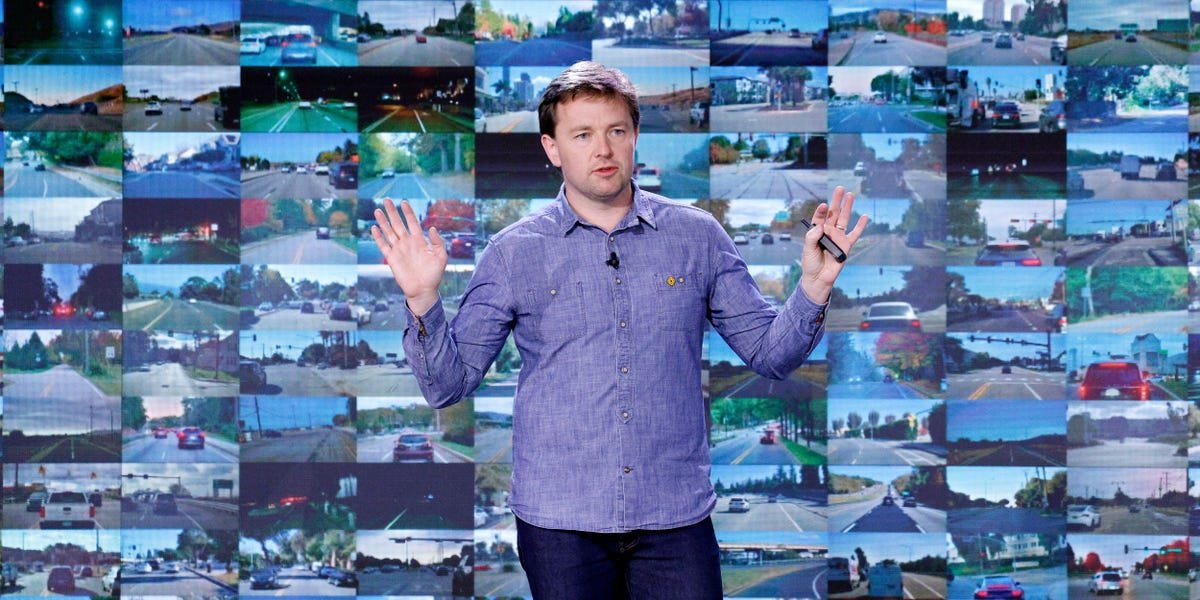
James Philbin, Rivian’s VP of autonomy and AI, told Business Insider that the price of lidar has decreased significantly enough in recent years to be able to put the sensor inside a personally-owned, mass-production vehicle.

“It’s been on this incredible cost curve, where 10 years ago, it would be just unimaginable that you could put a lidar on a consumer vehicle. And now it’s getting into that price point, kind of in the range of a radar,” Philbin said. Radar, a sensor that uses radio waves, is commonly seen in modern cars that have an advanced driver-assistance system (ADAS) or blind spot detection.

Lidar is a sensor that uses laser light to measure depth. While it’s historically been used for topography, the sensor has gained more visibility in the automotive world with the advent of self-driving cars.

Most notably, Waymo’s robotaxis have multiple lidar sensors, including the spinning lidar on the roof of the vehicle. Waymo has said that lidar provides additional safety to the vehicle’s AI driver.

On Thursday, Rivian announced a road map to fully autonomous driving, which includes building an in-house chip and installing a lidar sensor in the company’s coming SUV, the R2.

Philbin, who previously worked at Zoox and Waymo, told Business Insider that lidar makes an autonomous system “more robust” and can help the company get to its self-driving goal “faster.”

“It’s very affordable,” he said. “The performance it gives you for that cost is really amazing. And so to me, it’s kind of a no-brainer that you would want more sensors and more modalities for something that’s so safety critical.”

Using lidar diverges from the strategy of Rivian’s main EV competitor, Tesla, which has taken a strong stance on pursuing self-driving with cameras only.

Tesla CEO Elon Musk once called lidar an expensive “crutch.”

In the late 2000s, during the days of the Google Self-Driving Car Project, a single lidar unit could come with a five-figure price tag. Today, industry leaders say a similar unit could cost a few hundred dollars.

Rivian employees, including Philbin, did not disclose the cost of the lidar unit in the R2 when asked by Business Insider.

R2 will first be launched without the sensor in early 2026. It’s slated to be Rivian’s cheapest car to date, with a starting price of $45,000. The company aims to launch an R2 with lidar in late 2026.

When asked what the cost difference was to put a lidar in the R2, Philbin declined to comment but said that it was “not a significant consideration.”


Source link