The way millions of Amazon packages move across the country could shift dramatically.
Amazon said on Wednesday in a statement that a key partnership with the United States Postal Service unraveled late last year after months of negotiations.
The e-commerce giant said that its goal was to expand the volume of packages it routes through the federal carrier. However, it said that after spending more than a year working toward a renewed long-term agreement with USPS, talks suddenly collapsed in December, with the agency exiting discussions at the “eleventh hour.”
The Wall Street Journal first reported on Wednesday that Amazon is preparing to significantly scale back its reliance on USPS when the current contract expires later this year. The company has historically been the USPS’s largest shipping partner, handling billions of deliveries annually.
Amazon said in its statement that it remains open to continuing the relationship with USPS and is seeking further discussions with leadership, but warned that time is running low for a deal.
The strained negotiations come as the USPS faces a financial cliff. Postmaster General David Steiner told lawmakers on Tuesday in a written statement that the agency could run out of cash within a year if current conditions persist. In a testimony before Congress on Tuesday, he described the organization as being at a “critical juncture,” with limited options to stabilize its finances.
Under federal law, USPS operates as a self-funded entity, relying on postage and service fees rather than taxpayer dollars. That model has come under strain for years as traditional mail volumes decline and costs continue to rise.
Since the mid-2000s, the agency has posted losses in nearly every fiscal year. It ended 2025 with a multibillion-dollar deficit and has continued to report quarterly losses driven by rising labor, healthcare, and operational expenses.
As of 2026, USPS has hit its statutory borrowing limit and can no longer take on additional debt. In 2025, President Donald Trump floated a plan to privatize USPS, but there have been no follow-ups.
In recent years, Amazon has been shifting its logistics strategy by building a vast delivery network of its own instead of relying on third parties, including acquiring its own fleets of trucks, planes, and regional air hubs.
Even so, USPS has remained an important partner for Amazon, particularly for last-mile delivery. Steiner told Reuters in December that Amazon used USPS 1.7 billion times a year for packages.
USPS did not immediately respond to a request for comments.
The price is the price. At least it’s supposed to be.
We make exceptions — the cost of things like flights, hotel rooms, or concert tickets may move around based on supply and demand. Try to get on to a nearly full plane the day before it takes off, and you may pay much more than the person across the aisle who booked months ago. We may not always love the setup, but in limited instances, variable prices can make sense.
For most stuff, though, everyone should simply pay what the price tag says.
That does not seem to be where the economy is going. Businesses have gotten very good at leveraging technology to move prices around and extract more money from us.
The newest frontier: Companies using black box software and personalized data to set special just-for-you prices, and hoping — pretty reasonably — that we don’t realize what’s going on. Maybe a retailer or delivery service sees that you’re ordering from an affluent suburb, or using a fancy Amex Platinum card to pay, and charges you a little extra. That will likely seem wrong to a lot of people — but how would they know if it’s even happening?
Which is how we convinced our bosses to let us order McDonald’s and expense it. It wasn’t just to get a free lunch — we wanted to see if we could find out how this variable, personalized pricing thing might work.
Picking up some McMeals in the Business Insider lobby.
Jutharat Pinyodoonyachet for BI
One day earlier this year, the two of us rounded up four other colleagues in Business Insider’s Manhattan office to place the same order — a Big Mac meal with medium fries and a drink — at the same time from the same McDonald’s. We figured this was the perfect lab since New York state lawmakers tried to discourage the practice — lightly — with a new law that requires companies to tell you when they’re using personalized algorithmic pricing, or as its critics call it, “surveillance pricing.”
Uber’s app doesn’t go out of its way to tell you that it uses personal data to set pricing, but if you poke around, you’ll eventually find the state-mandated warning that “This price was set by an algorithm using your personalized data. Your location is used to help us calculate fees and savings.” Seamless and DoorDash provide similar warnings to New York residents on their apps.
After making our selections, the subtotals told the tale: None of us was asked to pay the same amount. Our total bills varied by 15 to 20 cents.
When we looked more closely at our receipts, we could see why: The price of our Big Mac meals themselves stayed the same. But some of us paid a service fee — the fee Uber collects for delivery — of $3.25, while others paid as much as $3.45. Two of us even had the same delivery guy, yet we still paid different amounts. There didn’t seem to be a discernible pattern to who was charged more: There was no discernible pattern by age, income, gender, etc. And while a 20-cent difference probably won’t change your mind about ordering a Big Mac, it also struck us as weird. What’s the deal?
The McDonald’s we ordered from was directly across the street, but don’t worry, all drivers were tipped appropriately.
Jutharat Pinyodoonyachet for BI
Beats us, says an Uber spokesperson, via email: The company says that while its fees can vary, any differences are “never based on a user’s personal characteristics.” What about the sign on Uber’s app saying the opposite? When we pushed for clarity, we were told that New York’s “poorly drafted and ambiguous law” requires it. We know we paid different prices for our burgers. What we don’t know is why. We ended our experiment confused and a little bit full.
It turns out we’re not the only ones unclear about how algorithmic pricing works or where we might see it.
Companies aren’t particularly forthcoming about where and when they’re using variable pricing, notes Oren Bar-Gill, a professor of law and economics at New York University, so it’s been hard ot nail down just how widespread the practice is. The most comprehensive work to date is a 2025 paper from the Federal Trade Commission, which tried to map the technical and industrial ecosystem that enables businesses to use algorithmic pricing. Even if it’s hard to see prices change, we can see the underlying technology companies are experimenting with.
“There are a lot of retailers who are paying a lot of money to get a lot of data — personalized information about consumers — and they’re doing it for a good reason,” Bar-Gill says.
Even when we can find what appear to be examples of algorithmic pricing, it’s hard to find a company that says that’s actually what’s happening. Uber says it doesn’t know why some of our Big Macs cost more. And last year, when Consumer Reports and Groundwork Collaborative, a think tank, said they found evidence Instacart was charging different customers wildly different prices for the same food from the same stores, Instacart said that was part of tests it was doing — and then pledged to stop doing them.
“Wait, why is my Big Mac more expensive than yours?” in action.
Jutharat Pinyodoonyachet for BI
“Part of the reason I think that it was so compelling was precisely that it was an experiment and not something more sophisticated,” says Lindsay Owens, Groundwork’s executive director, who worked on the study. “We were all sort of unwitting lab rats in the end.”
One thing we can say with some confidence: This kind of stuff couldn’t really happen before the rise of e-commerce. When you’re in a store, it’s very hard to pay a different price than the person standing in line next to you at the cash register — you’re each holding the same thing with the same price tag.
By contrast, there’s zero price transparency when you’re scrolling on your phone or laptop, and plenty of ways to obscure the price you’re actually paying. When we did our McDonald’s experiment, it looked like we were all dealing with the base price for the meal. It was only after clicking past a few more screens to the end of the checkout process that we realized our prices varied. While these fee differentials don’t really amount to much for us, they might for Uber — multiplied across millions of orders, those pennies add up.
Here’s the part where we make an uncomfortable argument: Maybe this isn’t a bad thing?
After all, no one is forcing us to buy Big Macs. And when we do buy one, why should we care if someone got theirs for 20 cents less? I want a hamburger, and the people selling me a hamburger want to charge me as much as they can for that burger. That’s just the law of supply and demand (and hunger) at work. What’s the problem?
The great unbagging.
Jutharat Pinyodoonyachet for BI
One argument you could make is that this is a regressive redistribution of wealth from consumers who don’t understand what’s happening to companies that can profit from that information asymmetry. If that’s too academic, how about this: It just feels gross. Pushing prices or constantly changing costs can alienate customers and be a reputational risk. Companies are starting to find the limits of this sort of switch-up. Chatter about possible dynamic pricing at Wendy’s put customers into a tizzy in 2024, and last year, Delta got into hot water over fears it would start using AI to set individualized fares.
“You have to be really careful,” says Arnab Sinha, who heads Boston Consulting Group’s pricing practice. “If it starts becoming unfair, there will be public backlash.”
When companies cop to moving prices around, they like to point out the ways it might benefit customers — everyone loves a happy hour or a cheap last-minute ticket to a sporting event. But that’s not really how people experience these things: When they think about price swings, they think about getting gouged, fairly or not.
Maybe what’s so irksome about this is the mysterious nature of all of it. The problem isn’t just that we’re paying different amounts — it’s that it’s impossible to know when it’s happening or identify the rhyme or reason when it does. It’s frustrating that even Uber’s response was essentially ¯_(ツ)_/¯.
But this world of personalized price mysteries is likely where we’re headed. The question isn’t just, “Why is your Big Mac more expensive than mine?” It’s also, “Why is your coat and hotel and apartment, and everything priced specially for you and mine for me?”
Peter Kafka is a chief correspondent at Business Insider and the host of Channels, a media and technology podcast. Emily Stewart is a senior correspondent at Business Insider, writing about business and the economy.
Business Insider’s Discourse stories provide perspectives on the day’s most pressing issues, informed by analysis, reporting, and expertise.
Arizona authorities briefly detained a man for questioning in the disappearance of Nancy Guthrie. And the man, later identified as a local delivery driver, told reporters that he had no idea who the elderly woman even was.
A spokeswoman for the Pima County Sheriff’s Department said that deputies detained the man during a traffic stop south of Tucson on Tuesday.
That man was later identified in news reports as Carlos Palazuelos, who said he was driving around working when authorities stopped him, handcuffed him, hauled him off, and held him “against my will.”
“I don’t know anything,” Palazuelos told reporters, according to video posted on X. The man said he wasn’t even aware that Nancy Guthrie, the mother of “Today” show host Savannah Guthrie, had been missing.
“I don’t follow the news,” said Palazuelos, adding, “I hope they get the suspect because I’m not it.”
Authorities believe 84-year-old Nancy Guthrie, who has limited mobility, a pacemaker, and relies on daily medication for a heart condition, was abducted from her Arizona home in the middle of the night 11 days ago.
Tuesday’s detainment took place hours after the FBI and the Pima County Sheriff’s Department released images recovered from Nancy Guthrie’s missing Nest doorbell camera showing a person in a ski mask who appeared to be tampering with Guthrie’s security device. Authorities said the video of the person, who they said was armed, was captured the day she disappeared.
Palazuelos told Fox News during an interview that it was a “possibility” that he may have once delivered a package to Nancy Guthrie’s ranch-style home, but that he wasn’t sure.
Surveillance image of a masked person at Nancy Guthrie’s door the day she disappeared.
FBI/Pima County Sheriff’s Department
“All I know is that they showed my in-law a picture of somebody wearing a mask or something, and they supposedly looked like my eyes,” Palazuelos said.
The man also told reporters that investigators searched his Rio Rico home and damaged the front door and garage door.
The Pima County Sheriff’s Department did not immediately return a request for comment from Business Insider regarding the man’s detainment.
This story is available exclusively to Business Insider
subscribers. Become an Insider
and start reading now. Have an account? .
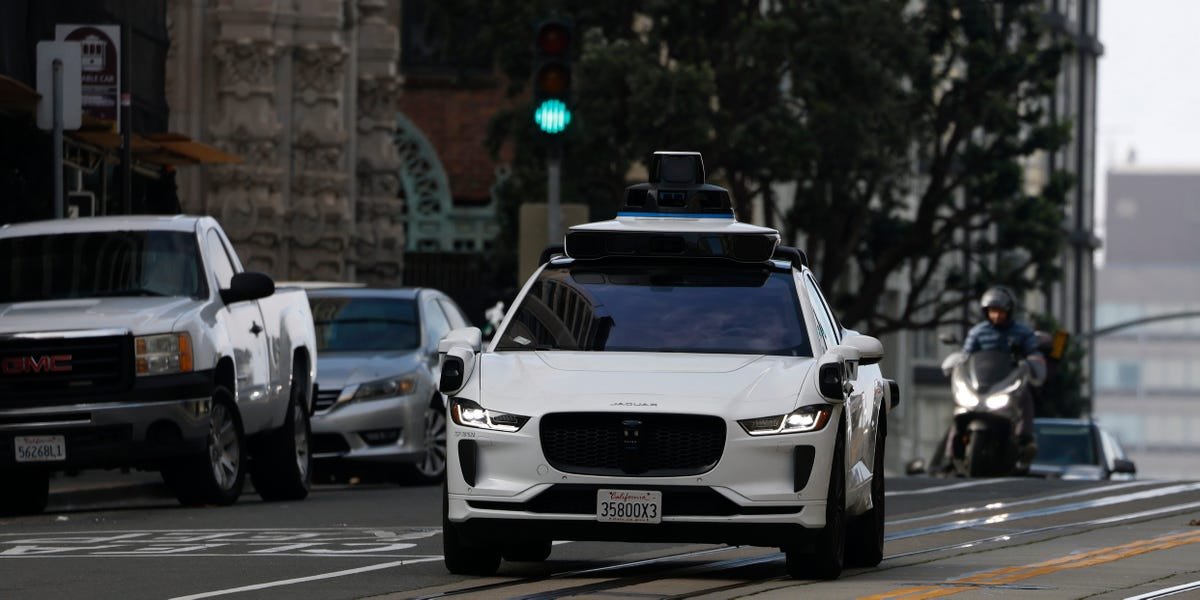
A woman gave birth in a robotaxi in San Francisco earlier this week, Waymo confirmed.
Waymo told local media that the robotaxi safely delivered its passengers to the hospital.
It’s not the first birth recorded in a Waymo, and with the company expanding rapidly, it may not be the last.
One San Francisco robotaxi arrived at its destination with an unexpected extra passenger on Monday.
A woman in labor gave birth in the back seat of a Waymo robotaxi while traveling to the hospital, the company confirmed in a blog post on Wednesday.
“Some people just can’t wait for their first Waymo ride,” the company said.
A spokesperson for the Google-backed robotaxi firm told The San Francisco Standard, which first reported the news, that Waymo’s remote monitoring team detected “unusual activity” in the backseat of the driverless vehicle.
Employees called 911 once they realised what was happening. But the robotaxi delivered its passengers to the hospital without needing assistance, and was subsequently removed from Waymo’s fleet for cleaning.
Apparently, it’s not the first time someone has given birth in a Waymo, with the company confirming to The San Francisco Standard that a similar incident previously occurred in Phoenix.
Waymo is growing up fast
Waymo has had a big year, with the company’s robotaxis becoming a regular sight on San Francisco’s streets, alongside expansions into new markets in Austin and Atlanta.
On Wednesday, Waymo said it had served over 14 million trips so far this year, and expected to hit 1 million rides a week by the end of 2025.
It hasn’t all been smooth sailing. Last month, Waymo issued a software update to 3,067 robotaxis after reports that its vehicles were driving past stopped school buses, according to a regulatory report filed on Thursday.
Waymo is planning a major expansion next year as it faces competition from Tesla’s nascent robotaxi service, which launched in Austin in June.
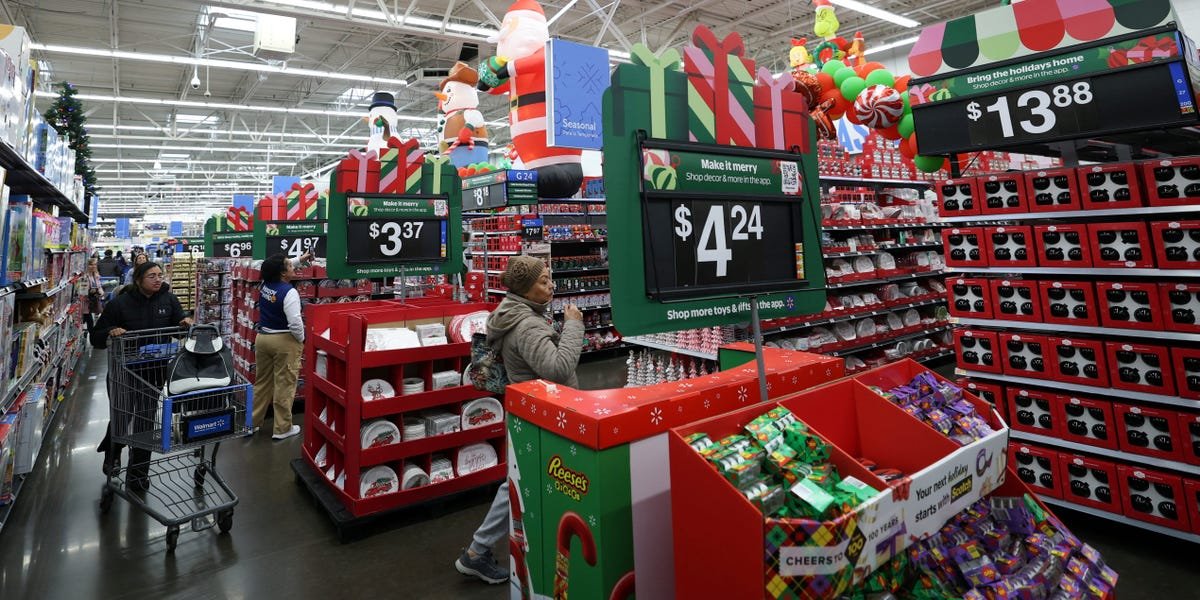
As Christmas approaches, Walmart is giving shoppers something pretty much everyone can use: a little more time.
Imagine you’re just arriving to Christmas Eve dinner with your in-laws and your niece says she’s been wanting a talking plush Bluey doll.
You find it in your Walmart app, place the order in a tap, and by the time dessert is ready, your gift is at the doorstep. (You can even get the whipped cream you forgot to bring for the pie, too.)
Such last-minute shopping options are becoming increasingly possible as major retailers make a big push into ultrafast delivery.
Case in point: Walmart told Business Insider exclusively that its shoppers will be able to place store-fulfilled express delivery orders as late as 5 p.m. local time on Christmas Eve — a full hour later than last year.
“More people are using Express Delivery to get their items faster, and December is when it truly shines,” Walmart’s chief e-commerce officer David Guggina said in a statement. “No one delivers for customers like Walmart, from the first Holiday deal to the final gift on Christmas Eve.”
The retail giant can now reach 95% of US households in three hours or less, and the company has said that more than a third of shoppers opt to pay extra for three-hour-or-less delivery.
Those express delivery numbers jump by 2.5X in December compared with the year’s average, the company said.
The company also told Business Insider that it recently rolled out a new “Get it Now” option in the Walmart app, which shows shoppers an estimated number of minutes to receive an item, and lets them place the order in one tap.
Walmart said earlier this month that it fulfilled its fastest Black Friday order in 10 minutes, with big increases in both the volume and speed of deliveries fulfilled from its stores.
But Walmart isn’t the only player in the ultrafast delivery game: Amazon and Target are also racing to offer last-minute fulfillment options on Christmas Eve.
Target says customers can get orders within two hours via curbside or in-store pickup, or opt for same-day delivery for a $9.99 fee, with stores closing at 8 p.m. on Christmas Eve.
And Amazon will show an “Arrives before Christmas” message on items that can be delivered as late as Christmas Eve via delivery or one of the company’s 25,000 pickup locations.
Correction, December 9, 2025 — An earlier version of this story misstated the delivery category that more than a third of Walmart shoppers opt to pay for — it is three-hours-or-less delivery.
Amazon said last week that it’s testing a 30-minute delivery option in Seattle and Philadelphia, while Walmart said itmanaged to fulfill a Black Friday order in 10 minutes and is expanding its drone service to the Atlanta area.
The race is on to get online orders to shoppers’ doorsteps as fast as possible, but we can’t help but wonder as companies pour money into the infrastructure to support it: Is 30-minute delivery overhyped or under-appreciated?
Business Insider’s senior retail reporters Alex Bitter, who primarily covers gig work apps and groceries, and Dominick Reuter, who mainly covers big box stores, sat down to hash it out.
Dominick: I’d say 30-minute delivery is the future. Are you saying it’s an already-failed past?
Alex: The fundamentals are not there. Unless there’s some massive other piece that we’re not seeing, I don’t get why Amazon is doing this.
Dominick: I definitely think it only works as part of a larger strategy where this service builds and strengthens customer relationships. It does not fly on its own.
Alex: A few years ago, we saw some startups try to do something very similar. You had companies like Gorillas — a German grocery delivery concept — pop up to deliver items in 15 minutes.
It was the same pitch: Is there an ingredient or two that you forgot for dinner tonight? No problem. We’ll deliver it to your door, fast.
Now, though, many of those startups either no longer exist or have scaled back significantly. Getir, an ultrafast delivery company from Turkey, left the US. Gopuff is still around and raising money, though reportedly at a lower valuation than it did during the height of the pandemic.
Grocery is already one of the lowest-margin categories in retail. With delivery this fast, you’re making it even less profitable.
To be fair, Amazon has a lot more money and experience than those startups did. But that does not change the fundamental truth that this is a challenging business model.
Dominick: Scale is everything here — the biggest players have a shot at making this successful. Even though it didn’t work out for the startups, their very existence shows the consumer demand for fast service.
But it takes such an astonishing volume of inventory to support that speed of fulfillment. Companies like Amazon or Walmart already have that inventory, which eliminates one of the biggest hurdles to making 30-minute delivery work.
It’s working in China, it’s working in India, and it’s gaining momentum in other global markets. The big challenge in the US is suburbia, but that’s solvable.
Although I will say 15 minutes is wildly unrealistic.
Alex: When we reported on the ultrafast delivery startups a few years ago, an analyst told me that a 30-minute delivery promise is more reasonable thana 15-minute one.
But Amazon already has fairly fast delivery. Not 30 minutes, obviously, but you can get orders from Amazon Fresh or Whole Foods in as little as a few hours.
Also, this is yet another grocery offering for Amazon. It feels like it has too many now. Consider Whole Foods Daily Shop, a small-format grocery store that’s designed for the same kind of fill-in trips that Amazon seems to be targeting with its 30-minute delivery option.
Dominick: When it comes to adding more stores and fulfillment centers, that’s exactly what Amazon needs to be doing, and it needs to get people going to those brick-and-mortar stores and counting on Amazon-exclusive products.
Walmart and Target are proving that having lots of physical locations can get you way closer to making these ultrafast deliveries successful. Walmart has 4,600 stores, Target has 2,000 — that counts for a whole lot.
There are 25,000 Amazon drop boxes, but those obviously can’t contain what’s in a typical Supercenter. Amazon is working on it, though.
Alex: Maybe this is Amazon figuring out how it can compete with Walmart — and Albertsons and Kroger, for that matter — without having the same store footprint. This also puts it in more direct competition with Uber Eats, DoorDash, and Instacart.
Many US consumers live in smaller towns or suburbs. I don’t think 30-minute delivery works well in those areas. People drive themselves to stores — something the retailers love because it’s cheaper for them than making deliveries.
Amazon is not yet in a lot of those areas, like it is in the densest cities in America.
I could see this 30-minute idea working in Manhattan, though people in such densely populated urban areas already have lots of options for a quick grocery run (bodegas, anyone?).
Amazon has been trying for years to boost its market share in grocery. I’m not sure this is it.
Dominick: The last thing I’ll say is I see ultrafast delivery as a key complement to the marketplace strategy that Amazon and Walmart are leaning on.
When customers need something now, that lets the company serve up an ad or some other exposure to the marketplace for a later purchase.
If Amazon and Walmart can get you to check their app first to get that missing ingredient, they could also sell you on some higher-margin product that might take a couple of days to arrive.
Alex: You need toothpaste, onions, and eggs right now, but that Christmas gift you’ve been meaning to buy can come this weekend.
Dominick: That, I think, is the reason it’s going to be these two giants driving this shift: you need to be very big to offer 30-minute delivery in the first place, and then you need to be very big to see any benefit from it as well.